
Subscribe now for full access and no adverts
Just before dawn on Sunday 25 June 1950, following a brief bombardment, the 150,000-strong army of the Democratic People’s Republic of North Korea, backed by Soviet Russia, crossed the border and invaded its southern neighbour, the Republic of Korea, backed by the United States. To many observers, it looked as though it was here, on a far-flung East Asian peninsula which some in the West would struggle even to place on a map, that the Cold War was about to turn ‘hot’ for the first time. But what had led up to this? And what happened next?
The Korean peninsula had been divided since the end of the Second World War, much like Germany in Europe. With no natural boundary, the 38th Parallel marked the line of the border, dividing Korea roughly in half; Soviet troops occupied North Korea, and the US occupied the South. In the North, Joseph Stalin established as leader a man who had spent much of the war in Moscow, very much as he had set up pro-Soviet regimes in Eastern Europe. This was Kim Il-Sung – the grandfather of Kim Jong Un, North Korea’s current supreme leader. In the South, the US established Syngman Rhee as leader, a man who had spent much of his adult life in the US, and who was known to be strongly anti-Communist, but also had no ties with the Japanese who had occupied the Korean peninsula for 35 years, between 1910 and 1945.
Over the ensuing years, Kim Il-Sung built up a hardline Communist state. Land was nationalised, and opponents were hunted down and imprisoned or executed. At the same time, Syngman Rhee built up a supposedly democratic state in the South – but he had little support in Korea, and his regime was soon marred by corruption and complacency, reliant on American backing.
In 1949, Kim, eager to unite the Korean peninsula under his own Communist rule, asked Stalin for permission to invade the South. The Soviet leader, preoccupied with events in Berlin (see MHM 151, April/May 2026), said no – the time was not right. The following year, Kim asked again for Soviet backing. This time, after the successful launch of the first Soviet atom bomb (see MHM 152, June/July 2026) and the final victory of the Communists after a 30-year civil war in China, Stalin was in more bullish mood, and gave permission for the assault. It would prove to be a terrible mistake.
A disastrous beginning
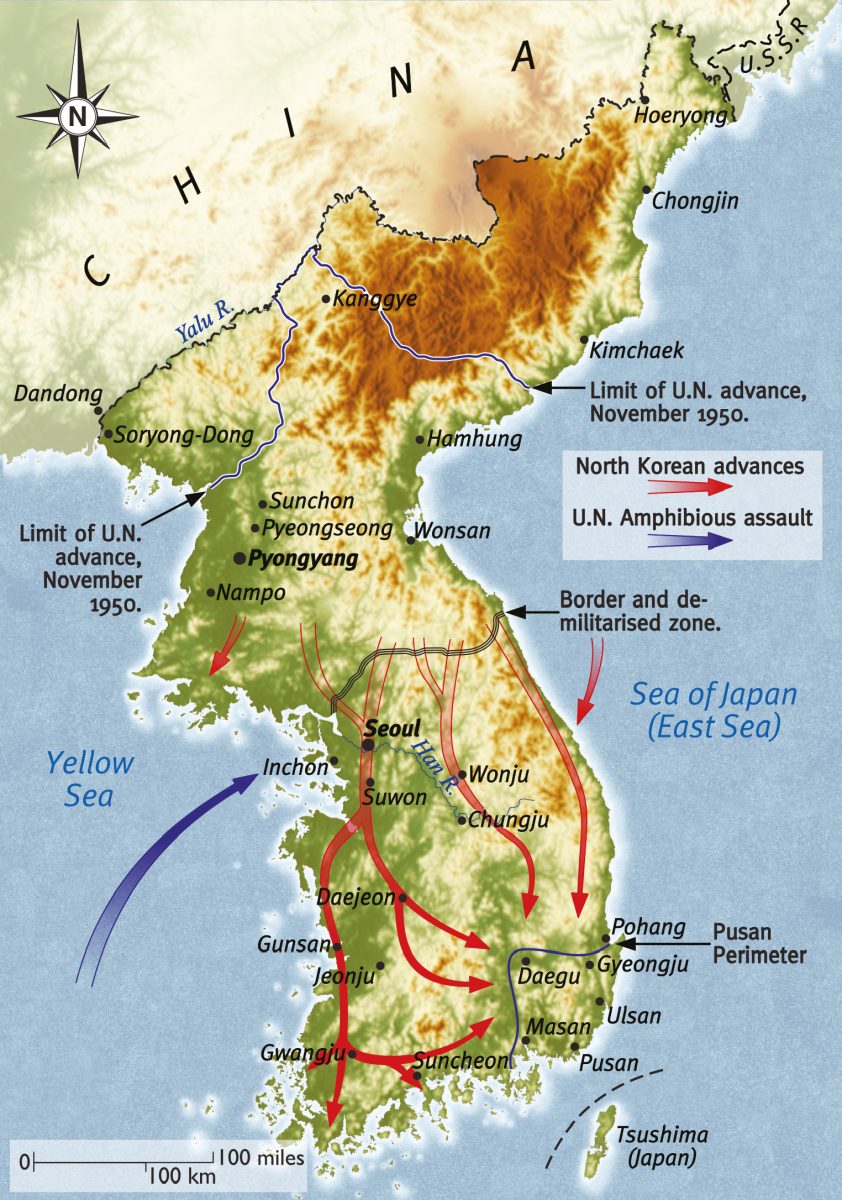
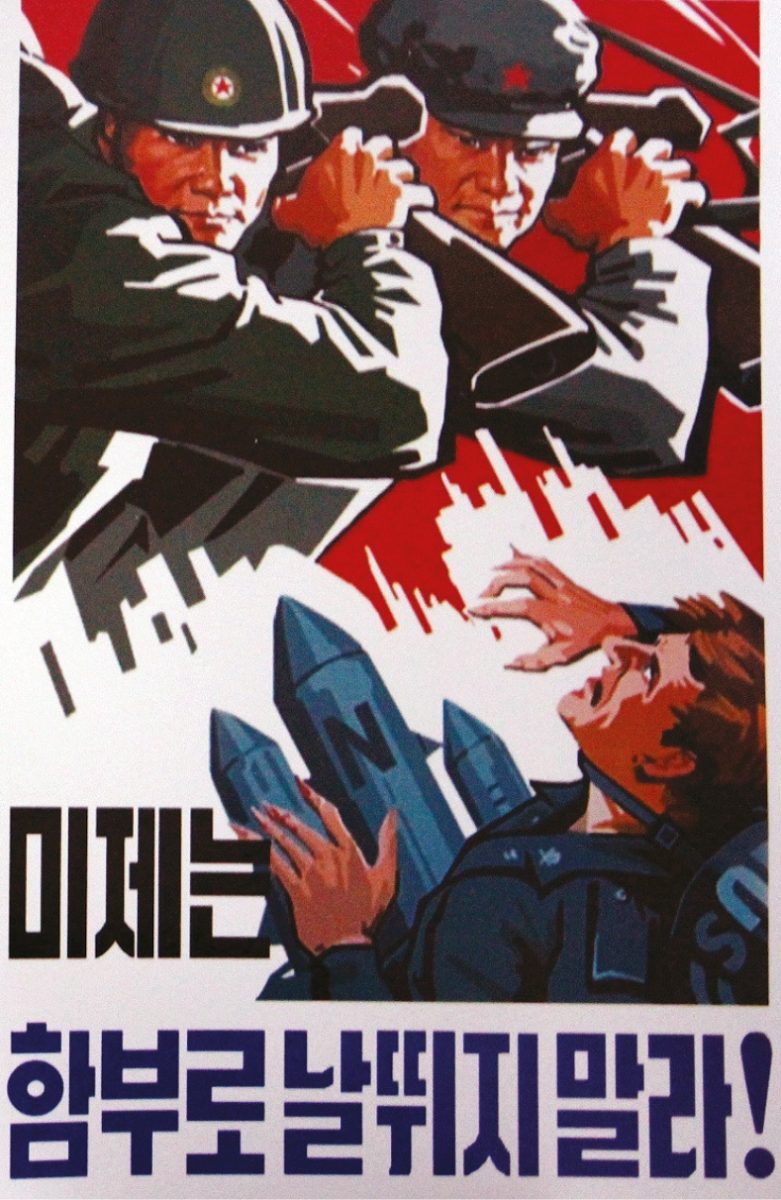
The first few weeks of the invasion were marked by overwhelming military successes for the North. Led by Soviet-supplied T-34 tanks, the North Korean infantry poured southwards, dressed in their mustard-coloured tunics. After only three days, North Korean soldiers captured Seoul, the southern capital. Hundreds of refugees fleeing south from the city were killed when the South Korean Army blew up one of the bridges over the mighty Han river in an incident that vividly illustrated the uncoordinated and desperate attempts of Rhee’s government to slow down the seemingly unstoppable invading force.
Washington was caught out, completely unprepared. An emergency session of the United Nations Security Council was called, and condemned the invasion. In a second session, the Security Council – in the absence of the Soviet Union, which was boycotting the Council at the time over its refusal to admit Communist China – called for a military force to be raised to defend South Korea. It was the first time the UN had voted to send a fighting force to defend a nation. And, despite many acts of aggression over following decades, it would be the last until 1991, when the UN voted to send an army to help liberate Kuwait after its occupation by Iraq’s Saddam Hussein. Fifteen nations would eventually contribute to this UN force in Korea, but initially the nearest troops available to come to the aid of the South were US troops drawn from the occupying force in Japan.

The US had rapidly demobilised after 1945. Its Army of 85 divisions had been reduced to one of only 10 divisions. And the thinking was that small wars were a thing of the past. This was now the ‘Atomic Age’. As a result, the US occupying force in Japan was nowhere near combat-ready. Under-equipped, under-staffed and under-trained, the American soldiers who were rushed to Korea had little idea what they would be up against.
Soldiers of the US 24th Division led by Major-General William F Dean deployed in a defensive line 50 miles south of Seoul. On 5 July, they awoke to the sound of North Korean tanks, which broke right through their lines. The North Korean infantry soon followed. Without effective anti-tank weapons, the American troops started to pull out – but their retreat soon became a rout. Astonished and dazed, in the heat of a Korean summer, some soldiers literally threw down their arms and ran. The first direct military confrontation of the Cold War ended in disaster for the West. Soldiers of the most powerful nation in the world had been humiliated by Soviet-equipped troops from a tiny, almost unknown, Asian country.
Other nations rallied to support the UN military force in Korea. British Prime Minister Clement Attlee was convinced that defending South Korea from Communist aggression was the right thing to do. But the only troops Britain could contribute at first were two battalions from the Hong Kong garrison, also hopelessly under-equipped for combat. Alongside the UK, many Commonwealth countries sent contingents to fight in Korea, including Canada, Australia, New Zealand, and South Africa. Turkey sent a substantial force that displayed great bravery and resilience on the battlefield. France, the Netherlands, Greece, Belgium, the Philippines, and Thailand, in time, also sent small contingents.
On the battlefield, further defeats and humiliations followed. Everywhere, the soldiers of the North Korean People’s Army completely overwhelmed the inadequately trained and poorly armed American soldiers. General Dean abandoned his Divisional HQ and retreated into the hills. Having got lost, he was captured by the North Korean Army, and paraded as the highest-ranking prisoner-of-war. The commander of the 1st US Cavalry Division, Major-General Hobart Gay, who had been Patton’s chief of staff in Normandy, admitted that he did not know how to organise a retreat. And it showed, as his men ran pell-mell southwards in disarray through the rugged Korean hills.
In just a few weeks, by the end of August, what remained of the South Korean Army, along with the bedraggled US troops, had been forced back to the south-east corner of the peninsula. Here, they formed a defensive line around the port city of Pusan, known as the ‘Pusan Perimeter’. More troops and equipment arrived to help rally the UN forces. But by now the North Korean People’s Army was itself running out of steam, and could not throw the US and South Korean troops into the sea as they hoped. Having advanced so quickly, North Korean supply lines were failing to keep up. Their advance slowed down and then stopped.
A daring plan
The man appointed to command UN forces in Korea was a legendary World War II hero, General Douglas MacArthur. As Commander of the US occupying force in Japan, he relished the challenge of taking command in Korea. Supremely confident in his own abilities, he enjoyed taking risks. Despite the humiliating setbacks, he now came up with a plan to reverse the course of the war that was both daring and immensely ambitious.
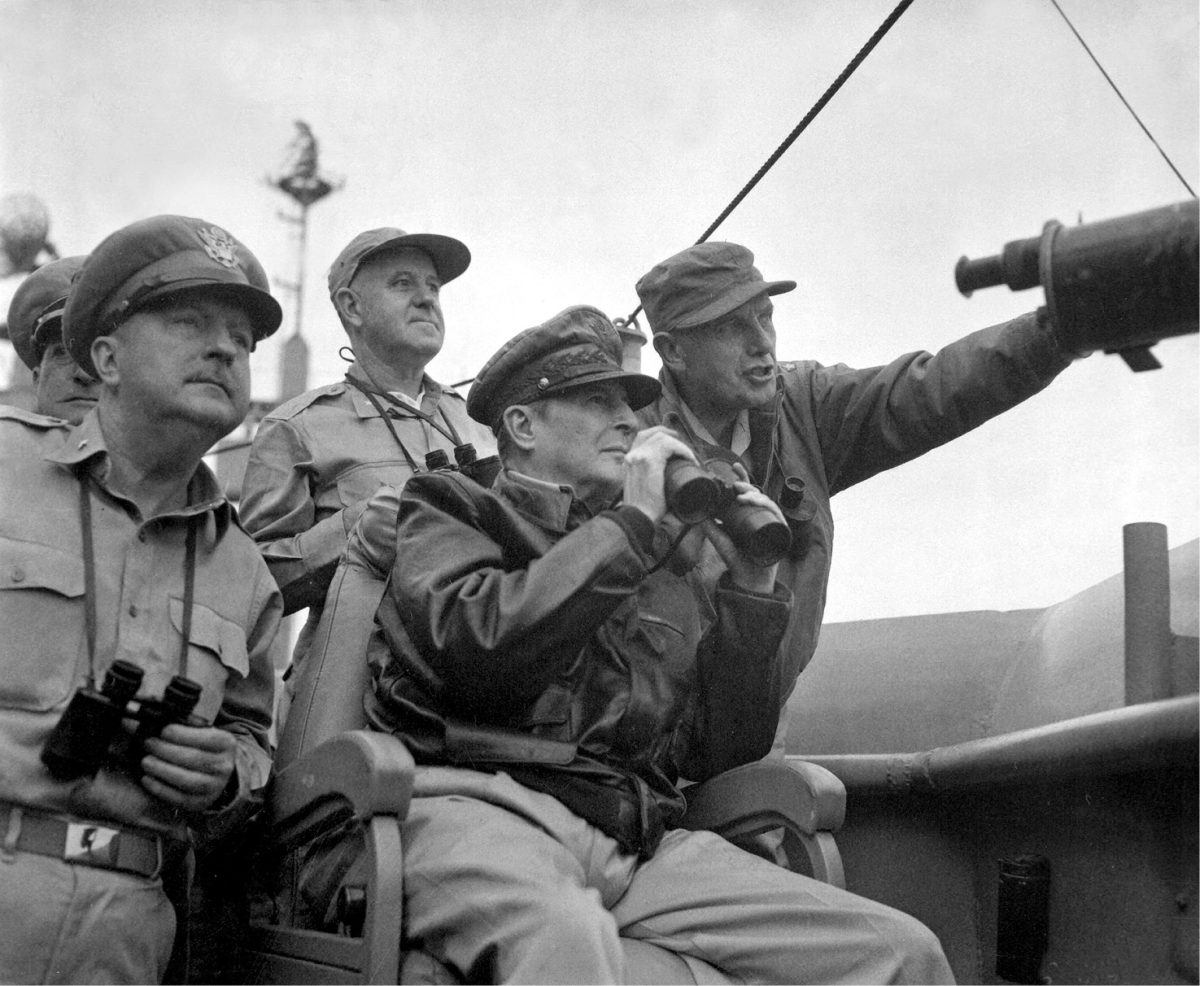

MacArthur decided to strike 150 miles to the rear of the North Korean line by launching an amphibious invasion at Inchon, the port outlet of Seoul on Korea’s west coast. From there, he wanted to strike inland and recapture Seoul itself. In Washington, his plan was dismissed as utterly reckless. General Omar Bradley, the D-Day veteran who was now Chairman of the Joint Chiefs of Staff, knew a thing or two about amphibious operations. He told MacArthur that the geography was wrong, the beaches too exposed, and the tides too great for an amphibious assault. But MacArthur was never one to doubt his own genius, and continued to plan his landings. When Bradley asked him what plans had been drawn up for an evacuation, if everything went wrong, MacArthur replied simply that the invasion would not fail.
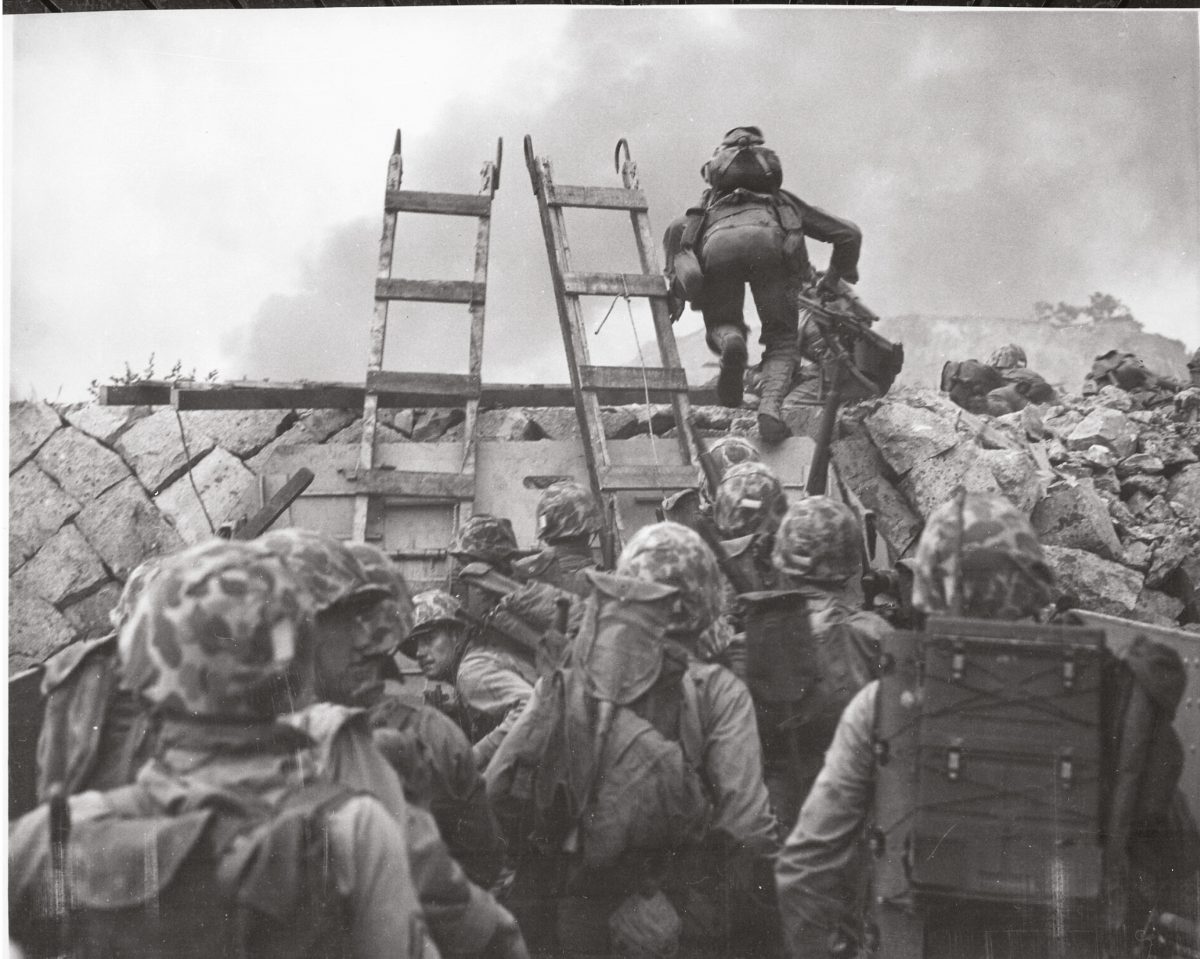
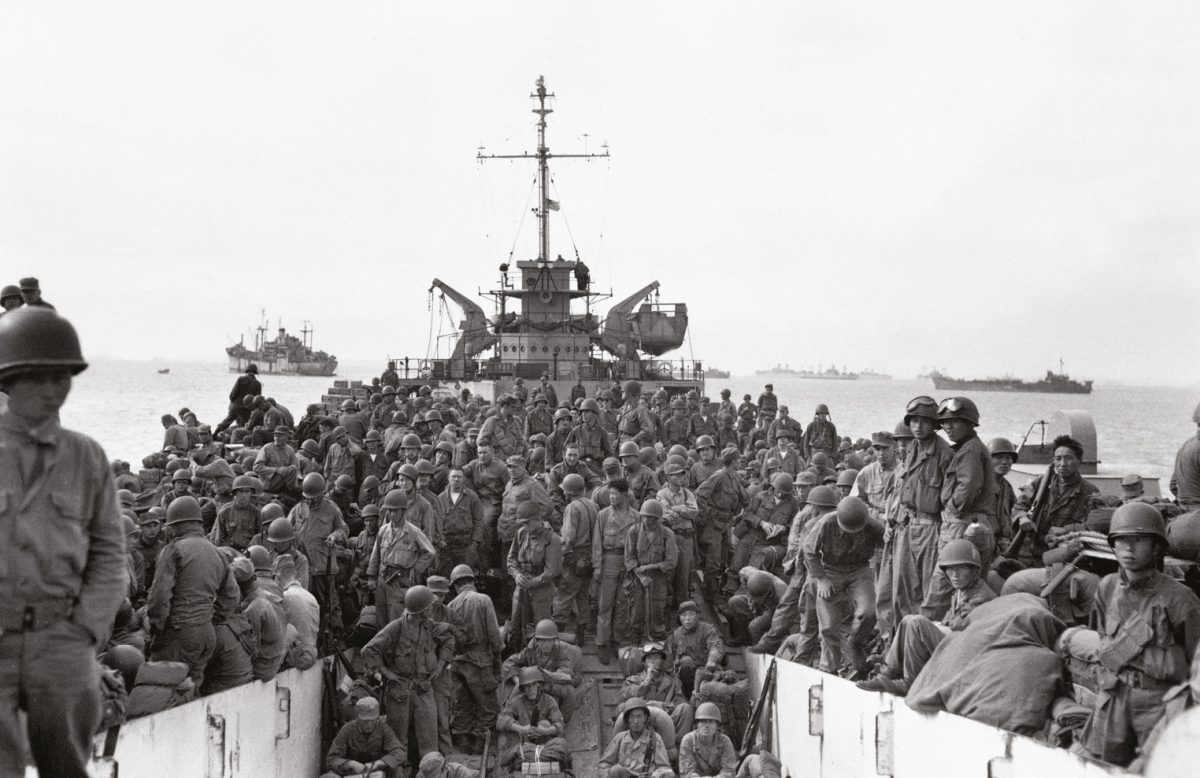
On 15 September, a fleet of 269 ships gathered off the coast at Inchon. It was the largest amphibious assault force since D-Day, six years before. After a heavy bombardment, US Marines of the 1st and 5th Divisions went ashore. They stormed up and over a high sea wall. The North Koreans soon began to flee. By late morning, the US Marines were in complete control and had established a beachhead. MacArthur cabled: ‘The Navy and Marines have never shone more brightly than this morning.’ He was photographed on the bridge of the flagship, looking every inch a great warrior. His gamble had paid off.
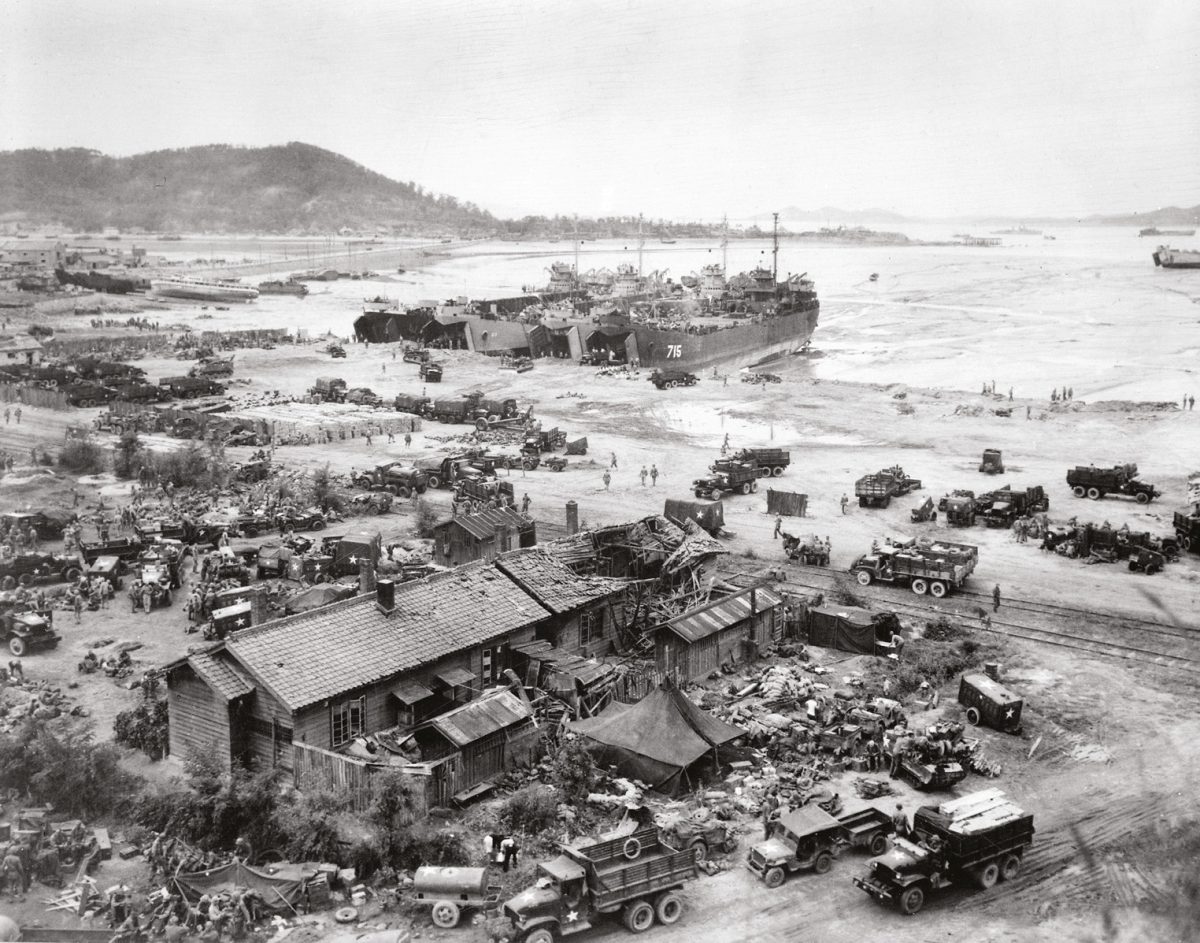
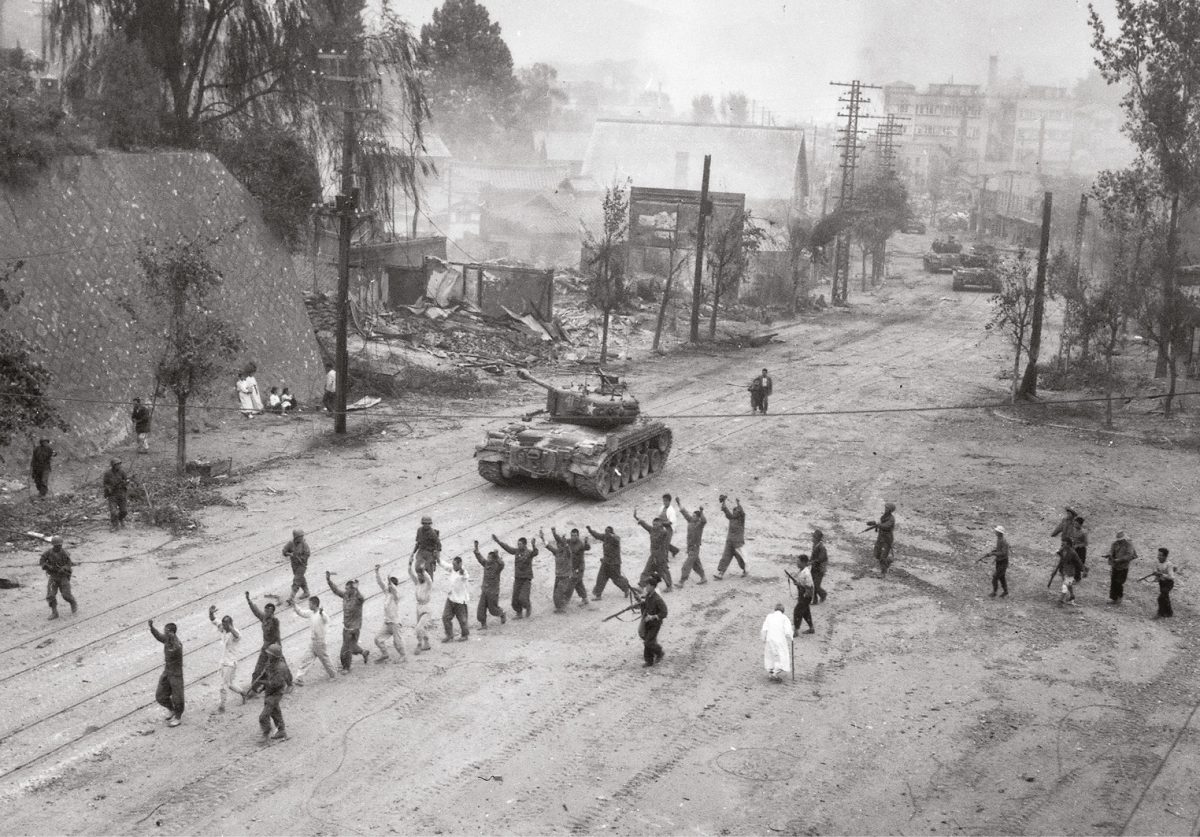
With the successful landings so far behind the North Korean front line, the pendulum swung back in favour of the UN-US forces. North Korean troops that had advanced to the Pusan Perimeter were exhausted. With over-extended supply lines, their flow of food rations started to dry up. Some captured North Koreans were found to be almost starving. Reinforced, UN forces broke out of the enclave and advanced rapidly north, rolling up the North Korean Army’s advance. After ten days, the US Marines from Inchon met up with those coming up from the south, and Seoul was recaptured – but only after a bloody fight in which some 50,000 civilians were killed and whole swathes of the city flattened.
Stalin was furious. Despite initial success, his North Korean proxy was now in a terrible state, and its army was disintegrating. Stalin withdrew most of his military advisers from the country, not wanting them to be captured in the debacle. The one area in which the Soviets and the Americans continued to confront each was in the air. Although the ground battles had been fought largely using World War II tactics and equipment, the air forces of both sides were now equipped with fast jet fighters. Soviet MiG-15s confronted American F-86 Sabre jets in mid-air dogfights that were fought at speeds inconceivable five years before. With a lack of trained North Korean aircrew, some of the MiGs were actually flown by Soviet pilots out of bases in China. They wore North Korean uniforms, so if shot down their real identity would not be revealed. The Americans knew this, but chose not to make anything of it, in case it prompted a direct confrontation between the two superpowers. But in the skies over Korea, the US and the Soviet Union continued the Hot War.
Triumph over logic
On the ground, with Seoul recaptured and the UN forces back at the 38th Parallel where the war had begun, there was a major decision to be made. What to do next? The UN had won a great victory. It had stood up to Communist aggression and defeated it. Surely the sensible thing would be to end the war at this point?
MacArthur would have none of it. He was determined to teach the Communists a lesson. North Korea must be punished for its aggression. On 9 October, MacArthur’s troops crossed the 38th Parallel and effectively began their own invasion of the North. Hubris and opportunism had triumphed over logic.
What recent historians have called a ‘second’ Korean War then began. MacArthur’s troops advanced north capturing Pyongyang at the end of October – the only Communist capital ever to fall to Western troops during the Cold War. By the end of November, they had reached the Chinese border along the Yalu River. But, after a pause for Thanksgiving – when turkey and all the trimmings were flown up to US and UN troops on the front line – the Chinese launched their own invasion.
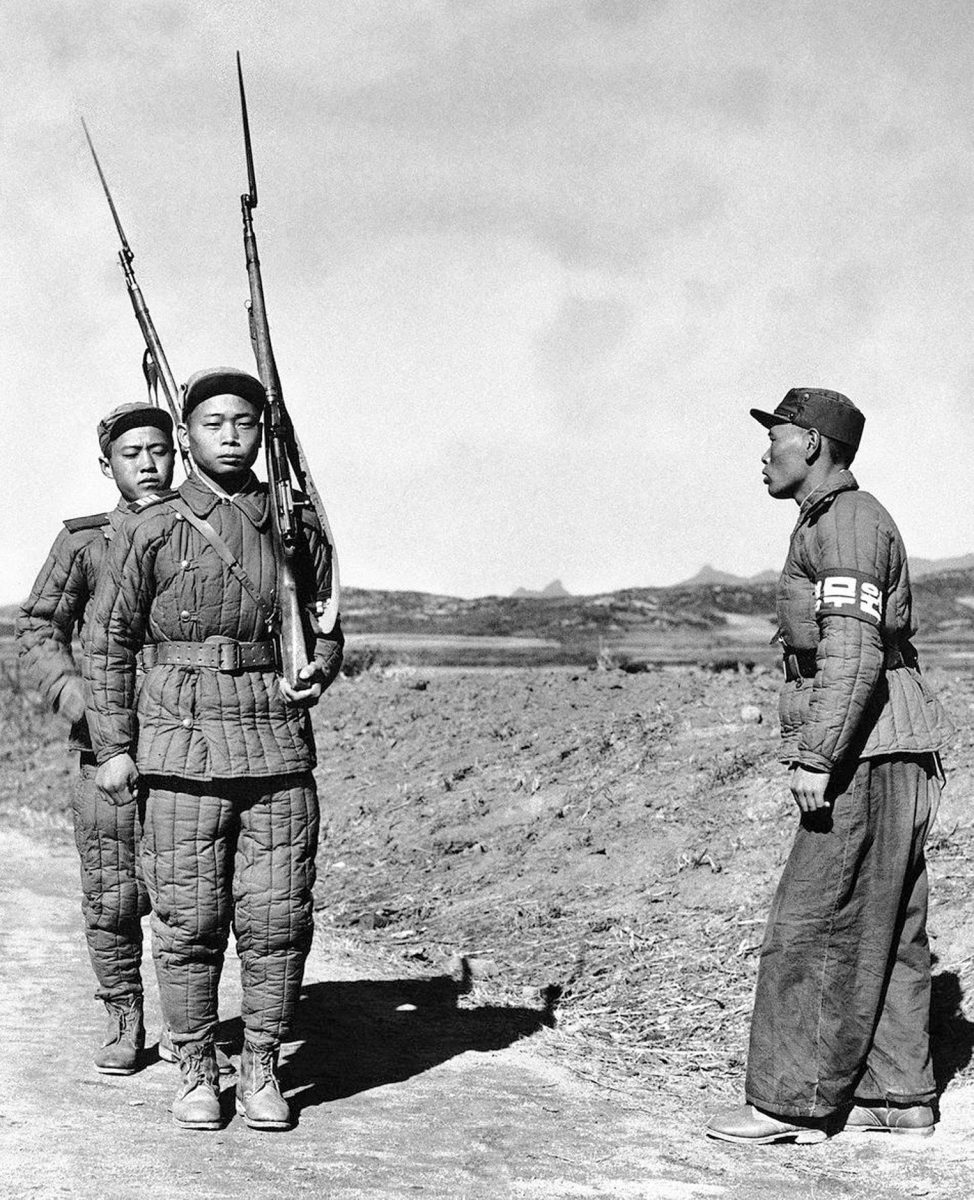
Thousands, then tens of thousands, then hundreds of thousands of Chinese People’s Volunteers charged south across the border behind bugles and drums. The US-led UN force was once again thrown into retreat. Chinese troops advanced along the hills and ridges, as the UN forces fled south in the valleys, in what became known as ‘bug out fever’. Amid freezing winter temperatures, men had to fight frostbite and frozen fuel supplies, as well as the ever larger numbers of Chinese Volunteers coming at them. On the east coast, the US Marines endured probably the worst retreat in their history. Eventually Seoul was recaptured by the Communists. Then a new US ground commander, General Matthew Ridgway, managed to halt the UN retreat, and by the spring of 1950 the front line had stabilised. By summer, the two sides were back where they had started, roughly along the 38th Parallel. MacArthur called for the bombing of Chinese cities and the use of atomic weapons. Finally, President Truman had no alternative but to sack him.

For two years, the ground fighting went on in a form of stalemate. Soldiers faced each other from dugouts and trenches, akin to the Western Front in the Great War. Peace talks began at Kaesong, and then at Panmunjom. But neither side trusted the other. Disputes arose over the treatment of prisoners, and over false accusations by the North of the use of chemical weapons. And heavy American bombers continued bombing North Korea. Eventually, after the replacement of Truman by President Eisenhower and the death of Stalin, the war came to an end with an uneasy Armistice signed in July 1953. The losses had been appalling. The US had lost 127,000 killed and wounded; the British 3,500. But these numbers could only pale by comparison to those of the Chinese, who had lost somewhere between a quarter and a half million men. South Korea had seen about 140,000 soldiers killed and the North roughly half a million. But the real losers were the Korean civilians, about 1.2 million of whom had been killed or wounded in the South, and another nearly 1.5 million in the North, mostly as a result of bombing, displacement, and starvation. It was a high price to pay for Communist aggression in Asia.
In Cold War terms, the threat of the mushroom cloud had cast its shadow over the war. The possibility of an escalation from conventional to atomic war had threatened the outbreak of World War III on more than one occasion. Generals like MacArthur had to learn in future not to threaten a nuclear Armageddon. Only the civil power could authorise the use of nuclear weapons. As we will see later in this series, some would learn that lesson. Others would not.
Taylor Downing’s latest book The Army that Never Was: D-Day and the Great Deception is out now in paperback (Icon Books, £10.99).
All images: Wikimedia Commons, unless otherwise stated