Subscribe now for full access and no adverts

When Anita Lasker came to Britain in March 1946, 80 years ago, having survived Auschwitz and having been liberated at death’s door from Belsen, she found that no one wanted to hear about her terrible experiences in the camps. Britons wanted to move on from the horrors of the past and look to the promise of the future. And people thought it would upset her to recall the terrors of camp life. So Anita stopped talking about what had happened to her in Hitler’s death camps. Her two children, born in the 1950s, grew up knowing nothing of their mother’s harrowing previous life. It was not until the mid-1980s that colleagues in the orchestra she played in got her talking and encouraged her to write down an account of her extraordinary life. This she eventually did, for her children and grandchildren to read, with typewritten sheets, copies of letters, and the few photos she had of her parents in pre-war Germany. Eventually, in 1996, a publisher asked to publish this as Inherit the Truth, 1939-1945. Now, with Anita aged 100, Faber & Faber has, happily, republished the book with a new foreword by Philippe Sands. It tells a remarkable story.
Anita grew up in Breslau in Silesia (now Wrocław in Poland), the youngest of three sisters. Her father, a successful lawyer, had fought in the German army in the First World War and had won an Iron Cross for bravery. She grew up feeling entirely German and barely aware of her Jewishness, until a boy at school puzzled her by telling the teacher that ‘the Jew should not wipe the blackboard’. When the Nazis came to power, her father believed that it was a passing phase and that the German people were too sensible and civilised to put up with Hitler’s thugs for long. Like many wealthy Jewish families, the Laskers left it too late to try to get out.
Painful partings
The family was very musical. Anita’s mother played the violin; her eldest sister, Marianne, the piano; her other sister, Renate, the violin; and Anita played the cello. Together, they would play quartets on Sundays. Realising her talent, her parents sent Anita aged 13 to study the cello in Berlin: no one in Breslau would teach a Jewish girl. Anita was in Berlin on Kristallnacht, 9 November 1938. She was rapidly brought home and her father decided he must try to get a visa for the family to leave Germany. But every attempt to emigrate failed. Finally, in the summer of 1939, Marianne, a committed Zionist, left Germany to escort a group of children bound for Palestine. They got as far as London when war was declared and onward travel became impossible. Marianne was the only member of the family to get out of Germany, and she spent the war helping to carry out repair work on bombed properties in Britain. The letters the family sent to her between 1939 and 1942 form a central part of the book.
The restrictions on Jews inside Germany grew worse and worse. The two remaining girls could not go to school. The work for Anita’s father dried up. Finally, in April 1942, the Nazis gave Anita’s parents 24 hours’ notice to report for deportation. The book includes a heart-rending account of the two daughters’ goodbye to their parents. Within a few months they had died of hunger, disease, and abuse in a transit camp in east Poland.
After a week of mass murder, the SS liked to relax with a little Schubert or Strauss.
Anita and Renate then worked in a factory in Breslau and tried to escape by train to Paris using forged documents. They were arrested by the Gestapo and sentenced to several years in prison. The German judiciary at this point maintained its separation from the Nazi state, but in December 1943 it was decided to remove Jewish prisoners and send them all to concentration camps. The two girls were separated and thought they would never see each other again. Yet another painful parting.
A new hell
Arriving at Auschwitz as a prisoner had its advantages. Anita did not arrive on a train of cattle trucks packed with Jews who went through ‘selection’ by the SS – to the camp to work, or to the gas chamber to die. But she still went through initiation, with her head shaved and a number tattooed on her left arm. It was at this point that a miracle occurred. Telling the tattooist that she had played the cello, the girl announced that Anita would be saved and ran off. She returned with a grand lady in a thick coat, who asked her about her cello playing. This was Alma Rosé, the niece of Romantic composer Gustav Mahler, and she ran the camp orchestra. Anita was quickly inducted into the orchestra. They played twice daily: at dawn, they played upbeat marches as the starving inmates left the camp to work in the nearby factories; at dusk, they played as the inmates returned. And on Sundays they put on concerts for the SS, who regarded themselves as civilised men: after a week of mass murder, they liked to relax with a little Schubert or Strauss. For all this, the members of the orchestra received extra rations. Anita had truly been saved by her cello.
There then followed another miracle, as – in this huge camp – the two sisters met up again and, although desperately ill, Anita managed to negotiate extra rations for her sister too. Although better off than many, Anita writes that they knew they were trapped, ‘and the only way out was via the chimneys’. Late in 1944, the two sisters were evacuated from Auschwitz as the Red Army approached, and they were taken to the even more deadly Bergen-Belsen. A new hell awaited them.
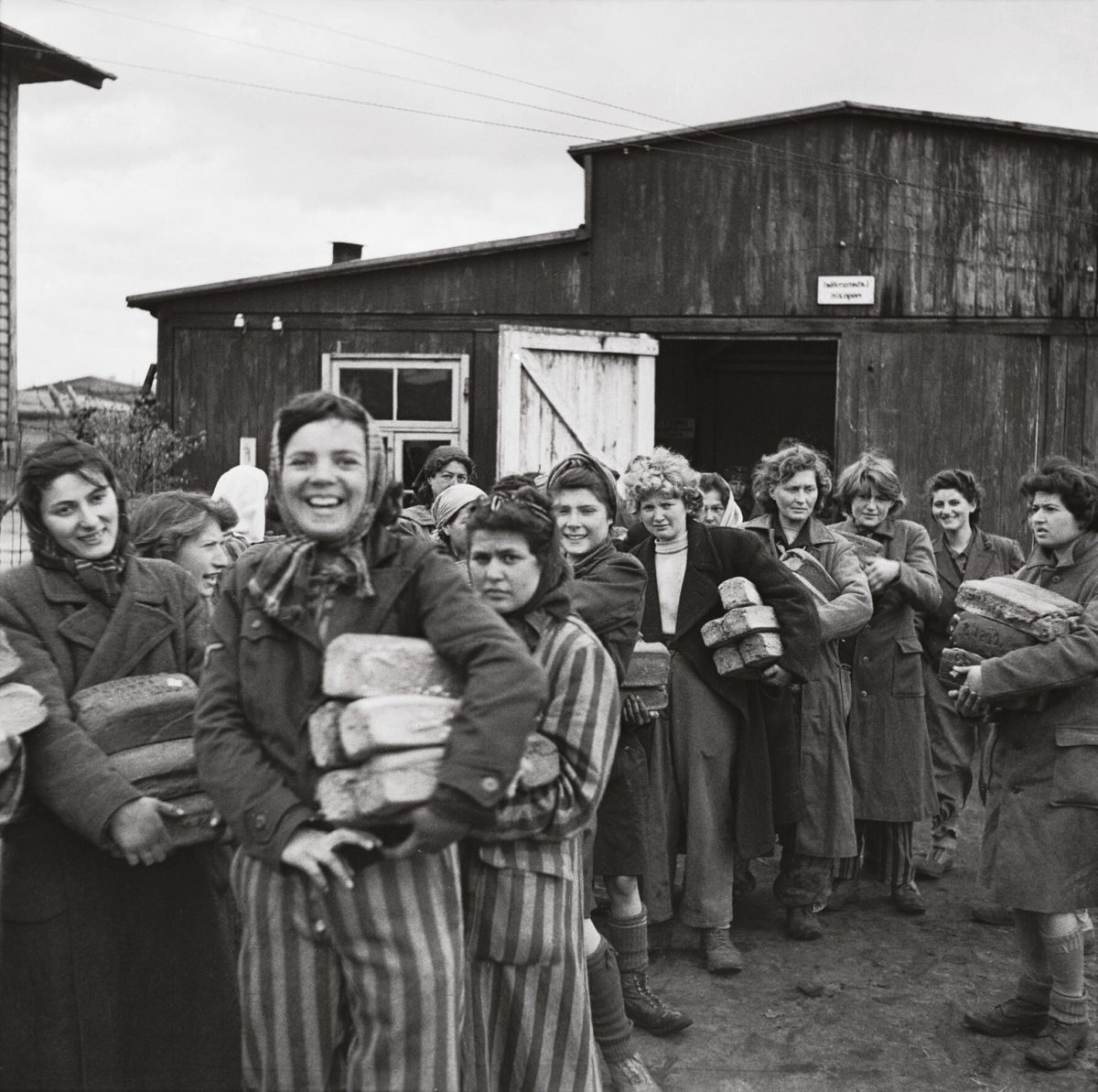
In Belsen, the situation was dire. It was desperately overcrowded, and, with food and water lacking for days on end, corpses piled up, but the survivors were too weak to drag them away. Finally, on 15 April 1945, British troops arrived, and through loudhailers announced, ‘You are liberated’. Anita was too weak to follow what was happening, but after a few days of sensible rations she began to recover. She was 19, but felt like 90. She had survived. She wrote: ‘After years of living for the moment… all at once there was space in front of us. It was very hard to believe.’
Within a few months, both sisters were working for the British military authorities who had taken over in the Belsen area. The last part of the book contains letters between Anita, Renate, and their elder sister Marianne, who was still in England. The joy of their communicating together again comes across in every letter. Ironically, many setbacks prevented the two girls getting to England before Marianne had left for Palestine. Endless bureaucratic delays had held them up. The book ends with their final arrival at Dover in March 1946.
Inherit the Truth is not a conventional history of the Holocaust. It is a remarkable first-hand account of survival in the dark heart of Nazi Germany. It is told without self-pity, but with extraordinary details, writing with disbelief about what the Nazi regime could achieve; about the destruction of a family, about life in Auschwitz, and about near-death in Belsen. Since writing the book, Anita has been interviewed many times, including in 3D-type holograms for the Shoah Foundation. But reading her own words, supported by letters, documents, and photographs of the time, offers a very special and intimate account of living through the Holocaust. Many thanks to Faber for republishing this important historic work to mark Anita’s 100th birthday.
Anita Lasker-Wallfisch
Age: 100
Nationality: German-British
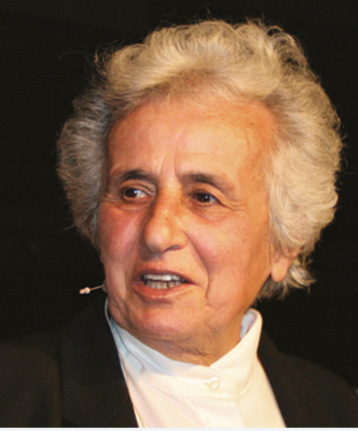
Anita Lasker-Wallfisch was born into a Jewish family in Breslau, Germany, in 1925, and grew up during the Nazis’ rise to power. She survived WWII by playing cello in the Women’s Orchestra of Auschwitz. Inherit the Truth: The Cellist of Auschwitz ends with Anita’s arrival in Britain in March 1946, aged 20. Because she was an immigrant, the Musicians’ Union initially refused to let her to play professionally; eventually, they relented and she became a founder member of what developed into the English Chamber Orchestra. In 1952, she married Peter Wallfisch, a concert pianist; they had two children. Since publishing her book, she has given hundreds of talks about the Holocaust in schools in Germany, Austria, and Britain. She has received an MBE in Britain and several awards in Germany, and in 2018 gave a speech in the Bundestag in front of Chancellor Angela Merkel. In 2025, as she reached the age of 100, she was visited in private by King Charles.