Subscribe now for full access and no adverts
Tom Hanks’ fascination with the Second World War goes back to his youth. Growing up in 1960s America, he remembers that most adults he knew had a link with the war. ‘My dad, my teacher, my dad’s friends, and my friends’ parents’ all talked about the war, he recalls. Whether they had been at the front, or in a wartime factory, they had all participated in one way or another, and their perspective was ‘reminiscent of them talking about a great plague or a great flood’. As a kid who was always searching out ‘some degree of non-fiction entertainment’, he particularly remembers admiring the British television series The World at War and movies like Kelly’s Heroes and The Great Escape.
Hanks began his acting career in the 1980s, and soon became known for his comedy roles in movies like Big (1988), for which he was nominated for an Academy Award. He then went on to more serious dramatic roles, including playing a gay lawyer with AIDS in Philadelphia (1993), for which he won the Oscar for Best Actor. Returning to comedy, one of his defining roles was as the title character in Forrest Gump (1994), for which he won a consecutive Best Actor Oscar. By the mid-1990s, he was one of the most successful and best-known actors in Hollywood, appearing in a wide variety of genres, from thrillers to voicing animation films (Toy Story), frequently picking up awards.
In 1998, he played a leading role in Steven Spielberg’s Saving Private Ryan as Captain John Miller, who led the patrol to find Private James Ryan (Matt Damon) and take him out of the line after his three brothers had been killed in action. The film is not only one of the best war movies ever made but it has been credited as causing a revival of interest in World War II, inspiring a host of television shows and movies about the war. As close collaborators, Hanks and Spielberg co-produced the HBO television series Band of Brothers (2001), which proved immensely successful with audiences around the world. Filmed mostly in England, this series told the story of ‘Easy’ Company of the 506th Regiment of the US 101st Airborne Division as it fought its way across Europe from Normandy to southern Germany. Combining his Second World War interests with further acting roles, he went on to executive produce the less-successful Far East version of Band of Brothers called The Pacific in 2010.
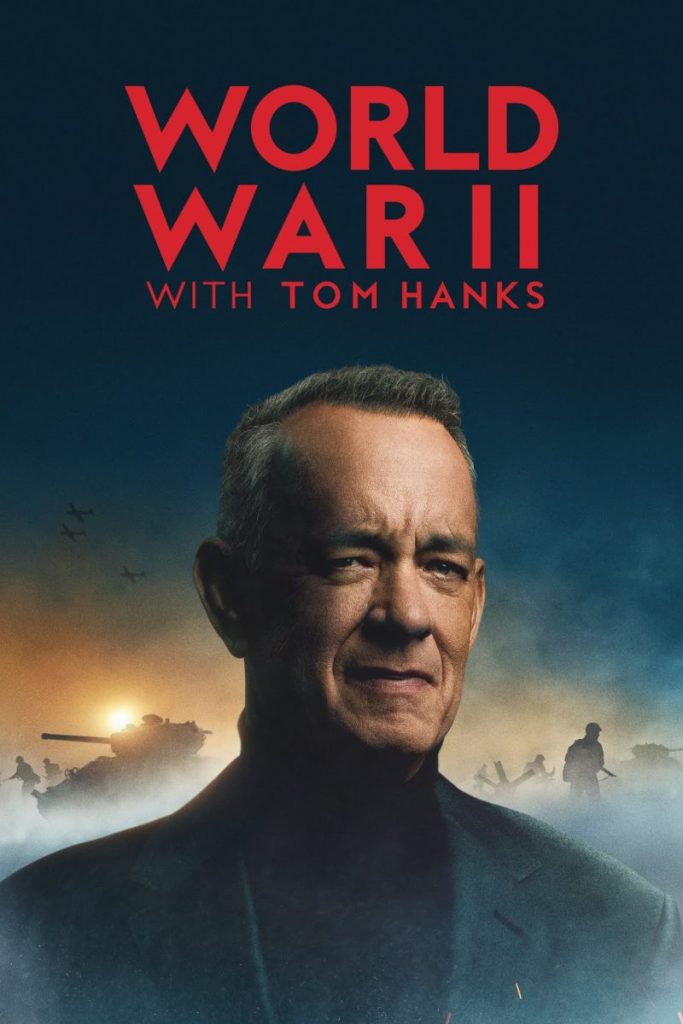
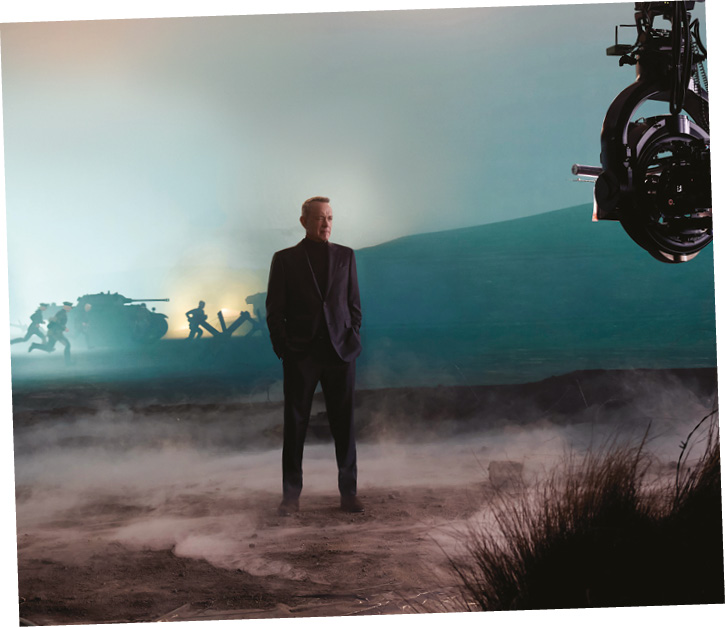
His long fascination with the war has now reached its summit in World War II with Tom Hanks, in which he acts as executive producer, presenter, and narrator for what is a major 20-part television series. The series is produced by the British company Nutopia for The History Channel. The title sequence of the series does not pull its punches. Amid a montage of powerful still photos, many of which have been colourised, and a highly dramatic music track, historians say things like: ‘All wars change the world but none of them changed the world like the Second World War did’. Other sound bites include: ‘the most destructive war in human history’; ‘the world is turned upside down and all hell is let loose’; ‘the biggest military operation of human history’; ‘we see humans at their absolute worst… and at their absolute best, willing to give their lives that others may live’. With claims like this only two minutes into an episode, you know you’re in for something epic.
The beginning
Each episode begins with a short introduction by Tom Hanks, who is lit with dramatic effect, a shaft of light cutting across his face. His unmistakable, gravelly voice sets up what you are about to see. What follows then is a relatively standard, brief outline of each period of war covered in that episode. Episode 1, The Beginning, goes back to Versailles and the sense of betrayal in Germany after the First World War. Focusing on the young Adolf Hitler, who we are told ‘never accepted’ the country’s defeat, the programme skips through the rise of the Nazi party and Hitler’s decision in the early 1930s to win power through the ballot box. In January 1933, he is appointed Chancellor, and he soon becomes the single political and military leader of Germany: the Führer.
We are told the story of the sellout of Czechoslovakia by the British and French at Munich, and their determination to take a stand over Poland. After the surprise Molotov-Ribbentrop Pact in August 1939, the stage is set for a German invasion of Poland. The Poles fight bravely, possessing the fifth-largest army in the world at this point. Powerful archive film of the battle for Poland carries through this part of the story, much of which is not familiar in the West. Polish civilians experience modern warfare in a horrifying way as bombers destroy their cities and dive-bombing Stukas attack refugees on open roads. Hitler is driven not just by his desire for Lebensraum (living space for the German people in the east) but also by a racial hatred of Jews and Slavs, whom he regards as inferior to the German master race.
In pitiful scenes from films and photographs, Jews are rounded up and attacked on the streets. The Einsatzgruppen (mobile death-squads) go into action behind the advancing Wehrmacht troops to seek out and kill supposed enemies of the Reich, political opponents, and Jews. They begin their ghastly massacres initially in relatively small numbers but we know this will grow into a vast, organised genocide. With Poles feeling defeated and abandoned, three German armies surround Warsaw. Then, on 17 September 1939, the Red Army invades eastern Poland as had been secretly agreed in the Molotov-Ribbentrop Pact. This seals Poland’s fate. Defence against two advancing armies on two fronts is impossible. And behind the Red Army comes the NKVD, the Soviet secret police, arresting diplomats, officers, writers, and intellectuals. At Katyn Wood in Belarus, thousands of Polish army officers are murdered and buried in shallow graves.
On 25 September, Warsaw experiences the largest air raid ever seen to that point: 20% of the city is destroyed; about 18,000 Poles are killed. The end of Poland comes only a few days later. On 1 October in London, Winston Churchill (still First Lord of the Admiralty) makes a speech declaring ‘the soul of Poland is indestructible’. Stirring words, but Britain and France had done nothing to support Poland in its deadly but hopeless military struggle.
At several points in this episode, we are given the US perspective. In early September, 90% of Americans in a poll say they do not want to get involved in the war. President Roosevelt echoes that view in his speeches. Then at the end of the programme, Roosevelt decides to reach out to the British government by opening a secret line of communication, but not with the Prime Minister, Neville Chamberlain. FDR instead picks out Winston Churchill as the man in the British leadership who understands how serious the situation is. It is the beginning of a long communication and the start of what will become a close partnership between the two men.
The whole story of the destruction of Poland is told well, supported by forceful archive film and still images. It is one that most readers of this magazine will be familiar with. But that is not the point. The series is not made for Second World War experts, but for a new and younger audience for whom the story could well be novel and fresh. They might be put off by endless black-and-white archive footage, and so the colourised stills help bring the story alive. This is very much a series for the 2020s.

Blood, toil, tears, and sweat
The second episode, Blitz, again tells a well-known story in a powerful and dramatic way. After six months of Phoney War, Hitler attacks Belgium and the Netherlands on 10 May 1940. The French are believed to have the best army and the finest tanks in the world. But German troops strike hard and, by deciding to advance through the supposedly impenetrable Ardennes forest, completely outmanoeuvre the French army. In London, Churchill moves into Downing Street but can offer the country nothing but ‘blood, toil, tears, and sweat’. After only five days in office, Churchill is awoken by a call from the French Prime Minister who tells him ‘we are lost’ and that defeat is certain. Churchill cannot understand it. France stood firm alongside Britain for four years from 1914 to 1918. He rushes to Paris to stiffen morale but finds a wave of panic has overwhelmed the capital.

As the German army advances towards the Channel coast, the programme tells the story of Dunkirk in conventional and stirring terms. In June, Churchill rallies the British people with his speeches: ‘We shall fight on the beaches… We shall never surrender’. Paris falls and German propaganda film shows Hitler sightseeing by the Eiffel Tower. Again, there is the take from Washington, where Roosevelt is about to fight an election. He decides to start building up the US military and to mobilise industrial production, but is still determined to keep out of the European conflict.
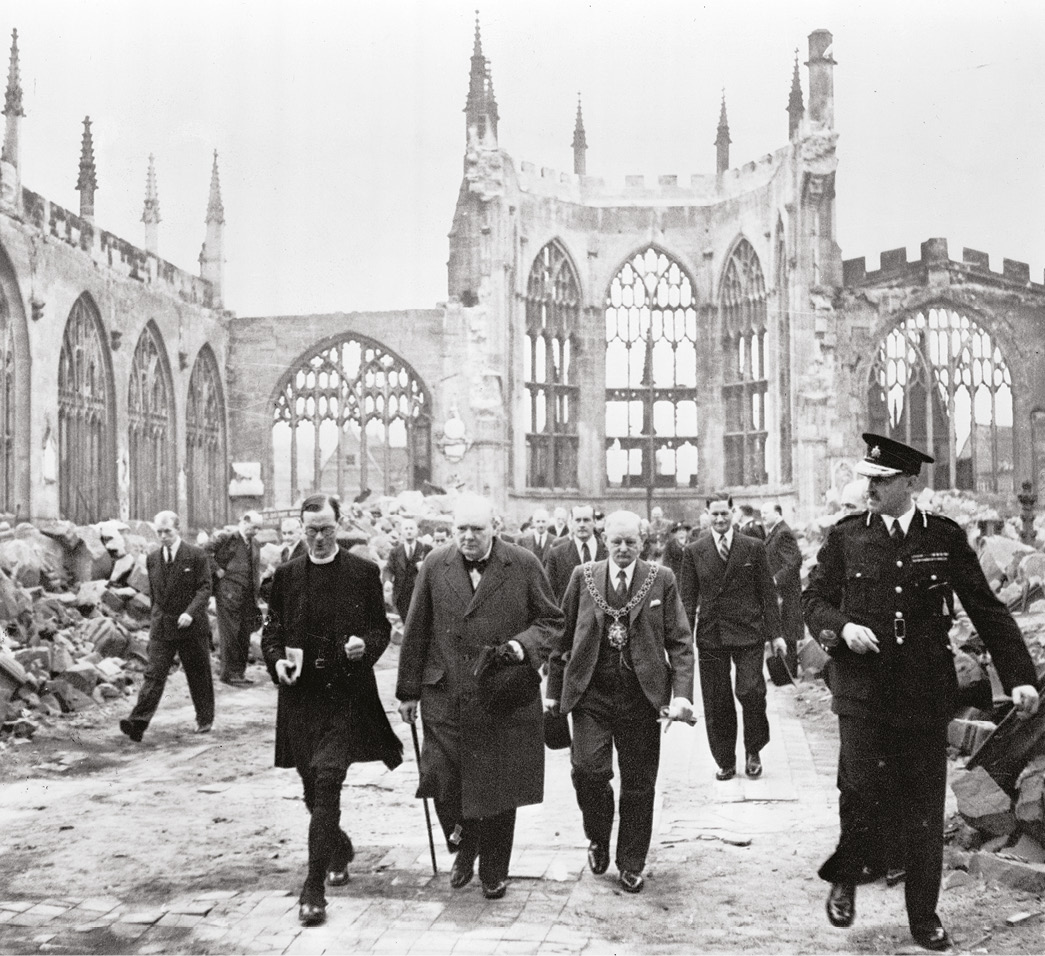
With Europe under the Nazi heel, Hitler plans an invasion of Britain, Operation Sea Lion. But first the RAF must be destroyed. However, the RAF defeat the Luftwaffe in the Battle of Britain and the Luftwaffe turns to bombing British cities. For 57 successive nights, London is bombed. Families are seen burying their dead. In Coventry, they are buried in mass graves. Ed Murrow reports from London and many Americans express their sympathy for Britain and its cause. In America, FDR wins an unprecedented third term. He tells the American people: ‘We must have more ships, more guns, more planes, more of everything. We must be the Arsenal of Democracy.’ Again there is nothing new or special about this narrative, but it is well told in a compelling way.
Familiar stories
The third episode, Barbarossa, tells the story of the German invasion of Soviet Russia, the biggest assault in history. The sheer numbers involved are staggering. Three million men, 3,000 tanks, 7,000 artillery pieces, and 2,700 aircraft launch the invasion. In the first week, the German forces advance 300 miles and capture 400,000 Soviet soldiers. By mid-July, 4,000 tanks and 6,000 aircraft have been lost by the Soviets. But ‘like the plains of Nebraska or Iowa’, Russia is vast and to the invader seems never-ending. With the capture of Kiev, another 600,000 Soviet troops are lost or captured. Finally, with reinforcements from the east, the Soviets rally and halt the German advance just 21 miles from Moscow. Again this is a familiar story but well told, and suggests the enormity of what will become the titanic contest on the Eastern Front.
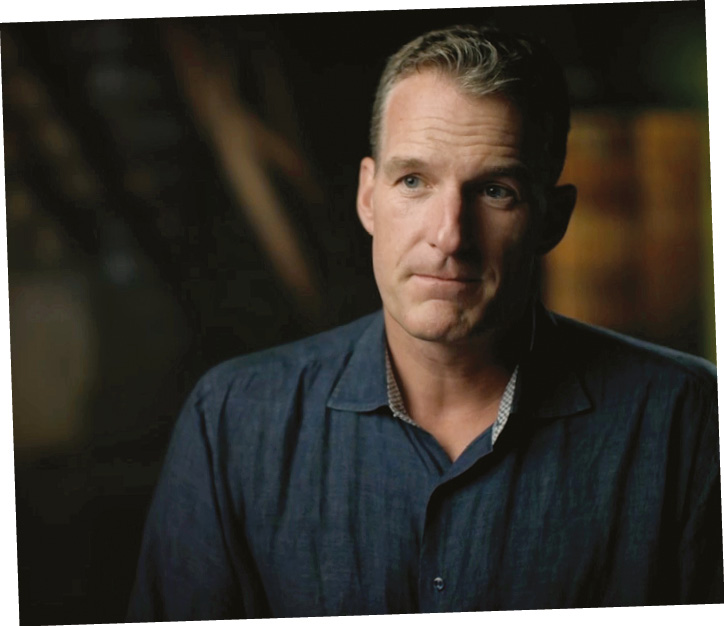
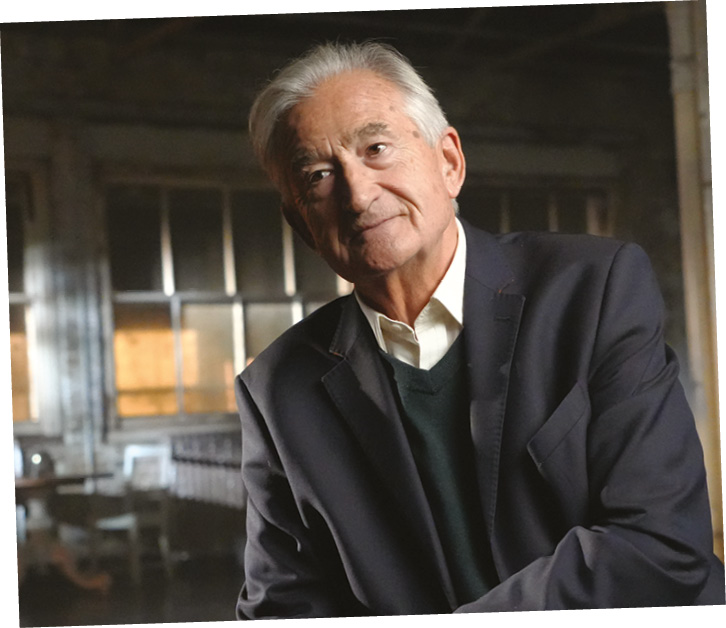
What this series does not have is interviews with veterans, of course, as there are very few left to tell their story. So each element of the narrative is brought alive by interviews with historians, who provide punchy sound bites throughout each programme. Among the British historians featured are Dan Snow, Saul David, Simon Sebag-Montefiore (who has interesting things to say about Stalin), James Bulgin, and Sir Antony Beevor – although there is not much from Beevor as he is not really a ‘sound-bite historian’. There are also lots of Americans, including Dan Carlin, the podcaster and host of Hardcore History; Alexandra Richie from Collegium Civitas in Warsaw; Robert Citino from the National World War II Museum in New Orleans; Cameron Zinsou from the General Staff College; and General Wesley Clark, a retired Army general; along with many more.

Interestingly, the role of historians in the series is to describe events, and to provide short, dramatic accounts of what is happening. Conventionally, in ‘television history’, historians appear in order to comment on, to interpret, or to analyse events. But, in this series, they almost act as witnesses, creating a vivid picture for the viewer. In most cases, it works well, but sometimes, in their enthusiasm, the historians get carried away. When Dan Snow describes Churchill’s first speech as Prime Minister to the House of Commons, he says ‘you could feel the opposition to Churchill draining away’. This was far from the case. Churchill was still an unpopular figure with the Conservatives, who saw him as an unreliable maverick and self-seeker. The Conservative members sat in silence through his speech. It was only the Labour benches who cheered him. Churchill still had a long way to go to unite the nation behind his determination to fight on towards the goal of victory.
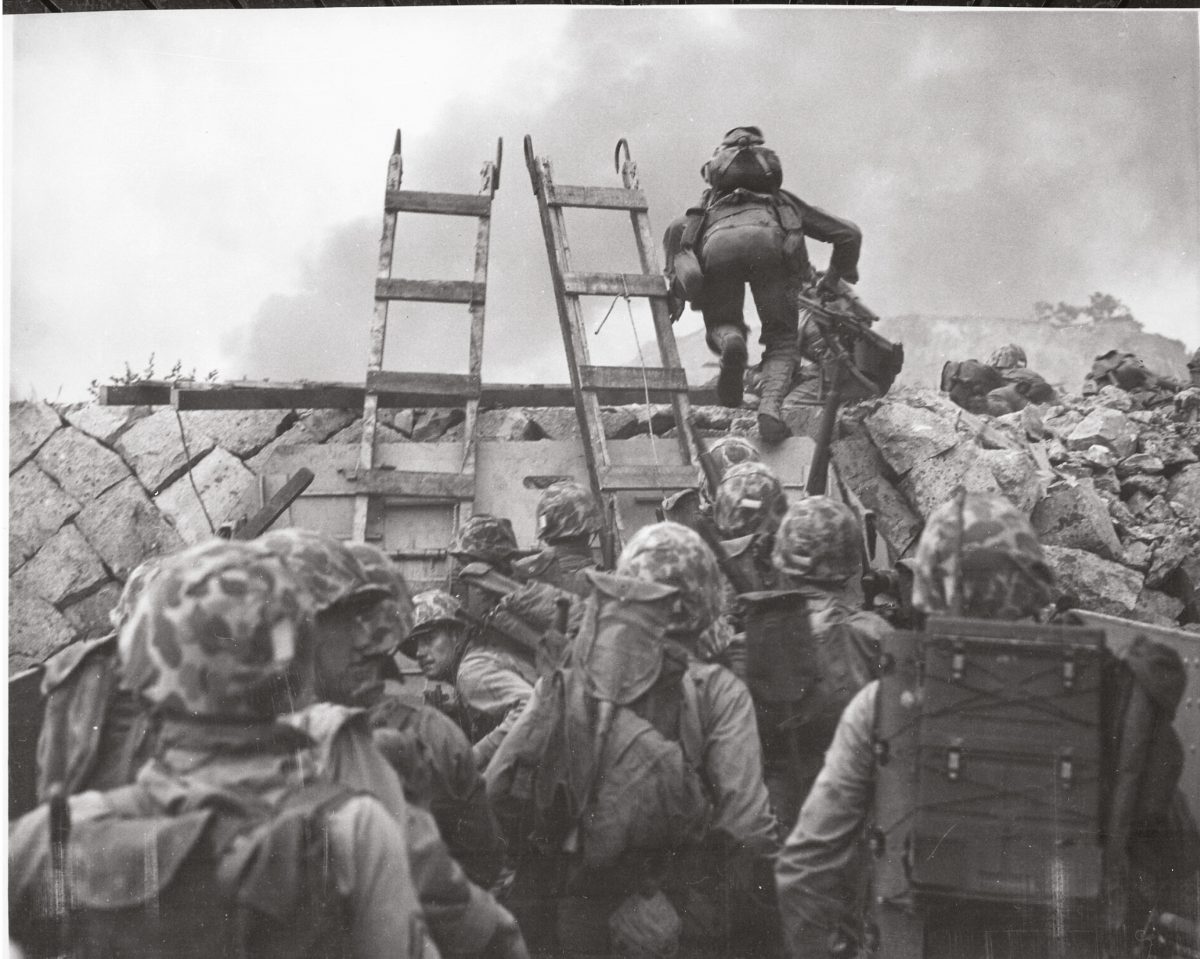
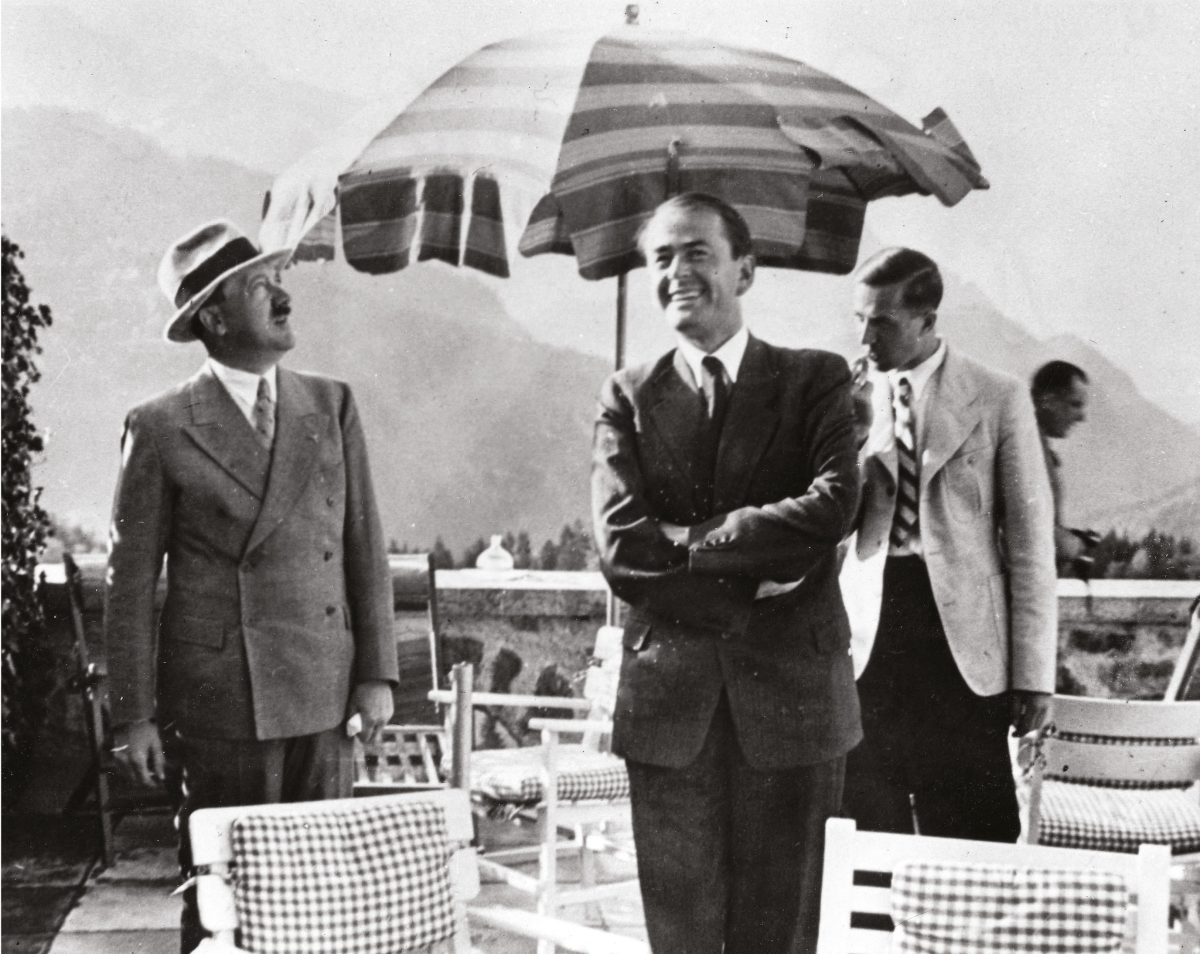
Overall, the series proves a powerful mix. Throughout, the archive film is superb and has often been restored to present it at its best quality. The British Archive Producer Aileen McAllister is to be congratulated for her outstanding efforts. The still photographs are often less familiar and have, in many cases, been colourised to maximise their impact. The music from Bleeding Fingers, a consortium of composers founded by Hans Zimmer, powerfully underscores the narrative. The credits roll quickly by towards the end of each programme, but the alert viewer will spot credits for a ‘Story Producer’ and a ‘Groomer to Mr Hanks’.
There is much to be admired in World War II with Tom Hanks. Its powerful storytelling will, without doubt, appeal to a young audience. Hanks himself brings a touch of Hollywood stardom to a project to which he is undoubtedly 100% committed. But, call me old-fashioned, I miss seeing the veterans telling their own stories. First-hand testimony has an impact that no historian, no matter how eloquent, can match. Hanks, as we know, is a great admirer of The World at War, the landmark series made more than 50 years ago by Jeremy Isaacs and his team at Thames Television in London. That includes brilliant and moving first-hand accounts from soldiers, sailors, airmen, and civilians caught up in the global struggle. Laurence Olivier provided gravitas in the narration and Carl Davis came up with memorable musical themes. Sometimes the archive film is scratched and faded, but it does not matter. If there were a choice between that 50-year-old series and Tom Hanks, give me The World at War any day.
World War II with Tom Hanks
Executive Producers: Tom Hanks, Jon Meacham, Gary Goetzman, Jane Root, Sharon Scott, Chet Fenster.
Host and narrator: Tom Hanks.
Archive Producer: Aileen McAllister.
Music by Bleeding Fingers.
Made in association with the National WWII Museum in New Orleans.
A Nutopia production for The History Channel and Sky History, 2026.