Subscribe now for full access and no adverts
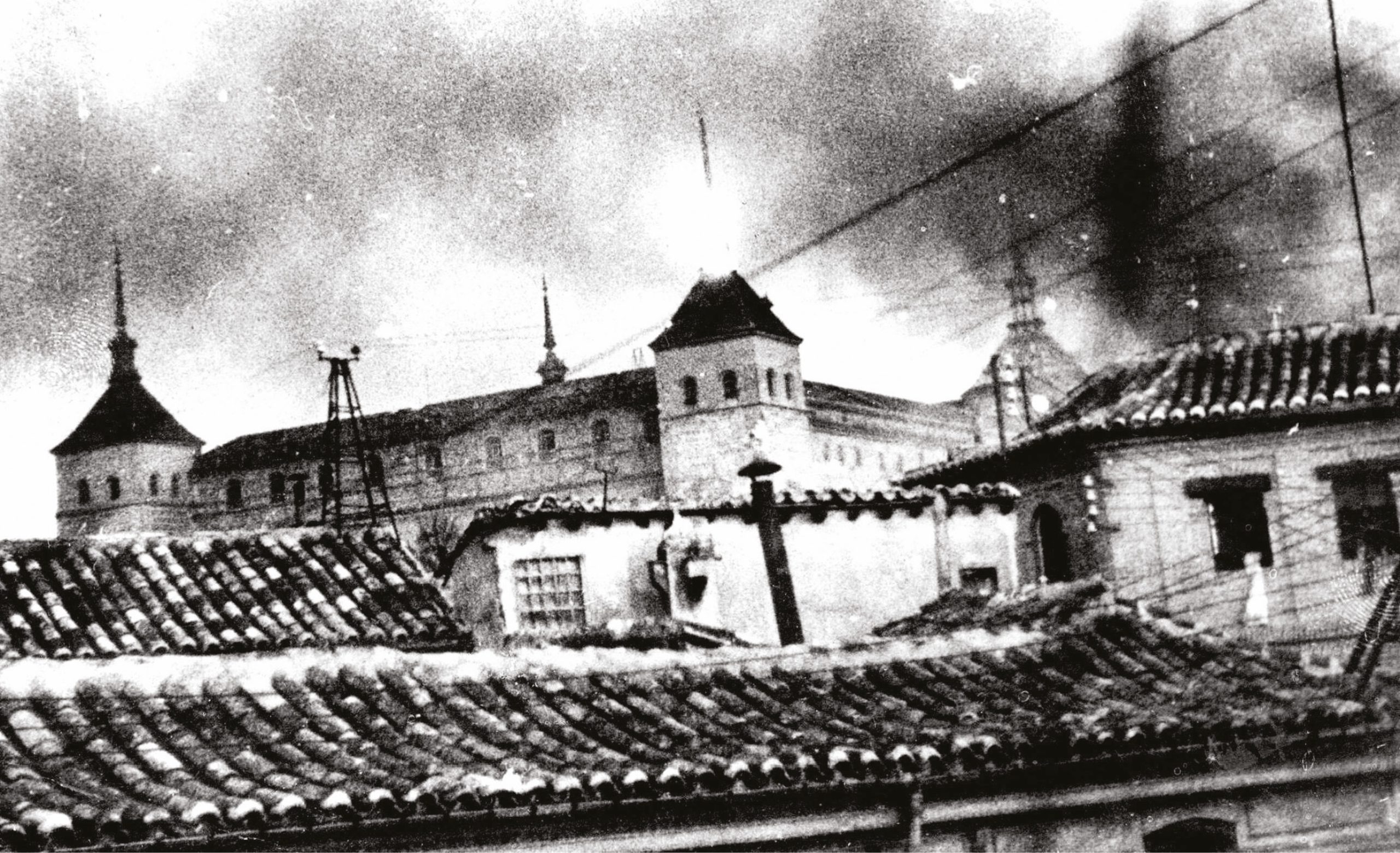
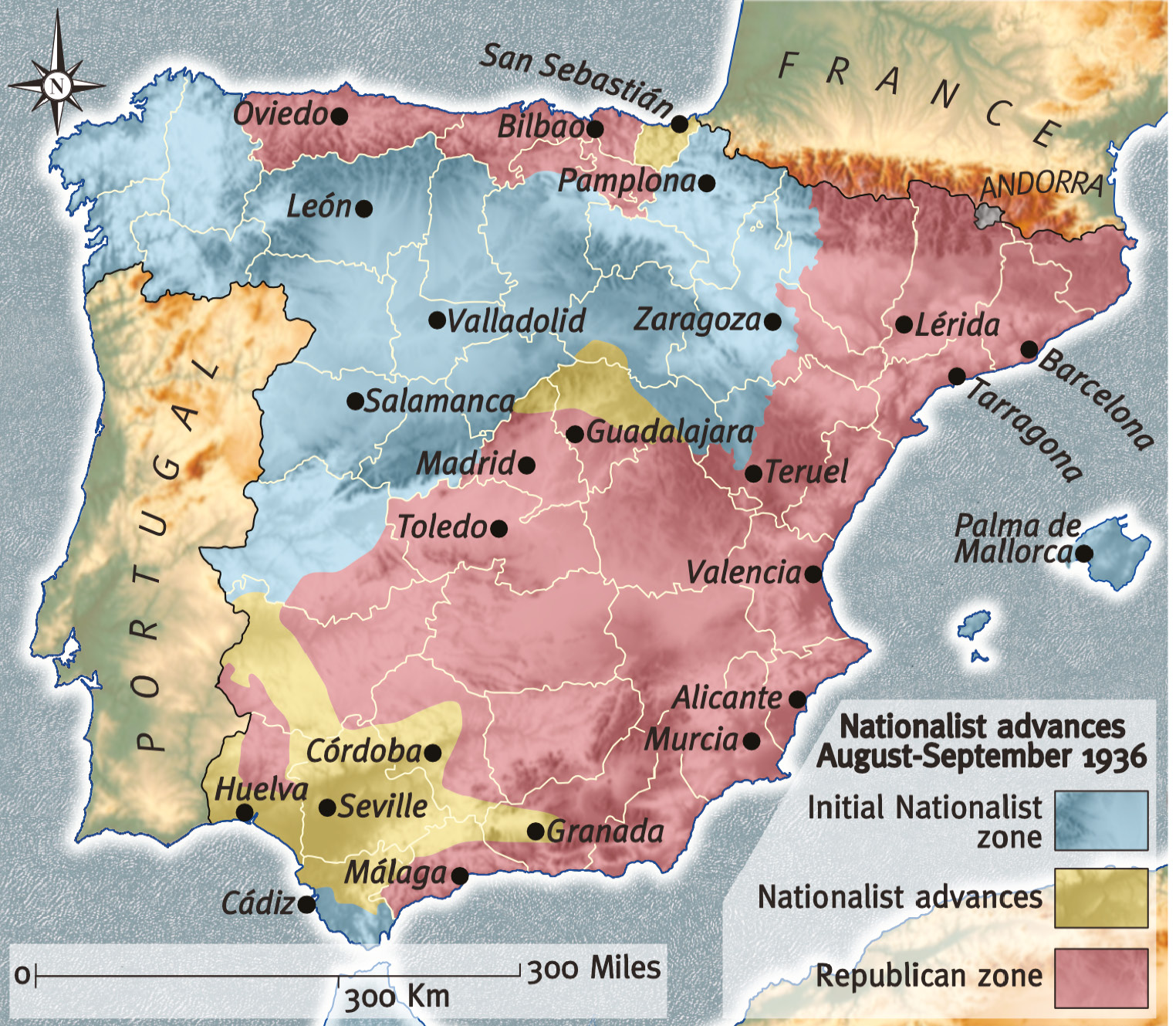
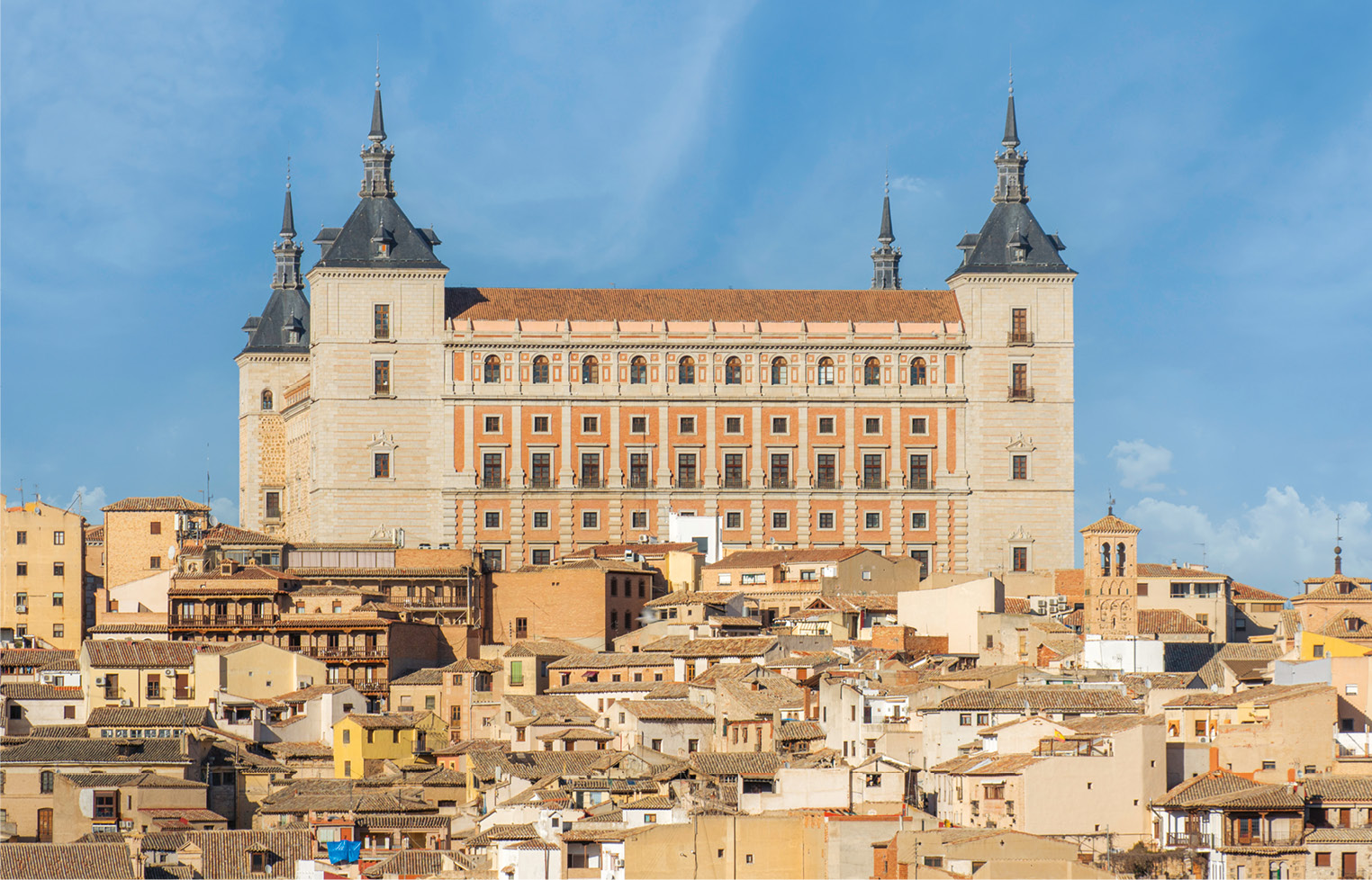
The Alcázar, a huge cube-shaped medieval fortress, looms over Toledo, a conservative city 40 miles south of Madrid. Ringed by the River Tagus, Toledo is famous for its many churches, its production of bladed weapons, and as the one-time home of the Spanish Renaissance artist El Greco.
But, to this day, it is the Alcázar, on a height overlooking the town, that dominates, resembling the White Tower, the oldest part of the Tower of London, with its sheer walls and four rectangular turrets – one at each corner. Ninety years ago, in 1936, this vast building was used as Spain’s principal academy for training army officers – the Spanish equivalent of Sandhurst or West Point.
Toledo also contained a modern arms factory, and a military sports centre where the academy’s officers honed their skills in athletics and team games. This latter establishment was commanded at the time by Colonel José Moscardó, the military governor of Toledo, an officer with equal passions for football and a faith in God and Spain. In the burning summer of 1936, officers like Moscardó were furious with Spain’s recently elected left-wing Popular Front government. Not only had the new Republican regime cut the numbers of the top-heavy army, but it was destroying the Spain that conservatives held sacred: the Catholic Church, land ownership by the upper classes, and national unity and traditions. In their place, right-wingers believed, the godless new government was opening the door to Marxism, anarchism, and separatism: breaking the country up by offering independence to Spain’s ethnic Basque and Catalan regions.
Spain was in a state of boiling chaos: churches were being burned by rampaging leftist mobs, peasants were illegally seizing the land on which they toiled, strikes were paralysing the cities, and tit-for-tat assassinations and street battles between far-left gunmen and the fascist Falange party were a daily occurrence.
One such event – the murder of the Parliamentary monarchist leader José Calvo Sotelo on 13 July 1936 – was the spark that set Spain ablaze. Sotelo was abducted from his Madrid apartment by police agents, and shot dead – proving to conservatives that, if the official leader of the opposition was killed by the state’s own police, then the country was in a lawless state of anarchy and needed to be purged with equal brutality.
Spain’s generals, led by Emilio Mola, were already conspiring to overthrow the government in a classic military coup, and Sotelo’s murder was the excuse they needed to trigger the plot. Another key plotter was General Francisco Franco, whose role would be to bring his Army of Africa – made up of Arab Moors and the tough fighters of the Spanish Foreign Legion – from Morocco to the mainland. The coup was launched prematurely in Melilla, a Spanish enclave in Morocco, on 17 July, and the next day army garrisons all over Spain rose in revolt. They were resisted by the militias of the trade unions, and leftist parties who demanded that the government issue them with arms – which, after a delay, they duly did.
As a result, the coup was crushed in Spain’s two largest cities, Madrid and Barcelona, and the rebels there were summarily executed. At Toledo, Moscardó hesitated: although his sympathies were firmly with the military rebels, because the officer cadets of the Alcázar were mainly absent on summer leave, he had few men available to defend the formidable fortress. At first he tried to bluff. Stalling increasingly irritated demands from government officials in Madrid to turn over the Toledo arms factory to them, he attempted delaying tactics, such as demanding a written order to give weapons to the Republican militias. Meanwhile, he gathered what forces he could inside the Alcázar.
Mortal danger
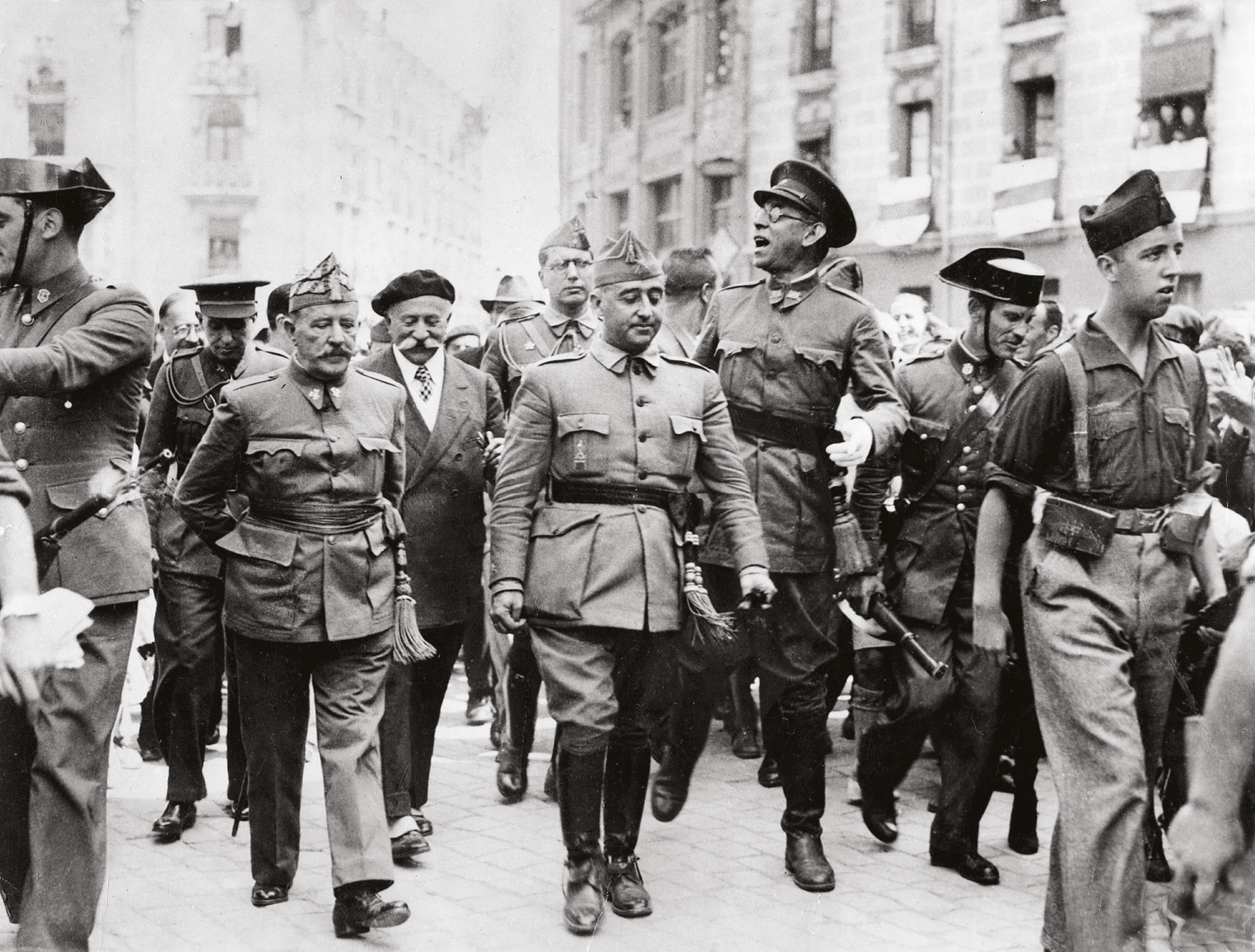
Moscardó had to hand around 300 officer trainees and their instructors, 45 students from his own sports academy, and just over 100 right-wing civilians – but the largest contingent in the Alcázar’s garrison were some 700 Civil Guards, the armed gendarmerie famous for their patent- leather tricorn hats, and hated by the rural peasants, who saw them as the private police force of their tyrannical landlords. They and the rightist civilians – mainly members of the fascist Falange – were in mortal danger of being lynched by enraged leftists if they remained outside the sheltering walls of the fortress.
Civil Guards and their families from all over the province of Toledo flocked into the Alcázar to take refuge. Counting 600 women and children, by 21 July there were almost 1,800 souls within the Alcázar, including around 30 left-wing hostages. The siege began after a young Falangist officer, Lieutenant Emilio Vela, paraded his troops outside the fortress and read out a proclamation of war, announcing that the Alcázar’s garrison had risen against the government.
Spain was in chaos, with street battles a daily occurrence.
Moscardó was not short of small-arms ammunition. Just before the siege began, he ordered a raid on Toledo’s arms plant that netted hundreds of thousands of rounds of rifle ammunition. The Civil Guards had a few machine-guns, and each had a rifle; and, in total, Moscardó calculated that he had one rifle for every two defenders. Although there were a score of artillery men in the garrison, they had neither big guns to fire nor shells to load. All they had instead were a few mortars, but these were so short of rounds that Moscardó ordered them to be reserved for dire emergencies. In effect, therefore, the only weapons available to the defenders were rifles, grenades, and some antiquated machine-guns.
Other essentials for a siege were also limited. Although the Alcázar had water from an internal well, plus an indoor swimming pool in its basement, food was very sparse, consisting of a small quantity of flour, beans, tomatoes, and dried fish and vegetables. This shortage was much alleviated, however, when the defenders discovered a house outside their walls stuffed full of wheat that had been overlooked by the besiegers. Moscardó ordered a raid on this store which yielded precious sacks of the grain.
Protein was provided by the Alcázar’s stable of horses, which were slaughtered daily throughout the siege, leaving just one prized stallion surviving. Rations of gritty bread and horse meat were the garrison’s unappetising staple daily diet, leaving some defenders so weak and malnourished that they had to be lifted to their firing posts in the turrets by rope pulleys.
Moscardó had left his wife and 16-year-old son Luis in hiding in the town, but the son was found and forced to telephone his father. Their conversation is the most-celebrated exchange of the whole war:
Moscardó: ‘What’s happening, my boy?’
Luis: ‘Nothing, papa. They say that if the Alcázar doesn’t surrender in ten minutes they will shoot me.’
Moscardó: ‘If that is true, shout “Viva Espana”, commend your soul to God, and die like a hero… Goodbye my son. A last kiss.’
Luis: ‘Goodbye father. A very big kiss.’
Moscardó then told the militia leader holding Luis to forget the ten minutes’ grace: ‘The Alcázar will never surrender!’ he said. Luis Moscardó was indeed executed a month later.
By any means
The hatreds tearing Spain apart were magnified and concentrated at the Alcázar. Moscardó and his men now knew that they and their families faced certain death if they surrendered. For their part, the besiegers saw the fortress as a defiant insult, and they determined to take it by any possible means. The fate of the Alcázar became symbolic, with the Republican government constantly proclaiming its imminent fall, while the Nationalist rebels believed that as long as the fortress held out, their cause would finally triumph.
Fighting went on at close quarters. The besieging militias built street barricades within yards of the fortress, behind which they kept up a steady rain of small-arms fire on the defenders. ‘War tourists’ made day-trips from Madrid, so they could boast that they had taken a pot shot at the Alcázar. Loudspeakers broadcast a constant propagandist mix of music, ribald insults, and exhortations to surrender to the captive audience within.
Inside the fortress, conditions rapidly became hellish. Women and children were confined to the cellars, where, deprived of light and water to wash in, they led a subterranean half-life amid the heat and stench. Medical care was extremely primitive, and naturally there were no drugs, anaesthetics or surgeons to treat the wounded.
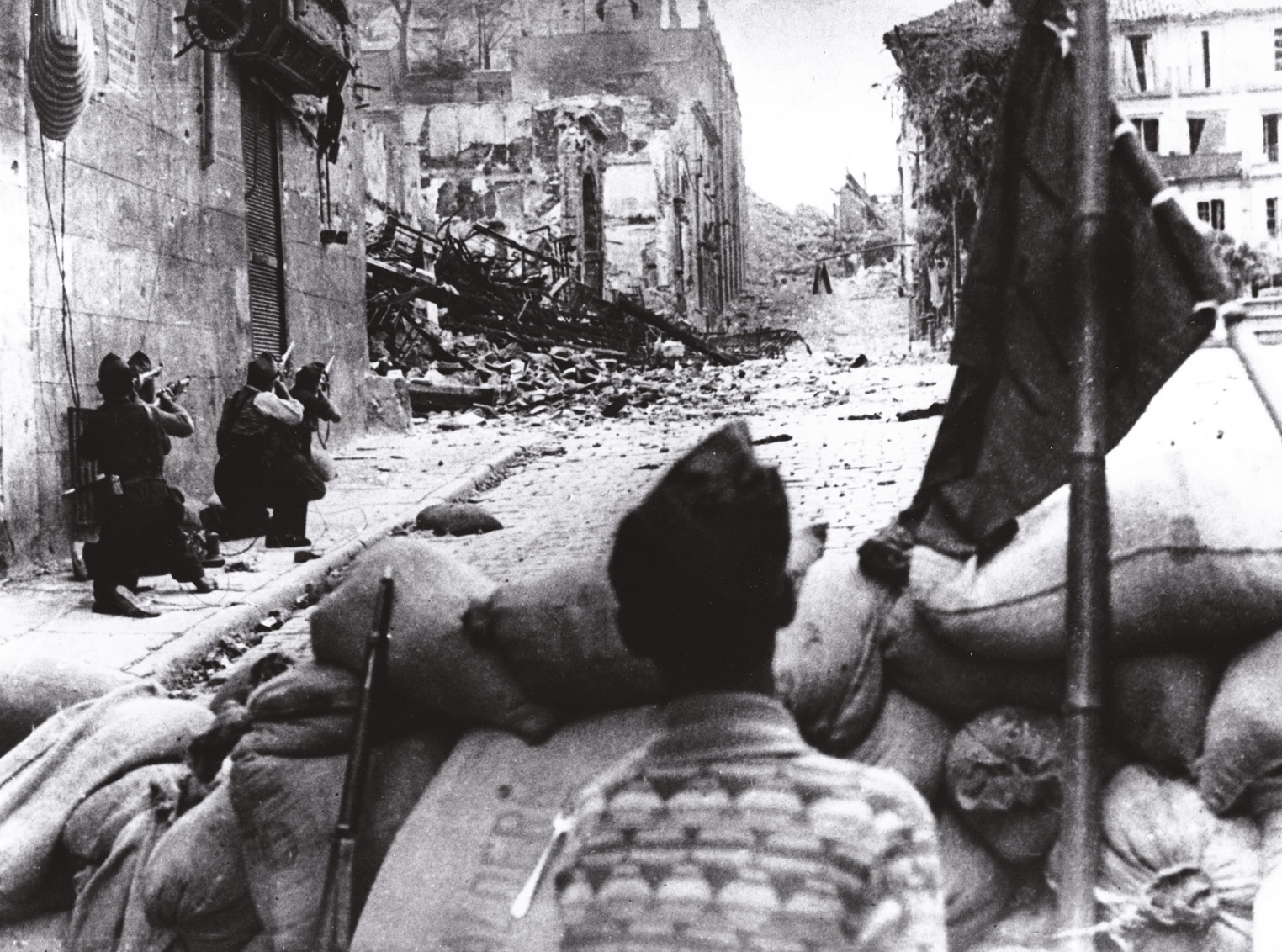
Strategically, it was necessary for the defenders to hang on to a few buildings outside the fortress walls to keep the besiegers at bay. The Alcázar’s riding school and an assembly hall known as the Gobierno became fiercely contested battlegrounds that repeatedly changed hands at the cost of many lives. Shell-fire from the attackers gradually reduced both buildings to heaps of rubble.
Despite the barrage of shells and propaganda directed at them, however, the defenders’ morale was boosted by faint radio messages picked up from Nationalist-held Seville, which told them that the Army of Africa had arrived in Spain and was fighting its way north to relieve them. In early August, a rebel aircraft flew overhead, dropping a Nationalist flag and a message from Franco encouraging them to resist until the end.
‘War tourists’ made day-trips to take pot shots at the Alcázar.

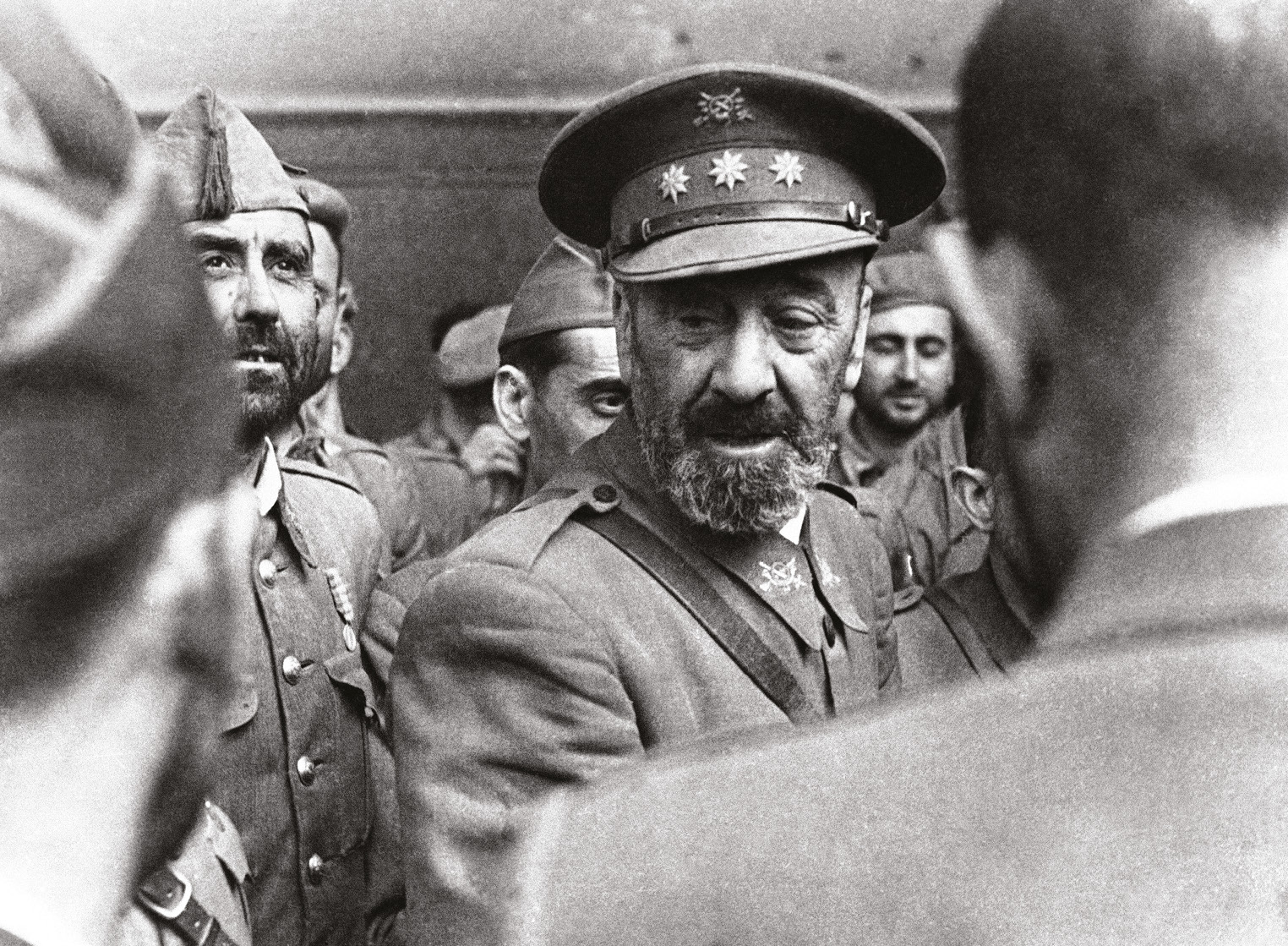
But most aircraft appearing over the Alcázar were Republican raiders, which bombed the fortress 35 times. Also in August, the besiegers granted the defenders’ request for a priest to visit the garrison to hear confessions, baptise two babies born within the Alcázar, and conduct a service. The chosen cleric was a priest of known left-wing opinions who had thus survived the murders of his fellow clergy in Madrid. Accompanying him through the siege lines into the fortress during an arranged truce was Major Vicente Rojo, one of the few professional army officers who had remained loyal to the Republic.
Rojo was a brilliant soldier who had graduated from the Alcázar and later taught at the academy. He would rise in the civil war to become a Lieutenant General and Chief of Staff of the Republican Army. His role in Toledo was to attempt to negotiate the departure of women and children from the fortress – but they fiercely refused to leave, and told him that, if necessary, they would fight and die alongside their menfolk. Resisting pleas to join the defenders, Rojo left after the failure of his mission and the siege resumed.

A hard choice
The besiegers had brought coal-miners from the northern province of Asturias to dig beneath the Alcázar’s walls and lay explosive charges to blast the fortress apart. It was hard, laborious work, as the miners were tunnelling through solid rock. The mining also told on the nerves of the defenders, who could clearly hear the sound of the digging beneath their feet and knew that it foretold their doom.
At last, on 18 September, the massive charge of dynamite was laid and primed under the Alcázar’s south-west tower, and all was ready. The Republican prime minister, Francisco Largo Caballero, had arrived from Madrid to have the honour of pressing the plunger to trigger the blast. The tower was toppled by a mighty explosion, which was followed by an armed assault across the tumbled ruins by swarms of infantry. But as the Russians were to find a few years later during the Battle of Stalingrad, reducing buildings to piles of rubble often aids the defenders, as the debris provides ideal cover for snipers, and scrambling over mounds of bricks adds an extra barrier in the way of any assault. So the attackers were driven back.
The conditions for the defenders were now desperate.
Even so, the conditions for the defenders were now desperate. Two other towers and most of the outer walls had been destroyed by the continuous shell-fire, and the surviving garrison members were living in the interior courtyard. Their only hope was the arrival of the Army of Africa, now just a week’s march west of Toledo.
For his part, Franco was faced with a hard choice. If he pressed on towards Madrid, ignoring the strategically unimportant town of Toledo, he had a good chance of taking the capital and ending the war. Yet relieving the Alcázar, with the siege having become a huge international news story, offered an enormous propaganda prize. He decided that saving the Alcázar’s heroic garrison should come before taking Madrid, and ordered his vanguard, commanded by General José Varela, to divert and relieve the fortress.
Among the ruins
On 27 September, the weary garrison heard the sound of Arabic spoken in the streets below them. It was the Moorish advance guard of Franco’s army. Most of the besiegers had wisely fled, but there was a horrendous massacre at Toledo’s hospital, where wounded Republicans, along with the doctors and nurses caring for them, were simply slaughtered by the Moors.
The leftist hostages within the Alcázar were summarily executed, too. All this was hidden from the press corps, which was invited in a couple of days later to witness Franco’s triumphant entry into the ruins. Moscardó welcomed him with the words ‘Sin novedad en el Alcázar’ (‘Nothing new at the Alcázar’), which became the Nationalist slogan summoning up the spirit of the siege.
The siege’s outcome benefited Franco politically. Within days of the siege ending, his relief of the fortress contributed to his fellow rebel generals choosing him as ‘generalissimo’ – the undisputed leader of the Nationalist cause and the future dictator of Spain. Historians of the war agree that the price of his decision to delay advancing on Madrid was a heavy one. The Republicans used the reprieve to bolster their defences around the Spanish capital, and the arrival there of the Communist International Brigades led to another, greater siege. Madrid would resist Franco until the very end of the war in April 1939.
Nigel Jones is a historian, journalist, and broadcaster, who has published widely on topics ranging from the Tower of London to the Valkyrie Plot to assassinate Hitler.
All images: Wikimedia Commons, unless otherwise stated