
Subscribe now for full access and no adverts
Almost everyone knows about the Somme, and how a series of Anglo-French assaults on well-established German positions led to horrendous casualties between 1 July and 18 November 1916. Far fewer, however, have heard of the Battle of the Boar’s Head, which immediately preceded it – and which, as Sir Arthur Conan Doyle reflected (in his account of the 1916 British campaign in France and Flanders), laid down a marker for what was to come: ‘They learned the lesson which was awaiting so many of their comrades in the south [the Somme]… that all human bravery cannot overcome conditions which are essentially impossible.’
Regarded as a diversionary assault on 30 June 1916, it was intended to distract German attention from the Somme – about 25 miles as the crow flies further south – where the real offensive was planned. As Conan Doyle continued: ‘The attack was so limited in the troops employed (primarily the Royal Sussex Regiment) and so local in the area that it can only be regarded as a feint to take the German attention from where the real danger was brewing.’
Feint it may have been – yet in just under five hours, the Boar’s Head cost the lives of more than 350 soldiers from the 11th, 12th, and 13th Battalions of the Royal Sussex, while more than 1,000 were wounded or taken prisoner. This is their story.
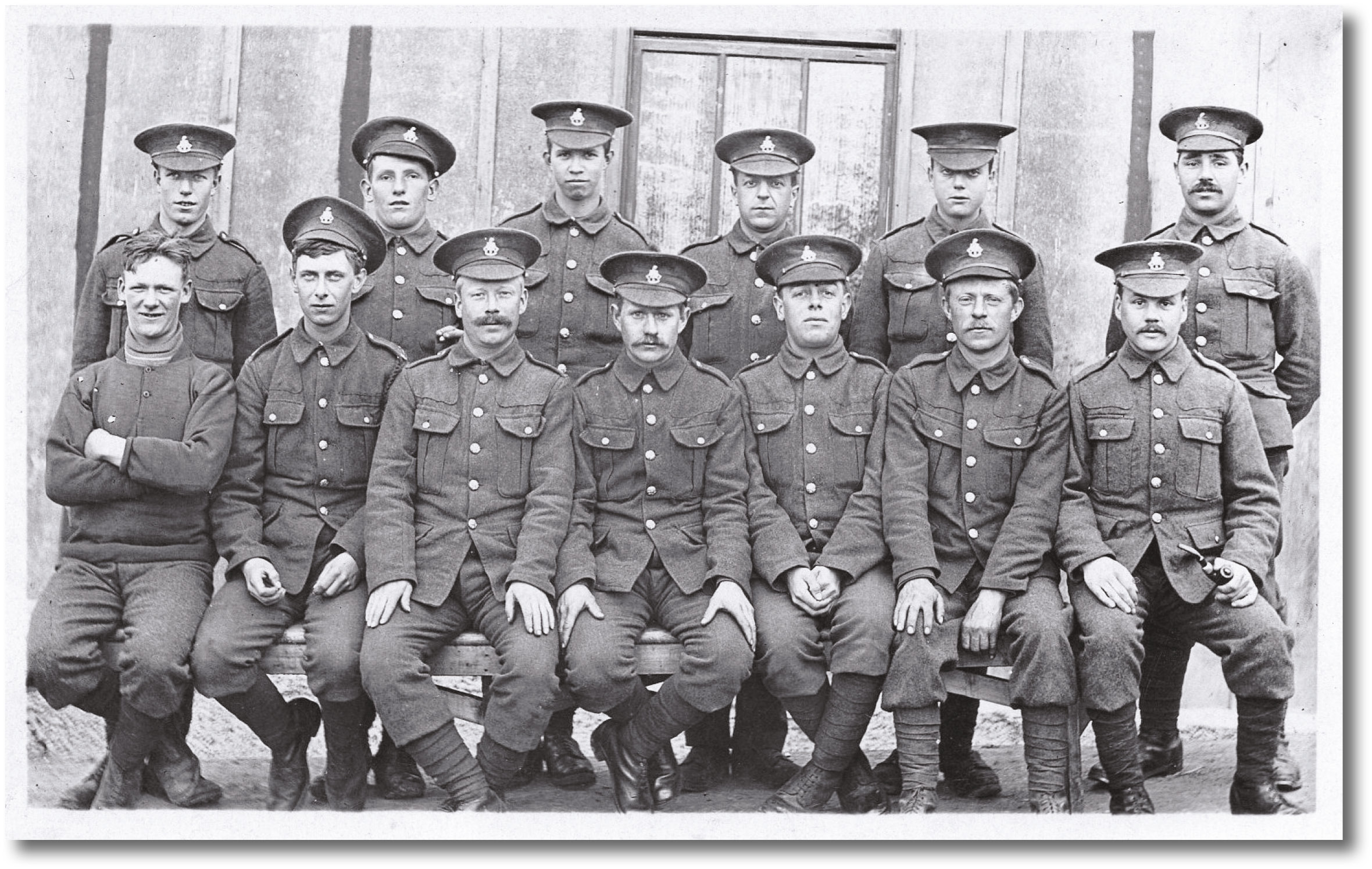
Lowther’s Lambs
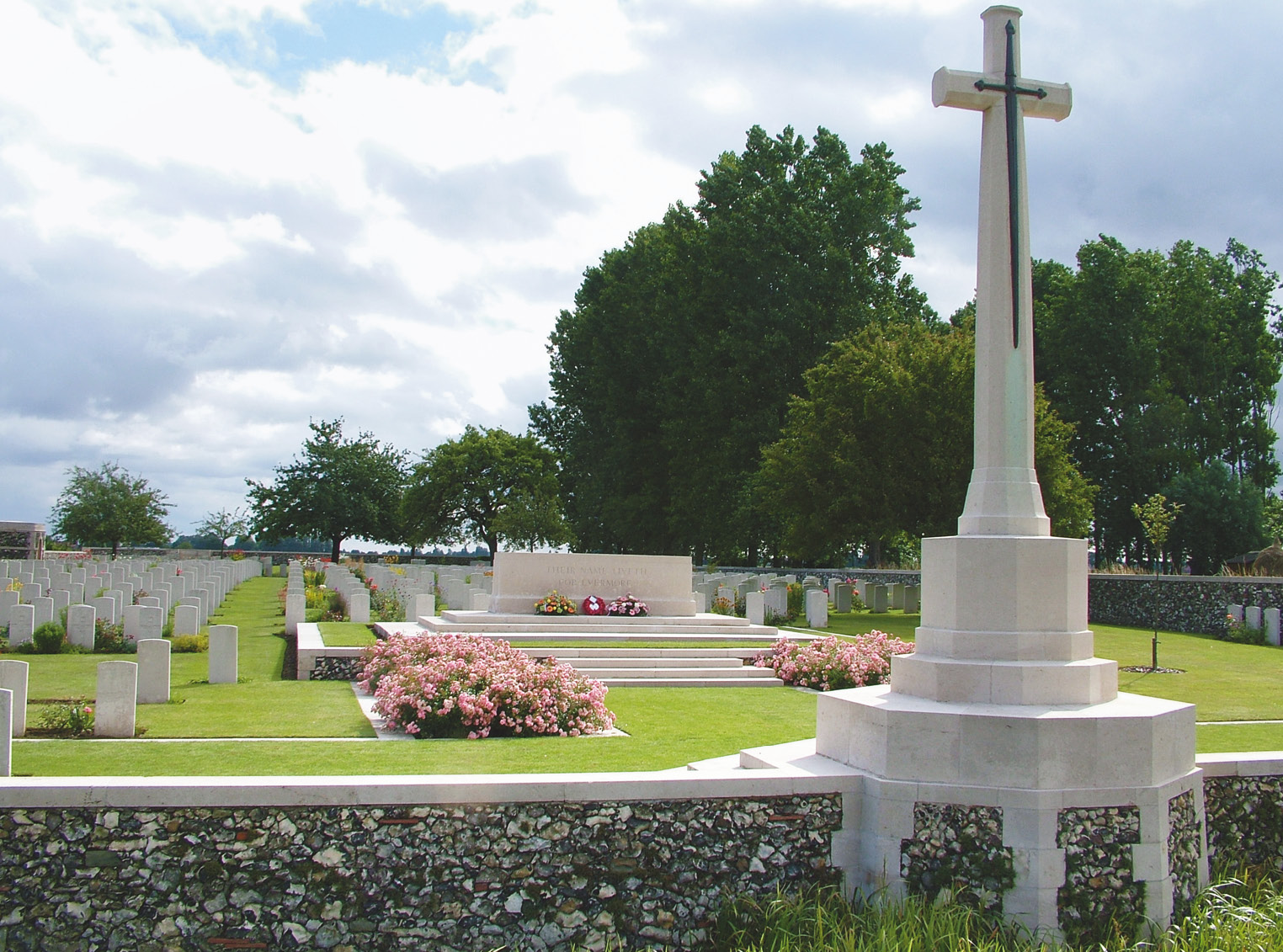
It was the late John A Baines, author of The Day Sussex Died: a history of Lowther’s Lambs to the Boar’s Head massacre (2012), who uncovered the story of the Royal Sussex’s attack, which had gone unrecorded in any British official history. He discovered that almost all the members of the regiment who died that day had service numbers prefixed ‘SD’ – a reference to the 1st, 2nd, and 3rd Southdown Battalions, which became the 11th, 12th, and 13th, Royal Sussex. Furthermore, just over half of those with a known grave lay in one place: the St Vaast Post military cemetery, near the village of Richebourg-l’Avoué.
There had already been six battalions of the Royal Sussex at the outbreak of war. This was quickly raised to nine by September 1914. Kitchener’s famous ‘Call to Arms’ prompted recruiting efforts in Sussex: one centred on the Goodwood Estates in the county’s west; the other in East Sussex, which became the personal mission of Lieutenant Colonel Claude Lowther (c.1870-1929), Conservative MP and owner of Herstmonceux Castle. Lowther had been recommended for the VC during the 2nd Boer War, and now began recruiting for the Southdowns.
In early September 1914, Lowther’s volunteers became the Southdown Battalion and commenced training at Cooden Camp on the outskirts of Bexhill-on-Sea. A 2nd Southdown Battalion was formed in early November, with a third following by the end of the month. A 4th Southdown Battalion, or 14th Royal Sussex, was also formed, which seems to have been a feeder to the others. Meanwhile, the training at Cooden lasted several months before the battalion decamped in May 1915 to Detling in Kent – a move coinciding with the 1st, 2nd, and 3rd Southdowns being embodied into the British Army as the 11th, 12th, and 13th Royal Sussex. With the addition of the 14th Battalion, the Hampshire Regiment, these four battalions now comprised 116th Brigade of the 39th Division. The Brigade also went to Malplaquet Barracks, Aldershot (Hampshire) and Witley Camp (Surrey) for training.
Lowther, who’d commanded the 11th from inception, no doubt hoped to assume command of the whole 116th Brigade – but his ambition was frustrated first when a ‘real brigadier’ (that is, a regular soldier) rocked up, and then when he was obliged to resign his commission due to ill health on 2 September 1915. His successor as officer commanding the 11th was announced as temporary Major Harman Grisewood (1879-1916) – about whom it was once said presciently that ‘he had a complete intolerance of fools in high places’. The brigade therefore left for France in March 1916 without its founding father – even if its members were still known as ‘Lowther’s Lambs’. Lambs to the slaughter more like.

The countdown begins
The period between March and June saw the battalions engaged in the daily grind of the front: marching to new billets, extra training, taking turns to occupy front-line trenches, being shaken by repeated artillery duels, and suffering the inevitable drip-drip of casualties. The Southdowns’ first billets near the front-line area were at the village of Fleurbaix, 13 miles west of Lille. On 13 March, all three Southdowns battalions had two of their four companies moved into trenches. The first casualties were suffered on that day, when the Germans shelled Fleurbaix. A sergeant and three privates of ‘C’ Company, 11th Battalion were killed. On 25 March, the 11th, 12th, and 13th moved to fresh and separate billets, while two days later Grisewood lost a brother, Captain George Grisewood, to illness – a calamity that would have preyed on Harman thereafter.
The battalions seem to have been moving almost constantly to fresh billets. Time was also spent in the trenches: the 12th from 15 April to the end of the month, and the 13th from the same date until 19 April, when it was relieved by the 11th at nearby Givenchy. Work went into repairing parapets and wire, laying new wire, and even on 18 May working on a new battalion bomb store. The following day saw the 13th Battalion’s wiring parties put out 91 coils of wire.
Sniping was constant on both sides, and the 13th Battalion’s snipers claimed two victims on 20 April, while those wiring parties put out another 112 coils of wire. There was gas-helmet practice for the 11th Battalion on the following day – a wise precaution. There was also reconnoitring of no-man’s land by the same battalion on 22 April. On 27 May, the 13th dug training trenches, quite possibly to prepare for the forthcoming assault. There were raids, too, such as that in the early hours of 3 June, when 11th Battalion relied on rifle- fire and bombs to repulse the enemy. And there were losses to ‘friendly fire’, with six killed and five wounded later the same day.
On 11 June, the three battalions were billeted around Locon, a few miles to the west, commencing training for a rumoured attack. On 16 June, the brigade moved finally to the Richebourg-Ferme du Bois sector in readiness. Things were building.
On 22 June, there was plane activity on both sides; German machine-guns were active, and so were British howitzers. On the same day, the move to Divisional Reserve suggested preparations for the proposed attack were commencing. The following day, Brigade officers were told of a future operation, and plans of action were discussed. On the afternoon of 24 June, the 13th marched to the divisional training ground to practise conducting the attack on a makeshift mock-up of the battlefield; and, on the same day, the artillery barrage commenced south of Richebourg, marking the start of the countdown to the Somme offensive. On 26 June, shelling and machine-gun fire occurred on both sides.

Murderous fire
The Boar’s Head was a German salient protruding towards the British lines. The objective was to ‘straighten out’ this bulge in the front-line, and draw German attention away from the Somme, where the ‘big push’ was planned the following day. After bad weather, the Somme offensive was put back one day to 1 July, which meant the Boar’s Head attack would eventually go in on the night of 29/30 June. All too predictably, there was an artillery bombardment to ‘soften up’ enemy trenches before the attack – but for the Boar’s Head it was decided there would be a gap between shelling and assault (although Allied intentions would still be well enough telegraphed).
On 29 June, each battalion’s artillery is recorded as having bombarded the enemy between 2pm and 5-5.30pm. To shell, and then to have a hiatus, was certainly not ‘accepted practice’, so there was a possibility of confusing the enemy regarding British intentions. The Southdown battalions arrived at their assembly points sometime after 1am on 30 June, with the lines beginning to be drawn up.
The Boar’s Head was a smaller affair, but the casualty rate was far worse
Conan Doyle took up the story: ‘After an artillery bombardment of considerable intensity, the infantry assault was delivered by the 12th and 13th Royal Sussex of 116th Brigade.’ That the Germans were waiting for them is exemplified by a story, true or not, that a notice was found proclaiming: ‘Come on Sussex boys. We’ve been waiting for you for three days!’ The enemy trenches were knocked about, but they had been permitted 11 hours to recover before the Sussex men attacked just 15 minutes after another briefer bombardment commenced at 2.50am. The 11th was consigned to a support role providing carrying parties, after its commanding officer, the aforementioned Harman Grisewood, had reportedly ‘rubbished’ the plans, saying he did not intend for his men to become ‘cannon fodder’. Grisewood was relieved of command, and his role in the debacle remains controversial.
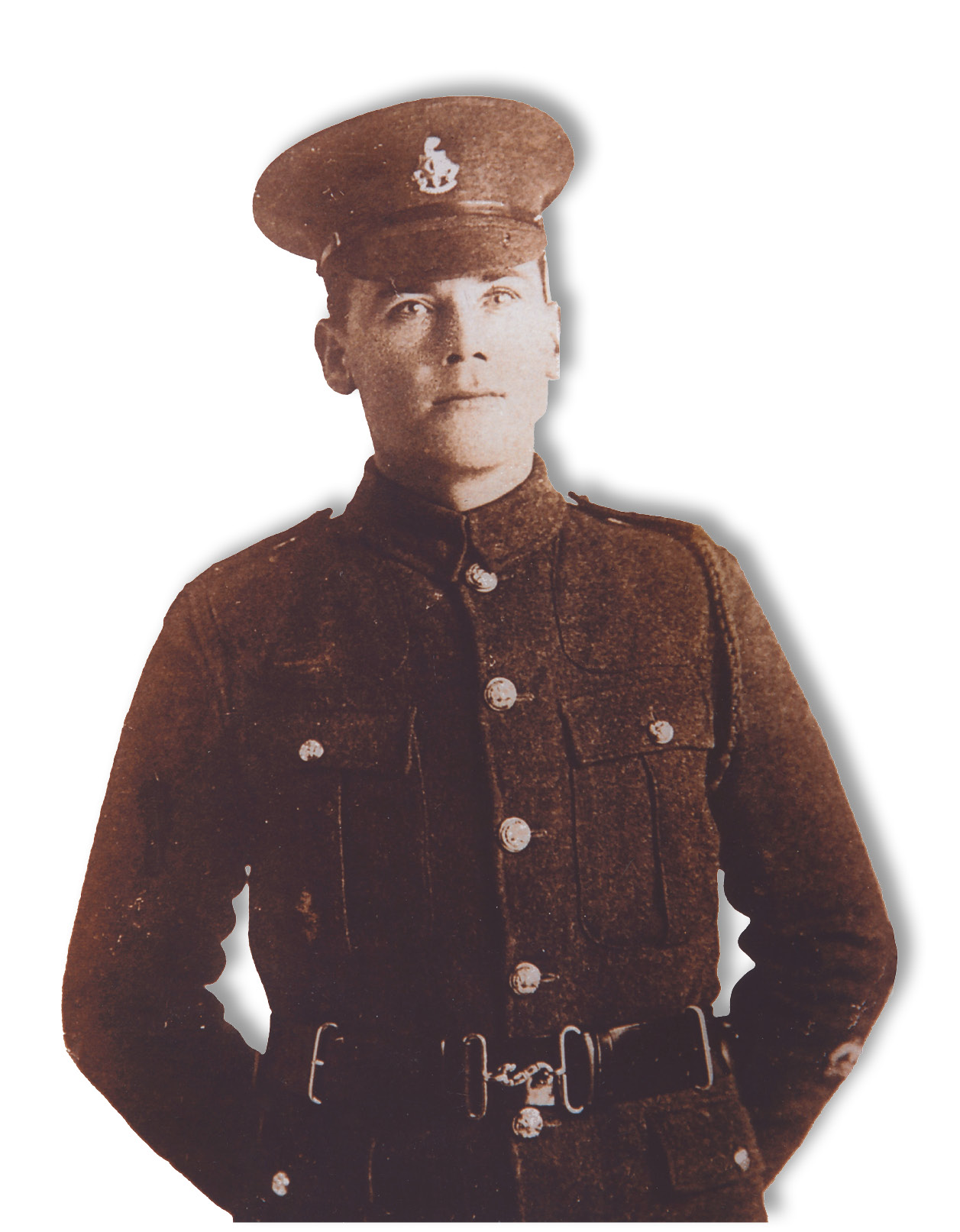
It is impossible to articulate in a few words the hell the RSR Battalions walked into at 3:05am on 30 June – ‘after a fresh bombardment of only 10 minutes,’ according to Conan Doyle. High-explosive, shrapnel, mortar, and murderous machine-gun fire awaited them as they grimly advanced in three waves at 50-yard intervals towards a determined, well-entrenched enemy, one German machine-gun alone firing 4,500 rounds. For most, it was the first time they had been ‘over the top’.
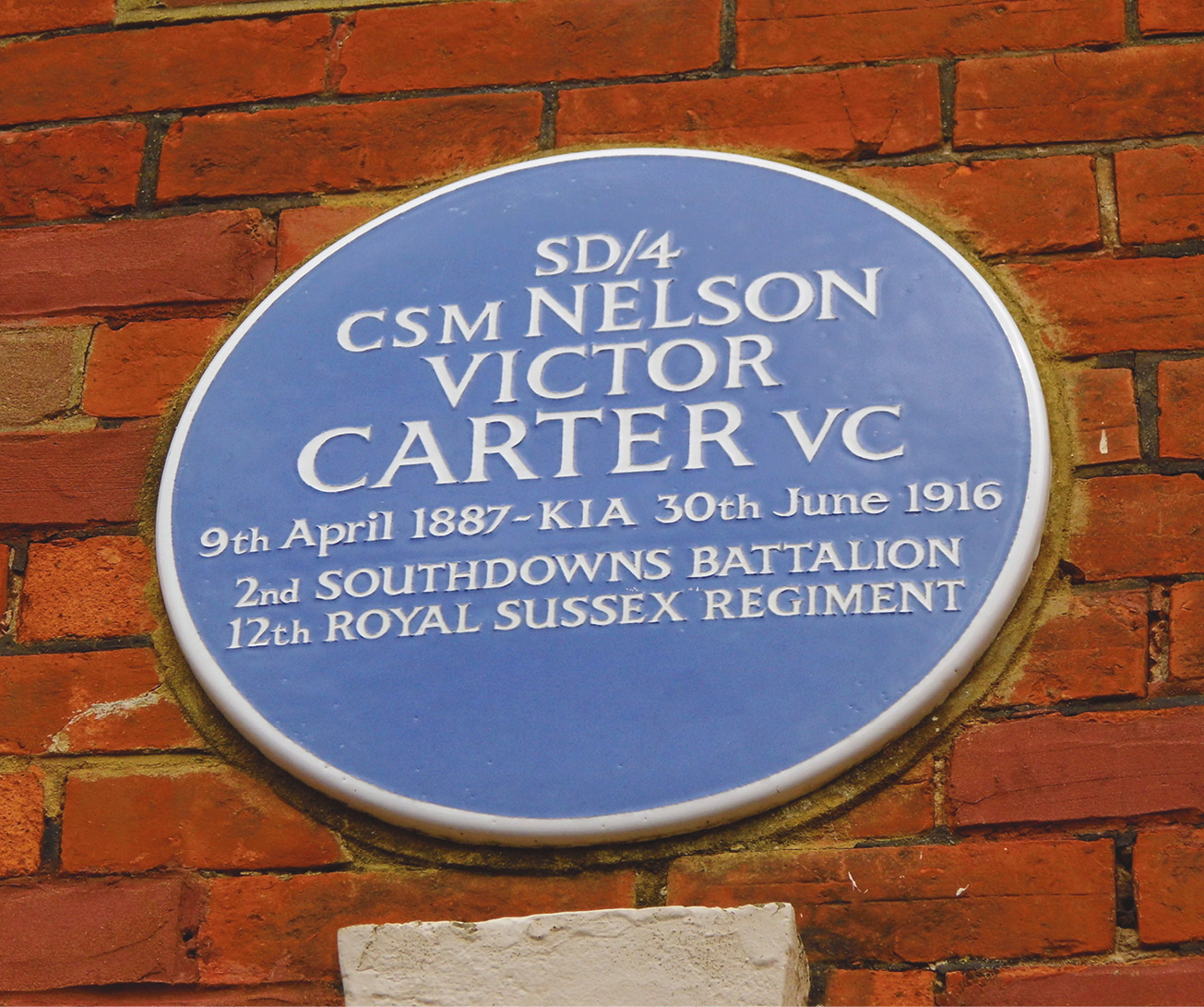
Remarkably, the ‘Lambs’ actually reached the enemy trenches, and in some places occupied them – but, due to heavy losses, they were never going to have sufficient manpower to hold on to the gains with reinforcements, extra ammo, and bombs unforthcoming. Enemy support trenches were taken, but only held for 30 minutes due to lack of resources. The attack was impeded by a number of factors: drainage ditches and a failure to bridge them (both 12th and 13th Battalion reports cited problems here); enemy wire which was still practically intact in places; a smoke cloud laid down by the British but now drifting back across their attacking front, making it difficult for troops to navigate; and the only partially successful detonation of a pipe mine intended to connect British and German ‘saps’ (short trenches enabling troops to move forward without exposure to enemy fire).
It was inevitable a retreat would be ordered, and when the battered battalions returned to their trenches, the 12th had suffered badly. Their losses of rank and file amounted to two-thirds. The 12th suffered 429 casualties in total (killed, missing, and wounded), of whom 17 were officers. The 13th fared even worse, and had been all but wiped out. The battle had lasted less than five hours – long enough for the Royal Sussex’s ranks to be shattered.
‘A bitterness of waste’
The first day of the Somme was infamous for its losses, with 600,000 men of the British Expeditionary Force engaged, and 58,000 casualties, of whom 19,000 were killed – just over 3% of those deployed. The little-known Battle of the Boar’s Head was a smaller affair, but the casualty rate was far worse – with 45% of those in action becoming ‘casualties’, and more than 15% (366) killed. The latter number is even higher if all those who subsequently died of wounds are included.
Did the Boar’s Head achieve anything, or was the carnage inflicted all for nothing? It is believed the attack kept German guns busy in the Richebourg-Ferme de Bois sector, when they might otherwise have been redeployed to the Somme, making the disaster there potentially worse. This may seem scant ‘success’ for the lives lost – and, in the aftermath, some spin was applied, especially at Brigade level, where German casualties were overstated while the British artillery’s work was bigged up in comparison to actual results achieved. It is possible that when reports of the Somme’s first day became known, no one particularly wanted to report the further calamity that had occurred immediately before.
There are many lamentable stories among such high casualties. There were 12 sets of brothers killed at the Boar’s Head, including three Pannell brothers from Worthing. In a story that prefigures the plot of Saving Private Ryan, four young Pannells were actually reported as ‘missing in action’ at the time – although, mercifully, it transpired one had been at home on leave and was therefore spared.
Perhaps the most heartbreaking statistic, however, concerns the number of ‘boys’ who died – with 11 perishing aged just 18, and two lads dying at 17. They were all too young to be serving overseas. Even younger was Private John Searle of Worthing, who was not even 16 when he participated in the Boar’s Head. His body was never recovered. These are tales to make any protective parent or grandparent want to weep.
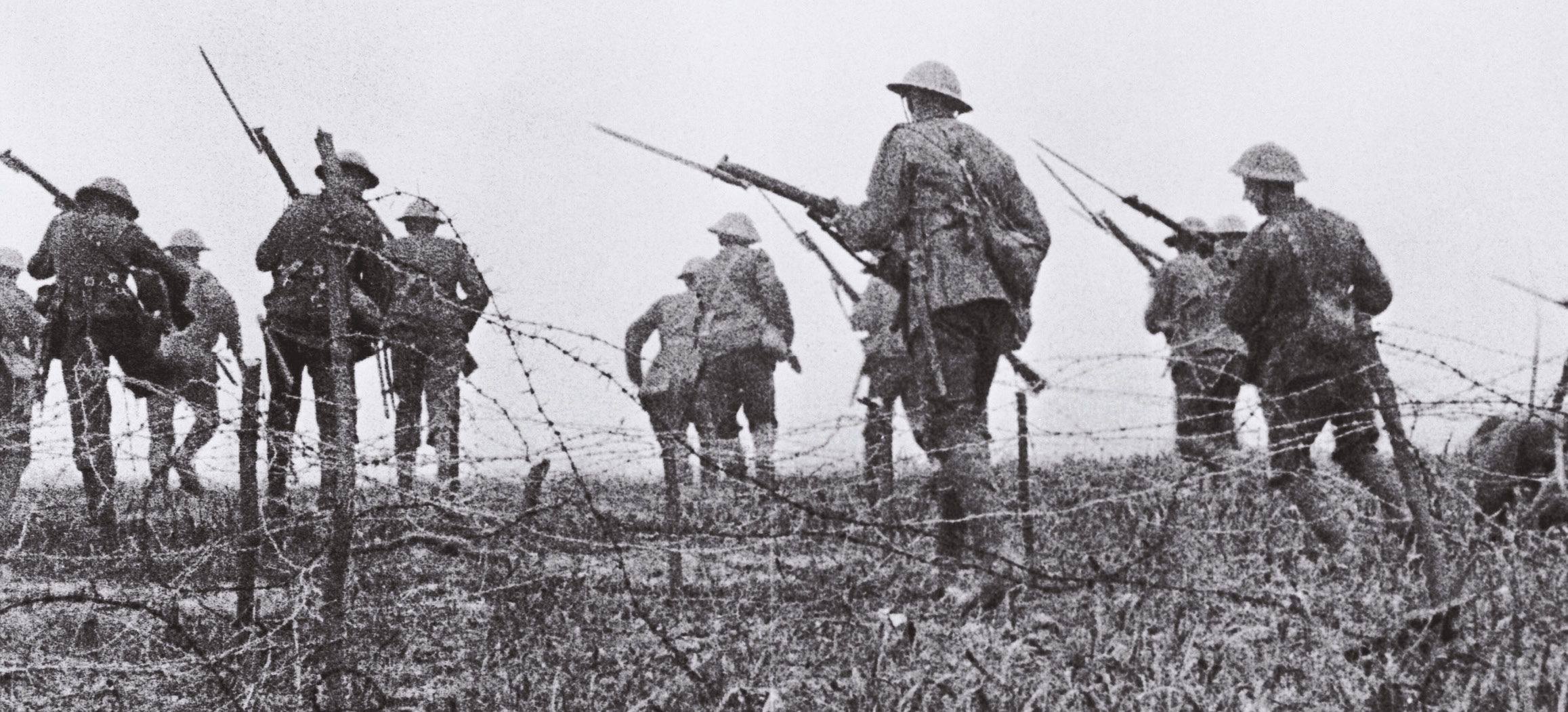
It seems invidious to single out any individual from among all these heroes (the word is overused today) – but one man was awarded the VC: Company Sergeant-Major Nelson Victor Carter (1887-1916), who is remembered with a plaque on his birthplace at 33 Greys Road, Eastbourne. Carter, aged 29, died having led an attack with ‘conspicuous bravery… under intense shell and machine-gun fire.’ He captured an enemy machine-gun and carried several wounded men to safety before being fatally wounded. Sergeant-Major Carter now rests peacefully in a military churchyard in France – where the inscription on his grave perhaps provides a fitting epitaph for all the men of Sussex who fought for King and Country on the morning of 30 June 1916: ‘The cherished flowers of France may fall, but honour will outlive them all.’
With such honour, though, came recrimination, when it became apparent that those engaged at the Boar’s Head had been deceived by their own side in order to perpetrate a ruse on the enemy. As the First World War poet Edmund Blunden (1896-1974) put it in Undertones of War (1928), a memoir in which he vividly documented his own experiences during the battle: ‘Our affair had been a catspaw, a “holding attack” to keep German guns and troops away from the great gamble of the Somme… deep down in the survivors there grew a bitterness of waste.’
Stephen Roberts is a historian who has written many times for MHM, including recent cover stories on Charlemagne and the Spitfire at 90.
Further reading:
• J A Baines, The Day Sussex Died: a history of Lowther’s Lambs to the Boar’s Head massacre (Royal Sussex Living History Group, 2012).
All images: Wikimedia Commons, unless otherwise stated