Subscribe now for full access and no adverts
In the summer of 1916, the First World War was not going well for the British and their allies. The previous year had seen the disaster of the Gallipoli Campaign, with around 170,000 casualties for no gain; and on 1 July 1916, during the first day of the Battle of the Somme, the British suffered 57,000 casualties in fighting that would drag on until November. Yet just a few weeks earlier, on 10 June, in the Arabian holy city of Mecca, Sharif Hussein bin Ali, king of the historic western Arabian region of Hejaz, signalled a bold new initiative – the beginning of the Arab Revolt – by firing a symbolic shot towards the garrison of the Ottoman Empire. With British and French support, the Revolt aimed at defeating the Ottomans, who held power in the Middle East, and who had joined Germany and Austria-Hungary as one of the Central Powers on 29 October 1914.
Framed within the context of the First World War, the Arab Revolt of 1916-1918 was replete with geopolitical manoeuvring, imperial hubris and ambitions, military innovations, spying, and hypocrisy. For the British, the Revolt’s contribution to the downfall of the Ottoman Empire safeguarded the vital strategic artery of the Suez Canal – and thus also control not only of the imperial prize of India, but also of Mesopotamia (soon rechristened Iraq) and its oil reserves, which were fast-rising in importance. T E Lawrence, the young British officer whose part in the Revolt would see him catapulted to fame, called it a ‘sideshow to a sideshow’ – but the ultimate rewards were significant.
Strategic Threat
The focus of the Revolt was the Hejaz Railway, which snaked down from Damascus to supply the garrison of some 10,000 Ottoman troops in the Muslim holy city of Medina – the home of the Prophet’s tomb. Built between 1900 and 1908, the 800-mile railway was designed to make Hajj pilgrimages to Mecca quicker, more affordable, and safer; importantly, it could also be used to transport troops rapidly into Arabia to put down uprisings. For the British, it was viewed with suspicion as a strategic threat to the Suez Canal.
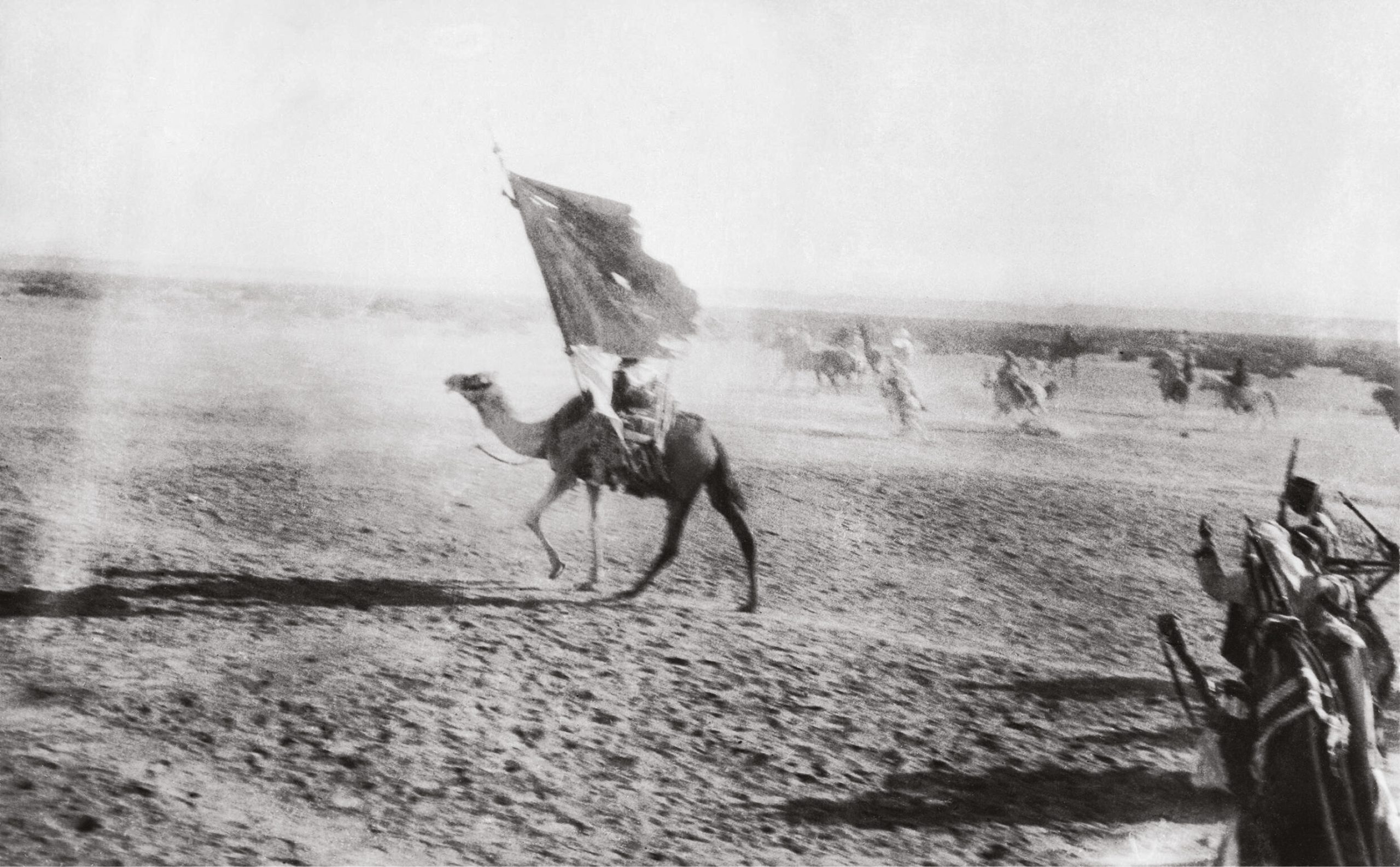
Initially, the Revolt went well in the Hejaz, with Hussein’s Bedouin horsemen backed up by British ships and aircraft taking the Red Sea ports of Jeddah, Rabegh, and Yanbu. Having already taken Mecca, Hussein was jubilant, proclaiming himself ‘King of the Arabs’ and his sons now bearing the title of Emir (Prince). Wider Muslim support failed to materialise, however, especially in India, and many Bedouin proved less than reliable converts to Hussein’s mission.
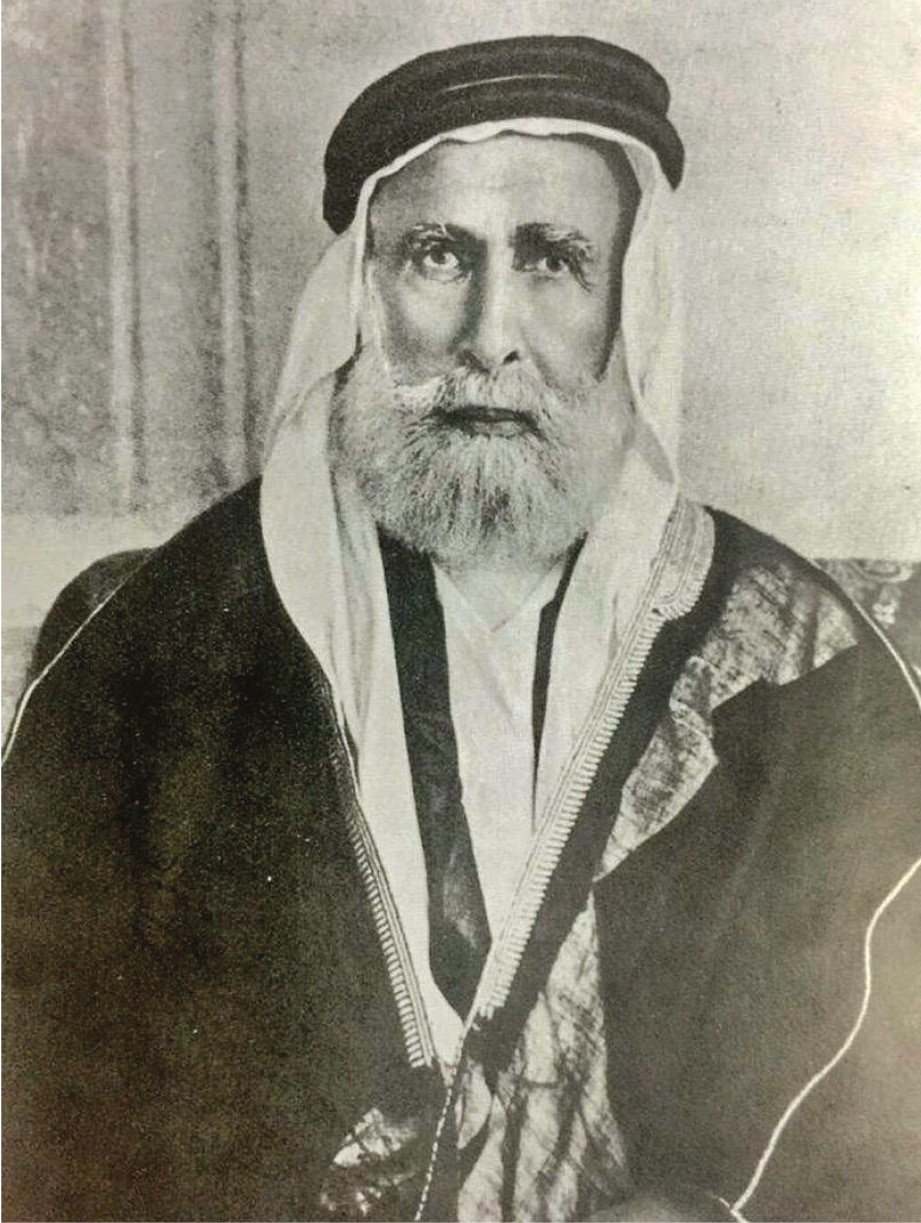
At Rabegh, on 16 November 1916, Hussein’s son Feisal reacted favourably to the suggestion that the Ottomans should be harried along the course of the railway – sanctioning what we now call guerrilla warfare. On the same day, the Royal Flying Corps’ ‘Arabian Detachment’, ‘C’ Flight of No.14 Squadron, arrived in Rabegh, and began flying reconnaissance and bombing missions against the railway from small forward-landing strips out in the desert. The die was cast, and the Hejaz Railway became the focus of endless raids by the Bedouin, and by their British and allied supporters.
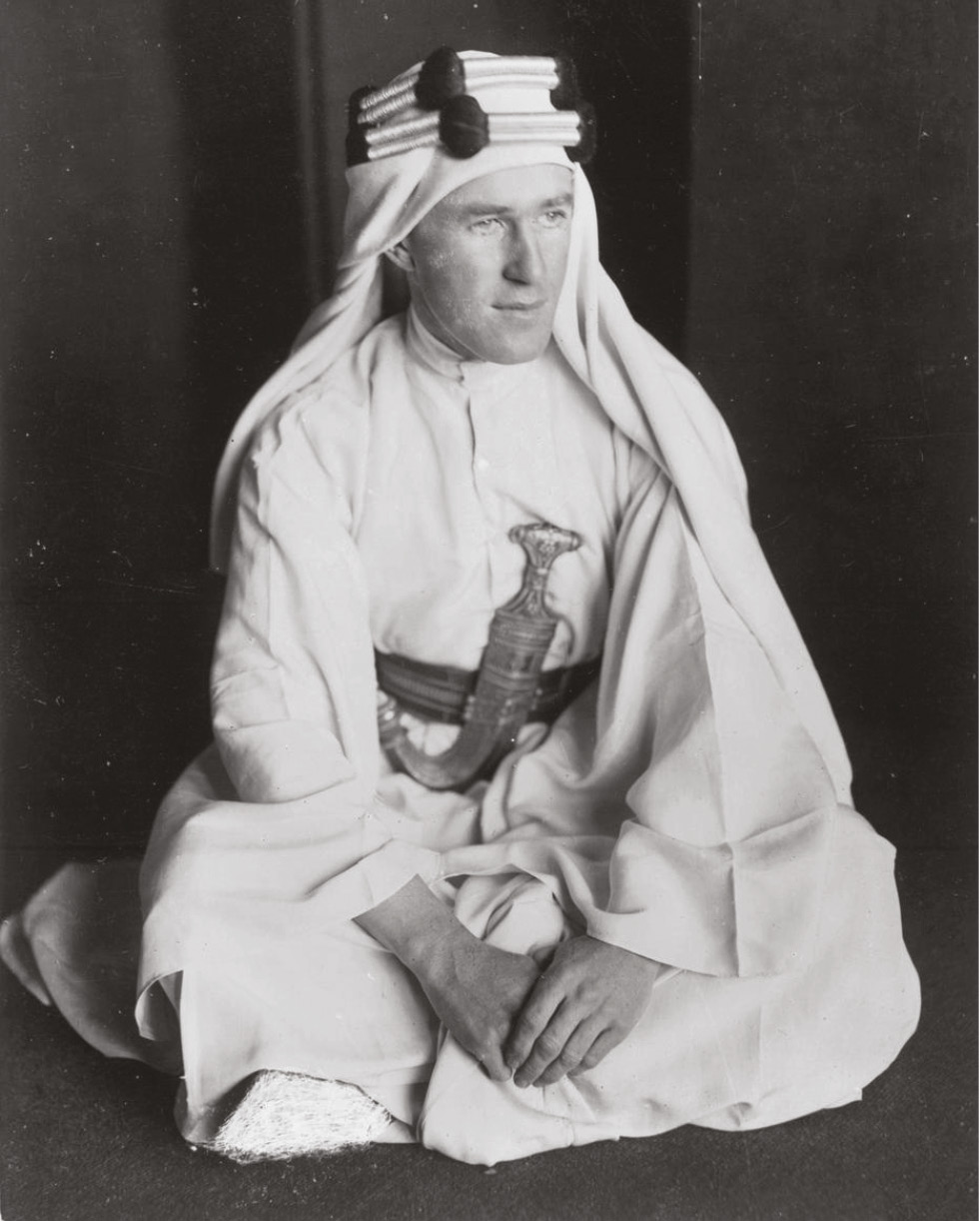
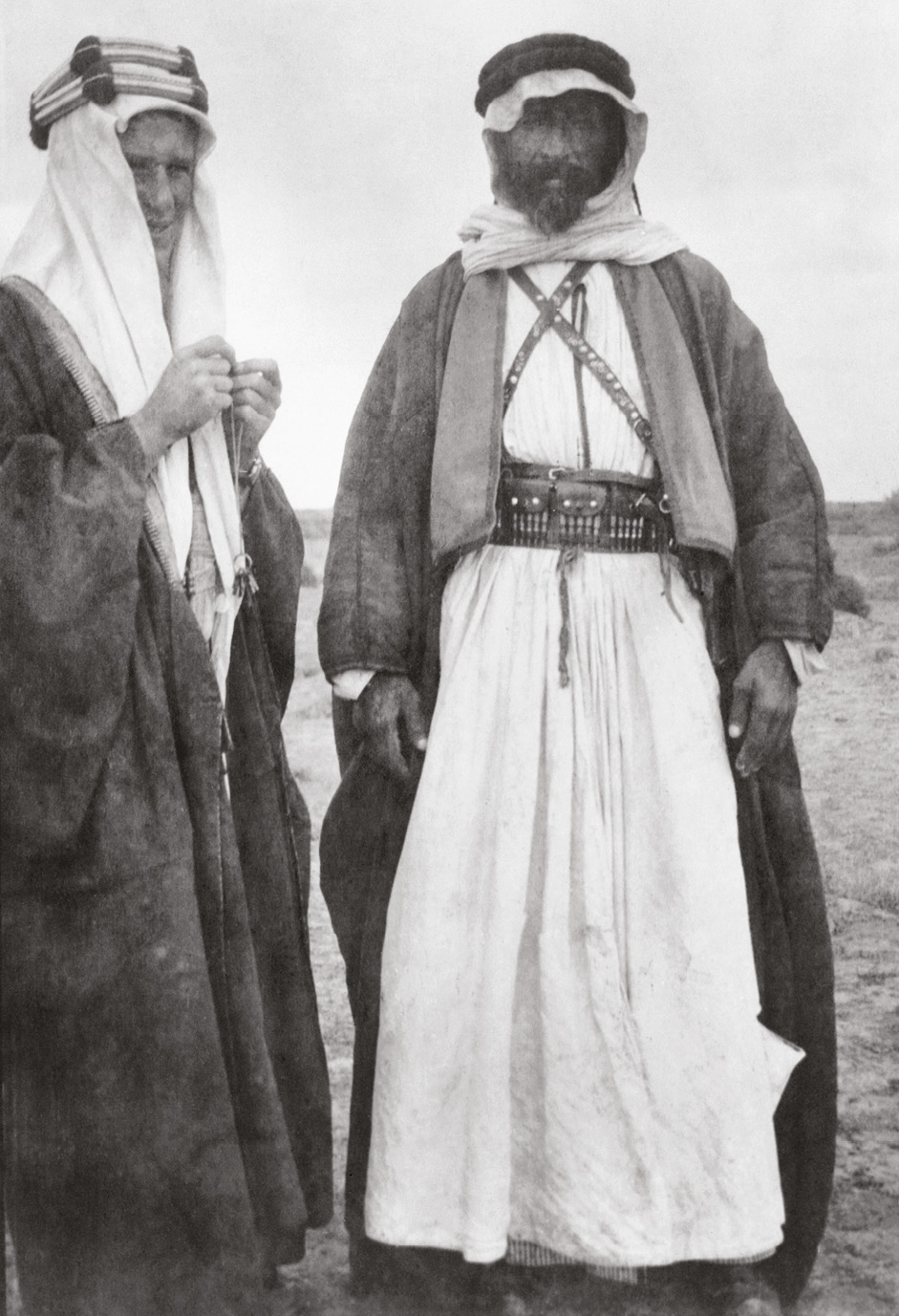
It soon became apparent that the Revolt would probably need more troops to confront the Ottomans successfully, and in October 1916 a 28-year-old Captain T E Lawrence travelled to the Hejaz from the Arab Bureau in Cairo to assess the viability of sending British reinforcements. Lawrence met Feisal and soon realised that gold to pay for Bedouin support would probably be more successful than the sending of British troops. Just two months later, in December, the Ottomans advanced towards Yanbu – but momentum faltered, and when Bedouin tribesmen and British aircraft attacked the Ottoman supply line of the Hejaz Railway, they retreated.
The pinprick surprise raids on the railway increased in frequency and intensity, highlighting Ottoman vulnerability to guerrilla tactics that were a potent mix of traditional Bedouin raiding and modern Western military technologies. Across what is today southern Jordan and Saudi Arabia, Lawrence and a handful of British explosive experts – including Major Herbert ‘Bimbashi’ Garland, Lieutenant Colonel Pierce C Joyce, and Captains Stewart Newcombe and Henry Hornby – together with Bedouin tribesmen, attacked Hejaz Railway stations and blew up bridges, culverts, and rail tracks. After the capture of the Red Sea port of Wejh in January 1917, ‘the Sultan’s Mule’ (as the railroad was known) became the focus of the Revolt’s ‘railway war’.
A guerrilla campaign
An important early success occurred in February 1917, when Major Garland and 52 Bedouin dug charges into the sand at various points on the railway between the Hejaz stations of Towaira and Wayban, some 40 miles south of the oasis city of al-Ula. The results were dramatic, as the passing locomotive detonated the charge then tumbled down an embankment, proving that even a small explosion could derail a train. Elsewhere, Garland’s fellow officer Stewart Newcombe of the Royal Engineers accompanied Sherif Nasir of Medina and his Bedouin in attacking the Hejaz station at Medain Saleh. They split into several groups, with Newcombe destroying about 100 rail tracks south of the station, and a second party under Shawish Azil demolishing 150 rail tracks and 15 telegraph poles. On reuniting, the group destroyed yet more rail tracks and damaged a train near Kashim Sana’a station.

Inspired by these successes, in which he had played no part, Lawrence attacked Aba el Naam station with the Bedouin of Sherif Fauzan al Harthi and Sherif Shakir. Lawrence cut the telegraph line and laid a gelignite mine. The Turkish train blew the mine and was damaged, but was rescued by the Turks. Lawrence’s artillery then opened fire on the station, the Bedouin attacked, and the Turks retreated back into their trenches. Thirty Turkish prisoners were taken and about 70 were killed or wounded. The damage took the Turks three days to repair.
These raids were local tactical successes, but a more strategic achievement came on 6 July 1917, when a force of Bedouin with Lawrence in tow took the Red Sea port of Aqaba – not by a heroic charge against the enemy but rather by racing through a sandstorm and taking the town without a fight. Aqaba had been ruined by British naval bombardment and abandoned by its Ottoman defenders. The effect of this victory moved the centre of military gravity northward towards Syria and the ultimate goal of Damascus.

The desert attacks on the railway spurred their own innovations, of which arguably the most successful was the creation and deployment of highly mobile motorised columns of Rolls-Royce armoured cars and tenders, along with Talbot lorries carrying 10-pounder mountain guns. This combination was an early and effective form of mechanised desert warfare, once again blending traditional Arab hit-and-run tactics with modern technology. Commanded by Lieutenant Leofric Gilman, the Hejaz Armoured Car Battery famously camped near a distinctive geological feature called Tooth Hill on several occasions, before attacking the nearby stations of Tel Shahm and Ramleh in April 1918.
Lawrence clearly saw the advantages and drawbacks of guerrilla warfare, codifying the principles in his celebrated despatch for the Arab Bulletin in August 1917 entitled ‘Twenty-Seven Articles’. As long as his men and the Bedouin played to their advantage of mobility and surprise, and did not engage the Turks head on, they retained their edge. Only once was this advice ignored in a major engagement – the Battle of Ma’an Station between 13 and 17 April 1918. Ma’an was the major Hejaz Railway hub in southern Jordan, and had been reinforced with extensive trenches the previous August on the advice of the visiting German General Erich von Falkenhayn. The Turks were doughty trench fighters, and bravado assaults by Bedouin horsemen and mounted regular Arab troops made little progress against the defended ridge west of the station. Arab casualties were heavy and the attack was abandoned. A frontal assault was never tried again.
In Lawrence’s footsteps: the Great Arab Revolt Project
Launched in 2006, the Great Arab Revolt Project was a ten-year archaeological investigation under the auspices of Bristol University. Led by MHMcontributor Nicholas Saunders and MHM’s former Editor, the late Neil Faulkner (1958-2022), it helped to provide a wealth of new research and thinking on T E Lawrence and World War I in the Middle East.
In 2005, there was no archaeology of the Arab Revolt in Jordan, despite the momentous historical consequences of the 1916-1918 uprising. These include the development of modern guerrilla warfare, the collapse of the Ottoman Empire, the redrawing of the Middle East map, the founding of the Hashemite dynasty in what would become Jordan, and even the fame and notoriety of T E Lawrence. Jordan’s rich heritage of prehistoric, Nabatean, Roman, Byzantine, and Islamic culture had understandably dominated archaeological research. Lawrence’s own Seven Pillars of Wisdom account of the Revolt also gave the impression that there was little more to add – and, as elsewhere, there was a wider view that the First World War was too recent for archaeological investigation. The idea of an archaeology of the Arab Revolt was almost outlandish.
Bristol University’s Great Arab Revolt Project (GARP) soon disproved this view with its professional and volunteer teams by discovering and investigating the Revolt’s largely uncharted conflict landscapes in southern Jordan between 2005 and 2014. The original intention had been to investigate the damaged and mostly abandoned Hejaz Railway stations from Ma’an to the Saudi border, some 70 miles south. It soon became evident, however, that previously unrecognised traces of conflict survived in-between these stations and further out in the desert.
History and myth sometimes collided with archaeology. GARP’s evidence provided information and insight unavailable to all who had written about the Revolt and Lawrence since 1918. After 100 years, something fresh could be said.
We began by excavating the ‘Hill of the Birds’ and revealed an extraordinarily well-preserved system of trenches and redoubts on a slope west of Ma’an station, the Turkish defence of which had defeated the Arabs and their allies during the April 1918 Battle of Ma’an. This was a rare defeat caused by abandoning classic guerrilla tactics espoused by Lawrence, in favour of a frontal attack.
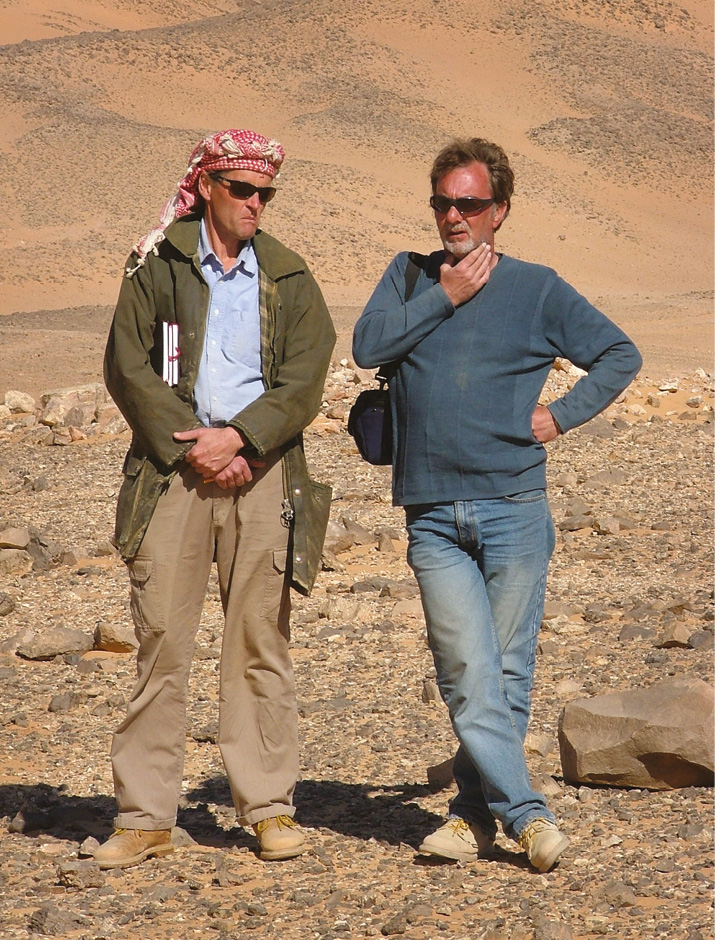
The prospect of creating an archaeology of modern guerrilla warfare and its ephemeral traces was a key achievement of our research. We discovered two sites that we called Tooth Hill East and Tooth Hill West, which served as short-lived camps for Rolls-Royce Armoured Car raiding columns in late 1917 and 1918. Despite the odds, in 2012, we matched up a 1917 photograph of a raiding camp with the actual site and excavated its campfire and remains. Vehicle spark plugs, a mass of empty bullet cartridges, smashed rum jars and gin bottles, and, crucially, dated bully-beef tins were unique and convincing evidence.
Fortunately, and with a Jordanian Army escort, we were allowed to investigate the location of the famous 1917 Hallat Ammar train ambush in what is today almost a no-man’s land between the Jordanian and Saudi border. Survey and excavation enabled us to reconstruct the event by matching the bullet and mortar spread with historical accounts. In a sense, we were investigating three sites – the historical/literary one, the Hollywood version as seen in David Lean’s Lawrence of Arabia (1962), and the archaeological ‘truth’.
Of the many other discoveries we made, perhaps one of the most unlikely was locating and excavating the remote desert site of Disi, a short-lived aerodrome with canvas hangars housing RFC/RAF biplanes, whose job was to fly reconnaissance and bombing missions along the Hejaz Railway. Lawrence had visited in May 1918, and we found the remains of hearths and burnt boxes, as well as pockmarks on the nearby rocky cliff where the British had taken potshots.
Altogether, in just ten years, GARP teamwork had rescued information, objects, and insights from the desert where they had lain since 1918. Many of Lawrence’s observations were proven accurate, but at other locations where he had not been present, we added sometimes extraordinary detail to the events at a turning point in history.
A classic victory
As the memory of Ma’an lingered, a successful guerrilla action was needed to restore confidence among the Bedouin. It turned out to be a classic victory, and some 40 years later became the iconic fictionalised scene in David Lean’s 1962 Hollywood epic Lawrence of Arabia. In a remote area some 9 miles south of Mudawwara station, Auda abu Tayi’s nephew Zaal told Lawrence of an ideal location for a train ambush several miles north of Hallat Ammar station – just over the border in today’s Saudi Arabia.
On 19 September 1917, as a twin-locomotive train packed with passengers and Turkish soldiers from Medina left Hallat Ammar station and approached a small bridge, Lawrence’s 50lb gelignite charge was detonated and the locomotives and wagons careered off both sides of the track. Lawrence’s machine-guns and mortars littered the desert with Turkish dead and wounded, and the Bedouin rampaged through the baggage and personal belongings, piling their booty on to camels before taking off into the Western Desert. The ambush had taken ten minutes, and left a scene of carnage and plunder. Unsurprisingly judged a great success by the British and Bedouin, it emboldened Lawrence to launch other raids on stations further north.
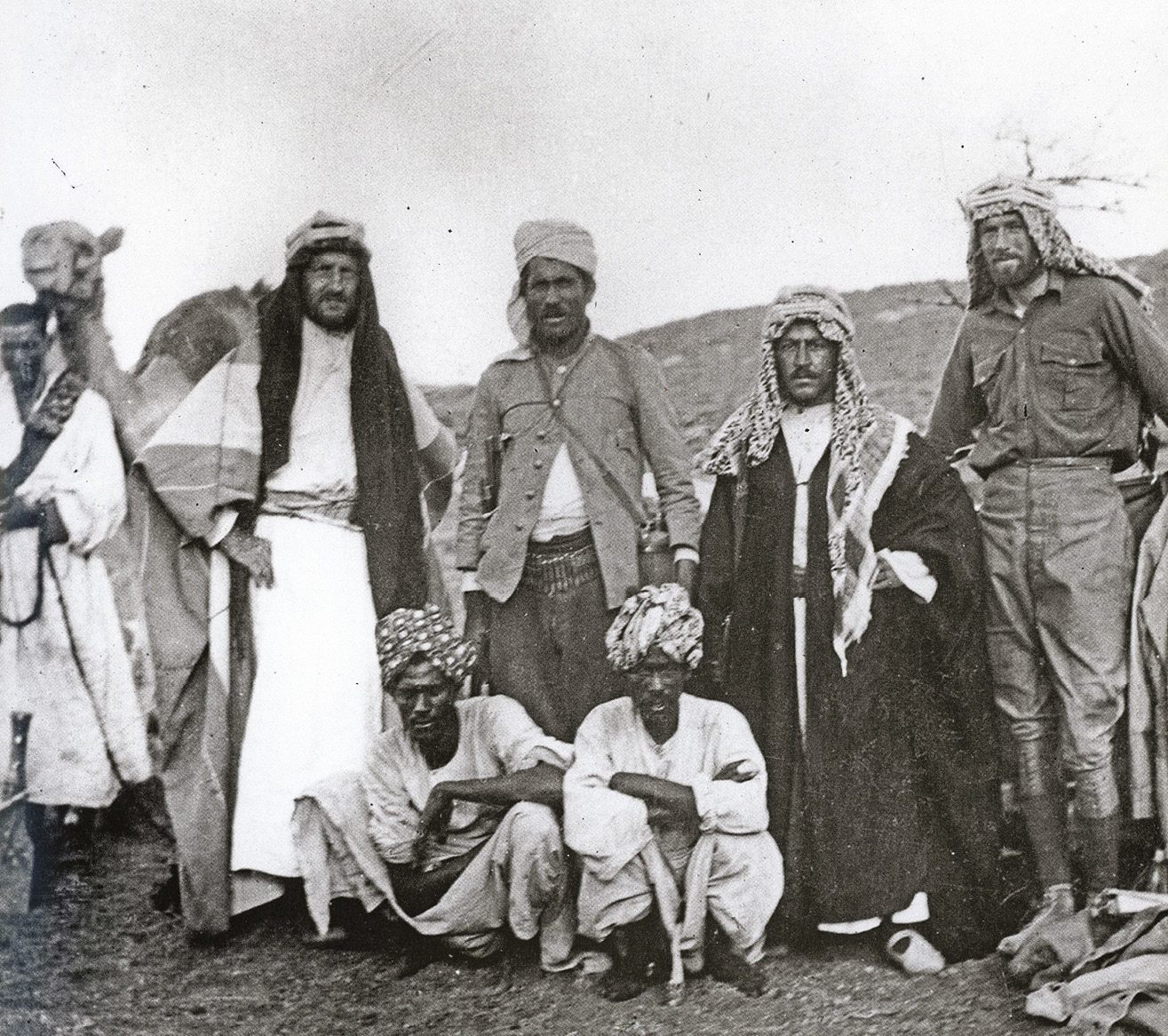
An important lesson of Hallat Ammar was to show the practicability of deploying armoured cars in the area; the ambush also revealed that Mudawwara station would have to be attacked by a large force if it was to be taken. The opportunity to test these conclusions came a year later when, before dawn on 8 August 1918, a combined British force of infantry, artillery, and aircraft attacked the three stone-built redoubts protecting the western approaches to Mudawwara’s fortified railway station. The Southern Redoubt fell first, with the Turkish defenders caught still asleep when Captain Lyall led his men of the Imperial Camel Corps (dismounted) in a grenade and bayonet charge. Meanwhile, the station itself was taken, and Captain Bell-Irving took the Central Redoubt soon afterwards, also finding the Turks asleep in their tents. Finally, the Northern Redoubt fell to a pincer movement by Lieutenants Rowan and Davies, supported by artillery and RAF bombing. By 7am, it was over and Mudawwara, for so long a Turkish railway bastion, had fallen.
Situation critical
These small- and large-scale successes along the railway saw the Revolt gather pace. One consequence was that General Edmund Allenby, the British commander-in-chief of the Egyptian Expeditionary Force (EEF), incorporated it into his wider Palestine Campaign. Allenby had taken over from General Sir Archibald Murray on 27 June 1917, and was a keen supporter of Lawrence’s guerrilla tactics in tying down Ottoman forces along the railway. For Allenby, the small but mobile and effective Arab Revolt forces became his right flank, enabling him to focus on confronting the Ottoman army.
Allenby reorganised his forces, and after several hard-fought engagements defeated the Ottomans in early November 1917 at the Third Battle of Gaza. On 9 December, after more bitter fighting in the Judean Hills, Jerusalem surrendered, and, two days after that, a victorious Allenby walked through the Jaffa Gate to take control of the historic city. It was a welcome British victory after the terrible casualty figures of some 275,000 men during the Battle of Passchendaele in Belgium, which had ended just weeks before.
Allenby’s forces next took control of the port of Jaffa, then moved north along Palestine’s Mediterranean coast, while Feisal’s Northern Army Arab forces and the British under Lawrence and Joyce shadowed him inland along the railway. Of pivotal importance was the strategic Hejaz Railway station of Deraa. Major-General Frederick Peake’s demolition of 600 pairs of railway tracks cut off the station completely, thereby forestalling Ottoman attempts to reinforce their front-line or withdraw their troops northward. Militarily, the Ottoman situation became critical on 25 September – Amman was taken, bridges and stations in the Yarmouk Valley fell, as did Zerqa and Mafraq stations and Deraa itself on 27 September.
There was much bloodshed as Auda abu Tayi and his Bedouin harried the Ottomans falling back on Damascus, and on 1 October the Australian Light Horse became the first Allied forces to enter the city. Soon afterwards, Feisal arrived with his Arab forces, Lawrence, and Sherif Nasir to a tumultuous welcome. The final splutter of the Arab Revolt took place when the Ottoman commander Fakhri Pasha surrendered the last Turkish stronghold of Medina on 10 January 1919, several months after the Armistice of Mudros, which marked the official defeat of the Ottoman Empire on 30 October 1918.
Nicholas Saunders is a leading modern conflict archaeologist and Emeritus Professor in the Department of Anthropology and Archaeology at the University of Bristol.
More on the Middle East: Taylor Downing reviews the new feature film Palestine 36 here
All images: Wikimedia Commons, unless otherwise stated