Subscribe now for full access and no adverts
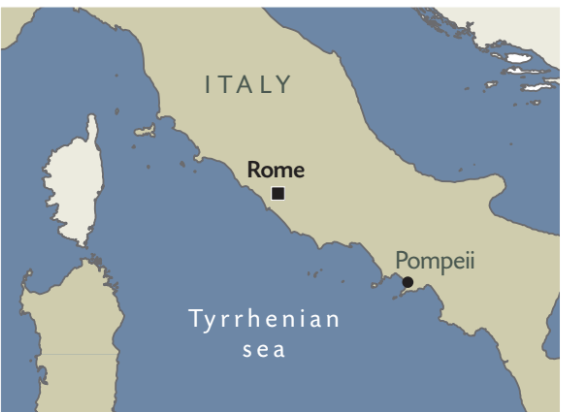
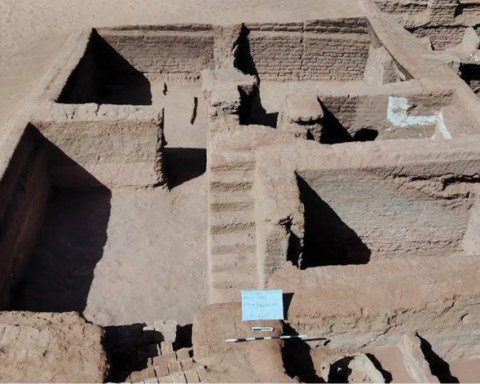
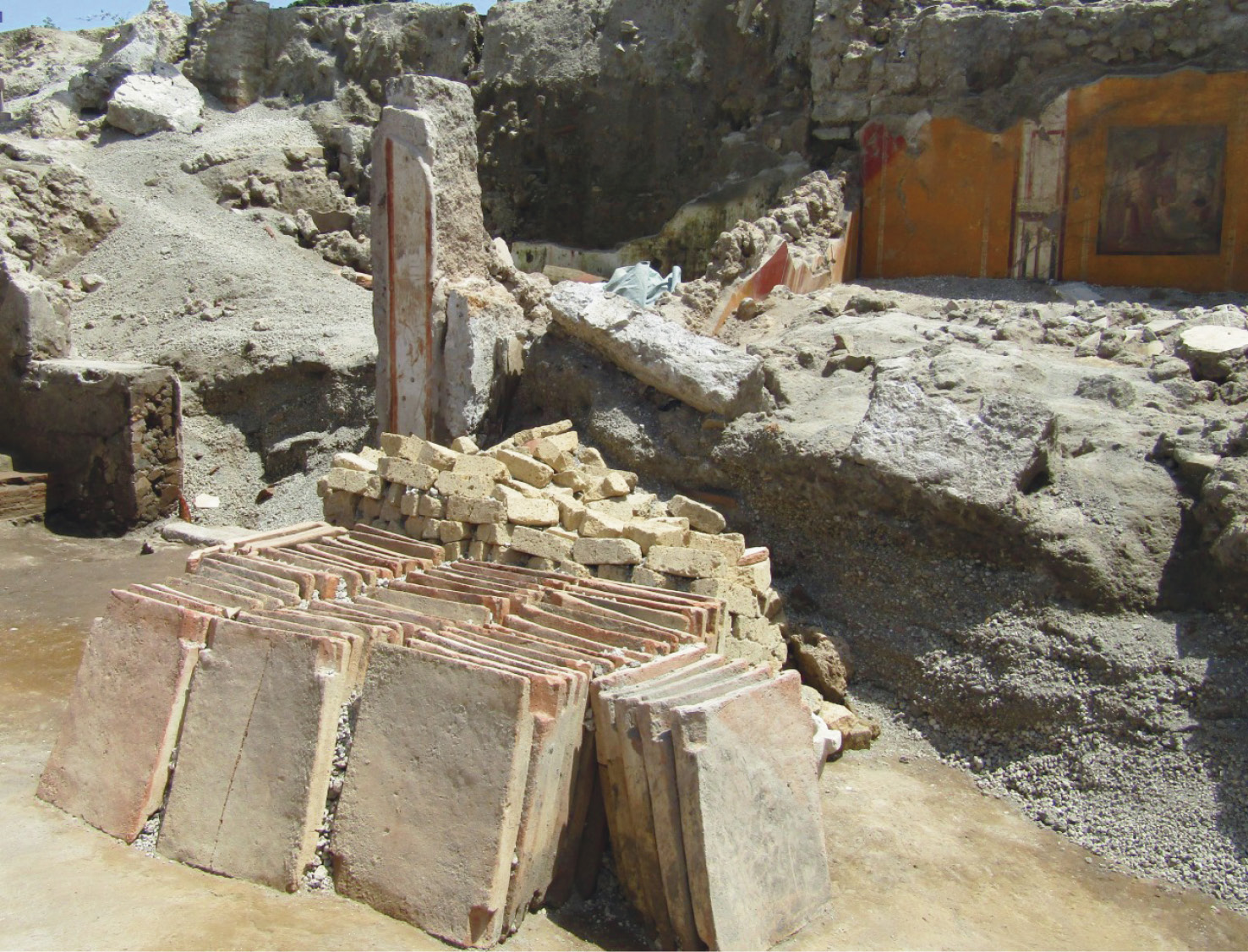
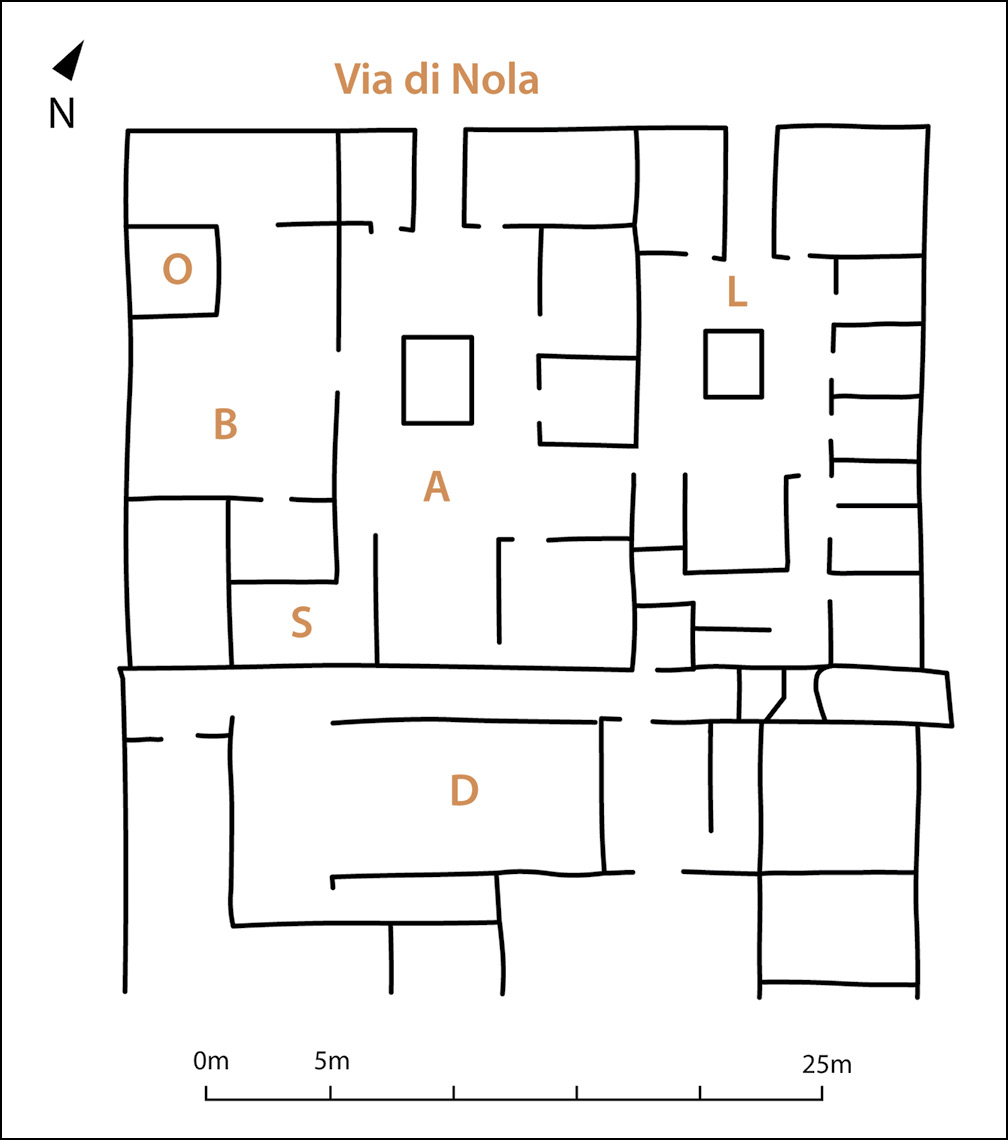
The building was awaiting a transformation. It stood in what is now known as Insula 10, Region 9, of Pompeii, and enjoyed an enviable position on the via di Nola: an important thoroughfare leading from one of the city gates towards the forum baths. Like many houses in Pompeii, a narrow corridor funnelled visitors from the street into a central atrium that was open to the sky and lined with rooms. Some of these were decorated with sumptuous frescoes; others had been given over to a commercial bakery. Under normal circumstances, passers on the street would find the aroma of fresh bread competing with the more earthy odours emanating from a neighbouring laundry. But these were not normal circumstances. The donkey-driven mills for grinding corn lay still, and the great oven was cold, because major building works were in full swing at the property. Roof tiles, bricks, and stone were stacked in the atrium, while amphorae brimmed with quick lime, slaked lime, and lime mixed with soil to make different kinds of mortar. In a side room of the bakery, hoes and a pickaxe were carefully stored for the work ahead. But it was not to be. Instead, the eruption of Vesuvius in AD 79 brought change of a very different kind, transforming the building into a tomb.

Inside Region 9
All of the information about this combined bakery and residential building in the city block known as Insula 10 has been freshly won from the volcanic debris that still smothers unexcavated portions of Pompeii. The digging is granting remarkable insights into Roman life – not least a uniquely detailed glimpse of a building team at work – and has come about thanks to major conservation efforts that are under way at the site. ‘Insula 10 lies between two other insulae that were exposed in the 18th and 19th century’, says Sophie Hay, a research fellow at the University of London and member of the Pompeii media team. ‘It’s the only street frontage that was still buried on the via di Nola in Region 9. So it lies at the boundary between excavated and unexcavated parts of the city. But because the neighbouring insulae have all been exposed, Insula 10 juts out like a tongue of land. This presents a challenge when it comes to stabilising the edge of the excavated area, which needs to be carefully maintained because there is a risk of collapse when it rains heavily. Obviously, it is much easier to maintain a single straight face, rather than three sides of a rectangle. So the idea, if you like, is to lop off this tongue of land. The excavation has been born from that need.’
One of the challenges for the archaeologists investigating Insula 10 is reaching Roman ground level, because they have to dig through the many metres of volcanic material that buried the city. In the northernmost of the three rooms that made up the commercial bakery, they found traces of a tragic scene that must have played out soon after this pumice first began to rain down on Pompeii. ‘We found the bodies of two women – one younger, one older – and a four- to seven-year-old boy in the room’, says Giuseppe Scarpati, archaeologist of the Archaeological Park of Pompeii. ‘We know that they died very soon after the eruption started, as their skeletons lay right on the room floor. This is a different position to many of the dead at Pompeii, who are often found higher up in the sequence of volcanic material that fell on the site, after surviving the opening phase of the eruption. These three seem to have been crushed when a wall and the ceiling of the room collapsed in on them.’
The bodies of this ill-fated party were the only ones found in the building. While it seems likely that they can be counted among the very first of Vesuvius’ victims at Pompeii, what they were doing in the building is less apparent. The bakery was closed for the renovation work, so it is unclear why three of the presumably enslaved people working there would have stayed on, after the rest of the team and even the donkeys powering the mills had been moved elsewhere. Perhaps the deceased were living in the residential part of the house and seeking shelter further away from the open-roof of the atrium. Alternatively, they may have been passers on the road who had no connection to the property, and simply ducked into the deserted building site in a bid to find refuge. If so, their path would not have been a straightforward one, as the only way in and out of the suite of rooms forming the bakery was via a single doorway that opened off from the building atrium. This arrangement speaks volumes about the conditions that the workforce would have been subjected to.
A high-security bakery
‘There was no commercial frontage to the bakery where they could sell their goods directly on to the street’, says Sophie. ‘Instead, access and movement was really restricted, which is why we have described it as a “prison bakery”. Once that single doorway connecting to the building atrium was closed and locked, everyone inside the bakery was trapped with the animals and the mills. A little window was found in the room of the bakery where we think the enslaved people lived. It was an internal window facing into the rest of the property, so anyone who managed to crawl through it would just have found themselves in the residential part – it didn’t take them outside the building. Even so, that window still had bars on it, which shows that the owner was taking steps to keep people in. We know from ancient authors like Apuleius that toiling in a bakery was really hard work: they would often put criminals in them, because it was one of the worst jobs going. There were the animals, the constant milling, the heat of the oven – it was a hard life. Today, we generally think of bakeries as nice places with fresh bread, but Roman bakeries don’t have a good press.’
While the elaborate security arrangements leave little room for doubt about the owner’s views on the bakery workforce, there is a hint of some pride in the produce they laboured to bake. A still-life fresco on the atrium wall just beyond the doorway to the bakery caused international excitement when it was found, because it bears an uncanny resemblance to a modern bread-based delicacy: the pizza. No other image of such a dish is known from Pompeii. It is shown – alongside other food – on a silver platter, beside a goblet charged with wine. The topping seems to include dates, nuts, and some sort of pesto-mix sauce – instead of tomatoes and mozzarella – while the size of the serving marks another departure from a typical modern pizza. Using the wine goblet as a scale shows that the dish is closer in size to an appetiser, rather than a meal in its own right. Perhaps, then, Pompeii was not home to a true proto-pizza, but the dish still looks like a tasty addition to knowledge of Roman cuisine, even if the production methods are less than palatable for a modern audience.

Another feature that is unique for Pompeii can be found in a room leading off from the atrium in the residential, rather than the bakery, part of the property. There, two large snakes sculpted in relief slither across the wall, while a third, painted snake, lies beneath them. These serpents represent protective spirits known as a genius locus, while their presence is explained by the room containing the household shrine, or lararium. Another painting associated with this shrine shows a figure casting an offering on to a burning altar, an act that must have been a familiar scene in the room. The altar associated with the lararium projects from the wall, and careful study of the deposits preserved on it has revealed traces of two layers of offerings. These included burnt dates, figs, pine nuts, an egg, and pine cones – the last of which could have been used as fuel. Given the construction work that was under way, the presence of these deposits raises the question of whether the builders were taking care to appease the household spirits, or if these offerings had been made by the inhabitants of the house, perhaps just before they moved out – assuming they had indeed vacated the property – before the upgrades got under way. Whoever was responsible for these attempts to appease the spirits, their final act was to place a little tile on top of the altar, presumably to protect the offerings below.
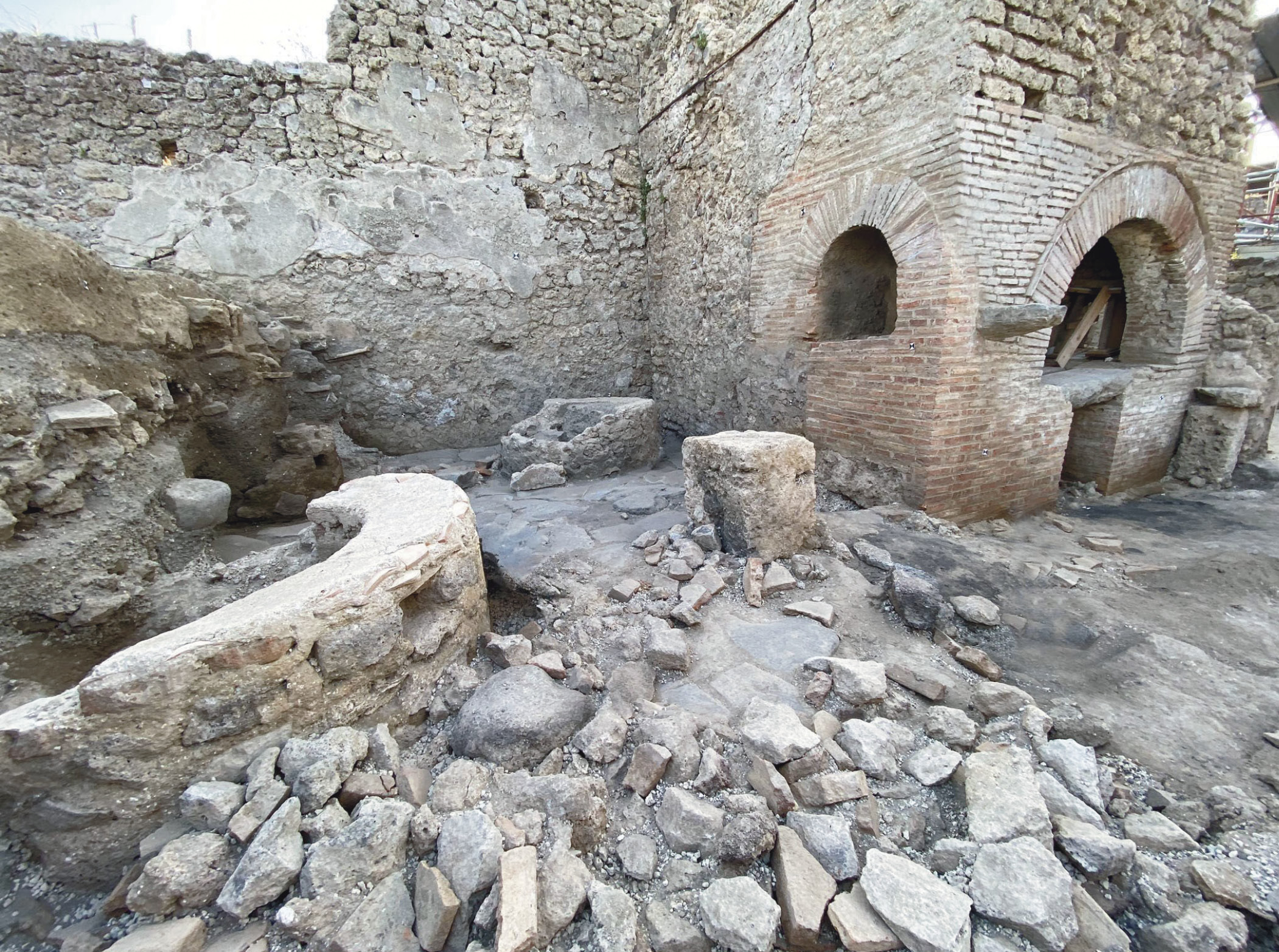
Who, then, did the property belong to? ‘We think that an individual called Aulus Rustius Verus was the owner of the entire complex,’ says Giuseppe. ‘He was definitely the owner of the bakery, because his initials – ARV – were cut into the millstones. And his name was also painted on the wall in the lararium. But, while the building probably belonged to him, we do not think that he lived in the residential part of it. It would have been too small for someone of his status, so it is likely that his home was a grander residence elsewhere in Pompeii. Instead, we can imagine that the person living in the residential space beside the atrium was overseeing the smooth running of the business for Aulus Rustius Verus. Indeed, this overseer’s responsibilities may have extended beyond the bakery, as we believe that Verus was also the owner of the laundry building next door. We can see that these two buildings were connected and share the same plumbing.’

Filthy rich
The adjacent laundry was dug back in the 19th century, and while smaller than the bakery and house complex, it shares some similarities in plan. In particular, the laundry also features rooms lining an atrium. Rather than containing a simple basin to catch rain falling through the open roof, though, the laundry was equipped with a much deeper vat to hold fluids, as well as various subsidiary tanks and an impressive drain that indicates liquids were being used on an industrial scale. Given that the cleaning services on offer required handling clothing that had been steeped in urine – because the ammonia it contains is highly effective at removing certain stains – it might be suspected that the workers were not much better off than their counterparts in the bakery, especially when it came to the sensory experience of working in such an establishment.

‘I’ve been looking at recent work by Miko Flohr, a scholar who specialises in Roman laundries, or fulleries as they are otherwise known,’ says Sophie. ‘He thinks that the smell might not have been as terrible as you’d immediately imagine. This is partly because the Roman nose was acclimatised to rather different smells than ours. The urine that was used for the cleaning process was also diluted with water, making the aroma less potent, while perfumes could have been used to disguise the smell. Flohr thinks, too, that it’s potentially telling that the written sources don’t talk about laundries being really smelly, which is odd because they loved to complain: you’d expect them to go on about it if it was really bad. So it’s a possibility that the odours coming from Roman laundries have been exaggerated, but we don’t know for sure.’
Another way to tackle stains is in evidence from the latest phase of excavations. This is investigating a new part of the insula, just to the south of the bakery and house complex. The initial results have revealed an impressive dining room that belonged to a grandiose mansion, the remainder of which is currently still buried. ‘It is a really big room’, says Giuseppe, ‘about 15m long by 6m wide. It is mostly painted black, which would have hidden soot marks created by lamps lighting the room, but there are also two small mythological scenes connected with the Trojan War. One, on the north wall, shows the moment when Alexander – also known as Paris – fell in love with Helen, which of course was the cause of the war. On the opposite wall, another scene shows Apollo and Cassandra. She was a priestess of Apollo and the daughter of Priam, king of Troy. When the god fell in love with her, though, she refused his advances. Because of this, she was cursed so that no one would believe her when she made prophesies, which gave forewarning of important moments in the Trojan War.’
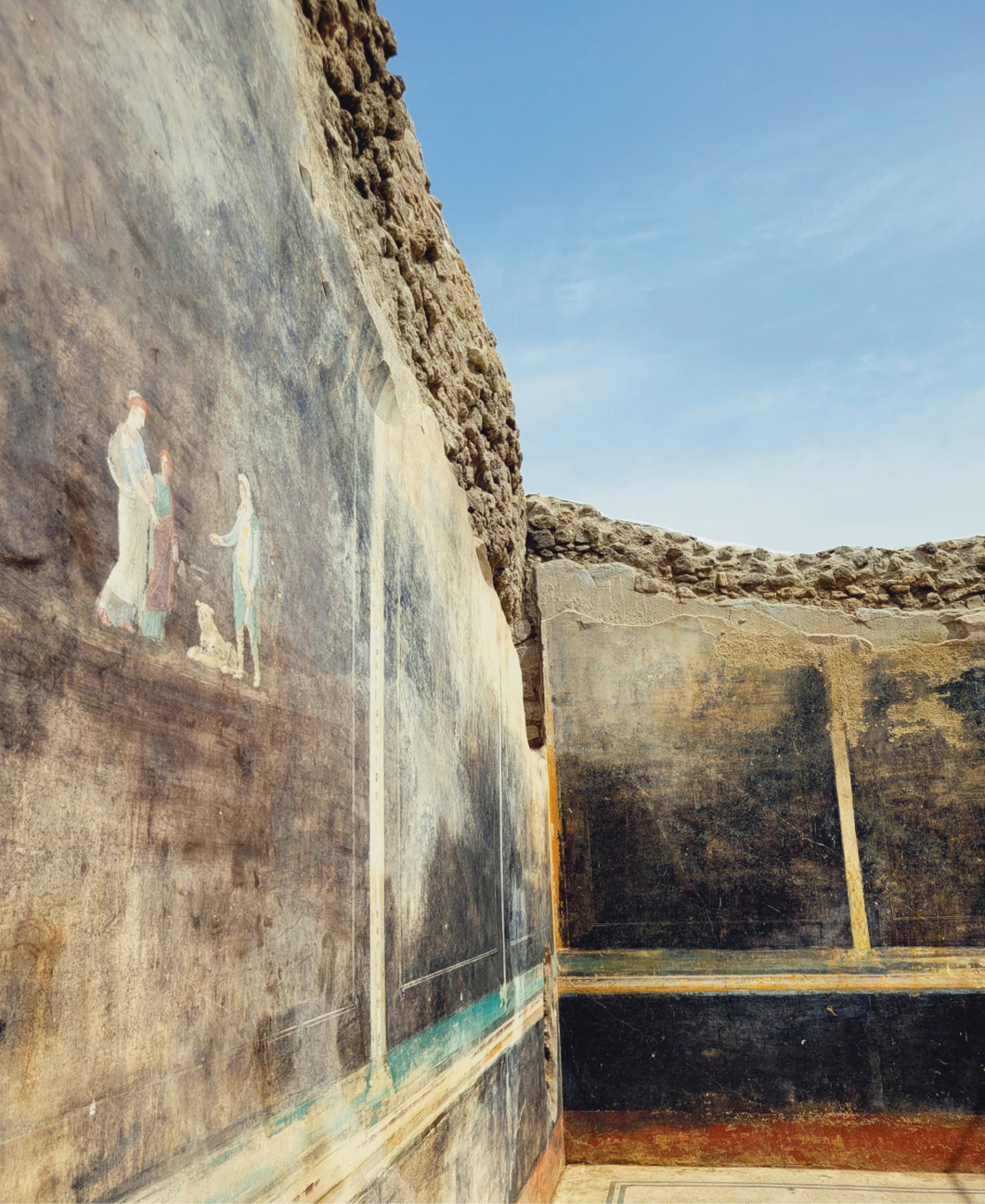
‘The artistic style of the decoration in these mythological scenes is known as Third Style’, says Sophie, ‘which dates to roughly the mid-1st century BC. The decoration was then transformed in the mid-1st century AD, using what is known as Fourth Style. Interestingly, though, this new work imitated the earlier decoration, while the mythological scenes were also preserved, suggesting that the owner thought they were precious. The approach is a bit like having an antique in your house and repairing part of it, but in keeping with the original style. The quality of those original paintings is very high – they were created by an important workshop that was active in Pompeii during the period.’


Apart from this decoration, finds in the dining room have so far been few. This can perhaps be explained by 18th-century diggers taking an interest in this part of the site during the Bourbon period. Further details of the mansion associated with this dining room will follow as work to eliminate the tongue of land presented by Insula 10 proceeds. There can be no doubting the scale of this residence, though, as the top of a large peristyle can already be traced on the ground. Given the scale of Aulus Rustius Verus’ commercial interests in this city block, it is natural to wonder whether the trophy home they sit alongside was owned by him, too. It is hoped that this question – and many more – will be answered in due course. For now, though, there can be no doubt that the powerful, poignant, and surprising finds that have already emerged from Insula 10 provide a vivid glimpse of Roman life: the bakery owner effectively incarcerating his workforce; the methodical preparation by the builders; the small acts of faith protected by a tile on the household shrine. These snapshots of everyday scenes serve to underscore the human cost of the ensuing tragedy on the day the city died. ‘It’s incredible,’ says Giuseppe. ‘Only at Pompeii can you make discoveries like this.’

All images: Parco archeologico di Pompei