
Subscribe now for full access and no adverts
In 1996, farmer Chris Hosken was spreading sand in a field outside Boden, on Cornwall’s Lizard Peninsula, when the ground suddenly gave way beneath his tractor. Fortunately, the vehicle easily straddled the void, but there were further surprises to come. When Chris climbed down to examine the hole, he found himself peering into a rock-cut chamber and a 5m-long tunnel that had been dug into the subsoil.
This was not the first time that interesting archaeological remains had emerged on Chris’ land; five years earlier, work to install a water pipe had uncovered a pit containing chunks of Romano-British pottery and quernstone, and in 1992-1993 English Heritage funded a geophysical survey of the fields. The results were intriguing, revealing a complex landscape scattered with linear features, picking out the footprints of field systems and a particularly clear, large rectangle. This was interpreted as a kind of Iron Age enclosed farmstead known in Cornwall as a ‘round’ (even if, as in this case, the shape is not circular). Inside its outline, towards the northern edge, was an anomaly strongly suggestive of subterranean walls. These appeared to relate to the tunnel that Chris had encountered – but what was it?
The local Historic Environment Record produced a possible clue, in the form of a note written by a local vicar more than 200 years earlier. The Reverend Richard Polwhele was not only a man of the cloth, but a keen antiquarian, and in 1803 he reported an exciting discovery: ‘At Bodean Veor, in the Parish of St Anthony, is an artificial cave, of about 30 yards in length. It is merely an excavation of the earth, without any stone for walls or roof, four or five feet underground. Its situation, on the highest part of the hill, suggests the idea of some military works near it – but none at present are discoverable.’
Polwhele was describing a fogou, a kind of subterranean structure particular to Cornwall and dated to the Iron Age (see CA 44 for discussion of an example at Carn Euny, near Penzance). These networks of underground tunnels and chambers derive their name from a Cornish word for ‘cave’, but their precise purpose remains obscure. Suggestions have included cold stores or somewhere to safeguard valuable commodities; places of refuge for the local community in times of trouble; and ceremonial spaces – a similar range of functions as have been proposed for the souterrains of Scotland (see CA 199) and Ireland (CA 263). Sadly, Polwhele provided no further hints about the location of his excavation – but the ‘artificial cave… without any stone’ sounded tantalisingly similar to the earth-cut tunnel that Chris had found by accident.
A project is born
Two hundred years after the antiquarian investigation, in 2003 Chris’ fields were once again under archaeological scrutiny. James Gossip (Senior Archaeologist at Cornwall Archaeological Unit) had secured funding from English Heritage to open evaluation trenches over some of the geophysical anomalies identified a decade earlier. Through this investigation (published in vol.52 of Cornish Archaeology; see ‘Further information’ below) he was able to confirm that Chris’ ‘void’ had indeed revealed part of an Iron Age fogou dating to c.400 BC, and that the dry-stone passage (roofless, but well preserved) was contemporary with the large rectangular enclosure surrounding it.
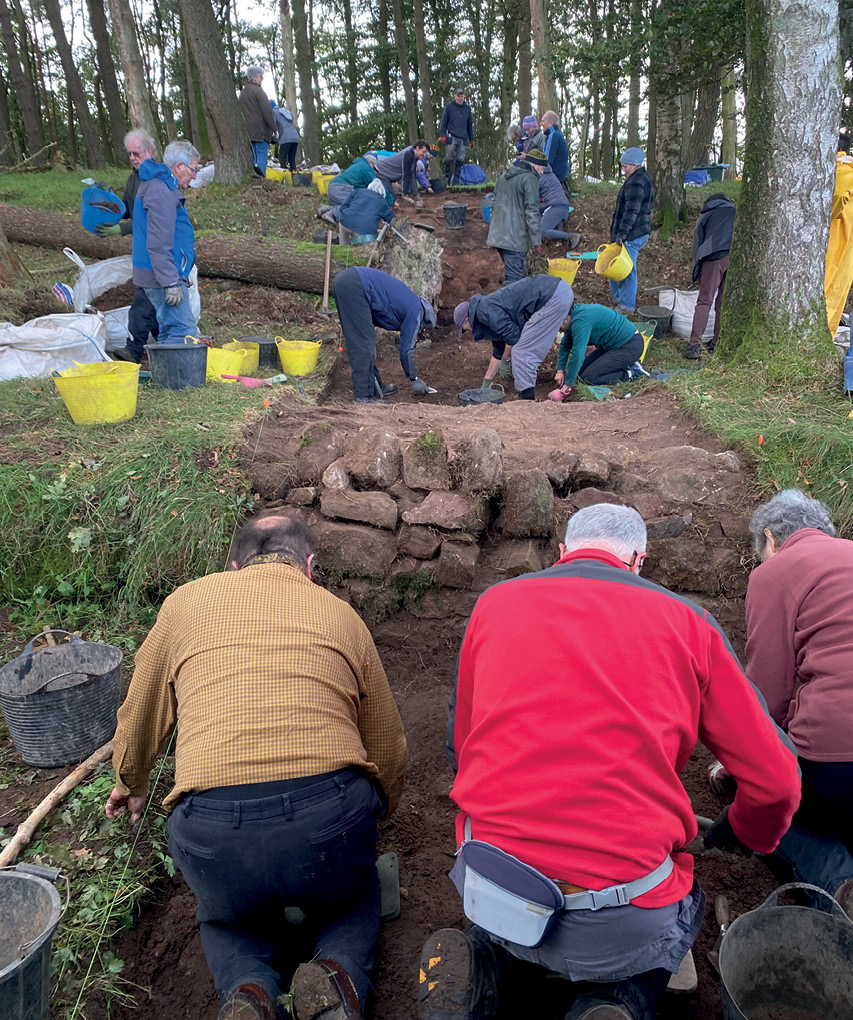
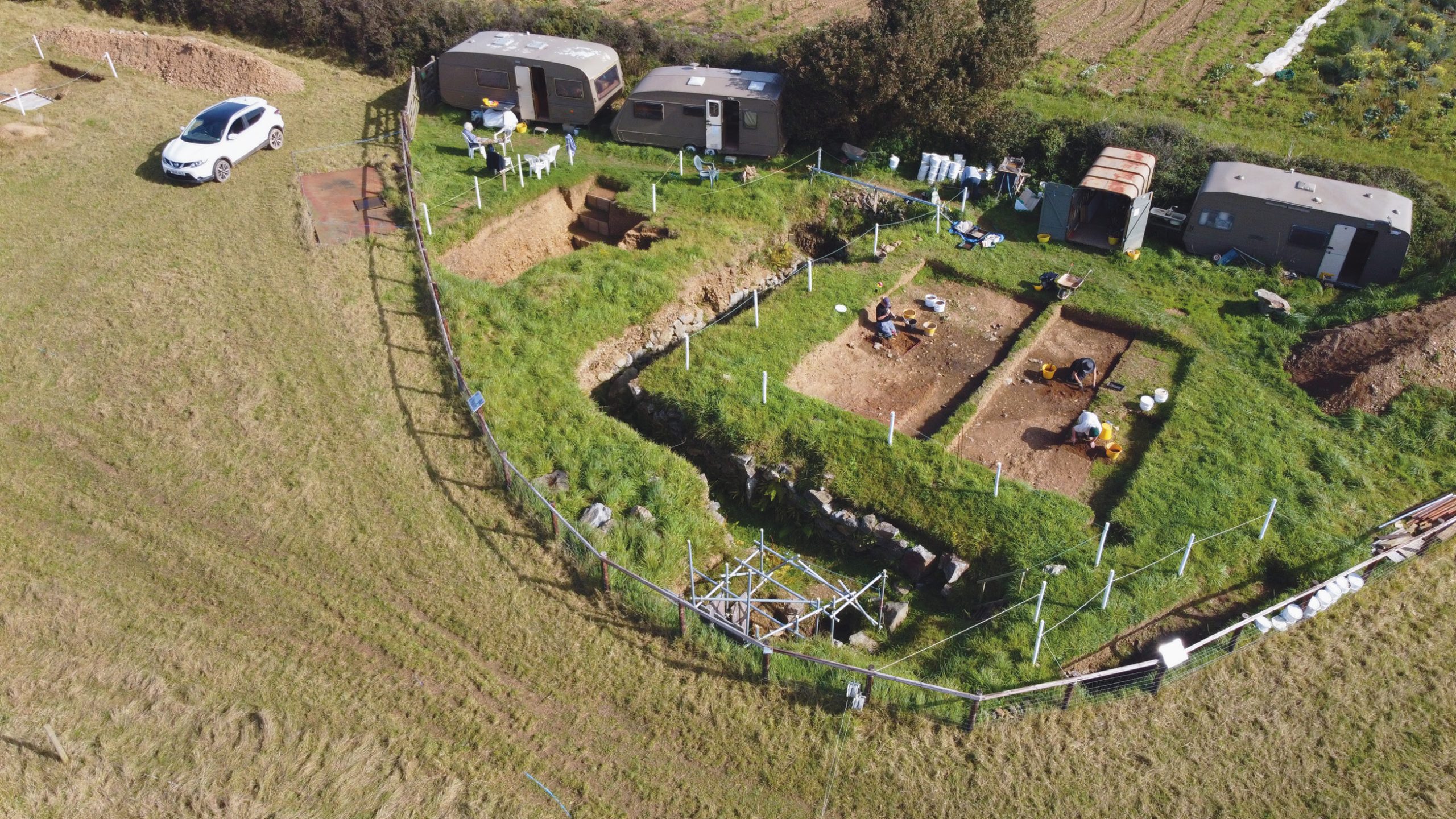
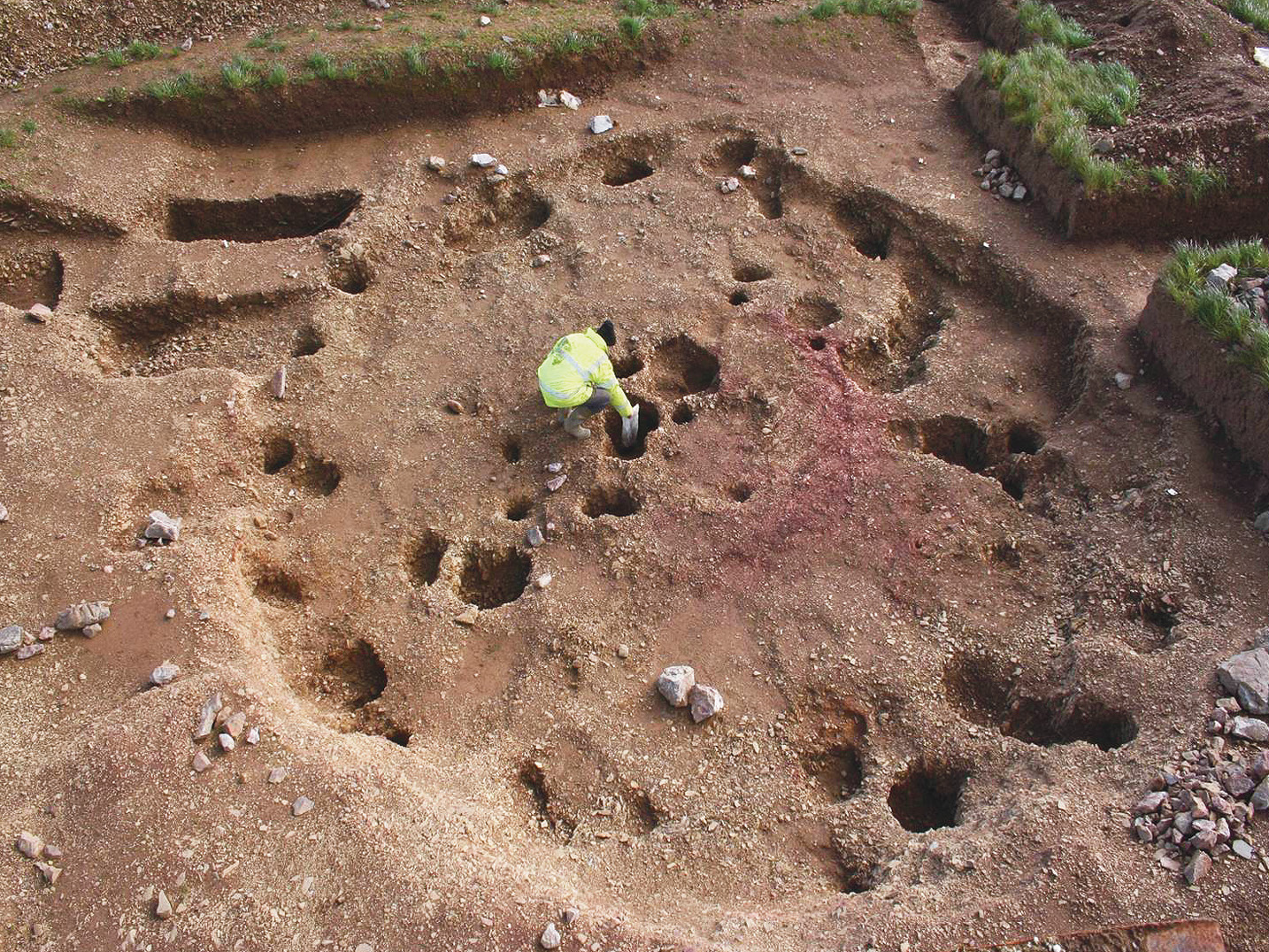
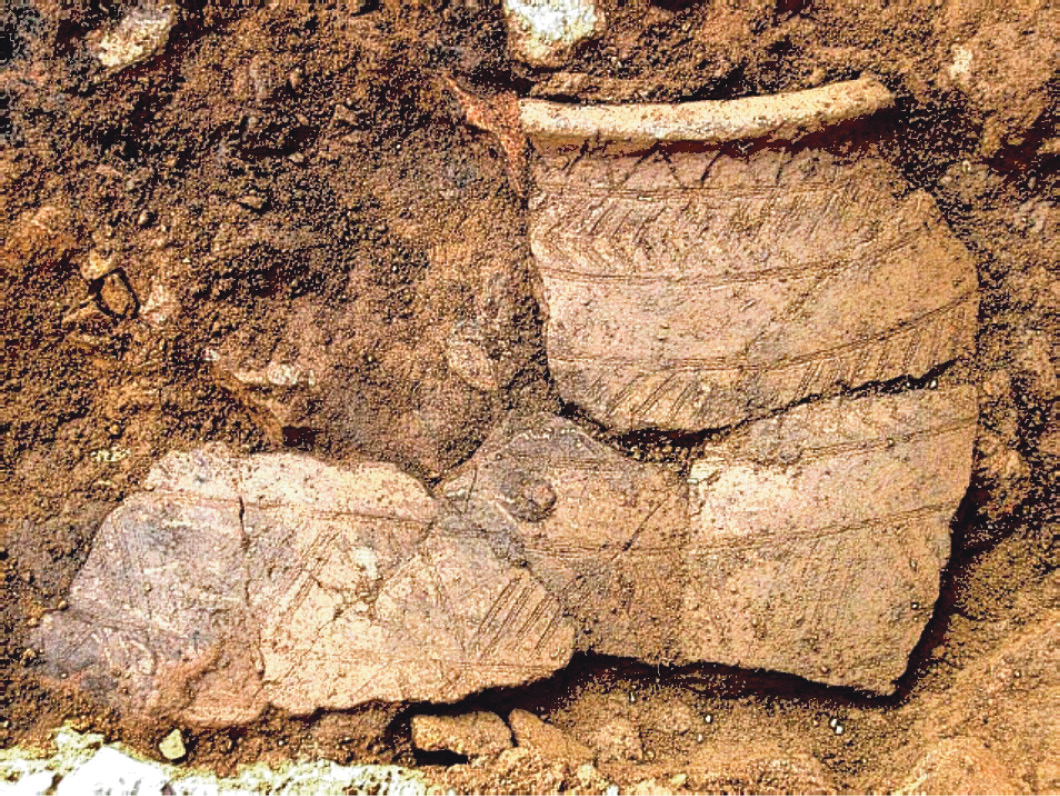
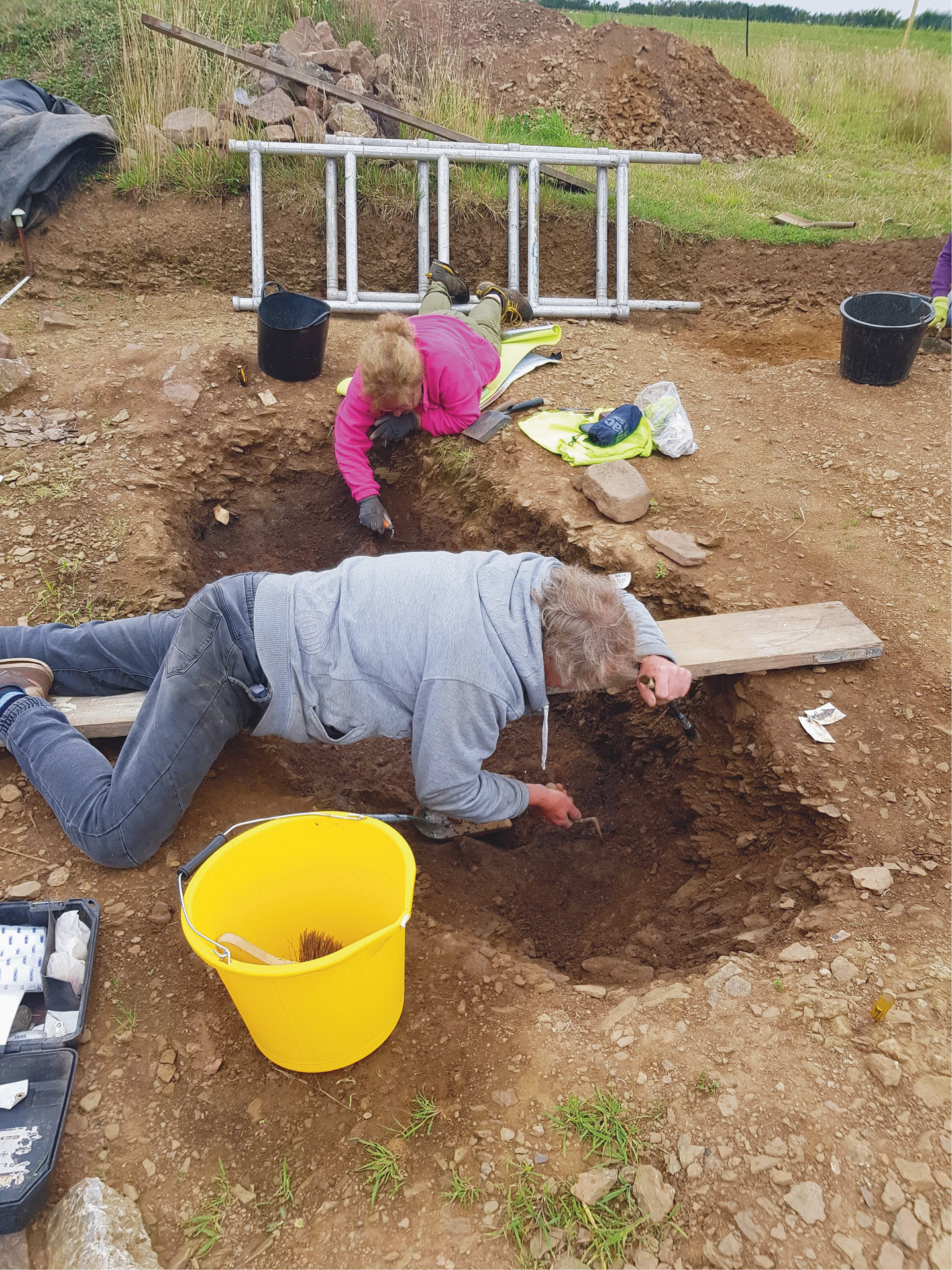
Just outside the enclosure (whose ditch was found to measure c.2.5m deep and c.3m wide), another anomaly proved to be rather earlier in date, representing the remains of a Bronze Age roundhouse. Measuring 8m in diameter, its sunken footprint produced fragments of a very large and elaborate Trevisker ware pot – a local variety dating to the middle Bronze Age (c.1400 BC) which is decorated with distinctive geometric patterns formed using twisted cords.These discoveries sparked great interest from the local community, culminating in the creation in 2008 of the Meneage Archaeology Group (MAG). Its initial task was a further excavation of the roundhouse (working with James and the Cornwall Archaeological Society), which recovered more pieces of Trevisker ware, as well as loom weights and a bronze dagger. Today, MAG has grown to around 75 members, ranging from teenagers to adults in their 80s, with diverse backgrounds and levels of archaeological experience. The group holds walks, talks, and workshops, but their main focus remains the community excavation at Boden, which (with Chris’ enthusiastic support) has expanded far beyond the original roundhouse to encompass other evidence of Bronze Age activity, Romano-British features, and the Iron Age fogou.
Tracing tunnels
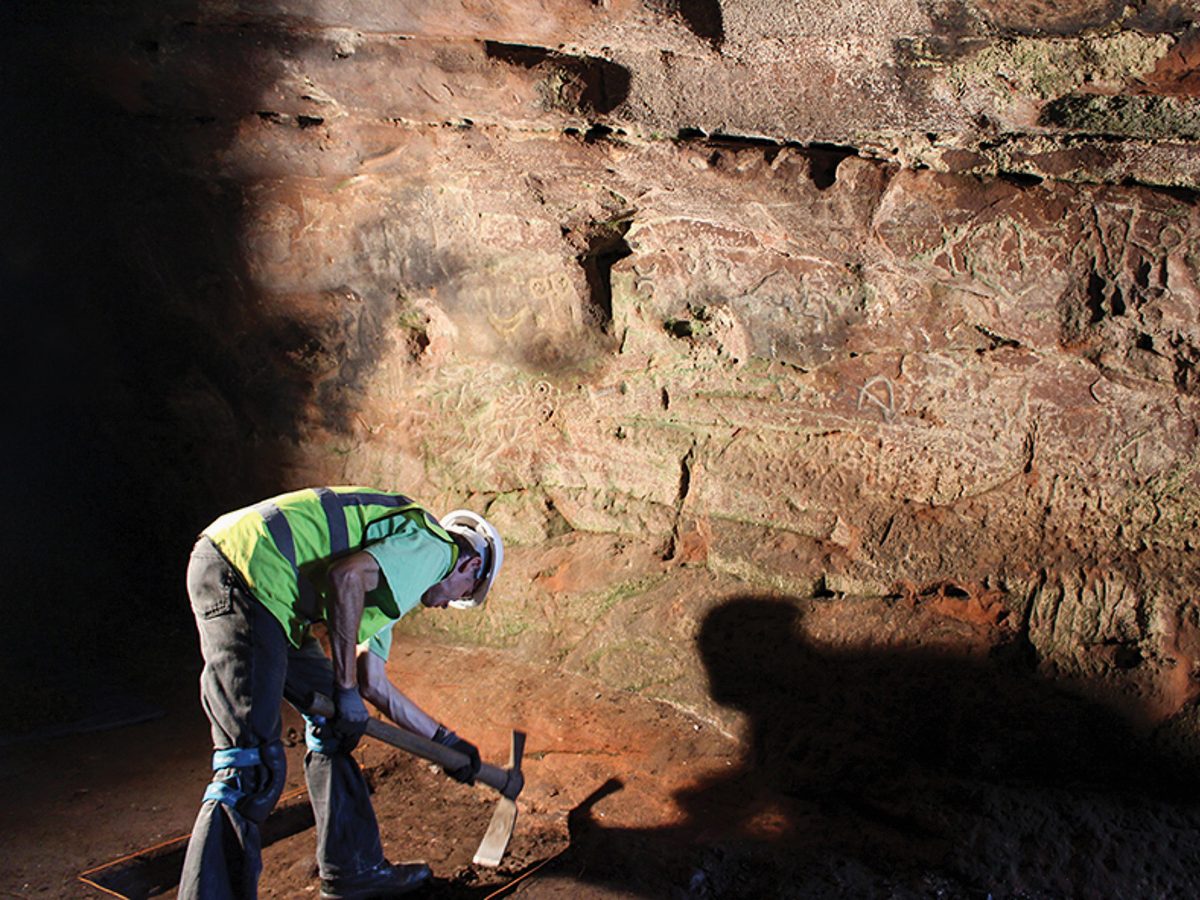
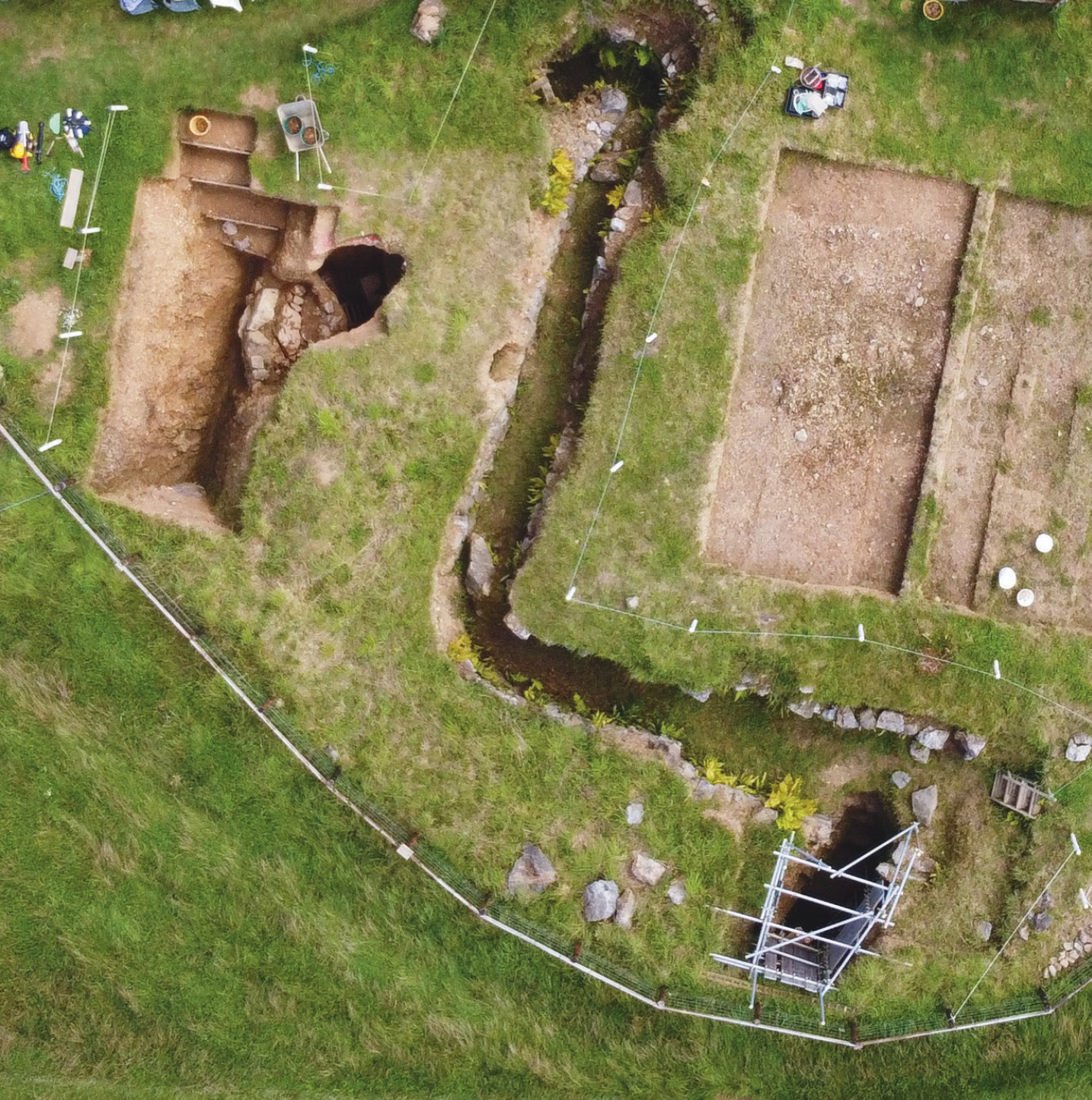
When I met James on site this summer, hoping to learn more about MAG’s latest finds, the fogou was the first stop on our tour. Today its passages are open to the air, but as we descended into their narrow depths you could still appreciate that this would have been a rather claustrophobically confined space when complete. Two tall stones protruding slightly from the wall appeared to mark the main entrance, like gateposts, and beyond these the passage initially ran to the north, before taking a sharp turn to the east and continuing for around the same distance, forming a starkly defined L shape.
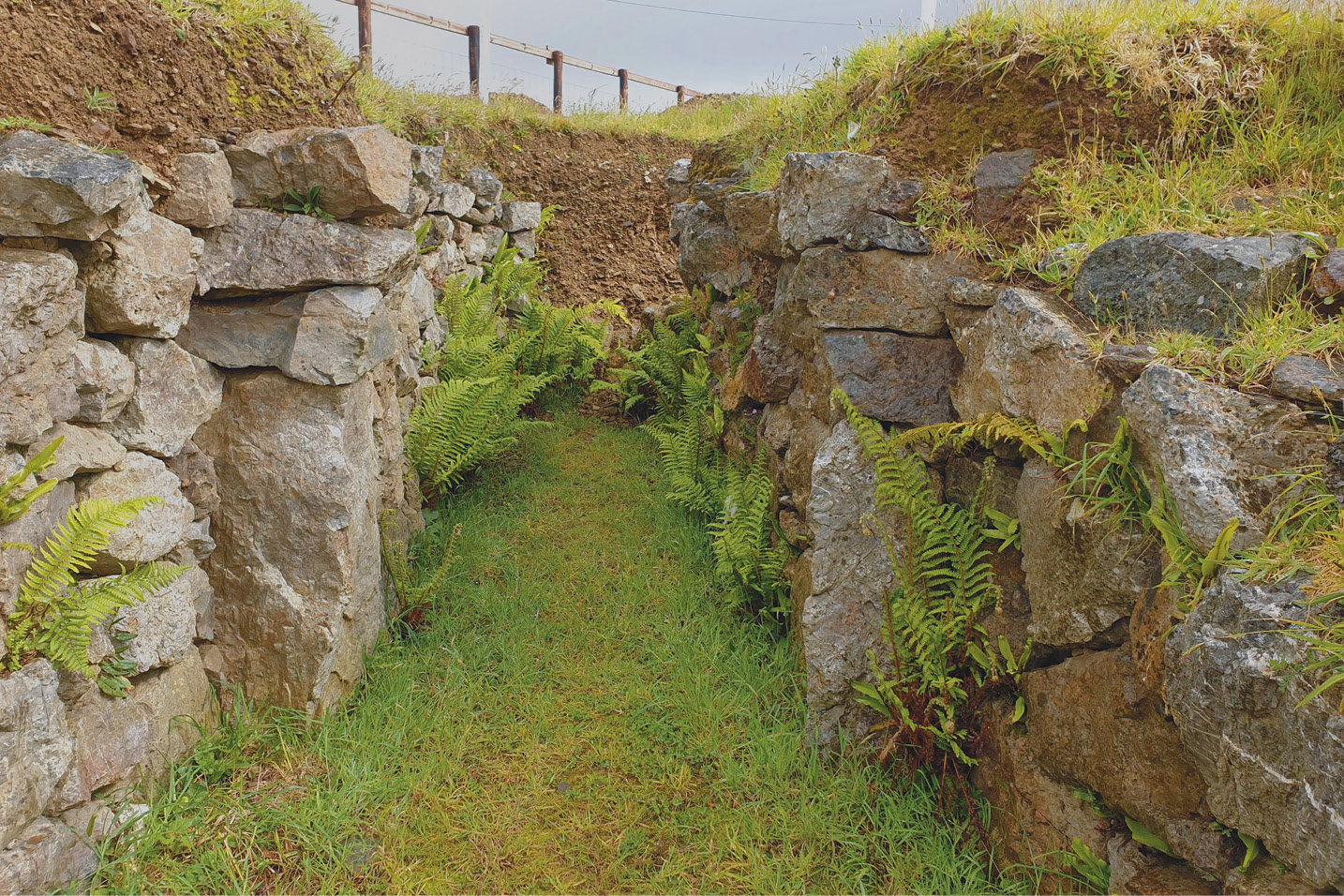
Beyond the ‘gatepost’ stones, it could be seen that the walls narrowed slightly, perhaps hinting at corbelling to help support a roof of stone slabs. Most of these have long since been robbed away, taken as useful building stone to use in other, later constructions, but one large example could still be seen, albeit on the floor of the fogou. James believes that this slab could have slipped from the grasp of would-be recyclers, toppling into the tunnel, and was abandoned as too difficult to recover. For any readers who would like to experience a fogou with its roof intact, one of Cornwall’s best-preserved examples lies just six miles from Boden. This is Halliggye Fogou, which was excavated in the 1980s and is today in the care of English Heritage. Visitors can explore its unlit interior for free between May and September (bring a torch), but from 1 October to 30 April it is closed due to resident roosting bats; see http://www.english-heritage.org.uk/visit/places/halliggye-fogou for more details.

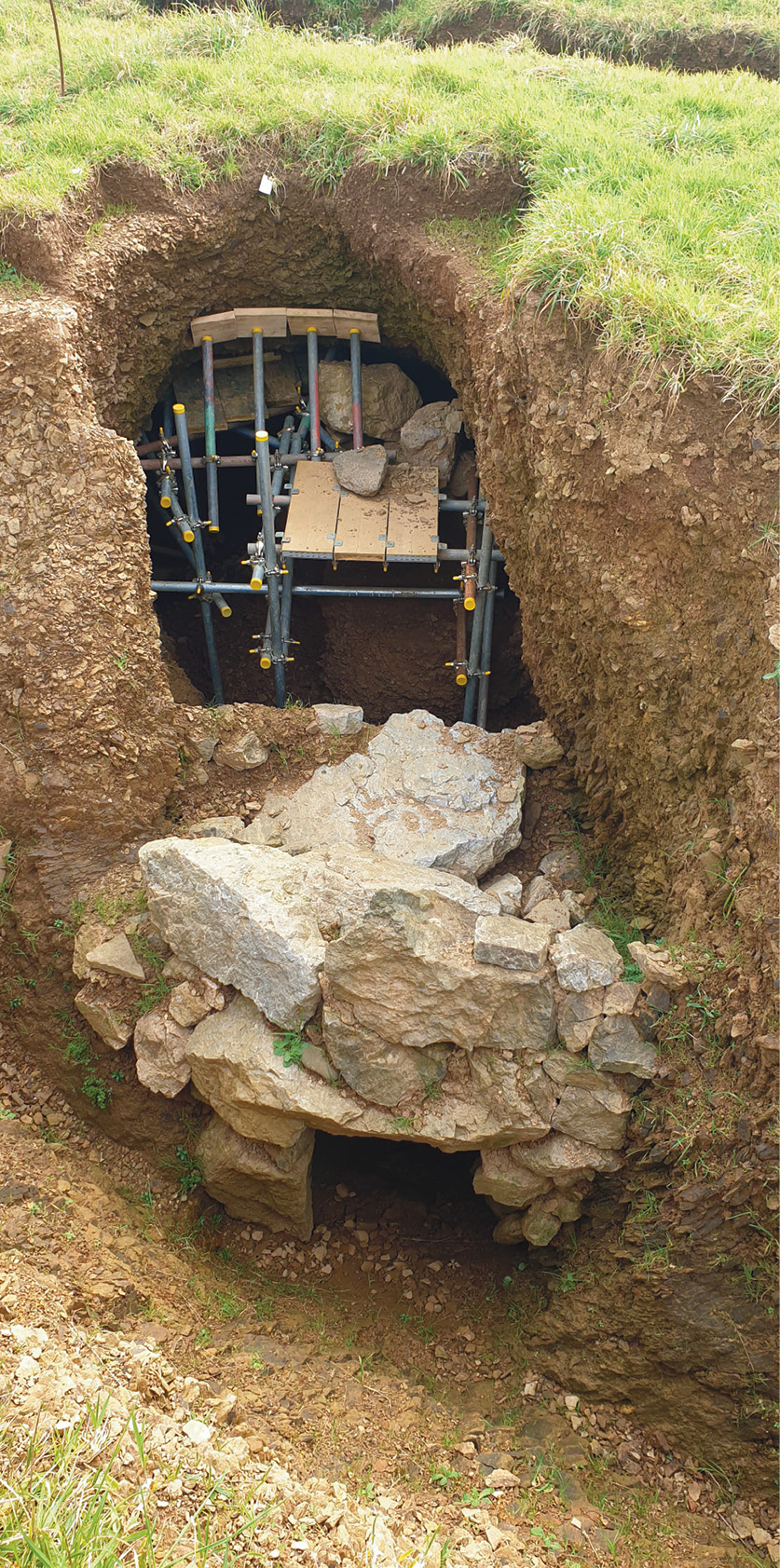
The Boden fogou’s dramatic dog-leg, discovered in 2014, is unique, James explained – but more recent seasons on the site have revealed its layout to be even more complex. In 2018, the team discovered a set of rock-cut steps descending 4m into the ground just to the west of the main entrance. These led to a previously unknown, curved side passage, with pick marks from its creation still preserved in the walls – and when MAG were visited by the then newly relaunched Time Team in 2021 (CA 386), their three-day investigation revealed a junction between the side passage and the rectangular enclosure ditch. Time Team also carried out geophysical surveys which hinted at a second such connection, this time linking the ditch with Chris’ ‘void’ (now confidently believed to be Polwhele’s ‘cave’), but this was not confirmed until the following year, when MAG’s 2022 excavation revealed a roofed stone passage between the two. It now seems clear that the fogou and ditch were not simply connected by their shared date, but were part of the same construction.
Creating this warren of tunnels would have represented a huge investment of time, energy, and resources – and, it appears, careful selection of specific materials. None of the stone used in the fogou’s construction is native to the field, but had been brought in from sources up to two miles away – something that was surely a deliberate choice, and not one made lightly, given the effort required to carry the stone uphill to where it was needed. Might there have been a deeper significance driving this decision? James highlighted that one of the main materials identified within the fogou’s walls is gabbro, a kind of igneous rock that comes from a small, specific area around St Keverne, about two miles from Boden. When this stone weathers and erodes, it forms gabbroic clay, which was used for almost all Cornish pottery produced from the Neolithic through to the early medieval period. Perhaps the stone that this evidently invaluable clay had come from was seen as somehow ‘special’ by the fogou’s Iron Age architects.
Roman rarities
For the first eight years of the community excavation, MAG’s investigations had illuminated the area’s prehistoric past – but in 2016 the project’s scope suddenly broadened. During an open day on the site, the team dug a series of test-pits over an anomaly thought to be similar to the Bronze Age roundhouse that they had dug in 2008. Although they would later go on to identify a second roundhouse, and Time Team would add a third to what is increasingly appearing to be a scattered settlement, what they found here was an area of Romano-British activity spanning the 2nd to 3rd centuries AD. It did include the remains of what was interpreted as a structure, but it had an oval form known to have arrived in Cornwall with the onset of Roman influence. Inside was a possible post-pad, and a pit that contained the largest and most highly decorated piece of Samian ware discovered in Cornwall to-date. Samian is rare in this region, but thanks to the discovery of a similar sherd in Exeter it is possible to put a name to the potter who created the Boden example: Patronus II, who was working in Gaul in the late 2nd century. Clearly the site, even though it was rural, was nonetheless well-connected at this time.
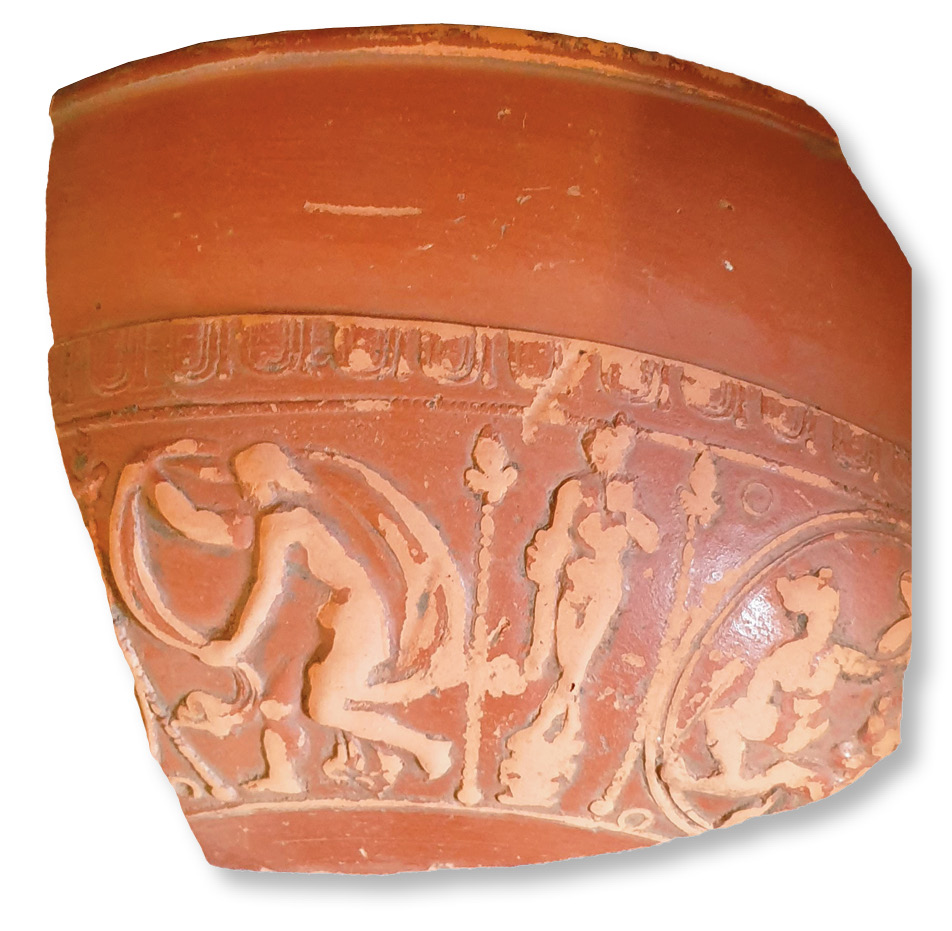
The fragment’s imagery is very abraded, but it is still possible to make out a veiled dancer, the god Pan with his characteristic pipes, and a partial erotic scene featuring a couple. Such realistic figurative imagery must have seemed radically different to the area’s indigenous inhabitants, who were more used to abstract geometric designs. As over a century had passed between the pot’s manufacture and its deposition, James suggests that it could have been kept and passed down as a treasured heirloom – perhaps its images are so worn because they had been repeatedly traced by generations of curious fingers.

If the oval depression did represent a structure, MAG have found little evidence of domestic activity within it, and less still of industry, such as slag, in its immediate surroundings. For now, its purpose remains unknown, but nearby the team have found traces of possibly ceremonial practices. These include two large pits, surrounded by stones, which have been interpreted as possible graves. Neither has produced any human remains (though this was not surprising, given the acidic nature of the local soil), but both contained a scatter of hobnails. The larger of the pair – an oval some 6ft long – has also yielded more than 600 Roman coins, mainly radiates. These are thought to have come from two discrete but broadly contemporary hoards, each possibly held in a (now broken) pottery vessel, dating to the second half of the 2nd century.
MAG reported their discovery to the local Finds Liaison Officer, and the coins have since been sent to the British Museum for more detailed examination. Although their condition is generally poor (again, probably due to the acidic soil) and expert analysis is ongoing, it is possible to talk to some degree about the contents of the hoards.

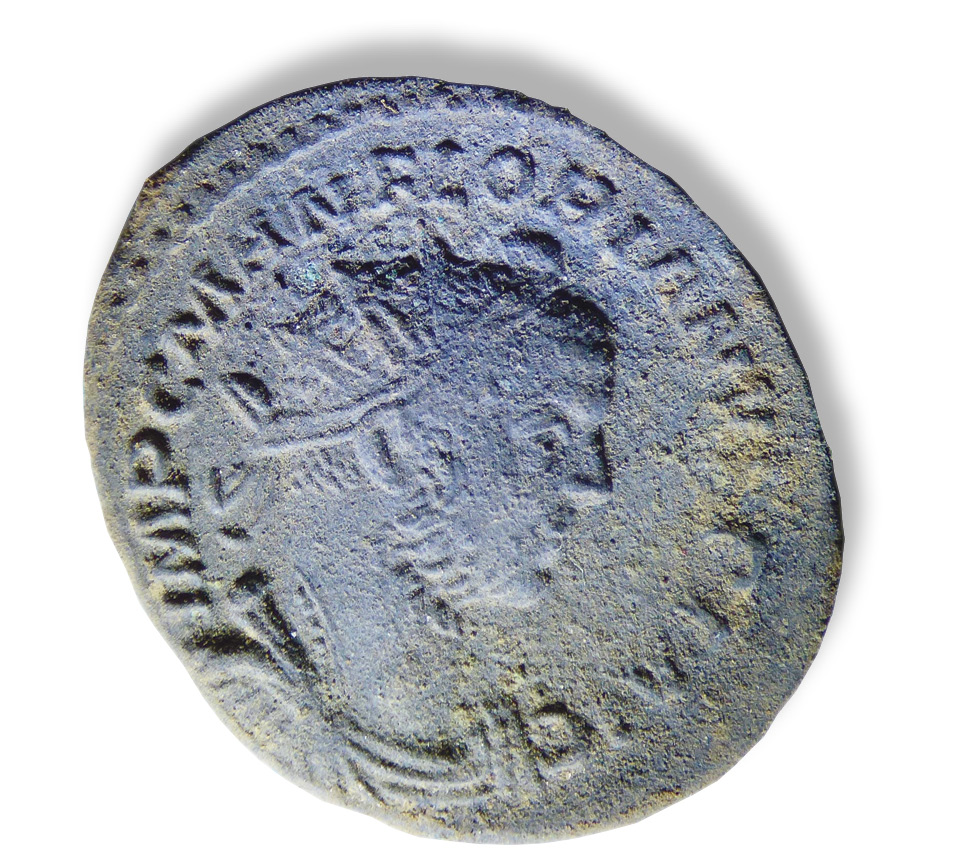
Hoard 1 comprised 145 complete coins, as well as fragments of more, ranging in date from AD 253 to AD 278/279. Its contents tell a vivid story of the challenges facing the Roman Empire at this time – not just economic difficulties reflected in their debased content, but dramatic political events. Most of the coins in this collection were minted within the bounds of the Gallic Empire, a splinter state that was born out of the Crisis of the 3rd Century, when invasions from abroad and instability, usurpers, and assassinations at home brought the Roman Empire to the brink of collapse. This breakaway territory was founded by a rebellious military commander called Postumus, and at its peak it held dominion over Gaul, Britannia, Hispania, and parts of Germania. Its influence rapidly diminished after Postumus was murdered by his own troops in AD 269, however, and five years later its lands were reconquered and brought back under the official imperial umbrella by the ‘legitimate’ emperor Aurelian. Other coins from the hoard reflect this restoration of the status quo, as they include issues of Tacitus (r. 275-276), Florian (r. 276), and Probus (r. 276-282), all of whom ascended to emperorship (albeit some of them only briefly) after Aurelian. The latest coin in the set is an issue of Probus dating to c.AD 278/279.
The much-larger Hoard 2 comprises around 485 coins (plus fragments), spanning c.AD 275-285. They are almost all ‘barbarous radiates’, contemporary copies of late 3rd-century coins that were produced in the western provinces during the Crisis of the 3rd Century, although there are also a handful of ‘regular’ coins from the Gallic Empire. The imitations are all notably smaller and more irregular in form than the coins they were copying: it appears that many of them had been struck on small scraps of metal sheet, possibly recycled material, and a wide range of dies seem to have been used in their creation.
Around the two ‘grave cuts’ were a number of much smaller pits containing lots of bits of pot, often coming from the same vessel. These appear to have been covered over with little cairns of stone; if this indicates some kind of ritual activity, there are few close comparisons, James notes, but it is possible that this was a regionally distinctive tradition.
Material world
Why might this unassuming rural site have attracted so much attention – and material culture – from Rome? During the Iron Age, Cornwall was the territory of a people called the Dumnonii. Unlike many of their contemporaries to the north and east, they managed to maintain their sovereignty through Julius Caesar’s and Claudius’ invasions of southern England – but this area nonetheless fell within the imperial sphere of interest because Cornwall was an important source of tin. Traded material reflecting contact with the Roman world is known from other sites in the Boden area, possibly because the nearby Helford River – a major route throughout prehistory, and possibly into this later period – could have served as a useful channel for commercial activity.

Another clue came in 2017, when a geophysical survey in the adjacent field revealed a square ditched enclosure measuring some 25m by 25m. Two years later, MAG opened a series of test-pits and trenches to investigate further, producing fragments of Romano-British pottery and Roman glass, and the feature was explored again during Time Team’s visit in 2021. Time Team initially suggested the square could represent a Roman temple, and then proposed a walled cemetery, but the outline proved to be neither. As the enclosure ditch surrounding the fogou attests, square ‘rounds’ are not unprecedented, but this was deemed too small to be a plausible farmstead. James offered another possibility, however. We are starting to see similar sites around the Cornish coast picked out in aerial photos, he said, and these are sometimes interpreted as Roman signal stations. If such a structure had been built to take advantage of the lofty position and sweeping views of the Boden site, it might explain why a nearby Iron Age settlement might have seen an influx of Roman material beyond what you would expect for its size and status.
MAG’s ongoing excavations are adding vivid new details to an ever-evolving and increasingly rich image of this area of Cornwall’s past. If you would like to see some of their finds for yourself, the team are holding an open day on site on 14 September, following a series of events this summer linked to a planned relaunch of the Young Archaeologists’ Club in the county; see their blog (linked below) for more details.
Further information:
• James Gossip (2013) ‘The evaluation of a multi-period prehistoric site and fogou at Boden Vean, St Anthony-in-Meneage, Cornwall, 2003’, Cornish Archaeology 52: 1-98; available to download from https://cornisharchaeology.org.uk/2022/08/19/volume-52-2013/.
• For more information about the work of the Meneage Archaeology Group, see their Facebook page at http://www.facebook.com/groups/270900704216, and their blog at http://www.meneagearchaeologygroup.org.
• You can watch the Time Team episode focused on the Fogou via the Time Team Official YouTube channel: http://www.youtube.com/watch?v=QwSz0TRVx4Y.
All images: James Gossip