Subscribe now for full access and no adverts
Australia’s Nullarbor Plain is the world’s largest semi-arid karst system and, as such, contains thousands of subterranean caves. Some are adorned with stalactites and stalagmites, some have cave spiders, and a few contain Aboriginal archaeology, including rock art. This imagery consists mostly of hand stencils rather than figurative art, but the singularly spectacular Koonalda Cave preserves a vast array of engravings deep beneath the Nullarbor Plain. In recognition of the site’s significance, it was granted (Australian) National Heritage status in 2014 – some 55 years after being first reported as a site of possible archaeological interest.
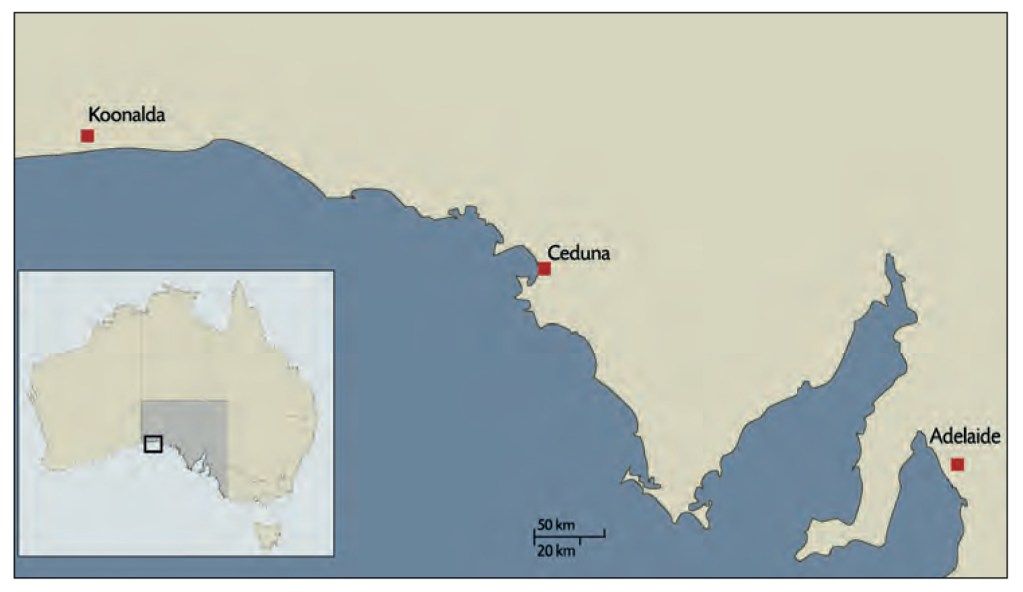
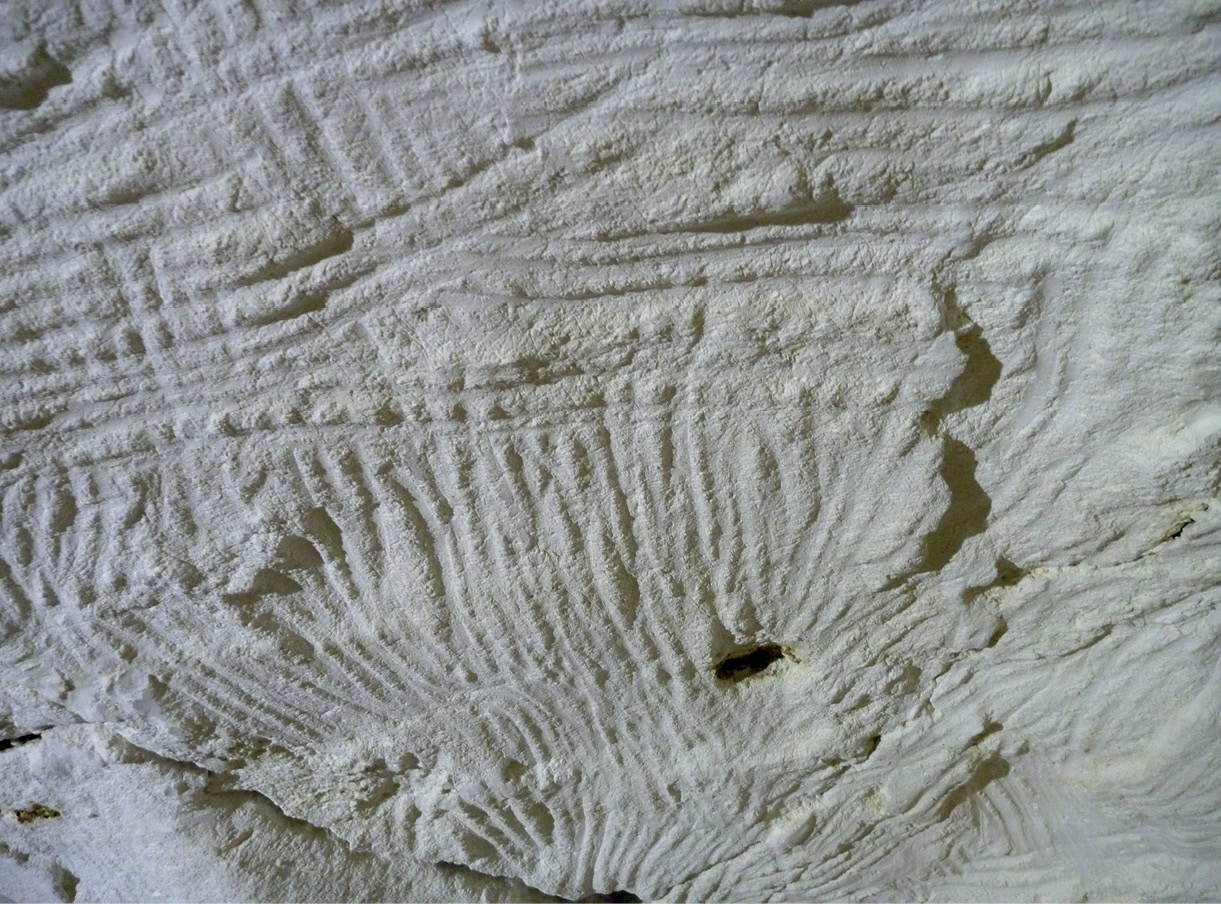
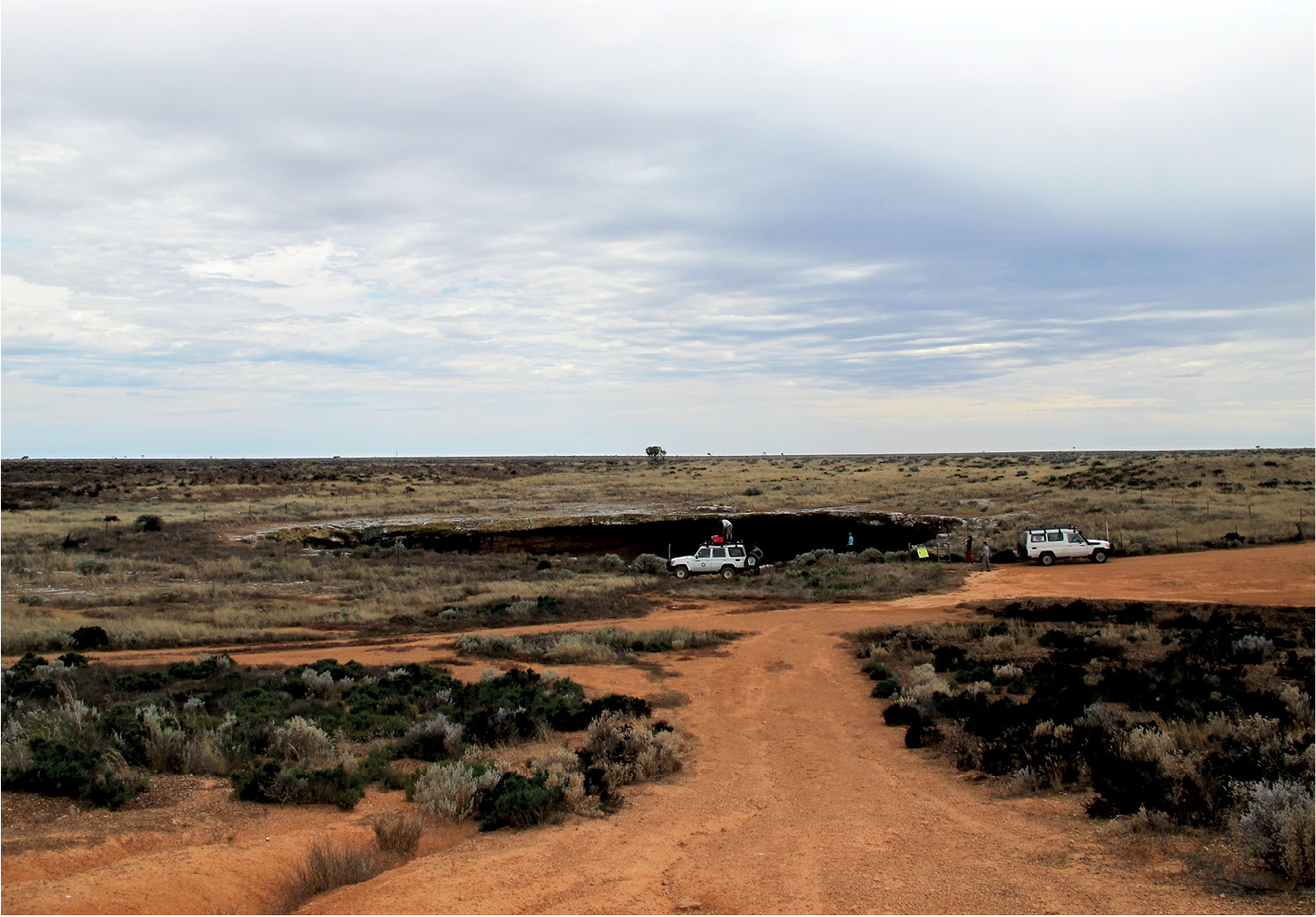
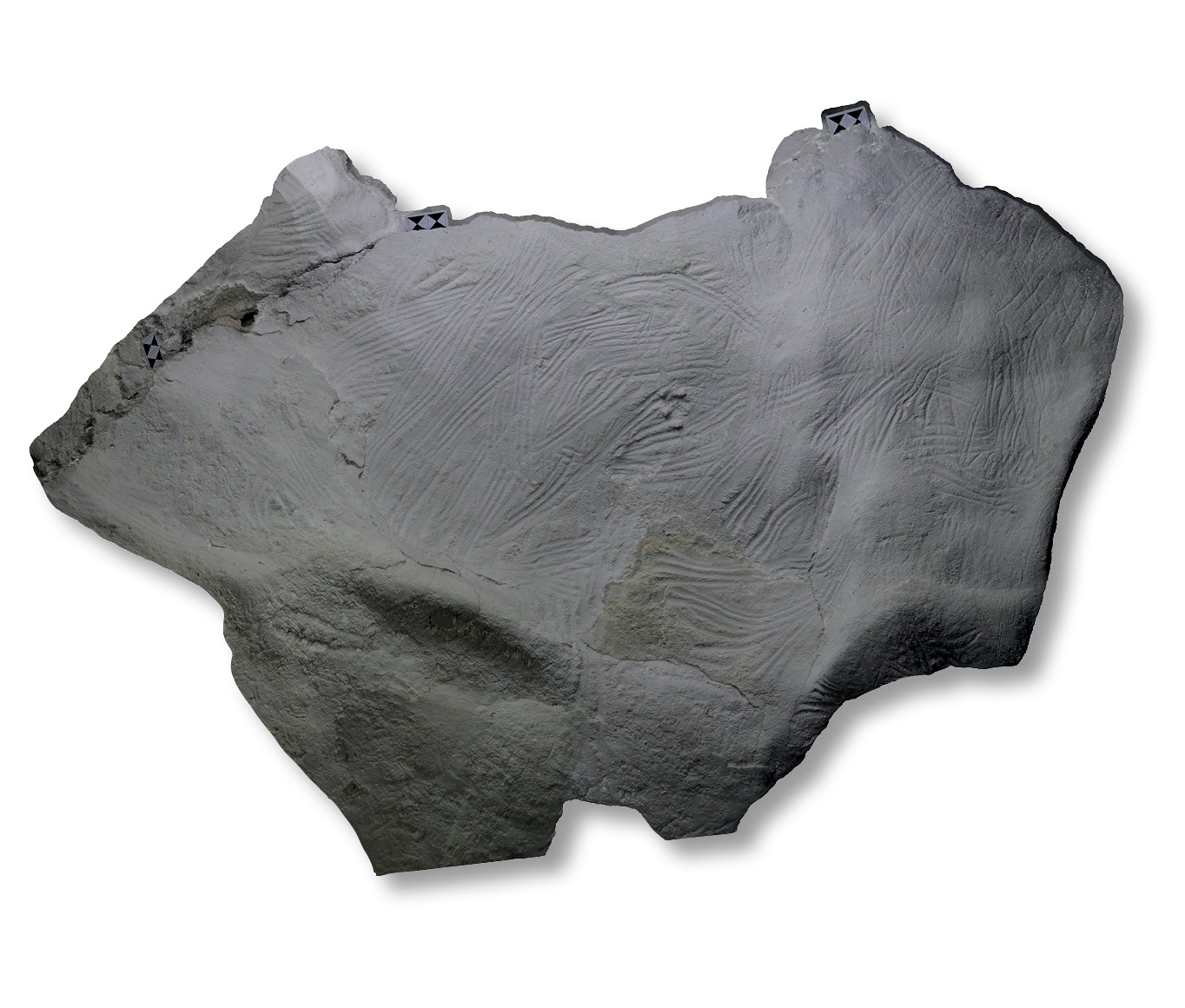
Koonalda Cave is located on the South Australian portion of the plain, approximately 30km north of the Nullarbor Cliffs, which drop precipitously into the sea. The cave is internationally recognised for having the world’s most impressive display of ‘finger flutings’, which are a particular form of engraving made on soft cave sediments. Such markings are formed by deliberately drawing fingers across a surface, leaving traces of the movement. Examples of this technique are not just found in Australia. Instead, comparable impressions have been identified in Palaeolithic caves across southern France and northern Spain.

The engravings are sufficient in themselves to merit the National Heritage status for Koonalda Cave, but the site is also known for the evidence it preserves of prehistoric flint mining. The term ‘mining’, as used here, relates to the intentional extraction of flint to make tools. Large nodules of flint naturally stud the upper walls of the main chamber and passageways. These nodules are subject to ‘crystal wedging’, which eventually causes them to fracture, resulting in large chunks landing on the floor of the cave. Once there, the flint was readily available for tool-making by Aboriginal people, an activity that took place either inside the cave or above ground.
In 1937, a kangaroo-skin package containing some 40 flint-blade blanks was procured by museum officers from an Aboriginal man living about 100km west of Koonalda Cave. We now know that for many millennia, Nullarbor flint was a desirable item that was traded via long-distance routes, the scale of which is well illustrated by the ability to transport pearl shell from Broome in north-west Western Australia to the Nullarbor Plain – crossing some 3,000km of intersecting trade routes along the way. However, in 1937 archaeology was not a formal discipline in Australia, and Aboriginal people were not thought to have been on the continent for longer than a few thousand years. Twenty years later, all of this was to change, with Koonalda Cave playing a pivotal role in both the understanding of Aboriginal occupation and the founding of Australian archaeology as its own unique discipline. Alongside all of this, the cave has made a significant contribution to the study of ‘finger-fluting’ engravings.

Hungarians on the Nullarbor
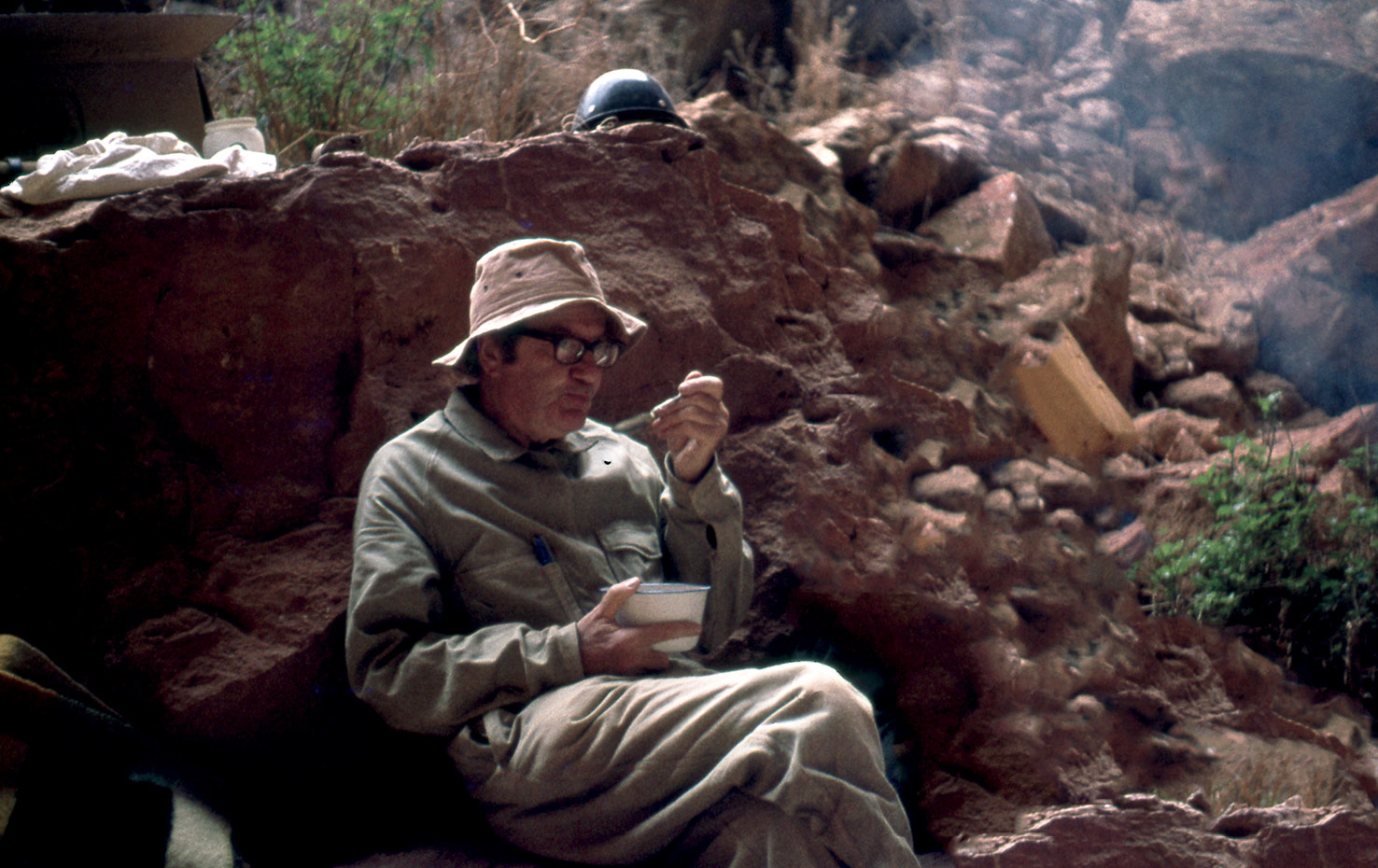
Prior to 1949, Dr Alexander (Sandor) Gallus was Head of the National Museum in Budapest, Hungary. After 1949, he joined the flow of post-war European immigrants into Australia, only to find that their ‘old world’ credentials did not retain the same value. On arrival, he was the most highly qualified and experienced archaeologist in Australia, but struggled to gain an institutional appointment. Instead, he volunteered his expertise on archaeological-related activities, and earned a living by tutoring in various European languages. Despite Gallus’s lack of formal status, it was he who was sent the first photographs ever taken of the engravings in Koonalda Cave. He instantly knew what he was looking at and used his small circle of support to organise an expedition to the site.
Koonalda Cave lies approximately 1,200km from the nearest capital city (Adelaide), and in the late 1950s was situated just north of an unsurfaced highway that was notorious for potholes the size of a passenger car and corrugations that rattled the mirrors off any vehicle that survived the treacherous cavities. Nevertheless, this post-war Hungarian archaeologist took himself and a small team of enthusiasts westward to establish whether the cave did indeed hold evidence for Aboriginal use. Verification was immediate and his first excavation followed in late 1958, with work continuing sporadically over the next 25 years – always facing the challenge of infrequent and insufficient funding. Gallus relied entirely on volunteer teams, composed mostly of university students, who went so far as to raise their own funds by passing around a hat and begging local manufacturers in Adelaide to supply their food and equipment. Despite many difficulties, Gallus and his enthusiastic volunteers opened up three trenches – the last of which was excavated to a depth of 4m – and removed tonnes of flint for analysis in Adelaide. They also investigated the expansive display of finger flutings and other engravings, which covered some 350m² of cave wall in an absolutely dark chamber.

Gallus was not the only Hungarian on the Nullarbor Plain at that time. Ljubomir Marun was researching there as well, surveying thousands of square kilometres and seeking caves and rockshelters containing archaeological material. Remarkably, Marun undertook numerous and often extensive excavations in Nullarbor caves, and produced a heft of raw data for his doctoral thesis. He, too, failed to secure an institutional appointment, and his extensive findings were not published. However, his unpublished reports and research thesis continue to offer a highly valuable baseline for investigating Nullarbor archaeological sites. Without these two very intrepid and determined Hungarians, archaeological research on the Nullarbor Plain may never have taken place, as it was they who inspired others to pursue similar efforts in this challengingly remote and arid zone. But it was Gallus, in particular, who managed to inspire an altogether unusual occurrence at Koonalda Cave.
Another team appears
In 1967, Gallus and his team were joined by another lead archaeologist – Richard V S Wright. Wright was a graduate in prehistoric archaeology from the University of Cambridge, who by then also held an appointment with the University of Sydney. He brought his own team, which included a bevy of specialists to investigate the rock art, prehistory, sediments, flints, fauna, and flora. In 1971, Wright compiled what is still the only substantial publication on Koonalda Cave. With a far higher level of funding and also direct access to the country’s key radiocarbon laboratory, he set about rigorously dating sediments from the deepest excavation trench. Gallus had previously managed to have some sediments dated and his results were truly surprising in light of the prevailing assumptions about the commencement of Aboriginal occupation of Australia.
Both Gallus and Wright agreed that the cave had never been a place for habitation. Instead, it was a flint source and venue for mark-making in total darkness. When it came to the question of how long Aboriginal people had been using the cave, however, Wright found no evidence that stretched beyond the period from 22,000-15,000 years ago. This stood in stark contrast to Gallus’s proposal of activity from 31,000 to 8,000 years ago. Gallus also estimated that the lowest floor associated with archaeological material dated to c.45,000 years ago. Although such a date would be unsurprising today, given the raft of published dates for human activity from 50,000 to 45,000 years ago in northern Australia, in the 1960s it was shocking to suggest anything earlier than 20,000 years ago. That said, the question of when precisely Aboriginal people first used Koonalda Cave – and when activity there ceased – has continued to haunt researchers, for a variety of reasons. In particular, uncertainty is caused by the small ratios of quartz used for dating in the layers of sediment, and the impact of sudden heavy rainfall, which can result in mixing of the deposits. However, drawing on a combination of both the previous research and independent dating undertaken in nearby sites containing deep deposits makes it clear that Aboriginal activity in Koonalda Cave equates more closely to Gallus’s estimation than to Wright’s.
Water, adventure, and stories
It was the speleologist Adrian Hunt who had first reported possible hand markings in Koonalda Cave. His report was the one confirmed by Gallus in 1958, and Koonalda Cave quickly went on to attract international attention as the world’s largest decorated Ice Age cave. While this was the first time that the engravings had been noticed, it was by no means the earliest exploration of the cave by Europeans, as many had visited the site since 1860. This failure to notice the markings for the best part of a century can readily be attributed to the predominant interests of visitors during this era. While the 19th century saw a fixation on mapping the nation’s water sources, by the early 20th century there was a desire among ex-military and -navy officers to organise private expeditions into remote areas and find new parts of Australia to ‘discover’. Neither of these endeavours involved looking for Aboriginal archaeological evidence, although hand stencils were often reported, due to their more obvious nature.

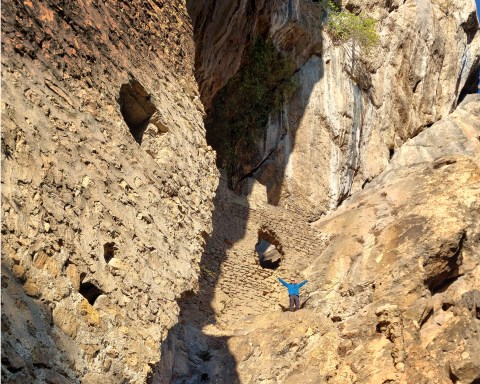
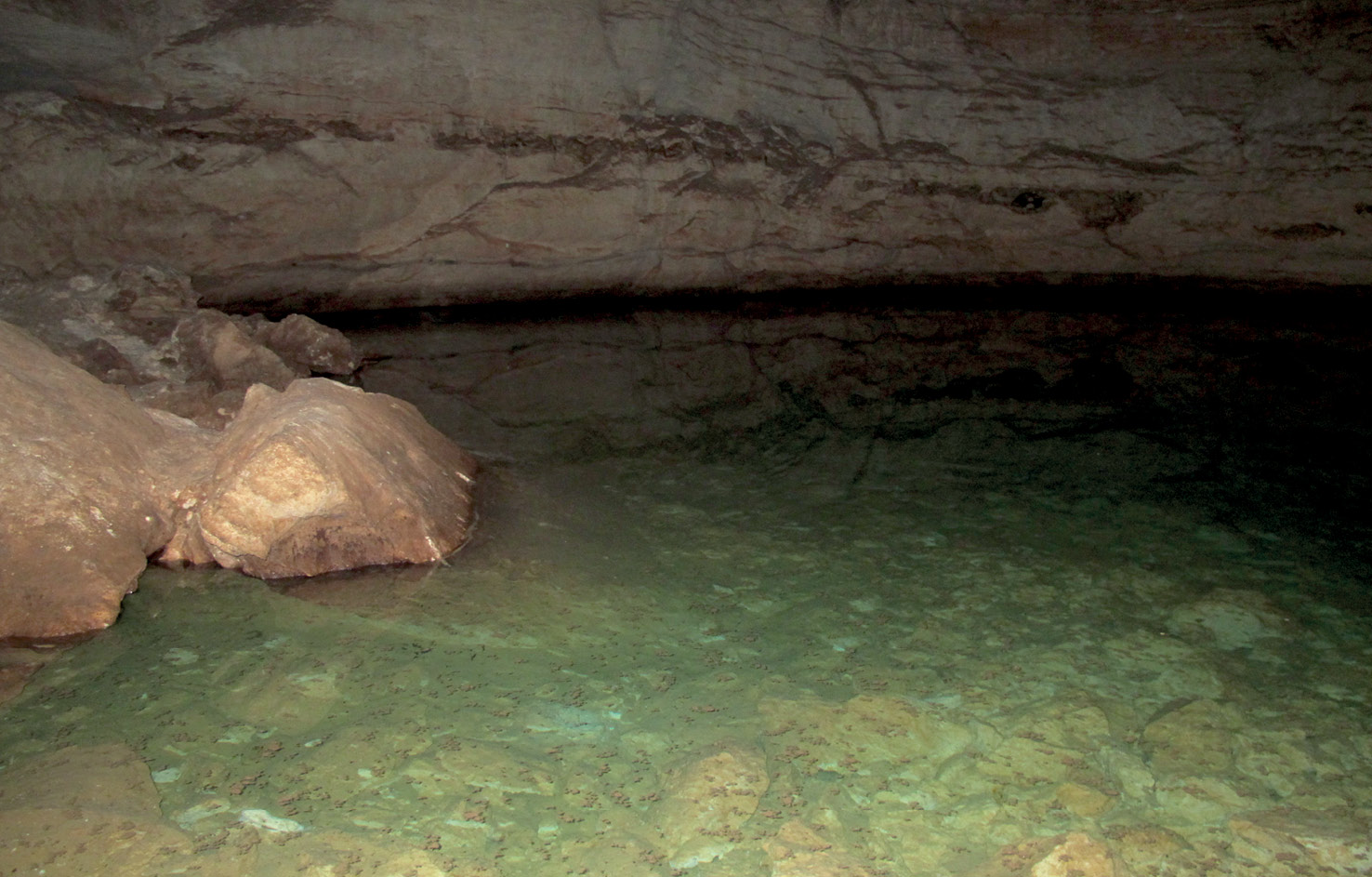
Initial interest in Koonalda sprang from another of its contents: water. The cave comprises two main, interconnecting passages, which extend approximately 80m below ground surface. One passage contains a series of lakes, the last of which lies some 600m from the cave entrance. The presence of water in the cave was first made known in 1897, by the explorer Richard Thelwell Maurice, who had been led to it by Mingo, a local Aboriginal man. From then until 1945, a series of government surveyors made the arduous trek to the cave to assess the quality and quantity of its subterranean lakes. During this same period, Captain Maitland Thomson organised numerous private expeditions to explore Nullarbor caves, including Koonalda. Thomson even went so far as to lower a boat down into the cave and have his men sail it as far as possible along the north passage. Considering the cave entrance is via a collapsed doline, this in itself was no small effort.
Not one of these individuals reported art or other archaeological evidence in the cave. In fact, at that time it was generally believed that Indigenous people did not venture onto the Nullarbor, on the basis of sensational news and magazine articles penned by Irish-born ethnographer Daisy Bates. Her articles, published between 1920 and 1940, claimed that local Aboriginal people avoided the area for fear of Ganba, the Great Snake. This notion is countered by the numerous, dense stone-tool scatters that have been – and still can be – found around the rock holes and ephemeral clay pans that are scattered across the Nullarbor Plain. Aboriginal people most certainly travelled across the plain, but used very particular trade and travel routes that were determined by where water could be obtained. For thousands of years, Aboriginal people navigated the plain by observing rainfall patterns and knowing the location of each and every ephemeral claypan and waterhole, no matter how small and how shallow. Koonalda Cave would have provided a reliable source of water for much of antiquity – except during the Last Glacial Maximum (LGM).
The LGM commenced in southern Australia approximately 23,000 years ago, leading to exceptionally low sea levels for the next 10,000 years. At that time, Koonalda Cave lay some 180km from the coast, rather than its current 30km. Sea retreat lowered water-table levels, meaning the lakes in Koonalda Cave would have been dry for much of that time. Aboriginal people, though, continued to access the cave even during the extreme aridity of the LGM. These visits included trips to the darkest and most difficult to reach part of the cave, in order to produce finger flutings and incisions on the walls. Evidence for this comes in the form of charcoal from torches, which litters the floor of the art chamber. Radiocarbon dating of some of these fragments by Gallus provided direct evidence for activity in the cave at the height of the LGM. Climatic conditions began to ameliorate around 10,000-8,000 years ago, bringing rising sea levels that once again placed Koonalda Cave close to coastal cliffs. Aboriginal people continued to make marks inside the cave and procure flint from it – until the arrival of Europeans, intent on ‘opening’ up the land.
The meaning of the marks
The best-known examples of finger fluting in Europe can be found at Rouffignac Cave, in southern France. Such marks were originally referred to by the terms ‘macaroni’ and ‘meander’, which were coined by Henri Breuil, a French Catholic priest and prehistorian, in response to their flowing, enigmatic form. The modern name was introduced by Robert Bednarik in the 1980s, to reflect the recognition that the markings are deliberate and respond to the natural topography of cave walls. The question of meaning has fascinated researchers and the public for well over a century. Most caves containing finger flutings also feature incisions made into cave walls or ceilings and, in Europe, both of these forms can merge into figurative depictions of animals. This suggested to some rock- art specialists that the marks may relate to sympathetic hunting magic. Needless to say, the surprise discovery in 1958 of a cave in southern Australia that contained very similar forms of engravings to those recorded in southern France and northern Spain piqued international interest.

Gallus considered the engravings, both finger flutings and incisions, to be a form of communication and encouraged Christine Sharpe, a budding art historian, to investigate the marks. Sharpe concentrated on incisions rather than the flutings, which was an area that rock-art specialists Lesley Maynard and Robert Edwards were more focused on. Intriguingly, it was noted that shapes such as lattices and ovals created by the flutings were present on the walls of Koonalda’s art chamber. Such forms are extremely rare in their European counterparts. Alexander Marshack’s exploration of symbolic behaviour exerted influence over the emerging interpretative context, particularly for Sharpe. Maynard and Edwards proposed that the marks could represent a religious or magical ritual context or – equally possible – they could simply be the result of ‘doodling’.
Our recent investigation has considered the marks within a broader context of Australian Aboriginal art and cultural activity. In doing so, it is clear that the marks are indeed meaningful and definitely purposeful for spiritual propagation. This underpins the maintenance of a species and is activated by song, dance, and painting (on the body, in sand, on wood, and so on). Repetitive acts, such as throwing sand, dust, or stones are also involved, in order to wake up totemic beings and return a food source to abundance. The repetitive nature of the flutings and incisions in Koonalda Cave are especially reflective of spiritual propagation (thereby ensuring both the survival of a species and its seasonal return) over many thousands of years. Just what species of food source was attended to over that timespan is yet to be revealed, but it is likely to involve the more favoured, high-value animals. In this regard, it is notable that the Nullarbor Plain is home to the southern hairy-nosed wombat, an animal rich in fat and protein. This made them highly desirable for hunter-gatherers, who were otherwise living on lean foods for most of the year. The wombat burrows deep into the ground and leaves deep incisions around the entrance to its burrow, as part of warren maintenance. The parallels to underground chambers in caves such as Koonalda are remarkable, as are the wombat-like scratches writ large across its walls. Wombat-fur string made into necklaces was a highly prized trade item too, since, when worn, it advertised the marriageable status of young Indigenous women living in this arid zone.
Protection of Koonalda Cave
As well as excavating in Koonalda Cave, Gallus made the case for protecting it, arguing for iron grilles to be installed at the entrance and for access to be restricted to counter growing vandalism. In 1970, Koonalda was duly declared a protected site under the then antiquities legislation. This was followed, in the 1990s, with the entrance being fenced off and access controlled. Sadly, such measures only limited rather than prevented further vandalism, and damage has continued at the site down to the present day. It is hoped that the recent addition of cameras around the doline will significantly reduce destruction of the ancient engravings and other features within the cave.


Such preservation is essential, not least because there is still much more to discover about Koonalda Cave. Apart from the finger flutings, a number of large standing stones have been identified within it, while a series of naturally formed limestone blocks – identified by Gallus as having possible anthropomorphic connotations – have never been reanalysed. In light of the deeper appreciation of Indigenous culture, story, and belief that has emerged over the last three decades, we can be certain that revisiting the mysteries of Koonalda has much to offer modern researchers. In regard to flint mining, for instance, we know that the flint was traded out of the Nullarbor, but much remains uncertain about the directions that it was sent in, and where this material intersected with other trade routes. The availability of portable spectrometers could change all of this, but the challenges of operating across vast distances and in extremely remote terrain remain, as ever – vast!
All images: courtesy of the authors