Subscribe now for full access and no adverts
Archaeology aims to pull back the curtains of time and open a window on the past. We can be fairly certain that, even hundreds of thousands of years ago, life was full of the types of culture, language, beliefs, and rituals that we might expect of humans with all their complexities and irrational behaviours. But how much of this is still visible in the ground today? Sadly, very little. When I do outreach work with AncientCraft (a heritage service that I founded in 2009, which aims to make prehistory accessible to all), I often describe the challenge facing archaeologists as a 1,000-piece jigsaw puzzle in a box whose lid bears a colourful picture showing a scene from the Bronze Age. The image depicts a settlement bustling with people going about their daily tasks, chatting, wearing colourful clothing – a vivid illustration of what their world was like. After 3,000 years, however, pieces have gone astray, as has the box lid with its helpful picture – and when you, the archaeologist, look inside, only a handful of pieces remain, none of them corners. Instead, you find disparate images of pottery, tools, post-holes, pits, and bones. How on earth can you hope to reconstruct the complete image with such meagre clues?
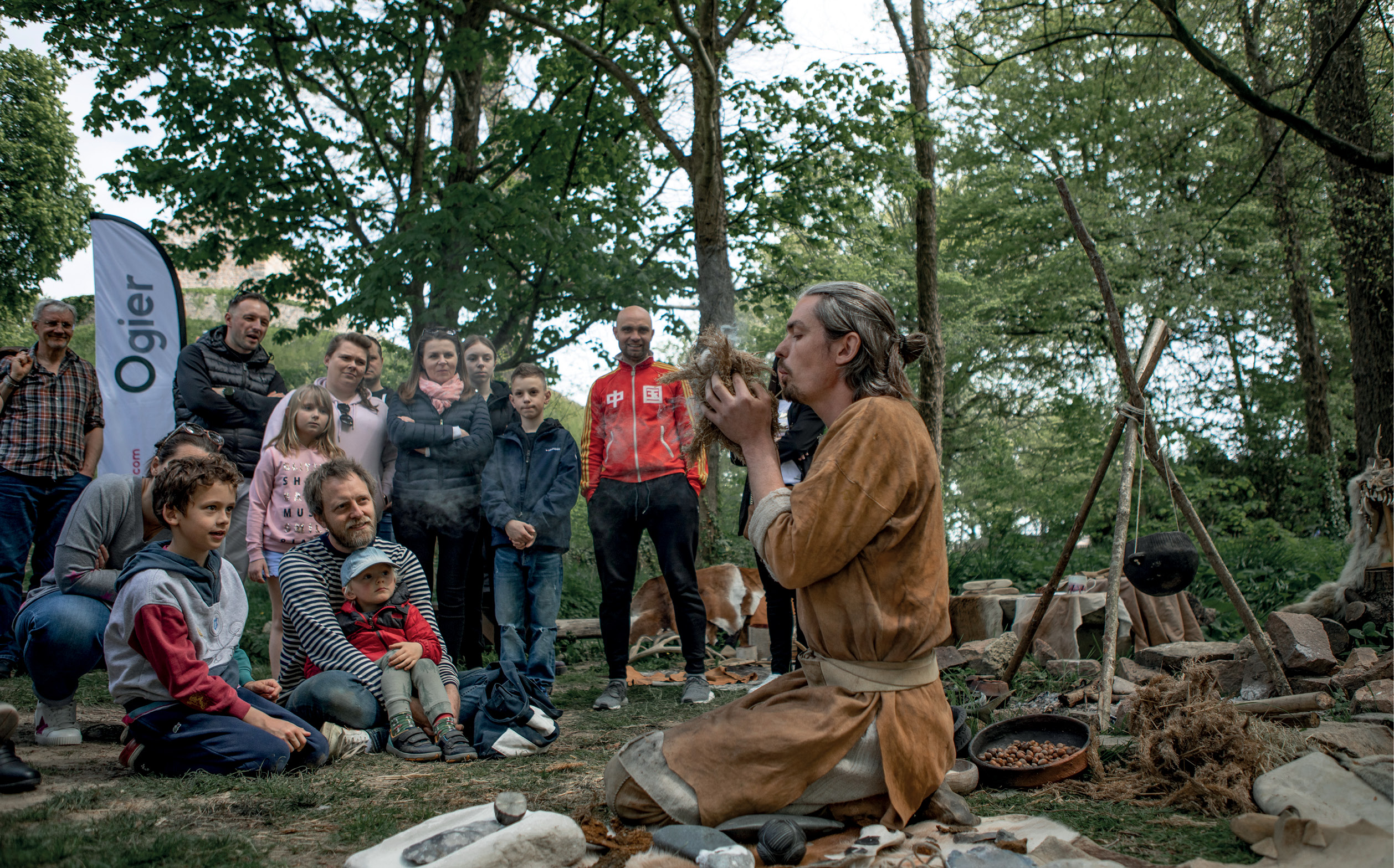
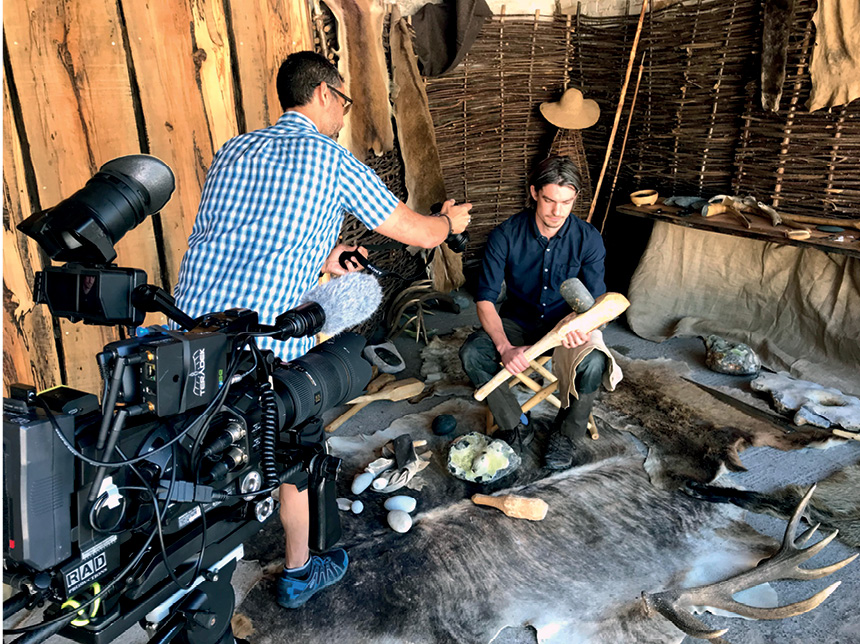
Fortunately – as readers of Current Archaeology know – ours is a multi-faceted discipline, and we can draw on diverse methods of analysis; data from previous excavations and interpretations; surveying, and more to restore some of those missing pieces. One of those facets is experimental archaeology – a concept that has been popularised through television programmes like Time Team, Living in the Past, or I, Caveman (to name but a few), which make frequent use of reconstructions and replicas. Strictly speaking, though, true experimental archaeology uses fixed parameters, controls, and variables to test a question.
Cutting-edge research
Let’s say you wanted to find out whether the ground stone axes of Neolithic Britain were overengineered, or if the effort of smoothing and polishing their surfaces actually improved their ability to fell trees and work wood. To explore this, you would create a number of replica axes of the same size and material as original artefacts, using authentic methods. These could then be used in a ‘real-world’ setting to fell some trees, and in a controlled setting like a lab with a drop tower used to analyse impact and shock through a material. The hope would be that the results show whether the investment of time needed to turn a flaked stone axe into a refined, polished one really did enhance its function and longevity, or whether this effort was unnecessary to its perceived main use and might instead have been for another purpose – dare I say it, possibly ritual?
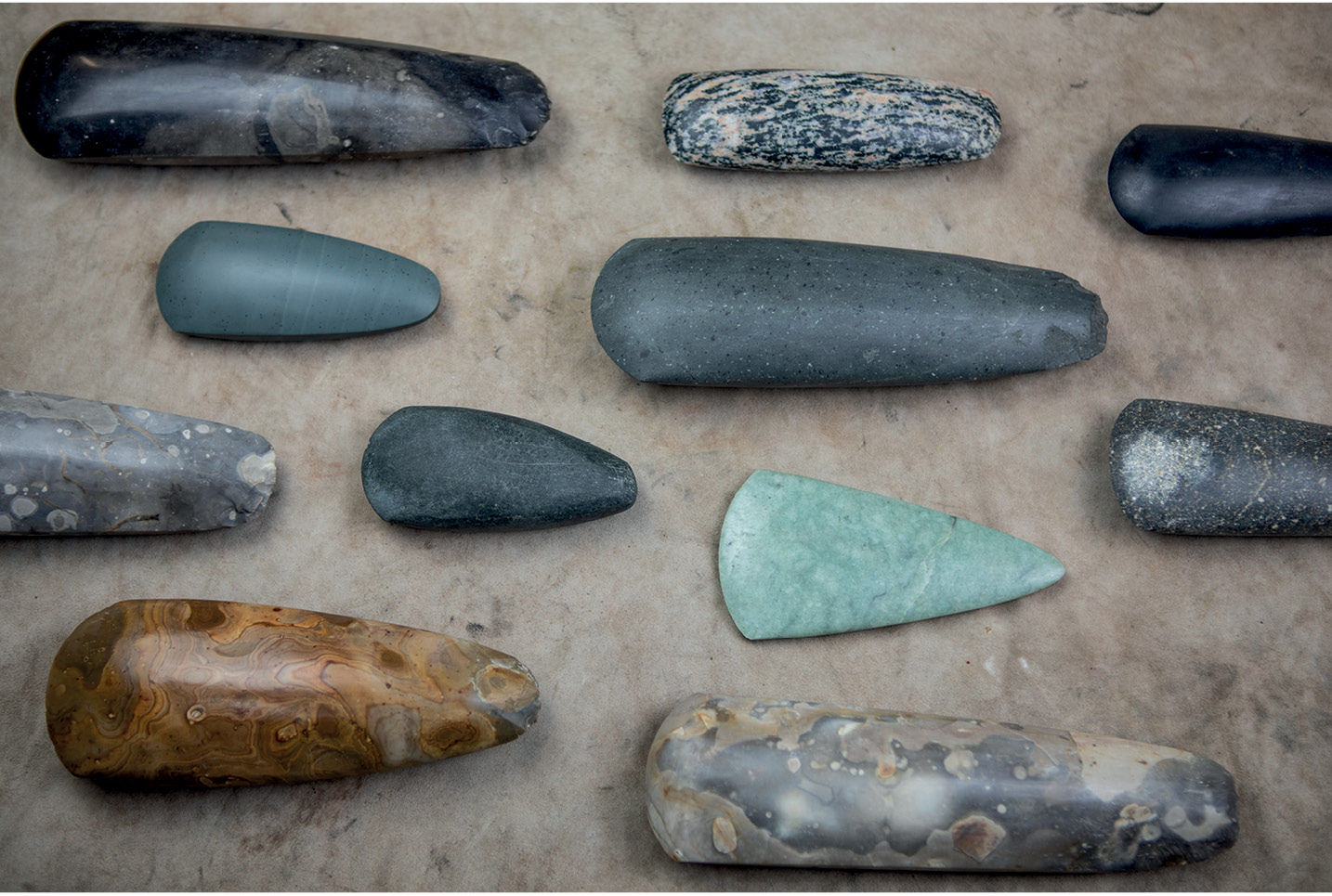
It takes around 60 hours to grind a flint axe smooth, and their apparent connection to ceremonial sites and ritual deposits has led some to suggest that this elaborate finishing process could have ‘special’ meaning. Important insights, however, have emerged from Scandinavia, where researchers in Denmark and Norway have been testing original and replica flint axes in tree-felling experiments since the 1950s. They aimed to understand how Neolithic people might have used these tools to fell large trees and clear forest, and, by working with both experienced flintknappers and foresters, they determined that stone axes were very effective at felling big hardwood trees – and that ground and polished stone axes last much, much longer than simple, flaked ones.
The reason for this is based on some of the principles of flint-knapping. When the edge of a flint or other workable stone is struck, the shock travels across its surface. If the flint is being intentionally flaked in order to shape it into a tool, this shock will localise along flake scar ridges, which help the flintknapper determine where a flake is likely to detach. If a flaked axe head is repeatedly struck against a tree, however, a similar level of shock will repeatedly travel across the same flake scar ridges with each strike. Flint is very hard, but hardness often comes with brittleness, and a brittle material will not withstand localised stress and strain for long periods. In the experiment, localised stress from repeated impacts eventually caused the flaked axe heads to snap. The ground and polished flint axes did not suffer the same damage, however, because their flake scar ridges had been ground away on a sandstone block, meaning that the shock from each strike against a tree could not localise on them but instead travelled evenly across the smooth surface of the axe head.

Exotic items
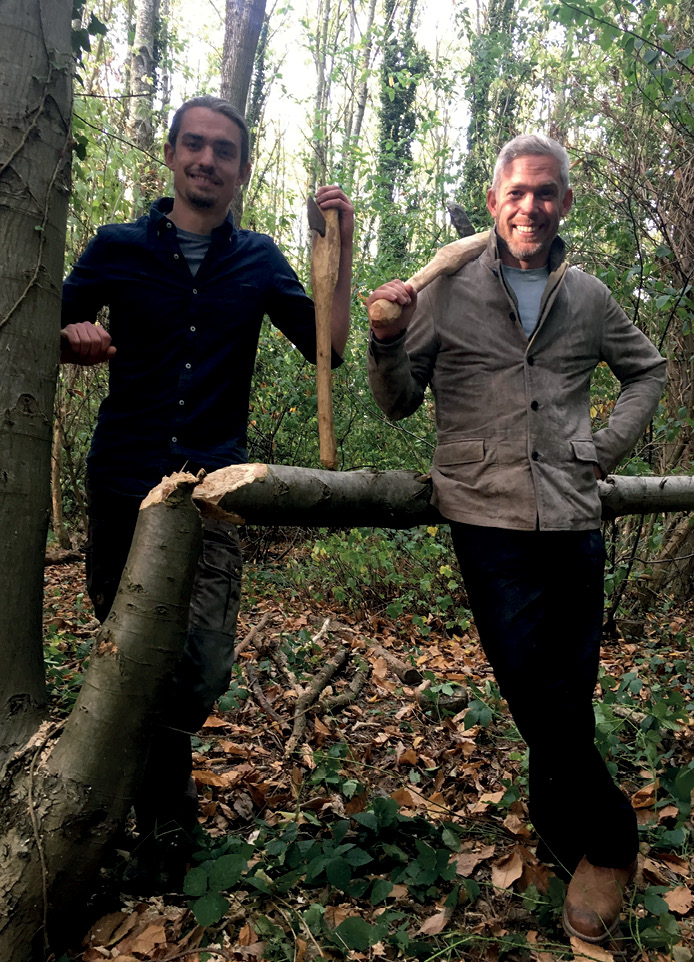
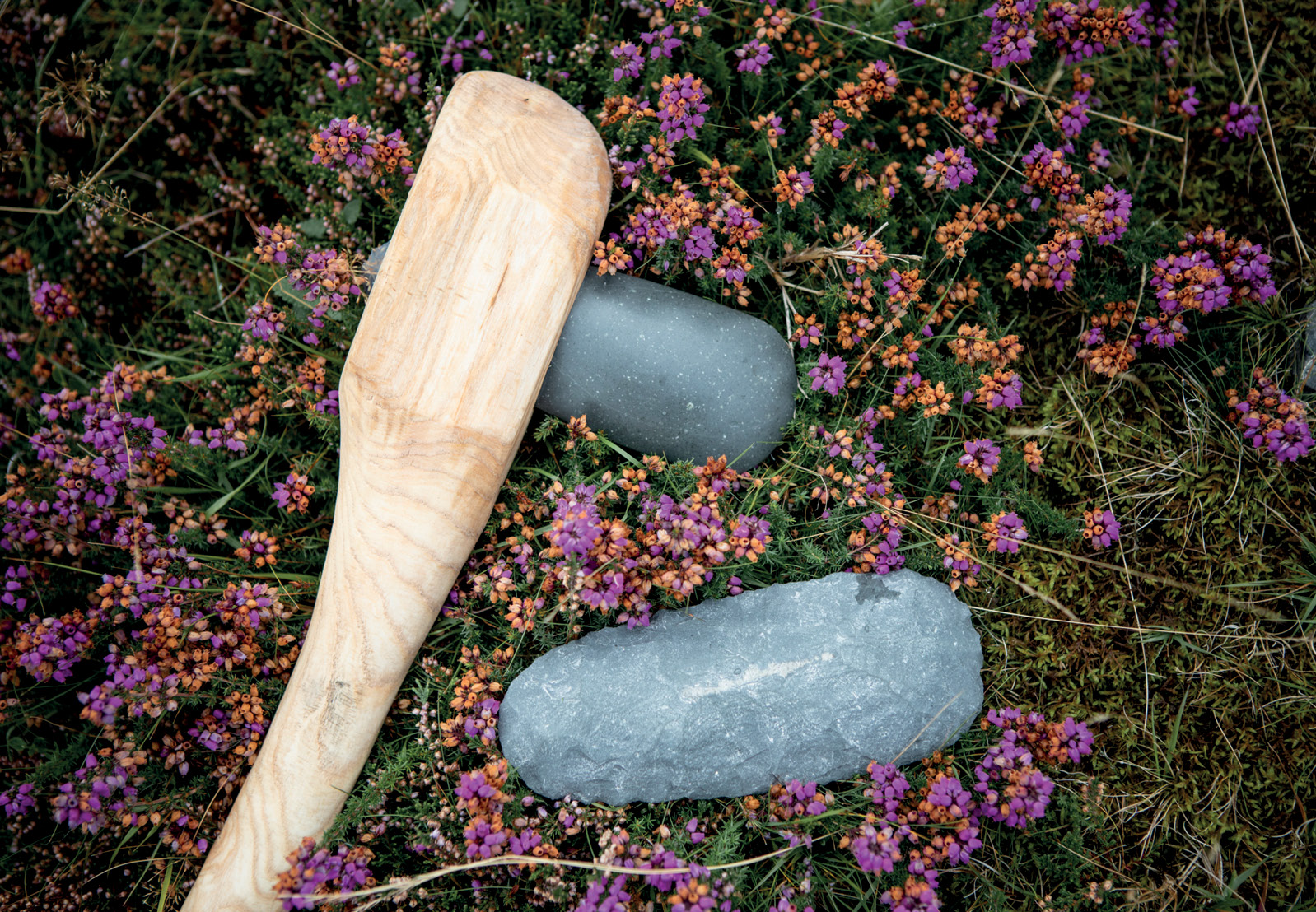
Time and effort were not only invested in making Neolithic axes, but in sourcing their materials – particularly in the case of those from Great Langdale in the Lake District and Penmaenmawr in North Wales. Their materials (epitodised greenstone and microdiorite respectively) are found high up on craggy slopes, and would have been time-consuming and difficult to collect. On the other hand, they have many desirable qualities. Both flake easily and can be ground smooth in half the time of a flint axe. Moreover, while flint is brittle, the volcanic stones of the Lakes and North Wales are slightly softer and a little more ductile. They are better at resisting sudden shock. Therefore, with a less brittle material that takes less time to work, and the improved longevity of a smooth, polished surface, they make the ideal type of rock for creating stone axe heads. How was this demonstrated? By making a large collection of replica Neolithic axe heads and testing them to destruction for an undergraduate dissertation completed in 2014. It was fun, but hard work!
What can this tell us? First, we can say that stone axes were generally ground and polished in order to dramatically improve their cutting power and longevity by reducing localised stress. In Britain, we can also look at the wide distribution of green axe heads from Great Langdale and the grey axe heads from above Penmaenmawr (among other non-flint materials), and we can strongly suggest that they travelled far from home because they lasted longer than flint axes and were prized for this quality. This is also supported by the trend of declining size of these ‘exotic’ axes the further they are from their source: they were used, resharpened, and used again over many episodes, until they were too small to be functional as tools.
Polished axes may have been valued for other, cultural reasons, too. There are plenty of examples of stone axes that were probably symbolic equivalents of their more functional cousins, such as those made from jadeite or oversized examples. Polished stone axes in Neolithic Britain and Europe probably collected their own special agency. We have had the good fortune of accounts detailing the wonderful myths, legends, and special rituals connected to axes made much more recently in Papua New Guinea and New Zealand, and while these are not perfect proxies, they do indicate that a stone axe is more than a wood-cutting tool. At the same time, a practical tool needed to exist and function usefully before it could start to collect stories and beliefs – tales which, in the case of Neolithic axes, are sadly now lost to time.
Mining for clues
Interestingly, some of the first ways in which Neolithic farmers arriving in Britain began to shape the landscape of their new home was to dig flint mines in the hills above the south coast. Sites like Cissbury Ring, Harrow Hill, Church Hill, and others witnessed the newcomers digging through chalk to reach the large nodules of dark grey flint. This impact is arguably Britain’s first industrial landscape (though the activity was sporadic or seasonal rather than constant). Some of the mines have been recorded through excavation, and a later part of this story, in which the completed axes were used to fell and clear spaces in the Mesolithic forest, has been explored by experimental archaeology. Finally, we can follow how damaged or lost axes ended up in the ground, often on a case-by-case basis. Within this narrative, further experimental research can shed light on specific aspects, such as the effort or techniques required to mine flint with pre-mechanical tools, or whether breakage patterns on stone axes can be linked to particular actions.
Whether experimental archaeology, genetic analysis, excavation, or surveying, each strand of research has the potential to add a lost piece back into the jigsaw. But the challenge for archaeologists and heritage personnel remains: how do we now convey what we know to wider audiences? Ultimately, people connect well to a story. But while we often lack the names of the main characters and their deeds (especially in prehistory), we often have the literal tools in front of us to help. A tangible connection forged through the types of objects that people used in the past, and the skills that they represent, can offer a sensory feast that allows us to not only wonder at the trials and tribulations of life thousands of years ago, but actually to know and appreciate them for ourselves.
Experiencing the past
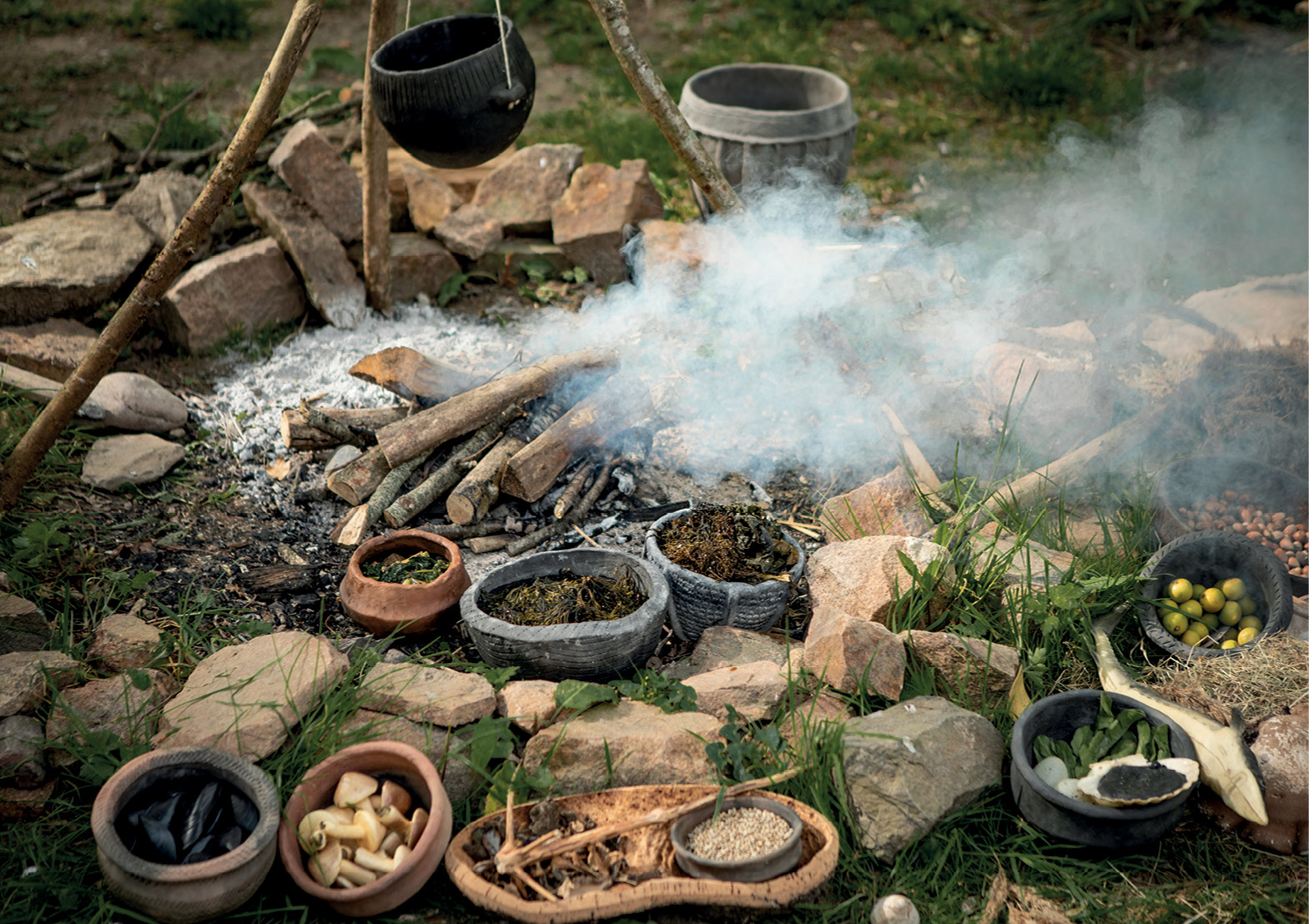
This brings me to the other form of using reconstructions and replicas to explore the past: experiential archaeology. This method has existed for as long as archaeology has been a field of study, but its parameters are much harder to define – essentially, if you are experiencing the process or output of archaeology in any form, you are engaging with experiential archaeology. The term was coined to describe practical reconstructions that do not have experimental rigour, but this does not in any way mean that they lack value for archaeological research. Both experimental and experiential initiatives have their aims and objectives, and the latter technique is often used to engage with the public. A personal example from the recent past was the Big Bronze Age Boat Build at Stanwick Lakes, Northamptonshire, which saw a team of volunteers recreating (and eventually paddling) a trio of log boats inspired by excavated Bronze Age examples (see CA 416).
Despite its name, the main aim of the project was not to build a boat, but to use the process of building a replica to capture the imagination of a group of volunteers from diverse backgrounds, as well as the many site visitors who were drawn to the spectacle of those volunteers whacking massive tree trunks with seemingly strange tools. While this was not an experimental project, it was grounded in previous experimental research, and also provided a platform to make observations that could later be tested experimentally.
The experiential project of boat-building, which included making and using replica axes and adzes, equipped the team and passers-by with the senses and experience to connect and empathise with people from the past. The next time they see a bronze axe in a museum, they will be able to appreciate its effectiveness and how much its owner valued it. More powerfully, they will also be able to convey this experience and knowledge to others who might themselves then be inspired by a replica stone or bronze axe.