
Subscribe now for full access and no adverts
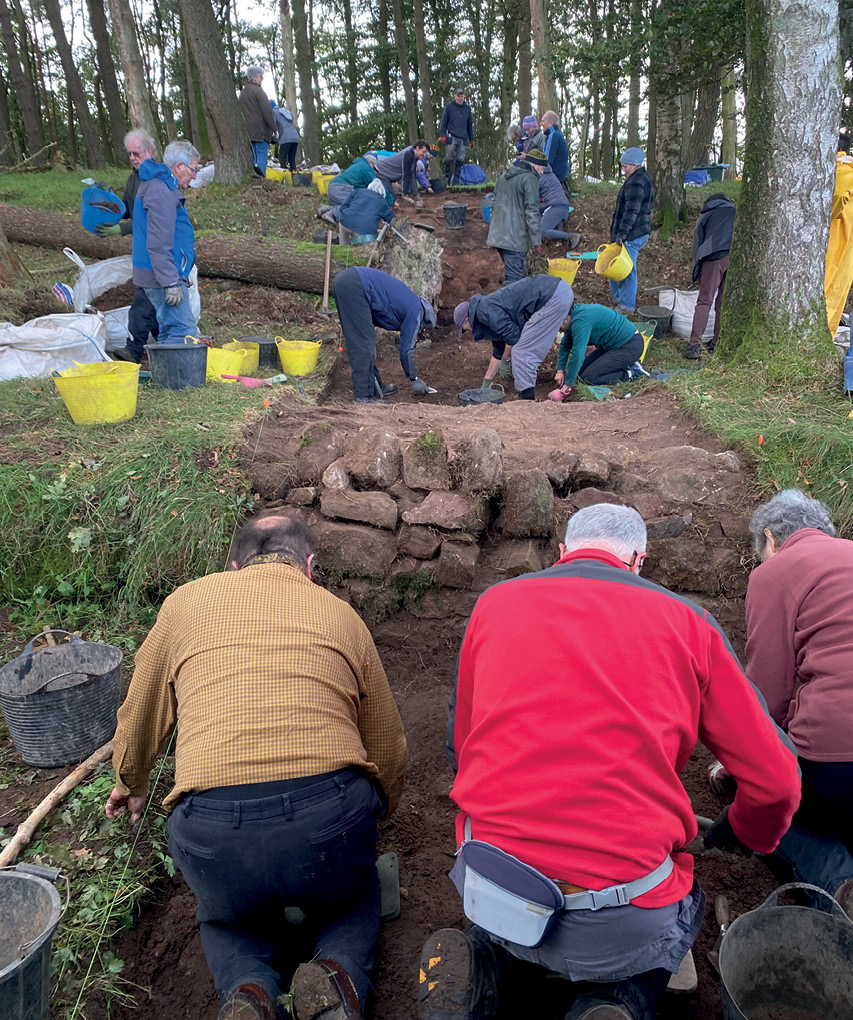
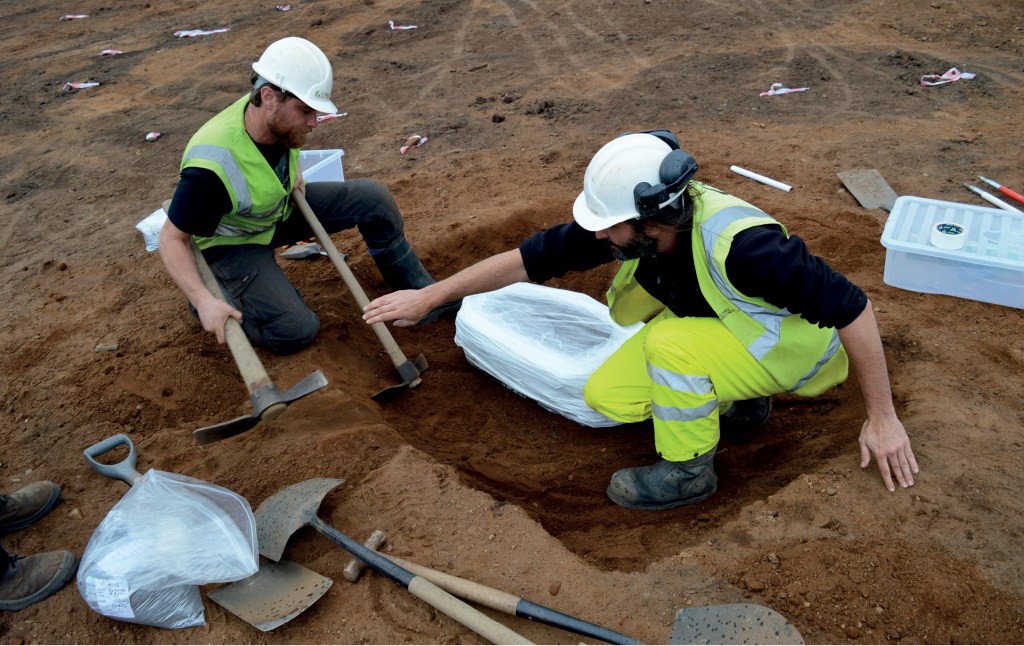
In 2016, a team from GUARD Archaeology Ltd, led by Alan Hunter Blair, were excavating on the edge of Carnoustie – working on behalf of Angus Council ahead of the construction of two football pitches – when a remarkable discovery emerged from the soil. Until then, it had been an ordinary Friday in September, but suddenly the machine excavator partially uncovered a number of bronze objects lying just 0.3m beneath the surface. It was a hoard of prehistoric metalwork, and on closer inspection we could see that organic material, including fragments of wood – possibly parts of a scabbard – survived around the objects. The excitement of making such a rare find was tempered by ensuring its safety, and it was quickly decided that the preservation of all the objects, both metal and organic, would be best served by block-lifting the hoard, pit, and surrounding sub-soil that same day. Recovering the finds in this way would allow us to excavate the hoard’s components in controlled conditions, preserving crucial information about the artefacts’ context and giving our team the time and space to examine thoroughly the processes involved in their deposition.
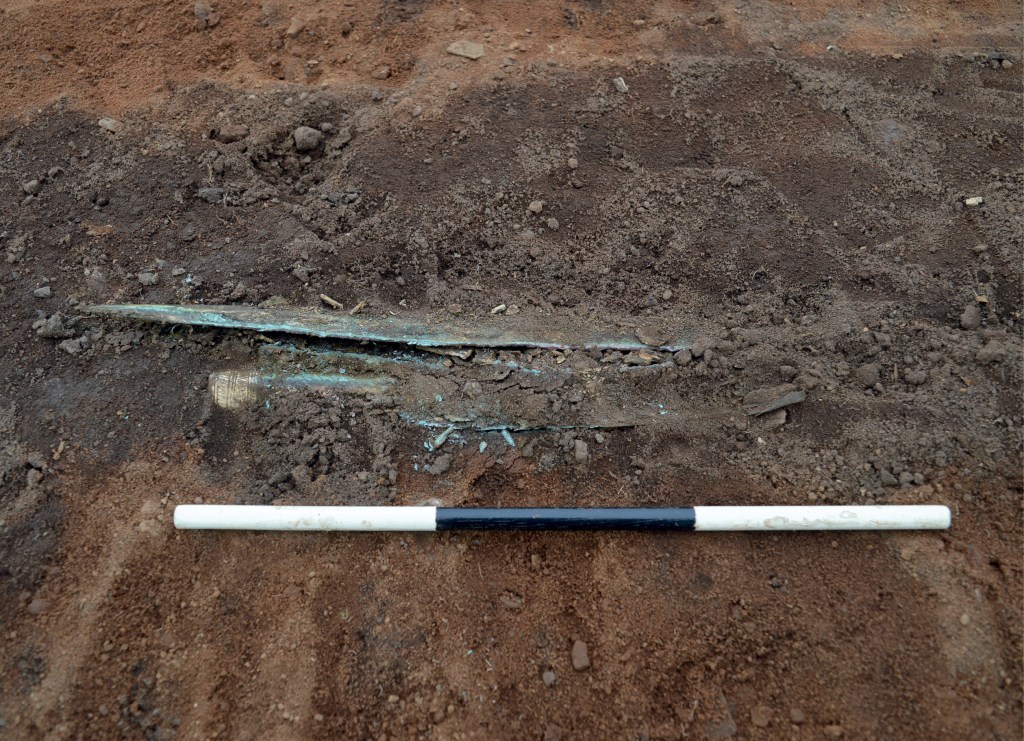
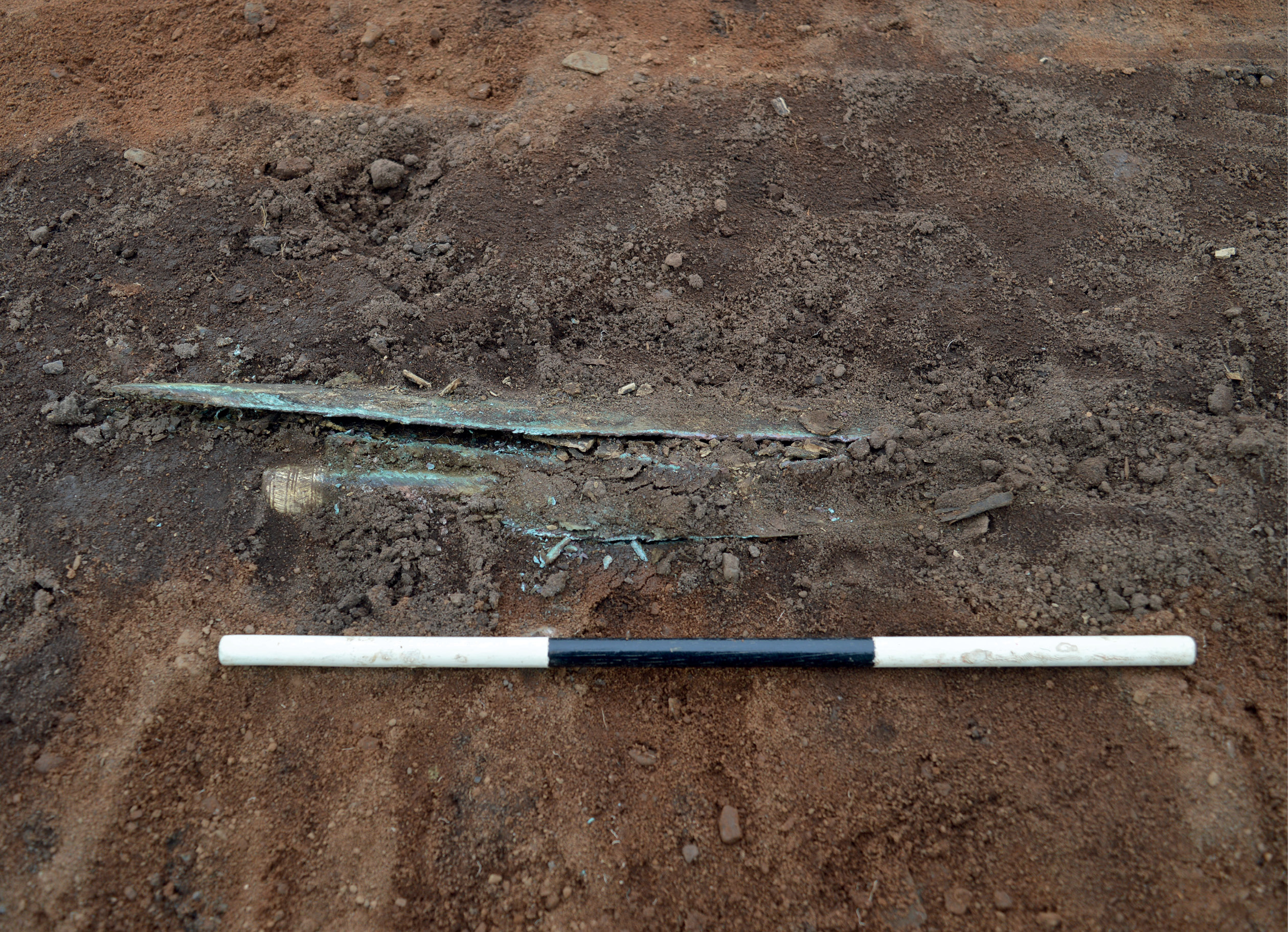
Beth Spence… gradually removed the soil, revealing a bronze leaf-shaped sword, a bronze annular mount, a sunflower-headed pin, and a spearhead.
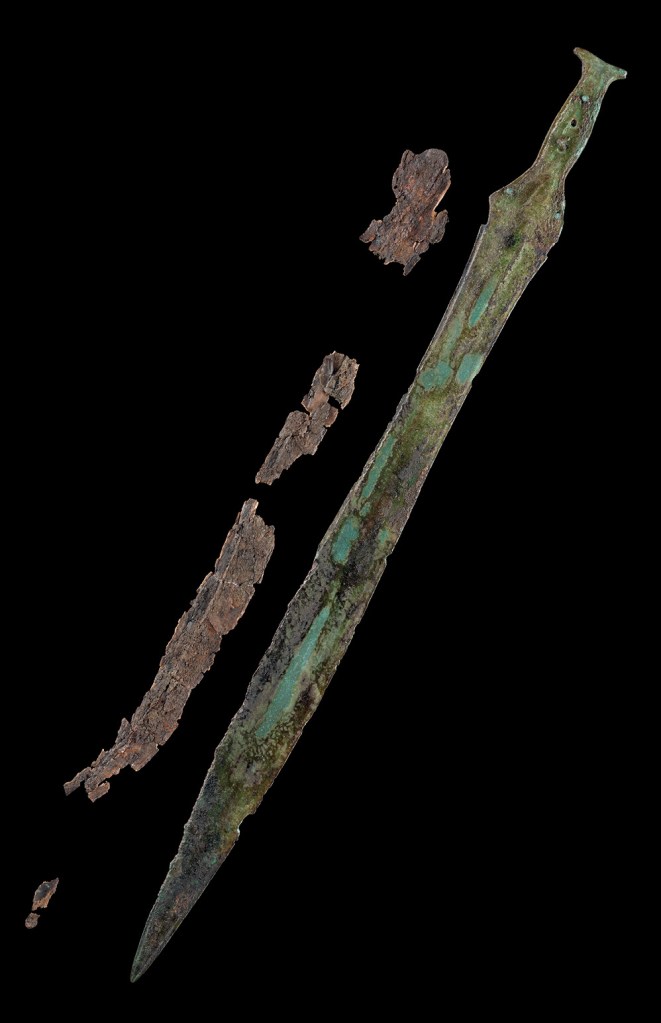
So it was that an 80kg block of soil was carefully transported to GUARD Archaeology’s Finds Lab in Glasgow. It was then X-rayed to gain a better understanding of its contents before micro-excavation began. This painstaking process, carried out by Beth Spence and advised by Will Murray of the Scottish Conservation Studio, gradually removed the soil surrounding the objects, ultimately revealing the presence of a bronze leaf shaped sword in a wooden scabbard, a bronze annular (ring-shaped) mount, a sunflower-headed pin, and a spearhead with a gold-decorated socket (see CA 326). They had been carefully and tightly packed together in the pit and, thanks to the anti-microbial properties of copper, the preservation of associated organic material was quite extensive. The survival of a wooden sheath around the Carnoustie sword puts the hoard in rare company. A Bronze Age sword scabbard was found at Pyotdykes Farm, north of Dundee, in 1963, and another was recently identified in the Peebles Hoard from the Scottish Borders (CA 418), but they represent exceptionally unusual survivals. This is not the only reason that the Carnoustie scabbard is significant, however. The sword it contained is a Ewart Park type, which is usually dated to 900-800 BC. Radiocarbon dating of the scabbard, however, placed it in 1118-924 BC, suggesting that traditional typologies might need to be revisited.
Detailed insights
The scabbard was made of hazel wood, cut into long strips a few millimetres thick, and both sides bore traces of a black, starchy material, possibly a form of glue used to attach an organic liner and cover to the wood. It was tipped with a tongue-shaped bronze chape, and the circular mount found beneath the sheath may have been a scabbard ornament (it was not robust enough to have been a load-bearing connector on a strap). As for the sword itself, 12 marks along one cutting-edge suggest that it may have seen some action during its lifetime. Five of these were primary combat marks, while the other seven were most likely the result of secondary ‘rebound’ impacts, where the sword had made repeated contact with an opponent’s weapon, and a slight asymmetry to the blade also speaks of it being resharpened after use. Microscopic traces indicate that the hilt may have been made of horn, but the pommel was too degraded by oxidation to assess its shape.
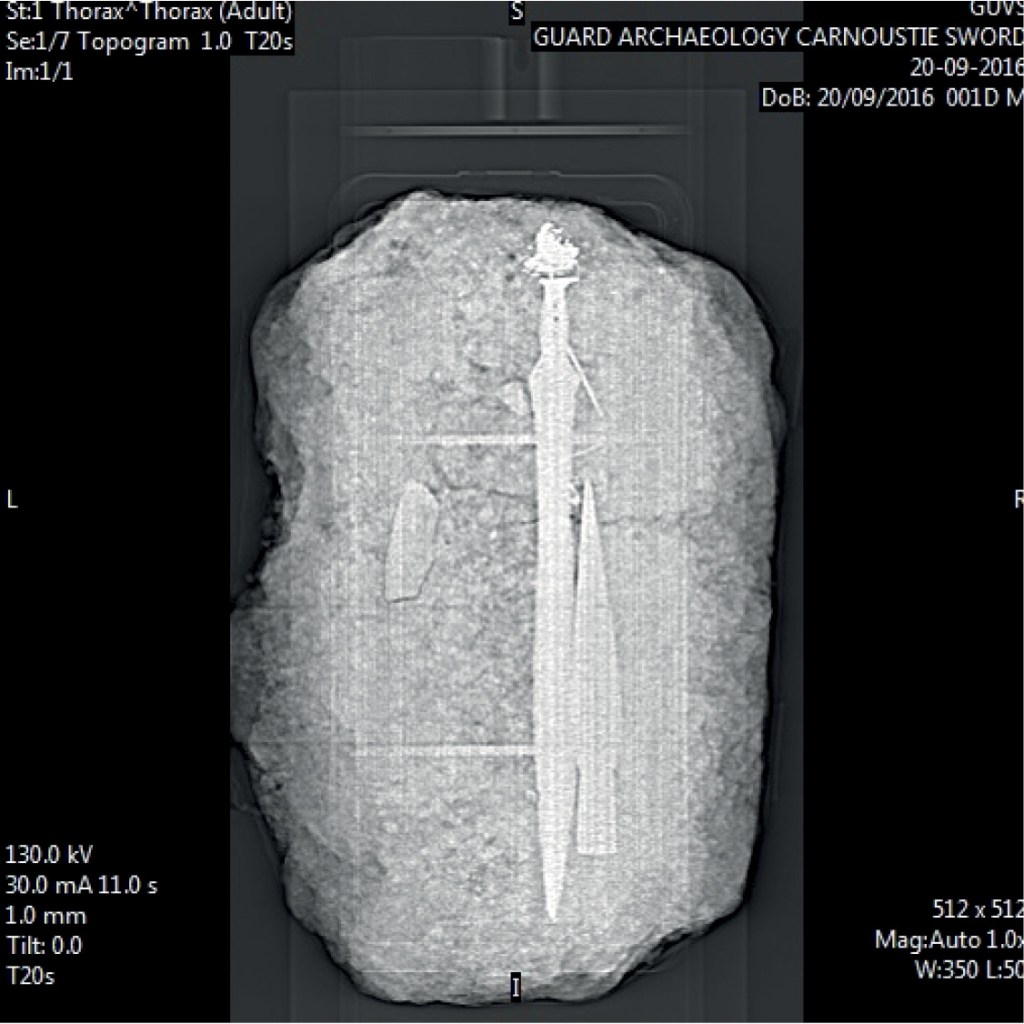
It is less clear whether the leaf-shaped spearhead had seen active service: CT scanning revealed a fracture within its core, highlighting a considerable point of weakness that would have hampered its use in battle. This would have been a visually impressive weapon, however: it is among the longest examples of its type yet found, and its socket was decorated with a band of gold foil bearing a herringbone pattern. Micro-CT scans revealed that this pattern was present on the underlying metal, too, indicating that the gold foil had been pressed into the incised lines to take the design – possibly as part of the spearhead’s original ornamentation, possibly added when a piece of gold became available. There were no traces of wood within the socket, which (along with the size of the pit in which it was found) suggests that any spear shaft had been carefully removed before burial.
Another ornate object was a complete, bronze, sunflower-headed pin with a swan’s-neck form. Its head was decorated with concentric circles, which may have been created using the lost-wax method rather than by inscribing a design after casting.
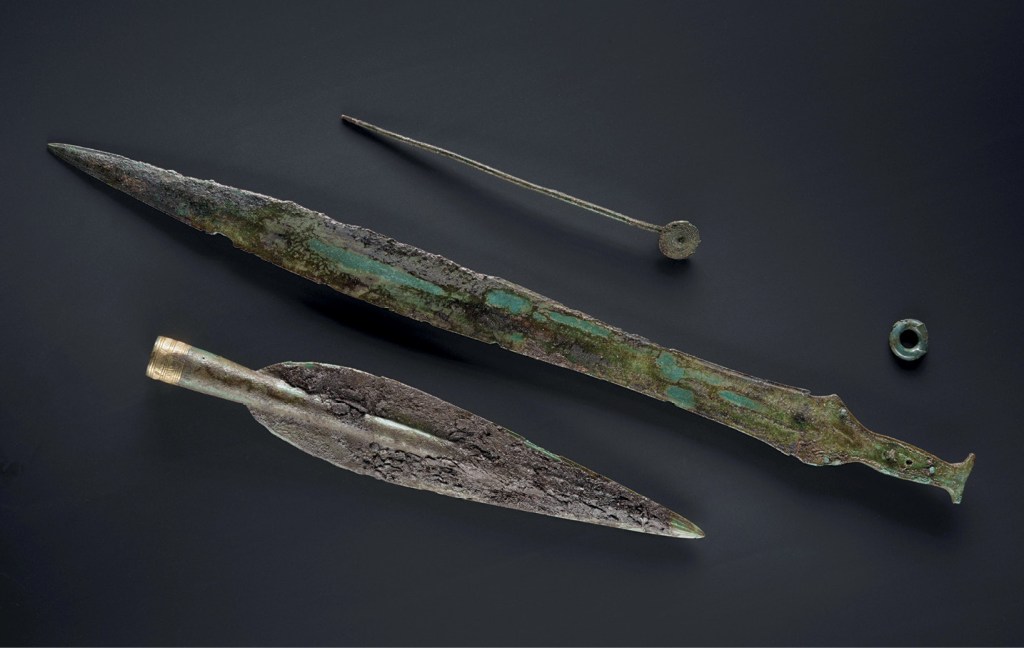
Illuminating insights came from the make-up of the metalwork as well: isotope and metallurgical analyses by Vanessa Pashley and Peter Northover revealed that the lead in the bronzes was not local to Scotland but had instead been mined in England, Wales, or southern areas of Ireland, potentially also reusing Continental material, while the gold came from Wales, Ireland, or possibly Cornwall. Perhaps the most striking evidence revealed by the micro-excavation, however, were the remains of animal hide and woven textiles still clinging to the metalwork. Fragments of sheepskin, identified by Esther Cameron, were found over much of the surface of the spearhead, suggesting that it had been wrapped in this material, with the woolly side inwards. At least two different textiles, both woven from sheep’s wool and apparently undyed, were also identified by Susanna Harris of the University of Glasgow. One of these, a fine tabby weave, appears to have been used to protect the gold end of the spearhead, while a slightly coarser fabric had been wrapped around the sword in its scabbard. Traces of this latter textile were found between the head and shank of the pin, too, hinting that it may have been used to secure the loose ends of this cloth, perhaps a cloak.
This carefully bundled collection had been buried close to a contemporary roundhouse whose upper occupation layer dated to 1082-905 BC. The structure formed part of a clustered settlement which GUARD Archaeology discovered in the north-eastern corner of the site (an area with a long history of occupation: the same excavation also revealed the largest early Neolithic timber hall known in Scotland – see CA 350 and CA 426). The pit containing the hoard was very shallow, just 0.16m in depth, and this, together with the evident care that had been dedicated to wrapping the objects in protective textiles, even pinning one of them closed, leads us to conclude that the Carnoustie Hoard had been buried for safekeeping, with the intent to recover it in the future.
Ringing the changes
While the Carnoustie Hoard was mostly martial in theme, the second collection that we will explore in this article was made up entirely of ornaments. It was discovered at Rosemarkie on the Black Isle during an excavation undertaken by AOC Archaeology in 2020-2021 in advance of the construction of houses by Pat Munro (Alness) Ltd. GUARD Archaeology was commissioned in 2024 to carry out analysis of the excavation’s finds, and once the hoard had been transferred to our Finds Lab, it was again X rayed before micro-excavation began.
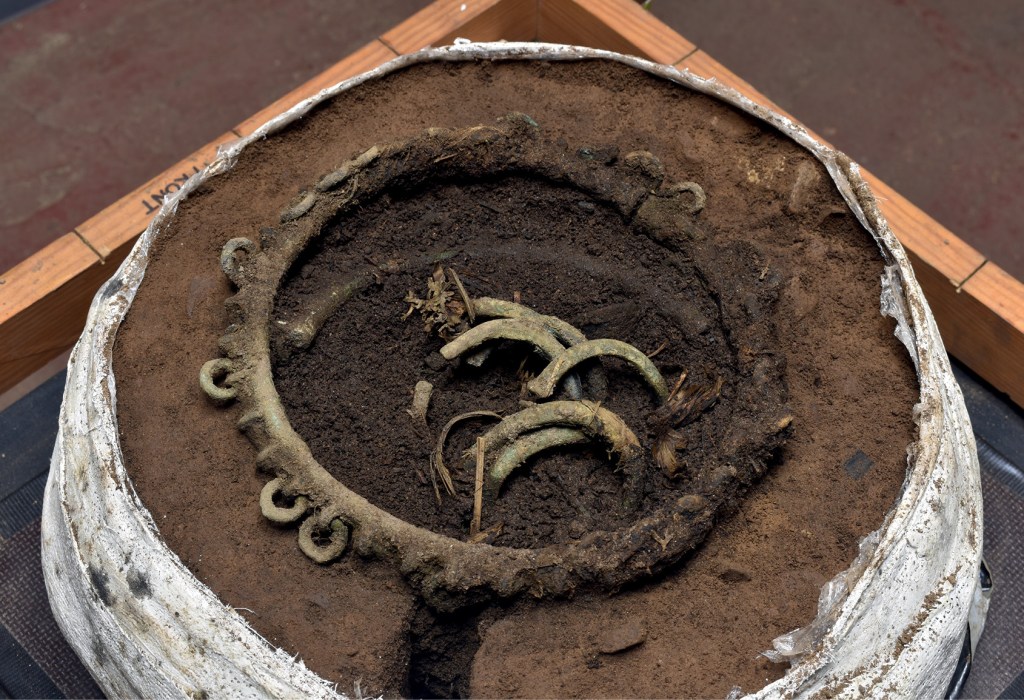
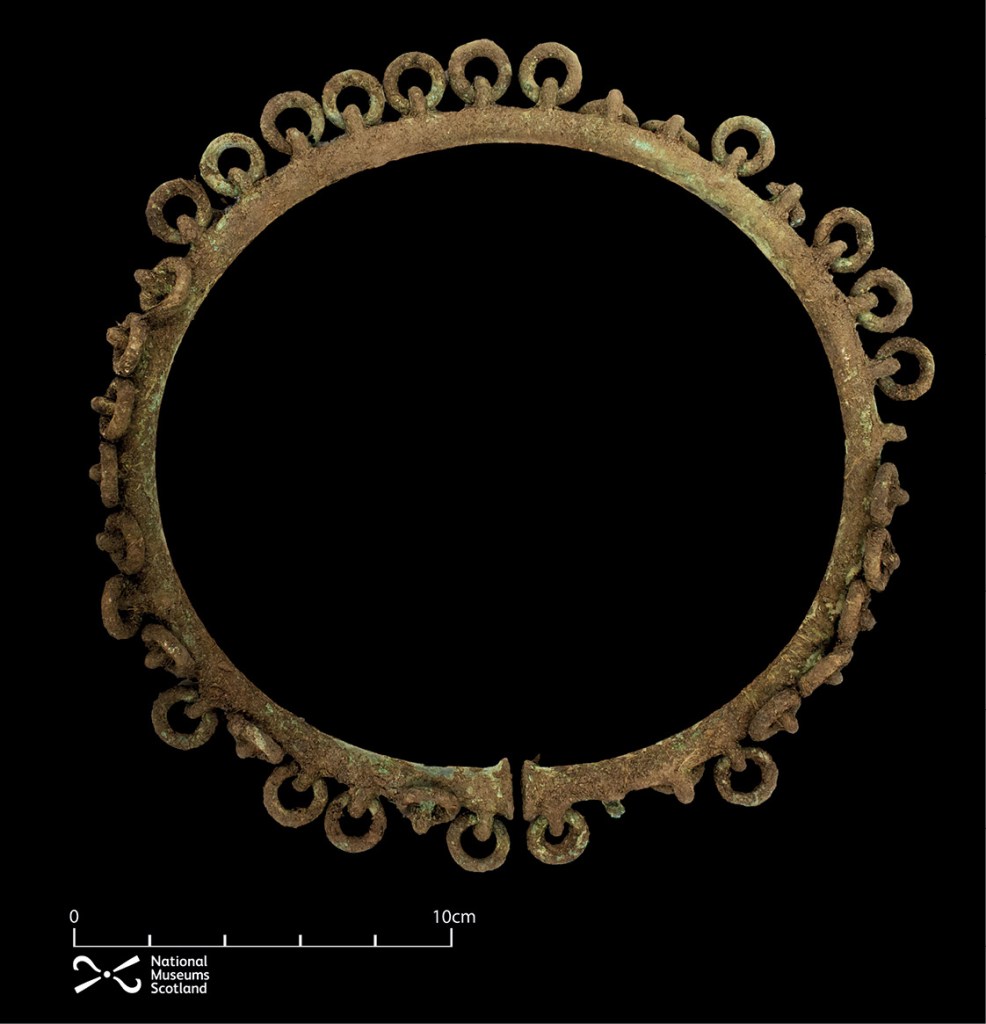
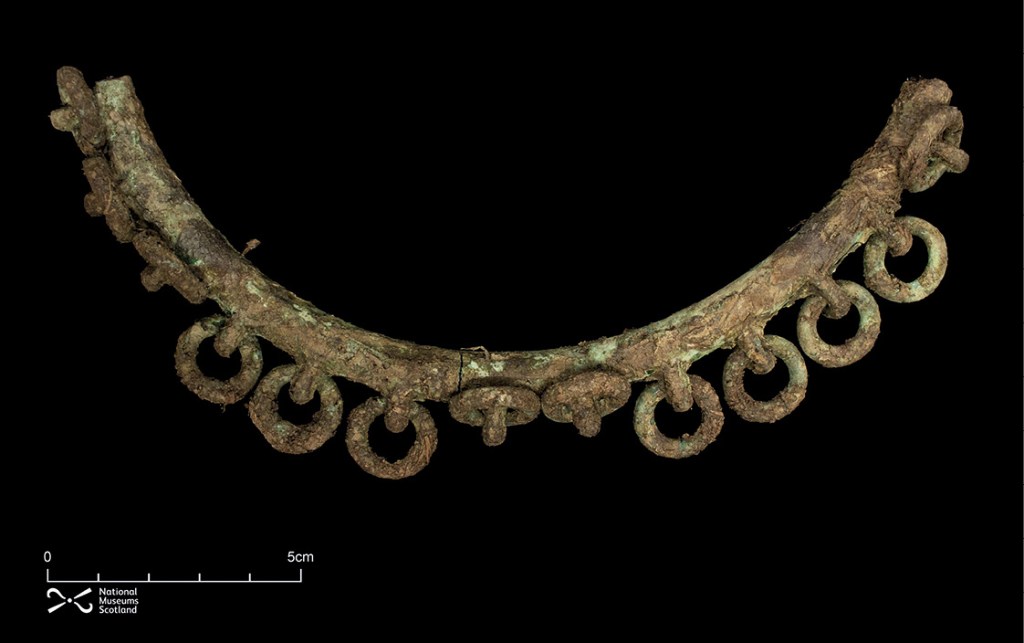
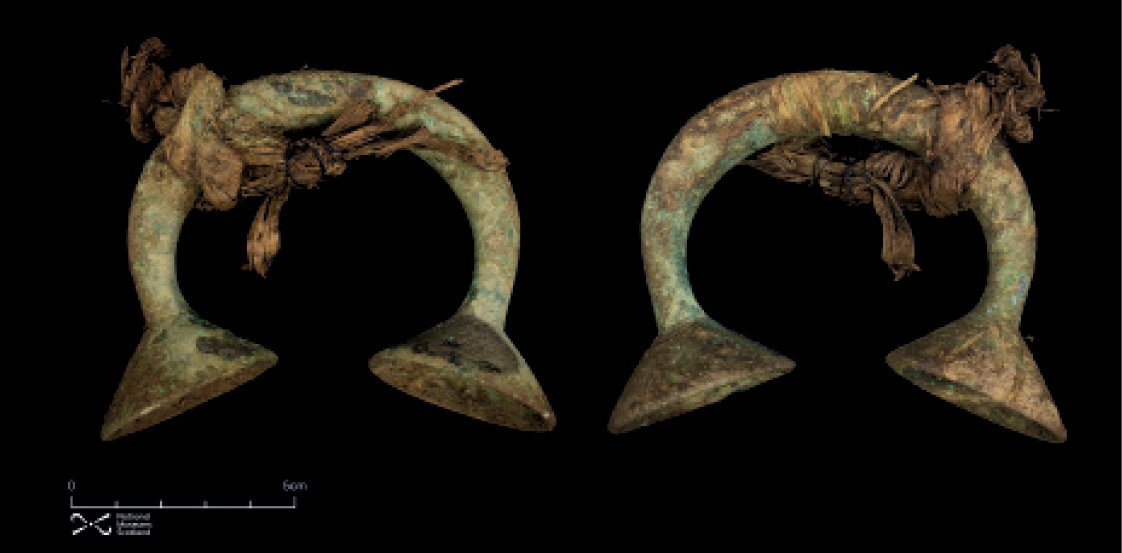
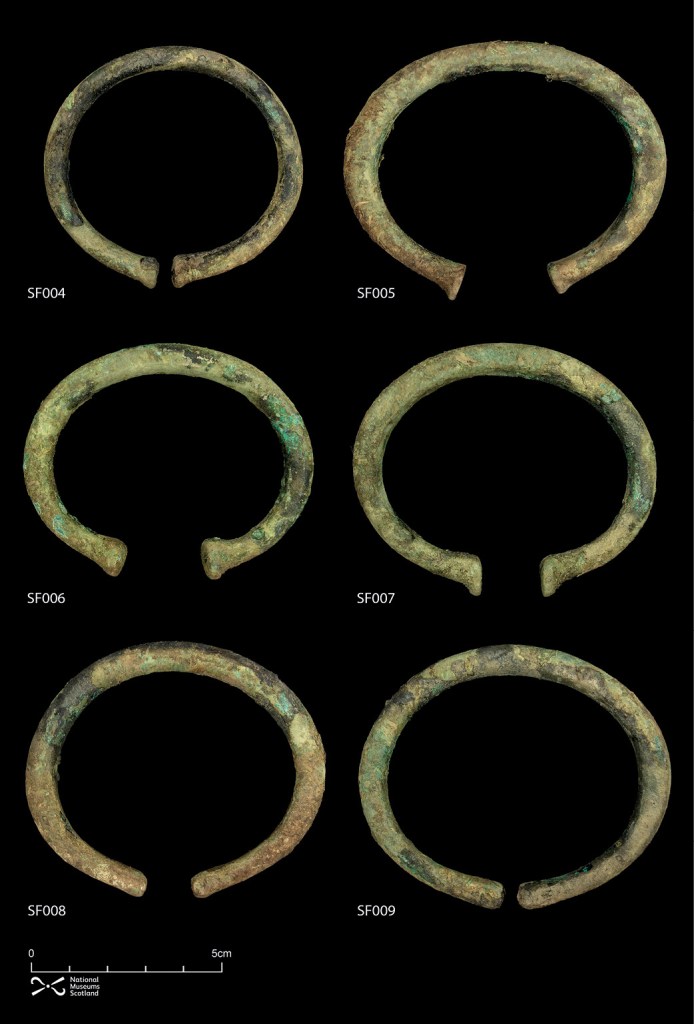
The bronze artefacts within the hoard included a complete penannular (forming an incomplete circle) ornament decorated with dozens of tiny rings. A fragment of another such object had been placed within its circuit, and beneath this was a stack of six penannular bar bracelets and another penannular ornament with cup-shaped ends. What had not been revealed by the X-ray, however, was the sheer volume of organic material that was also present. This was not fabric or sheepskin, but two different kinds of plant material.

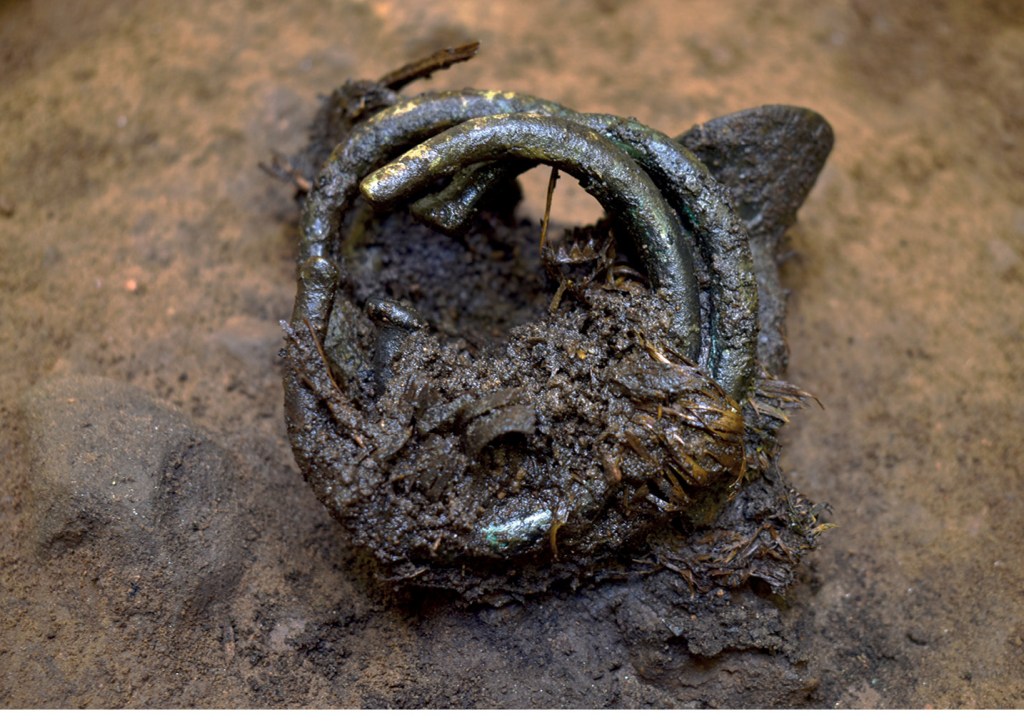
One was a spiky-looking plant, later identified as bracken stems and fronds, which was present from the top to the bottom of the pit and appears to have been used as packing when the artefacts were buried. The other – a long, grass-like plant that later proved to be bast, the inner bark of a tree (here, probably ash) – seemed to be concentrated around the metal objects, following the curves of each. It formed a large clump at the base of the pit, too, entangled with the lowest artefacts within the hoard. Despite having been buried for thousands of years, this mass was strong enough to hold the artefacts in place and would not release its quarry easily. The last few items in the hoard had to be removed as a group – and when the project’s conservator Will Murray finally managed to tease them apart, he found something very rare indeed: a simple overhand knot that had been tied around the cup-ended ornament when the tree bast was still in pristine condition, binding it to three of the bracelets. A sample taken from the bast also gave us a secure date for the burial of this hoard: 894-794 BC, at the very tail end of the Bronze Age.
The intact penannular ringed ornament, adorned with 37 rings, is the most complete and complicated example of its type yet found in Scotland.

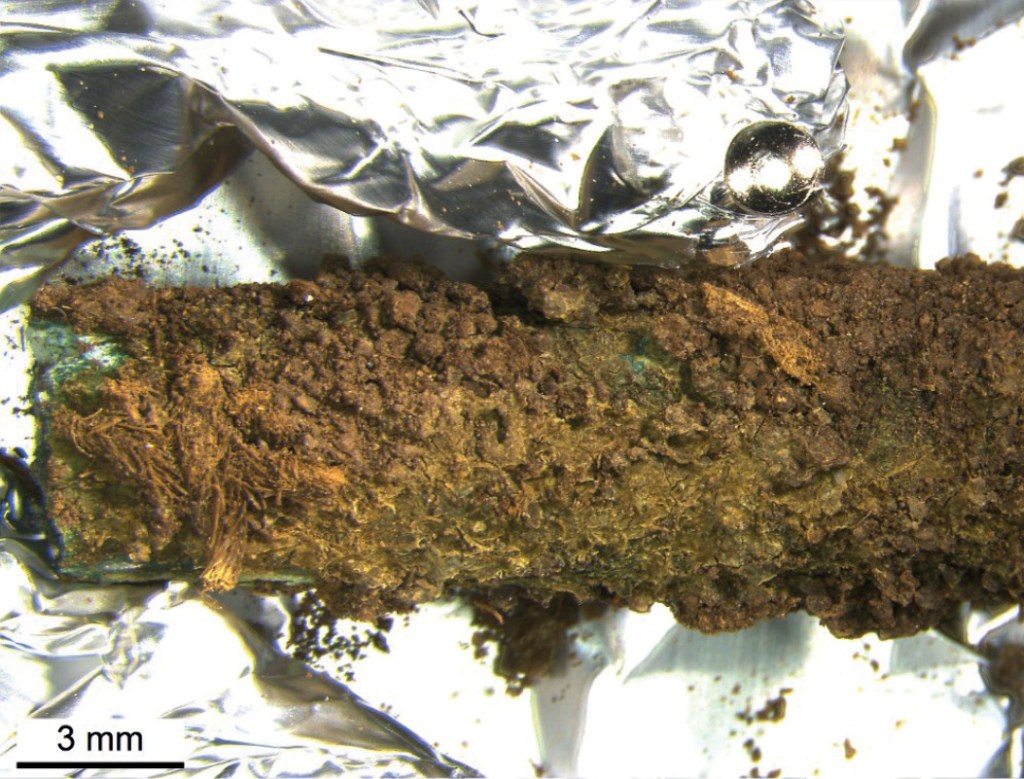
Once we had separated the hoard items, the metal artefacts were examined by Matt Knight and his team at National Museums Scotland. We now know that the intact penannular ringed ornament, adorned with 37 rings, is the most complete and complicated example of its type yet found in Scotland. Its fragmentary counterpart had 13 surviving rings, and both ornaments were probably made by the same craftworker – possibly using the lost-wax casting method, like Carnoustie’s sunflower-headed pin. This was a very rare process, only used in the creation of highly prized objects, and workshops to produce such pieces were probably few and far between in Bronze Age Scotland. Similar examples of the ornaments (although missing the attached rings) are known from Braes of Gight and Wester Ord, both in Aberdeenshire, but their purpose is unclear. The complete one from Rosemarkie was too small to fit over an average human head, and it showed no signs of being distorted in order to be worn around the neck.
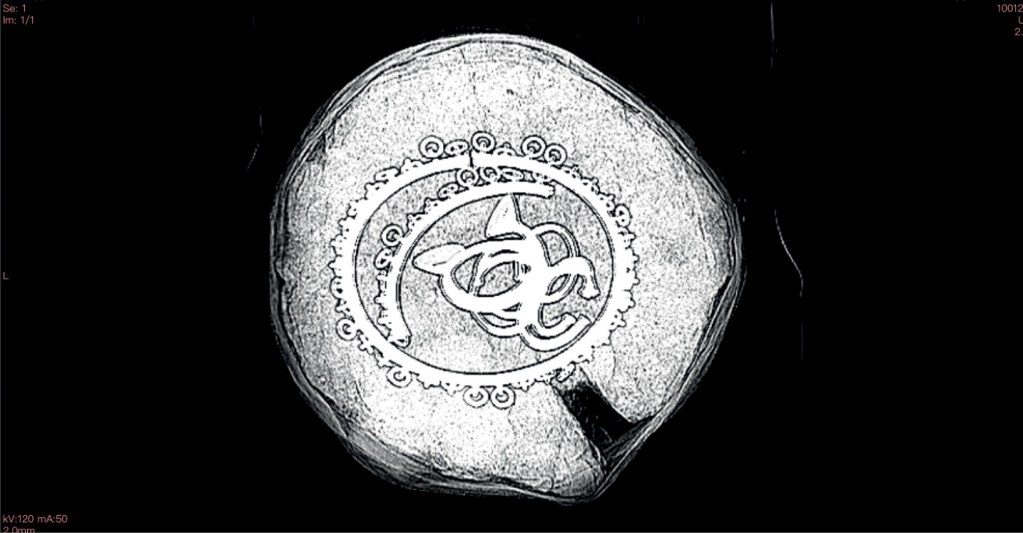
As for the other objects in the hoard, X-ray imaging of the cup-ended ornament revealed that it was cast as an entire object, with no visible seams or joins. There are several comparable finds known, mostly Irish and made of gold, but its closest parallel is a bronze version from the Poolewe Hoard in the West Highlands. The Rosemarkie example is much sturdier and thicker than any of these, however. The bracelets were also unusual as, despite being carefully stacked on top of each other in the pit, no two were alike – perhaps they had been contributed by different individuals or households. Three of the six show signs of distortion, suggesting they had been repeatedly worn, and one stood out as the heaviest known penannular bar bracelet yet found in Scotland. This speaks of the local community’s access to a large supply of bronze, which they used for the ostentatious display of wealth and status. In terms of where this metal came from, isotope and metallurgical analysis (again by Vanessa Pashley and Peter Northover) revealed both exact and close matches with the bronze from the Carnoustie Hoard, clearly signalling the direction from which Bronze Age smiths in Scotland were sourcing these metals.
Contextual clues
Like the Carnoustie Hoard, the Rosemarkie artefacts had been buried close to a contemporary settlement: this one had been established around the 15th century BC and was abandoned near the turn of the 8th century BC, around the same time that the metal objects had been committed to the ground. AOC’s excavation revealed seven Bronze Age roundhouses, one of which – slightly earlier than the hoard, producing a radiocarbon date of 1125-909 BC – contained fragments of crucibles and clay moulds used to cast weapons and tools (but, sadly, none of the object-types contained in the hoard). The hoard had been buried on the north-east edge of this settlement, carefully packed within a pit that was just big enough to hold the objects and suitably shallow for ease of recovery. Its contents, probably drawn from disparate sources, had been deposited with great care – but why?
There are several possible motivations for the burial of an ancient hoard of bronze. There are founders’ hoards or metalworkers’ stashes – these include a range of damaged objects and fragments that could be recycled, as was common practice during the Bronze Age. There are votive hoards, often composed of deliberately broken objects that were thrown into watery places with no chance (or apparent desire) of recovery. And then you have hoards like those from Rosemarkie, Carnoustie, and Peebles (which was found in the entrance of a roundhouse and contained a mix of weapons and decorative objects accompanied by traces of leather, wood, and plant material). This third category shows us another side to the story, representing precious items that were gathered together, carefully wrapped, and neatly buried for safekeeping close to a settlement where they could be guarded and easily retrieved when the time came. The question, then, is not so much why they were buried, but why the time never came for these Bronze Age communities to retrieve their valuable belongings.
Acknowledgements: The Carnoustie excavation and post-excavation analyses were funded by Angus Council and were required as a condition of planning consent by Angus Council, who are advised on archaeological matters by the Aberdeenshire Council Archaeology Service. The Rosemarkie excavation and post-excavation analyses were funded by Pat Munro (Alness) Ltd and were required as a condition of planning consent by Highland Council, who are advised on archaeological matters by the Highland Council Historic Environment Team.
Further information:
• ARO60: Neolithic Timber Halls and a Bronze Age Settlement with Hoard at Carnoustie, Angus by Beverley Ballin Smith, Alan Hunter Blair, and Warren Bailie.
• ARO62: ‘A Hoard, Spear Moulds and a Bear, Oh My!’: a Late Bronze Age Settlement at Greenside Farm, Rosemarkie by Iraia Arabaolaza, Rachel Buckley, Sam Williamson, and Alun Woodward.
• Both publications are available to download for free from http://www.archaeologyreportsonline.com.
• The Carnoustie Hoard was recently acquired by National Museums Scotland and will go on display for the first time next summer as part of a major exhibition in Edinburgh. Running at the National Museum of Scotland from 27 June 2026-17 May 2027, Scotland’s First Warriors will feature more than 250 objects exploring the origins and impact of conflict and warfare in prehistoric Scotland, from the Neolithic period to the coming of the Romans. See http://www.nms.ac.uk/ScotlandsFirstWarriors for more details.
All images: © GUARD Archaeology Ltd, unless otherwise stated