
Subscribe now for full access and no adverts
Last autumn’s excavations at Culloden Battlefield, near Inverness, had already rewritten our knowledge of how the engagement unfolded (see CA 430), but further insights continue to emerge, including the discovery of an unexploded mortar shell, which further highlights the conflict’s possible layout and the strategies of the forces involved.
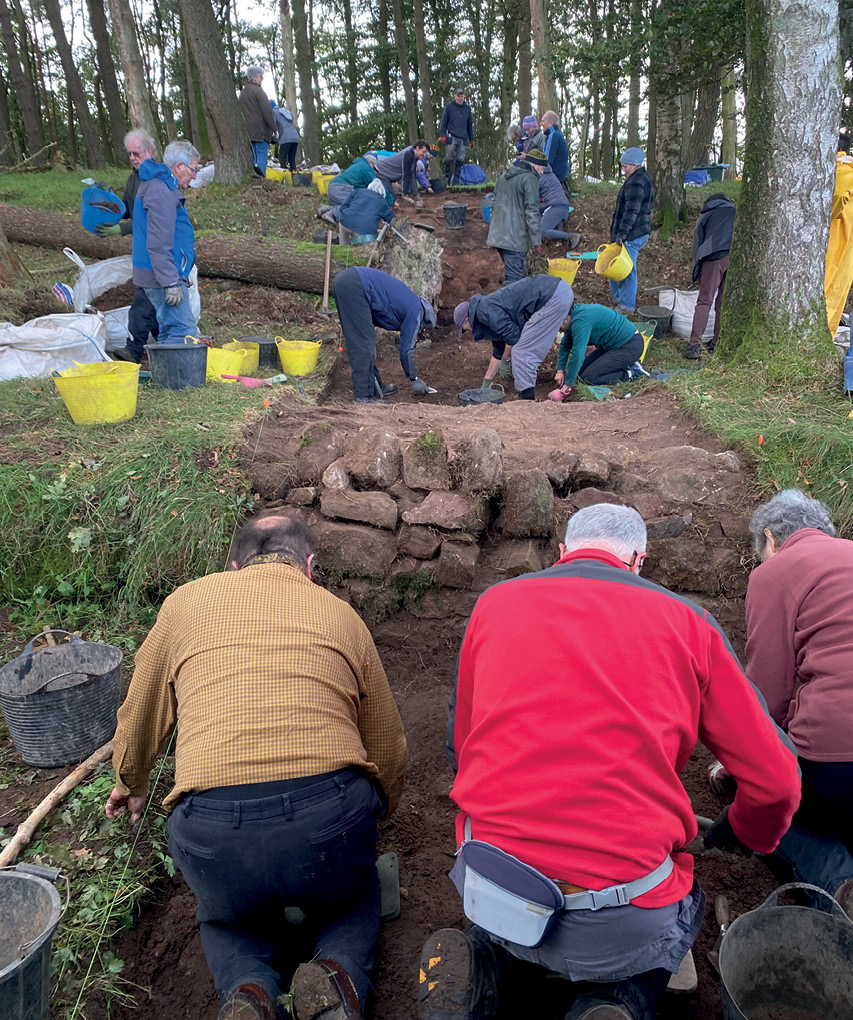
The week-long investigation, led by Derek Alexander from the National Trust for Scotland and Professor Tony Pollard from the University of Glasgow, was carried out in order to learn more about the battle, which took place on 16 April 1746 between the Jacobite army led by Charles Edward Stuart (‘Bonnie Prince Charlie‘) and government forces led by the Duke of Cumberland.
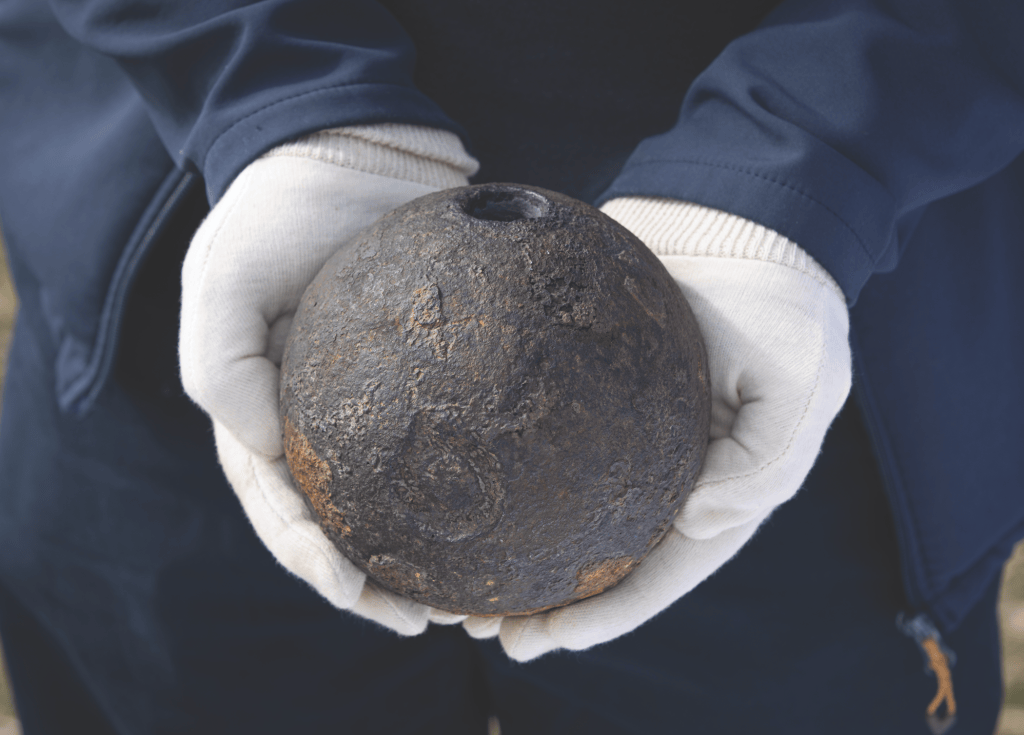
The shell was found buried 30cm deep (12in) in a field to the north-west of the battlefield’s Memorial Cairn. Weighing 8kg (17.5lbs) and measuring 14cm (5.5in) in diameter, it is much heavier than the 1.5-2kg (3-4lbs) cannonballs that the Jacobite army are known to have used, and it is believed that it was fired from one of the government army’s six Coehorn mortars. These were light, squat guns, first used in battle in June 1719. They were able to shoot ordnance in high arcs over enemy lines. While fragments of shells from Coehorn mortars had previously been found at Culloden as well as at Glen Shiel, this is the first complete, unexploded example to be discovered in Scotland.
It is believed that the shell may have landed on particularly boggy ground that extinguished its fuse before it could ignite the powder. As Derek Alexander explained, ‘The mortars may have been aiming at the Jacobite artillery, so the place where the shell landed may mark the heart of the Culloden battlefield. The ground rises slightly in this area, providing a better vantage point, and it is adjacent to the old road along which artillery could have moved more easily, making it a plausible location of the Jacobite artillery positions.’
On excavation, the shell was taken to the Scottish Conservation Studio where it was examined and cleaned by conservator Will Murray. It was X rayed under controlled conditions, revealing that the object was hollow and that parts of its bung remained. This was carefully removed and its contents emptied, revealing black powder which had degraded but was still powerful enough to cause a slight reaction on exposure to the air. The whole shell was then cleaned inside and out to stabilise it and make it safe for display at the Culloden Battlefield Visitor Centre.
Text: Kathryn Krakowka / IMAGE: National Trust for Scotland