
Subscribe now for full access and no adverts
Iron age mining rituals in Germany
Evidence of Iron Age ceremonial activity associated with quartz mining has been discovered at the Bruchhauser Steine, a prominent rock formation in the Sauerland region of western Germany. This natural landmark comprises four massive rocks jutting out of the hillside, which hosted a hillfort between the 5th and 3rd centuries BC. In 2025, a metal-detectorist discovered two iron axes in the topsoil of the Feldstein, the highest of these rocks. The artefacts appeared to have been deliberately arranged with their blades at right angles to each other, and subsequent conservation work found that they were probably deposited with their wooden hafts still attached.
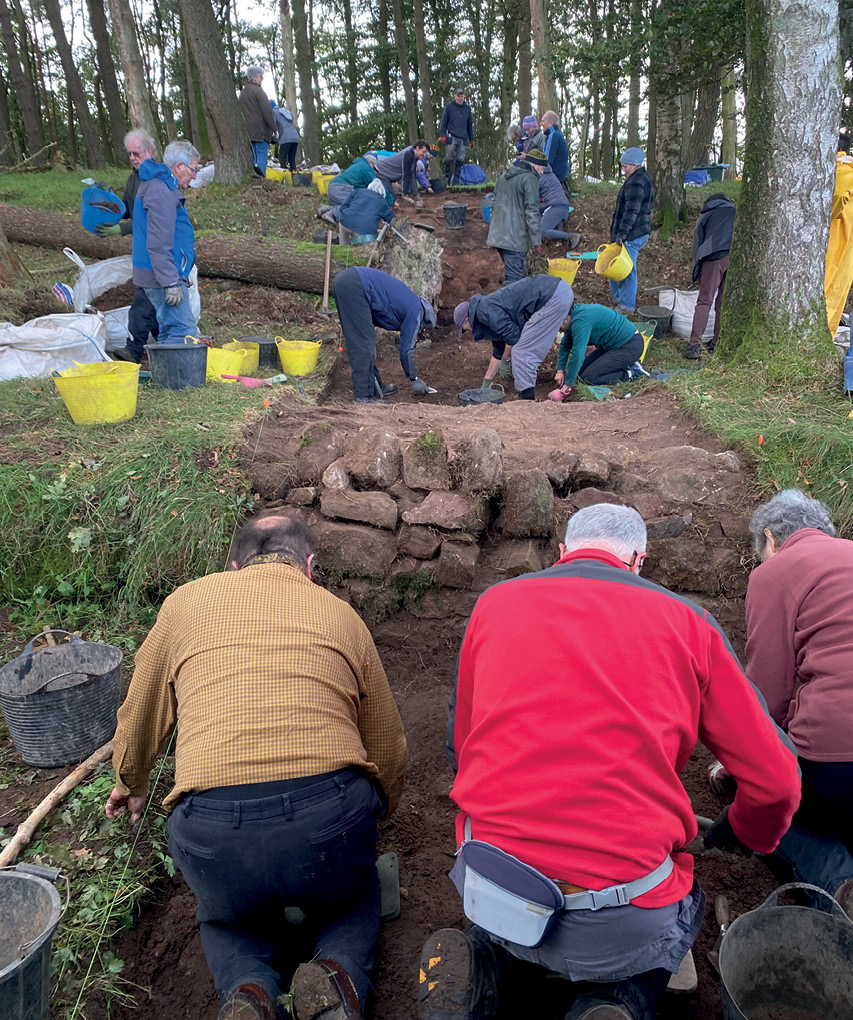
Subsequent excavation of the site by archaeologists from the Westphalia Lippe Regional Association (LWL) revealed that the axes lay over a large cavity where quartz had been quarried. Inside this pit was a stone slab and a hammerstone used to crush the extracted material. It would have been far easier to have extracted quartz at the base of the rock, so the fact that Iron Age people scaled the summit of the Feldstein for their quarrying suggests that this location was seen as important in some way.
Evidence of early colony uncovered in Chile
Excavations at the 16th-century colony of Ciudad Rey Don Felipe in southern Chile have revealed new details of this short-lived community.
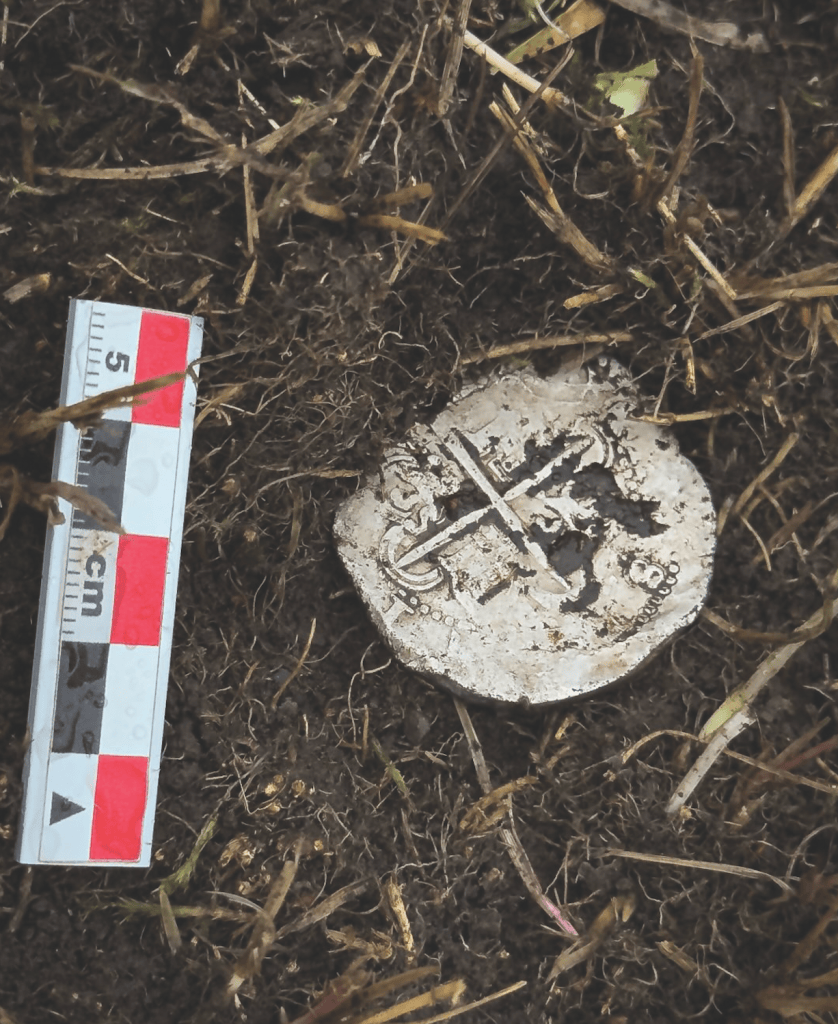
The site was established in 1584 by navigator Pedro Sarmiento de Gamboa, who was looking to control the Strait of Magellan. The mission failed, however, and within a few years most of the settlement’s inhabitants had died. Yet, despite its short tenure, recent archaeological investigations at the colony have uncovered new evidence of its activities including two. bronze cannons and a silver eight-real coin with the Jerusalem Cross on one side and the coat of arms of Philip II of Spain on the other. The coin was discovered in the foundations of Rey Don Felipe’s first church and corresponds exactly with the location of the coin that Sarmiento de Gamboa is known to have placed (based on his writings) on the building’s cornerstone during a ceremony marking the settlement’s creation on 25 March 1584.
The Iliad in Egypt
A papyrus fragment preserving part of the text of Homer’s Iliad has been found in in the Egyptian town of al-Bahnasa (ancient Oxyrhynchus), placed on the abdomen of a Roman-era Egyptian mummy.
The 1,600-year-old manuscript was discovered during excavations by the Oxyrhynchus Archaeological Mission from the University of Barcelona. While papyrus associated with mummies has previously been found at the site, these documents were all magical or ritualistic in their content. This is the first time that a Greek literary papyrus has been found deliberately buried with a person at the site. Analysis of the fragment has revealed that the writings come from Book II of the epic poem, specifically a passage cataloguing the Greek ships.
Text: Kathryn Krakowka / image: Richard Bezzaza, Simón Urbina