
Subscribe now for full access and no adverts
Excavations beneath the floor of St Cuthbert’s Church in Darlington, Co. Durham, have revealed the foundations of an 11th-century predecessor.
The work, part of the ‘Opening Doors’ project, was recently carried out by the Archaeological Practice of Newcastle in order to record and, where possible, preserve any historic features that were uncovered during renovations by Pinnacle Construction and the Parochial Church Council (PCC) of St Cuthbert’s.
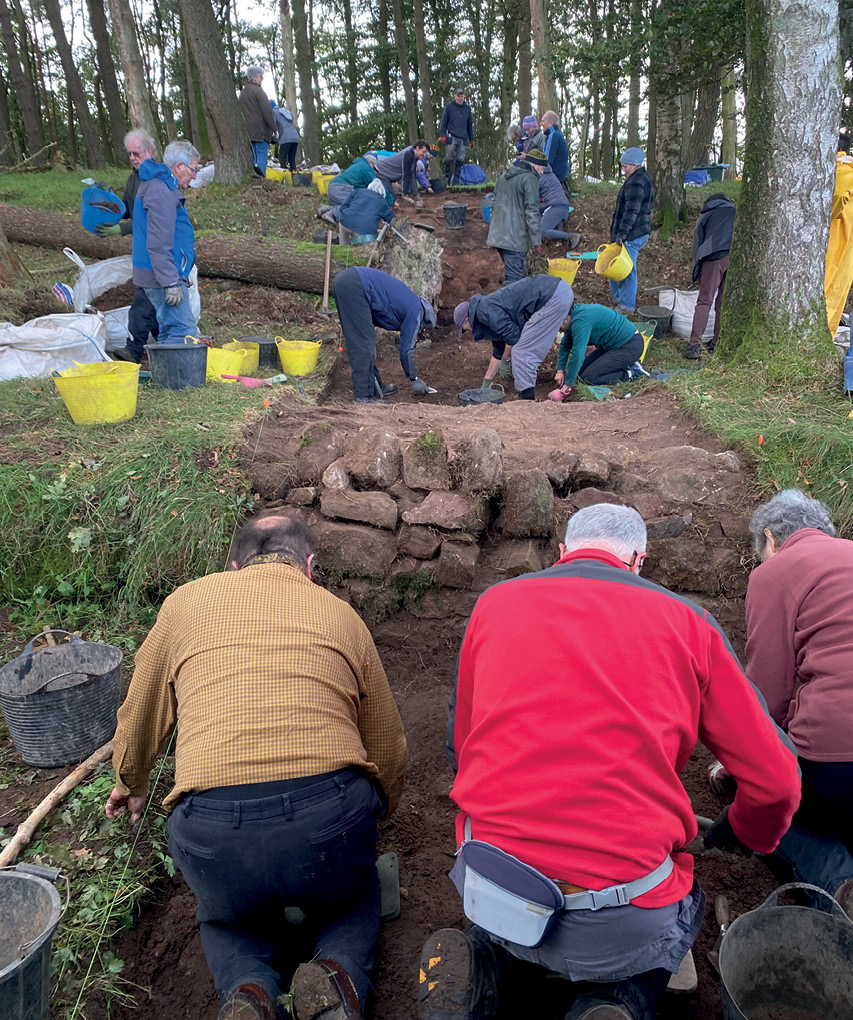
The wall remains were exposed when digging through the Victorian floor, as part of an initiative to lower it to make St Cuthbert’s more accessible. This revealed just over 6m (20ft) of footings, measuring c.1.2m (4ft) wide and made of roughly worked facing stones around a rubble core, set on deep cobble foundations. They ran along (though slightly out of alignment with) the path of the current church’s arcade columns (below); no signs of the east end of the earlier structure were discovered, but a few hints of its western wall suggest that it may have been associated with a tower.

While it is possible that the walls are early 11th-century in date, the project team believe it is more likely that they were built in pre-Norman style shortly after the Conquest, c.AD 1080, after the community of St Cuthbert’s fled Durham during the ‘Harrying of the North’ by William the Conqueror’s army. The extant church was built a century or so later, using the 11th- century walls as the base for its arcade columns.
In light of this discovery, the draft plans for the renovation, created by Knox McConnell Architects, have been redrawn in order to ensure these remains are preserved and their location marked on the new church floor. As part of their recording of the site, the Archaeological Practice of Newcastle have also created a 3D image of the entire church as well as a fly through video and a visual reconstruction. These will be used to inform new interpretation displays once the renovations are complete.
Text: Kathryn Krakowka / iMAGE: Archaeological Practice of Newcastle