Subscribe now for full access and no adverts
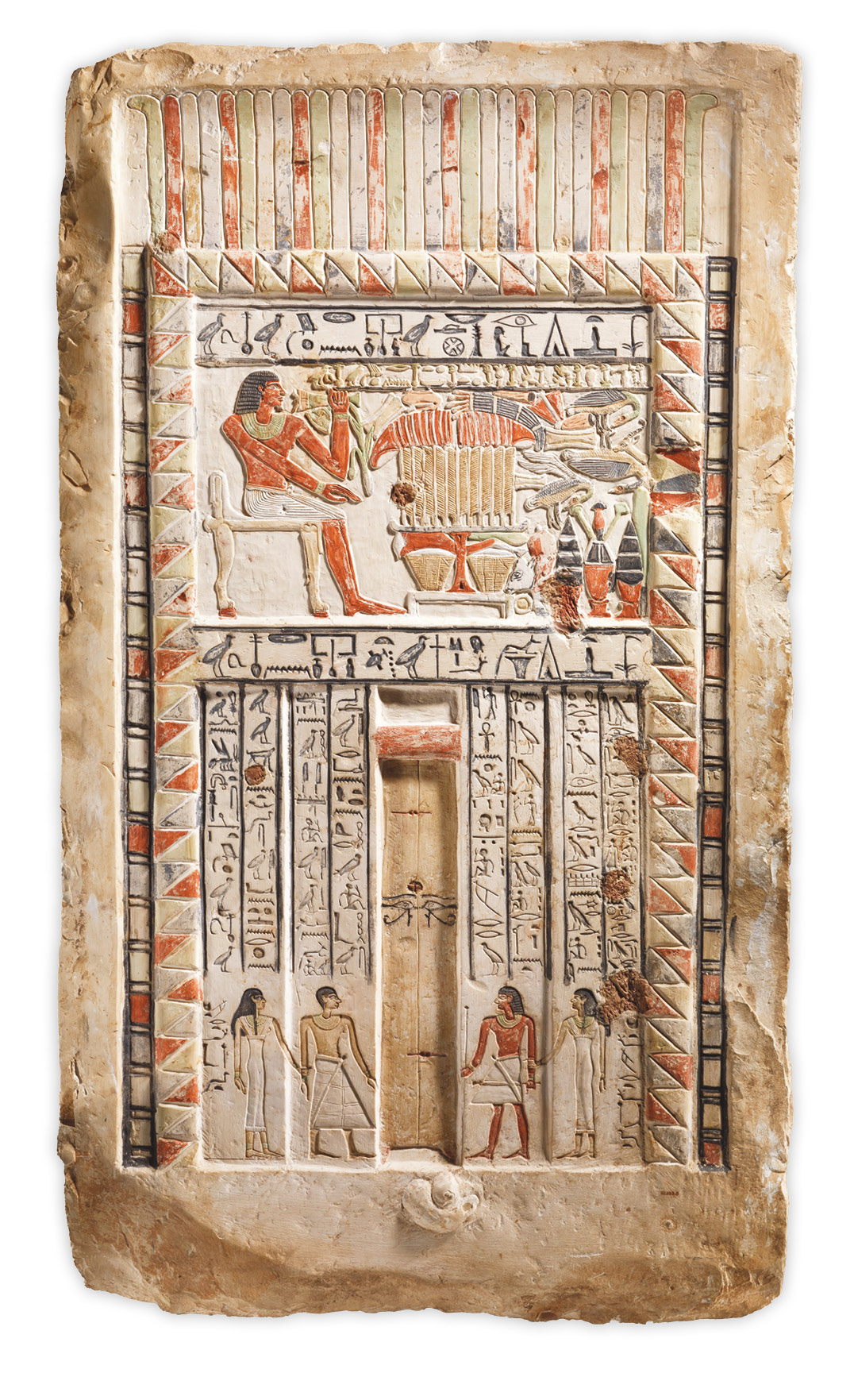
The Egyptological term ‘false door’ is long established but misleading. Although an accurate descriptor of an architectural feature that does not, in fact, lead anywhere in the physical world, such a ‘door’ is probably better conceptualised as a threshold into – and a conduit between – the world of the living and the realm of gods and the divinised dead.
Attested chiefly from Old Kingdom private tombs, false doors are known also from both royal and elite contexts throughout the pharaonic period. This example belongs to a man named Neferiu, a royal sealer, and probably comes from the important late Old Kingdom and First Intermediate Period cemetery of Dendera. It is a rare example of the genre, in that it has retained a good deal of its original colouring.
The false door might also be termed a stela, and represents one (although not the exclusive) focal point near a tomb for the offering cult of the deceased. This individual is usually an elite male, but women accompany their spouses (as here), and can be represented alone.
There tend to be two main representations of the deceased on false doors. One is of them seated at a table of offerings. Neferiu’s example is gloriously over-the-top: the table is excessively laden with meat, vegetables, bread, and fruit. Because one important aspect of the ka-spirit is sustenance, it is often said to be this spiritual form that partakes of the offerings.
The person whose name and titles occupy the largest part of the accompanying inscriptions is often shown at the lower part of the door too, as here, in mirrored although slightly different images. As usual, the man advances with a staff and sceptre, and in this case is accompanied by his wife. The use of these symbols is an affirmation of the status of the deceased, and the scene also represents ‘coming forth by day’. This is the title of the later funerary composition now known as the Book of the Dead.
It is interesting to compare these mirrored scenes with the arrangement of the so-called ‘guardian’ figures of Tutankhamun flanking the sealed burial chamber entrance in his tomb in the Valley of the Kings. These statues are not, in fact, guarding anything, but rather represent the deceased in the form of his ka-spirit emerging from (and re-entering) the burial chamber, part of an eternal cycle. Neferiu’s descendants must have hoped for the same scenario at Dendera in the late Old Kingdom.