Subscribe now for full access and no adverts
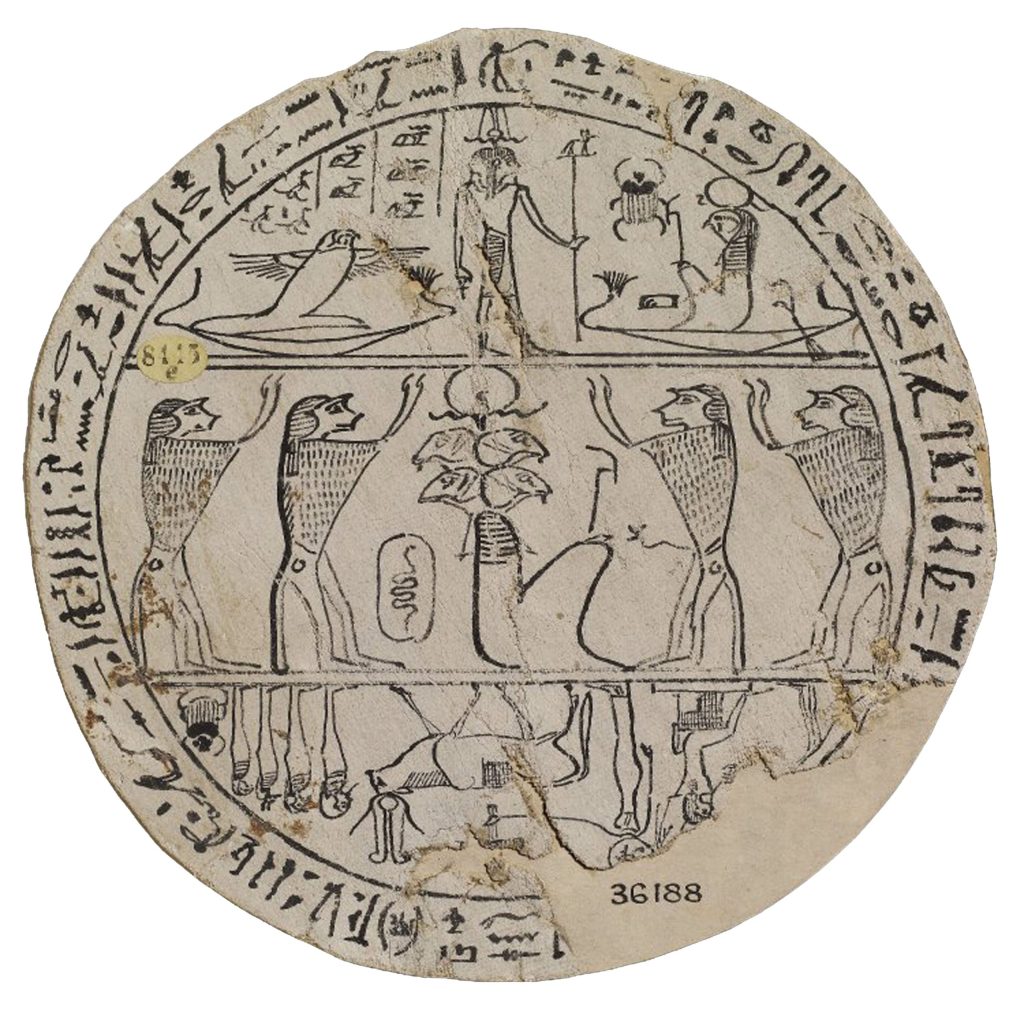
A hypocephalus of Neshorpakhered, now in the collection of the British Museum. Image: public domain via Wikicommons
A hypocephalus (from the Greek meaning literally ‘below the head’) was a disc intended to be placed under the head of the mummified body, thereby providing it with magical protection and aiding in the rebirth of the deceased. Key expressions of concern for the protection of the head of the deceased are seen from as early as the Pyramid Texts. Dating exclusively from the Saite to the Ptolemaic Periods (c.650-200 BC), hypocephali were an important means of channelling and condensing magical protection into one object by invoking various gods. In previous times, the content of this protection would be spread across a funerary papyrus, decorated coffin or tomb chapel.
Usually made of cartonnage – a thin layering of linen and plaster – as in this example, hypocephali are often inscribed with very select parts of Chapter 162 of the Book of the Dead. This text is entitled ‘Spell to bring about a flame beneath the head’ – a reference to solar illumination, echoed by the circular shape of the disc. The spell also mentions ‘a very great protection which was made by the Ihet cow for her son Ra when he sets’. Indeed, the Ihet cow is represented in this example. The effect of the object is described thus: ‘His place will be enclosed by a blaze, and he will be a god in the realm of the dead’ – an important reference to the taking on of divine status in the afterlife by a deceased person.
The contents of the other vignettes on the hypocephalus refer to scenes in other chapters of the Book of the Dead, such as Chapters 17 and 71. Different chapters seem to have been uniquely combined in each example. In total, fewer than 200 hypocephali are known, and they mainly belong to individuals with priestly titles which seem to focus on the cult of Amun at Thebes. Together with its supposed Theban provenance, such an association is confirmed by the fact that this example belongs to a singer of the god Amun, a woman named Neshorpakhered (literally ‘She Belongs to Horus-the-Child’). The central element of most groupings of vignettes is the depiction of a multi-headed deity. While this may be the god Amun, as here, other examples could have represented different divinities, depending on the region in which they were created.