
Subscribe now for full access and no adverts
In the East India Company’s long, slow surge across India, Maharaja Ranjit Singh was the most formidable foe it ever encountered.
The architect and defender of the Sikh Empire, the man known in his lifetime as ‘the Napoleon of the East’, Ranjit had all the hallmarks of a conqueror and empire-builder: great courage, ruthlessness, cunning, vast patriotic ambition – and, perhaps most crucially at that moment in history, the willingness to learn from his opponents.
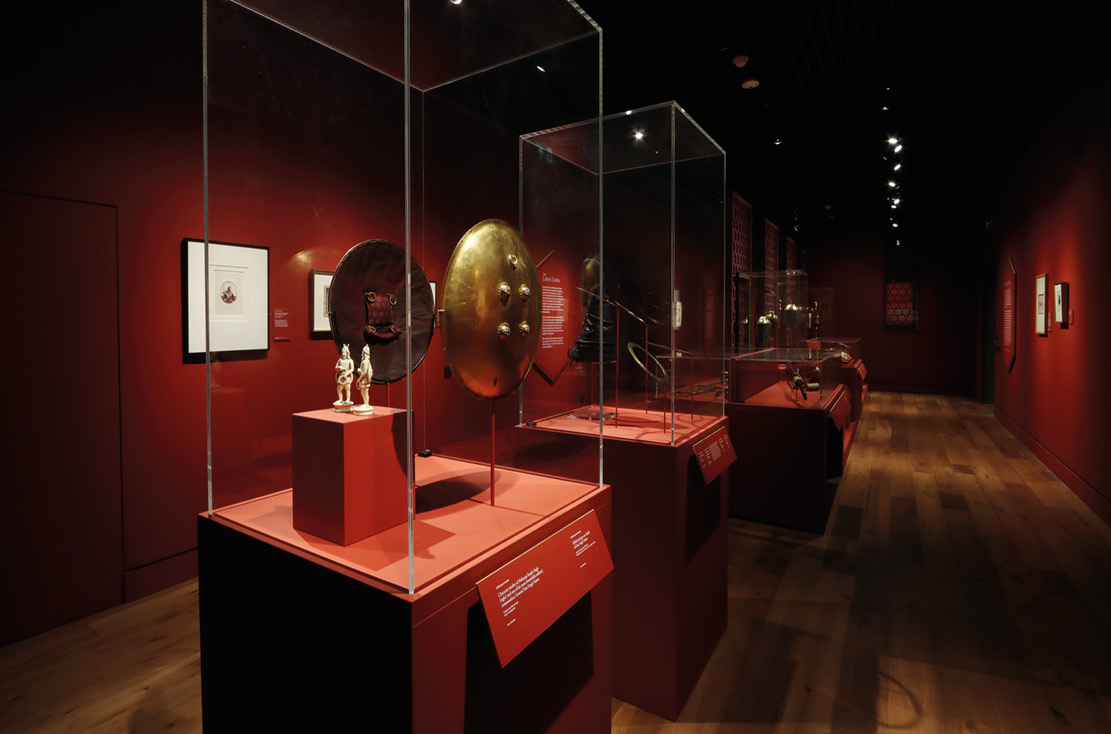
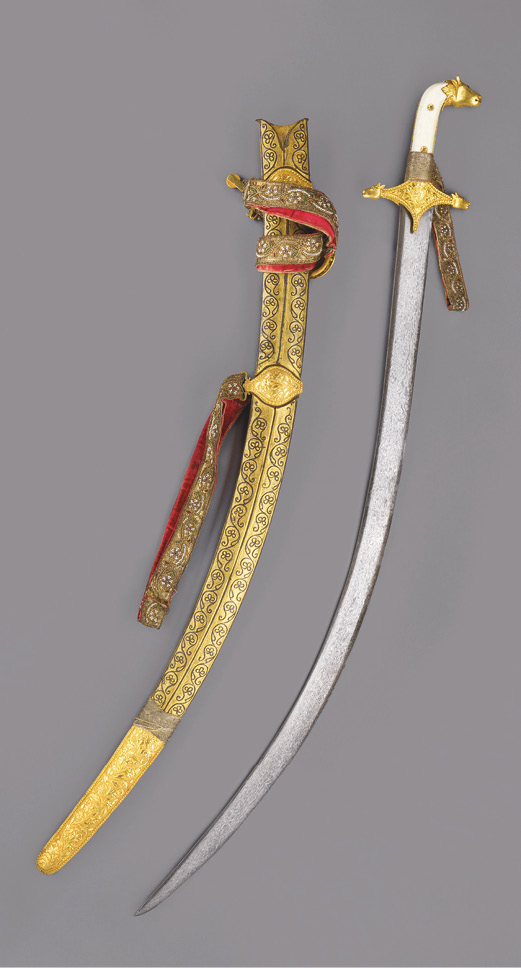
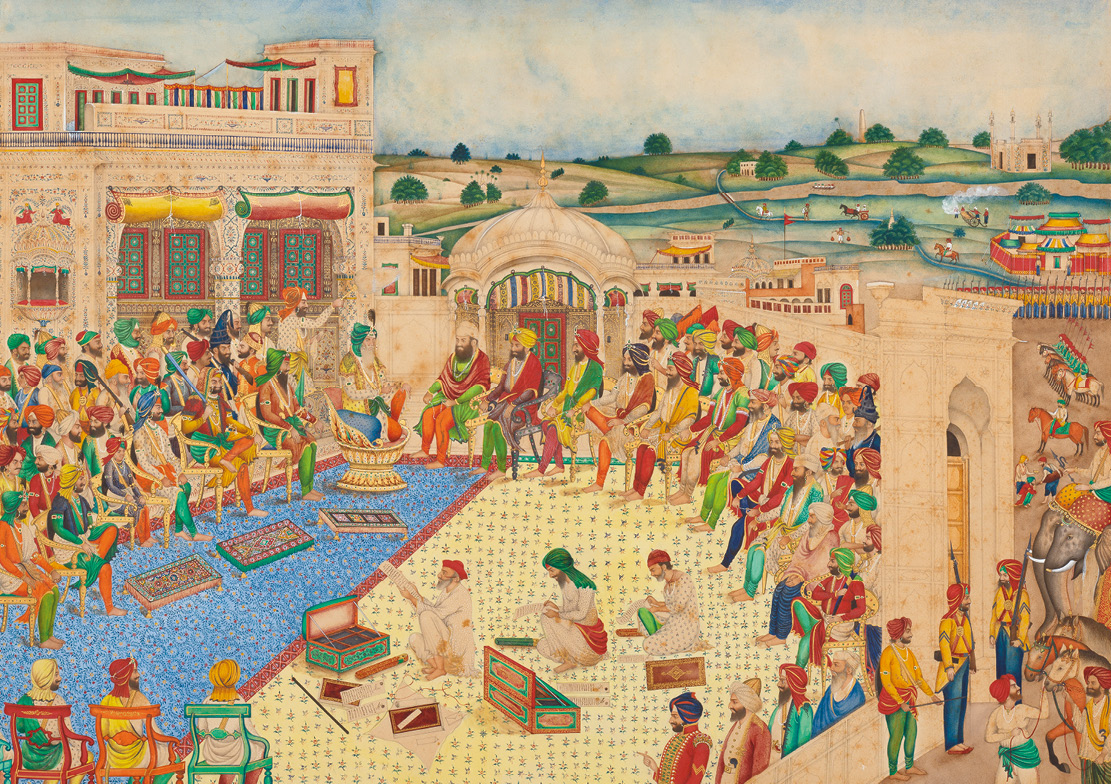
Now his achievements are being celebrated by an exhibition at London’s Wallace Collection, bringing together armour, weaponry, pictures, and courtly treasures to present a rich picture of his life and times, and of the military approach that made him so hard to beat.
Born in 1780, Ranjit caught smallpox as a child, and the disease scoured his face and cost him an eye. He was short in stature, too, but he first proved his valour at the tender age of 16, leading a force of 5,000 Sikhs outside the city of Amritsar to defeat a vastly larger force of invading Afghans.
He was born in the Punjab, for many centuries the most turbulent corner of India, lying between the arid slopes of Afghanistan and central Asia and all of India’s riches. Watered by the five major rivers that give it its name – punch meaning ‘five’, aab meaning ‘water’ – Punjab was and remains the granary of the subcontinent, and proved an irresistible target for successive waves of Afghan and Persian conquerors, driven by greed and religious zeal.
For those who found themselves in their path, the options were to roll over or to resist – and, given the conquerors’ ferocity, resistance required a very particular sort of courage.
From the soil of the Punjab, and from these age-old existential challenges, was born the religion and civilisation of the Sikhs, which in its maturity combined the values of egalitarianism, religious tolerance, and charity with a martial spirit that verged on the fanatical. Hindus in their spiritual formation, worshippers of Vishnu or Shiva, these people of India’s north-western marches learned the hard way that if they did not care to submit to Islam, their only recourse was to become as bellicose as the invaders.
Over more than 200 years, the Sikhs had earned the respect both of the Afghans in the west and of the Maratha and Rajput clans to the east and south, and had made good on their special claim to the Punjab. But by the time Ranjit’s beard first grew, peace had produced complacency: his people had split into many independent confederacies, called misls, whose only thought was for their own safety and prosperity.
Ranjit was the son of the chief of one such misl, but from an early age he had a much grander vision of his people’s future, envisaging them united in an empire.
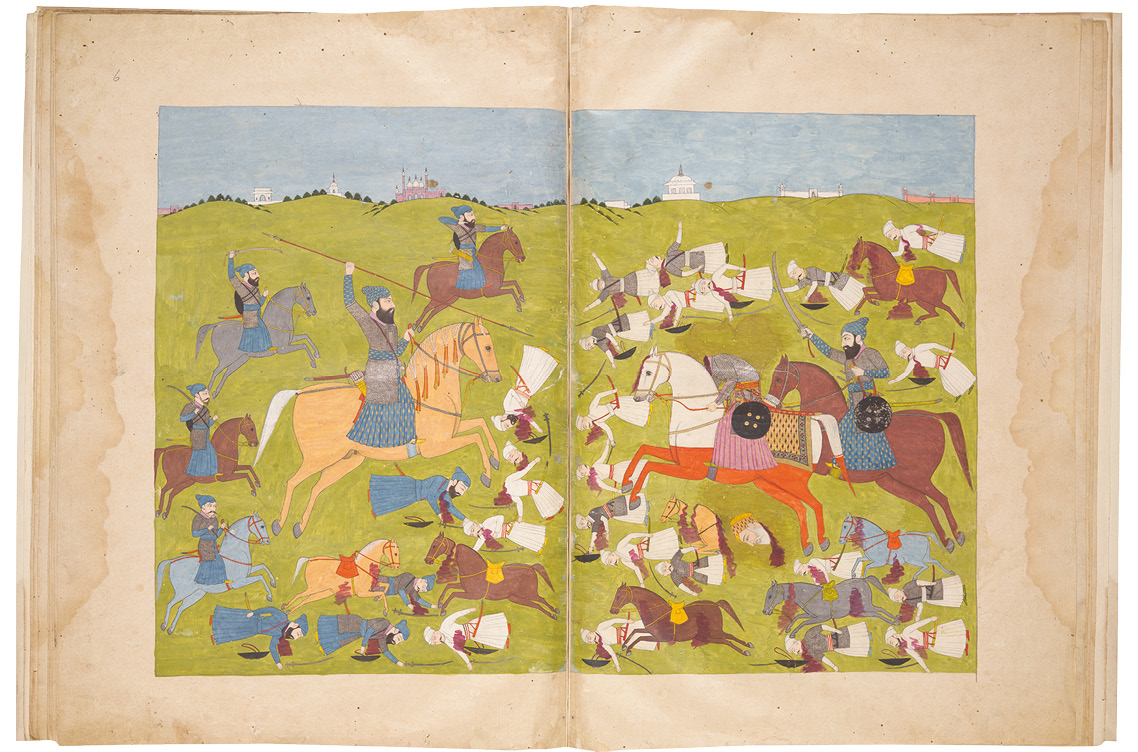
From the outset, this required ruthlessness. He descended on defiant misls, slaughtering stubborn old patriarchs and herding their widows and children into the growing body of forcibly unified Sikhs. Four years after his first victory, aged 21, he seized Lahore, then as now the capital of the Punjab, and was anointed Maharaja. A year later, he recovered the smaller city of Amritsar, home of Sikhism’s holy of holies: the Golden Temple. By the time of his death in 1839, the Sikh Empire stretched from the Khyber Pass, the natural bulwark against the Afghans, to the borders of Tibet.
Establishing his court in Lahore, Ranjit Singh presided over an era of rich artistic accomplishment and great wealth, symbolised by his acquisition of the Koh-i-Noor diamond from the Afghans, who had in turn looted it from the Mughals. (Only later did it find its way into England’s crown jewels, where for the time being it remains.)
The ‘immortals’
As a warrior, Ranjit’s genius was to combine the wild spirit of the so-called ‘immortals’, the fighters who embodied the Sikhs’ traditional martial spirit, with the technology and know-how of a wide range of foreign fighters, notably French veterans of Napoleon’s wars who found in service with the Sikh not only honour and remuneration but a handy way to get back at perfidious Albion.

The ‘immortals’, also known as ‘Nihangs’ (‘crocodiles’), were always the most distinctive face of Ranjit Singh’s army. Galloping into the fray bare-chested, with no body armour of any sort but armed to the teeth, they were fearless because they believed their immortality was guaranteed. They were ‘a very lawless race’, wrote Isabella Fane, daughter of the British commander-in-chief Sir Henry Fane, who observed them during a visit to Lahore in 1837. ‘Even the great Ranjit has little or no authority over them.’
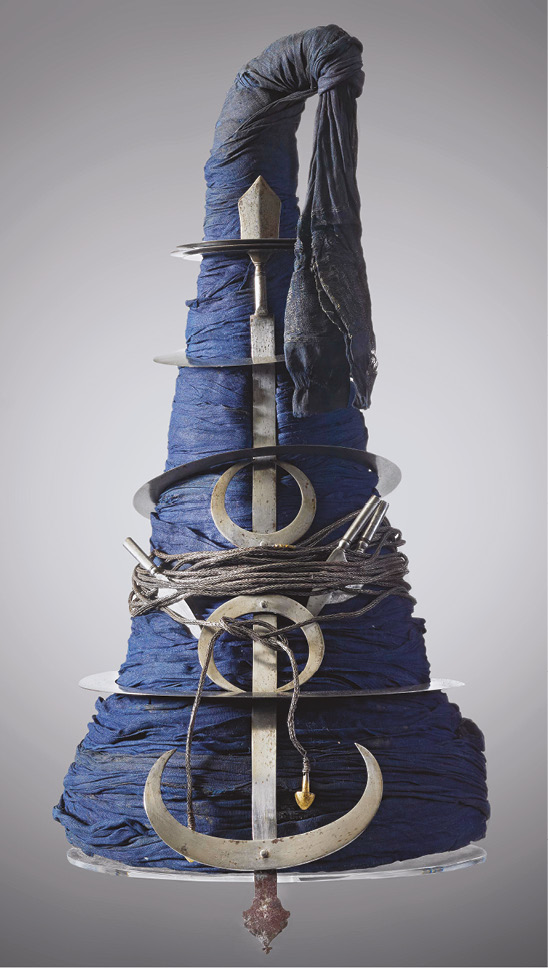
She watched them put on a ‘most savage display… on their heads they wear a turban… which they bring to a long point and on this they insert two or three of those iron hoops called quoits. These they use with wonderful dexterity and little consideration.’ At the Wallace Collection, one such crocodile turban is displayed (pictured above), resembling a slightly crumpled wizard’s hat on which are strung a number of Miss Fane’s ‘quoits’ – sharpened metal discs inscribed with religious mottoes which, according to exhibition co-curator Davinder Toor, were used by the Nihangs as ‘death frisbees’.
The Nihangs were unputdownable, though their carelessness of personal safety ensured that many were slain as they charged into battle at the front of Ranjit’s army. But key to the long-running success of the ‘Lion of the Punjab’ was what came behind them: a thoroughly modernised force, stiffened with French, British, and other foreign officers, and with a train of artillery, the pride of which was ‘Zamzama’ or ‘Lion’s Roar’ – the great 80lb cannon called ‘Kim’s Gun’ by Rudyard Kipling, because the young hero of the novel of that name liked to perch on it. It still stands outside the Lahore Museum today.
Defiant in both directions, towards the Afghans in the west and the Maratha and the East India Company’s ambitions in the east, Ranjit Singh succeeded in giving his people an era of precious peace that lasted beyond his death.
RANJIT SINGH: SIKH, WARRIOR, KING
Until 20 October 2024
£14
The Wallace Collection, Manchester Square, London W1U 3BN
+44 (0)20 7563 9500
http://www.wallacecollection.org/whats-on/events/ranjit-singh-sikh-warrior-king
All images: Trustees of the Wallace Collection/RMN-Grand Palais (musée du Louvre)/Toor Collection/British Library/Royal Armouries, Leeds
WORTH CHECKING OUT… Upcoming Events and Exhibitions
ARCHAEOLOGY
King’s Lynn under Siege: the 2024 season
14-19 July 2024
http://www.sharp.org.uk/product-page/king-s-lynn-under-seige-project-volunteer
Prices vary
In 1643, during the first year of the British Civil Wars, a Royalist coup seized control of the Norfolk port of King’s Lynn. After a short siege, the Parliamentary forces retook the town, and then, realising its importance, refortified it to a design seldom to be found anywhere else in Britain. Formed in 2018, King’s Lynn under Siege (KLuS) has been researching the town during that conflict, and will return to the site this summer for a further week of exploration. As in previous years, KLuS welcomes participants to join them, regardless of experience.
EXHIBITIONS
Maps: memories from the Second World War
Until 25 January 2026
National War Museum, Edinburgh Castle, Edinburgh
http://www.nms.ac.uk/exhibitions-events/exhibitions/national-war-museum/maps-memories-from-the-second-world-war
£19.50 (adult)
During WWII, millions of maps were produced by the Allied and Axis powers. Originally used to navigate the cities of Europe, the jungles of south-east Asia, or an escape from a prison camp, the maps in this exhibition are now mementos, retained alongside medals, photographs, and other keepsakes. This show introduces visitors to a POW, a pilot, a brigadier, and an army chaplain through the maps they kept from their wartime service.
The Impending Crisis: how slavery caused the Civil War
Ongoing
The American Civil War Museum – Historic Tredegar, Richmond, Virginia
https://acwm.org/the-impending-crisis
$18 (adult)
‘A house divided against itself cannot stand.’ So said Abraham Lincoln in 1858, two years before the American Civil War. Launched in April at the Civil War Museum’s Historic Tredegar site, this major exhibition explores why the issue of slavery – and how Americans viewed it in the context of faith, politics, and patriotism – sparked a conflict that reshaped the country’s future.
Our War Too: women in service
Until 21 July 2024
National WWII Museum, 945 Magazine Street, New Orleans
http://www.nationalww2museum.org/events-programs/events/our-war-too-women-service
$32.50
The popular narrative of American women during World War II often focuses on those who worked on the home front, while stories of women who volunteered in the uniform services continue to go under recognised. This new show, featuring unique artefacts and an interactive scrapbook, honours the nearly 350,000 US women who served their country in the armed forces during the period.