Subscribe now for full access and no adverts
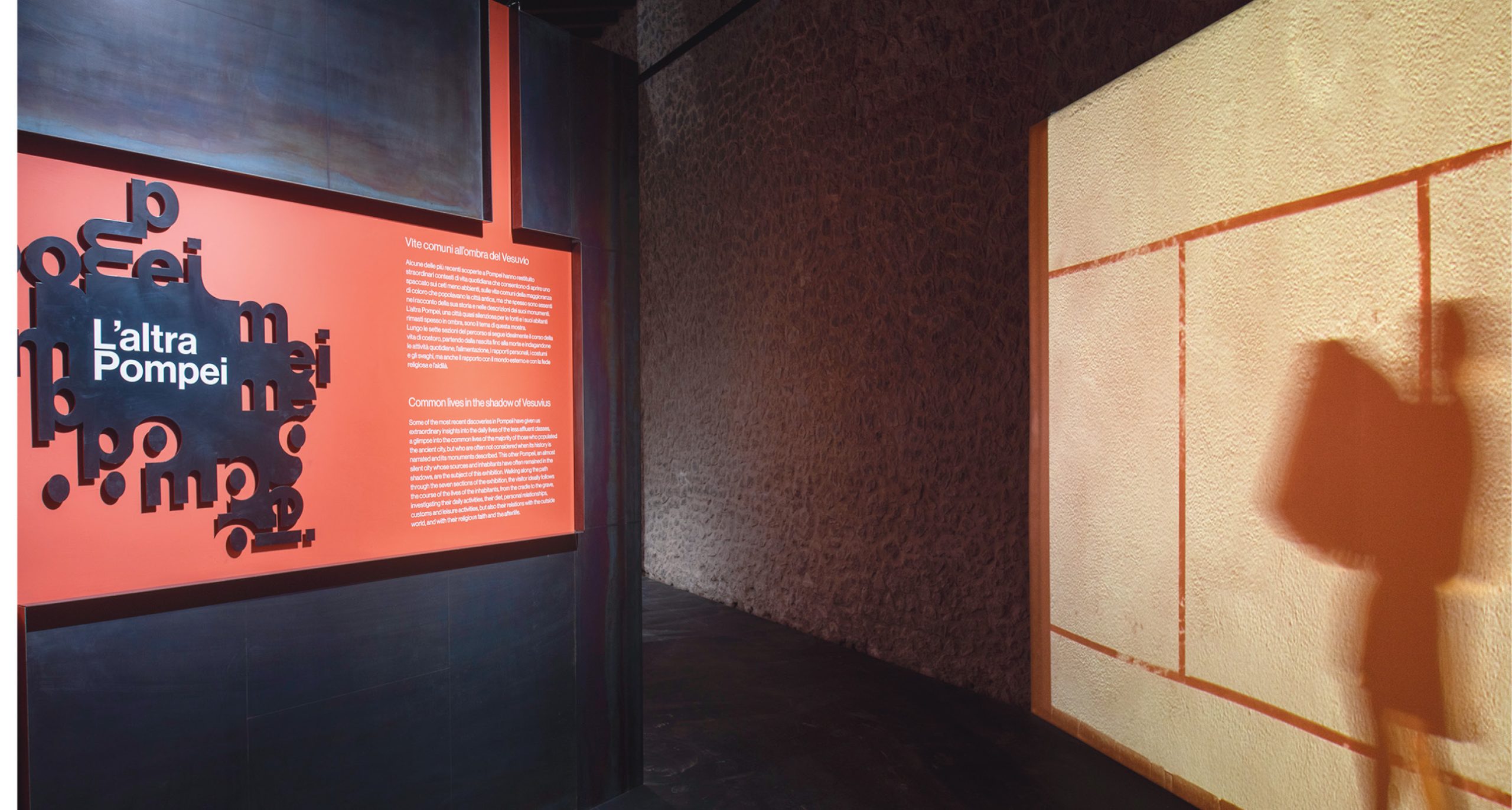
Pompeii is one of the most famous archaeological sites. Frozen in time during the eruption of Vesuvius in AD 79, the city is an invaluable source of information about the ancient world. However, it is Pompeii’s elite – their richly decorated homes, valuable belongings, and grand public buildings – who often dominate the narrative. Over 80% of the city’s population lived very differently. In this new exhibition, curator Silvia Martina Bertesago set out to revive the memory of this forgotten majority, bringing to the forefront the stories of Pompeii’s slaves, workers, merchants, and artisans to present a more complete image of life in the city in the 1st century AD.
Occupying spaces
In contrast to the large atrium houses with countless rooms and gardens that were home to wealthy Pompeiians (see here), most of the urban centre’s population (thought to have numbered c.20,000) lived in much smaller residences: in subdivided spaces and studio apartments, behind shops and businesses, or in rooms within larger homes and buildings. Evidence of these anonymous spaces is less apparent in the archaeological record, but has increasingly begun to emerge in recent years. Among the most remarkable discoveries is a well-preserved section of the slave quarters at Civita Giuliana, a suburban villa c.700m north of Pompeii. One of these rooms, which has been reconstructed for the exhibition, was unearthed several years ago (CWA 111) and contains three beds of different sizes, as well as a store of equestrian equipment. It is believed to have been occupied by a head slave and his ‘family’ (although there were no legal protections surrounding family relationships for those in slavery), who worked in the villa’s stables. The cramped quarters, complete with improvised rat traps, offer a rare insight into the hardships of daily life for these three enslaved individuals and the countless others like them.
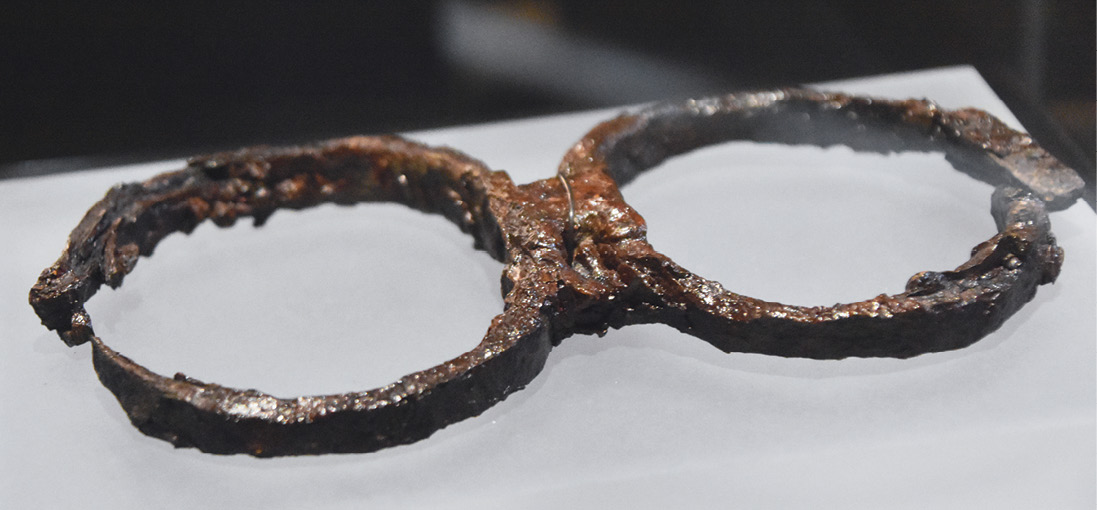
Elsewhere in Pompeii, the discovery of shackles and restraints present a vivid reminder of the brutality that could feature in the life of a slave in the Roman world. More ornate but perhaps no less confining is a bracelet of gold and glass paste bearing the inscription DOM(I)NUS ANCILLAE SUAE (‘from the master to his slave girl’), probably a gift given by the master of the house to a female slave. Both reflect the harsh reality, that slaves’ lives were often entirely subject to the rule of their dominus.

Bread and circuses
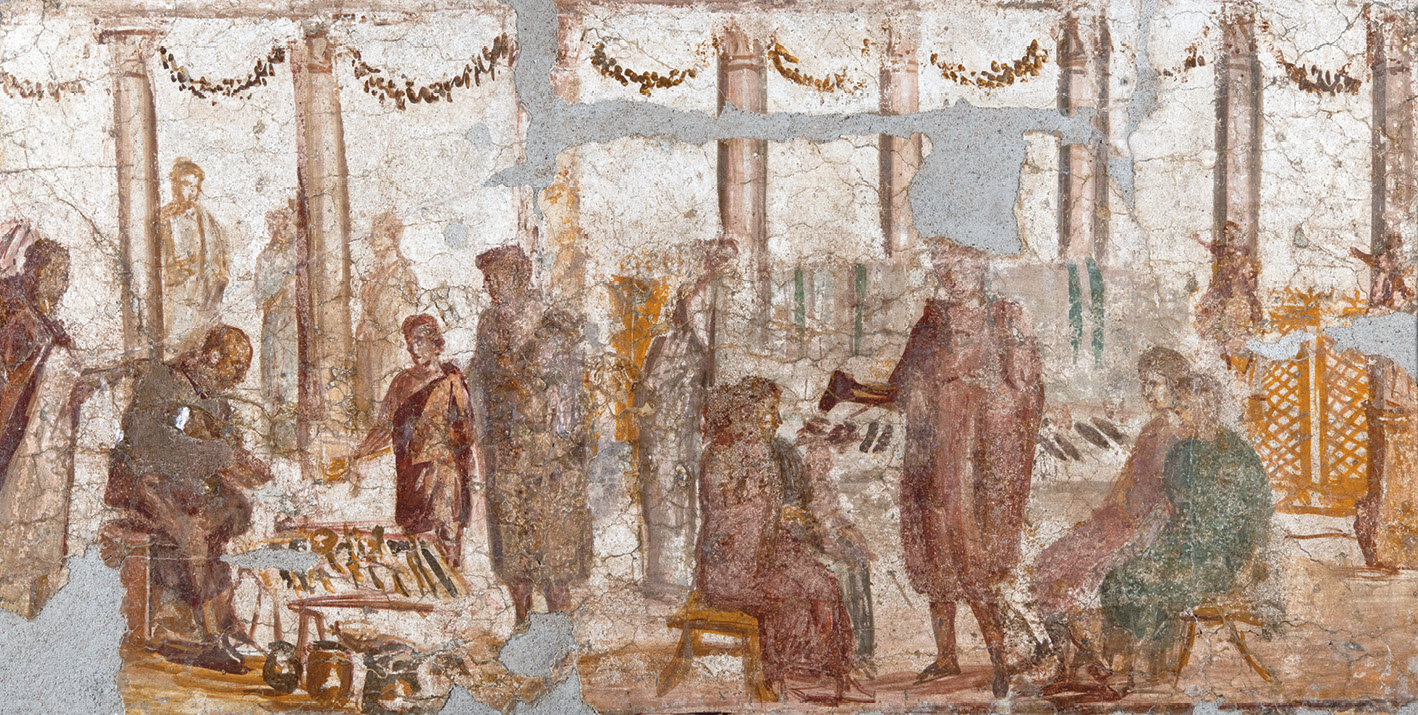
Standards of living varied dramatically even among the lower classes of Pompeiian society, as we can see in their diets. Written records document the purchase of panis puero (‘bread for slaves’) distinct from the bread consumed by the rest of the household, while numerous frescoes illustrate the wide spectrum of meals found on tables across Pompeii. Physical evidence is also found in the form of ceramic cooking and serving vessels, as well as glassware, which were accessible to all social classes in Pompeii by AD 79. Food itself was preserved in the eruption too, from loaves of bread at a bakery to the charred remains of a stew served in many of Pompeii’s taverns. Dried figs were of particular importance for poorer Pompeiians, supplementing their diets through the harsh winter months.
The lower classes were limited in their clothing as well, often wearing short tunics that allowed for heavy manual labour, with restrictions surrounding who was permitted to wear the toga. On the streets of Pompeii – as in surviving frescoes depicting such scenes – the status of an individual could quickly be determined by what they were wearing. Charred textile fragments and imprints of fabric on plaster casts of the victims of Vesuvius reflect differences in the quality and type of material available depending on social and economic status. Even poorer individuals had a taste for accessories though. Brooches, buckles, bracelets, and rings in the same styles as more expensive jewellery were often reproduced in affordable materials for less affluent customers.
Non-elites participated in many types of cultural activity as well. Dice (alea) are found all over Pompeii, most commonly in domestic contexts, and often in parts of the house where productive activities were carried out, painting an image of workers interspersing their tasks with short breaks. Gaming pieces from board games are common as well, although less is known about the details of these diversions. Slaves, freedmen, and citizens alike attended the theatre and enjoyed music, and gladiator fights were particularly popular through all levels of society, with images of gladiators appearing commonly in graffiti across Pompeii.

Beliefs and burials
Religion was an integral part of life for most Pompeiians, with the poor favouring deities like Isis and Dionysus for their affinities with fertility, agriculture, and commercial success, as well as the possibility of change and the promise of new life.
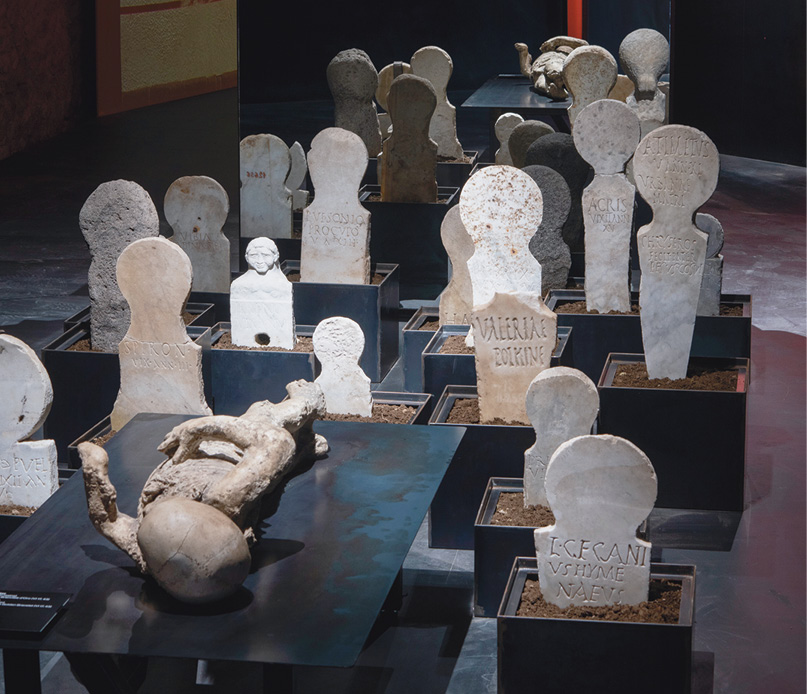
The beliefs of individuals are also reflected in their burial customs. We have a fascinating example of this in the tomb of a freedman called Marcus Venerius Secundio. Unusually, the former slave was buried, rather than cremated like most adults in Pompeii, while the remains of his wife Novia Amabiles and their two children were placed all together in a single glass urn. Discoveries like this suggests that funerary practices in Pompeii were more complex than literary sources might indicate, particularly surrounding customs of child burial, and seem to have varied according to the decisions of the family, individual taste, and even the circumstances of death. Marcus Venerius Secundio and Novia Amabiles’ children were not the only ones to die young. A collection of funerary stelae belonging to children from Pompeii is a moving reminder of the fragility of childhood in the ancient world, especially for those of lower status.
Life for Pompeii’s average inhabitant was often hard, frequently sadly short, and unfortunately easy to overlook in the archaeological record. However, the search for these traces is essential if we wish to understand what life was really like in the shadow of Vesuvius.
DETAILS:
L’altra Pompei: vite comuni all’ombra del Vesuvia
Address: Palestra grande, Pompeii
Open: Until 15 December 2024
Website: http://www.pompeiisites.org/mostre/laltra-pompei-vite-comuni-allombra-del-vesuvio
Text: Amy Brunskill / Images: © luigispina, courtesy of the MIC – Archaeological Park of Pompeii; courtesy of the Archaeological Park of Pompeii