
Subscribe now for full access and no adverts
In the summer of 1940, Britain’s military was in dire straits. After the humiliation of defeat, withdrawal, and evacuation from Dunkirk, many soldiers had been able to make it back home. But most of their transport, equipment, and artillery had been abandoned in France.
The country faced the threat of invasion from what seemed like an all-conquering army that had already stormed through Poland, Norway, Denmark, Holland, and Belgium. Britain’s army chiefs scrambled to re-order and re-equip the men who had survived the evacuation, while the Battle of Britain was fought out above their heads in the skies of southern England.
But the country’s new Prime Minister, Winston Churchill, who had only been in office since May, had other ideas. During that ‘Spitfire Summer’ of 1940, he set up a series of organisations that were not aimed at defence but at taking aggressive action against the enemy.
First, there was the Special Operations Executive. The SOE officially came into existence in July 1940 to conduct espionage and sabotage operations in occupied Europe with a view to forcing the Axis armies to divert men and resources from the battlefronts to the occupied territories. Its first political leader, Hugh Dalton, the Minister of Economic Warfare, recorded in his diary that Churchill had told him to ‘set Europe ablaze’. Soon SOE operatives, including dozens of women agents, would be parachuting into occupied France to help the resistance and carry out acts of sabotage and assassinations such as that of Reinhard Heydrich, the brutal SS chief, who was killed by Czech and Slovak soldiers trained by SOE.
While the executive was getting established in its Baker Street headquarters, Churchill insisted that a new airborne force of parachutists and glider troops should be created, too. In disarray after Dunkirk, army chiefs felt this was definitely not the time to create and train up a new force. In addition, the RAF complained that it didn’t have the aircraft to carry airborne troops to their drop zones. But Churchill persisted and eventually a Parachute Brigade, and then an Airborne Division, were created with men training at Ringway (now Manchester Airport).
Finally, Churchill wanted also to create a new force known as commandos – named after the Boer irregulars who had fought against Britain at the beginning of the century and who had immensely impressed the young Churchill with their daring raids. They were to be made up of volunteers specially trained in the use of knives and small arms, navigation and demolition. By attacking positions along the long coastline of occupied Europe, the commandos were, according to Churchill, to ‘create a reign of terror down the enemy coast’.
Together, these units helped bring into being what would become known as ‘Special Forces’. But in 1941 and 1942 their role was limited to small-scale attacks and raids on enemy positions. Operation Biting and the capture of a Würzburg German radar at Bruneval on the coast of northern France was one of these small raids, and the attack on the St Nazaire dry dock was another, larger operation.
Freelance pirates
In addition, Churchill gave permission for undercover missions to be carried out by what historian Damien Lewis describes as ‘freelance pirates’. The key element of these missions was that they would be deniable. That is, if agents were caught by the enemy, the authorities in Britain would deny any involvement.
One of the very first of these dubious missions, the brainchild of Brigadier Colin Gubbins of SOE, was to be carried out by a group of trained saboteurs and killers led by Captain Gus March-Phillipps, with a hand-picked crew consisting of Lieutenant Geoffrey Appleyard (the two had met in a foxhole at Dunkirk) and Lieutenant Graham Hayes (a friend since childhood of Appleyard) along with Anders Lassen, a rugged, brave, and tough Danish aristocrat known as the ‘Danish Viking’. These men and the rest of their crew were supremely fit, determined, and defiant, preferring to act alone rather than in the more ordered world of the regular military.
Their mission was to sail a Brixham trawler, the Maid of Honour, which had been converted with hidden guns into a Q-ship, around the coast of west Africa to the Spanish port of Fernando Po (now Bioko) in the Gulf of Guinea, off Lagos. It was believed the Germans were using this as a harbour to gather supplies to repair and re-equip its U-boat fleet, which was wreaking havoc in the eastern Atlantic and along the African coast.
With their vessel disguised as a Swedish sailing boat on a pleasure jaunt, March-Phillipps and his band of brothers were to sail 3,000 miles from Poole in Dorset to Fernando Po, and then attack, overwhelm, and kidnap the vessels that the Germans were using to sustain the U-boats. They were then to sail them out into international waters, where a British destroyer, HMS Violet, would intercept them and seize them as a legitimate prize of war. It was called Operation Postmaster. If it went wrong, the raid risked bringing Spain into the war on the side of the Nazis. Hence, it would be denied that this was any sort of British military mission.
Operation Postmaster: The aftermath
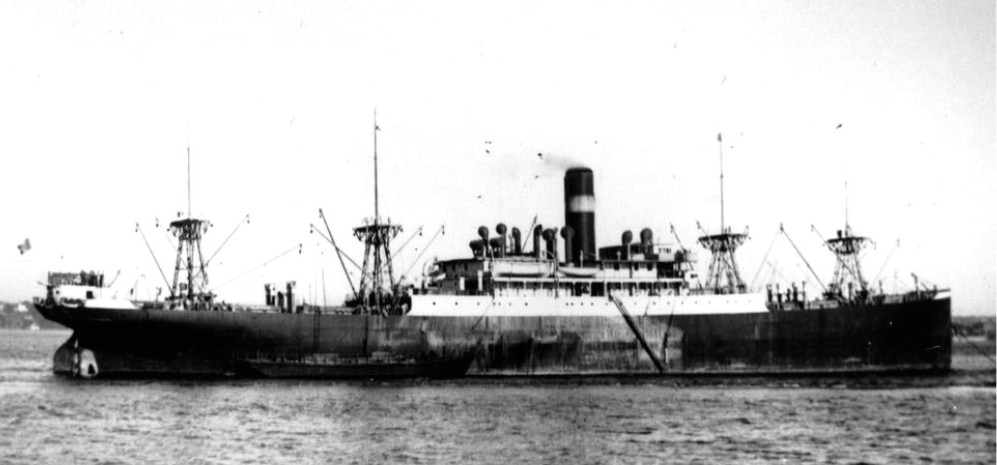
The Operation Postmaster raid was a complete success in hijacking the Duchessa d’Aosta (below) and the Likomba, which contained supplies for the U-boat fleet. The story put out by London was that the ships’ crews had mutinied, sailed out to sea, and been seized as legitimate war booty by the Royal Navy in international waters.
But, crucially, the raid also succeeded in that it was never clear to the authorities in Fernando Po nor in Madrid who was behind it. No one knew who had stolen the Axis ships. The SOE agents left hints that it might have been the Free French. Many Spaniards suspected it had been a British operation but had no proof. The local governor came to suspect that Heinrich Luhr, the local SS commander, had betrayed Nazi Germany by organising the theft of the ships himself.
None of the dire political repercussions that had been feared actually followed the raid. SOE judged that Operation Postmaster had been a triumph, and as a consequence set up the Small Scale Raiding Force in which Captain Gus March-Phillipps, Lieutenant Geoffrey Appleyard, and Anders Lassen went on to pursue their irregular and deniable activities with further success.
In the final captions of Guy Ritchie’s film, it is said correctly that March-Phillipps married Marjorie Stewart the following year, although they did not meet on a mission. Lassen went on to win the Victoria Cross for his part in later raids, while fellow Operation Postmaster veteran Graham Hayes was captured and interrogated by the Gestapo for over a year. He never broke.
Action and violence
So far, so correct. The story of the mission was written up by Damien Lewis in his gripping 2014 book Churchill’s Secret Warriors. But then Guy Ritchie got hold of it and made The Ministry of Ungentlemanly Warfare, and any connection with historical truth became lost in cinematic fiction.
Ritchie is the British director of gangster films including Lock, Stock and Two Smoking Barrels (1998) and Snatch (2000), plus the successful Sherlock Holmes (2009), and Aladdin (2019) adaptations. From 2000, he was married for several years to the pop singer Madonna.

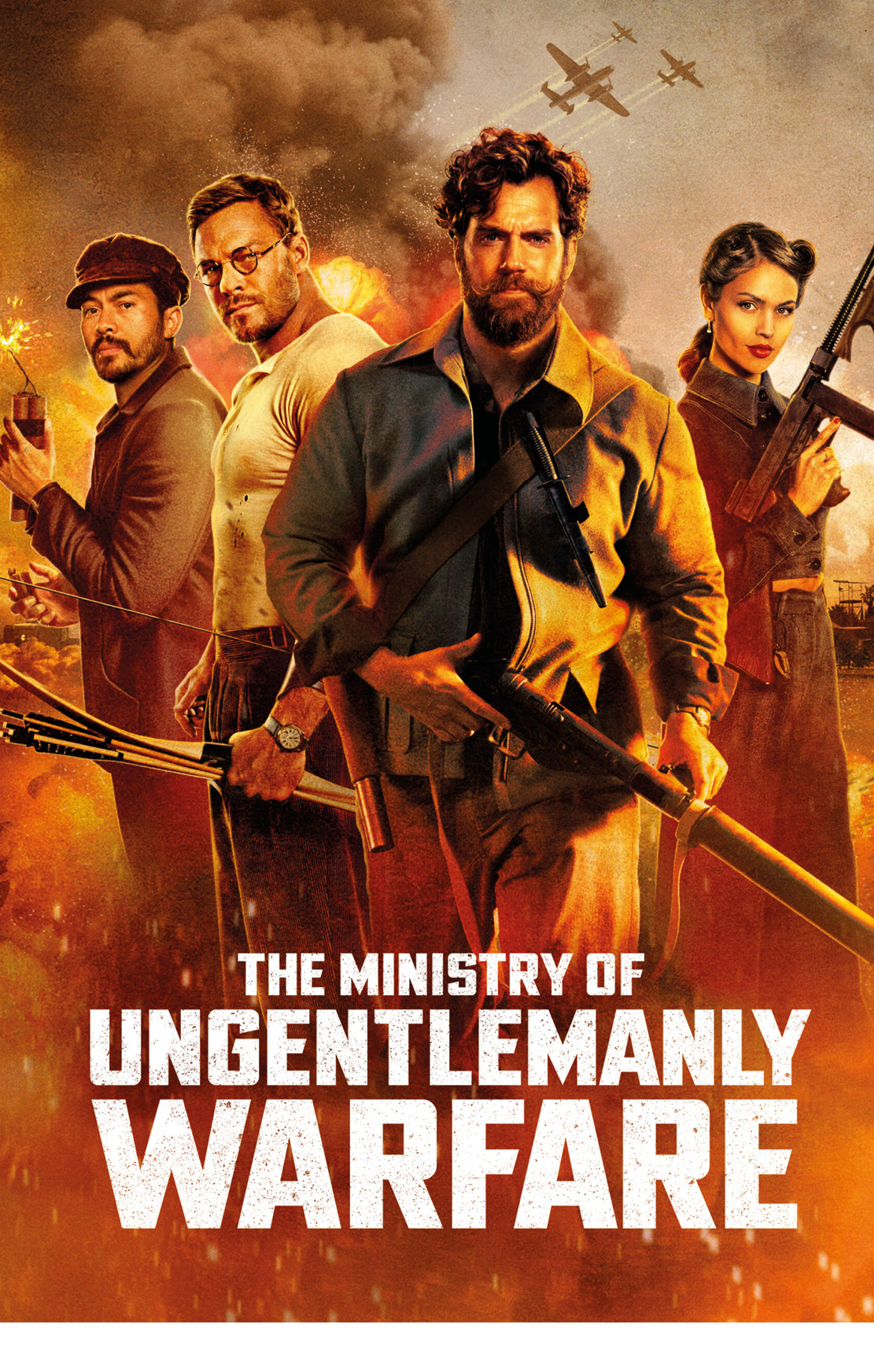
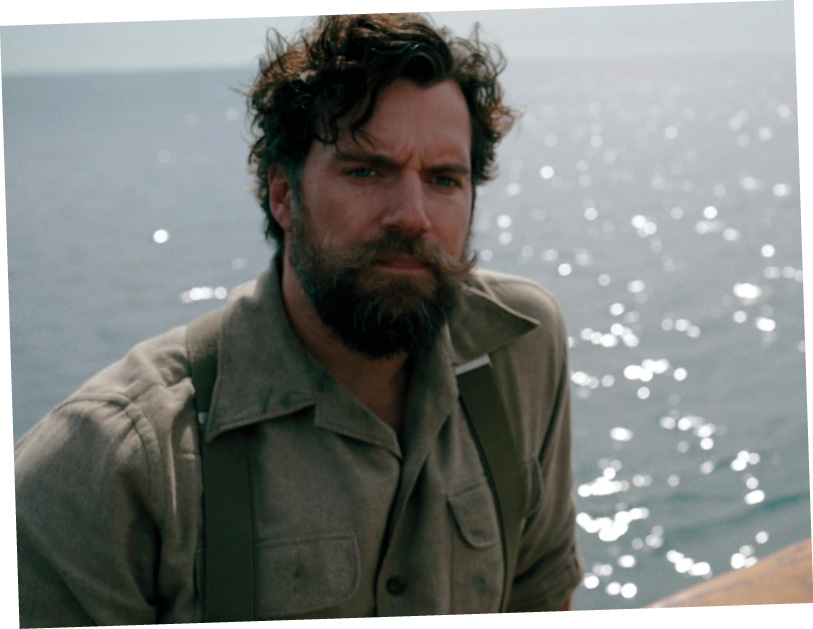
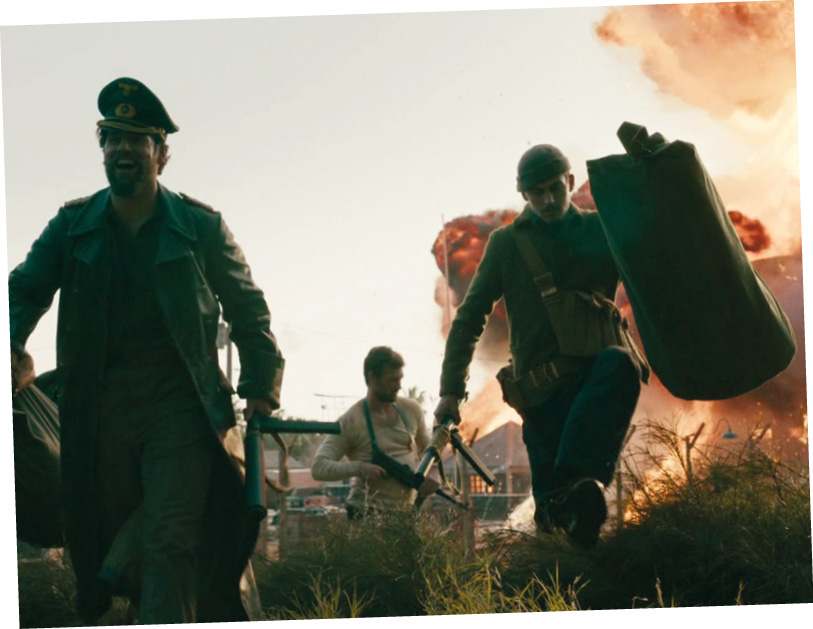
Ritchie makes powerful action movies, but had never made a historical film before Ungentlemanly Warfare was released earlier this year. His penchant for action and violence comes out clearly in the movie, which begins with March-Phillipps (played by Henry Cavill as a plummy, wise-cracking ex-Etonian) and his team sailing the Maid of Honour down the west coast of Africa, and cutting the throats of a German raiding party. Much blood is spilt.
Anders Lassen (played by bull- like Alan Ritchson) is particularly lethal with knives, tommy guns, pistols, and a bow and arrow. En route to Fernando Po, they massacre a company of German soldiers who are guarding and interrogating Lieutenant Appleyard (Alex Pettyfer). This sequence is entirely made up to add another episode of violence to the movie.
The chronology of Operation Postmaster is very confused in the film. In an early scene, Winston Churchill (preposterously played by Rory Kinnear in the worst screen Churchill for years) is warned by politicians and military leaders that he must negotiate with Hitler or the country will face certain defeat. This is presumably taken from the events of late May 1940, when Churchill refused to parley with Hitler. This was despite his Foreign Secretary at the time, Lord Halifax, arguing along with others in the Cabinet that it was in the country’s best interests to negotiate with Nazi Germany at the peak of their success. However, Operation Postmaster was not conceived until the autumn of 1941, and was not carried out until January 1942.
Ian Fleming (played by a cool Freddie Fox) is shown correctly as one of those behind the operation – though nothing much is made of this storyline. However, Admiral Pound, the naval chief, is shown as being totally against the clandestine operation. In fact, the Navy gave its slightly reluctant support to Postmaster. Will the Pound family sue Ritchie for defamation?
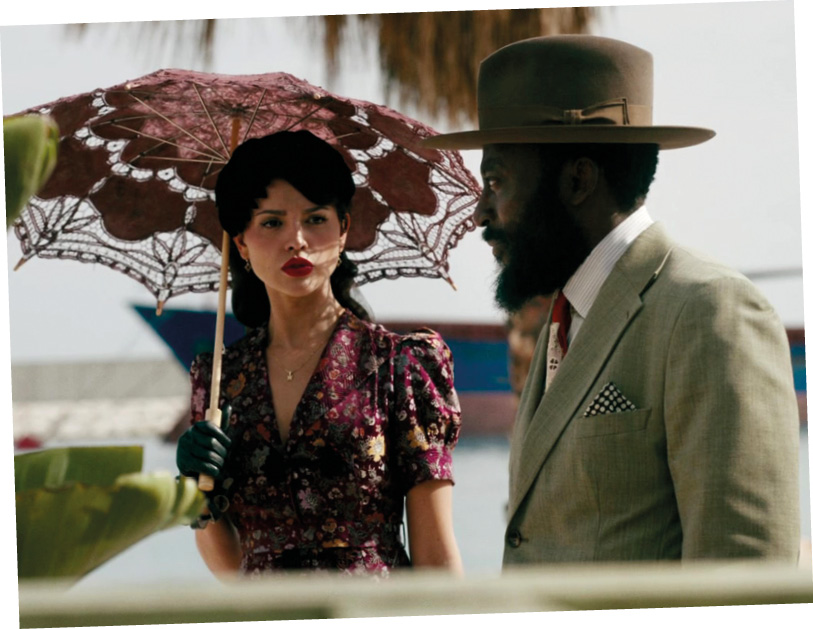
To diversify the cast a bit, two characters are given a central role in the film. One is Richard Heron (Babs Olusanmokun), a completely invented local businessman at Fernando Po, who helps SOE. And the other is an actual SOE female agent who had no role in Postmaster: Marjorie Stewart (played with verve by the beautiful Eiza González), who predictably becomes the femme fatale at the centre of the story. Her task in the film seems to be to seduce the local German SS commander on the island, Heinrich Luhr (the sinister Til Schweiger) and distract him from the upcoming operation. It turns out that the superwoman Miss Stewart not only speaks Italian and German fluently, but is an exceptional shot, has a suitcase full of beautiful dresses, and can sing Kurt Weill songs with gusto.
The film is correct in showing Churchill’s close support for the operation while keeping up the position that everything can be denied if it goes wrong. Hitler had for his part said that any SOE agent captured would be tortured and then hung by piano wire in a slow, excruciating death. This leads March-Phillipps to quip: ‘If we’re picked up by the British, we go to prison. If we’re picked up by the Germans, it’s torture and death.’ But in the movie world of superheroes, no one is put off by this sort of talk, which just raises the stakes for all concerned.
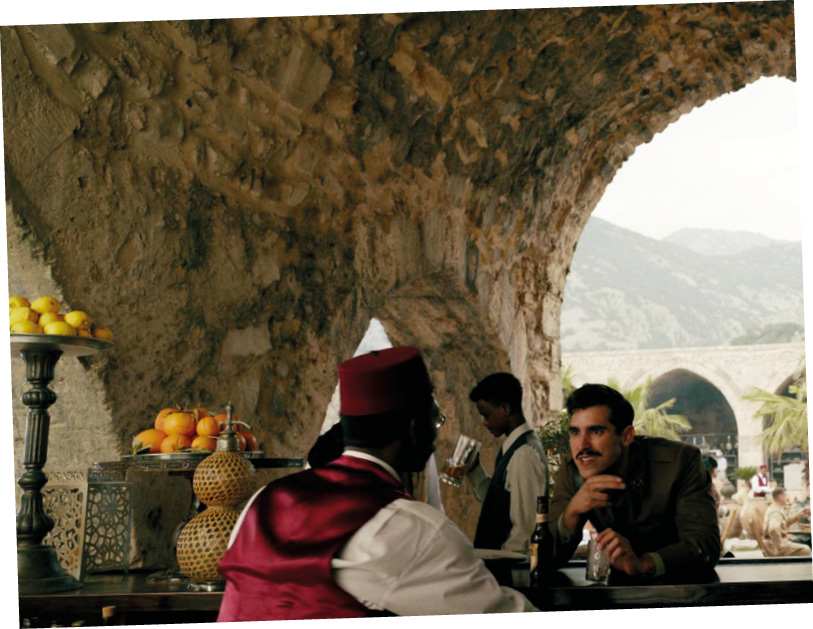
The targets in the Santa Isabel harbour at Fernando Po are the Italian Duchessa d’Aosta, a 7,800-tonne cargo ship, and the Likomba, a German tugboat used to rescue damaged U-boats. Both are formidable targets, with their own crews and giant anchors to secure them in harbour. In order to distract the officers of the two vessels, a dinner is organised at a local restaurant. This was set up by Richard Lippett, an SOE agent on the island who had unlimited cash to provide the diners with wine and women on the evening of the attack.
The actual sequence of the raid and kidnap of the ships is a complete travesty of the actual events. Richard Lippett’s restaurant dinner becomes a fancy-dress party organised by Richard Heron. This is an excuse for Marjorie Stewart to dress up in a revealing Cleopatra outfit. Fortunately, she finds a Roman armour costume and insists Luhr dress up as Antony.
When the attack on the harbour takes place, March-Phillipps, Appleyard, and Lassen turn up and massacre every German or Italian sailor they come across. Despite firing at night, they are still 100% accurate in their shooting. In reality, they had been given strict orders to be as stealthy as possible and to cause ‘no useless slaughter’. Clearly the script writers never received that order, as the commandos go around the port killing anyone in sight.

Stretching the facts
The film implies that the operation both defeated the U-boat menace and encouraged the United States to enter the war in Europe. In fact, it was not until spring 1943 that the U-boat threat was convincingly overturned, and, by the time of the raid, the US had already committed to a policy of ‘Germany first’ and of sending troops to fight in the European theatre. The raid did not achieve what the movie claims.
Damien Lewis, in writing Churchill’s Secret Warriors, found a little-known story about a group of commandos who carried out an extraordinary operation with restraint, daring, and immense skill. The mission succeeded against all the odds, with no casualties either on the British side or among the Italians, Spaniards, and Germans.
In adapting the book, Guy Ritchie was presumably intent on making another gangster-style movie with plenty of violence and romance. The massacres that take place in Ministry are entirely invented and in no way convey the cleverness of Postmaster itself.
In an interview for the Imperial War Museum, Damien Lewis shrugged his shoulders at the fact that the film is a ‘Guy Ritchie movie… you know, stretching the facts’. It is a great shame that his story did not find a more suitable director who was more concerned to honour the genuine derring-do of the protagonists, rather than create comic- book stereotypes that make for neither good history nor good cinema.
The Ministry of Ungentlemanly Warfare (2024)
Directed by Guy Ritchie.
Produced by Jerry Bruckheimer.
Based on the book by Damien Lewis.
Starring Henry Cavill, Eiza González, and Alan Ritchson.
Available on Amazon Prime.