
Subscribe now for full access and no adverts
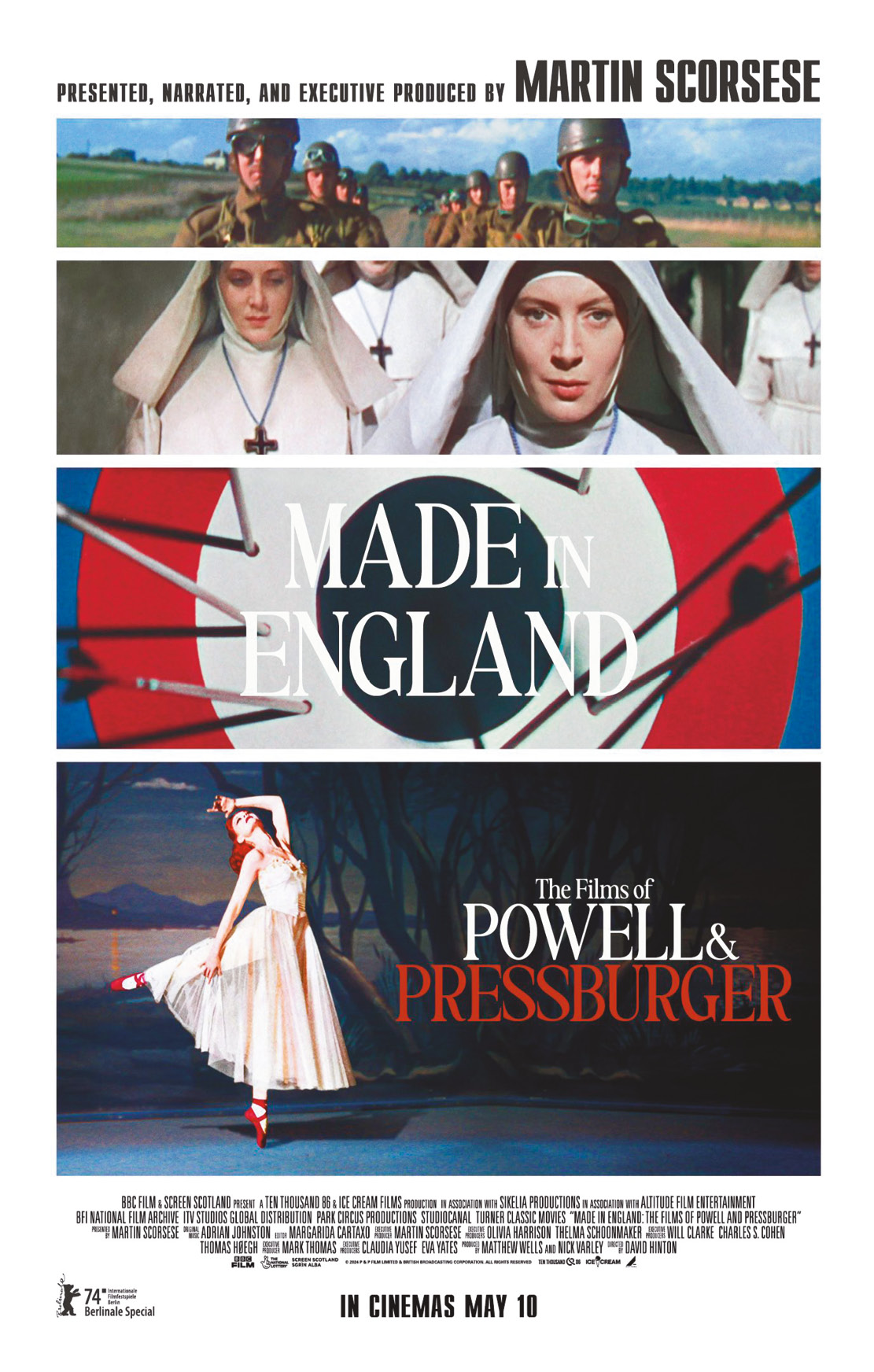
Englishman Michael Powell and Hungarian-born Emeric Pressburger were filmmakers who collaborated in an unlikely partnership for nearly 20 years from the late 1930s to the mid-1950s. They made some outstanding, expressive, and emotional films, including a range of very differently styled productions throughout the Second World War. For 20 years after their creative partnership broke up, their work was largely forgotten until rediscovered by American filmmakers in the 1970s. One of these, Martin Scorsese, became an obsessive fan and, along with David Hinton as director, has produced a new feature documentary, Made in England, about their work.
Scorsese was one of the leading directors in what was called the ‘New Hollywood’ of the 1970s and 1980s. Movies including Mean Streets (1973), Taxi Driver (1976), Raging Bull (1980), and Goodfellas (1990), and a series of collaborations with Leonardo DiCaprio including Gangs of New York (2002) and The Aviator (2004), have won him an Academy Award, four BAFTAs, and, among other accolades, a Lifetime Achievement Award from the American Film Institute.
Scorsese was born in 1942 and grew up in the Little Italy district of New York. When he was just three years old, he developed asthma, and instead of playing sports like other boys, obsessively watched movies on the family’s small black- and-white television at home. At that time, the Hollywood studios were not selling their movies to the television companies, fearing competition, and so American television showed a lot of British films. Scorsese consequently developed a love of British cinema but most especially delighted in the visually powerful and emotional films of Powell and Pressburger. So great was this obsession that, when he came to Britain in 1974, Scorsese tracked down Michael Powell, then in his 70s and living in relative poverty in rural Gloucestershire. Scorsese invited him to New York, where Powell ended up living and where he married Scorsese’s long-term editor Thelma Schoonmaker.

Speaking straight to camera, Scorsese takes us on a journey through the work of the two men. Their joint credit always read ‘Written, Produced, and Directed by Michael Powell and Emeric Pressburger’, but Scorsese makes it clear that there was indeed a creative divide between them. The original idea for a film story usually came from Pressburger, who would write the initial script. Powell worked closely with him on developing this, but acted as director on the studio floor. ‘He was the one who shouted “Action!” and “Cut!”,’ Scorsese tells us. They both worked on the editing, and both usually played the role of producer. For years they worked together in their own company The Archers – whose logo of an arrow hitting a bullseye became one of the most famous of its day – on the dozen major films the two men made together.
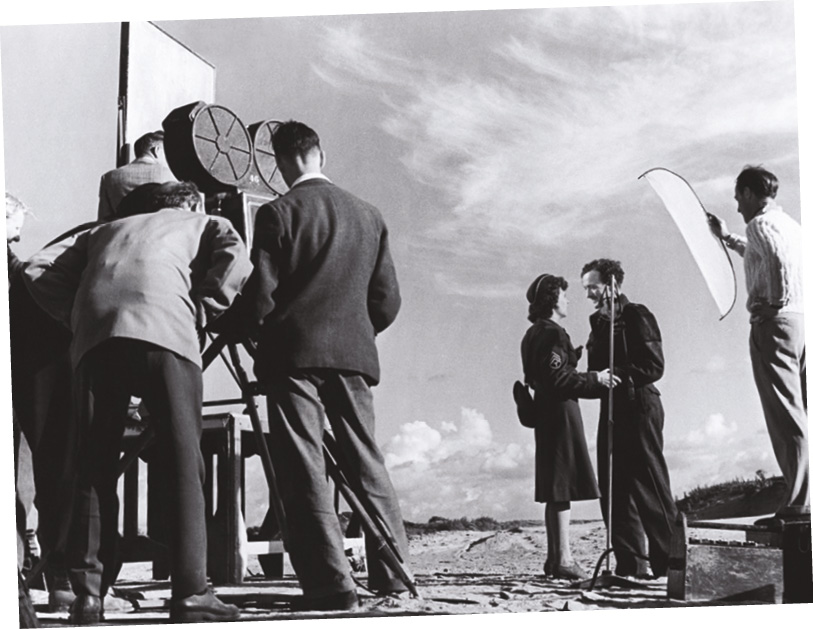
Powell was the son of a Kent hop farmer who learned the craft of filmmaking in the silent era working for the legendary Irish director Rex Ingram in the south of France. When he returned to Britain in the 1930s, he cut his teeth directing a set of what were called ‘quota quickies’. These were usually short, one-hour films made at speed to fulfil the government quota of the number of British films that had to be shown in the cinema, usually as B-films to support American-made leading features.
After the intensity of directing a film, Powell would escape by walking in the Highlands of Scotland. Set against the backdrop of a dramatic and rugged Scottish island, Powell made one of his most personal and extraordinary films, The Edge of the World (1937), about the depopulation of St Kilda. The film brought him into the orbit of Alexander Korda, the Hungarian producer who ran the Denham Film Studios outside London.

Korda introduced Powell to another Hungarian émigré, Emeric Pressburger, in 1939. Pressburger had worked in Berlin for the big German studio UFA until the Nazis drove him and many other Jews to leave the country. He worked in Paris briefly, before coming to London despite knowing nothing about English life or culture. The two men saw eye to eye creatively: each seemed to know and understand what the other was trying to do, and each helped to inspire and encourage the other. And so began a great film-making partnership.
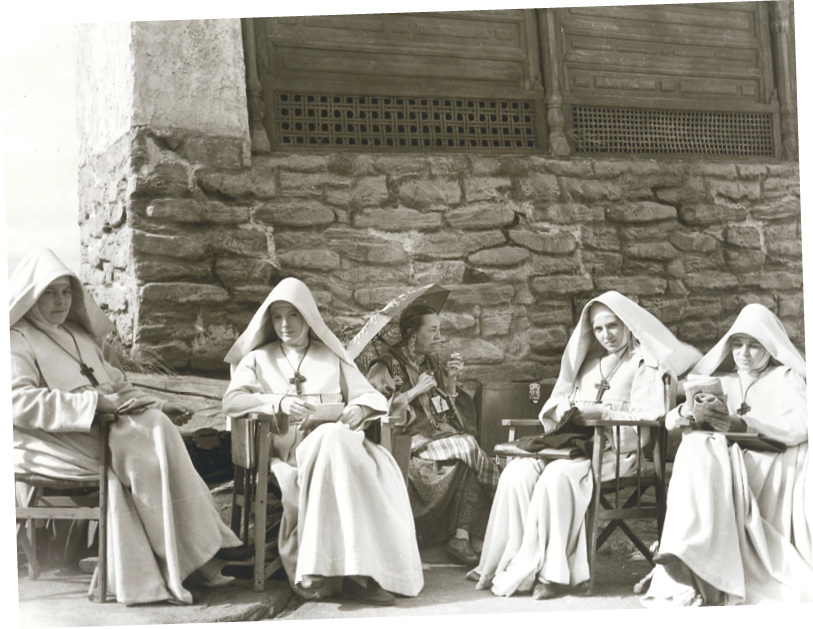
Remarkable war film
Pressburger’s anti-Nazi sentiment and Powell’s love of British values and customs enabled them during the war years to produce several remarkable films, including 49th Parallel (1941), One of our Aircraft is Missing (1942), The Life and Death of Colonel Blimp (1943), and A Canterbury Tale (1944). Just after the war they made one of their most famous films, A Matter of Life and Death, in 1946. By this point, they had built up an ensemble of actors and crew members with whom they regularly worked and who became part of the ‘Archers family’.
After the war they needed to reinvent themselves, and they produced a run of magnificent Technicolor masterpieces including Black Narcissus with Deborah Kerr and Kathleen Byron (1947), The Red Shoes with Moira Shearer (1948), and The Tales of Hoffmann (1951), a cinematic version of Offenbach’s opera. By this point, their production deal with Rank had broken down and they worked again for Alexander Korda and his London Films company. Their work there included The Small Back Room, based on the Nigel Balchin novel, in 1949 and The Elusive Pimpernel in 1950. However, they were too independently minded to make films for the American studios, and their work for Sam Goldwyn and David Selznick ended in controversy and law suits.

Their final collaborations were The Battle of the River Plate (1956) and Ill Met by Moonlight (1957). By this point, Powell thought Pressburger was becoming too timid and had lost his sense of ambition. And Pressburger thought Powell had become wild and unreasonable in his demands.
Pressburger went on to write a couple of novels. Powell produced and directed Peeping Tom (1960), a horror film so vilified by the critics that it marked the end of his filmmaking career. The two men vanished from the cinema scene for nearly two decades until they were ‘rediscovered’ by the American New Hollywood directors and by film critics, who have put their collaboration back at the centre of British filmmaking in the mid-20th century.
Made in England is a great tribute to their work and to the romantic idealism that inspired many of their greatest films. Martin Scorsese has been instrumental in encouraging the Film Foundation and the British Film Institute to restore classics of cinema. Scratched prints that had made the rounds of dozens of cinema projectors have been replaced by pristine, colourful screen presentations, often restored from the original camera negatives. So one of the joys of this documentary is seeing clips of these remarkable films in their original black-and-white or Technicolor glory.
In telling the Powell and Pressburger story, Scorsese repeatedly shows us how particular scenes or even specific shots inspired memorable moments in his own movies, such as Taxi Driver and Raging Bull. It is remarkable how the idealism of the British films inspired the violent realism of American movies of the 1970s and 1980s. Scorsese’s passion for the talents of these two great filmmakers is without doubt infectious.
49TH PARALLEL (1941)
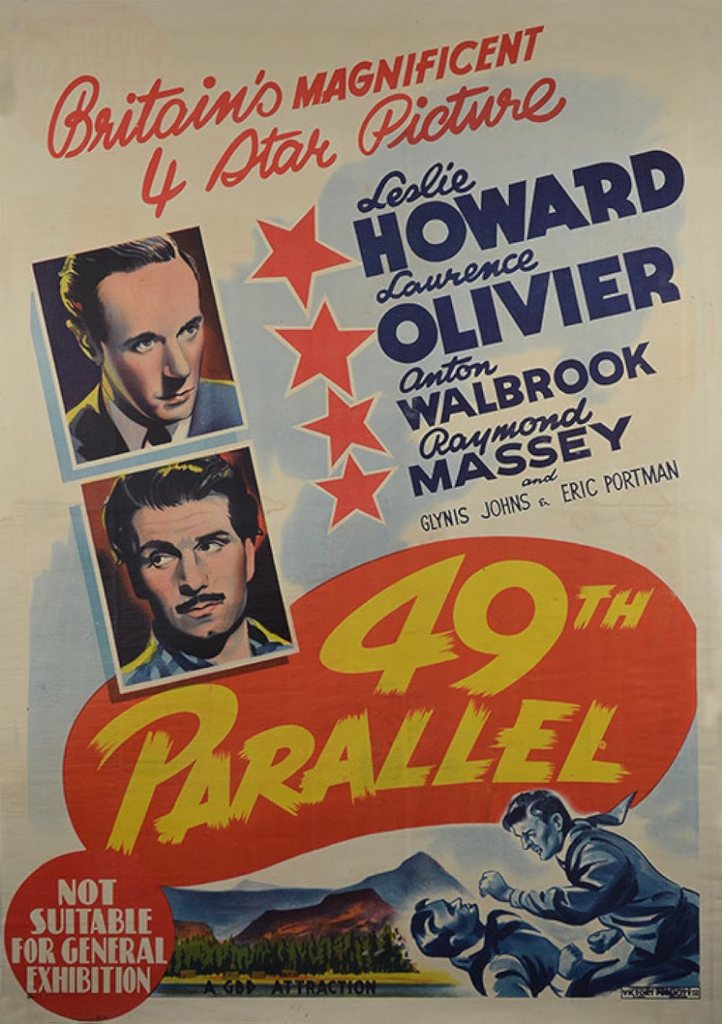
Powell and Pressburger’s first war-film collaboration was a propaganda piece, made with the backing of the Ministry of Information, which was intended to show Americans the evil of the Nazi regime.
Six fugitive Nazis from a U-boat try to escape across Canada into the then-neutral United States. The men represent in microcosm the Nazi state, each showing slave-like obedience to their leader, the U boat commander Captain Hirth (Eric Portman). When the six fugitives run into a German Hutterite community, they assume the farmers will be sympathetic. But many of them are refugees from Nazi Germany, and they reject the fanatical speech of Captain Hirth. One of the six crew members declares he wants to stay with the community and is summarily shot as a traitor. After various further adventures and brutalities, they reach the American border at the Niagara Falls but are turned back.
Several stars appeared in the film, including Laurence Olivier, Leslie Howard, and Raymond Massey, all of whom agreed to work for half their usual fee. The film was edited by David Lean and the music was composed by Ralph Vaughan Williams. It was written and shot during 1941, but was not released until early the following year, by which time America was at war with Nazi Germany and Japan. The film was still well received in the United States, where Pressburger earned an Oscar for his script.
THE LIFE AND DEATH OF COLONEL BLIMP (1943)
When it became known in 1942 that Powell and Pressburger were developing a film based around the David Low cartoon character of Colonel Blimp, a reactionary, pompous, and jingoistic buffoon, there was outrage at the War Office. It was assumed the film would portray the Army as run by a battery of Blimp like incompetents. Even Churchill asked for the film to be stopped, until his Minster of Information Bernard Bracken convinced the PM that, unlike in Nazi Germany, talented produces in a free country should be allowed to make their films.
In the event, the Blimp figure in the movie (played by Roger Livesey) is far more nuanced than the Low cartoon. The story takes place across 40 years of history from the Boer War to the 1940s. The central character, not named Blimp but Major-General Clive Wynne-Candy, wins a VC in the Boer campaign and goes to Berlin, where he falls out with an Imperial German Army officer, Theo Kretschmar-Schuldorff (played by Anton Walbrook). They fight a duel, but having wounded each other, the two men meet in the hospital while recovering and become close friends. They both fall in love with the same woman, an English governess played by Deborah Kerr. The German marries her. But Candy marries another woman, a WWI nurse, who looks just like the governess, and is also played by Deborah Kerr.
Candy is portrayed not as a representation of buffoonish British arrogance, but instead as a man who admires fair play and honesty in war. But he becomes increasingly out of place, and is put in charge of a section of the Home Guard. The driver of his jeep, Angela, reminds him of his previous loves. This is also Deborah Kerr, in her third role. She is outspoken, proud, and a perfect example of the new woman who has joined the ATS to do her bit for the war effort.
When Theo, now an anti-Nazi, flees Germany and comes to Britain in 1940 he is registered as an Enemy Alien and goes to live with Candy. Mirroring Pressburger’s own story, he tries to tell Candy that it is not enough to play by the rules, as the Nazis will never do this. The exiled German tells Candy that he is an innocent in a harsh and brutal world. Theo says: ‘You’ve been educated to be a sportsman and gentleman in peace and war, but this is not a gentleman’s war.’ These were the thoughts of Pressburger, another exile accepted by Britain in a cruel world. However, Powell identified with Candy, who believed in simple, honest British values.
The film was a great success at the box office in Britain, but because of government objections was not shown in the US until 1945, with an hour cut out of it. It was restored in superb Technicolor in the 1980s, and more recently a full digital restoration has been released.
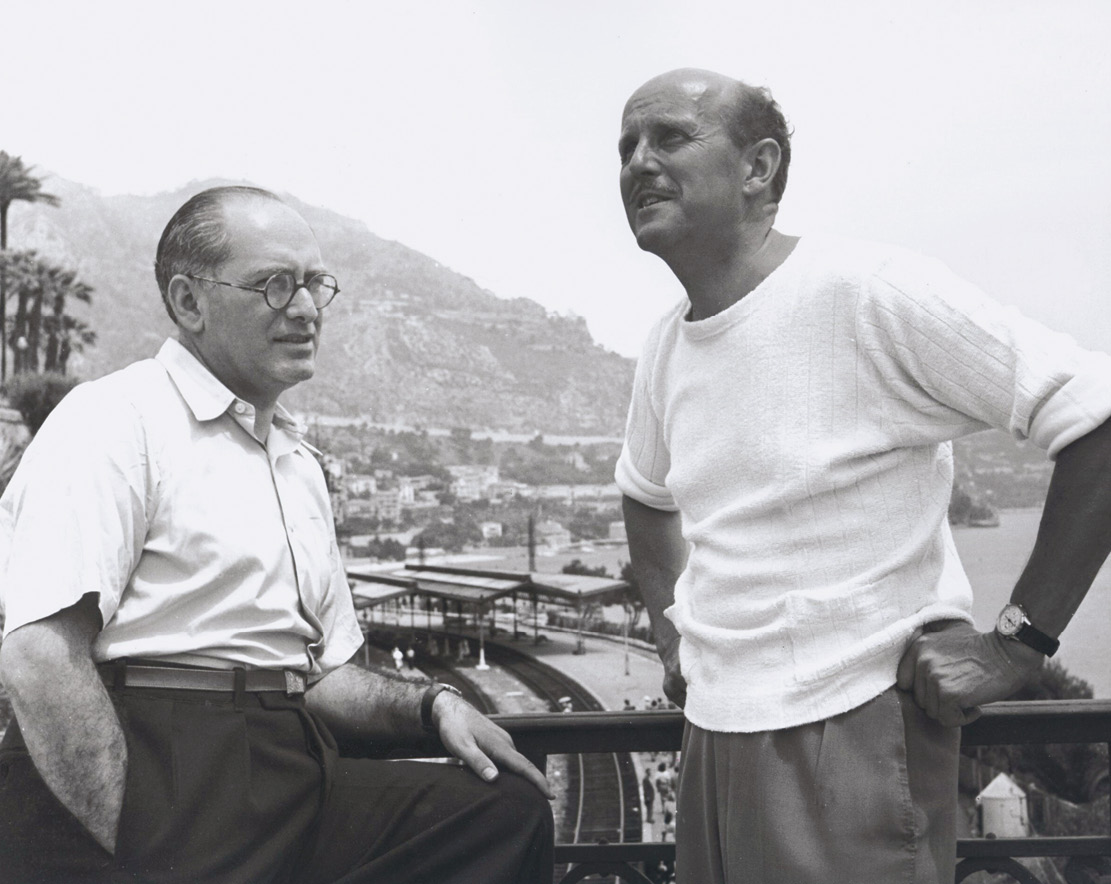
A MATTER OF LIFE AND DEATH (1946)
The Ministry of Information asked Powell and Pressburger to make a film about Anglo-American relations. The central character, Squadron Leader Peter Carter (David Niven), falls in love with a US radio operator in Britain, June (Kim Hunter). Carter is in a Lancaster bomber going down in flames. He has told his crew to bail out, but he has no parachute. He makes contact with June, the only radio operator who picks up his signal. And they talk. She is horrified to think of the fate that awaits him. He is stoical. But the film soon transitions from realism to surrealism. The fates intervene and he survives bailing out, meeting June for real on the beach where he is washed up. Their relationship develops fast.
The film then moves between a heavenly world shot in black and white and the real world shot in Technicolor. Which world does Carter belong to, the living or the dead? Pressburger has a lot of fun with this dilemma, as the angels and fates above put Carter on trial to decide whether he should live or die. Towards the end of the film, there is a stunning sequence in which a giant staircase links the real world with heaven. Today, the sequences would be done with CGI but then it had to be shot for real on a huge moving stairway. This took the London Passenger Transport Board three months to build. Cameraman Jack Cardiff had to carefully calculate the perspective for every shot in advance. The final effect is gripping and provides a fitting climax to this strange, unreal film.
Life and Death was a great success when it was released and was given the first ever Royal Film Performance at the Empire, Leicester Square, in November 1946. Audiences loved it, but it is not recorded what the royal family made of this ethereal tale.
MADE IN ENGLAND: THE FILMS OF POWELL AND PRESSBURGER (2024)
Directed by David Hinton.
Written and presented by Martin Scorsese.
Executive Producers: Martin Scorsese and Thelma Schoonmaker.
A BBC Film and Screen Scotland co-production.
Available to stream online.