
Subscribe now for full access and no adverts
With the surrender of Continental forces at Charleston, South Carolina, on 12 May 1780, and the subsequent destruction of American commander Abraham Buford’s relief force at Waxhaw Creek (see MHM 150, February/March 2026), General Sir Henry Clinton was delighted with the outcome of operations in the southern theatre. Certain that his accomplished second-in-command Lord Cornwallis could handle the rebels himself (and despite a growing personal animosity with the man), the British commander-in-chief set sail back to his New York headquarters on 5 June full of confidence that victory was at hand.
Opposing Clinton, the patriot commander-in-chief George Washington was himself not displeased, as he still envisioned taking New York from the British, and thus providing a different ending to the war. The British having previously relinquished their occupation of Philadelphia, Washington was able to entrust the control of that city to his trusted friend, the soon-to-be-infamous Major General Benedict Arnold, who was still hors de combat owing to wounds he had received at Quebec and then Saratoga (see previous articles in this series), as well as suffering the effects of a bad case of gout.
Unfortunately, Washington’s confidence in his friend soon suffered a difficult challenge as Arnold, nursing serious grudges against an ungrateful Congress and brooding over its failure to reward his services with promotion, began to take pecuniary advantage of his position. Entertaining lavishly and siphoning off money from government coffers, Arnold found himself the subject of legal proceedings and in receipt of a letter of censure from his old patron George Washington. Perhaps hoping to alleviate the temptations, Arnold was relieved of his post in Philadelphia and was soon put in charge of defences at West Point, the critical fortress guarding the Hudson River, with Washington thinking it was a good thing to have such a commanding figure nearby for the final struggle for New York.
As well-meaning as they appeared, Washington’s decisions failed to solve the problem of the growing estrangement of one of the most aggressive and combative officers of the rebellion. Spurred on by the urgings of his staunchly loyalist wife Peggy, Arnold entered into correspondence with her dear friend (and former suitor) Major John André – a British Army officer and the head of Sir Henry Clinton’s intelligence service. Soon, Arnold was communicating regularly with André and offering his services to the enemy. A deal with Clinton was reached and Arnold was finally offered a large reward – a lump sum of more than £6,000 (equivalent to £1,256,588 in 2026) – for which he would provide enough sensitive information to allow British forces to seize control of West Point and thus all traffic on the Hudson.

The plan unravelled on 23 September 1780, when André, returning from a clandestine meeting with Arnold, was captured by a rebel patrol. Soon adjudged to be a spy, André was hanged. Arnold, however, had learned of his capture and fled to New York and the protection of Sir Henry Clinton. On hearing the news, Washington was outraged and unforgiving of his once-trusted friend; and even more so when Arnold was offered a commission in the British Army and began leading combat forays against his former comrades-in-arms.
The southern strategy
Having followed the guidance of Lord Germain, Britain’s Secretary of State for the Colonies, Clinton was happy to leave the southern theatre in the hands of Cornwallis, while he returned to New York. Little did he know that estimates of the degree of loyalty among the southerners were grossly overestimated. Certainly, a great many of the planter class – having derived large incomes from the export of tobacco to Great Britain – were better disposed towards King George III, but they remained a relatively small percentage of the population.
Concerned by a series of reverses in the south, and delighted by his earlier victory over British General John Burgoyne at the Battles of Saratoga (19 September and 7 October 1777), Congress decided to appoint the meticulous and cautious General Horatio Gates as overall commander of patriot forces in that theatre. But Gates, hesitant and indecisive as ever (see MHM 150, February/March 2026), was easily outmatched by Cornwallis, who defeated him on 16 August 1780 at the Battle of Camden, in South Carolina, and quickly moved into North Carolina in pursuit of his fleeing force. Despite Whitehall’s expectation of more southern support for the royalists, relatively few colonists rallied, and these Cornwallis put under the command of Major Patrick Ferguson. An energetic and inventive officer, Ferguson was also a prolific writer, the inventor of a breech-loading rifle, and a seasoned combat veteran.
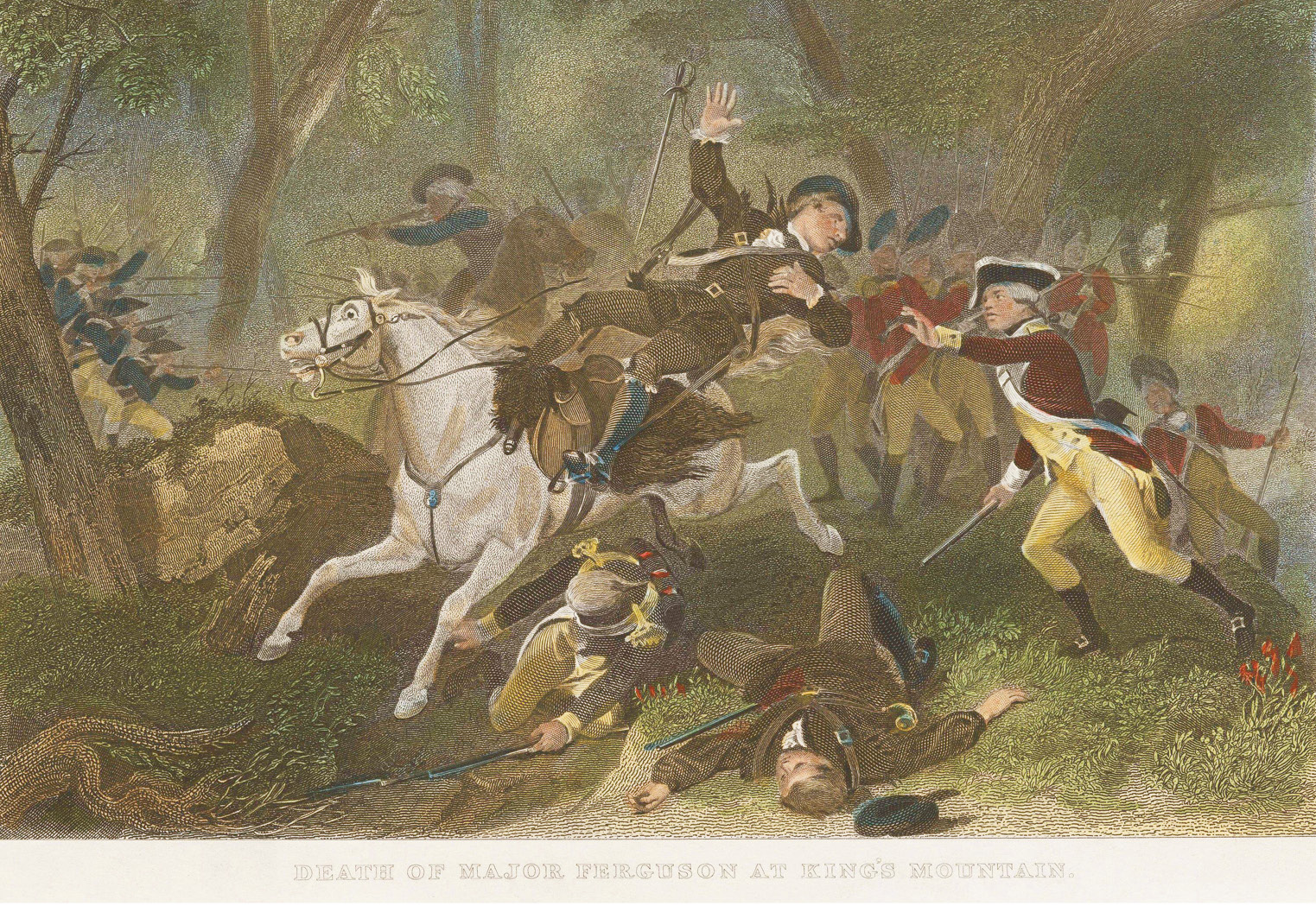
As Cornwallis moved into North Carolina, he dispatched Ferguson’s loyalist command to his left flank. Unfortunately for Ferguson, his unit was well beyond reach of support from Cornwallis and, confronting staunch patriot resistance, was soundly defeated in a battle at Kings Mountain. While the loyalist forces slightly outnumbered the rebels, the latter launched a surprise attack with an unexpected ferocity – killing around 290 loyalists, wounding 163, and capturing 668, with Ferguson himself killed in the action. It was the largest ‘all-American’ action of the war, involving only rebel and loyalist militia.
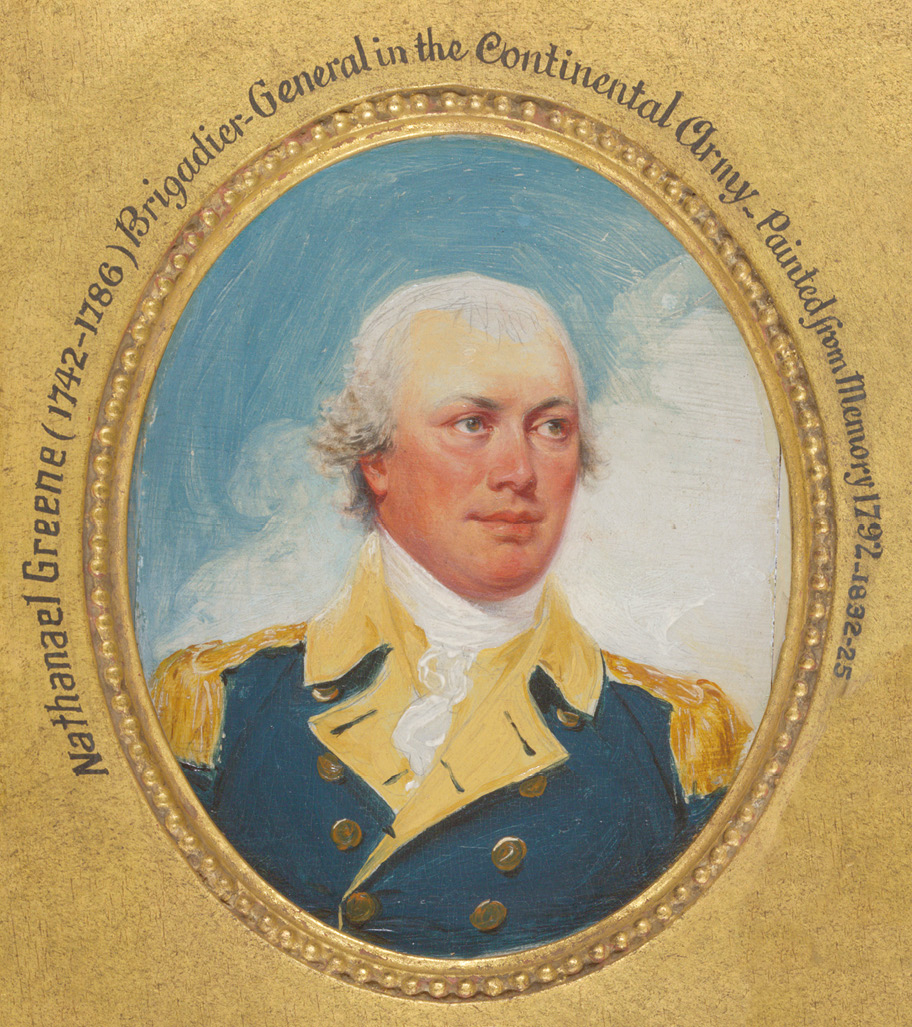
Undeterred by Ferguson’s defeat, Cornwallis continued his movement through North Carolina, heading for Virginia still in pursuit of Gates’s command. He was unaware that Congress, shocked by the defeat at Camden and now realising that Gates was not up to the task, had fired him. Washington quickly put his trusted and exceptionally competent subordinate Nathanael Greene in command of the southern theatre. Cornwallis did not know it, but his challenges were about to become more complex and dangerous.
Complicating factors
While Britain continued to pursue the subjugation of its American colonies, this was not the only foreign-policy issue with which it had to contend. Its relations with Spain and the Dutch, always strained at best, worsened considerably when they followed France into an alliance with the Americans, with the French dispatching ships and troops to North America. Nor was the problem confined to North America. Britain was now faced by four hostile forces, and found its trade interests under threat on four continents. There was also the matter of its considerable sugar trade from the Caribbean. While the Royal Navy was certainly a superb fighting force, it was stretched thin by the far-flung requirements placed on it.
More at risk than Britain’s navy was its merchant fleet, for although the country maintained a 10-to-1 advantage over the Americans in fighting ships, the civilian service found itself at the mercy of an almost overwhelming number of privateers. Facing the British merchant fleet were more than 2,000 privately owned vessels armed with more than 18,000 guns and as many as 70,000 sailors. By the end of the war, they would have succeeded in capturing more than 1,500 ships and taking prisoner more than 12,000 British sailors. At the same time, arms, ammunition, and other necessities for the rebels would continue to pour through gaps in the Royal Navy’s putative blockade activities.
However, with the entrance of France into the hostilities, additional measures would of necessity have to be taken. The veteran Admiral Sir George Rodney was pulled from duty around Gibraltar and dispatched to the West Indies, but while there a French fleet slipped out of Brest and delivered the French General Jean-Baptiste Rochambeau and his army to Rhode Island. Distracted for six months by French activity in the Caribbean, Rodney was slow to react even as another French fleet slipped out of Brest for the Caribbean and detached a squadron under Admiral de Grasse, which headed north for America. While Rodney himself sailed back to England, his subordinate Admiral Samuel Hood was dispatched to New York, entirely missing de Grasse, who had put in to Chesapeake Bay in Virginia.
The end of the world
Undeterred but still smarting from the defeat at Kings Mountain, Cornwallis continued moving north, determined to destroy Nathanael Greene’s army. The latter had meanwhile split his forces in two knowing he could not yet take on Cornwallis. Commanding one wing of this division was the able and seasoned fighter Daniel Morgan, accompanied by his deadly backwoods marksmen. Fearing that Morgan was going to attack the British garrison located at the town of Ninety Six in South Carolina, Cornwallis dispatched Lieutenant Colonel Tarleton and his dragoons to intercept and destroy Morgan’s force. When Tarleton discovered that the garrison was not under threat, he requested reinforcements, which soon arrived in the form of British regular infantry. Unknown to Tarleton, Morgan too had received reinforcements, boosting his command to more than 1,900 seasoned fighters. Even so, Tarleton was undismayed, as he was leading some 1,500 regulars and had two pieces of artillery with him.
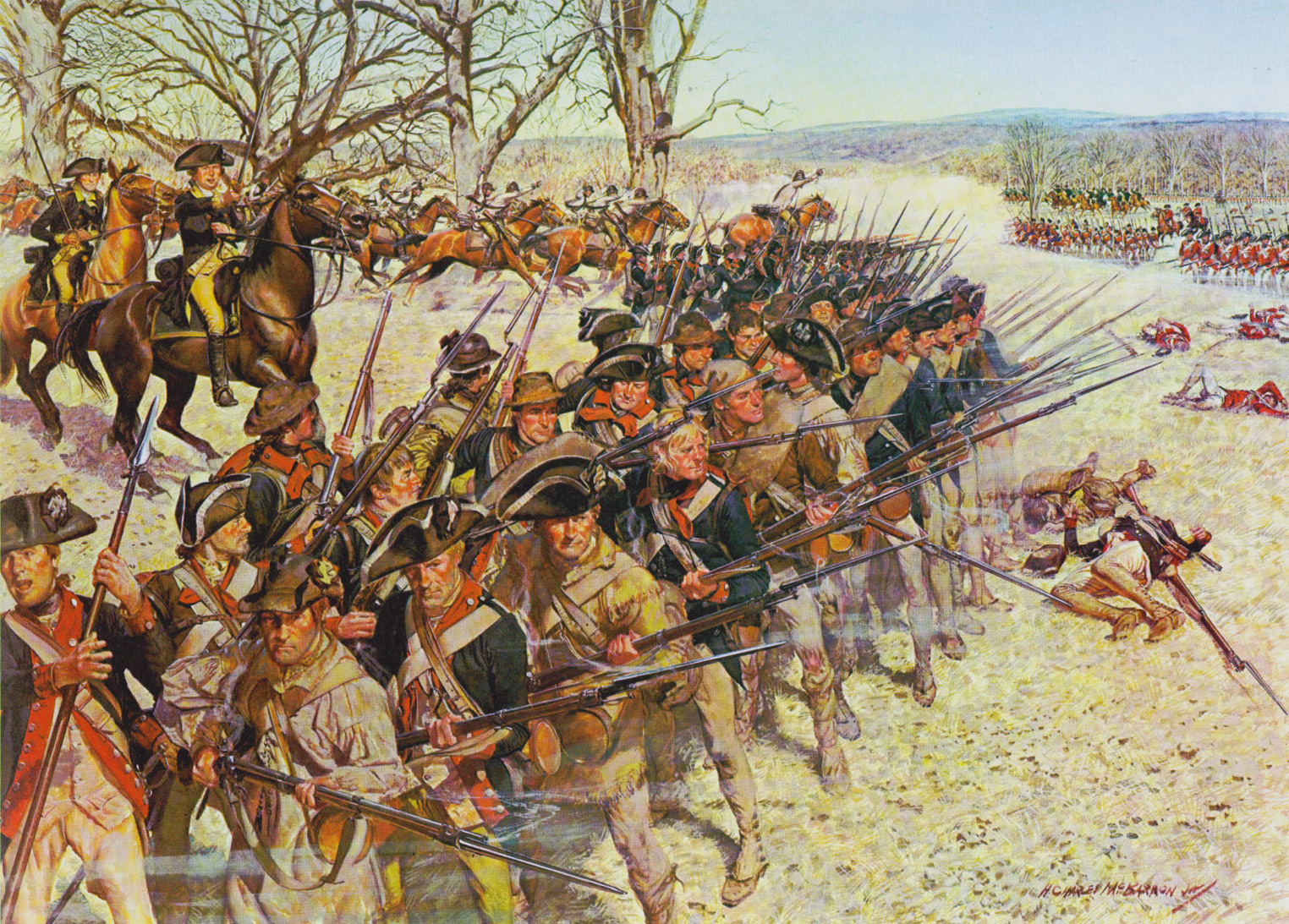
Morgan, although unlettered and not a student of military arts, was clever and experienced enough to anticipate Tarleton’s approach to battle – precipitate to the point of recklessness. Thus he chose his ground near Cowpens, South Carolina, and arranged his troops carefully. Then, ensuring his men were well fed and well rested, he waited for the British. True to form, Tarleton launched his assault on Morgan’s position early the following morning and was heartened as the colonials’ first two lines fired and then retired. Rushing headlong into the fight, the British were stunned when the colonials turned on them, fired a devastating volley and drove them steadily back. Tarleton’s troops, having marched most of the preceding night in their pursuit, were exhausted; and though Tarleton himself tried to urge his remaining forces to renew the assault, they refused and fled. Those still on the field surrendered. It was a stunning setback for the British, losing 110 killed in action and more than 600 taken prisoner. When Tarleton reported back to Cornwallis, the latter was stricken and dismayed, snapping off the point of his sword in frustration.
However vexed he was, Cornwallis was determined to press on, and finally to bring the rebels to heel. It had been a gruelling campaign in which, in order to move faster, he had destroyed most of his baggage, keeping only enough wheeled vehicles to carry ammunition, rations, and the wounded. Steadily losing out to disease and desertion, he was down to roughly 2,400 men. Brigadier General Charles O’Hara, a close friend of Cornwallis and his second-in-command, noted that he was determined to ‘follow Greene’s army to the end of the world’. Despite his determination, Cornwallis’s pursuit of Greene became increasingly difficult as his ranks steadily dwindled. At the same time, Greene’s forces had grown larger as he was joined by Morgan’s riflemen and militia units from both Virginia and North Carolina. They now outnumbered the British forces by a margin of two to one.
Cornwallis was dismayed, snapping his sword in frustration.

Cornwallis finally clashed with Greene’s forces at Guilford Courthouse, near Greensboro, North Carolina, on 15 March 1781. Both sides fiercely contested the field, with the Americans deployed into three lines spaced 300-500 yards apart. As the British forces rushed forward, the first two lines of Greene’s command fired, then retired through the next line. It was a technique that seemed to be working well – but, as the fight moved through the woods, the British steadily forced the Continentals backwards, and, as it intensified, Cornwallis ordered his artillery to fire grapeshot into the mêlée, killing some of his own troops in the process. After a battle lasting 90 minutes, Greene’s troops abandoned the field, allowing the British to win the day. The cost was high: Cornwallis was now down to just 1,400 ‘effectives’. He needed to regroup, reorganise, and re-equip. Greene, however, having safely withdrawn the bulk of his force, kept on his heels.
Meanwhile, communication with Sir Henry Clinton was sketchy and frequently contradictory. Having fallen back to Wilmington, North Carolina, Cornwallis struggled to resupply and re-equip his badly depleted force. He was convinced that as long as the rebels in Virginia kept supplying their partisan bands in North Carolina, the war would continue unabated. When informed of the arrival of reinforcements (including a number of loyalist troops under the command of Benedict Arnold) in Virginia, he quickly moved north to join up with them, before finally receiving orders from Clinton to establish a fortification on the coast to await the arrival of Admiral Thomas Graves and 19 ships of the line en route from New York. Unbeknown to all, the last act of the war was about to unfold.
No hope of escape
Cornwallis strove mightily with his limited resources to stamp out the sparks of rebellion, while at the same time alternately fighting or pursuing a somewhat smaller force led by the French-born Marquis de Lafayette. For his part, George Washington remained in New York, seemingly fixated on drawing out and defeating the British in the area where his army had been so thoroughly trounced earlier in the war. In constant meetings with the French Lieutenant General Rochambeau, Washington argued for an assault on New York – but Rochambeau, with 40 years of military experience, countered that the terrain, the troops available, and the lack of sufficient artillery made this far too problematic a solution. He preferred instead to take advantage of Cornwallis’s perilous position at the end of the Virginia Peninsula. Meanwhile, having quarrelled with Cornwallis, Benedict Arnold left Virginia, and sailed back to New York to serve with Clinton. It turned out to be a good decision for him, as Lafayette was actively seeking to capture and dispose of him.
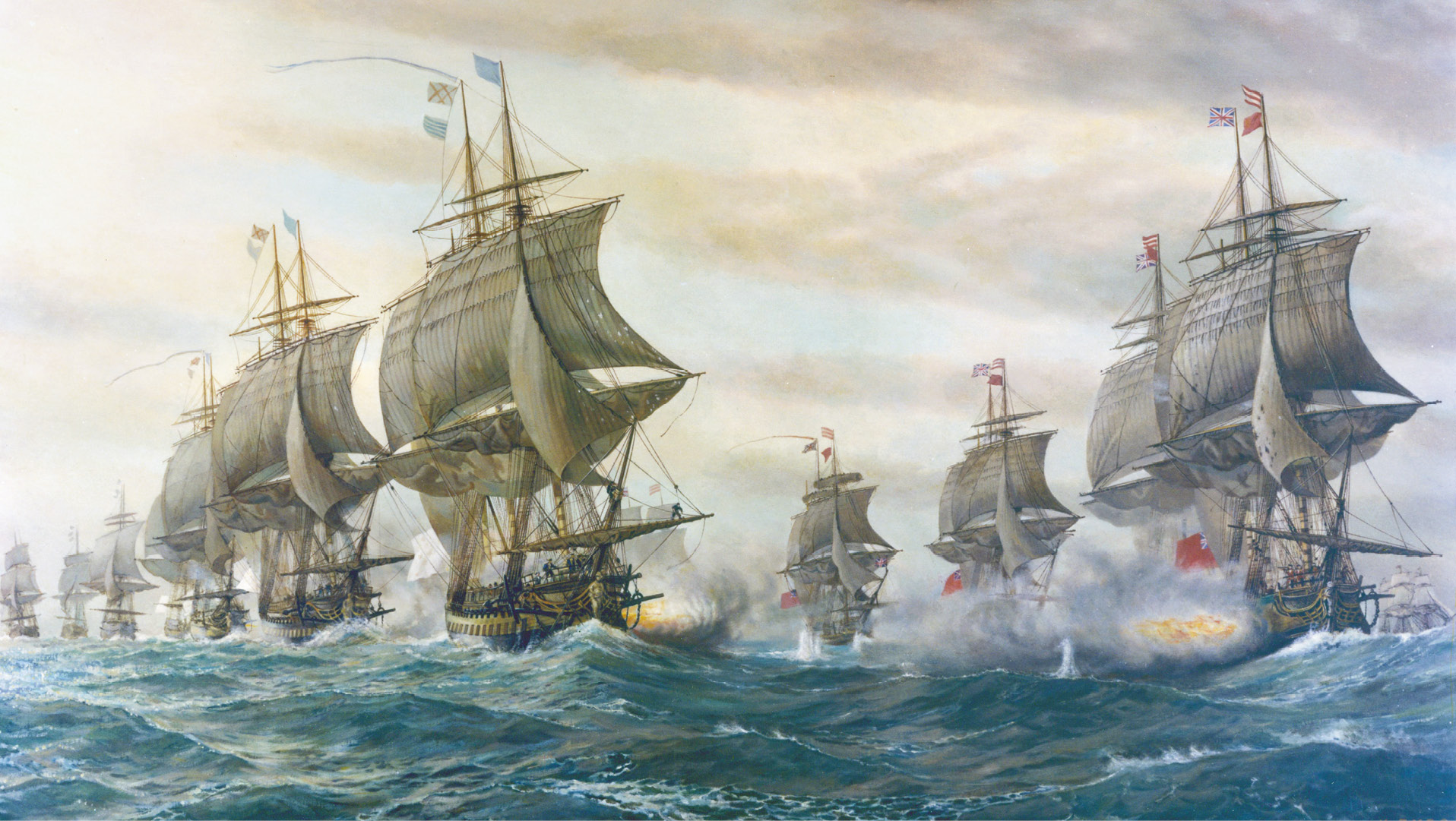
As Washington and Rochambeau debated their opposing positions, a situation arose that was more favourable to Rochambeau’s argument. Thomas Graves’s fleet of 19 warships was intercepted in the Chesapeake Bay by the Comte de Grasse’s 24-strong fleet carrying more than 1,500 guns. De Grasse had already delivered more than 3,200 troops, armaments, and siege equipment to the American forces that had closed in around Cornwallis’s position. In a two-hour sea fight, the French pummelled and then drove off Graves’s fleet.
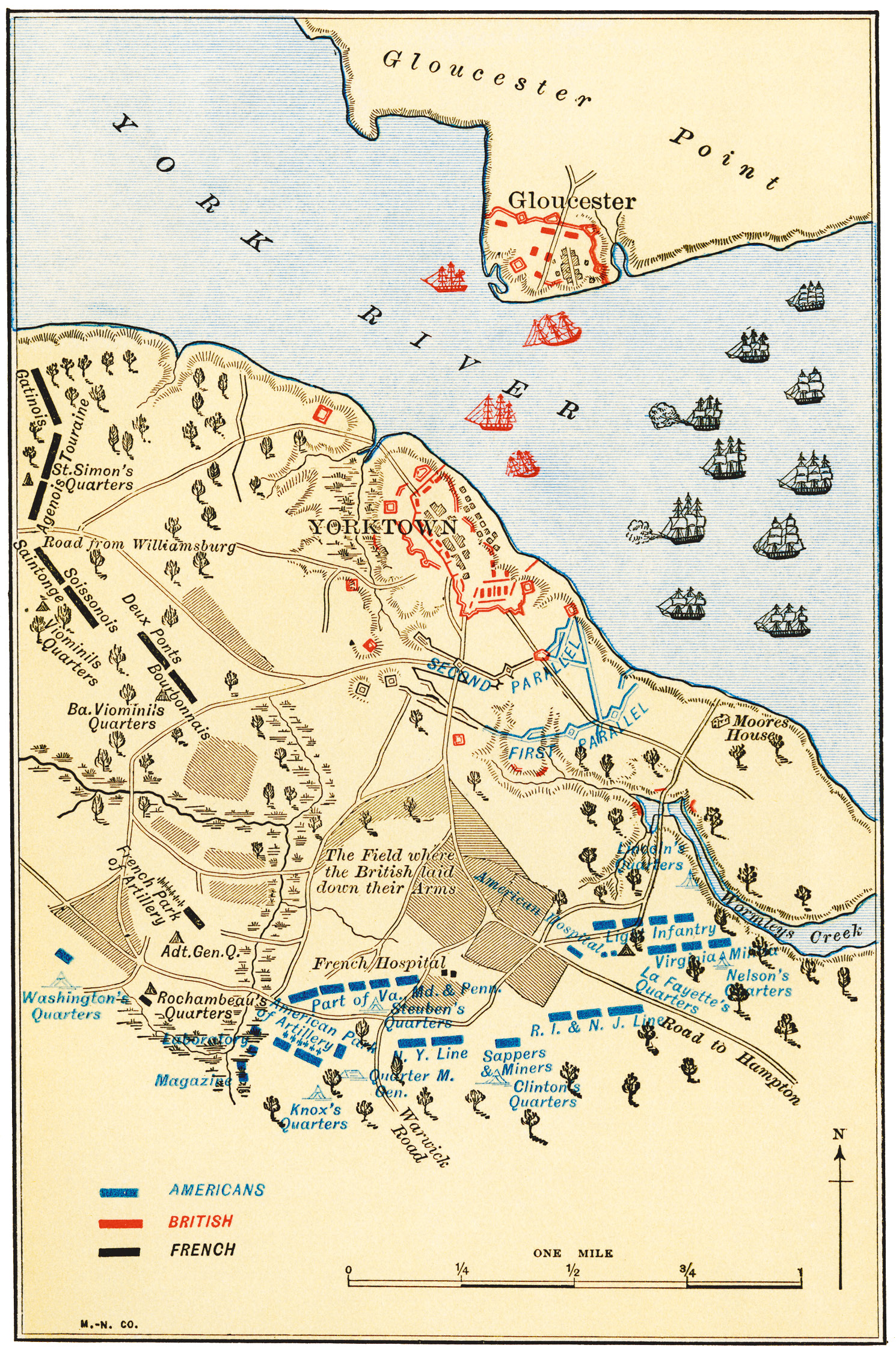
With Cornwallis now effectively trapped on the Virginia Peninsula, Washington finally acceded to Rochambeau’s arguments. To deceive Clinton of his intentions, the American commander-in-chief made a great and convincing show of preparations to attack New York. Quietly, he then dispatched a Franco-American force to the scene of the action in Virginia, as he and Rochambeau followed on. On arrival, this force promptly joined the siege lines established by Lafayette and the American General Benjamin Lincoln around the British cantonment. Travelling together, Washington and Rochambeau arrived in Williamsburg, Virginia, on 14 September 1781, and began to put forces in train for the siege of the British position at Yorktown. When all of their forces had arrived, they included 7,800 French troops, 3,100 militia, and 8,000 Continentals, along with siege guns and mortars, arrayed against Cornwallis’s 9,000 troops, who were solidly dug in behind revetments.

With the arrival of Washington and Rochambeau, a serious assault on Cornwallis’s position was begun. Henry Knox’s artillery rained shot continually into the British defences as French and American ground troops worked furiously, digging trench parallels and advancing relentlessly to pull the noose tighter. On 14 October, assaults on two of the British positions’ critical redoubts were launched by American and French units – the former commanded by Lieutenant Colonel Alexander Hamilton with great success. While a brief British counter-attack the next day succeeded in spiking six guns, it was driven back by French troops and the spiked guns were soon put back in service. Cornwallis tried desperately to begin to evacuate his troops by boat, but a sudden rain squall put a halt to any attempt to reach Gloucester Point, across the York River, from where he hoped to evade their besiegers and march north to join Clinton’s forces in New York.
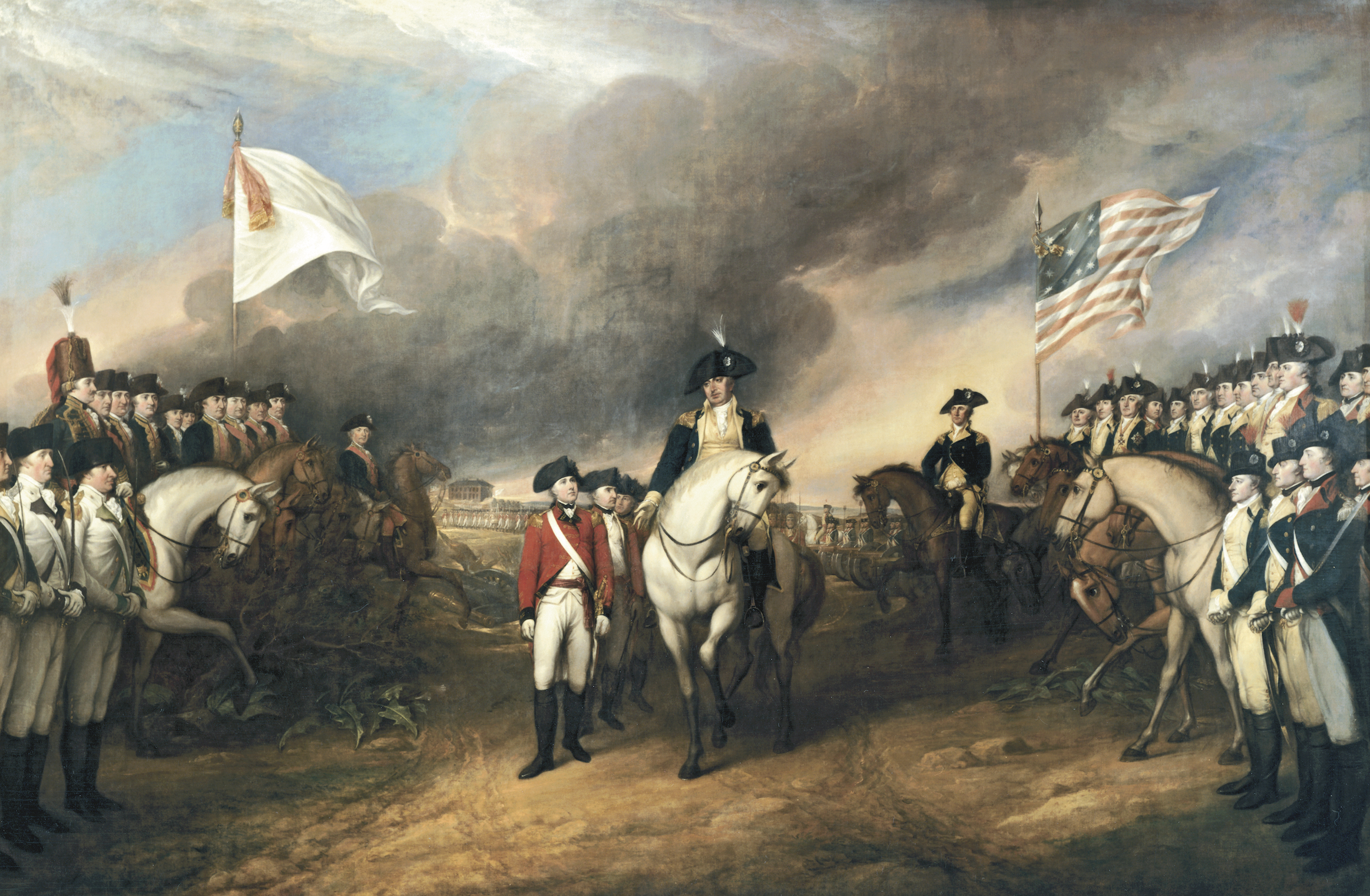
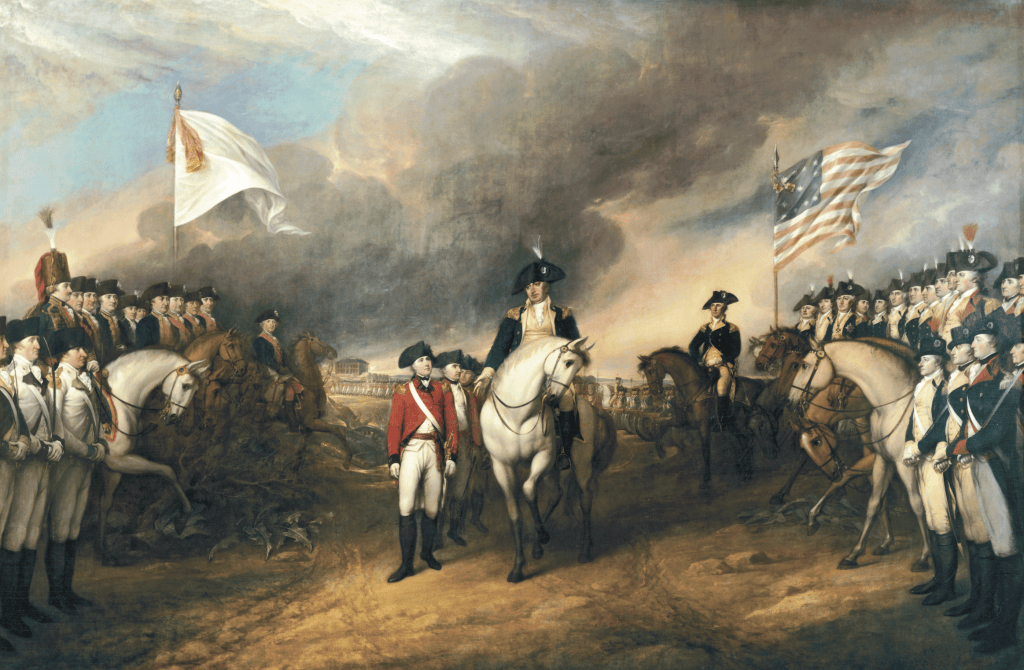
Cornered, and with no hope of escape or succour, Cornwallis offered to surrender, and on 19 October 1781, with muskets shouldered and flags furled, the British and Hessian (German mercenaries hired by the British) soldiers marched out of their defences and surrendered their weapons, as their band played ‘The World Turned Upside Down’.
Five days later, a fleet sent by Clinton finally arrived to assist Cornwallis – but on learning of his surrender, it turned about and returned to New York. When the British Prime Minister Lord North heard the news, he was reported to exclaim: ‘Oh God, it’s all over’. Within three months, North himself had received a vote of ‘no confidence’ in Parliament, and submitted his resignation to the king. The negotiations for a peace treaty would take another two years to conclude, but during that time there were no further battles or campaigns in North America. The Americans had won their war and their independence.
Fred Chiaventone is a military historian, retired cavalry officer, and Professor Emeritus for International Security Affairs at the US Army’s Command and General Staff College.
Further reading:
• Jack Kelly, Band of Giants: the amateur soldiers who won America’s independence (Palgrave Macmillan, 2014).
• Joseph G Ellis, The Cause: the American Revolution and its discontents (Liveright, 2021).
• John R Maass, From Trenton to Yorktown: turning points of the
Revolutionary War (Bloomsbury, 2025).
• Edward G Lengel, This Glorious Struggle: George Washington’s
Revolutionary War Letters (Smithsonian, 2008).
The American Revolution: Taylor Downing reviews Ken Burns’s latest documentary series; see here
All images: Wikimedia Commons, unless stated otherwise; courtesy National Gallery of Art, Washington