Subscribe now for full access and no adverts
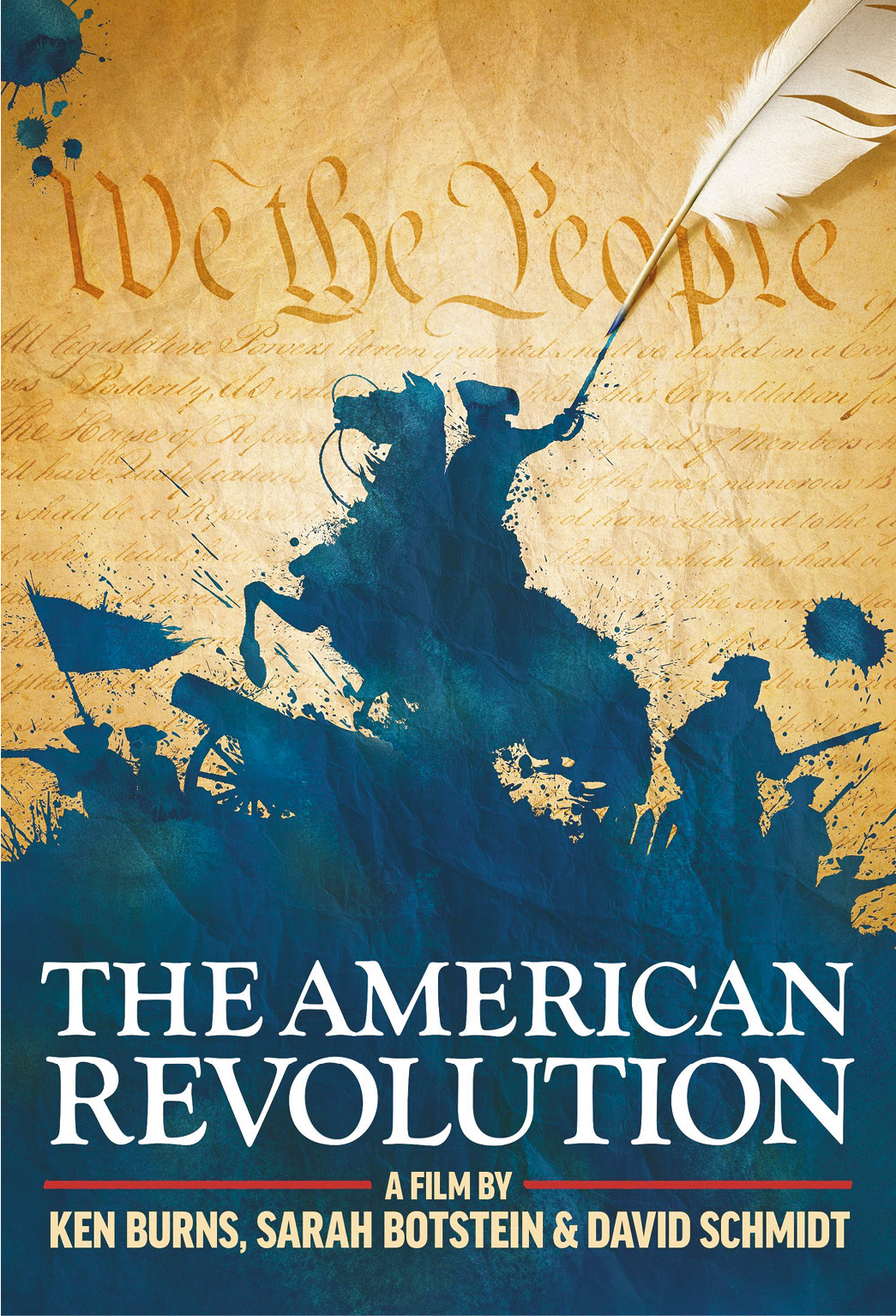
When Ken Burns’s series The Civil War was first shown on five successive nights in a single week in September 1990, it caused a sensation. In the era before streaming and catch-up, to see the series you had to watch it when it was transmitted. The average viewing figure was 14 million per episode, and it was estimated that about 39 million Americans watched at least one episode. It was said that, as the week progressed, bars and restaurants closed, and people cancelled dinner parties because everyone wanted to stay at home to watch the next two-hour episode.
Burns went on to make several other major historical series, including projects on Baseball (1994), Jazz (2001), The National Parks (2009), The Roosevelts (2014), and The Vietnam War (2017). They were all very watchable and powerful television. His latest effort, The American Revolution, first shown on PBS in November 2025, is impressive – but at six two-hour episodes, it is also very long, and may lack the impact of earlier series, especially The Civil War (see box below).
The United States is deeply divided today in the run-up to what will be the 250th anniversary of its Declaration of Independence this summer. President Trump’s policies on foreign affairs, on the use of the justice system, and on the expulsion of illegal immigrants are immensely popular with some Americans, but deeply opposed by others who fear that traditional American values are being overruled or forgotten. The American Revolution is a timely reminder by Burns of the idealism behind the founding story of the US. Not many nations have an origin like that of America and the team behind the series works hard to present this as a grand and noble project.
The series begins with an uplifting quotation from Thomas Paine: ‘From a small spark kindled in America a flame has arisen not to be extinguished… it winds its progress from nation to nation… Man finds himself changed and discovers that the strength and powers of despotism consists wholly in the fear of resisting it and that in order to be free it is sufficient that he wills it.’ These inspiring words set the tone for what is to follow in 12 hours of television.
In the first few minutes, we are told the events of the 1770s add up to ‘the most consequential revolution in history.’ Another quote, this time from John Adams writing in that decade, explains that the conflict with Britain was a ‘great revolution, the most complete in the history of nations. Objects of the most stupendous magnitude and measures of which the lives of millions yet unborn are intimately interested are now before us.’ It seems everything in the American story is bigger and more universal than elsewhere in human history!

But the series also claims that, while the Revolution was ‘the first war ever fought proclaiming the inalienable right of all people’ that would ‘change the course of human history’, it was also ‘a savage civil war’. In this conflict, it was not just a case of freedom-loving Americans fighting the despotic British, it was a struggle in which brother fought brother and American fought fellow American. This is a no- holds-barred presentation that tries to demythologise the American foundation story.
From the start, the series is keen to embrace the contradictions of slavery and the story of the dispossession of Native Americans from their land and the destruction of their culture. All of these are elements that play out within the American Revolution. The Iroquois Confederacy, in which six Native American nations had come together to defend themselves from aggressive settlers who sought to seize their land, is said to be an inspiration for the colonists in the Thirteen Colonies to come together to defend their rights against British tyranny.
The contradiction between the leaders of the Revolution who speak so enthusiastically about ‘the cause of Liberty’ but who see no issue with buying and keeping Black slaves is made clear, too. Moreover, there is no attempt to whitewash or make saints of these American Founding Fathers. Several prominent Americans are accused of being adept at smuggling goods up and down the American coast. George Washington is shown to be making vast profits by dealing in land to the west of the Appalachian Mountains, which was illegal at the time.
KEN BURNS’S THE CIVIL WAR
When first shown in September 1990, Ken Burns’s The Civil War attracted the highest ever viewing figures on Public Broadcasting (PBS) in the US. The series used still photographs, music, statements from historians, and quotations from letters and diaries to iconic effect. The slow move across the authentic black-and-white photographs from the conflict came to be known as the ‘Burns effect’. The music, both contemporary and modern, generated great emotion, from the modern title song ‘Ashokan Farewell’ to original marching songs of the day. Through readings of the letters and diaries of soldiers and commanders, actors were able to express the human dimension with immense and moving impact. Still memorable more than 30 years later is the haunting letter of Major Sullivan Ballou to his wife, in which he declared his enduring love but correctly predicted his death in the upcoming Battle of Bull Run. The deep Southern accents of historians like Shelby Foote added what seemed a richness that was at the time unique. Many have criticised the series for concentrating purely on the battles and for avoiding the broader political issues and context of the war, but as history on television The Civil War was unsurpassed.
Bringing the past to life
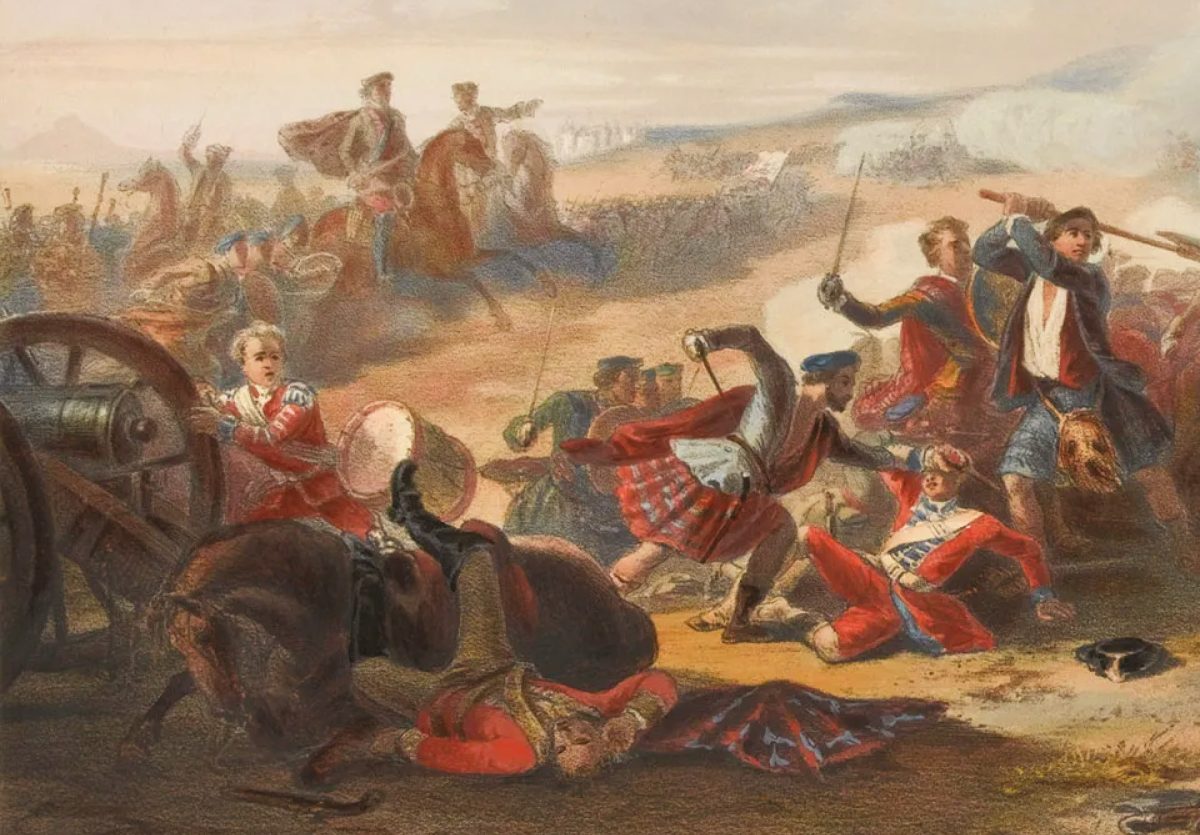
The elements that make up the series have many parallels with the Civil War series. Obviously, there was no photography in the 1770s, but the programmes are packed with paintings and drawings, some original and authentic, and some rather more comic-book-like illustrations made especially for the series. The camera moves across these paintings in a similar way to how the photographs were treated in The Civil War.
For me, the most powerful feature in The American Revolution is, like in The Civil War, the first-hand testimony. Some is from the familiar figures of the time like Samuel and John Adams, Abigail Adams, Benjamin Franklin, George Washington, and Thomas Jefferson. But there are dozens of readings from the letters and writings of lesser-known men and women. They provide a sort of bottom-up view of events and frequently portray the emotion and heartache of individuals caught up in terrible violence. Burns has gathered a distinguished cast of voices to read these extracts that includes Kenneth Branagh, Tom Hanks, Damian Lewis, and Meryl Streep, among many others.
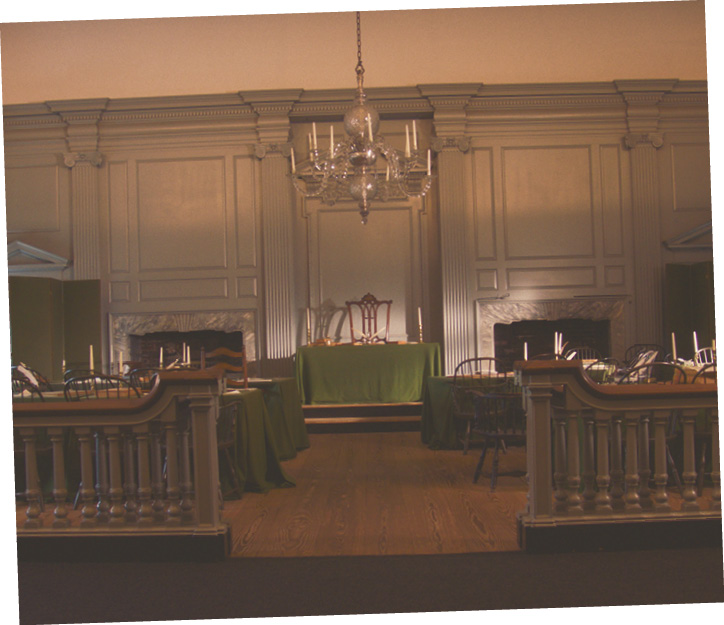
In addition, there is a lot of special photography that brings out the haunting beauty of the primitive American landscape – rivers, forests, hills, and mountains in sunshine, rain, and winter snow. There is filming, too, in the many heritage centres and National Parks across America, from the living history museum at Colonial Williamsburg to local history societies where dining rooms, libraries, studies, and kitchens from this period have been faithfully preserved.
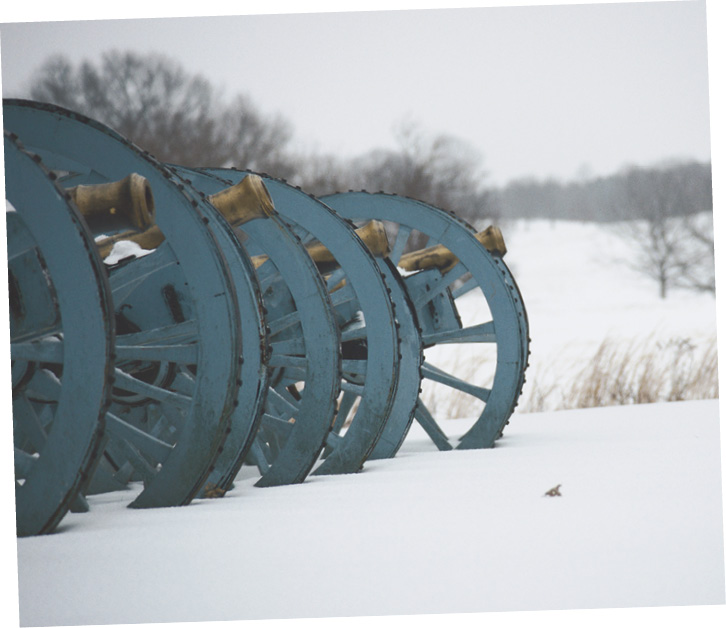
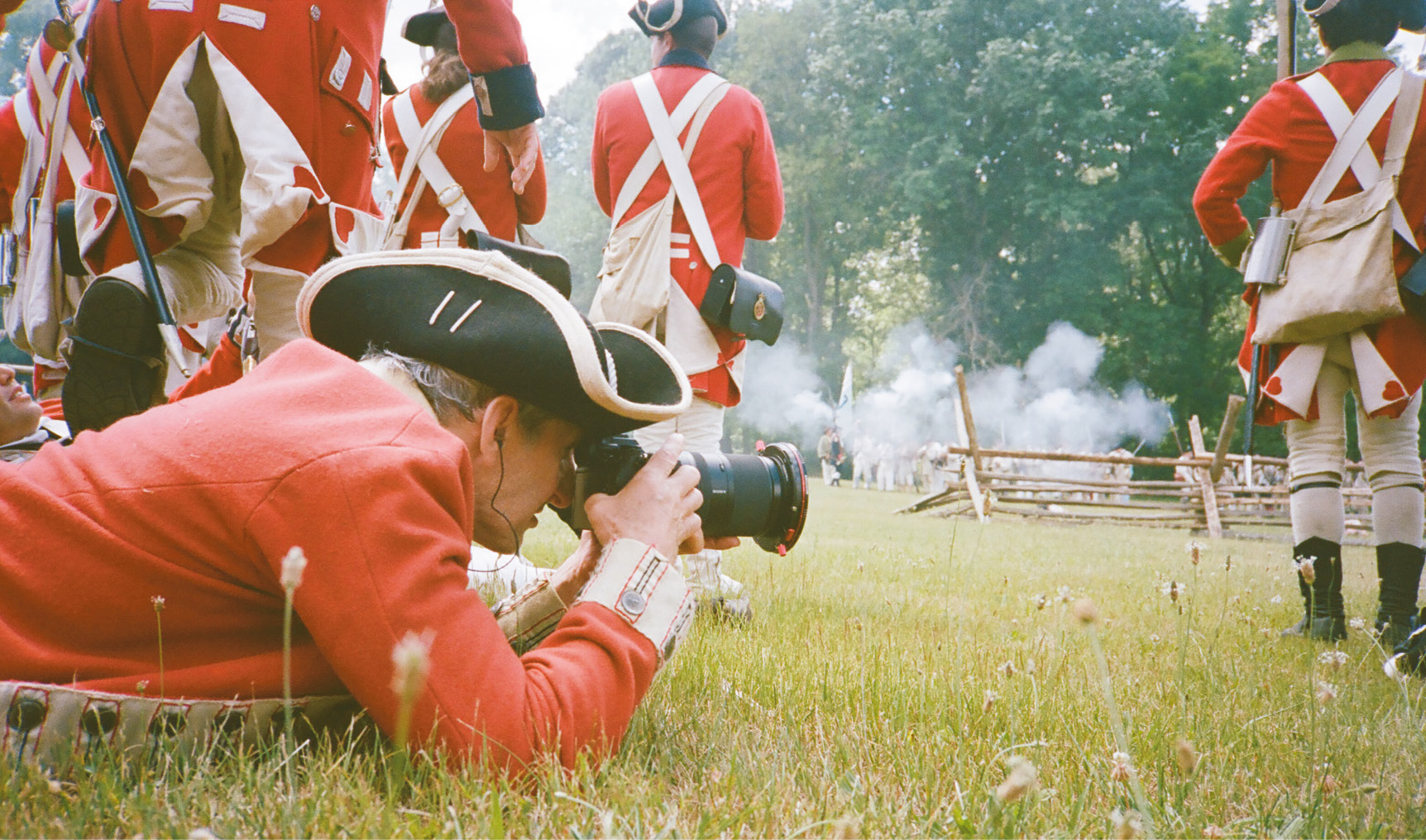
Ken Burns is on record saying he does not like the use of re-enactors to stage battle scenes. However, he does use them at times, usually dramatically shot, often at night or like shadows passing through the woods. He always avoids showing faces, and this helps to avoid the ‘pretend’ of re-enactments where well-fed, healthy-looking men and women of today dress up, looking nothing like their emaciated ancestors with bad teeth would have looked 250 years ago. Every battle scene is illustrated with big close-ups of muskets or cannon firing. These sequences add atmosphere without becoming risible.
Finally, there are interviews with a host of American historians of every background who help to narrate and analyse events, as in The Civil War. Many of these historians and writers explore more recent interpretations of the subject, bringing little known ideas from university history faculties into the mainstream. For instance, a lot of female historians are keen to praise the role of women who, despite having had almost no political status in the colonies, are brought into the foreground of the story. Particularly interesting are the contributions of Mercy Otis Warren, a commentator and satirist (whose words are read by Meryl Streep), and Phillis Wheatley, the first Black American woman to have her poems and writings published (read by Amanda Gorman).
All of these elements are brought neatly together by a commentary written by Geoffrey Ward, a long-time collaborator with Ken Burns who also co-wrote the narration for The Civil War, and read by Peter Coyote. Even the music echoes The Civil War. There is a much-repeated violin lament that sounds like a version of ‘Ashokan Farewell’, the theme music to the earlier series.
The path to independence
The first episode clearly portrays the ‘Britishness’ of the 13 colonies along the eastern seaboard that lay between Spanish Florida and French Canada. In fashion, politics, and culture, most colonists looked to England for a lead. Even if they had never visited Britain, they still tended to call it ‘home’. So, in the Seven Years War (1756-1763), most colonists supported Britain. Even George Washington fought for the British. However, although trade with the New World was vital to the British economy, British leaders did not know how to handle the colonies, and in the years following the war they slowly drove the previously patriotic colonists into becoming rebels.
In a series of Parliamentary Acts, London tried to pay off its debt from the Seven Years War by taxing the colonies. The Stamp Act of 1765 was widely opposed and led the failed brewer Samuel Adams to begin a propaganda campaign against Parliament. ‘If trade can be taxed,’ he wrote, ‘then why not the land… and we will no longer be free subjects.’ The Townshend Acts prompted further signs of rebellion, leading to 46 tons of tea famously being thrown into Boston harbour in December 1773. The Continental Congress in Philadelphia began slowly to think about coordinating widespread opposition to British rule. With the crisis polarising rapidly, Lord North in London took a strong line, and General Gage with a force of 1,000 grenadiers sought to attack a supposed arms store at Concord. The resulting massacre at Lexington Common was the spark that ignited the rebellion.
Having set out the parameters of the conflict to come, the second episode gets into its stride by telling two parallel stories. First, there is the military progress. The bloodletting really begins in the battle that comes to be known as that of Bunker Hill in June 1775, when, according to one historian, the British suffered a higher rate of casualties than in any battle until the first day of the Somme on 1 July 1916. George Washington takes command of the Continental Army and tries to forge a unified, disciplined force out of thousands of part-time militiamen and farmers.
Meanwhile, there is the parallel political story, which is very well told, of how the colonists gradually inch their way towards the cause of independence. Thomas Paine writes his pamphlet on Common Sense in January 1776, exciting many but still alienating those who would not consider denying the authority of the King 3,000 miles away in London.
Finally, Thomas Jefferson drafts the Declaration of Independence, which is formally ratified on 4 July 1776. Declaring that the King is the enemy and is unfit to be the ruler of a free people, the Declaration rings out with some of the most famous phrases in American history. At Bowling Green in the southern tip of Manhattan island, soldiers who hear the Declaration read out are so enraged they tear down the statue of George III – a symbolic gesture that has been echoed frequently in recent times, from the pulling down of statues of Lenin at the end of the Cold War to that of Saddam Hussein after the defeat of Iraqi forces in 2003.
The next three episodes tell the story of the war that follows, as Britain determines to defend its interests, seeing the loss of the American colonies as potentially the beginning of the end of its empire. The conflict brings in France and then Spain to support the Americans against the British. With the escalation of violence, absurd levels of cruelty are demonstrated. Partisans on both sides torture captives, rape, pillage, and plunder captured farms. The British take the war from the north-east to the southern colonies. Eventually, after years of fighting, General Cornwallis surrenders to General Washington and the French General Rochambeau at Yorktown in October 1781 (see also the feature on here). The war is over. Slave runaways are returned to their owners. The property of loyalists is seized and confiscated. But a great event in world history has taken place. A republic has defeated a monarchy.
The war had united the 13 states but the peace that followed divided them. Finally in 1787, a Constitution and a Bill of Rights were drawn up to create a strong federal government that would share power with the states. George Washington, a natural leader, was the man in charge of the new republic. In 1789, he refused any kingly title and was happy to be called ‘President’; in 1797, he stood down, according to the terms of the Constitution, and returned to his home at Mount Vernon, Virginia.
The American Revolution gives a sophisticated take on events. This is not a story of good guys defeating bad guys. Yes, it is a celebration of liberty, but it is full of nuance. It tells how men like Jefferson and Washington can proclaim all men are created equal but find the hundreds of slaves they own are invisible, and have no thought at all for 50% of the human race: women. It tells how the independent United States will turn westwards in the century after its Revolution and deny the Native Americans the independence it had fought for.
The series ends on an uplifting note: America is predicated on an idea of freedom that will go down the generations and inspire people around the world. That will be the very positive contribution of The American Revolution to the 250th celebrations of a divided America this summer.
The American Revolution
Produced and directed by Ken Burns, Sarah Botstein, and David Schmidt. Written by Geoffrey Ward.
Narrated by Peter Coyote.
A Florentine Films production for PBS.