
Subscribe now for full access and no adverts
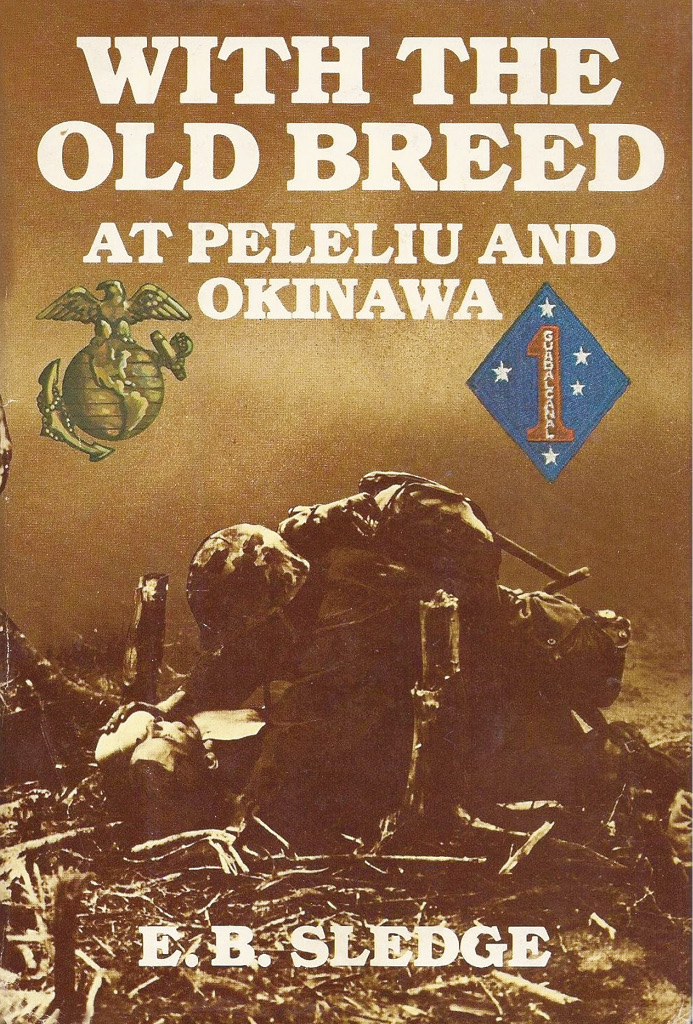
With the Old Breed is a harrowing, visceral account of a US Marine’s combat experience fighting the Japanese in Peleliu and Okinawa in 1945. Together with Robert Leckie’s Helmet for My Pillow, it provided the material for HBO’s acclaimed 2010 television series The Pacific. Excellent though the latter was, the book offers much more. The savagery of the combat is well captured by the series, but Sledge reflects on something more subtle: how men struggle to maintain their humanity in a world where all decent human values have been abandoned.
First published in 1981, With the Old Breed is based on notes Sledge kept in his pocket Bible through 1944-1945. Even the best military memoirs should come with a caution: while offering a raw, unfiltered, and essentially true account of frontline combat, the details of action, times, and places may not always match regimental histories and other accounts. This is not true of Sledge’s memoir. Unusually, he intersperses his contemporaneous account with substantial italicised summaries of key campaign events, the fruit of his subsequent research (he became a university professor after the war). This, plus the introduction and forewords by marine officers who served with Sledge, and a two-page bibliography, sets it apart from more colourful accounts like Frank Richards’ Old Soldiers Never Die (see MHM 143, December 2024/January 2025).
Inhuman horrors
Sledge is enrolled in officer training but, together with many of his peers, abandons it in favour of direct entry as a private in the Marines. The training is harsh and uncompromising, but it is recalled with some affection and gratitude: the recruits are becoming part of one of the finest fighting forces in the world, and no detail is spared in preparing them for the gruelling tasks ahead. Sledge ends up as a mortar man, serving in a 60mm mortar section. ‘The Old Breed’ of the title refers to the veterans who had completed pre-War training and served in battles like Guadalcanal. The importance of training and teamwork is a recurrent theme in the book, and Sledge recalls near the end of the Okinawa campaign the slaughter of green replacements who have had just a few weeks rifle-training and can’t even arm and throw a grenade.
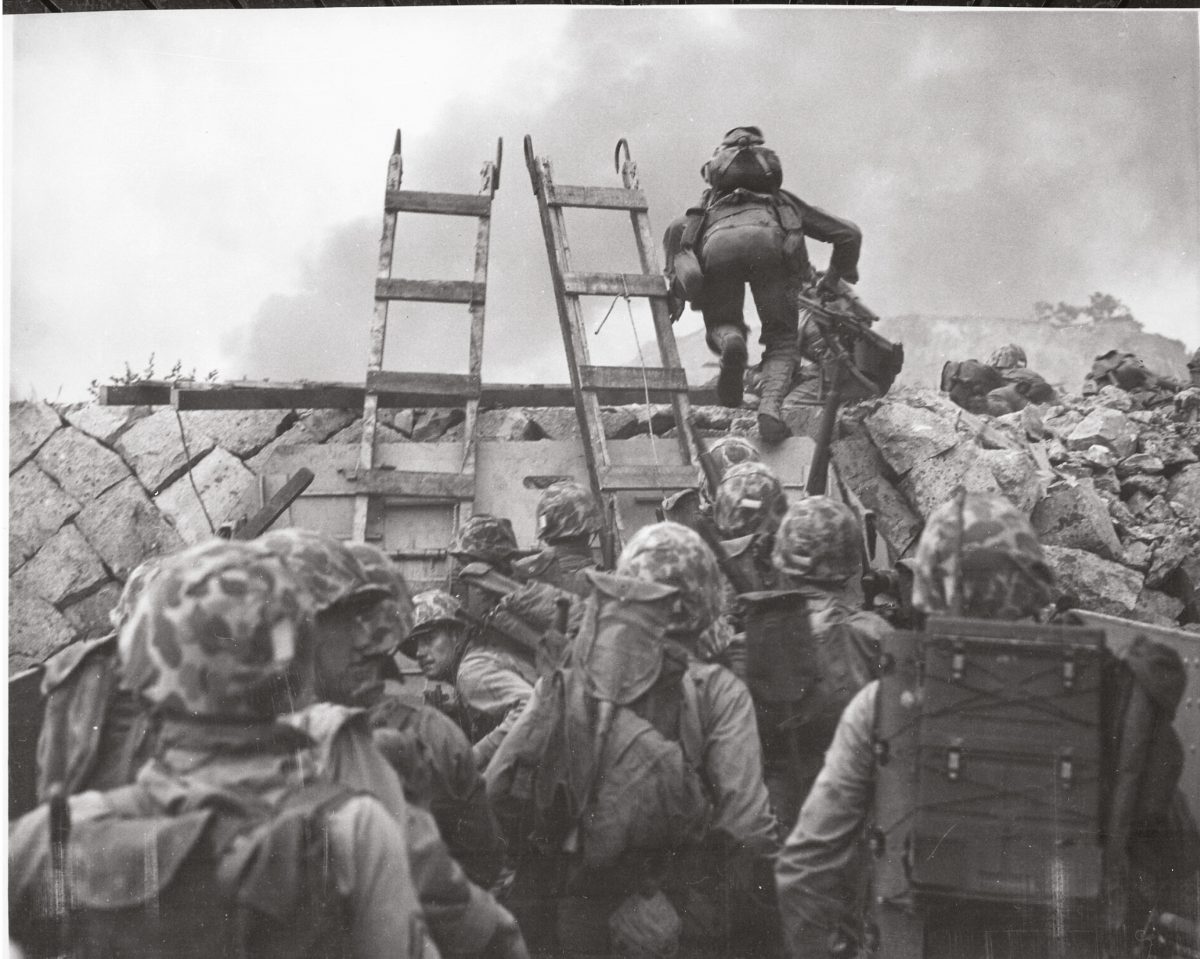
It is training that enables the young marines to face and overcome fear, an emotion which they are assured is perfectly natural. As the amphibious transports carry Sledge and his comrades to the beach at Peleliu, he feels the inevitable reflexes:
My stomach was tied in knots. I had a lump in my throat and swallowed only with great difficulty. My knees nearly buckled, so I clung weakly to the side of the tractor. I felt nauseated and feared that my bladder would surely empty itself and reveal me to be the coward that I was. But the men around me looked just about the way I felt.
Their Japanese opponents display a fanatical determination to fight to the death, and in both campaigns their defence is much more skilful than in earlier battles, without the suicidal banzai charges that provided easy targets for their opponents, and with formidable defences including bunkers, caves, and interlocking fields of fire. The cruelty and savagery of the fighting presents an extra dimension of horror: dead marines are mutilated, prisoners tortured, medics and stretcher-bearers fired on. The result is a determination to retrieve every marine who is hit, living or dead. Sledge’s mortar section often double up as stretcher-bearers when not firing, and he describes several narrow escapes.
War tends to debase everyone who engages in it.
It is hardly surprising in these circumstances that the marines see their enemy as less than human. A central tenet of Sledge’s writing is that war tends to debase everyone who engages in it. Many of his peers succumb to the temptation to ‘field strip’ Japanese corpses – removing valuables, souvenirs, and gold teeth. One man, to the horror of his comrades, even hammers a knife into the teeth of a dying Japanese soldier. His agony is ended by another marine. Sledge himself succumbs to temptation, but is warned by a combat medic friend that he risks ‘germs’. He later realises that his friend is gently sparing him the shame of doing something he would not normally have contemplated.
Much of this is directly linked to the ‘violent death, terror, tension, fatigue and filth that was the infantryman’s war’. Behind the lines in Okinawa, they encounter civilians, and a different picture emerges. ‘The children won our hearts. Nearly all of us gave them all the candy and rations we could spare. They were quicker to lose their fear of us than the older people, and we had some good laughs with them.’

Esprit de corps
Balancing the intense hatred of enemy soldiers is an extraordinary comradeship that binds the marines together in the most dire circumstances. This esprit de corps is fostered in training, and forged into an unbreakable force in the furnace of battle. Critical is the relationship between pairs of buddies who inhabit a single foxhole. The Japanese give them no rest at night, sneaking in to infiltrate American positions. Thus it is a cardinal rule that no one moves from their position at night, and passwords are strictly adhered to. While one man sleeps, the other watches and listens. When these rules are broken, tragedies ensue. At Peleliu, a marine cracks and starts to shout and scream at night. In spite of entreaties from comrades and even a morphine injection, he continues, and has to be silenced with a shovel blow which kills him, to the agony of his friends. Another man dies from friendly fire as a result of a comrade’s negligence.
In the chapter ‘Of shock and shells’, Sledge drives home the stress of constant shelling, close combat, and surprise counter-attacks. Just as in the First World War trenches, when men dreamt of a ‘Blighty wound’, men who get a ‘million-dollar wound’ that will send them home are congratulated and comforted.
He wore a triumphant look of satisfaction, shook hands with me heartily, and grinned as a stretcher team carried him with a bloody bandage on his foot. God or chance – depending on one’s faith – had spared his life and lifted his burden of further fear and terror in combat by awarding him a million-dollar wound. He had done his duty, and the war was over for him.
But the vast majority soldier on, in spite of casualties that mean the eventual turnover of their company exceeds 150% by the end of the Okinawa campaign.
In addition to the fear and constant stress of combat, Sledge graphically portrays the sheer physical filth and squalor that steadily saps the will to go on.
In combat, cleanliness for the infantryman was all but impossible. Our filth added to our general misery. It has always puzzled me that this important factor in our daily lives has received so little attention from historians and often is omitted from otherwise excellent personal memoirs by infantrymen.
In both campaigns, particularly Okinawa, this is exacerbated by the close proximity of decomposing bodies for days and even weeks on end. In a final irony, after 82 days of almost constant fighting, it is the marines who are tasked with collecting and burying the Japanese dead.
In his closing remarks, Sledge reflects that ‘War is brutish, inglorious and a terrible waste’. But he also acknowledges that sacrifices are sometimes impossible to avoid. Above all, his experience is redeemed by ‘my comrades’ incredible bravery, and their devotion to each other’.
Eugene Bondurant Sledge
Born: 1923
Died: 2001
Nationality: American
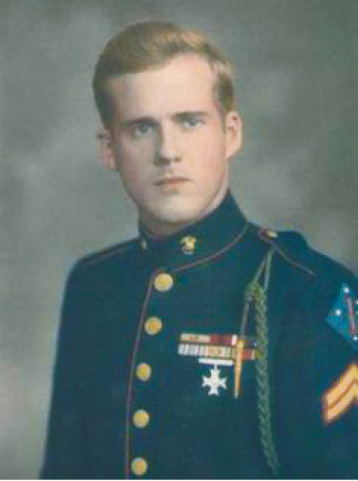
Born in Alabama in 1923, Eugene Sledge was 18 when the US entered WWII. At the request of his protective parents, Sledge joined a Marine Corps officer-training programme in 1942. However, he quickly flunked out of this programme intentionally in order to enlist immediately as a private, and spent the rest of the war in the Pacific theatre. Several decades later, he compiled his personal notes from this period into a highly acclaimed memoir, With the Old Breed: At Peleliu and Okinawa. After being discharged in 1946, Sledge went on to attend university, later becoming a professor of biology. His second memoir, China Marine: An Infantryman’s Life after World War II, which explored his post-war service in Beijing and his trauma recovery, was published posthumously in 2002.