
Subscribe now for full access and no adverts
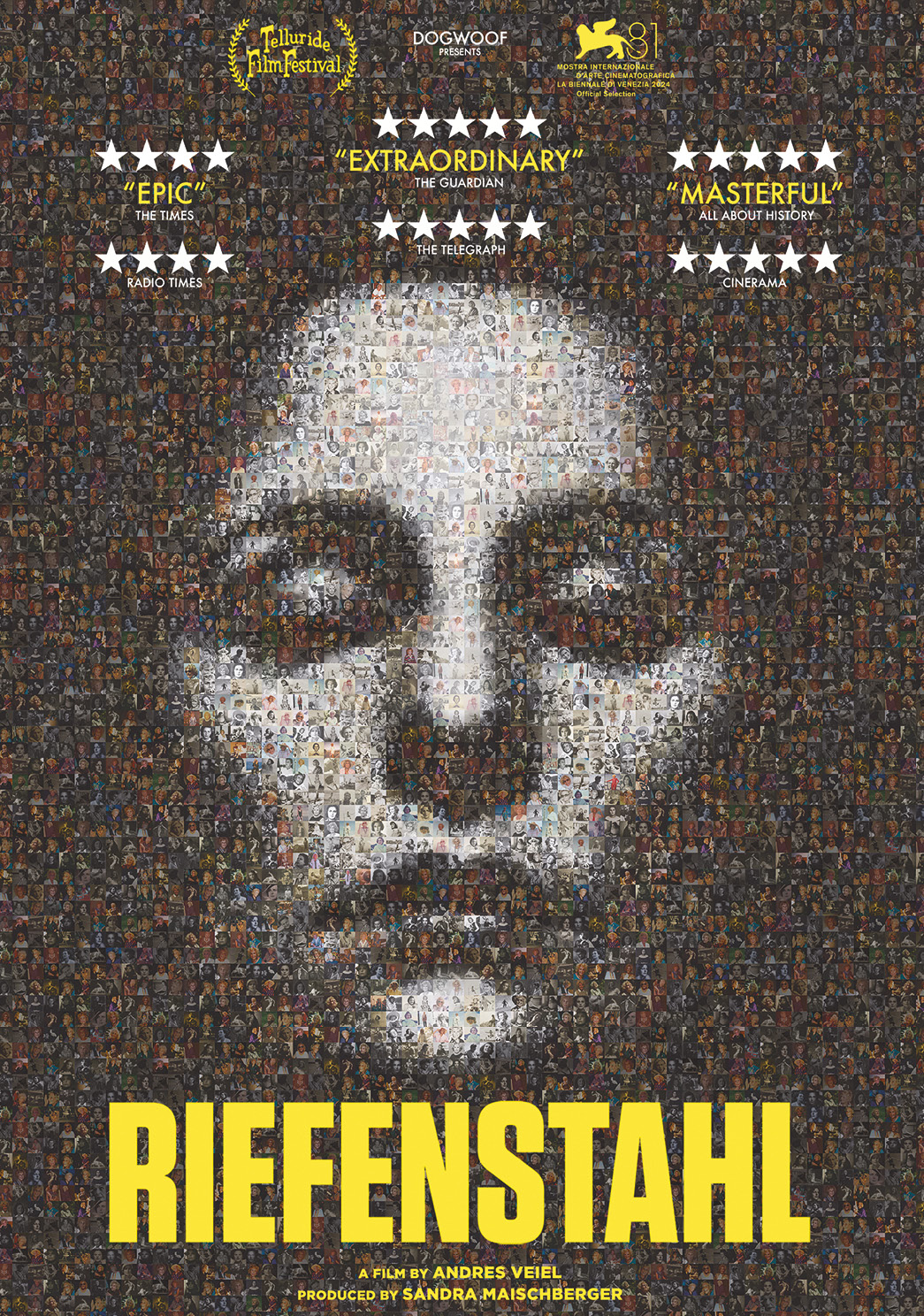
Leni Riefenstahl was Hitler’s favourite film-maker. He personally asked her to make a documentary of the 1934 Nuremberg Rally which, more than any other movie ever made, expresses the fascist, totalitarian ethic on film in a captivating and totally immersive way. This was Triumph des Willens, or Triumph of the Will. It has provided stock shots of Hitler and his adoring audience of Nazi supporters for hundreds of film-makers ever since. Even if you have never seen Triumph of the Will in its entirety, you will have seen clips from it over and over again in television documentaries about the Third Reich. Riefenstahl’s images of Hitler and the Nazis have become enduring emblems of the regime.
Riefenstahl began her career as a dancer and then became a star in various ‘mountain films’ – a popular genre of German cinema in the 1920s. Highly dramatic adventures were acted out against the backdrop of the German, Austrian, or Swiss Alps. The films were as important to the German film industry as the Western was to Hollywood.
Having appeared in many of these movies, in 1932 Riefenstahl directed, co-wrote, and performed the lead role in a film called The Blue Light. She played a wild outcast girl called Junta, who shepherds goats and falls in love with a visiting painter while the rest of the village shuns her. Set against the extreme background of the Dolomite mountains, The Blue Light pits the mystical raw forces of nature against the corrupting influences of modern civilisation. Riefenstahl was young, attractive, and, by this point, one of the leading film stars in Germany.
In February that year she attended her first Hitler rally. She was instantly mesmerised by the Nazi leader’s speech, which she described as having an ‘apocalyptic’ effect on her. A few days later, the political leader, who was on the verge of coming to power, met up with the beautiful young film star. Relying on the ballot to achieve victory, Hitler no doubt realised that being seen with the glamorous screen actress would help promote both him and his cause to many Germans.
The first film Riefenstahl made for Hitler was of the 1933 Nuremberg Rally and was called Sieg des Glaubens, or Victory of the Faith. But, as this prominently featured Ernst Röhm, the leader of the SA ‘Brownshirts’, the film was withdrawn and copies were destroyed after the Night of the Long Knives in July 1934, in which Hitler had Röhm and many of his associates murdered.
That film acted as a sort of dress rehearsal for Triumph of the Will. With a team of 170 technicians, Riefenstahl choreographed the hundreds of thousands of Nazi party members in a massive celebration of party unity around the leader. Everything is a marvel of discipline, focused on strict obedience to the word of the Führer.
In 1936, Hitler once again asked her to make a film, this time of the Berlin Olympics, which the Nazis were using to show to the world the spectacular nature of the regime and its ability to stage the global sporting competition with immense efficiency and style. Riefenstahl was given a vast budget and again employed scores of cameramen and technicians.
She produced the finest sports film that had ever been made and introduced radical new ideas of how to film sporting events. These included motorised tracking cameras that could speed along the side of the athletics track, and underwater cameras to record the swimming and diving events. The resulting film Olympia was shown around the world, won countless awards, and once again promoted the Nazis to a global audience.

For many years, Riefenstahl was close to the Nazi leadership, especially Hitler and Goebbels. But after the war she found this association embarrassing and for the next 50 years tried to deny that she had ever been close to the fascist leaders. She always said that she was only an artist and not interested in politics and had no knowledge of the horrors or atrocities that took place within the Reich. She also refused to accept any responsibility for promoting the Nazi ethic through her films.
Many books have been written and films made about Riefenstahl’s extraordinary life (she died in 2003, aged 101). Now Andres Veiel, an established German theatre director and film-maker renowned for digging deep into the archives of his subjects, has produced this new German-language documentary, which brings her story to the screen in an intriguing and powerful way.
New material
Although Riefenstahl does not exactly tell us anything new about its subject’s story, it does include a fascinating range of new material – presented through almost magical digital effects – to flesh out the key phases of her life.
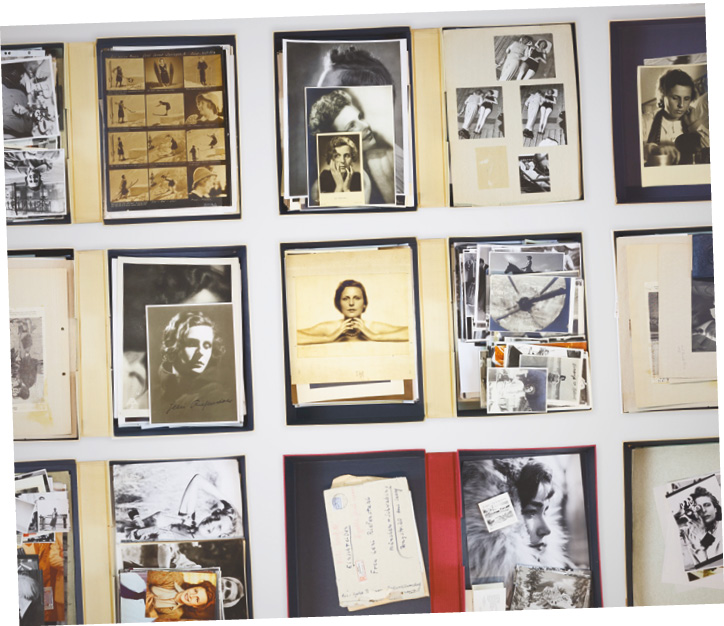
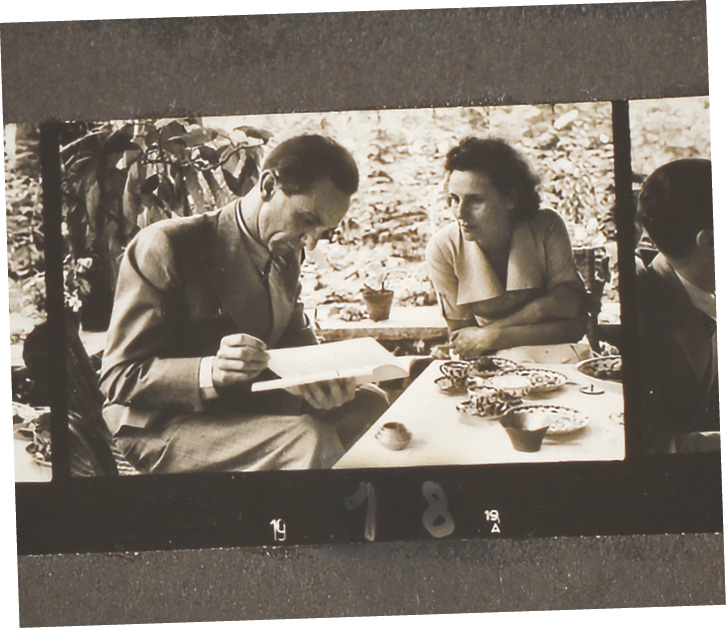
Much of this new material comes from documents in her estate to which Veiel had access. Riefenstahl was a meticulous collector of film, photographic, audio, and paper records throughout her career. These include clips of her at work, some of which were released at the time to promote her films, others which have never been seen publicly before. But there are also hundreds of audio cassettes that Riefenstahl made of phone calls she received, of conversations she had, and of meetings in her office. In addition, there are albums of photos she kept of her different projects.
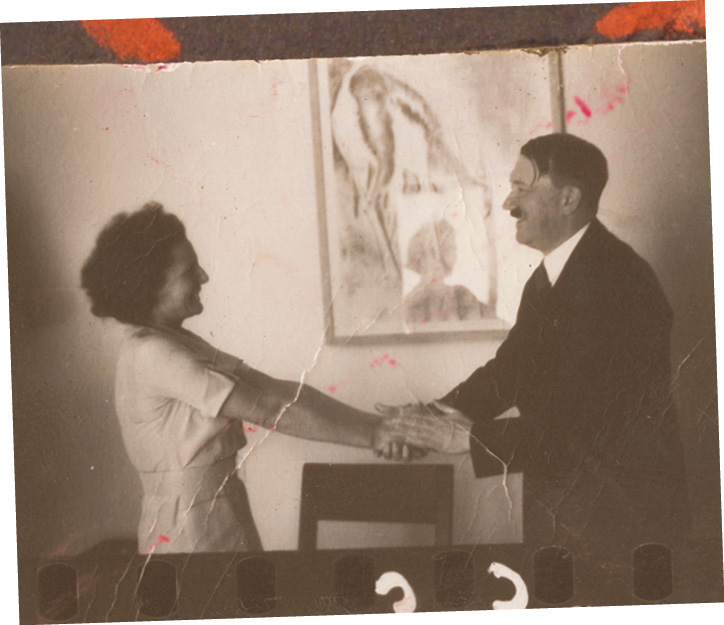
Riefenstahl always insisted on her innocence of any charges of supporting the Third Reich. Sure enough, she was never a member of the Nazi party. But the evidence is clear that she was given immense resources, financial and practical, to make the two films for which she is most remembered, Triumph of the Will and Olympia. And no one who sees the film of the 1934 Nuremberg Rally can be in any doubt whatsoever that the film-maker was at the very least a fellow traveller with the Nazis, or more likely an ardent supporter of Hitler and the sense of unity, obedience, and discipline that he brought to Germany. After the war, Riefenstahl was always going to find it difficult to peddle her line that she was just an innocent artist caught up with the dominant political ideology of her day. But this she tried to argue for the rest of her life.
The film Riefenstahl features extracts from a dozen or so television interviews she did from the 1970s to the 1990s. These are absolutely fascinating to watch. They range from the Canadian Broadcasting show Leni Riefenstahl in Her Own Words in 1965 to a German TV programme called simply Talk Show in 1976, and from a BBC interview for Tonight of the same year to the celebrated documentary The Wonderful Horrible Life of Leni Riefenstahl, made by another distinguished documentary-maker, Ray Müller, in 1993.

Many of these extracts include footage of Riefenstahl repeating lies about her life and being pressured by interviewers to accept that she must have been an enthusiastic supporter of Nazism. Frequently she erupts in a rage, denouncing the interviewer for telling lies while maintaining she was not a Nazi herself. On many occasions, she stops the filming and walks out of the interview in protest.
For instance, Riefenstahl insists that she did not make Triumph of the Will at Hitler’s request and that the film is really about ‘peace’ and not Nazi values. In the German talk show, when confronted by a woman of her own age (then also in her 70s) who says no one at the time could have been ignorant of the camps and the murders of Jews, Riefenstahl denies she knew anything about such massacres. She says she only knew about the camp at Dachau (in fact the first Nazi camp) and that it was not for the incarceration of Jews but was for political dissidents. This is correct – but can we really imagine that someone so close to the leadership had no understanding of the virulent anti-Semitism of the regime?
In another interview, she is read extracts from Goebbels’ diaries, in which the Propaganda Minister describes Riefenstahl as a regular visitor to his home and to that of Hitler. She dismisses this as false, too, and then goes on to say that Goebbels tried to rape her on several occasions and ‘tried everything to get me’, adding that she always resisted his advances.
Końskie massacre
Curiously, despite being the great Nazi propagandist of the 1930s, Leni Riefenstahl never produced any wartime propaganda for the regime. Here at least she could reasonably argue that she was, as it were, on the right side of history.
However, once again there is controversy. Veiel’s film tells the now well-known story of her trip to Końskie in Poland in September 1939, following a request to make a film about the rapid Nazi conquest of the country. Naturally Hitler was to be placed at the centre of this victory. At Końskie, she filmed German soldiers triumphantly entering and occupying the town, but there were some Jews gathered to be removed to make a better picture.
These Jews were then taken away by Wehrmacht soldiers, lined up, and promptly shot. Riefenstahl was shocked with what she witnessed and protested to the commanding officer. Then she asked to be removed from the commission and never again carried out any front-line filming. For this she could later have claimed some credit, but instead Riefenstahl denied the whole incident and claimed that her actions could in no way have led to the murders. Again, in later interviews she grew angry with questions that associated her with one of the first war crimes of the Second World War.

A similar incident occurred during Riefenstahl’s work on a film called Lowlands, which was based on a famous German opera. As both star and director of the film, Riefenstahl cast a couple of dozen gypsies who were released from a camp to take up their roles. After filming, it seems most of the gypsies were sent to Auschwitz, where they shared the fate of the million civilians murdered there. Again, Riefenstahl denied this in interviews.
In late 1945, after the defeat of the regime she had worked so hard to promote, Riefenstahl was interviewed by an Anglo-American team of Special Prosecutors who were looking for evidence to decide who should be prosecuted for war crimes. In the main, they accepted her claims of innocence and decided that artists should not be punished for the actions of the Nazi regime.
Post-war Germany was not for her, so in the 1960s Riefenstahl decided to leave the country and spend several years travelling in Sudan, where she filmed the Nuba tribes. In the documentary, this is presented as part of her quest to record the body beautiful, and once again she seemed blissfully ignorant of broader issues around the Nuba relating to colonialism and poverty.
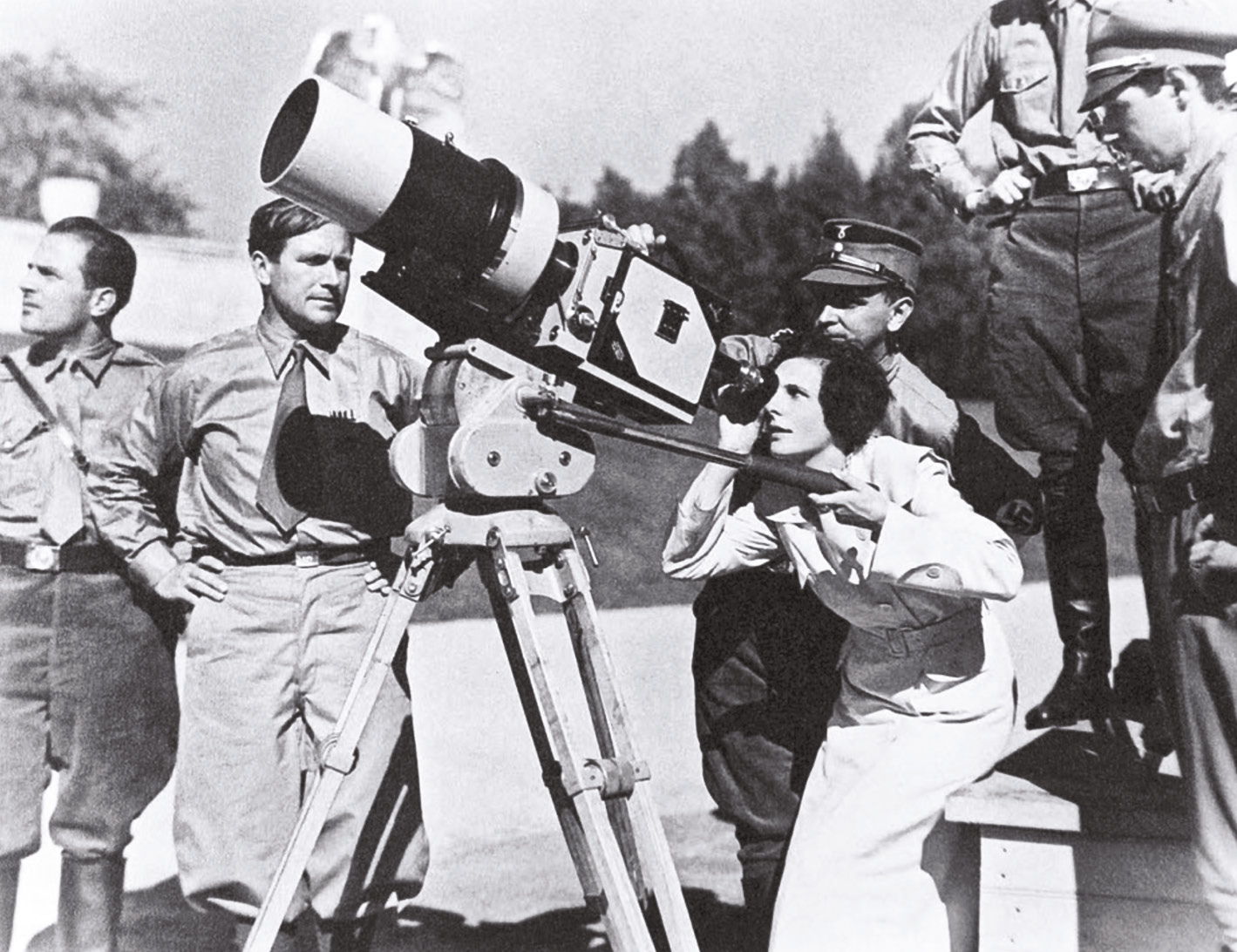
Riefenstahl was a pioneering film-maker, though her work under the Nazi regime made her controversial. Image: Wikimedia Commons
It was here that she built a relationship with a man 40 years younger than her – her assistant Horst Kettner. He helped organise her archives and kept recordings of her many telephone conversations. These included calls in which, after her various television appearances, Germans rang Riefenstahl up to express their admiration for her denial of responsibility for Nazi atrocities. Kettner also filmed her in her later years, some footage of which appears in the documentary.
The last shots we see of Leni Riefenstahl in Veiel’s documentary show an elderly woman, aged 97, being helped into a chair to be interviewed. She insists a wrinkle in her face must be removed with make-up and tells the crew to realign the camera and move the lights to show her more favourably. To the last, Riefenstahl was the vain film director who wanted to be in control.
Compulsive viewing
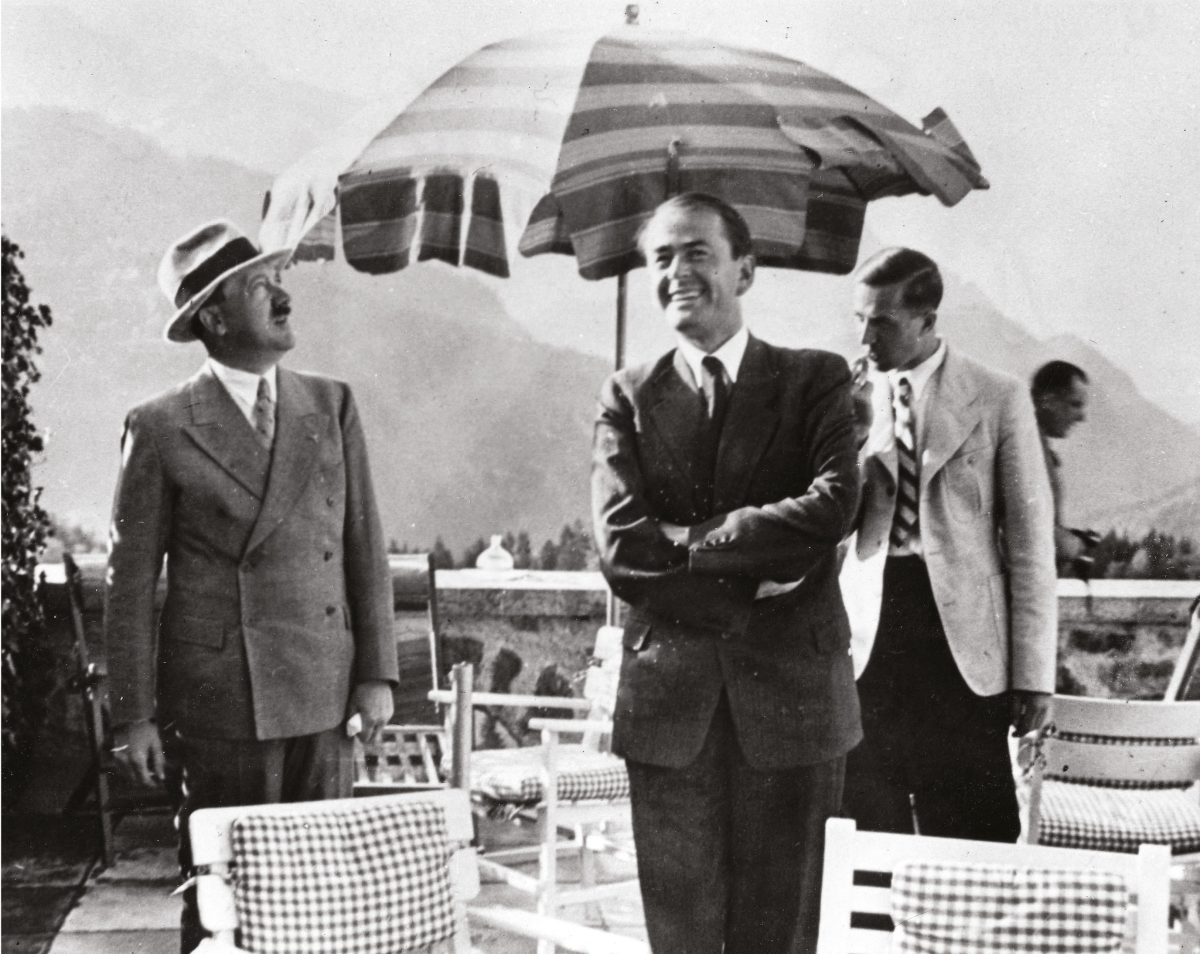
Veiel’s documentary is compulsive viewing. Although quite long – at nearly two hours – it passes quickly. Many comparisons are made between her life and that of Albert Speer. Speer, too, had started as an ‘artist’ (in his case an architect) in Hitler’s court. He went on to become Minister of Armaments and Production from 1942, controlling the vast Nazi war machine and employing millions of slave labourers in appalling circumstances to keep the German factories functioning.
Unlike Riefenstahl, after the war Speer accepted his guilt and took responsibility for supporting the Nazi regime. This saved his life and at Nuremberg he was sentenced not to death but to 20 years in prison. Riefenstahl, meanwhile, as Veiel’s documentary makes abundantly clear, lived out her life in denial. In claiming she had played no role in supporting Hitler’s regime, she spent almost half a century telling lies and disputing facts that are absolutely certain in the historical record.
After Speer’s release from Spandau in 1966, he and Riefenstahl became friends. The two spoke frequently over the phone, discussing their plans for memoirs and the fees paid to them by television companies. Speer was happy with just a couple of hundred marks for each appearance. But Riefenstahl said she would charge at least 5,000 marks every time. One imagines two old Nazis chatting about the good old days and bemoaning how the world had changed.
Taylor Downing’s book Olympia is published as a BFI Film Classic paperback. His new YouTube channel is @TaylorDowningHistorian.
Riefenstahl (2024)
Director: Andres Veiel.
Producer: Sandra Maischberger.
Archive producers: Monika Preischl and Mona El-Bira.
A Vincent Production funded by several German film and television companies.
Distributed by DogWoof and BetaCinema.
Available for streaming on BFI Player and Apple TV+.