
Subscribe now for full access and no adverts
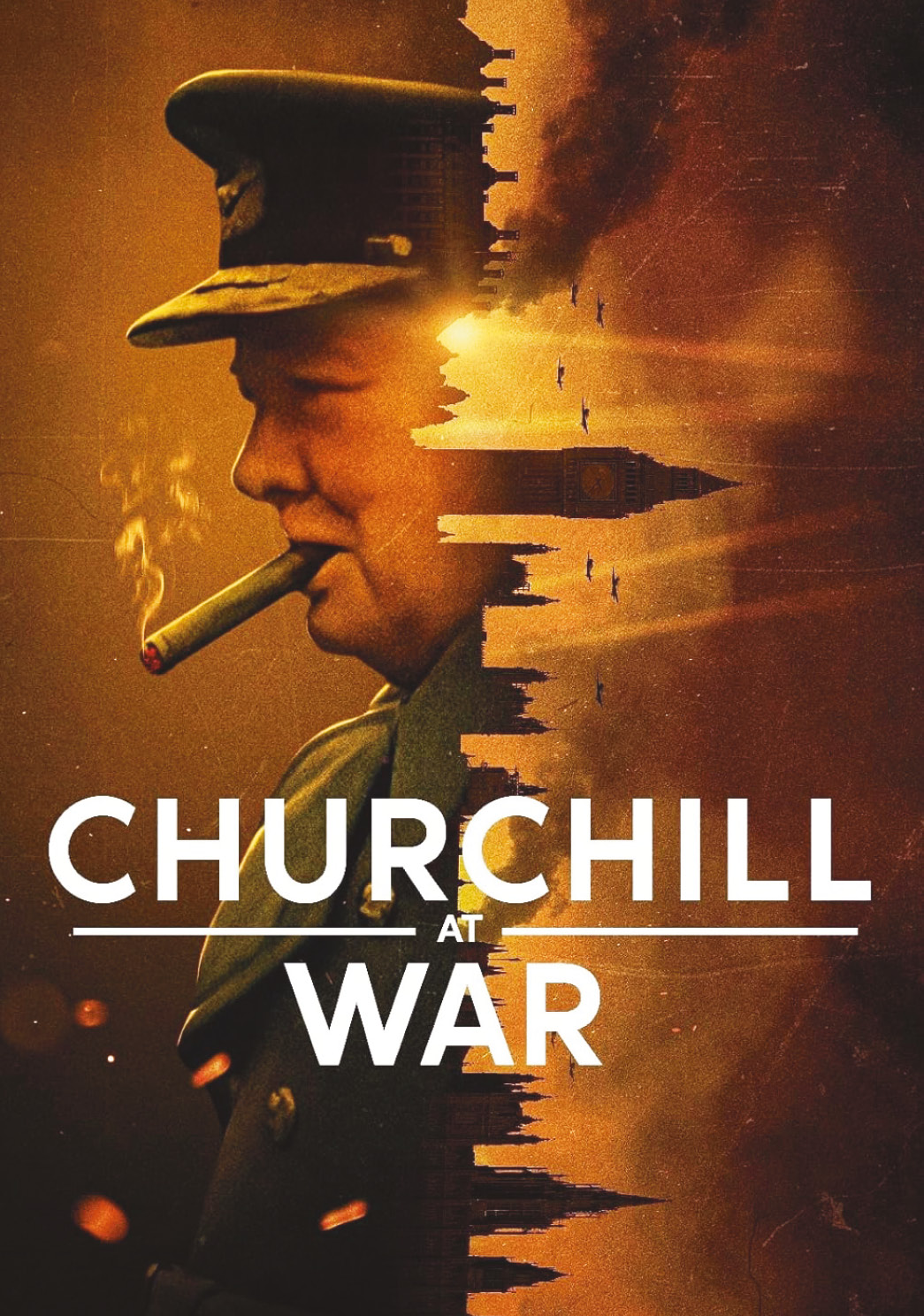
With the existence of literally dozens of films about Winston Churchill, as well as hundreds of books about one of the legendary figures of the 20th century, why did Netflix bother to commission the new four-part documentary Churchill at War?
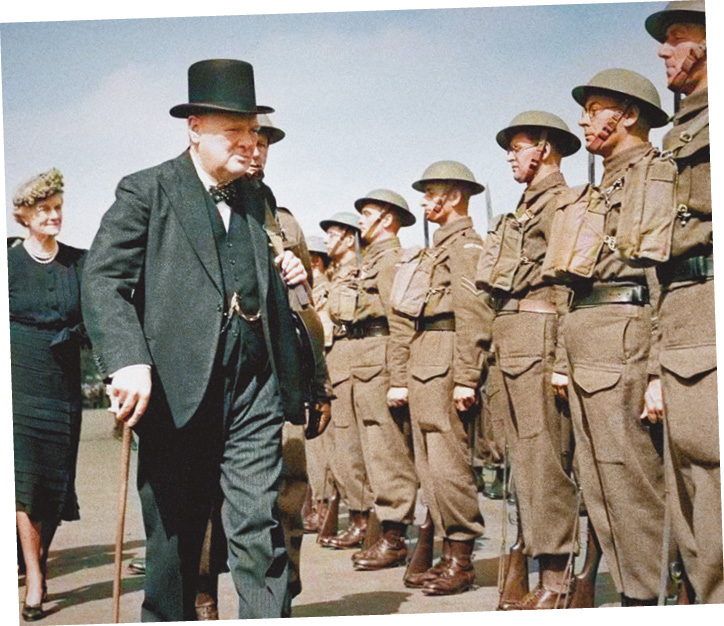
The answer is that this series has some fascinating new elements to it. Unlike most recent movies about Churchill, it is not about just one moment or aspect of his life. It covers his five years as war leader between 1940 and 1945, and also provides a good prologue on his early life to put the war years into context, as well as an epilogue on his post-war years and return to Downing Street in 1951. Second, the series has restored and colourised the archive footage and the many, powerful still photographs it features. Regular readers will know I am not usually a fan of colourisation, but I have to admit this time it has been done very effectively, giving the wartime images a slightly faded hue. There’s nothing garish about the colourisation here.
Additionally, and for the first time, using AI voice-enhancement technology, the series quotes from many of Churchill’s books, mostly his epic six-volume account The Second World War, but also from My Early Life and from various letters written to his wife Clemmie. We actually hear Churchill’s voice, digitally recreated, reading these extracts. This is all done with the approval of the Churchill Estate, which still control his words (both written and recorded). It is remarkable – but also slightly scary – to hear some of the famous phrases from his books being read not by an actor but by Churchill’s own voice! However, the selections are well chosen and are always sourced, including detailed footnote sources in the end credits. Although the digital readings are fairly flat, they add an enormous amount to the series, even if they raise the question as to what is real and what is not.
Another element of the mix that makes up the series is a set of interviews, some with distinguished historians who have spent years studying Churchill’s life, including: Andrew Roberts, who also serves as a series consultant; Allen Packwood, director of the Churchill Archives Centre in Cambridge; Jon Meacham, the historian of the relationship between Churchill and Roosevelt; and Anthony Tucker-Jones, the military historian. Dan Snow also comes across particularly well and has a powerful soundbite for every crisis.
Other interviewees include ‘celebrities’ like ex-President George W Bush, ex-Prime Minister Boris Johnson, Sarada Peri (Obama’s senior speech writer), and David Lammy, the current British Foreign Minister. They usually speak about Churchill’s qualities of leadership or the inspirational speeches he made during his career. Lammy makes an especially powerful comment when he says that in May 1940, when talk of negotiating with Hitler was widespread, Churchill was ‘crystal clear about values of freedom and liberty, and so he speaks to our times as we have to be crystal clear about what we are defending and fighting for today’.
There are many other historians and observers who appear through the series. Sonia Purnell has many interesting insights into Churchill’s relationship with his wife, Clemmie. Afua Hirsch and Kehinde Andrews have much to say about Churchill’s attitude to race and empire. And other historians pop up here and there to comment on his various action and decisions.

The weakest element of the series is a set of dramatisations starring Christian McKay as the documentary’s subject. McKay is a distinguished stage and screen actor best known for his role as Orson Welles in 2008’s Me and Orson Welles. He creates a passable impression of Churchill, although he is far too young to play the wartime leader. And he is certainly no Gary Oldman, who played Churchill in the 2017 film Darkest Hour to much acclaim.
Some of the dramatised scenes, especially when Churchill is debating with General ‘Pug’ Ismay (Jason K Ralph) or his wife Clemmie (Erica Wessels) are reasonably well done. Langley Kirkwood and Martin Kluge are just about believable as Franklin Roosevelt and Stalin. Other scenes are just not up to it. The sequences pretending to be from the House of Commons, for instance, are almost comical. The set looks nothing like the Commons, with men sitting in neat rows on black square benches. One wonders why so much time and money has been spent to make everything in the series as authentic as possible, when the producers went for such a schematic and poor representation of the beating heart of British democracy.
The series is clearly made not just for an American but also for a global audience. It has already been dubbed into 20 languages. There are no real surprises or revelations contained in the main narrative, but episodes are told well and thoughtfully, and the film-makers are always keen to bring out the broader moral significance of the decisions Churchill made. The whole thing moves along with flair and pace, and none of the episodes seem to lag for a minute.

Colourisation: a black-and-white issue?
The process of colourising black-and-white films got off to a bad start when an enthusiastic team at Turner Classic Movies colourised Casablanca in the 1980s. Directed by Michael Curtiz and starring Humphrey Bogart and Ingrid Bergman, the 1942 classic is totally perfect in its stark black-and-white depiction of relationships in the wartime North African city. When colourised, it looked garish and vulgar. Over the years, however, technology has advanced dramatically, with digital restoration processes now enabling every frame of film to be stabilised, and scratches and damage to be removed.
Although still considered a highly dubious approach to feature films, the colourising of archive film is far more acceptable. For instance, Peter Jackson produced a successful colourised account of the First World War with 2018’s They Shall Not Grow Old. Done well, the process can bring people and the past to life and immerse the viewer in the storyline. Without doubt, it makes documentaries attractive to a younger generation, which would almost certainly never watch anything in black-and-white. The argument is also made that the original scenes would have been shot in colour, if only such film stock had been available back then.
By the time of the Second World War, colour film was available, but its cost made it rarely usable by newsreel or military cameramen. Colourisation is, like the genie, out of the bottle, and it can never be put back. We should accept it, when used appropriately, and enjoy it. And the Churchill at War documentary very effectively colourises material relating to the war leader’s life story.
Battle erupts
The first episode, The Gathering Storm, begins with a long tease from the summer of 1940 that sets up the rest of the series. ‘Churchill got a lot of things wrong in his life but if you’re going to get one thing right,’ as one interviewee says, ‘the Second World War is pretty high up there.’ George W Bush, no doubt thinking of his own role post-9/11, adds that ‘the world at times has a need for strong leaders. Churchill was a strong leader.’
A timeline then takes us back to 1874 and the great man’s birth at Blenheim Palace into one of the leading families of the realm. Swiftly and neatly, the narrative drives us through his younger years and his relationship with his parents (using quotes digitally read by Churchill himself from his delightful book My Early Life), his escape from a Boer prisoner-of-war camp that turns him into an overnight celebrity, his early years in politics and his crossing the floor of the House of Commons in 1904, to the First World War. During this time, the disgrace of the Gallipoli Campaign is blamed on him, and he fears that it is the end of his career. Then, in the post-war era, he has ten busy years serving in several prominent government positions, until he goes into what he called ‘the wilderness years’ for most of the 1930s.
From the point at which Hitler comes to power in Germany, Churchill sees the Nazi regime as a threat to Europe. But he is classed as a warmonger, and no one listens. His hard-line support of Britain’s imperial role in India and around the world alienates him even from those in his own Conservative Party. But the coming of war justifies his hostility to appeasement and, in May 1940, he finally makes it to Downing Street just as battle erupts in northern Europe. ‘I felt as if I were walking with destiny and that my past life had been but a preparation for this hour and for this trial,’ he later wrote, while admitting to his detective in the car back from Buckingham Palace that ‘I hope it is not too late’.

The second episode, His Finest Hour, focuses on the summer and autumn months of 1940. Again, the story of the collapse of France, of the Battle of Britain, of the heroism of the Few, and of the bombing of London in the Blitz is all well told. More time could be spent on the bombing of other cities in Britain. But Churchill’s role in ensuring the British people have the determination to fight on and not give up comes across well.
The third episode, The Day of Destiny, covers Churchill’s attempt to court US President Franklin Roosevelt. FDR is moved by Churchill’s pleas for support but is restrained from entering the war by Congress – as well as the strong swell of isolationism across America. Churchill is disappointed by his first meeting with the American president at Placentia Bay, Newfoundland, in August 1941, as he had hoped it would result in a declaration of war. Of course, it is the Japanese assault at Pearl Harbor that December which finally gets America involved. A reconstruction shows Churchill hearing the news on the radio at Chequers, as was the case, and how a telephone call to the White House confirmed that the United States was now at war.
Churchill’s visit to Washington later in December 1941 is a triumph. He takes over the second floor of the White House, builds a genuine friendship with Roosevelt, and speaks heroically to Congress – destroying what’s left of American isolationism. This episode then flashes forward to Operation Torch in November 1942, when American forces land in north-west Africa (there is no mention of the Battle of Alamein), and to the debate about opening a second front at the Casablanca conference. As Sarada Peri says of the war at this point, ‘to defeat Germany, Britain gave time, America gave money, and Russia gave blood.’
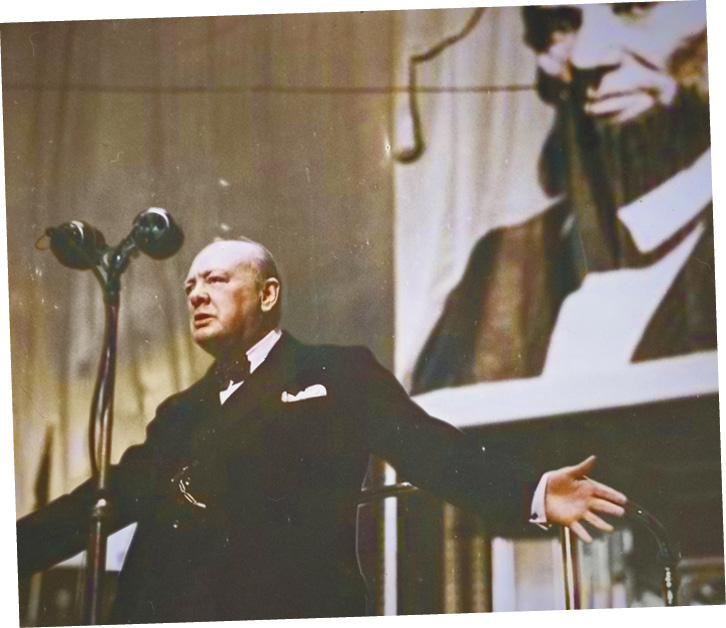
The Bengal Famine of June 1943 is covered as well, and the finger is pointed at Churchill for not allowing relief to be sent to the region, resulting in the deaths of up to three million Bengalis. At the first meeting of the ‘Big Three’ in Tehran in November, a modest dramatisation shows FDR making jokes to Stalin at Churchill’s expense. The interests of Britain and the US were no longer so closely aligned and, as Jon Meacham notes, ‘Britain had moved from being a great imperial power to an adjacent one.’
The final episode, Out of the Storm, begins with Churchill’s anxiety that the D-Day Landings will fail and set back the whole war effort. But, with the help of a sophisticated deception operation, the landings are a great success. Churchill wanted to witness the invasion in person but, to his annoyance, the King forbids it. As the Allies advance across northern Europe, so America comes to dominate the strategic planning for the rest of the war. Former President Bush tells us this was because, by then, ‘we were the biggest dog in the pound’.
As the existence of death camps such as Auschwitz is revealed (thankfully the film-makers make no attempt to colourise the footage of the Holocaust), so Churchill asks the RAF to consider bombing the gas chambers. But there is no appetite in the US or Britain for such a risky operation – one that might end only in the death of hundreds of camp inmates.
Right person, right time
The crucial months of 1945 are covered in some detail, from the Yalta Conference of February that year onwards. On VE Day, Churchill is cheered by giant crowds in London. But he is already growing anxious about the Soviet occupation of Eastern Europe. He tells his military to prepare a plan to check the Russians if they don’t stop at the agreed borders, Operation Unthinkable. Boris Johnson calls it ‘a bonkers plan’. Churchill warns of totalitarian control over the East and is once again, as in the 1930s, dismissed as a warmonger. After the successful Trinity Test of the atom bomb in New Mexico in June, Churchill gives ‘unanimous, unqualified, and automatic’ approval for the Americans to use it to shorten the war. He leaves Potsdam mid-conference to return to London for the election results. Everyone expects an easy victory. But, as we know, there is a Labour landslide. The great war leader is out.
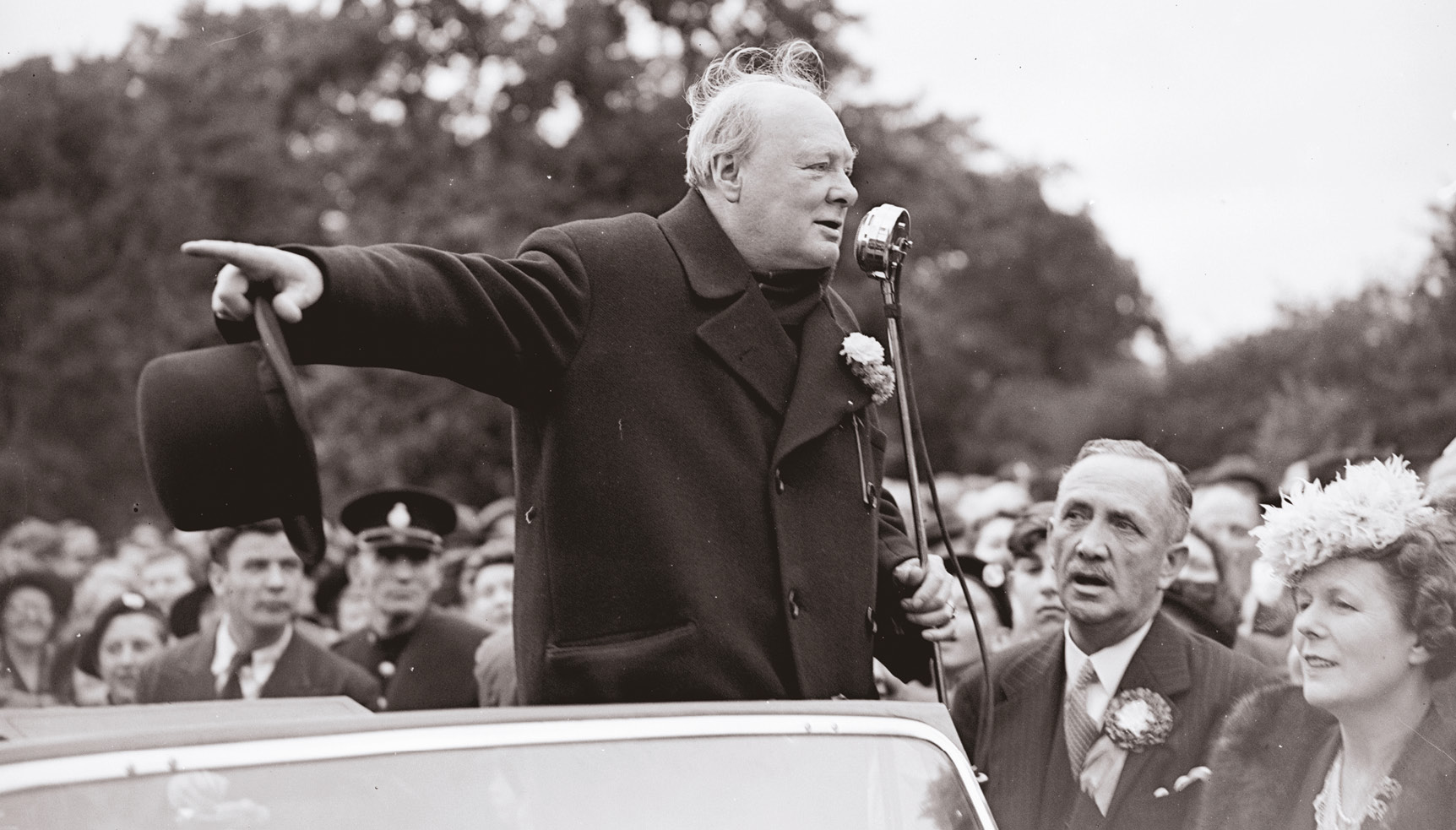
But, of course, he is not down. In March of 1946 he travels to Fulton, Missouri, to give his great warning about the Soviet Union and the coming of the Cold War in his ‘Iron Curtain’ speech. George Bush says that the ‘moral clarity’ of describing the world in terms of ‘good versus evil… upsets people’. Again, he is no doubt thinking of his own use of the term ‘Axis of Evil’ to paint all of America’s post-9/11 foes as partners of the Devil. Forward to 1951 and Churchill wins an election and is back in Downing Street. Fortunately, the programme does not go on to describe his lacklustre second term in office.
The series ends, as it should, with a nuanced summary of Churchill as war leader. His wrongs and his mistakes have been pointed out. Nevertheless, he had ‘helped to save the world from something truly evil’. Jon Meacham provides a suitable conclusion when he says that ‘Churchill should inspire not because he’s a hero, but because he’s human.’
To anyone not familiar with the Churchill story, this Netflix series provides a very good guide through the turbulent years of his life. For once, the British nation had the right person in the right place at the right time. There’s no harm in reminding ourselves and the rest of the world of this fact as the series, clearly meant for a global audience, unapologetically does. It narrates Churchill’s life in a compelling and highly watchable way. And its pioneering use of AI audio technology gives Churchill a new voice, quite literally, from his own words.
Taylor Downing’s latest book The Army that Never Was: D-Day and the Great Deception is available in paperback (Icon Books, £11.99).
Churchill at War (2024)
Directed by Malcolm Venville.
Executive Producers: Sara Bernstein, Sara Enright, Brian Grazer, Ron Howard, and Justin Wilkes.
Consultant: Andrew Roberts.
Featuring Christian McKay as Winston Churchill.
An Imagine Documentaries production available on Netflix.
Image: Wikimedia Commons