
Subscribe now for full access and no adverts

The Battle for Norway lasted for two months in 1940. The country had been neutral during the First World War and hoped to keep out of the Second. But neither side respected Norwegian neutrality. The Germans exported iron ore from Sweden, vital for their war machine, through the Norwegian port of Narvik. Winston Churchill, as First Lord of the Admiralty, came up with a plan to mine the waters off the Norwegian coast in order to harden the blockade against the Nazis.
The British Cabinet, reluctant at first, finally agreed to the plan and to send an Expeditionary Force to Norway. Meanwhile, Hitler ordered his generals to prepare an invasion. He hoped the country’s naval bases could be used against the British in the North Sea and the Atlantic, and to ensure Norway was not occupied by the Allies.
The plans of both sides came to a head in April 1940. Germany invaded on the ninth day of that month, having conquered and occupied Denmark in an operation that lasted only eight hours. In total, some 120,000 men, supported by a battalion of elite parachute troops, landed at several ports and airfields simultaneously. The capital, Oslo, was quickly overcome. An Allied force of about 38,000 men was landed in the north, but did not have the right clothing or equipment for mountain warfare. Meanwhile, the Cabinet dithered. General Ironside, Chief of the Imperial General Staff, wrote in his diary that he was ‘very upset at the thought of our incompetence’.
After Hitler had launched his invasion of France in May, the Expeditionary Force was rapidly withdrawn. The German navy suffered several major losses during the invasion, including the heavy cruiser Blücher. The Royal Navy lost an aircraft carrier, HMS Glorious, and its destroyer escorts. By 10 June, the German occupation of Norway was complete – but King Haakon VII and many soldiers, sailors, and airmen escaped to Britain.
The German occupation began relatively benignly, as in other countries such as the Netherlands. But this rapidly changed as economic scarcities began to hit the population. The Norwegian fascist leader Vidkun Quisling, whose name would soon become synonymous with treachery, led a puppet government. But Quisling never held complete power. That lay in the hands of the German Reich Commissioner. And the substantial German naval and Luftwaffe presence in the country was controlled from German military headquarters, the OKW.
Within a few months, an underground resistance movement had been formed, which rapidly grew in numbers and in the scale of its activities. The movie Number 24, directed by Jean Andreas Andersen and released on Netflix in January, tells the true story of resistance leader Gunnar Sønsteby, who became the most decorated citizen in the country, being awarded the War Cross with three swords.
Intriguing story
Number 24 tells Sønsteby’s story in a fresh and intriguing way. It is no whitewash of resistance heroism – and it constantly questions the morality of violent resistance. At the beginning of the film, an old man (played by Erik Hivju) prepares to address a college audience of teachers and a diverse gathering of young students. He is national hero Gunnar Sønsteby, there to tell his war stories and to answer questions from the students.
These scenes are intercut with a series of long flashbacks showing the young Sønsteby, played by Sjur Vatne Brean, who slowly becomes involved with and then leads a resistance cell. It is a brilliant device through which the students question some of the values of an elderly war hero, bringing the issues that concern their generation to bear on those of the generation who lived through and fought in the war.

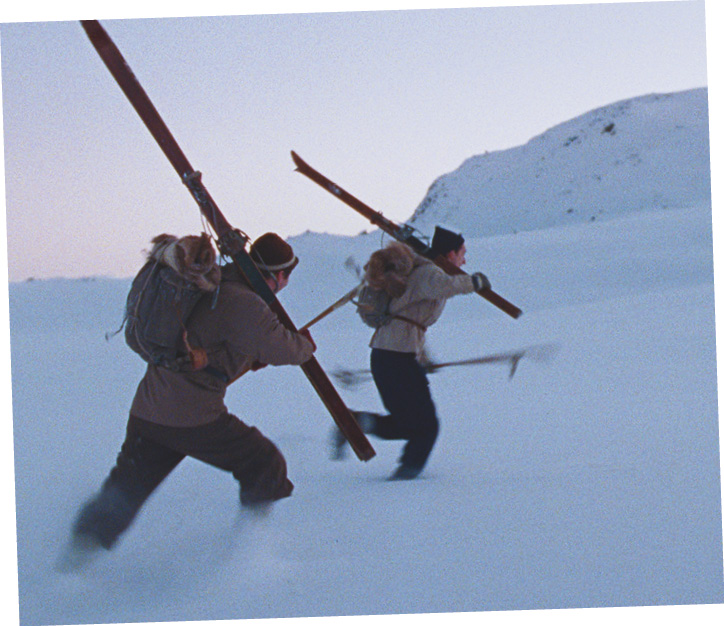
Sønsteby grew up in Rjukan, in Telemark, in the mountains. As a youth before the war he enjoyed skiing with good friends like Erling Solheim (Jakob Maanum Trulsen). After the German occupation, he was working as an accountant. ‘Do you carry on or do you oppose the occupation?’, the elder Sønsteby asks the students. This was a question that public officials in all occupied European countries had to face. When does cooperation become collaboration? When do you defy the seemingly all-powerful occupying military force?
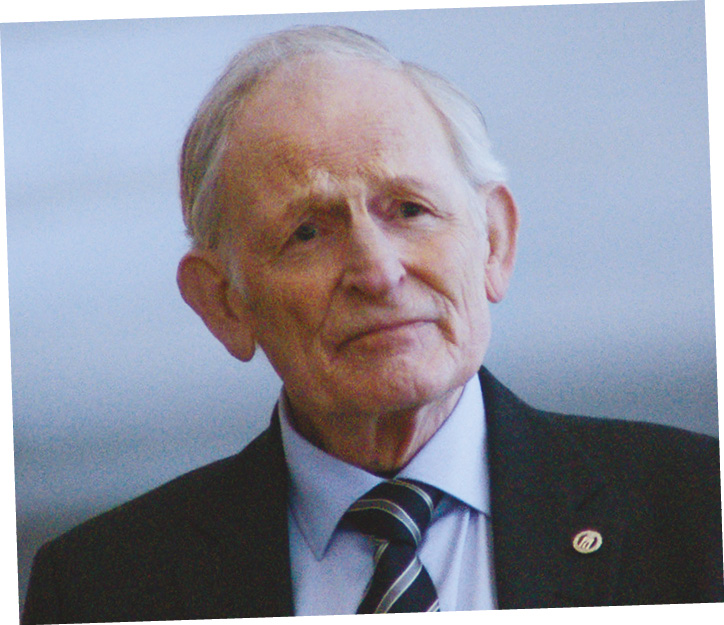
As a young man, we see Sønsteby recruited into the resistance. But he suffers an early defeat in a shootout with German soldiers. ‘We were unprepared,’ he tells the students. ‘I promised myself I will never be unprepared again. Peace and freedom trumps everything else.’ The young Sønsteby travels to Stockholm, where he is recruited by Britain’s MI6, given a code number, and is allocated his first assignment.

The mission is to persuade the governor of the Bank of Norway to give him the metal plates in order that the resistance can print banknotes to finance their activity. Every step Sønsteby takes is carefully considered and planned out. He never sleeps in the same room two nights running; instead, a network of flats is made available to him. Using a variety of aliases and constantly on the run, he repeatedly evades the Gestapo and the SS, who start to pursue resistance members. Horrifying tortures are carried out in the basement rooms of their headquarters. Eventually one man, threatened with being burned alive, gives the Germans the name of the resistance boss. He names Gunnar Sønsteby.
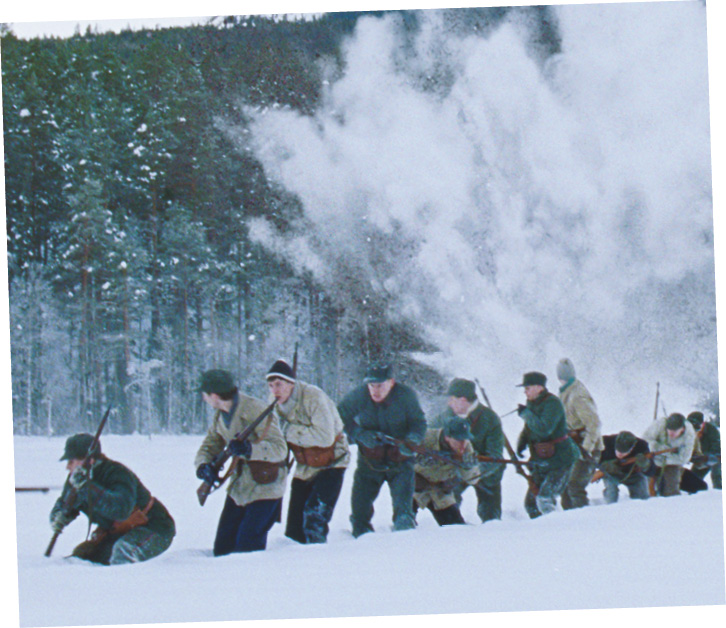
With the noose tightening around him, Sønsteby escapes again to Stockholm, but this time is flown out and taken to RAF Leuchars in Scotland. There he is interrogated by suspicious officers from the Special Operations Executive (SOE). ‘Why have you survived when so many others have not?’, they ask Sønsteby, believing he could be a German double agent, sent over to penetrate British intelligence. ‘I plan and prepare everything,’ he replies. Eventually Sønsteby is accepted as genuine by the British and given several months’ training.
The occupation of Norway
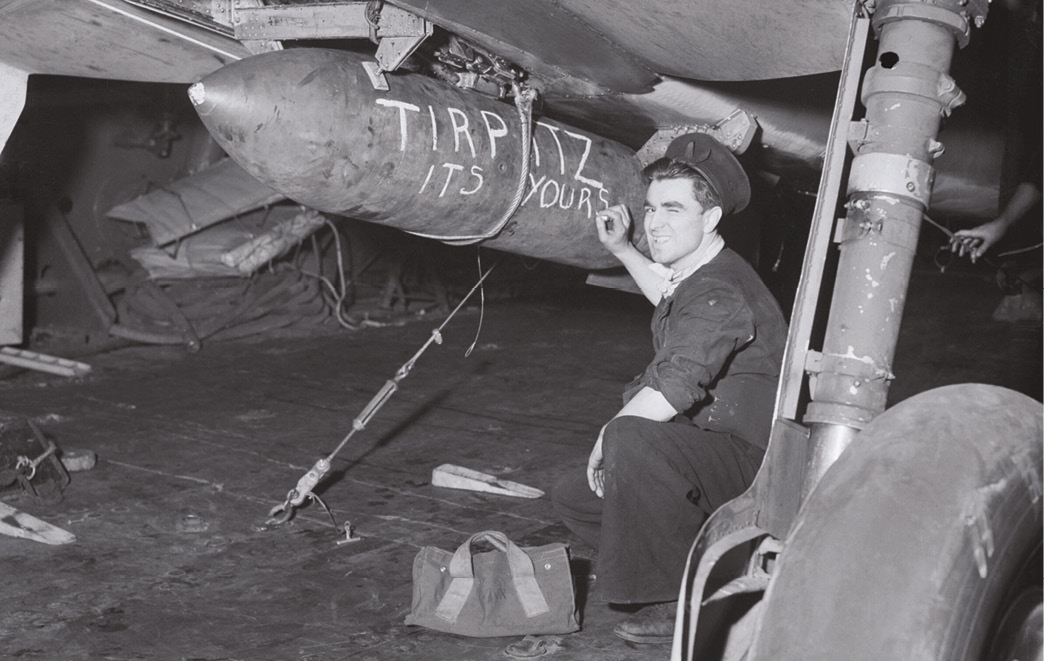
After the fall of Norway in June 1940, the Nazis quickly occupied the country, providing the Third Reich with several naval and air bases. Literally hundreds of large fjords and harbours enabled its fleet to hide. The Bismarck was sunk after a famous pursuit, which began when the German battleship was spotted by an RAF reconnaissance plane in Grimstadfjord in May 1941 as it was about to strike at the Atlantic convoys. Her sister-ship Tirpitz spent most of the war in Norwegian waters, acting as a threat to North Atlantic merchant shipping and also for a time threatening to intercept Allied convoys supplying the Soviet Union. This prompted a large naval and air effort to find and sink her that lasted for two years. Tirpitz was disabled by a mini submarine in September 1943, but was not finally sunk until she was hit by Tallboy bombs dropped by Lancaster bombers in November 1944.
The German garrison that occupied Norway was far larger than necessary. This was partly because Hitler became obsessed with Scandinavia, regarding it as part of his ‘Zone of Destiny’. He was also convinced that it would be used by the Allies to attack his northern flank. The deception campaign Operation Fortitude North played on the fears of the German High Command. A hoax army, the British Fourth Army, was invented, with ‘headquarters’ in Edinburgh and men stationed across Scotland and Northern Ireland, purportedly ready to attack Norway and Denmark in the spring of 1944. This deception succeeded in keeping a force of approximately 250,000 men stationed in the country throughout 1944 – soldiers who could have been redeployed to far greater effect on the Eastern Front or to Normandy.
Of this large force, only about 6,000 were members of the SS, but it was these men who vigorously pursued the resistance leaders, torturing and murdering those they rounded up. They were also responsible for the deportation of about 800 Jews, nearly half of the country’s Jewish population, to concentration camps in Eastern Europe. The remainder managed to flee, some to Sweden and some to Britain.
Acts of sabotage
The film is vague about this phase. In reality, Sønsteby was trained by the SOE in 1943 and taught the techniques of sabotage. He was appointed leader of Kompani Linge, or the Norwegian Independent Company, which was to carry out SOE-led operations in Norway and to perform extensive intelligence and surveillance work inside the country. In the film he is quickly parachuted back into his homeland, where he is now one of the most senior figures in the resistance movement. ‘How would you respond to torture,’ he is asked by one of the other leaders. ‘I’m not sure,’ answers Sønsteby. ‘That is the only answer,’ he is told. Sønsteby is given a couple of grenades and told to keep them with him at all times. He must use them if he is apprehended. ‘You cannot let them take you alive,’ he is told.
During 1944, he carries out several acts of major sabotage. In May, he leads a team that blows up the hall being used both to keep information about Norwegian young men and as a recruiting centre for Norwegians being called into the German forces. In September, he blows up a factory producing guns for the Nazis. The Allies had planned to bomb the factory, which would have led to the deaths of hundreds of Norwegian workers. This way they can blow it up at night, when there are no civilians in the building.
Through these scenes, the film creates a powerful sense of jeopardy. As he departs from these acts of sabotage, Sønsteby is repeatedly stopped at German checkpoints, but somehow manages to escape capture each time.
Back in London in November 1944, Sønsteby meets Norwegian King Haakon, who tells him he has done brilliant work in Norway, but that he must go back and carry on. This time he is given a new task: to carry out a series of executions. Some top Nazis are to be assassinated, but some leading Norwegian collaborators are also on the list. He has to cross a line from sabotage or targeting Nazis to killing his own countrymen. We follow him carrying out these orders with his now characteristic precision.
Sønsteby is the complete opposite of the men depicted in the recent BBC series SAS Rogue Heroes. He is cool, calculating, and unemotional. He doesn’t drink alcohol and has no relationships with women. When a resistance leader’s wife asks him to dance, his awkwardness at physical contact is apparent. While the SAS heroes bomb and shoot their way through the war, Sønsteby carefully plans every step and each operation in detail. Yes, there are explosions in Number 24 – but only a few. Instead, it is the moral dilemmas that are foregrounded.
These issues come out in the questions asked by the young students to the elder Sønsteby. A young man asks him if he made life-and-death decisions about Norwegians. The old man replies: ‘Subtle differences disappear in war. Everything is black and white. New rules come into existence. I lost a lot of good friends. That makes you think differently.’
A young woman asks if there are any things he did in the war that have worried him since. Apparently not. He says: ‘We took particular individuals who were committed Nazis or those who had sent Jews to camps. Among them were some of the biggest mass murderers in Norwegian history.’ We see a montage of shootings and attacks carried out in the last year of the war. But the young woman persists in her questioning. ‘Did you not consider non-violence as a policy?’, she asks. ‘Non-violence is very good in theory, but is no use in war,’ he replies. The old hero admits that at times the Germans took revenge for these shootings. After one assassination, 28 good men were killed by the Nazis. ‘Was it worth it?’, the young woman asks. He replies by asking her: ‘What is freedom worth?’
One of the individuals Sønsteby is told to kill is Erling Solheim, his old school friend, with whom he had skied in the mountains before the war. Solheim is without work and has written to the Nazi authorities offering to identify Sønsteby in order to win a high cash reward. The resistance, learning of this, devise a plan in which they will abduct Solheim and silence him, but the film lingers on whether Sønsteby – loyal to his friends but also to his country – can bear to go along with it.

The fifth drawer
Since 1945, Norway has been a democracy run on progressive lines. As in all of Europe and America, generations have grown up in peace and prosperity and have never faced the moral challenges of war. They naturally have different values to those who many decades ago had to fight for their freedom. For the wartime generation living under a harsh and brutal occupation, freedom meant everything. For present generations, freedom is taken for granted. The question-and-answer session in Number 24 is an ingenious format to explore this clash of values.
The film concludes with a direct quotation from Sønsteby himself. ‘I have five drawers in my head,’ he says. ‘The top three I open all the time. The fourth I occasionally look into. The fifth drawer I closed on 8 May 1945. I have never opened it since.’ Some of the stories of war must remain secret. They are too painful to tell. And to a generation that never confronted such issues, they make no sense.
Number 24 tells a little-known story of the Second World War – that of the resistance movement in occupied Norway. But it tells it in a highly unusual and imaginative way. Through Netflix I hope it attracts the recognition it deserves from a large international audience.
Number 24 (2024)
Directed by Jean Andreas Andersen.
Written by Erlend Loe and Espen Lauritzen von Ibenfeldt.
Starring Sjur Vatne Brean, Erik Hivju, Philip Helgar, and Lisa Loven Kongsli.
A Motion Blur production available on Netflix.