
Subscribe now for full access and no adverts
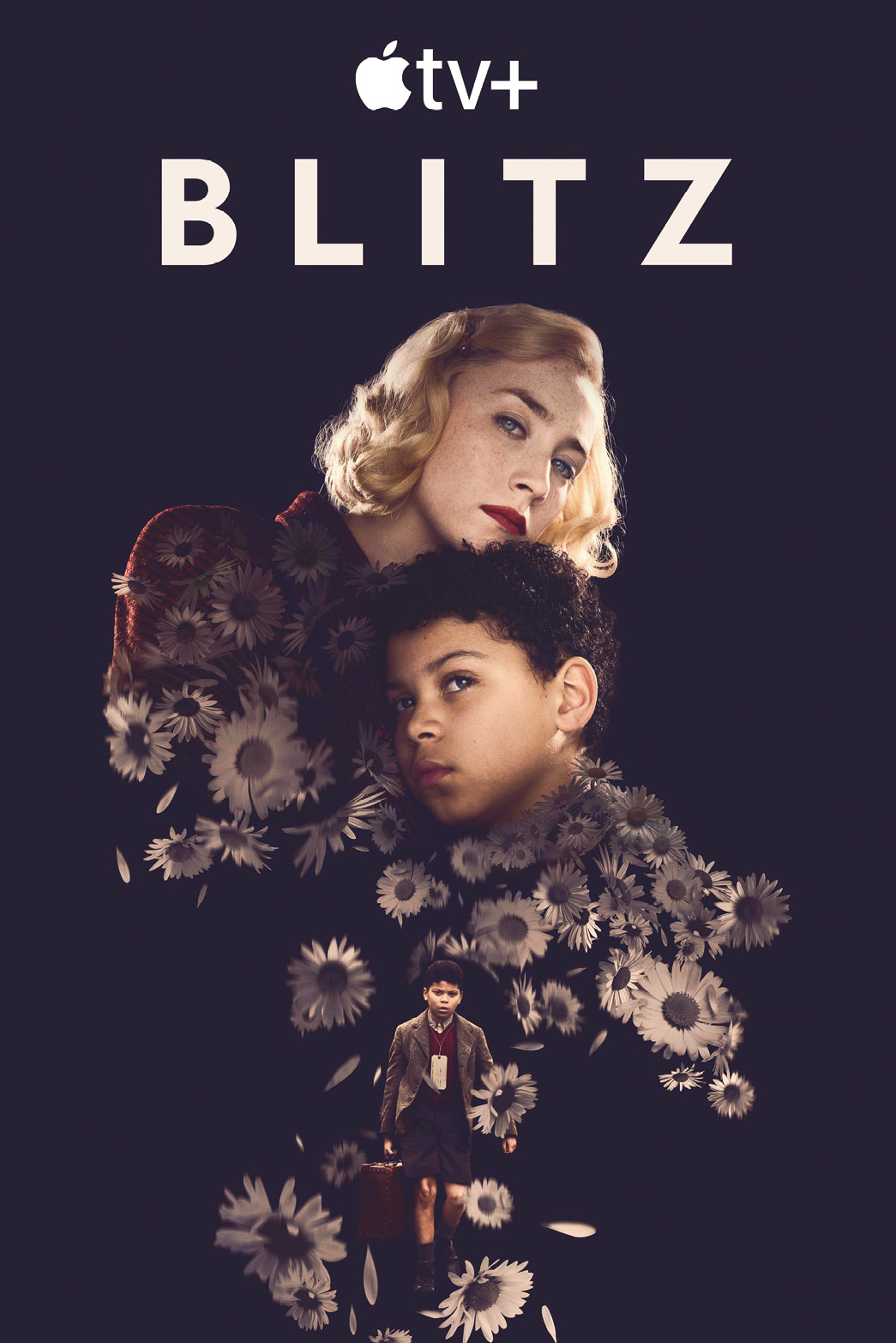
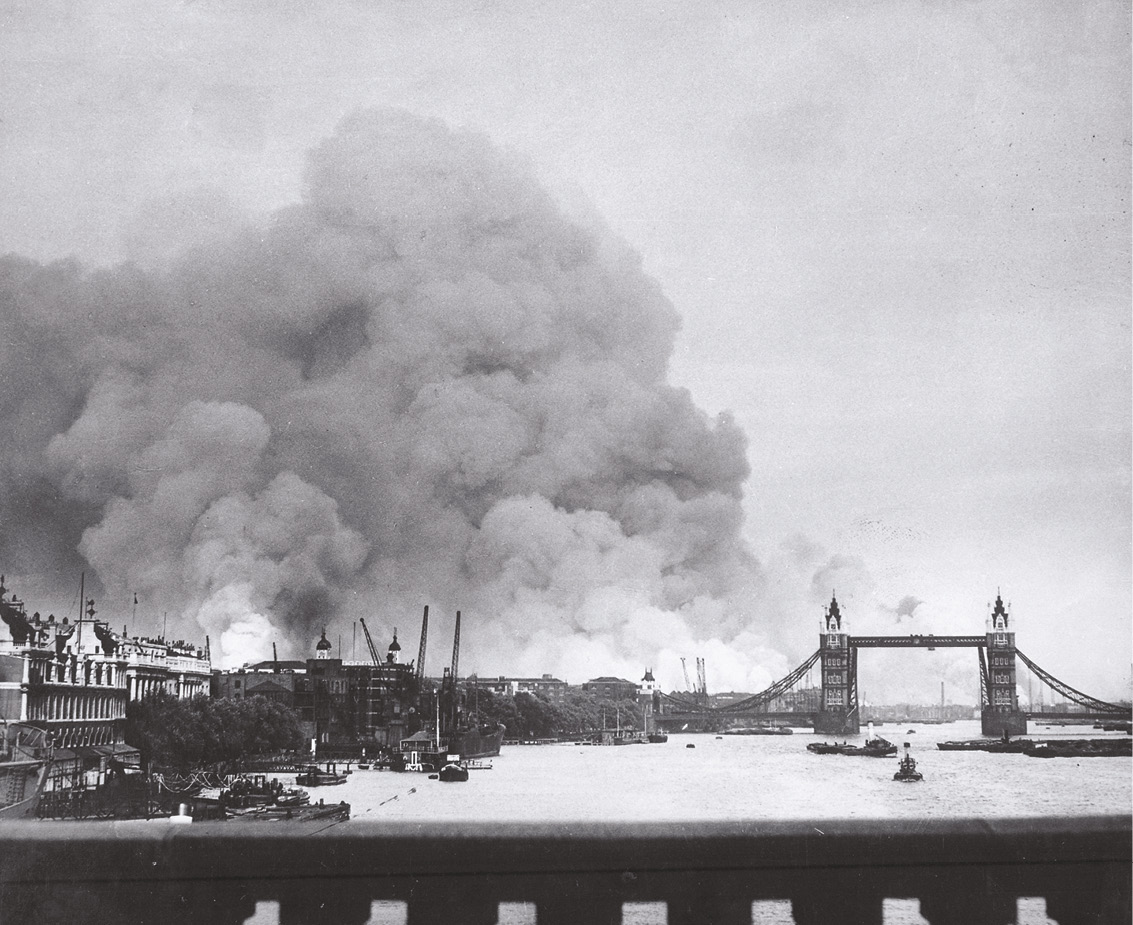
As far as Britain is concerned, the Blitz is one of the central episodes of the Second World War. Many cities were heavily bombed from September 1940 to May 1941, but the attacks on London are often made to represent them all. From 7 September, the capital was bombed every night for 76 consecutive nights, with one single respite. Approximately 43,000 people were killed or wounded and more than a million homes in London (roughly one in six) were damaged or destroyed.
Despite the heavy bombing of London, Coventry, Liverpool, Portsmouth, Plymouth, Glasgow, Southampton, and other cities, Hitler did not bomb Britain into submission. Law and order certainly broke down in places, and many local authorities proved hopelessly incompetent when it came to dealing with the problems of bomb damage and displaced families. The concept of ‘we was all one’ has often been absurdly exaggerated in popular mythology. But, overall, Britain’s spirit did hold up.
So it is rather surprising that very few British films have been made about the Blitz. During the war, the ‘Blitz spirit’ was celebrated in a few movies – such as 1940’s London Can Take It!, in which an American correspondent reports on the courage and resilience of Londoners, and 1943’s Fires Were Started, a brilliant drama-documentary tribute by Humphrey Jennings to the heroism of the firefighters.
Since then, various films have had sequences set during the Blitz, such as Hope and Glory (John Boorman, 1987), Atonement (Joe Wright, 2007), and Their Finest (Lone Scherfig, 2016). But in these movies the Blitz scenes are all merely backdrops to the main storyline. Sir Steve McQueen’s latest production for Apple TV+ is the first major British film to focus its entire narrative on Blitz stories.
McQueen is a British artist, writer, and film-maker. In 1999, he was awarded the Turner Prize for his art. He has since directed a number of films – including Hunger (2008), about the 1981 Provisional IRA hunger strike at the Maze Prison in Belfast, and the immensely powerful 12 Years a Slave (2013), about a free man kidnapped and sold into slavery in the American Deep South in the 1840s. The latter won a host of awards, including the Best Picture Oscar, making McQueen the first Black British director to win an Academy Award. In 2020, he directed Small Axe, a series of five television films for the BBC and Amazon Prime about the Black experience in Britain from the 1960s to the ’80s. For McQueen, this was a very personal project, as it depicted life in London’s West Indian community in which he had grown up. In 2020, he was knighted for his services to art and film.
His art always has a particular intensity about it, and this has drawn him to the subject of war on more than one occasion. His artwork Queen and Country, now in the Imperial War Museum, presents a tribute to 160 British soldiers who died in the war in Iraq as a cabinet in which the face of each man appears on a sheet of postage stamps.
The McQueen treatment
Four years ago, it was announced McQueen would write, produce, and direct a movie he had long wanted to make about Londoners during the Blitz. The following year, it was revealed that Saoirse Ronan would appear along with a stellar cast, and that Apple TV+ would take distribution rights in the project.
The opening caption of the film in many ways reveals what is to come. It announces that in September 1940 Britain stood against ‘the might of Nazi Germany’ backed by its ‘Commonwealth Allies’. This is, of course, absolutely correct, and it is often wrongly claimed that Britain ‘stood alone’ in the winter of 1940-1941. But it is the role of Commonwealth citizens, black and Asian, supporting the Mother Country, that the film concentrates on, giving Blitz the uniquely McQueen treatment.
The harrowing opening scenes show firefighters struggling with a vast blaze that is raging across a series of warehouses in the docklands of the East End. It is difficult to see how anyone could survive the intensity of this inferno. In fact, all the scenes in the film showing fires and destruction are exaggerated from the reality of the Blitz. The propaganda film Fires Were Started, made during the war, features several similar scenes, but terrible though the blazes were, they were never on the existential scale depicted here.
Later in the film, there are aerial CGI shots of the totally devastated urban landscape. Again, these are dramatically exaggerated. The German bombs dropped on London caused appalling damage and loss of life. Bombs on the jerry-built terraced houses of the East End would reduce two or three houses to rubble, but would rarely bring down a complete street. It was not until V-1 flying bomb and V-2 ballistic missile attacks of 1944-1945 that a whole row or block of houses would be destroyed in a single assault.
The aerial graphics of Blitz damage look as though they are more inspired by missile attacks on Kyiv or Gaza than by German bombs on London. But then again, every era depicts the horrors of war in different ways, and McQueen certainly captures the nightmare of living under a rain of bombs that can bring death and destruction indiscriminately from the skies. No one knows who will be killed or maimed next, and that was as true in London in 1940 as it is in Ukraine or the Middle East today.
The film also depicts the happy domestic life of Rita (Saoirse Ronan), her nine-year-old, mixed-race son George (a brilliant performance from child actor Elliott Heffernan), and her piano-playing father Gerald (the musician and songwriter Paul Weller). In flashbacks, we discover that Rita had had a fling with George’s father, who had been deported for fighting when racists attacked him in the street. This gives the first of a couple of opportunities for McQueen to direct a frantic calypso-style dancing scene in which Rita and George’s father cavort wildly together before being separated.
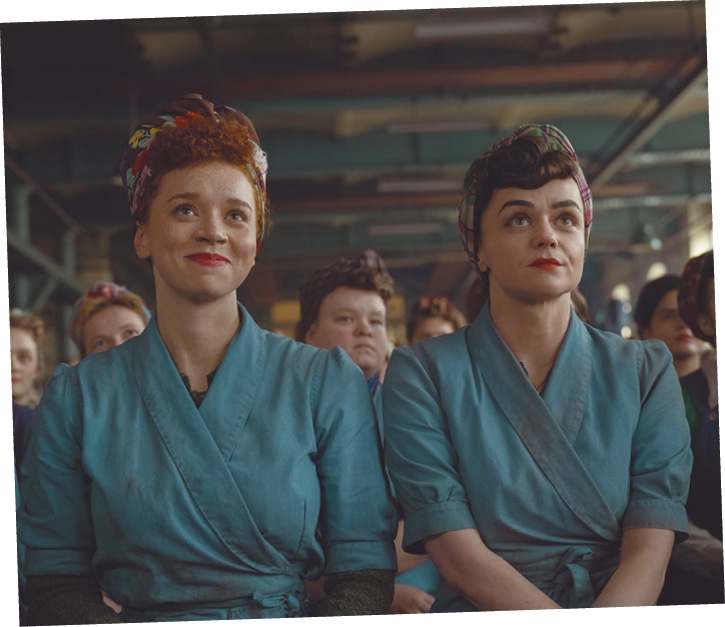
By September 1940, Rita is bringing up George as a single parent with her father’s support, while working in an East End munitions factory. Here, women workers handle heavy machinery but enjoy the independence that a decent income offers them.
When the air-raid sirens wail, Rita, George, and Gerald rush for the nearest Underground station, Stepney Green. No street shelters had been built in the overcrowded East End, unlike in some smarter districts of London. However, officials have locked the station and initially will not let people in. Eventually, as the bombs start to fall, the police order them to open the station, and the locals rush to occupy the platforms deep below ground. Gerald tells Rita this is no place for a child, and that she should send him off in the official evacuation programme that is being offered to London parents.
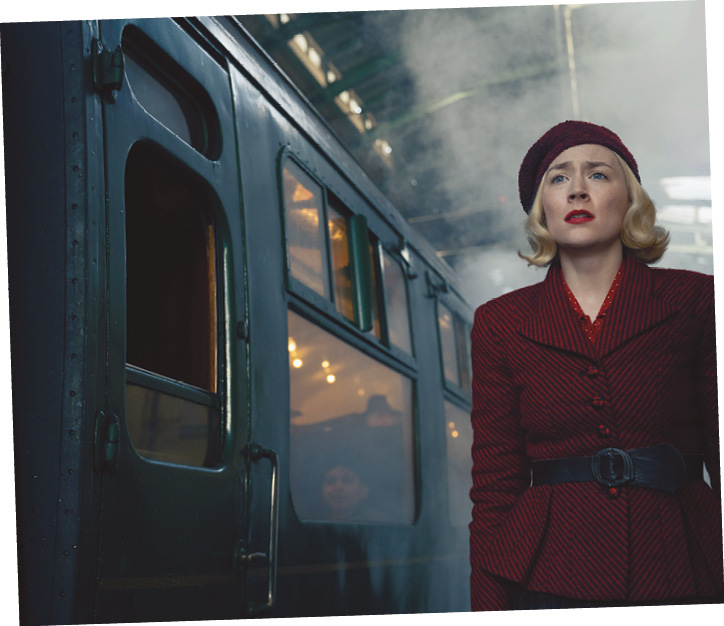
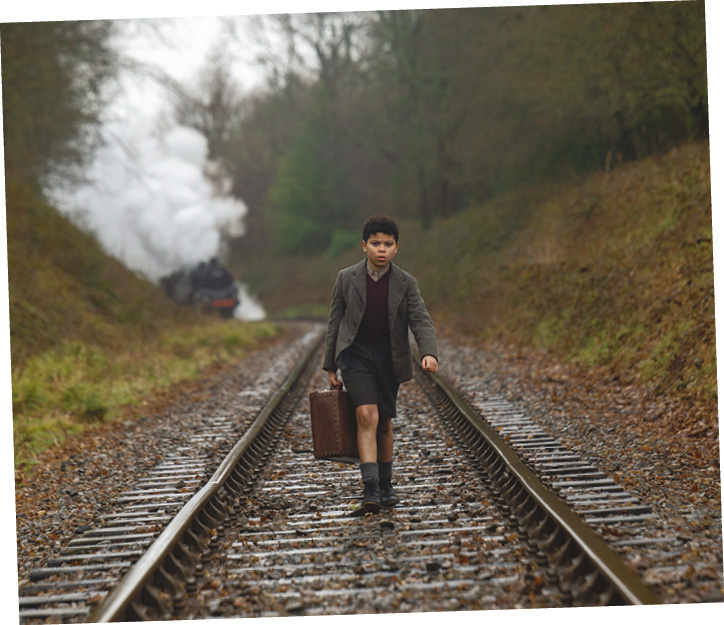
Next day, Rita reluctantly takes George to the train station where, amid smoke and whistles, she hands her son over to the officials. Along with hundreds of other children, he departs for who knows where. Being mixed-race, he is bullied by other boys. So George decides to jump off the train and return to his family in the city.
Evacuation: children of confllict
During the first days of war in September 1939, fearing heavy bombing and mass destruction, local authorities arranged for some 1.5 million children to be evacuated to the safety of the countryside. As there was no bombing during the Phoney War, many parents later called their children back to the city. But with the start of the real Blitz in September 1940 another mass evacuation was organised.
In Blitz, the character of George (Elliott Heffernan) is put on a train with hundreds of other children, each wearing a label with their name around their neck and carrying a small suitcase. Officials bustle around as hurried parents make their tearful farewells. No one, parents or children, has any idea where they are being sent.
In the normal way of things, the train would take the children to a country town or village where more officials would allocate them to local families. Some children enjoyed a happy time in their new homes, experiencing rural lives, seeing farm animals, and breathing country air for the first time.
But many others, separated not only from parents but often from siblings, were desperately unhappy. Bed-wetting was one of the first problems. Many children suffered from being treated badly, as country folk were horrified by the lack of manners of urban working-class children, some of whom did not know how to use a knife and fork. And, for sure, some children suffered various forms of abuse.
Overall, however, the evacuation scheme was judged a success, as so many people were moved around the country, saving the lives of thousands of city children. But it is doubtful if, in today’s world, parents would have the trust to hand their children over to officialdom as willingly as they did in 1940.

George’s odyssey
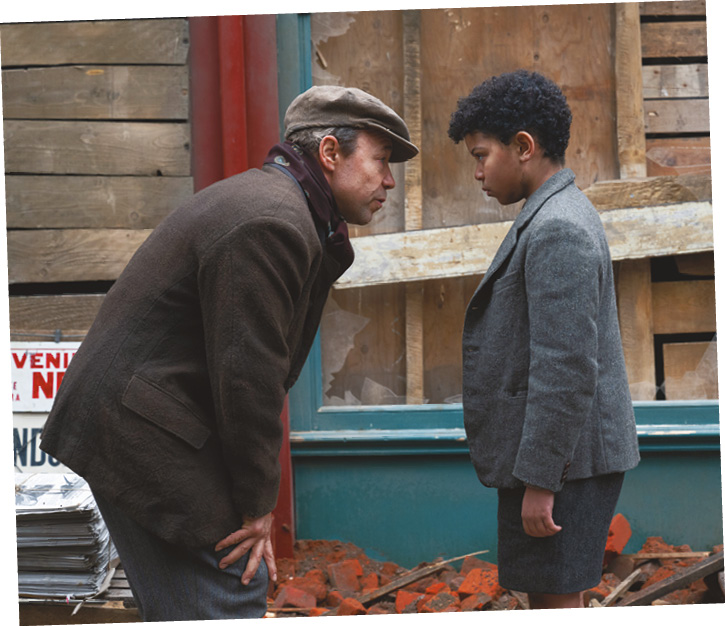
The rest of the film follows George’s odyssey as he crosses London trying to find his way home, with many of the storylines taken from real incidents recounted in Joshua Levine’s book The Secret History of the Blitz. McQueen paints a multicultural picture of 1940s London. While staring at exotic imperial images from around the world in the Empire Arcade, George is befriended by the black Air Raid Warden Ife (Benjamin Clementine). As Ife does his rounds in a local air-raid shelter, he breaks up a racist incident where a White family try to segregate themselves from an Indian one. This is based on an actual incident with a Nigerian Air Raid Warden in Marylebone.
Ife makes one of the central speeches of the film, telling the White family that this is what Hitler does in driving races to hate each other. He says that ‘everyone is equal’ and only if they remember that will they ever win the war.
Meanwhile, Rita is going through her own adventure. She is a good singer, and when the BBC come to broadcast live from her factory, she is picked out to sing a song which she dedicates to all mothers whose children have been evacuated. But then, to the horror of the BBC producer, the other factory women storm the stage and chant on live radio: ‘We need shelters! Open the Underground!’.
The authorities had refused to build deep shelters in the East End, but had provided simple Anderson shelters for those in middle-class areas who had their own gardens. In reality, there was little equality during the Blitz.
Rita leaves the factory and, inspired by the moving words of a Jewish Communist, offers herself as a volunteer helper in a mass shelter. Communist groups had campaigned for more public shelters and better facilities. Here Rita has to support a young girl whose mother has seemingly been killed in a raid. When she goes out with her girlfriends for an evening at the pub, they are keen to pick up sailors. But Rita overhears a man saying that she is ‘damaged goods’ because she already has a mixed-race son.
As George’s progress continues, he is picked up by the Fagin-like Albert (Stephen Graham), accompanied by his wife Beryl (Kathy Burke). But instead of being asked to pick a pocket or two, he is told to climb into a bombed jewellery shop and steal as much silver and gold as he can. Then, after another opportunity for a song-and-dance act, a scene follows based on the bombing of the Café de Paris. In March 1941, a German bomb fell down the ventilation shaft into the basement ballroom of the nightclub, killing 34 revellers and injuring dozens more. Several looters actually made their way into the bombed ballroom before the authorities arrived and, in a gruesome scene, Albert and Beryl sip champagne and steal rings and watches from the corpses of the diners.
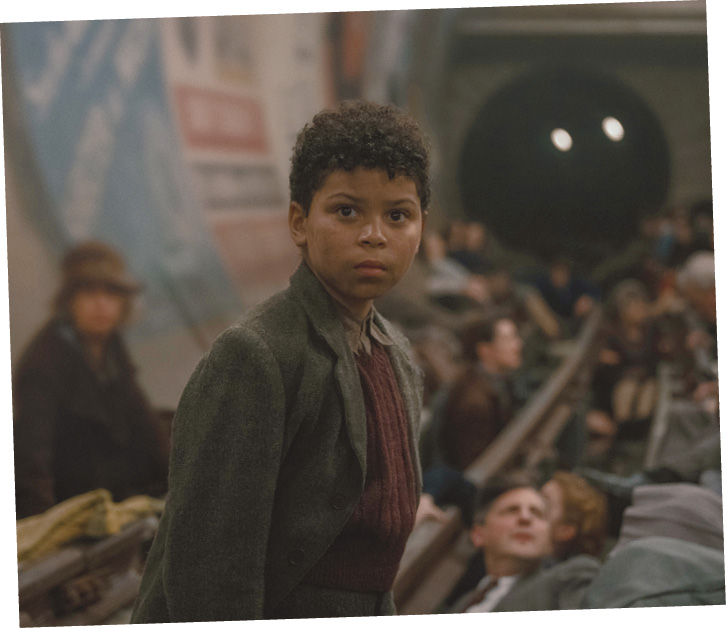
George escapes and spends a night sleeping between the rails of another station. Here there is a scene based on the flooding of Balham tube station in October 1940, when a bomb hit an underground water main and 68 people were killed. As flood water pours on to the platform, George gets away only to find the escape route blocked by gates. He is small enough to be forced through a gap, and in raising the alarm saves many lives. After this, the film heads to a rather predictable ending.
Superlative performances
There are many elements to admire in Blitz. There are superlative performances, especially from Saoirse Ronan and Elliott Heffernan. The ebullience of Black West Indian music and culture is marvellously expressed. Adam Stockhausen’s designs are impressive, even if the destruction is at points overdone. And Hans Zimmer’s score is brilliant, moving between sound effects and musical accompaniment.
Some will criticise Blitz for being ‘woke’. Certainly, the film is dominated by the desire to convey several messages. McQueen wants us to know that London relied on the efforts of a diverse and multicultural population amid the horrors of the war. In the movie, values of justice, fairness, and equality are preached by Black and minority figures.
By contrast, officials are depicted as hard-hearted and unsympathetic, while many White Londoners come across as racist and abusive. Undoubtedly there were such racists in London, but this is not the entire story. When, later in the war, the US Army brought its segregationist Jim Crow policies to the country, many Britons were horrified and made an effort to treat Black American soldiers as equal to White ones.
In Blitz, McQueen has rightly shown the injustices prevalent in a Britain that was divided by class and race. Without doubt, the authorities at the time were often weak and unfair. And looting did take place after bombs had fallen. But, like many films that are more concerned with getting across a political message, Blitz is not entirely successful or accurate in its depiction of London in 1940. This is very much a 2020s version of events. However, all of McQueen’s films are definitely worth seeing and this latest work – one of surprisingly few movies about a central feature of the British wartime experience – is no exception.
Blitz (2024)
Written, produced, and directed by Steve McQueen.
Starring Saoirse Ronan, Elliott Heffernan, Paul Weller, Benjamin Clementine, Stephen Graham, and Kathy Burke.
A Working Title, Regency, and Lammas Park production.
Available for streaming on Apple TV+.