
Subscribe now for full access and no adverts
A true science of myth should begin with a study of archaeology.
Robert Graves, The Greek Myths, p.21
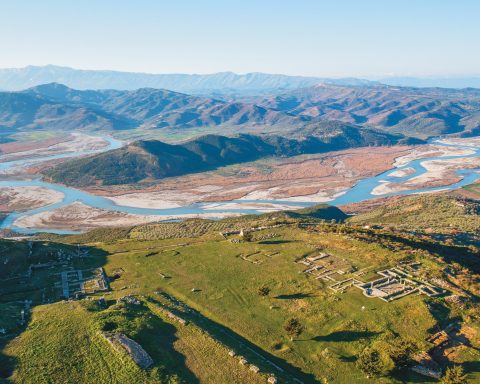
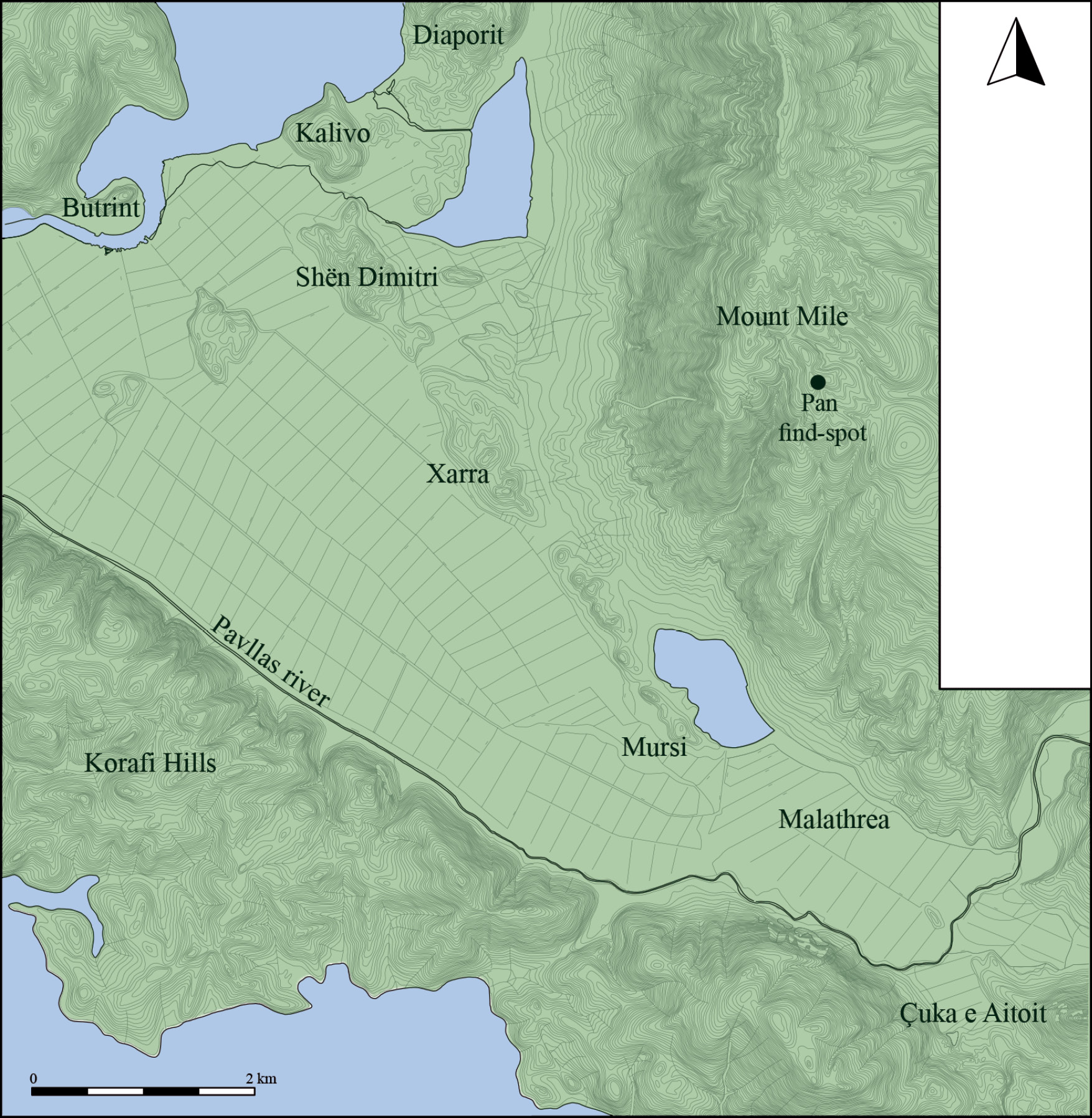
The Albanian dictator Enver Hoxha was obsessed with defending his ‘paradise on earth’. He feared invasion by NATO troops using a combination of amphibious landings and parachutists. As a result, he covered the country with thousands of mushroom-like bunkers, concealed trenches, and anti-aircraft guns. From the sea to the mountains, Albania became a fortress. This extraordinary martial investment had one unexpected outcome. During construction of an anti-aircraft installation close to Fshati i Vjetër, ‘The Old Village’ high on Mount Mile, overlooking Butrint, ancient Buthrotum, and the Straits of Corfu, an exquisite bronze statuette of the god, Pan, came to light in 1981.
Reportedly, as the gun battery was made, ruins of some ancient building and pottery were also found. These suggest, in view of the pastoral setting, that a sanctuary of Pan had stood there in antiquity. Now this chance find has come to possess more meaning, as new research shows another sanctuary dedicated to Pan existed in Butrint itself. The significance of this lost urban sanctuary brings to mind a celebrated passage in the Greek writer Plutarch’s Moralia, written around the later 1st century AD, that, while reporting Pan’s death, indirectly mentions Butrint.
The Mount Mile statuette
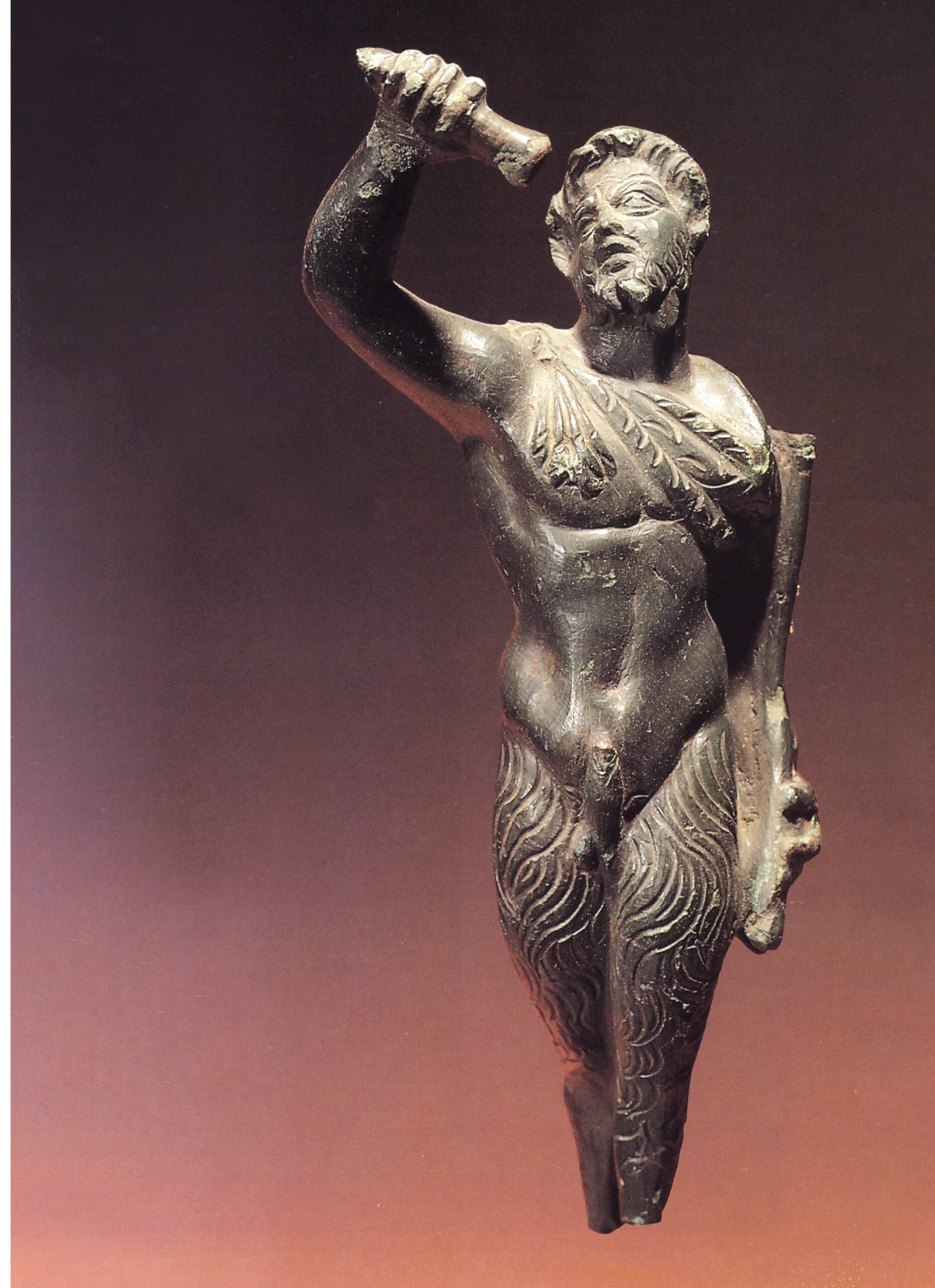
The Mount Mile statuette was immediately exhibited in the National Museum in Tirana, Albania’s capital. Shortly afterwards, it graced an Albanian postage stamp. Above all, it is a striking but small work of art, standing to a height of 17cm. Broken just below the knee, the statuette is otherwise well preserved. Pan is depicted as a mature bearded man with slightly coarsened features, a strong, muscular body, rough hair, pointed animal ears, and dewlaps hanging from either side of his chin. His eyes are wide and staring and his mouth slightly open. His face is shown with human features; the horns are discreetly rendered and the ears small.
From the waist up, he is essentially human; from the waist down, he has the characteristic goat-legs, which would have ended in cloven hooves had they been preserved. He is shown naked, ithyphallic, and wearing the pelt of a wild cat (identified as a lynx in the Homeric Hymn that describes him), knotted at his right shoulder and slung over his left arm. His torso is twisted slightly, with his left leg in front of his right, giving the figure movement and grace, and the smooth musculature of his upper body is complemented and contrasted by the swirls on his goat-legs and on his lynx pelt, both of which possess the same patterning.

The statuette is cleverly modelled, with a noble expression and harmonious proportions and movements. In his left arm, Pan is carrying a lagabolon, a shepherd’s crook and throwing stick. Pan, the lagabolon tells us, was simultaneously a shepherd (and hence a protector of animals) and a hunter. His right arm is raised and in his hand he holds an alabastron, from which he is pouring oil on to his erect phallus, a pose far more commonly adopted by another fertility god, Priapus, with whom Pan is sometimes depicted. As a nature god, Pan was always associated with orgiastic rituals and was a hedonistic participant in the feasts associated with the Dionysian Mysteries, serving to ensure the fertility of the herds and the harvest.