Subscribe now for full access and no adverts
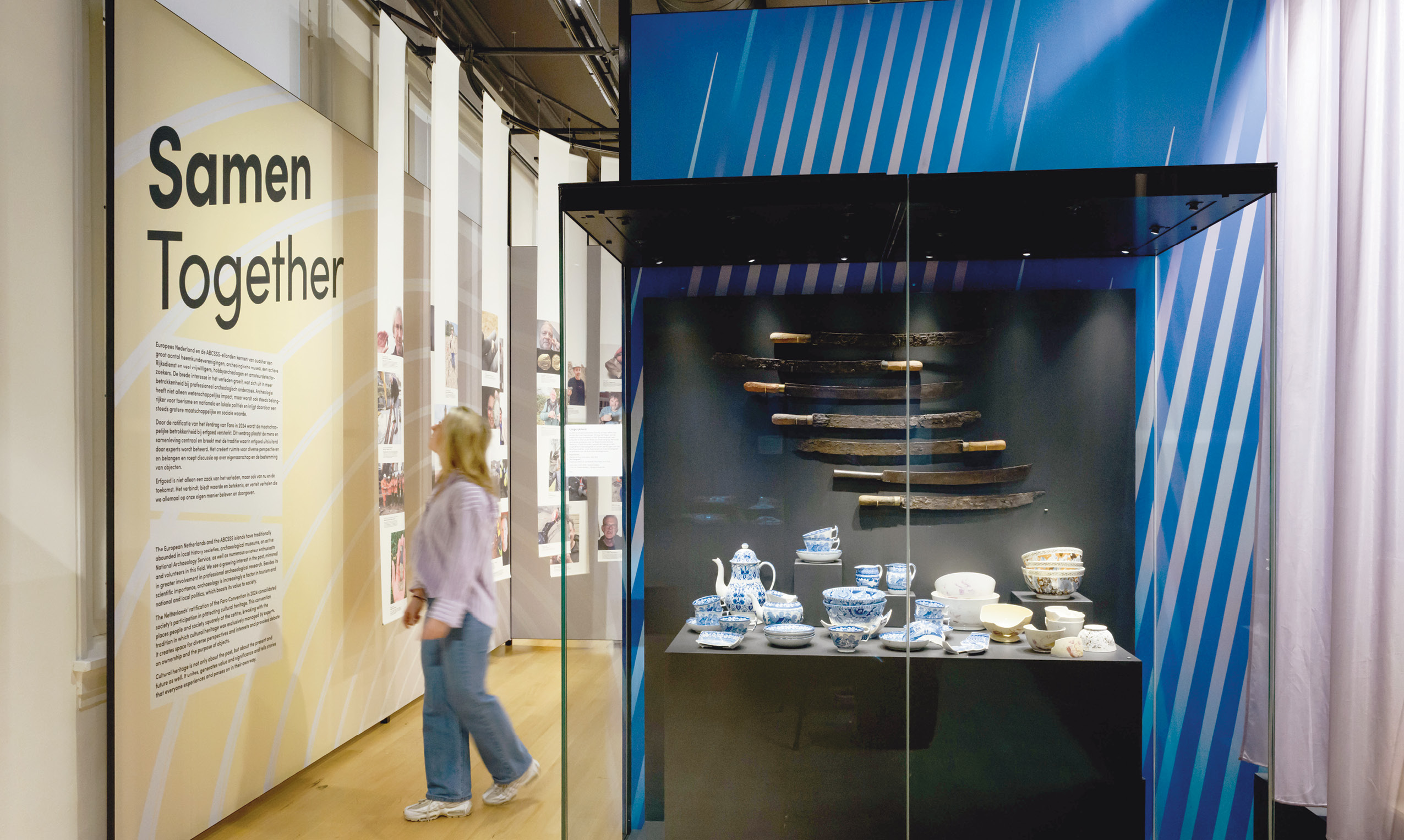
The years since the turn of the millennium have brought major changes to Dutch archaeology, from new surveying technologies and scientific techniques to changes in legislation and the relationships between amateur and professional archaeologists. To celebrate this rapidly developing field, the RMO have gathered some of the most striking finds made during the years 2000-2025 from across the Netherlands and Dutch provinces, including the ABCSSS islands (Aruba, Bonaire, Curaçao, Saba, Sint Eustatius, and Sint Maarten) in the Caribbean. The exhibition examines the archaeology behind these discoveries, investigating the different ways they came to light, and the people, places, and methodologies involved, and asks the question: what gives a find ‘value’?
Notable and newsworthy
Archaeological finds are frequently in the news, but the discoveries that make headlines usually do so for one of several reasons. Often of interest are finds hailed as ‘the first’ or ‘the oldest’ of their kind. One such discovery on display in the exhibition is a boxwood comb dating to AD 120-175. The comb was excavated in 1996, but on closer examination in 2016 researchers identified on it the remains of nine immature lice: the oldest in Europe. Also featured is the oldest wine found in the Netherlands, salvaged from a ship that sank between 1720 and 1760. On recovery, the bottle was found still to contain a small amount of dry red wine, which turned out to have been diluted with fruit juice, likely made from elderberries.
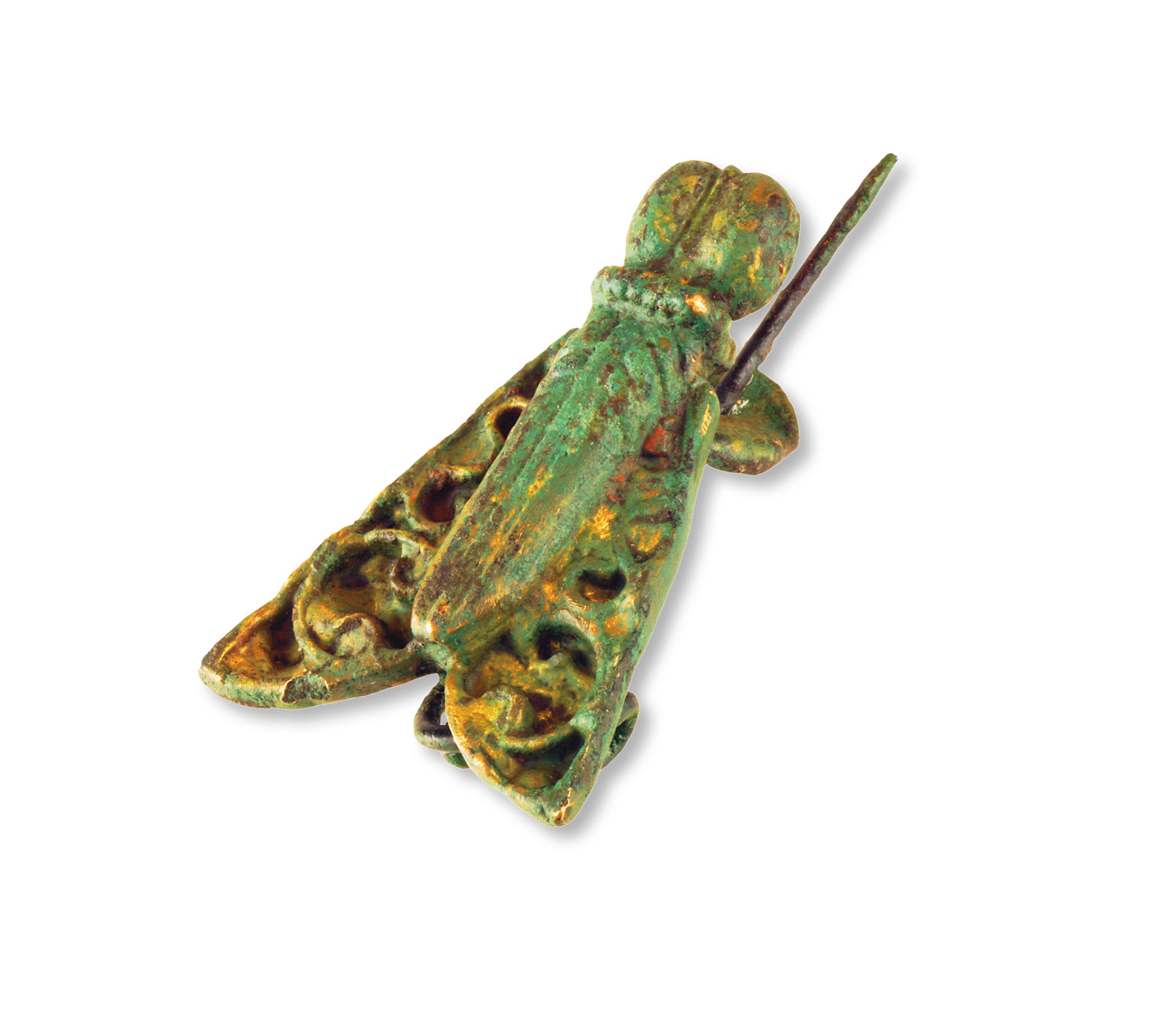
While the perceived worth of these everyday items lies in their age, other finds, such as the Roman coin hoard from Bunnik (see CWA 130) or the Hoogwoud treasure (CWA 122), are considered notable thanks to their more eye-catching nature. Monetary value is not always the deciding factor, though: some discoveries capture attention simply because they are unusual. For example, a cicada-shaped brooch found by a metal-detectorist – one of many finds registered in the Portable Antiquities of the Netherlands (PAN) since the launch of the database in 2016 – was, at the time of discovery, the only one known in the Netherlands. This prompted research into the unique object, and we now know that the pin dates to the Roman period and probably belonged to a woman who travelled from western Hungary with auxiliary troops from that region, who were stationed along the Rhine in the late 2nd or 3rd centuries AD. The brooch has become the archaeological mascot of Leidsche Rijn, and highlights how changing attitudes towards metal-detectorists have contributed to community involvement in archaeology in the Netherlands in recent years.

Secrets revealed by science
The significance of an archaeological discovery is not always immediately obvious: in an age where archaeological science is constantly evolving, the recognised value of a find is frequently increased by what researchers can discover in post-excavation analysis. This is demonstrated by a conical-neck urn found in the Iron Age burial ground of Tilburg, dating to c.900-750 BC. The urn contains the cremated remains of an adult woman, but lipid research in the lab identified traces of fats revealing that the pot had been used repeatedly to cook meat or fatty products like milk before it was repurposed in this burial.
Another find with a rich past teased out by scientific analysis is a Merovingian necklace from a child’s grave in Lent, made up of 120 beads of glass, amber, and faience. While its appearance alone made it clear that this was a special object, mass spectrometry, micro-CT scanning, and isotope analysis enhanced its significance by revealing that the beads were manufactured using several different techniques, and made from raw materials that originated in other parts of Europe, the Baltic, Egypt, India, and western Asia. These findings make the necklace a powerful testament to this community’s access to extensive trade networks that connected them with people thousands of miles away.
A storied history
Although the importance of many finds can be easily identified, there are countless others whose value is less tangible, their significance rooted in their power to connect people with the past.
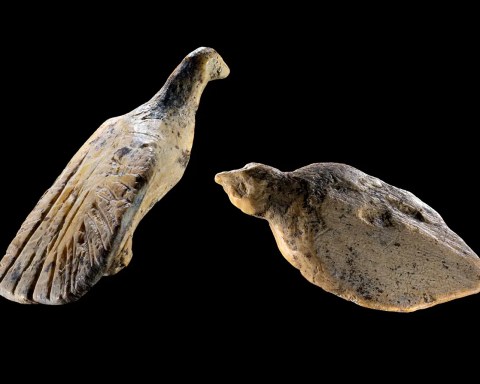
In 2022, excavations on the Caribbean island of Bonaire discovered a carnelian amulet in the burial of a cacique (chief) dated to c.AD 1200-1400. The pendant appears to have begun life as a frog-shaped charm – resembling ornaments originally used by the earliest pottery-producing people of the Antilles and South America (400 BC-AD 500) – before later being modified into the shape of a bird. Also of note is the material: carnelian is not native to Bonaire, so must have been brought from the mainland, probably Venezuela or Colombia, adding another element to the curious history of this object and the individual with whom it was buried. In addition, this find is invaluable on a broader scale for the insight it offers into the lost world inhabited by the societies who lived in the Caribbean before European colonisation.
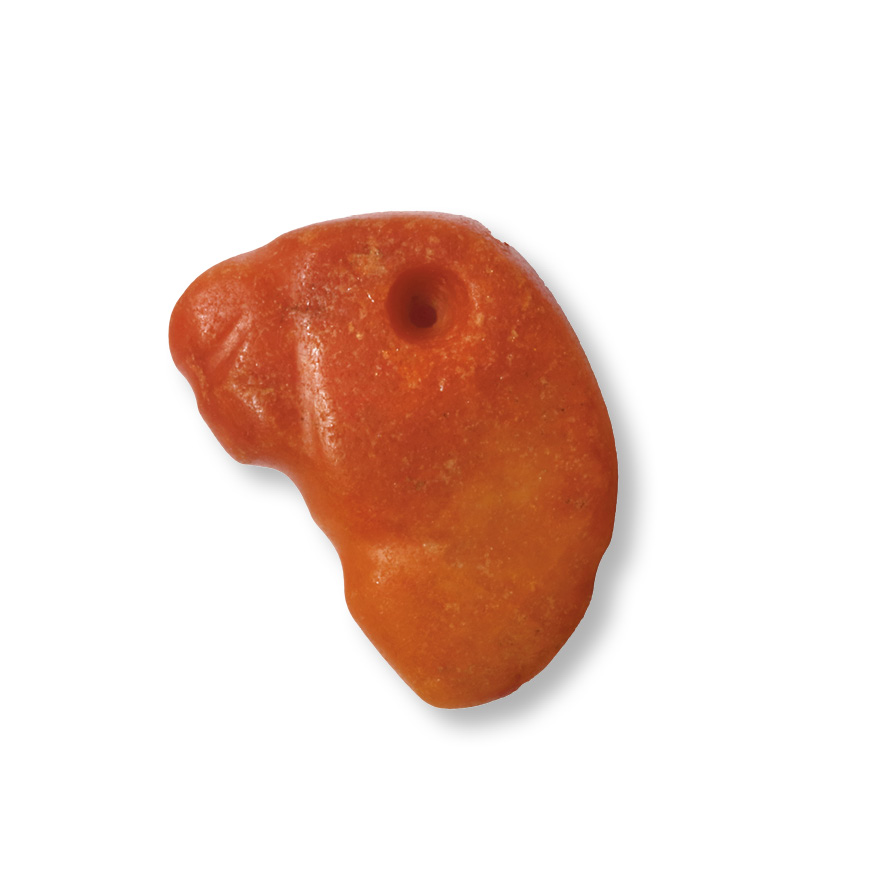
Excavations on the Caribbean island of Bonaire uncovered this carnelian pendant, originally shaped like a frog, and later transformed into a bird. Image: Collectie: Sekshon di Kultura, Arte i Literatura (SKAL) Bonaire, foto: Minja Hemminga/Archol
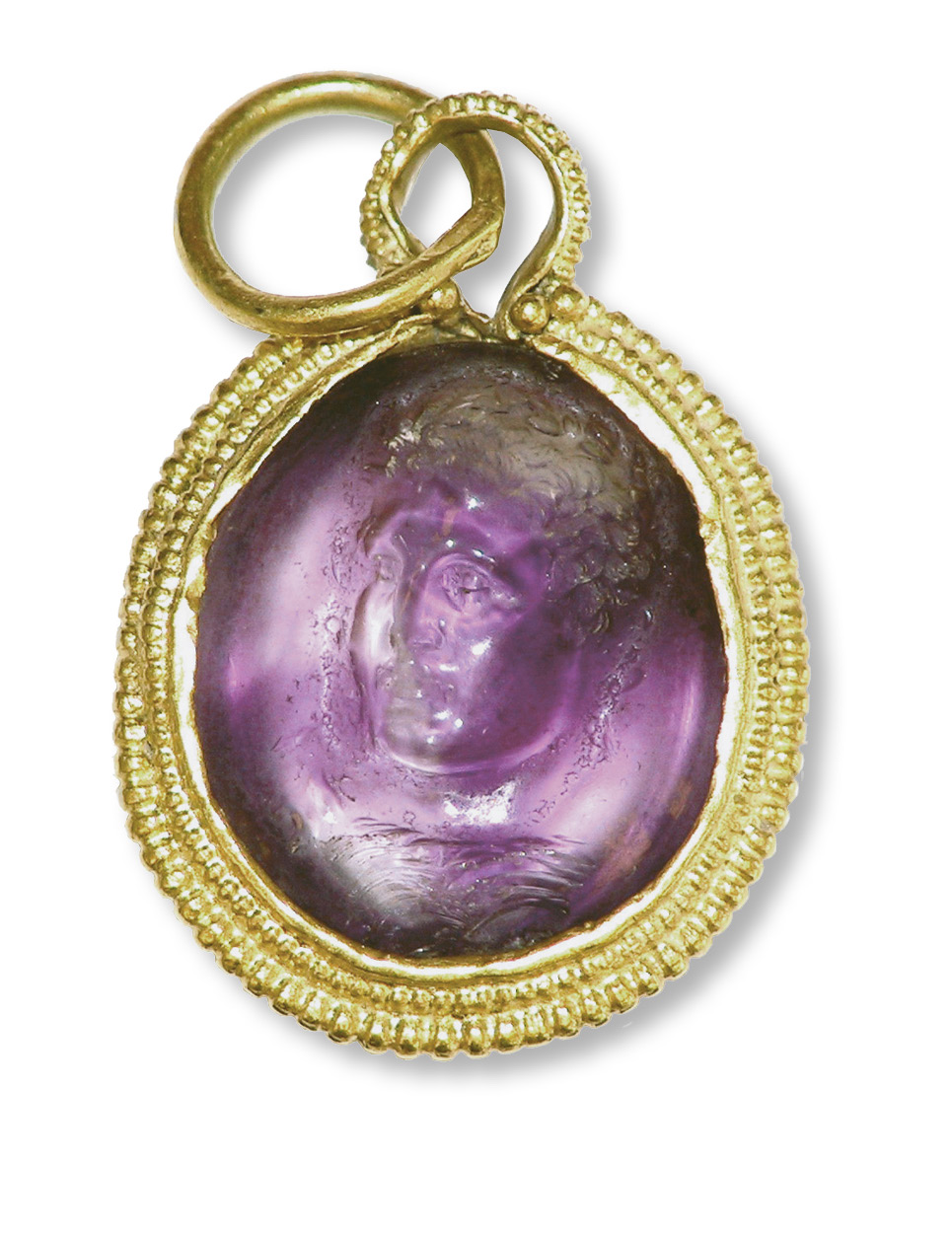
Meanwhile, an amethyst brooch found in Sint-Oedenrode in the Netherlands can be traced through thousands of years of history. The image of a youthful, bearded Heracles was carved into the stone in the Middle East in the 2nd century BC. Around a thousand years later, in the Byzantine Empire, this amethyst was set in a gold mount so that it could be worn as a pendant, and it remained in use for another three centuries before ending up in a moat. The journey of this brooch is one that captures the interest of modern audiences, as well as demonstrating that people in the past were drawn to objects with a story, just like us.
As these objects and the others on display demonstrate, there are many different sorts of archaeological value to many different people. This ties into other themes addressed throughout the exhibition, such as the nature of archaeology in 2025, how it is being done, and who it is being done by. ‘Most of all,’ curator Ivo van Wijk reflects, ‘it is an exhibition put together by all different kinds of people who are struck by a passion for archaeology, by professionals and volunteers, amateur metal-detectorists, young, old, women and men. Archaeology is becoming more rooted in our society and that is a good thing because it shows our shared interest in our past’.
DETAILS:
Above Ground Level
Address: Rijksmuseum van Oudheden, Rapenburg 28, 2311 EW Leiden, Netherlands
Open: until 7 September
Website: www.rmo.nl/en/exhibitions/temporary-exhibitions/above-ground

Text: Amy Brunskill