
Subscribe now for full access and no adverts
On 30 June 1940, the Channel Islands – an archipelago of which Jersey, the largest island, is 85 miles from England but only 14 miles from France – became the only part of the British Isles to be occupied by Nazi Germany. It was not until 9 May 1945, the day after victory was declared in Europe, that the swastikas could be torn down: an event marked by islanders ever since as Liberation Day.
This much is common knowledge, but how did Jersey manage more than 10,000 German prisoners of war, freed Russian and Spanish Republican slave labourers, and nearly 8,000 returning evacuees and deportees? What happens to the coastal defences? What about collaborators and black marketeers? Looted and ruined homes? How does an economy given over to subsistence farming for survival recover? Above all, what had been happening since news from the islands was cut off? This aftermath of liberation has never been the subject of an exhibition – until now.
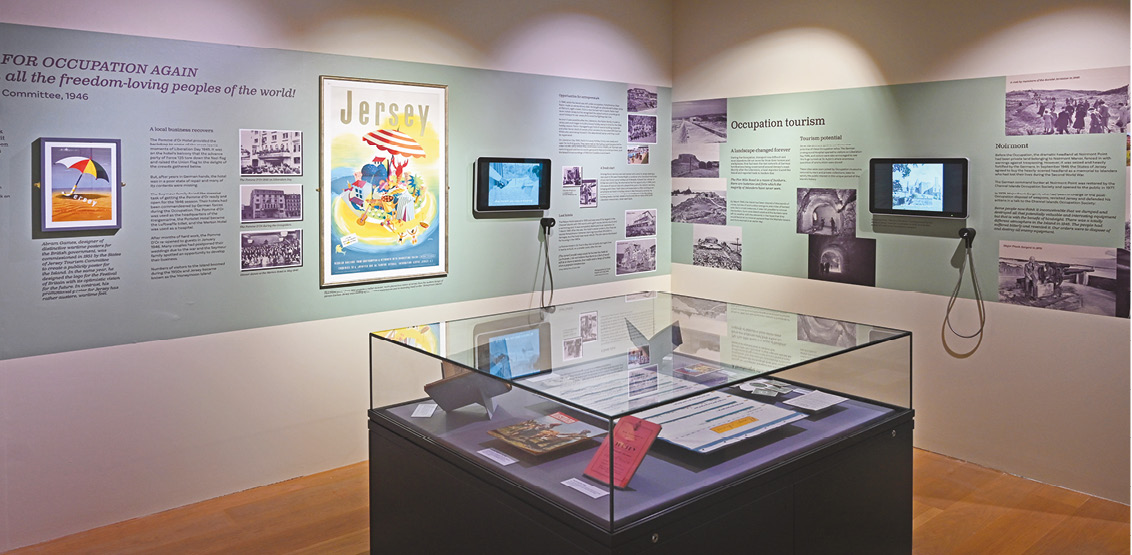
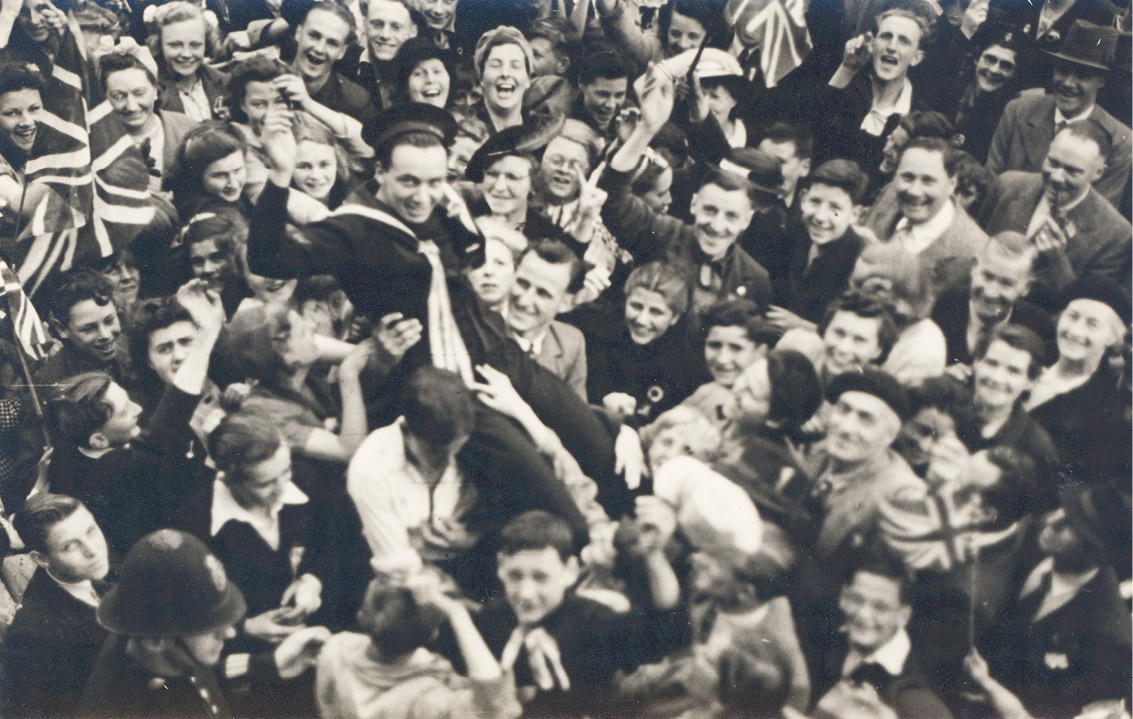
You’re greeted by a floor-to-ceiling blow-up of the crowd who welcomed the British military Task Force 135. It was led by Jerseyman Captain Hugh le Brocq, who had only just been told of his wife’s death after surgery in Jersey Hospital six weeks earlier. His uniform is displayed with a Union Flag and the Nazi flag that was gleefully pulled from the balcony of the Pomme d’Or hotel. Alongside it, extraordinary footage of their arrival runs on a loop. The only known colour film of events, it was shot on a Ciné-Kodak 16mm camera that Dr Mortimer Evans had kept hidden and makes those joyful scenes newly vivid. One woman recalls having ‘rushed to the pier to kiss the soldiers’ and that she ‘didn’t get home until the early hours of the morning’ – perhaps predictably weddings soon followed 135’s arrival.
Collaborators
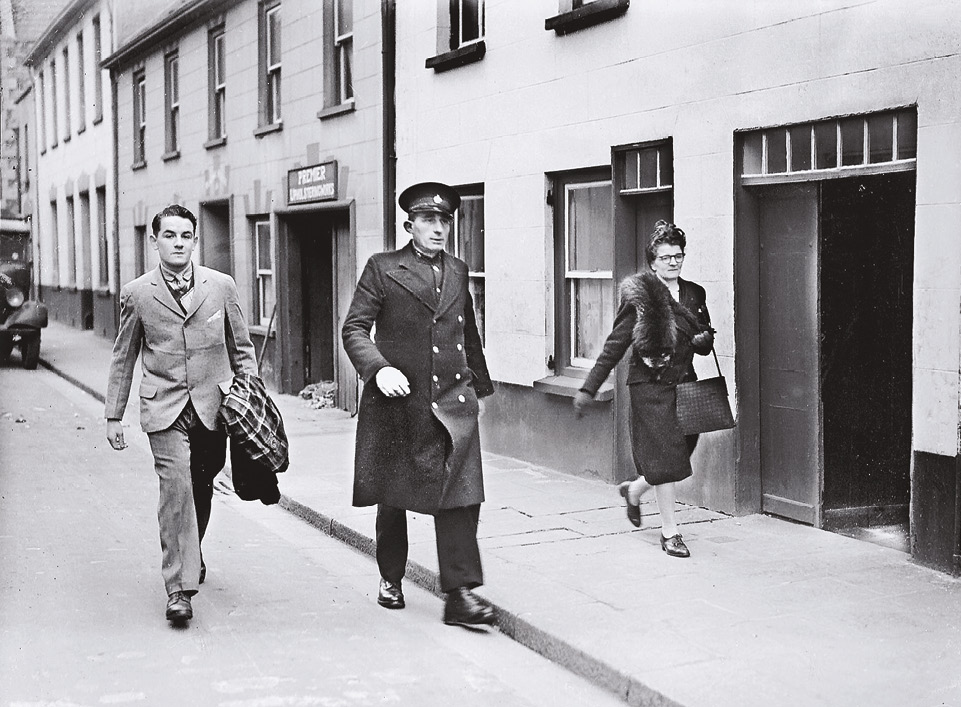
All had not been well. Out of context, the gawky uniformed man with prominent ears in one picture (below) could be from an Ealing comedy. But look to his left: that rather plain woman in glasses, whose disquietingly sumptuous fur stole is teamed with a smart coat and gloves, is the notorious collaborator Alexandrine Baudains. An unrepentant informer, she gleefully enriched herself at her fellow islanders’ expense under the protection of her Nazi lover. She had referred herself to prison for her own safety after her home was attacked soon after liberation.
The exhibition offers a judicious account of such contentious matters. When Herbert Morrison, the UK’s Home Secretary, was despatched to Jersey to investigate, he found ‘a people steadfast in their loyalty’. Yet a Crown Film Unit ‘story documentary’ shows the freed slave workers and postmen intercepting informers’ letters. Stories of modestly heroic subversion and survival, yes, but clear acknowledgement too – in a propaganda film destined for mainstream British cinemas – of the dark underbelly of Nazi occupation.
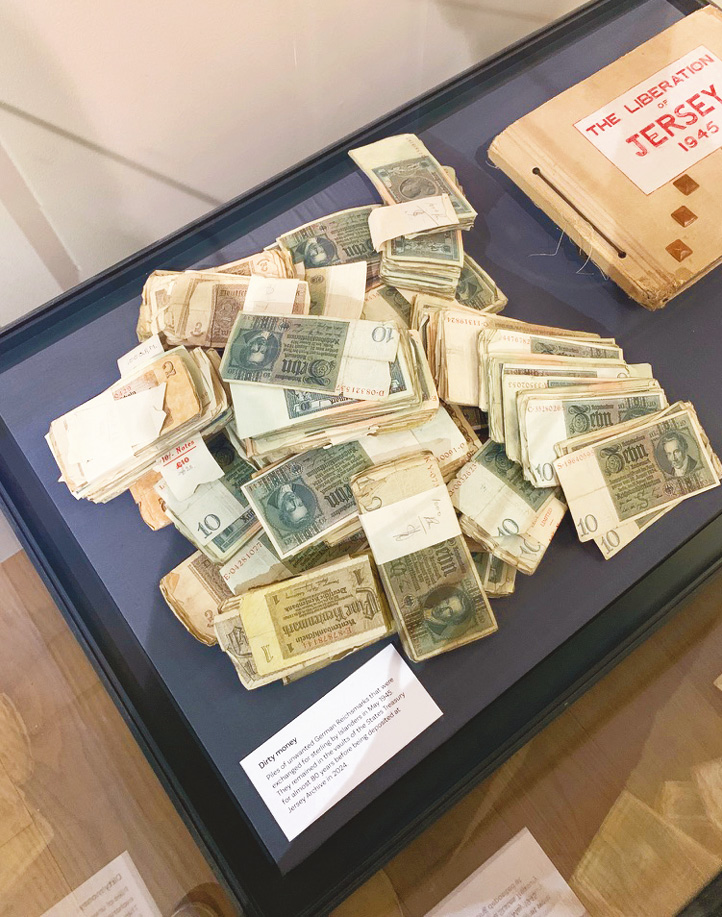
Task Force 135 had brought with it £500,000 in sterling, which was duly offered at a very good rate for the Reichsmarks islanders had been forced to accept under occupation. Letters in the Jersey Evening Post angrily noted the mysteriously large amounts of cash some islanders were seen to exchange. (A pile of Reichsmarks that had languished in a Treasury vault until 2024 is displayed under the apposite caption ‘Dirty money’.) Alongside headlines announcing the deaths in concentration camps of Canon Clifford Cohu, Clarence Painter and his son Peter, and Louisa Gould as a consequence of their resistance activities (Gould’s brother, Harold Le Druillenec, was the only British survivor of Bergen-Belsen), furious editorials demand that justice be done.
The Jersey government chose not to prosecute, however, and Baudains and her ilk got on the boat to the UK and disappeared. The sense of injustice is palpable, but the cases brought to the government had been judged not to have met the high threshold for treason, and the law offered no lesser crime under which the wrongdoers could be prosecuted.
‘Ready for occupation again’
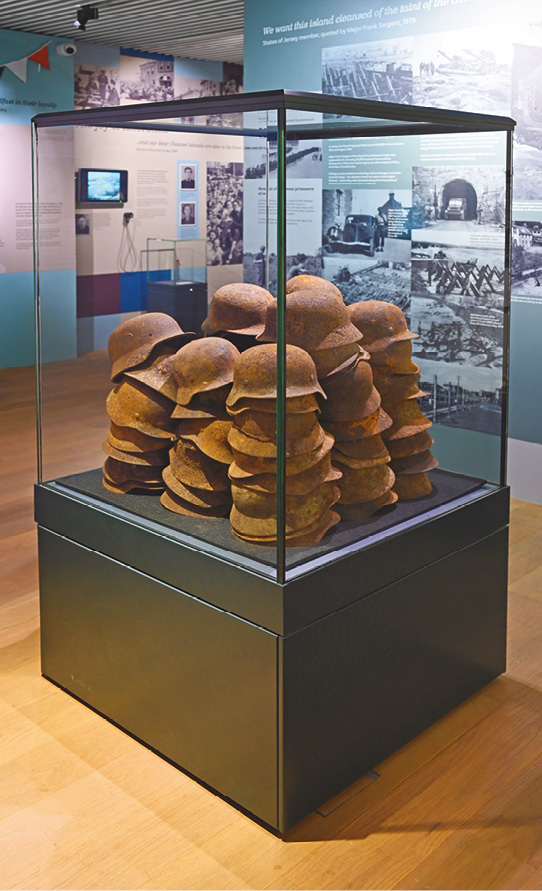
There was much else to be done. Major Frank Sargent was disposing of 20,000 tonnes of ammunition and thousands of rifles and machine-guns. Ordnance was dumped from barges into the deepest part of the Channel, and bigger guns shoved off the cliffs. Ten thousand German POWs were loaded on troop carriers to the mainland. Thousands of helmets (a rusty pile fills another display case) and miles of barbed wire were stashed in tunnels dug at grave human cost by slave labour. Some 65,000 mines were removed between May and August 1945, many by 1,680 German POWs who were also forced to clear anti-tank defences so that the beaches could all be opened for the first time since 1941.
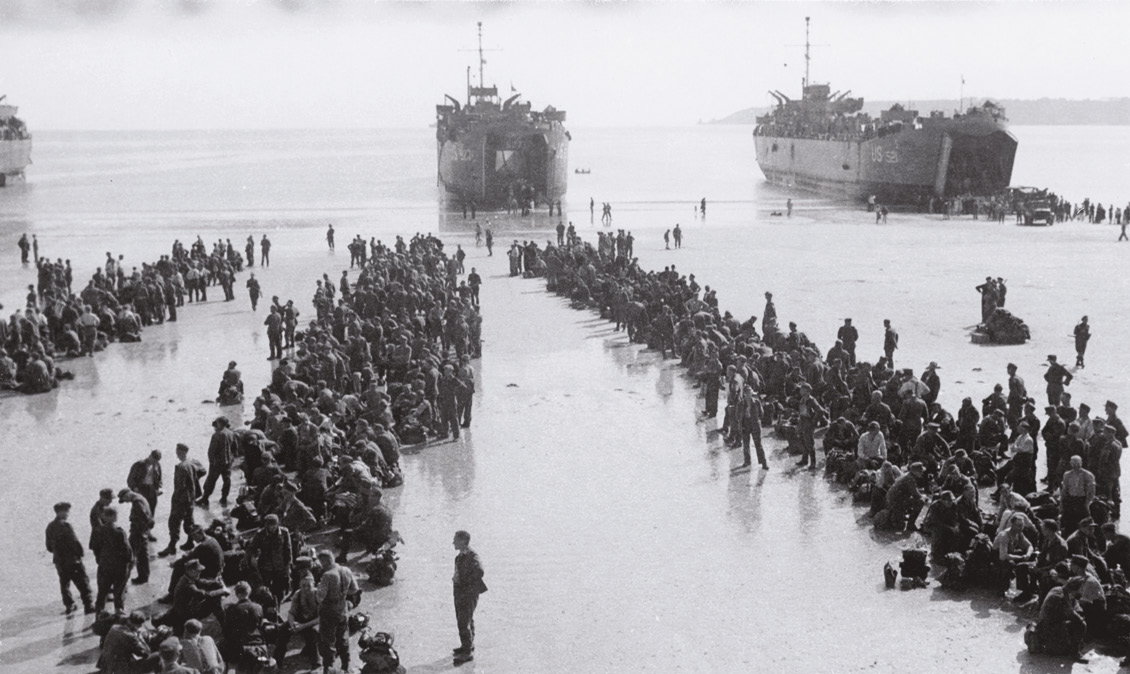
Showing a gift for understatement, the Bailiff Alexander Coutanche gently warned on 5 June 1945: ‘You may find things somewhat changed when you get back.’ Around 41,000 people had stayed in Jersey, but there were 6,600 evacuees in June 1940, leaving friends, family and homes that were routinely pillaged – a warehouse full of purloined furniture waiting to be claimed back is shown. From 26 June, a few hundred people a week were permitted to return, with priority given to those with skills to rebuild the island, to returned POWs and men on leave from the continuing fighting in the Far East, and to those with critically ill relatives.
Despite now carrying £7.7m debt, Jersey recovered. Another eye-catching section explores tourism’s rapid revival. In what now seems an almost unfathomable lapse of taste, the tourism committee proudly announced Jersey was ‘READY in 1946 FOR OCCUPATION AGAIN by visitors from all the freedom-loving peoples of the world!’. A post-war film nearby shows a young couple in one of the occupation museums that sprang up almost immediately, wondering at a crystal radio set successfully concealed from the Gestapo just a decade before.
There is much more besides across the three rooms of this small but absorbing exhibition. Thought-through and thought-provoking, it is hard to imagine a more fitting commemoration of the 80th anniversary of Jersey’s liberation. MHM
Life after Liberation
Until 31 December 2025 (Free entry)
Jersey Museum, Art Gallery & Victorian House, The Weighbridge, St Helier, Jersey JE2 3NG
www.jerseyheritage.org/visit/places-to-visit/jersey-museum/
+44 (0)1534 633300
All images: Simon Coppock, unless otherwise stated
MHM visits…
FESTIVAL
Hereford Military History Festival
26-28 September 2025
http://www.herefordmilitaryhistoryfestival.com
Ticket prices vary – see website
Tickets have now gone on sale for the inaugural Hereford Military History Festival, set across historic venues including Hereford Cathedral and the newly refurbished Castle Green Pavilion. Speakers confirmed so far include Sir Antony Beever on the evolution of warfare, Ben Macintyre on the 1980s Iranian Embassy siege, and Nicholas Soames MP on the personal life of his grandfather Winston Churchill.
EXHIBITIONS
Canada’s Unknown Soldier
Until 24 May 2026
Canadian War Museum, 1 Vimy Place, Ottawa, ON K1A 0M8, Canada
http://www.warmuseum.ca/ exhibitions/canadas- unknown-soldier
Admission CA$21 (adult)
Marking 25 years since the repatriation of Canada’s Unknown Soldier, this new exhibition – running for the next year – explores the history and significance of his tomb at the National War Memorial. Visitors are invited to reflect on the ideas of sacrifice and commemoration, and deepen their understanding of how Canada remembers those who served.
Myth and Reality: military art in the age of Queen Victoria
Until 1 November 2026
National Army Museum, Royal Hospital Road, London SW3 4HT http://www.nam.ac.uk/whats-on/ myth-and-reality
Admission free
During Queen Victoria’s reign, artists influenced the way British people thought about the army and its soldiers more than they ever had before. This major new exhibition at the National Army Museum, which features more than 140 paintings and drawings, charts the changing nature of 19th century war art.