Subscribe now for full access and no adverts
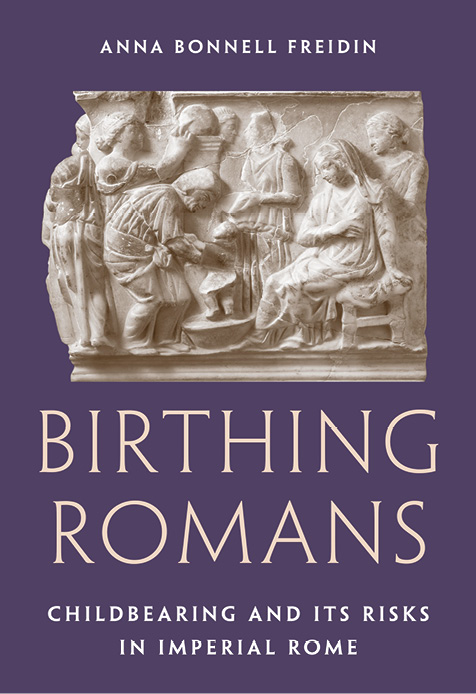
REVIEW BY PAULINE RIPAT
Roman legends stressed the importance of babies in the foundation of Rome and its destiny to dominate. The unlikely birth of the twins Romulus and Remus from a Vestal Virgin, and their even more improbable survival in the nurturing clutches of a she-wolf, proved that Rome enjoyed divine support. The myth of the rape of the Sabine women promised that the nascent city would be populated by generations of Romans. Conception, birthing, and child-rearing were of continuous importance in the literal and conceptual perpetuation of the Roman Empire. Yet literary and material sources allow only disjointed and often second-hand impressions of women’s navigation of these activities, which were weighed down by ideological priorities and the risks presented by grim biological realities.
Anna Bonnell Freidin takes a fresh approach to the evidence, seeking to reveal women’s experiences of childbearing by fleshing out the social structures and cultural interpretations that wrapped around these activities. For the woman-shaped negative space thus revealed, she suggests scenarios whose unverifiability does not detract from their plausibility. Freidin adopts as her point of departure and recurrent example for her five-chapter study an epitaph from Pannonia in about AD 200, which commemorates 27-year-old Veturia, mother of six children, only one of whom survived her. The first chapter situates Veturia in the legal, social, and economic worlds of Roman marriage and childbearing. Freidin considers what was by all measures Veturia’s very early experience of sex and motherhood, the social supports generally available to parturient women, the centrality of status in the context of legal incentives offered to prolific mothers, and fecundity as a means of participation in the Roman state.
Freidin then moves to the cultural metaphors that shaped concepts of women’s bodies as generative resources. Dominant interpretive frameworks included arable, conquerable landscapes teeming with extractable value and ambivalent, cargo-carrying waterscapes which, like childbirth, offered high risk and reward. Discussion of the configuration of women’s bodies as microcosms of these broader environments includes amulets, cephalopods, dream interpretation, and taxation: reader, do not miss it.
In her third chapter, Freidin describes the ‘proto-eugenic’ aims of the 2nd-century AD medical writer Soranus, as revealed in his work on women’s reproductive health. She demonstrates how he sought to exert the authority of his views, presented as prudent advice within broader cultural interpretations of women’s physiology and the risks of childbearing. Chapter 4 situates amulets, whose importance in the area of ancient Roman health management cannot be overstated, particularly in the birthing room, where they gained their efficacy amid the bustling network of women who supported labour. But, as Veturia’s example makes clear, birth did not guarantee survival for child or mother, and the final chapter addresses individuals’ navigation of cautious and disappointed hope through votive religion and the assignment of responsibility through the invocation of inexorable fate.
Freidin’s use of every kind of evidence and generative methodology offers an enlivening perspective on birthing, the most critical process of Roman society and, thus, of Roman history.
Birthing Romans
Anna Bonnell Freidin
Princeton University Press, £38
ISBN 978-0691226279