Subscribe now for full access and no adverts
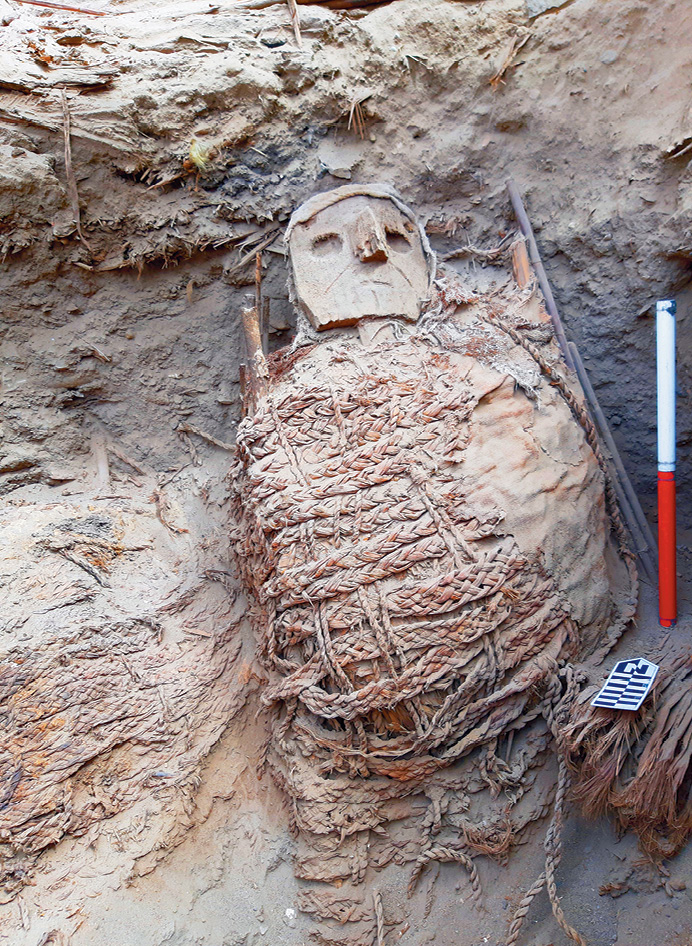
Excavations at the archaeological site of Pachacámac, near Lima, have uncovered a remarkable collection of well-preserved burial bundles dating to the time of the Wari Empire (AD 800-1100).
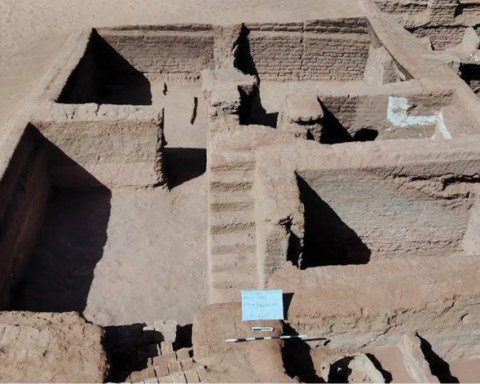
Pachacámac, which was occupied from c.200 BC up to the Early Colonial Period (AD 1533-1572), is home to several large temples, as well as settlement structures and cemeteries dating to a variety of different periods. The latest research – the results of which were announced on the Archeowieści blog, associated with the University of Warsaw’s Faculty of Archaeology – has explored a complex of these cemeteries near Pachacámac’s Painted Temple. The excavations, led by Professor Krzysztof Makowski, focused on an area where a wall from the Inca/Colonial periods had collapsed, protecting the graves beneath from looting.
The team discovered an assemblage of 73 burials, some individual and some groups, dating to the second half of the Middle Horizon (AD 650-1000). The deceased were wrapped in fabric bundles in a seated foetal position and a number of them – both men and women – had wooden or ceramic masks attached to false heads on the bundles. The use of masks in mortuary traditions became increasingly common across the Andes from c.AD 800 until the Spanish Conquest. It has been suggested that, in cases like this where the burials are not those of ruling elites, the masks may reflect an individual’s position as head of a family.
Also found during the excavations were two wooden staves in a settlement layer near the cemetery, dating to the same period. These were part of a votive deposit that had been covered with a layer of Spondylus princeps shells imported from Ecuador, further indicating a ritual significance. The staves feature depictions of dignitaries wearing Tiwanaku-type headgear and are similar in style to the famous ‘Idol of Pachacámac’ found at the site in 1938.
The burials will now undergo further analysis by bioarchaeologists, which may shed more light on the social organisation of Wari society and the dynamics between men, women, and children at Pachacámac in this period. The discovery also represents an important contribution to studies of cultural development in the pre-Hispanic Andes, and an opportunity for comparison with other sites from the same period, such as Castillo de Huarmey (see CWA 116).
Text: Amy Brunskill / Image: © PUCP Archaeology Program ‘Valley of Pachacámac’, ed. M Giersz