
Subscribe now for full access and no adverts
This year’s Nobel Peace Prize has been awarded to Nihon Hidankyō, a group that represents survivors of the atomic bombs dropped on Japan in 1945. The organisation received the award for ‘demonstrating through witness testimony that nuclear weapons must never be used again,’ the Nobel Committee said.
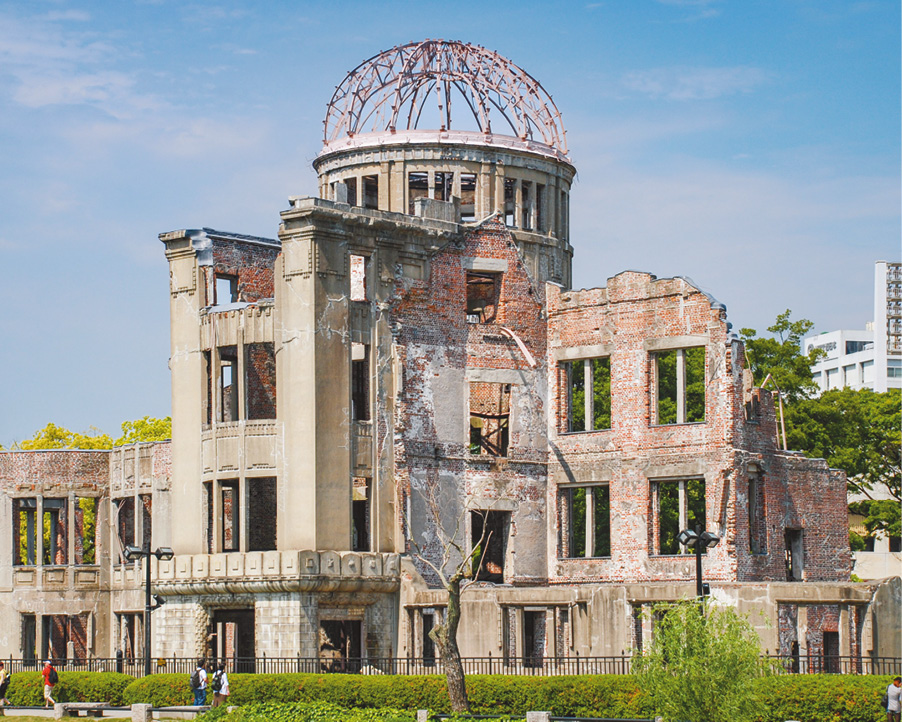
More than 150,000 people were killed when the United States dropped two atomic bombs on the cities of Hiroshima and Nagasaki in August 1945. Days later, Japan’s Emperor Hirohito announced the country’s immediate surrender, bringing an end to World War II in the Pacific and ushering in the Nuclear Age.
Some 650,000 people survived the attacks, many with severe burns and radiation injuries. In 1956, a grassroots organisation of survivors – known as hibakusha in Japanese – began campaigning in order to secure better rights for themselves. In the decades since, Nihon Hidankyō representatives have travelled around the world to share their stories, and to warn against the use of nuclear weapons in war.
The Chair of the Nobel Committee, Jørgen Watne Frydnes, said the group, which has been nominated for the prize several times previously, had ‘contributed greatly to the establishment of the nuclear taboo’.
Nihon Hidankyō’s co-leader Toshiyuki Mimaki survived the bombing of Hiroshima when he was three years old, and remembers burnt survivors fleeing the city. Reacting to the announcement, he said: ‘never did I dream this could happen.’
The prize, which consists of a diploma, a gold medal, and the sum of $1m, will be presented at a ceremony in Oslo on 10 December, the anniversary of the death of the prize’s founder – and the inventor of dynamite – Alfred Nobel.