Subscribe now for full access and no adverts
Archaeological work in Kenya has uncovered the earliest evidence for plant farming in equatorial east Africa.
As a crossroads for various population movements throughout history, many of which included the transmission of crops, the region encompassing Kenya, Tanzania, and Uganda has long been believed to have played an important role in the development of early farming. However, almost no ancient plant remains have been found here to date, severely limiting studies of the area’s early agriculture.
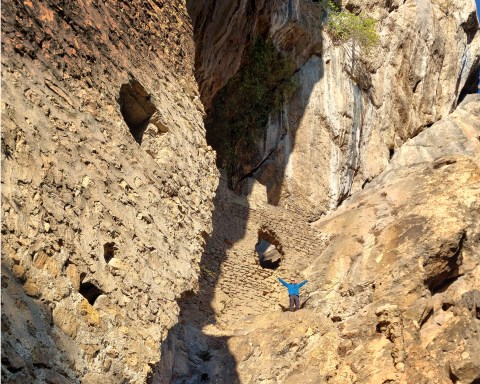
Now an international team of archaeologists working at Kakapel Rockshelter in the Lake Victoria Basin, near the Kenya/Uganda border, have made a valuable discovery. Kakapel is a site known for its rock art, but archaeological material in the rockshelter reveals many phases of activity by different communities spanning the last 10,000 years. Following excavations carried out between 2018 and 2020, researchers used flotation to identify a large assemblage of well-dated archaeobotanical remains from these archaeological layers.

Perhaps the most significant discovery was remnants of the legume crop cowpea (also known as black-eyed pea), which were found in a hearth and directly dated to 2,300 years ago. This makes it the earliest documented domesticated crop – and the earliest direct evidence of farming – yet found in eastern Africa. The cowpea is believed to have originated in west Africa and arrived in the Lake Victoria region with Bantu-speaking peoples from Central Africa. The presence of new pottery types in deposits at Kakapel at the same time as the first appearance of the domesticated plant appears to support this hypothesis. Meanwhile, a cow bone found in the same hearth, also dated to 2,300 years ago, provides the earliest direct date for domesticated livestock in the region. Together, these discoveries provide strong evidence for exchanges taking place between local herders and incoming farming populations.
In later deposits at the rockshelter, the archaeologists found signs that by at least 1,000 years ago sorghum and peas (originally domesticated in north-east Africa) and finger millet (indigenous to the eastern African highlands) were all being incorporated into food production. These findings indicate that domesticated plants did not arrive in eastern Africa in a single package, but in multiple phases, most likely associated with the movement of different groups. While finger millet seeds appear in the largest numbers, it is the presence of a diverse selection of both wild and domesticated foods that defines Kakapel. We see that, throughout the period of use of the rockshelter, communities were combining various resources to create stable food systems, each favouring different plants depending on what best suited their cultural preferences and the environmental conditions at the time.
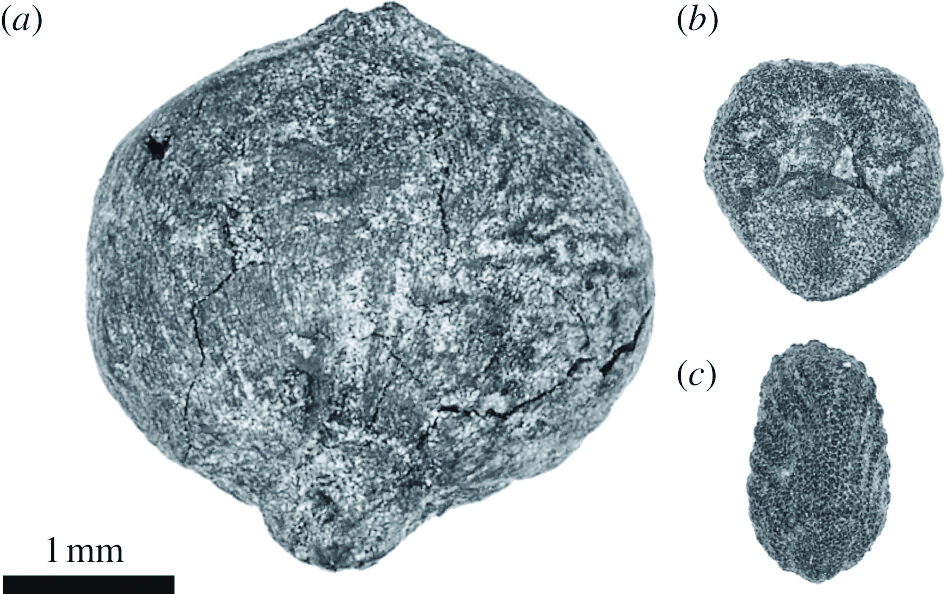
This research, which has been published in Proceedings of the Royal Society B (https://doi.org/10.1098/rspb.2023.2747), sheds important light on early farming in the Lake Victoria Basin, confirming that this was an area where diverse populations with new food-producing strategies were coming together repeatedly throughout history. The results represent a vital step in developing our understanding of the early farming economies that emerged across pre-colonial sub-Saharan Africa, as well as furthering Africa’s contributions to global discussions about plant domestication and the origins of agriculture.
Text: Amy Brunskill / Images: Steven T Goldstein