Subscribe now for full access and no adverts
Excavations in the ancient city of Artaxata have uncovered the remains of a church dating to the early days of Christianity in Armenia.
Artaxata was the capital of the Kingdom of Armenia from the early 2nd century BC, and remained in use until the 5th century AD. According to legend, the city was where Gregory the Illuminator was imprisoned before he converted the Armenian king Tiridates III to Christianity in AD 301, thus making Armenia the first place to adopt Christianity officially as its state religion.
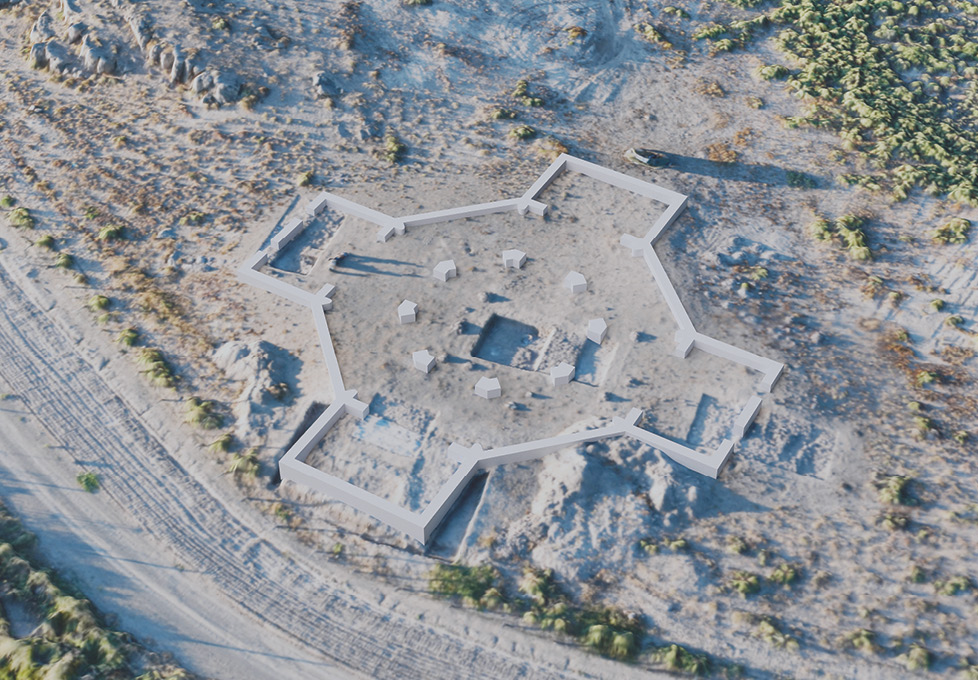
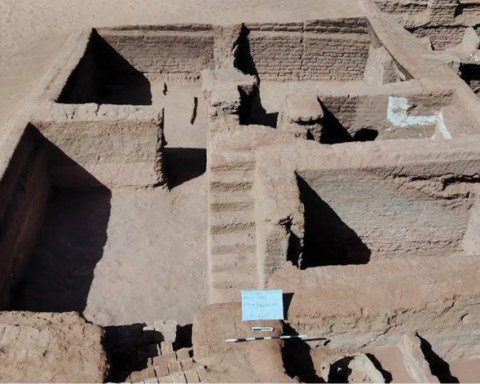
This year, the joint Armenian-German archaeological team from the Armenian Academy of Sciences and the University of Münster that has been investigating ancient Artaxata since 2018 identified evidence of a previously unknown early Christian church, in the form of an octagonal building c.30m in diameter, with cruciform extensions. It appears to have been systematically destroyed and burnt to the ground at some point in the past, but archaeologists have discovered signs of mortar floors and terracotta tiles, as well as ornate marble decorations believed to have been imported from the Mediterranean, although geochemical analysis is still pending. Similar octagonal churches are known from the 4th century AD in the eastern Mediterranean – further supporting suggestions of a Mediterranean connection – but this is the first example found in Armenia.
Radiocarbon dating of two of the church’s wooden beams reveals that they were cut some time before the mid-4th century AD. A 4th-century date is indicated by other finds, too, including pottery, and by the building’s construction methods. This makes the structure the earliest archaeologically documented church ever found in the country, and places its construction around the time of Armenia’s adoption of Christianity. It therefore has the potential to provide important information about this period of history. The discovery also offers valuable insight into Artaxata’s significance in the centuries after the settlement ceased to act as the kingdom’s capital.
Text: Amy Brunskill / Image: © Armenian-German Artaxata Project