Subscribe now for full access and no adverts
Bronze Age fossil collecting
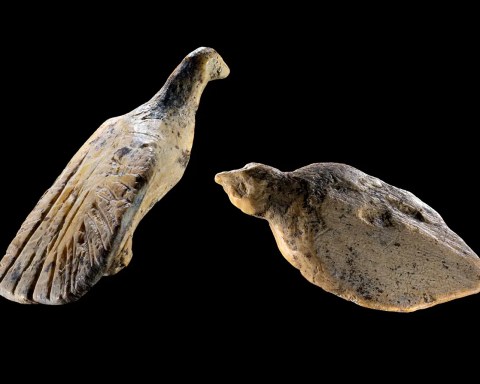
An object discovered in an ancient basement storeroom at Mycenae during excavations in the 1970s has just been identified as the fossilised astragalus (ankle bone) of an extinct genus of rhinoceros, thanks to recent analysis by an international team of archaeologists (Meier, Pliatsika, and Shelton). The fossil’s use in the Late Bronze Age is uncertain, but researchers suggest that it could have been a piece of gaming equipment, a zoomorphic weight, or some kind of apotropaic or ritual item. The bone’s antiquity and the fact that it clearly came from an animal much larger than any of the local fauna at the time doubtless contributed to its significance. The fossils of other large animals are known to have been collected later in Greek history, and were often associated with stories of gods and mythical creatures. The astragalus from Mycenae, found in an undisturbed layer dating to 1230-1200 BC, is the earliest fossil from a secure context found in mainland Greece, providing valuable evidence that fossil hunting was occurring as early as the Bronze Age. The research has been published in Scientific Reports (https://doi.org/10.1038/s41598-024-68778-w).
More victims of Vesuvius
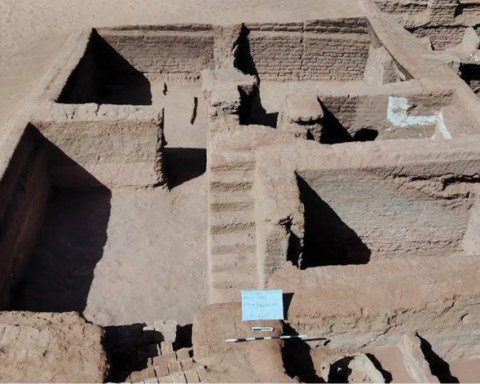
Ongoing excavations in Insula 10, Region 9, of Pompeii (see CWA 126) have produced another moving discovery: the remains of a man and woman killed during the eruption of Vesuvius in AD 79. The two individuals were found in a small room – a service area being used as a temporary bedroom during the renovation of the house – where they presumably took shelter from the rain of volcanic debris. Sadly, the falling pumice filled the adjacent living room, trapping them inside the little chamber, where they were then killed by the pyroclastic flow. The woman, who was found lying on the bed, had a small assemblage of valuable items with her, including gold, silver, and bronze coins, and jewellery including gold and pearl earrings.

16th-century trumpets
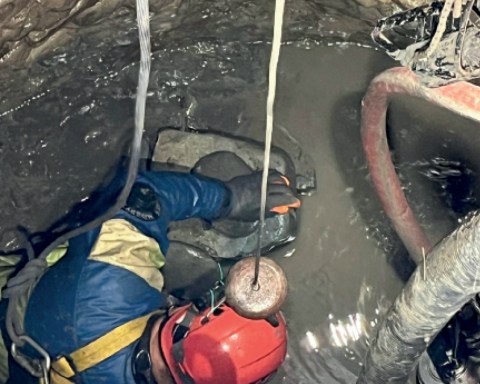
Researchers from the International Centre for Underwater Archaeology in Zadar have discovered a rare cargo of brass trumpets at a post-medieval shipwreck near Cape Franina in Premantura, Croatia. Investigations at the wreck of the unidentified 16th-century sailing ship, which have been under way since 2020, have discovered that it was carrying a variety of goods including ceramic vessels, colourful glass beads, and red glass bowls. However, the most significant find is a large number of brass trumpets: extremely rare and expensive objects, of which very few surviving examples are known. Inscriptions on the trumpets suggest that they were produced in Strasbourg, France, and Leiden in the Netherlands. Researchers believe that the ship may have been a Dutch vessel that traded between Leiden, Venice, and Constantinople, but research is ongoing.
Text: Amy Brunskill / Image: courtesy of Pompeii Archaeological Park