Subscribe now for full access and no adverts
Iron Age cemetery in UAE
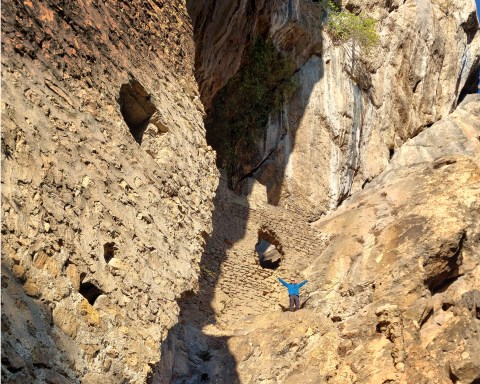
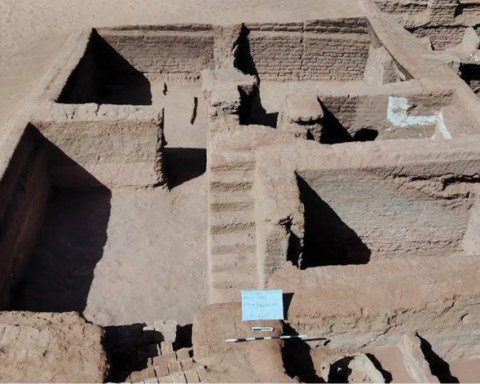
An Iron Age necropolis recently discovered in Al Ain is the first to be found in the United Arab Emirates. The burial ground, which was unearthed as part of the Funerary Landscapes of Al Ain Project, dates to c.3,000 years ago, and is believed to house over 100 tombs. The burials comprise c.2m deep vertical shafts with oval burial chambers at the bottom, which were sealed with mud bricks or stones, and the shafts backfilled. Despite this, the tombs appear to have been looted in antiquity; surviving artefacts hint at the richness of the grave goods they may once have contained. The objects recovered include small pieces of gold jewellery, well-crafted ceramics, and copper-alloy spearheads and arrowheads, as well as shell cosmetic containers, bead necklaces and bracelets, rings, and razors. These discoveries offer valuable insights into Iron Age burial practices in the UAE, about which almost nothing is known. It is also hoped that analysis of the human remains, which is under way, will tell us more about the lives and habits of these people.
Wine at Troy
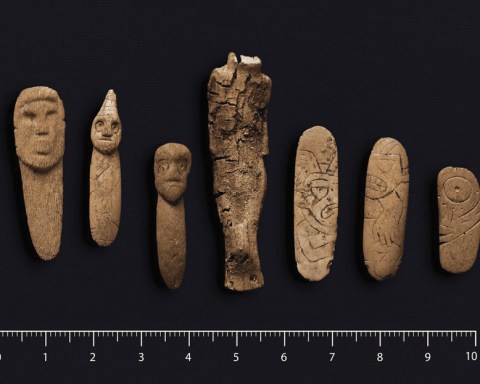
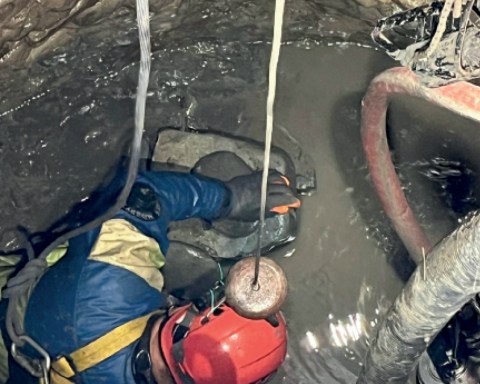
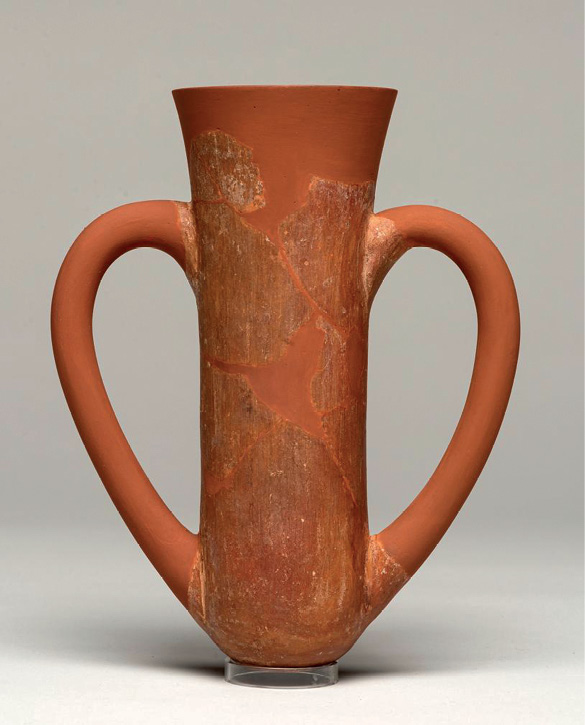
Recent analysis of a depas goblet from the ancient city of Troy has identified the presence of succinic and pyruvic acids, indicating that the vessel once held fermented grape juice. Contrary to earlier assumptions, these types of vessel were not found exclusively in elite contexts in Troy but also in areas outside the citadel that were not associated with the wealthy and powerful, indicating that wine consumption was more socially widespread than previously thought. Supporting this interpretation, the analysis of two other fragments from ordinary ceramic cups – also discovered in the Early Bronze Age lower settlement – revealed traces of wine as well. This surprising find suggests that the lower classes of Bronze Age Troy regularly consumed wine, not just the elite. The research has been published in the American Journal of Archaeology (https://doi.org/10.1086/734061).
Female medieval scribes
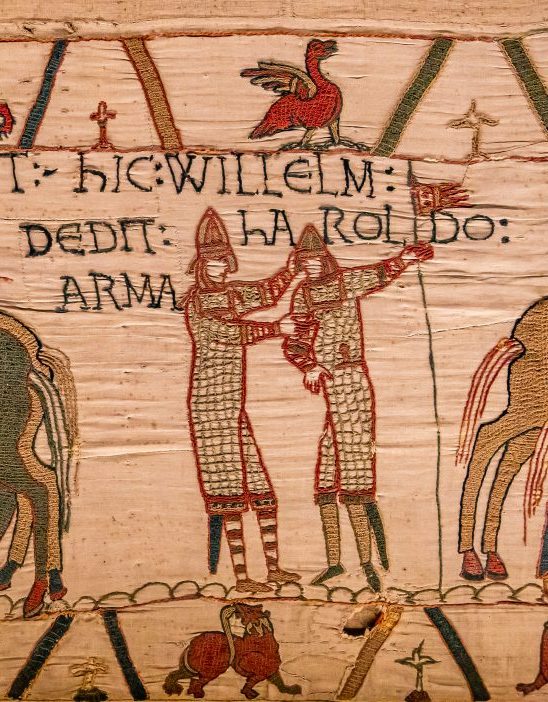
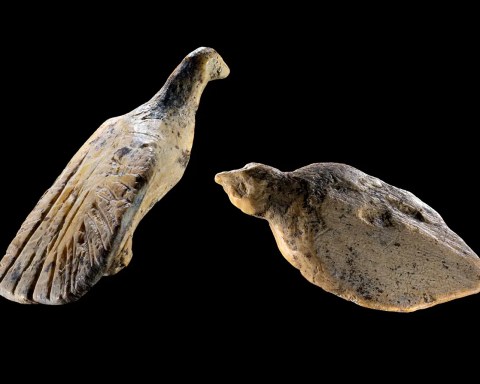
A research project recently published in the journal Humanities and Social Sciences Communications (https://doi.org/10.1057/s41599-025-04666-6) is shedding light on the role of medieval female scribes. Researchers investigated 23,774 colophons – short statements added to medieval manuscripts that often include the name of the scribe or a personal reflection written by them – searching for female names or references in which the scribe refers to themselves as a woman (for example, ‘scriptrix’ or ‘soror’). This survey identified 254 colophons written by female scribes, representing 1.1% of the texts studied. However, this calculation is considered a lower-bound estimate, so the real number could be higher. Using prior calculations of the proportion of manuscripts that have been lost since the Middle Ages, it is therefore proposed that female scribes could have been responsible for copying over 110,000 manuscripts between the early 800s and the 1600s, of which at least 8,000 may still survive. Further research will tell us more.
Text: Amy Brunskill - Image: Valentin Marquardt/University of Tübingen