
Subscribe now for full access and no adverts
Rare Roman coin on display at Trimontium Museum
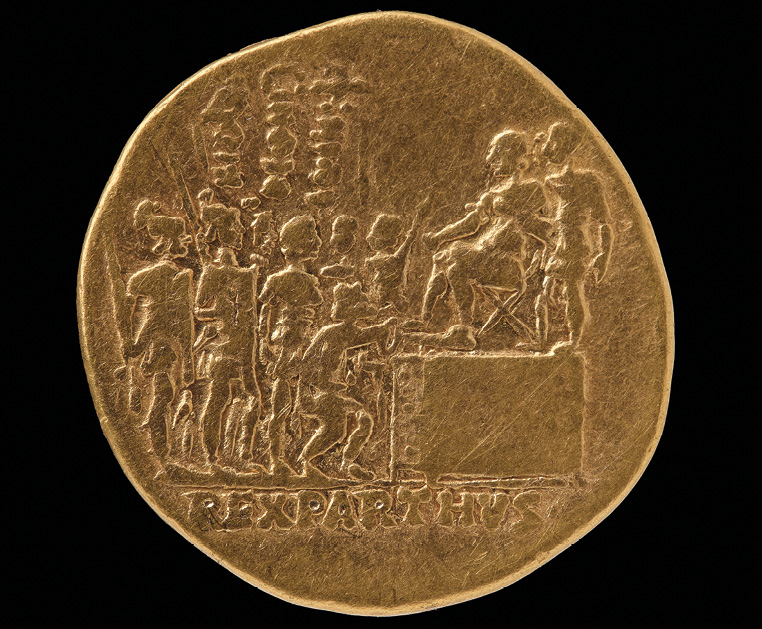
An aureus – a Roman gold coin – has recently been put on display in the Trimontium Museum. Discovered at Newstead, in the Scottish Borders, the coin is on loan from National Museums Scotland, thanks to support from players of the People’s Postcode Lottery. This type of coin dates to AD 114 117, as demonstrated by the obverse depiction of the emperor Trajan. On the reverse, Parthian kings are shown surrendering to the emperor, propaganda that relates to his temporarily successful military campaign to capture the ancient cities of Ctesiphon and Seleucia. The aureus is part of a new display of key coin finds associated with the Roman invasion and occupation of Scotland, which will run until the end of 2025.
Expanding Nottingham’s subterranean past
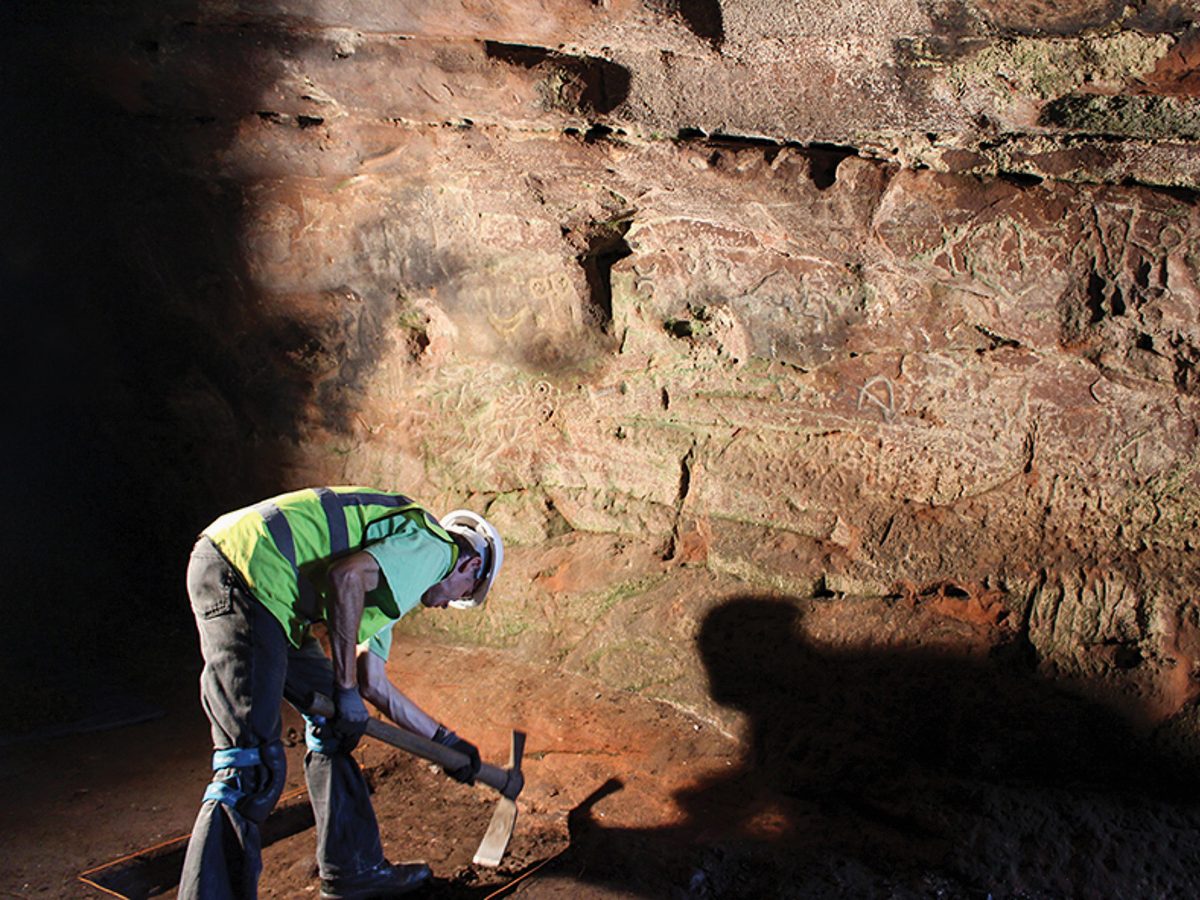
Ongoing research in Nottingham has recorded 900 caves below street level. City Archaeologist Scott Lomax began compiling records of Nottingham’s subterranean caves in 2009, and, while previous records already marked the existence of 425 examples, Scott’s work has revealed that the true number is more than double this, which makes Nottingham Europe’s most cave-rich city. With 30 new caves recorded in 2025 alone, the number is constantly increasing, and the caves found so far have offered insights into life from the medieval period onwards. One of the latest discoveries, investigated using a drone, is believed to have been used for the storage of beer barrels in the 19th century.
Reconstructing a roundhouse
A team of archaeologists from Avalon Archaeology have worked with volunteers to construct a replica Iron Age roundhouse at their site near Glastonbury. The project is based on peat-preserved remains from Glastonbury Lake Village, which was occupied in an area between Glastonbury and Godney from 150 BC to 50 BC. The original roundhouses were built with willow or hazel posts, reinforced with woven walls coated in daub. The roundhouse joins a reconstructed Roman dining room, Viking ship, and Saxon long hall on the site (see CA 405), and its organic structure is hoped to last for around a decade.
Text: Rebecca Preedy