Subscribe now for full access and no adverts
For some, Plato’s observation still rings true. In the 4th century BC, the Greek philosopher claimed in his Laws that a remarkable degree of stasis could be observed in ancient Egyptian artforms: ‘no painter or artist is allowed to innovate… or to leave the traditional forms and invent new ones… And you will find that their works of art are painted or moulded in the same forms that they had 10,000 years ago’. While today we would see ancient Egypt existing for a period of more like 4,000 years, it is true that certain artistic themes can be traced across this span. This tendency for repetition is at odds with the freedom and individuality associated with artists in the modern world. As such, it can be easy to see the corpus of ancient Egyptian art and artefacts as primarily a collection of endlessly regurgitated generic forms produced by equally indistinguishable artisans. The resulting anonymity of ancient Egyptian artists is compounded by an apparently widespread – though not universal – restraint in signing their work. Little wonder, then, that study of ancient Egyptian crafts has traditionally focused on the images and objects themselves, rather than on what they can reveal about the individuals who created them.
Yet when you look more closely, traces of individuality can be found in many different forms. On one level, new styles demonstrably did emerge over the course of the millennia. Items such as jewellery were susceptible to the whims of fashion, while advances in technology like the development of the potter’s wheel and glassmaking presented new possibilities and a wider canvas to experiment on. At another level, there are ample opportunities to find traces of the people responsible for achievements ranging from monumental architecture to minute worked gems. Perhaps the most obvious insights into individual artisans can be found in inscriptions on funerary stelae, which document how they wished to be remembered. One, belonging to a man called Irtysen, declares ‘I am an expert artist/craftsman, someone who is efficient at his craft’. Archaeology allows us to explore the workshops where sculptors toiled, or the kilns pushing ancient Egyptian thermal technology to its limits. Perhaps, though, the most vivid glimpses of these artisans as people can be found in more subtle traces, like the mistakes they concealed or the unfinished works that betray their methods. All of this, and more, is being explored in the Made in Ancient Egypt exhibition at the Fitzwilliam Museum, Cambridge (see ‘Further information’ below).

Egypt inside out
‘For the last 40 years, the Fitzwilliam Museum has been looking at ancient Egyptian objects from the inside out’, says exhibition curator Helen Strudwick. ‘We’ve been trying to understand not only how the object was made, but why it was made in that particular way, who was commissioning these items, and what they were paying for. So, it’s a very broad spectrum of research that we’ve been doing here.’ In many ways, this approach can be traced back to that most celebrated of archaeological discoveries: the tomb of Tutankhamun. In 1923, Howard Carter engaged a forensic scientist, Alfred Lucas, to conserve the materials within. Rather than rushing to apply preservatives, though, Lucas took care to study how these objects were made, and what with, before subjecting them to any conservation treatments. What was pioneering in the 1920s is standard practice for museums in the 2020s. Ever since the 1970s, when the Fitzwilliam appointed Janine Bourriau as its first professional Egyptologist, the museum has taken a keen interest in how these objects were made, undertaking detailed studies of material ranging all of the way from pottery to papyrus. In the exhibition, the artefacts are mostly divided by type, with sections devoted to stoneworkers, potters, makers of faience and glass, metalworkers, jewellers, makers of linen and basketry, woodworkers, papyrus-makers, and coffin-makers. The opening portion, though, asks how these varied professions saw themselves, and how they were seen by wider society.

‘I think it’s probably very similar to the way they sit today’, says Helen. ‘Perhaps not with the megastars at the very top, but there are definitely different levels of creativity and talent. So, when you look at the commemorative slab of Irtysen, he’s saying “I’m a really skilled artisan, I know how to do all these different things”. From this, it seems that status was measured in terms of your knowledge of the processes involved in making things. Ancient Egypt had quite strict rules about how things should be laid out. So the people at the top were the people who were doing the best work in that area. They manifest themselves by having these commemorative slabs made for them, and because of that we know some of their names.’
‘It’s clear that there was also a hierarchy of trade. The scribes, for example, regarded themselves as the pinnacle of achievement, again because of knowledge: they knew the language and could write using hieroglyphs, which were regarded as divine – the word for a hieroglyph is medu-netjer, meaning “the word of God” – and so they felt that they were somehow separate from other trades. Inevitably, then, they looked down on everybody else. There’s a magical element to sculptures as well, which were regarded as living images. This is reflected in one of the names for sculptors: sankh or “the one who gives life to”. If a statue was put into a temple, there would be a religious ceremony at the end of production, when the mouth, nostrils, eyes, and ears of the object would be ritually opened, to allow it to have a full sensory experience. It was effectively brought to life. In fact, this was also true of temple inscriptions, with the birds and animals, and things like that, so they were all active on the walls. I sometimes think that the ancient Egyptians must have imagined a constant babble of sounds coming out of all these inscriptions.’
‘By contrast, potters appear to be right at the bottom of the pile. It seems as if they were equated with people who were makers of mud brick, because the word for both trades is the same. A text called the “Teaching of Khety”, which was – of course – written by scribes, satirises other trades, saying that “the potter is buried under the soil, even though he’s still alive. He gets more covered in mud than a pig”. Today, we can see the lovely things that these potters produced, but at the time it was seen as grubby work and therefore not necessarily something to be admired.’
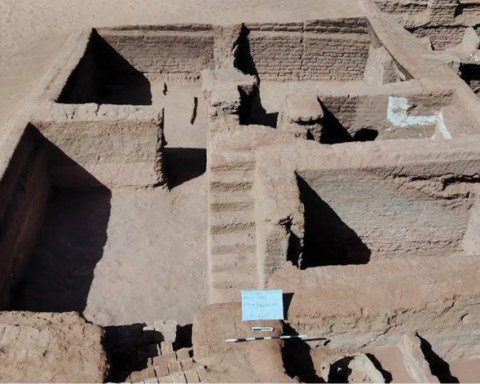
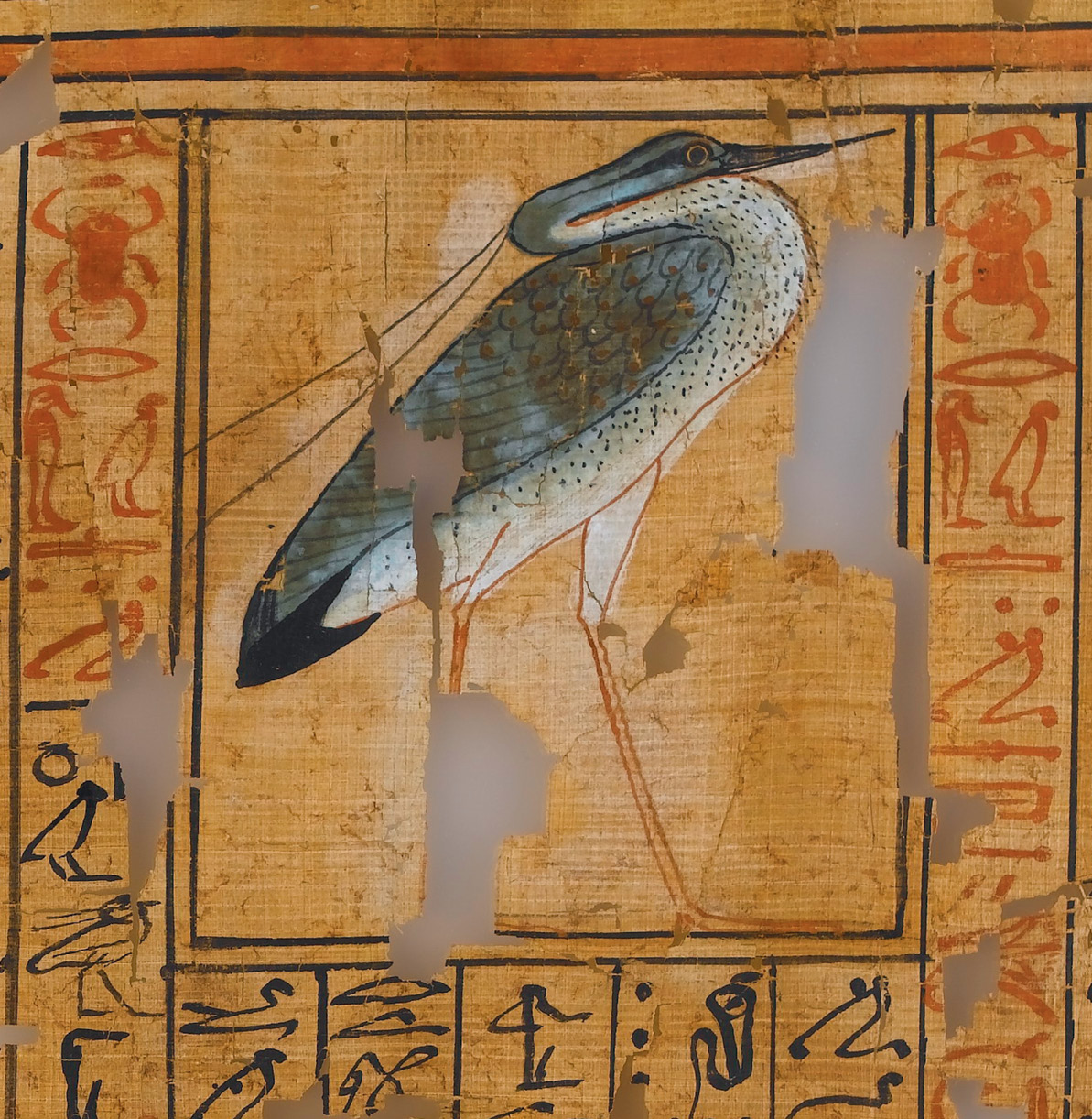
Inevitably, there were hierarchies of skill within the individual trades, too. Often, some people would be tasked with designing or overseeing the production of the finished goods, for example, while others were actually making them. In certain cases, such as the manual hollowing out of a stone receptacle, this work could be extremely laborious. On other occasions, including painting vignettes on papyrus, the physical act of doing the work could involve a high level of technical ability and creative flair. A fine example of this comes from the Book of the Dead of Ramose. This compendium of spells was intended to help Ramose, a former senior royal scribe, negotiate the afterlife. The illustrations accompanying the spells showcase the talent and ingenuity of the artist or artists responsible, who managed to use the limited range of pigments available to dazzling effect. It is also from the funerary realm that we get glimpses of the realities of life for some less-august workers. Recent excavation of burials at Amarna, the desert city founded by the maverick Pharaoh Akhenaten c.1346 BC, has revealed the remains of individuals subjected to gruelling manual labour. The deceased were clearly involved with constructing the major new structures that were needed at the site. Many of these workers had stress fractures and were somewhat malnourished, indicating that they were not treated particularly well.
Personal touches
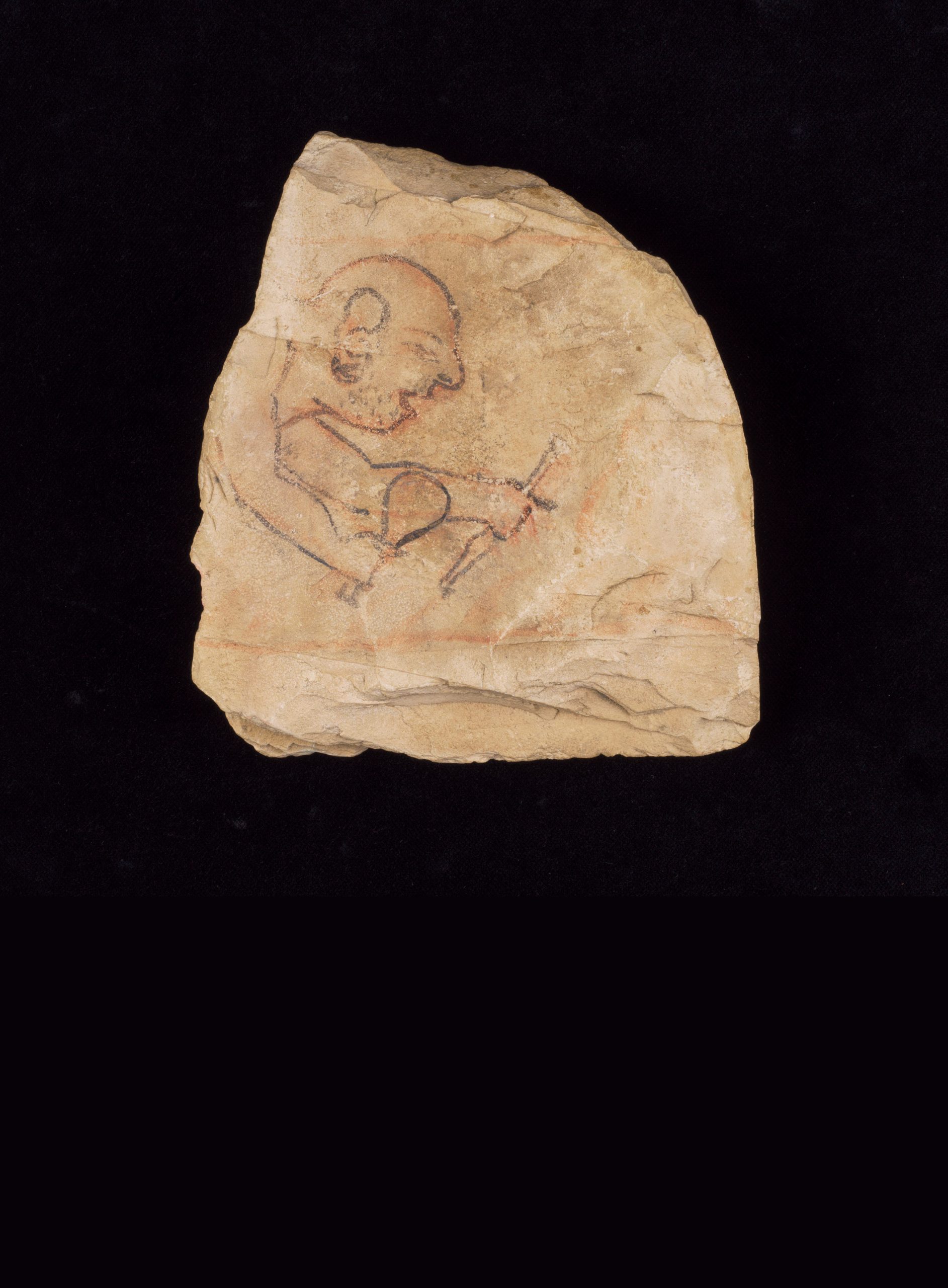
When it comes to visualising workers, models and painted scenes in tombs provide valuable depictions of a wealth of productive industries under way. Such formal imagery is not always good at capturing individuals, though, and a much more characterful representation of an ancient Egyptian at work can be found sketched on a sliver of limestone that probably came from the Valley of the Kings. It shows the upper part of a muscular man, with his mallet and chisel poised for work. Surviving accounts of building operations in the Valley offer a sense of how his day would have unfolded, with activity divided into two four-hour shifts, with a break in between. Other texts keep track of the valuable copper chisels issued to workers, and reveal that dangers could come in many forms. One worker was reported absent after being ‘bitten’, although by what is left to the imagination.
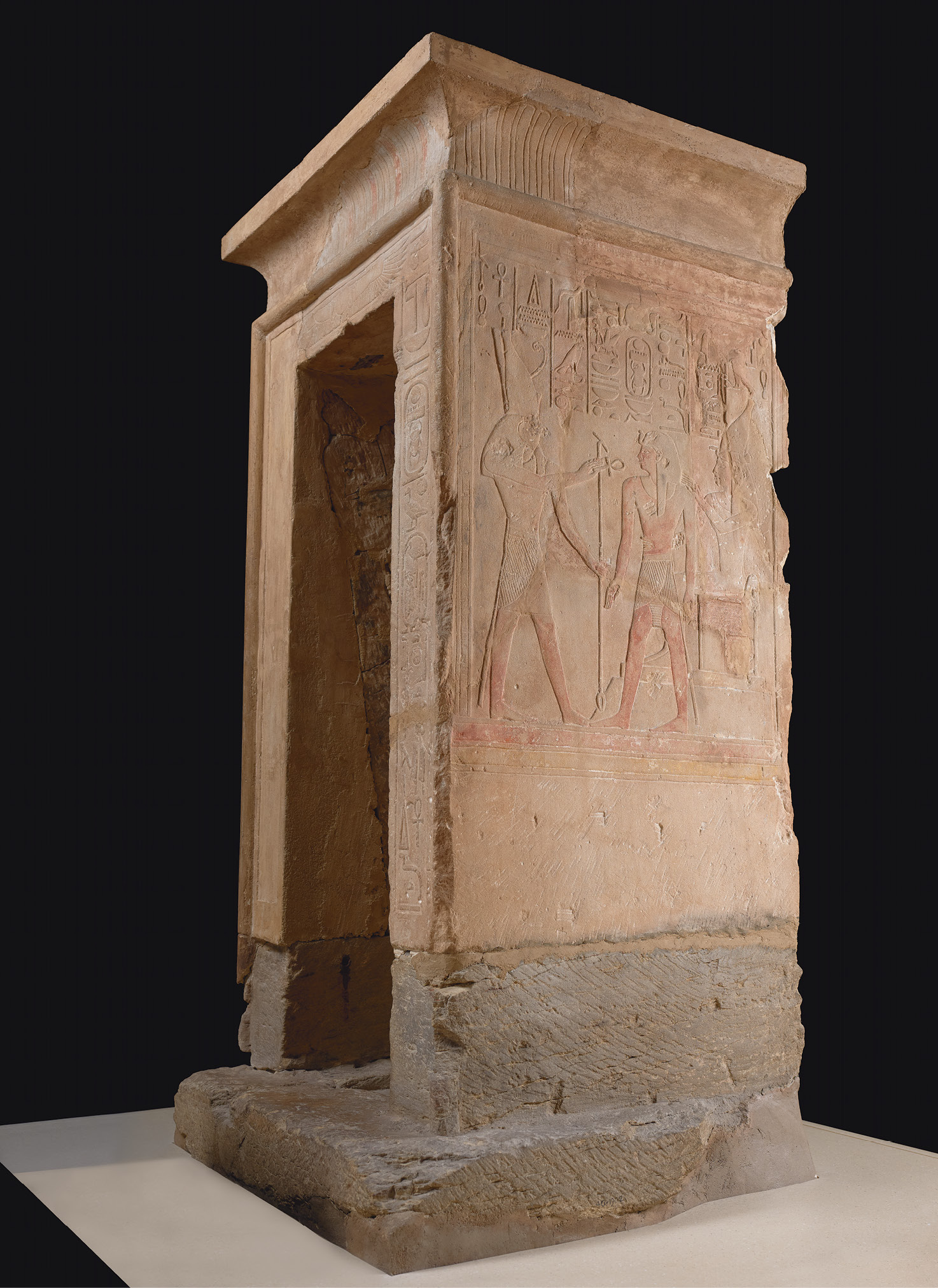
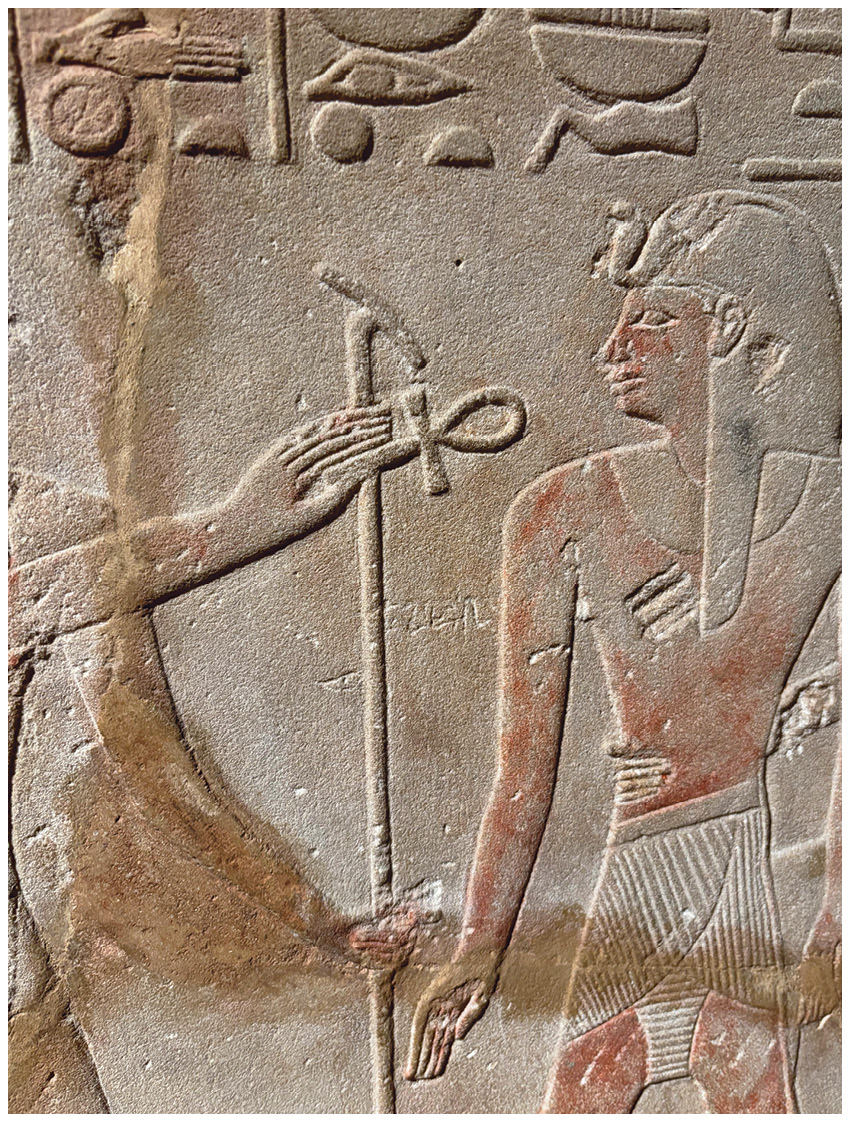
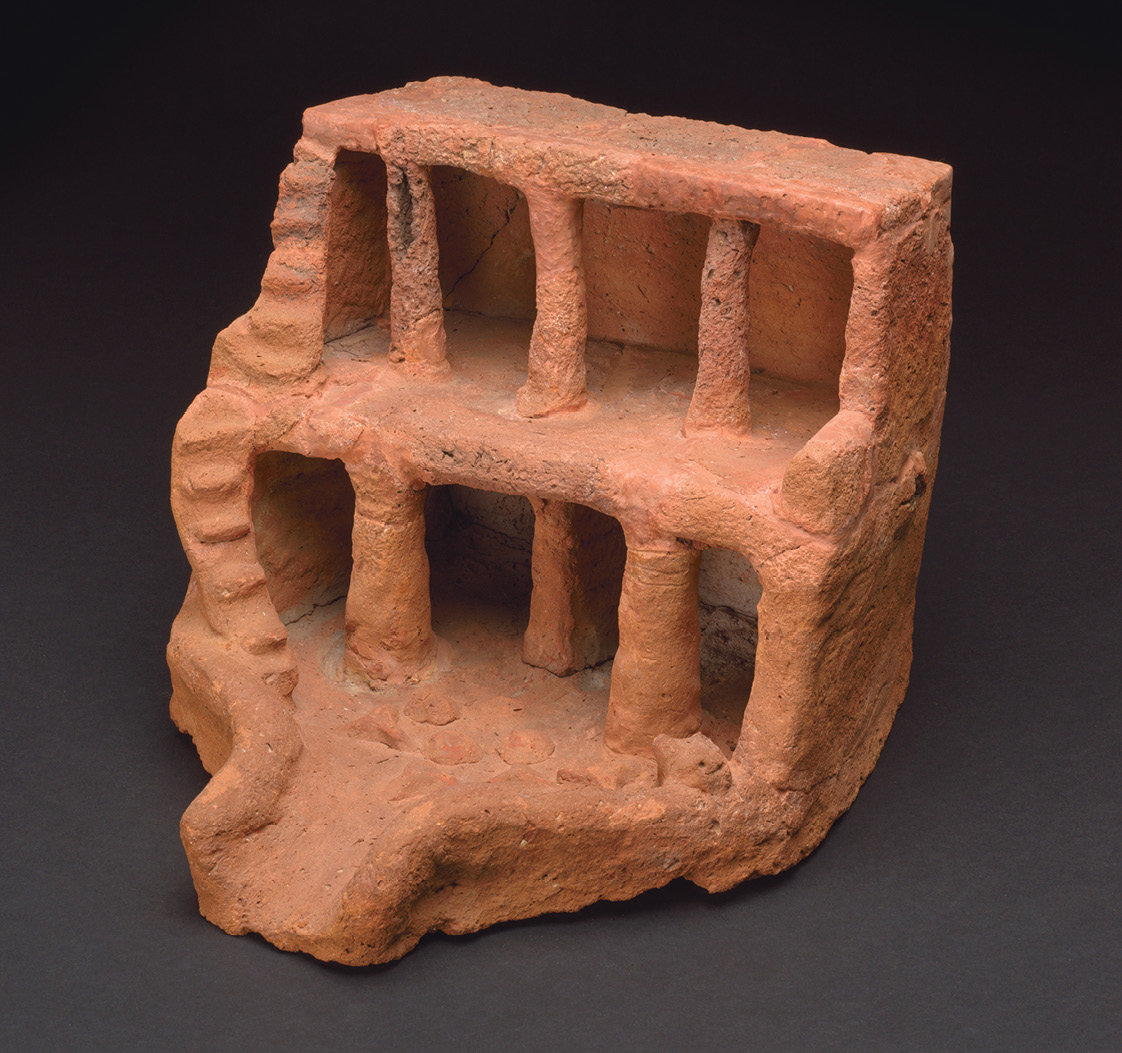
Tensions between formal Egyptian rules governing how things should be done and more individual acts of expression can be seen playing out in many different ways on a wide range of objects. When it comes to the former, a limestone block roughed-out in the shape of a sphinx offers a lesson in how sculpture should be done. Coarse rectangles of stone have been left as a prelude for the more intricate work of shaping the ears of the beast, while its flanks are divided into a regular square grid. This arrangement quite literally sketched out the rules governing the proportions of such a piece, with the resulting model quite possibly serving as a teaching aid. At first glance, this ‘by-the-book’ approach seems to be epitomised by a fine stone shrine that was dedicated to Thutmosis III and dates to c.1479-1425 BC. Here, too, an overlying grid would have determined the proportions of the piece. Traces of chisel marks reveal how tools of different sizes were employed to create the fine details of the decoration, including images of the pharaoh and gods, as well as hieroglyph texts. Applying raking light to one flank of the shrine, though, brings out a much more subtle addition to the stone. This detail was written in hieratic, the Egyptian form of handwriting, and was surely added surreptitiously. It states simply that ‘the outline draughtsman made it’, although sadly the associated name is too damaged to read. A personal touch of a very different kind can be found on a terracotta ‘soul house’, made c.2055-1650 BC. This model of a two-storey building was created for funerary use, but before it was fired a small handprint was inadvertently impressed on its underside, presumably when it was taken outside to dry.

Greater scope for individual expression seems to have come to the fore during the reign of Akhenaten. Indeed, the very move to Amarna and adoption of a new sun cult could be construed as a calculated rejection of traditional ways of doing things. New styles of art are also in evidence, and it was during this era that the person who is perhaps the closest that ancient Egypt comes to a star sculptor was active. His name was Thutmosis, and he had a home and workshops in an elite quarter of Amarna. Excavation of this complex produced a range of sculptures in various stages of completion, including a renowned head of Nefertiti. Examples of Thutmosis’ output appear so fresh and sophisticated that some past scholars attempted to explain his handiwork as a product of Greek influence, although the dating rules this out. Pieces from Thutmosis’ workshops include an unfinished statue of a man – most likely Akhenaten – while a striking unfinished head of a princess found nearby displays strong similarities to his work. Glass, stone, or faience inlays would have served as the princess’ eyes, while her quartz head would probably have been slotted on to a limestone body, to evoke linen clothing. The quality of such garments is demonstrated elsewhere in the exhibition by a breathtaking high-status dress, which was found in a coffin and dates to 2504-2347 BC.

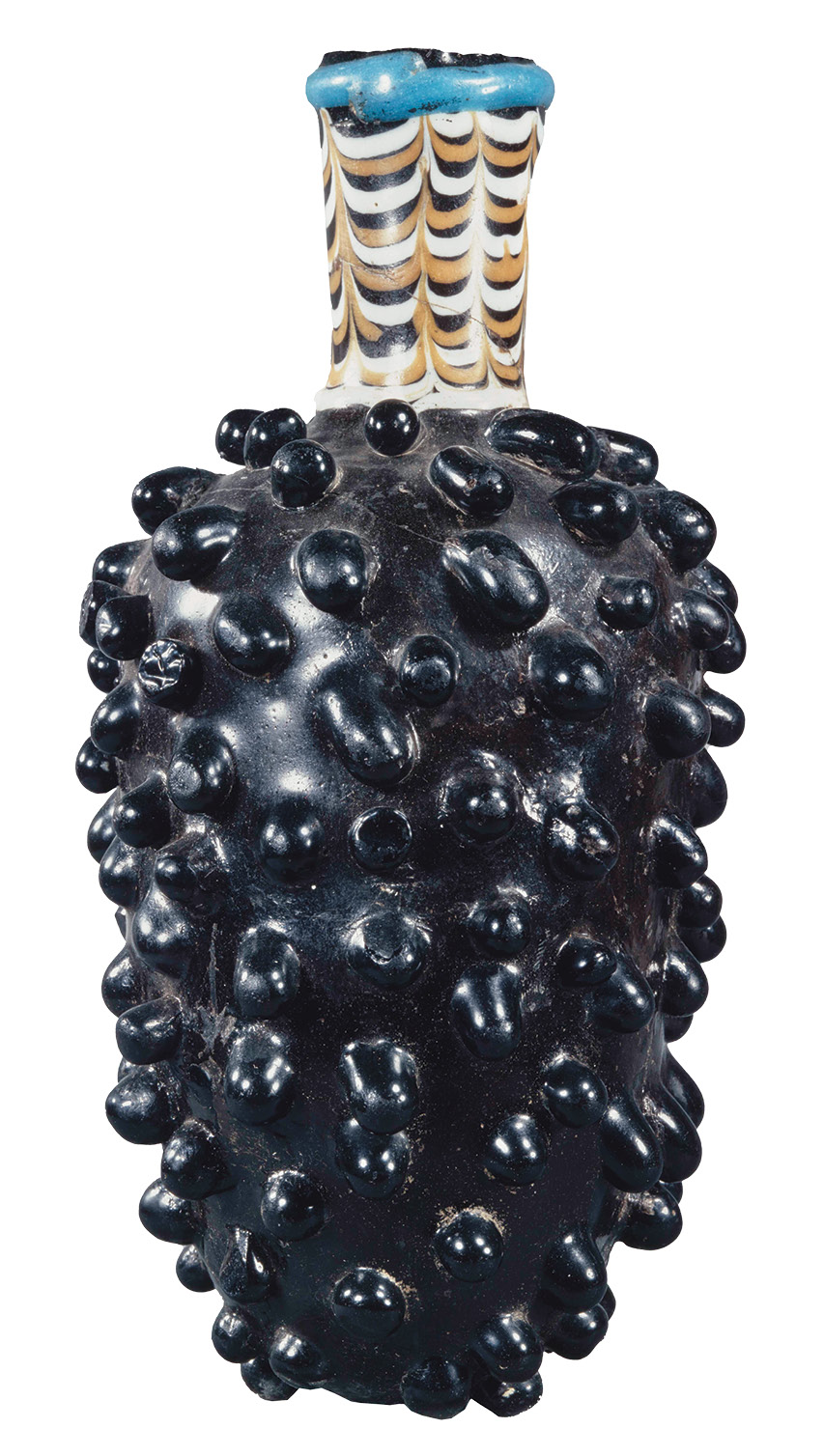
When it comes to the potential of new technologies, valuable information about the use of kilns and furnaces has also been produced by recent work in Amarna. This has revealed that there was an area dedicated to making faience, another for bronze, and – slightly more carefully separated – one for glass. Such an arrangement would have been prudent, as glassmaking was a rather more dangerous industry that operated right on the cusp of what ancient Egyptian kilns could produce. Indeed, for a long time it was assumed that ancient Egyptians were not able to make glass, and their contribution was restricted to working with material produced elsewhere. Analysis of the Uluburun shipwreck off Turkey has comprehensively disproved this notion, though, as the 200 glass ingots on board were all made in Egypt. One of the problems facing ancient Egyptian producers was that the temperature needed for glassmaking was 1,150°C, bringing it perilously close to melting or even exploding the mud bricks that their kilns were made of. One method that was developed to minimise the risk involved adding an extra mud lining within the kilns, which could be replaced after each firing. As glassworking became more sophisticated, so too it allowed experimentation with new forms and colours. A creative peak in this sphere seems to have been achieved around 1400 BC.

Machines for the afterlife
Coffins are of particular value for the study of ancient crafts, as the finished articles required collaboration between specialists working with a wide range of materials, including wood, plaster, linen, and paint. In recent years, the Fitzwilliam Museum has deployed a range of techniques to expose their secrets. ‘We’ve worked in lots of different ways when looking at coffins’, says Helen. ‘It’s not simply taking samples and seeing what they are. For example, CT scanning the coffin structures is allowing us to see how they’re put together. We’ve also been working with a specialist in ancient Egyptian carpentry to look at the techniques being used, and an expert in historic painting techniques to try to understand the ways that people were applying the paint using ancient brushes. Replicas have been made of various components, allowing us to have a go at doing it ourselves to see the skillset that you need. Using replicas of ancient Egyptian tools also allows us to recognise the kind of marks that they leave behind, helping us to identify ancient traces of their use.’
Two enlightening examples of what can be gleaned from such detailed studies are displayed in the final section of the exhibition. One, a mummy board for Nespawershefyt, a supervisor of scribes and craftmen’s workshops, dates to c.1000 BC and bears sumptuous paintwork. The other, a coffin for Pakepu – whose job was akin to a funeral director and had the title ‘water-pourer on the West of Thebes’ – was created c.680-664 BC and features artistry that is rather lacklustre in execution. Seemingly, this points to a clear difference in quality between the two pieces, but the reality is more complicated.
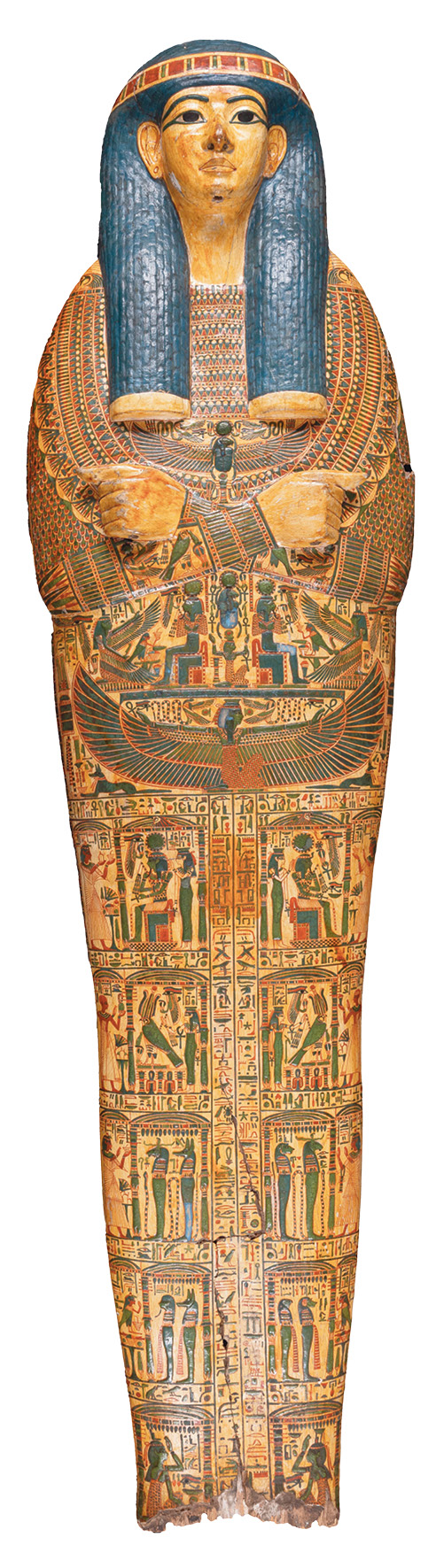
Above, we see the mummy board of the supervisor of temple craftsmen Nespawershefyt, which dates to around 1000 BC. Below is the inner coffin of a man called Pakepu, which was produced in c.680-664 BC. Note the faded area on the left side of the face where the paint being used began to run out. This coffin was given to the museum in 1869 by Edward VII, then still the Prince of Wales. (They are not shown to scale.). Images: © The Fitzwilliam Museum, University of Cambridge
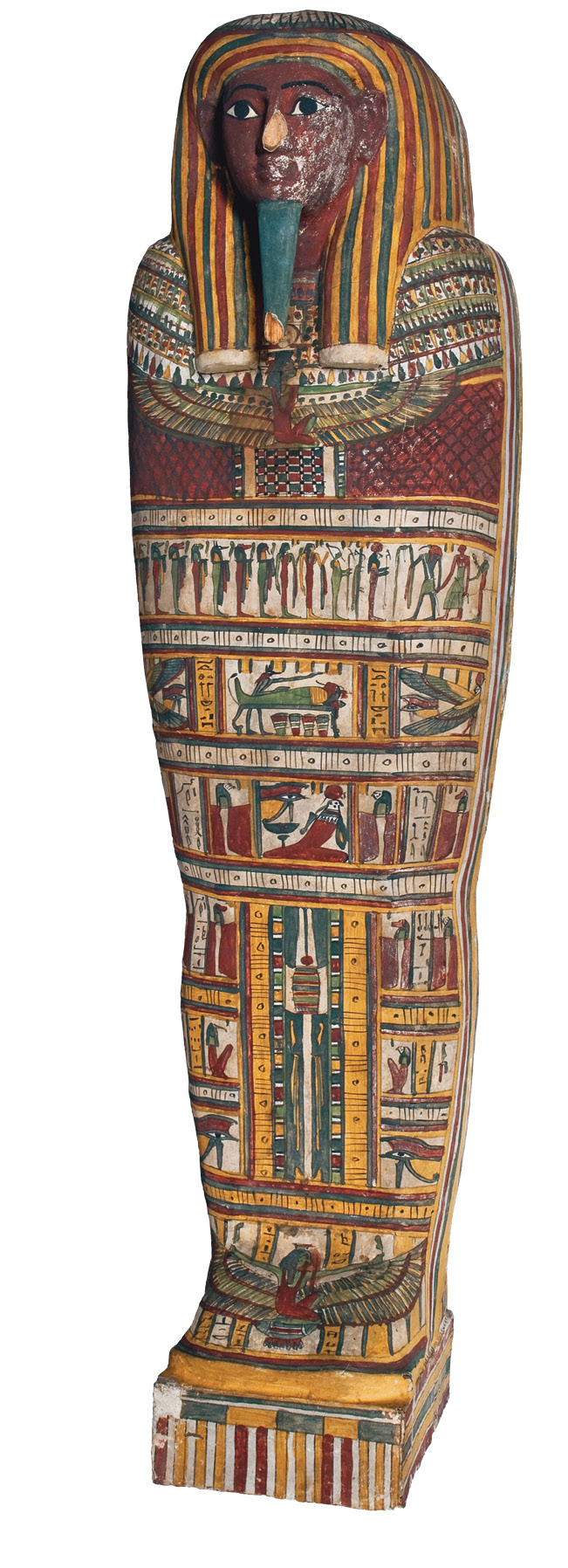
‘The mummy board for Nespawershefyt is a cut-down portion of a coffin lid that had probably been looted from an earlier burial, before being reused’, says Helen, ‘so while the care and precision with which the paint has been applied puts it at the pinnacle of achievement, the underlying wooden structure is not that good. By contrast, the coffin for Pakepu was the inner of two such caskets. The outer coffin was incredibly bodged together: it was made of around 125 pieces of wood that were pegged together to create a structure with lots of voids in it. These were filled with horrible coarse plaster, which made it incredibly heavy. As the decoration on the inner and outer coffins was definitely done by the same people, we assumed that the inner coffin would be of a similar quality. When we CT scanned it, though, we found that the carpentry is absolutely fabulous. It would have been an expensive thing to buy, but then somebody decorated it in a rather amateur – if I can put it that way – style. The contrast is amazing. I suspect that maybe the family ran out of money, or perhaps Pakepu had a cousin who said “Oh, it’s alright, I know someone who can paint this for you”.’


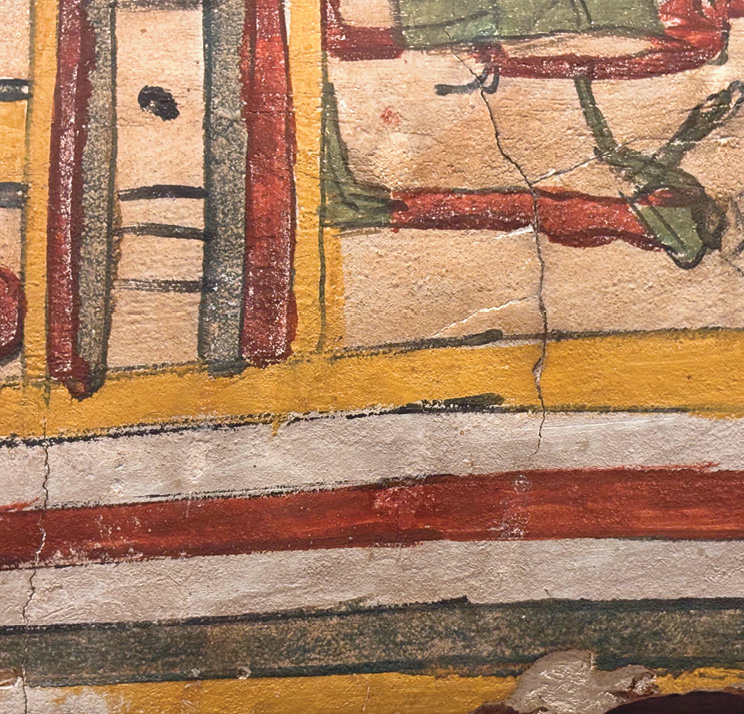
‘If you look towards the foot end of Pakepu’s coffin, you can see that there are horizontal stripes, but the paint doesn’t really stay within the borders very well. There’s even a trickle of red paint running down from one. The yellow stripe is bordered by two black lines, and we can see that the painter created these with a straight-line edge – like a long ruler. After painting a bit, they simply picked it up and moved it along to the next portion, but made no attempt to tidy up the places where the lengths of border overlap. We can also see that the painter created most of the decoration while standing on one side of the coffin, because he painted as far as he could reach, and then went around to the other side and made a half-hearted job of joining up the final bits with the parts that he had already done. It’s a similar story with the face on the coffin, which was painted in dark red paint. After completing one half of it, he was obviously running out of paint and decided to thin it out, on the basis that no one would notice. It probably did look OK originally, but over time that part of the face has faded noticeably.’
‘These little touches make it all seem so much more human. That little trickle of paint, for example, is just so relatable. At the same time, we should not be able to see any of these things. The decoration should have been done much more carefully than this, and look much more beautiful. That said, it’s also important to remember that coffins served a very particular purpose in ancient Egypt. They would have been seen almost as machines, which were designed to preserve a person in the afterlife. Even with the decoration, I think the coffin of Pakepu would have fulfilled that role perfectly adequately, it just wouldn’t have been showy. And Pakepu would never have known: we can see that the paint was only applied after he had died, when his body was already sealed inside.’

Further Information:
• Made in Ancient Egypt will run at the Fitzwilliam Museum, Cambridge, until 12 April 2026. For more information, including ticket prices, see https://fitzmuseum.cam.ac.uk/plan-your-visit/exhibitions/made-in-ancient-egypt.
• A lavishly illustrated volume to accompany the exhibition is also available: H Strudwick with T Clarke (2025) Made in Ancient Egypt (The Fitzwilliam Museum, ISBN 978-1 913645922). As well as discussing the individual artefacts, the book contains fascinating essays exploring aspects of the topic.