Subscribe now for full access and no adverts
Trade was flourishing across vast distances in the early centuries AD, connecting the farthest reaches of Asia, Africa, and Europe – from south to north and east to west. But trade did not just happen: it relied on infrastructure, secure routes, and the confidence that goods and people could move safely. Such security required not only practical measures, but also strong political alliances and a military presence. In a world where borders were often fluid and unstable, these factors were crucial to the vibrant exchange of goods, ideas, and culture that shaped societies from the Roman Empire to northern Europe.
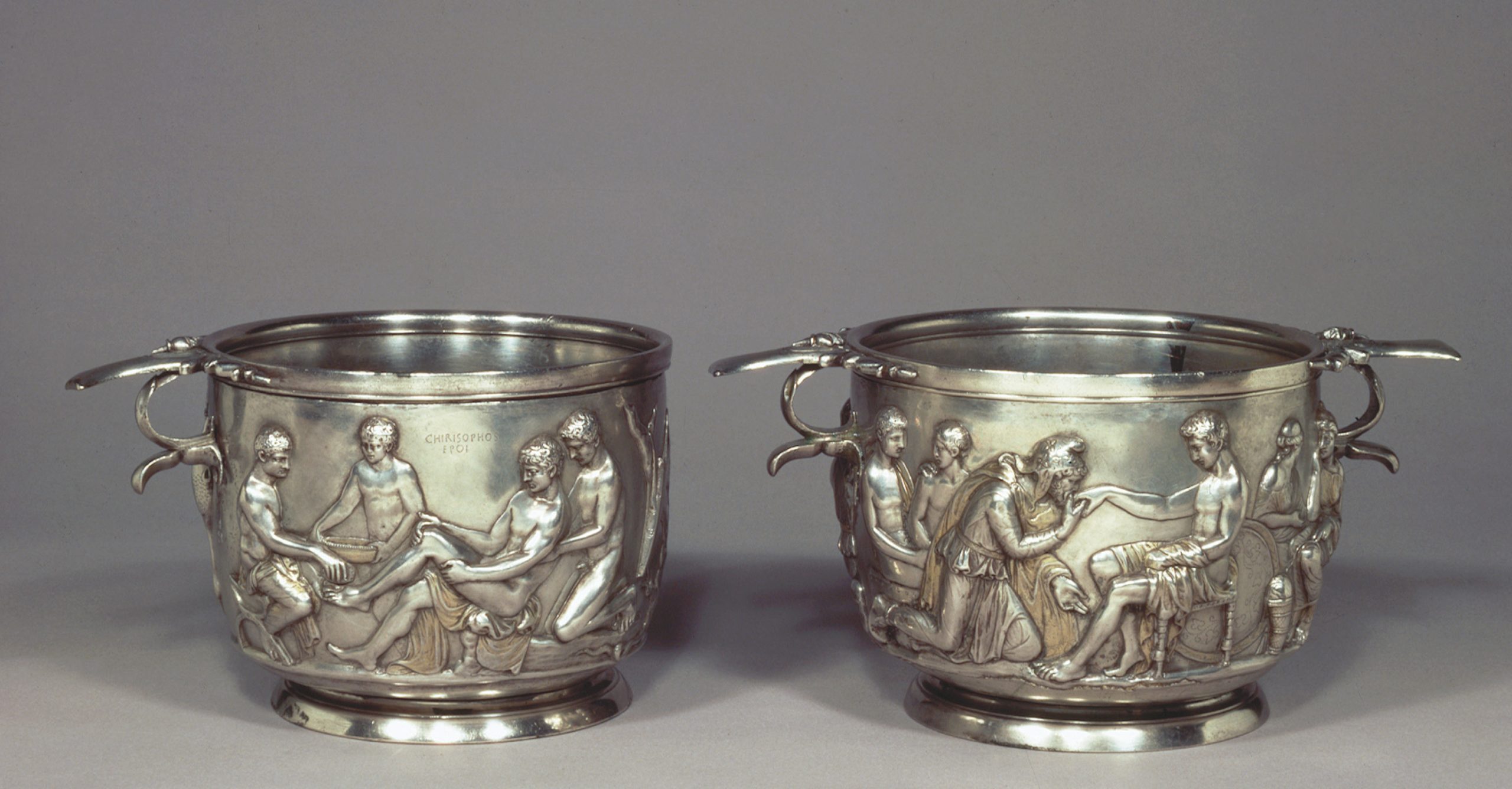
At the heart of this complex web of connections are objects that were far more than mere possessions. The National Museum of Denmark in Copenhagen holds two extraordinary artefacts that offer us a window into this dynamic period: the Hoby cups. These exquisite silver drinking vessels, dating back over 2,000 years, were found in a rich burial and are among the most remarkable artefacts from the Iron Age in the country (500 BC- 400 AD). Far beyond their aesthetic beauty, the Hoby cups speak to us of cultural exchange, of the intersections between the Roman world and northern Europe, and of the elite societies that lived at the heart of these exchanges.
These cups were not simply luxury items for the powerful – they were tangible symbols of the shifting political and cultural forces at play, objects infused with meaning and agency. As we delve into the story of the Hoby cups, we should consider not just their exceptional craftsmanship, but the broader implications they carry. These artefacts invite us to reflect on a world where people were interconnected across great distances, where power, security, and prestige were intricately linked, and where material culture had the power to shape identity and influence.
Unearthing the Hoby burial
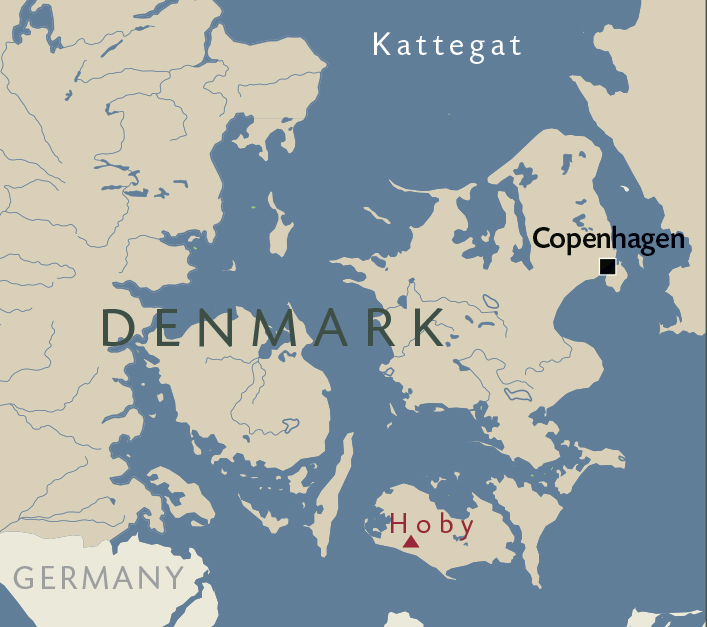
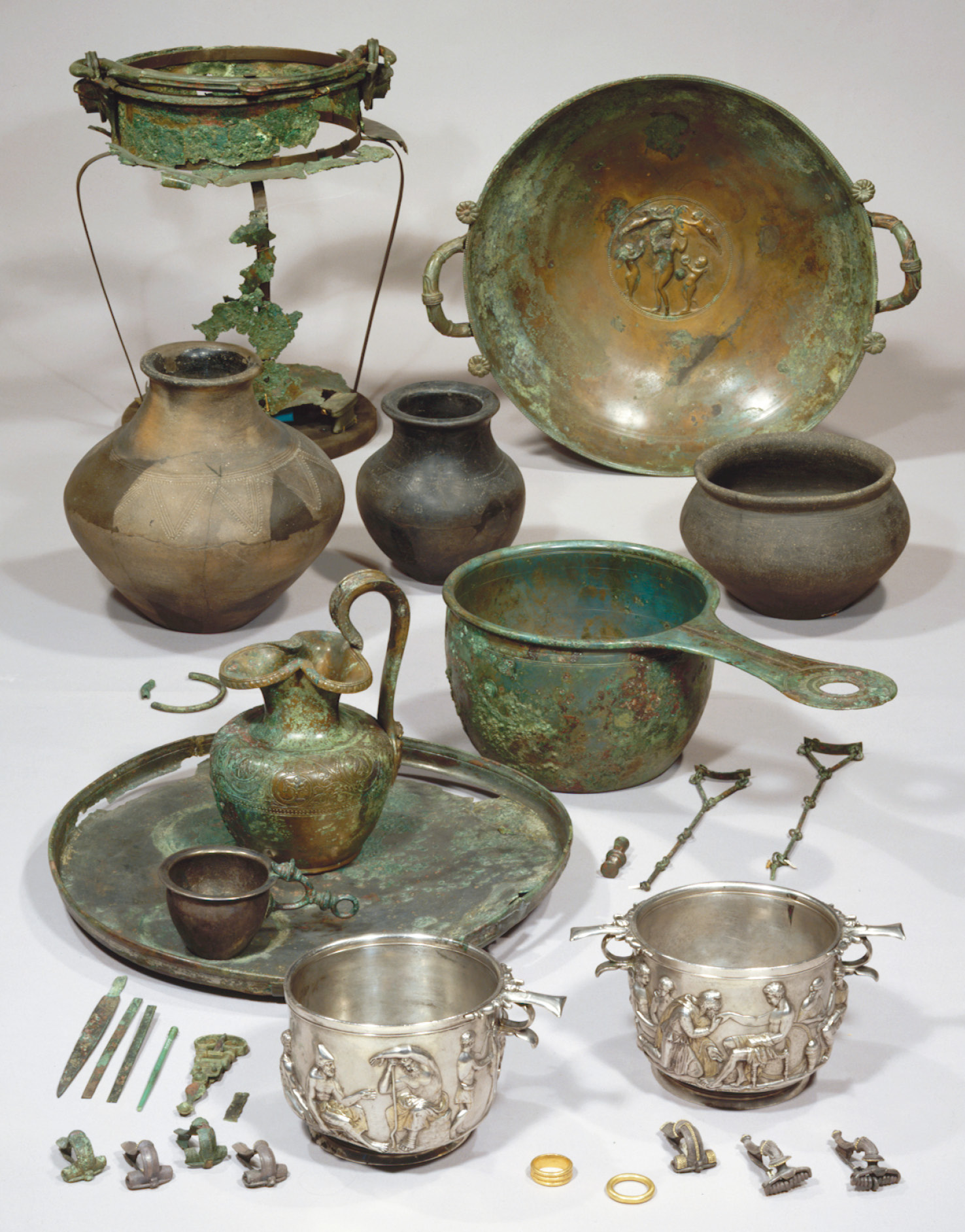
In 1920, following the accidental discovery of a burial by construction workers, archaeologists from the National Museum of Denmark conducted excavations in the small village of Hoby on the island of Lolland (southern Denmark). What they uncovered was the richly furnished grave of a man: the assemblage indicated that the deceased was probably a chieftain or high-ranking figure, someone who commanded significant power and influence within his community. Analysis of the skeletal remains has confirmed that the individual was between 25 and 35 years old. In addition to two golden rings, items of dress and personal adornment, a bronze knife, pottery vessels, a small cup with a zoomorphic handle, and a drinking horn of which only the bronze mountings survived, the burial contained a magnificent table set for drinking, including a basin, a bucket, a tray, a jug, a ladle, and two cups. Most of the vessels were made of bronze, but the two cups were made of silver and weighed approximately 1kg each. The examination of the objects showed that the burial took place during the Early Iron Age (1st-2nd century AD).
Roman artefacts beyond the frontiers
How did such luxurious objects find their way beyond the fringes of the Roman Empire? The answer lies in the complex network of trade, diplomacy, and gift exchange that characterised the Iron Age in the country. Denmark’s location at the crossroads of maritime and overland trade routes made it a crucial hub for exchanges between the Roman Empire and the tribes in northern Europe. Recent excavations carried out between 2001 and 2016 confirmed the central role of Hoby in the local social and economic landscape during this period. Roman goods flowed northward along these routes, often exchanged for other valuable commodities such as amber, furs, and slaves. The elites in northern Europe eagerly acquired Roman artefacts, which they used to display their wealth and connections, assert their status, and align themselves with the sophistication of the Mediterranean world.

Indeed, the Hoby burial is only one of the many richly furnished graves found across northern Europe from the Iron Age. These burials often contain Roman imports, ranging from jewellery and weapons to glassware and pottery. Together, they reveal the extent to which Roman material culture permeated the Empire’s northern regions and beyond. However, the Hoby burial stands out for its exceptional wealth and the quality of its objects. The high-status individual buried at Hoby could have acquired the cups in many ways, including as donatives or via trade. It seems most likely, though, that these objects were diplomatic gifts, as Roman authorities often used such items to build alliances with local leaders, who could act as intermediaries or allies in the Empire’s efforts to secure its borders.

The craftmanship of the Hoby cups
The Hoby cups stand out for their artistry and craftsmanship, making them some of the finest examples of Roman luxury goods found outside the Empire. Because of this, they remain a key subject of scholarly study, with research focusing on silversmithing techniques, iconography, trade networks, and on their cultural significance. Both cups depict scenes from Homer’s Iliad: one shows Odysseus healing Philoktetes, and the other portrays the meeting between Achilles and Priam. These scenes highlight dramatic events from the poem: the Trojan king Priam pleading with Achilles to return the body of his son Hector; and the allusion to the fall of Troy, which occurred only after Philoktetes joined the Greek warriors. The choice of scenes from the Iliad might suggest that the decoration had more than just an aesthetic value. Understanding the full significance of these scenes would have required knowledge of the Iliad and related literature. We do not know, though, how familiar with these works the people of northern Europe were at the time, making it hard to determine what these images meant to the local community in Hoby. Despite this, it is clear that the cups were powerful symbols of prestige and cosmopolitanism.
From a technical point of view, the craftsmanship of the Hoby cups is extraordinary, reflecting the skills and artistic achievements of silversmiths working in the Roman Empire. While the main body of the vessel was shaped by hammering and raising the walls of a simple cup, the high-relief decoration on the exterior was created on a separate shell. The designs were formed in relief by hammering the metal from the reverse side, with further details chiselled from the front. The external surface was then enhanced with gilding and inlaid details, further elevating the visual impact of the scenes depicted. The value of the cups was enhanced by the presence of the artist’s signature: Cheirisophos, literally meaning ‘wise hand’. While this may have been a clever pseudonym, Verity Platt (Professor of Classics at Cornell University) has recently suggested that the name indicates the creator’s awareness of the artistic value of his work, in terms of both crafting the cups and the scenes depicted.

The prestige of drinking
In the ancient world, reclining or sitting to eat and drink while others stood to serve or attend was a sign of power, privilege, and prestige. In Rome, it became a distinctive practice of aristocratic society and the upper classes. This brings us to the possible original owner of the Hoby cups. In addition to the artist’s signature, a second name was inscribed on the bottom of the cups, that of Silius, leading to speculation that these objects originally belonged to him. This has raised the possibility that he could be identified as Gaius Aulus Silius Caecina Largus, a general and governor of Upper Germany (Germania Superior), stationed in Mainz between AD 14 and AD 21. If so, it would indicate that he exchanged them in a diplomatic context with a local chieftain. The presence of the Hoby cups in the burial, alongside a drinking horn, suggests that the prestige of drinking was probably a shared cultural practice, with the cups being a particularly fitting gift for such occasions.
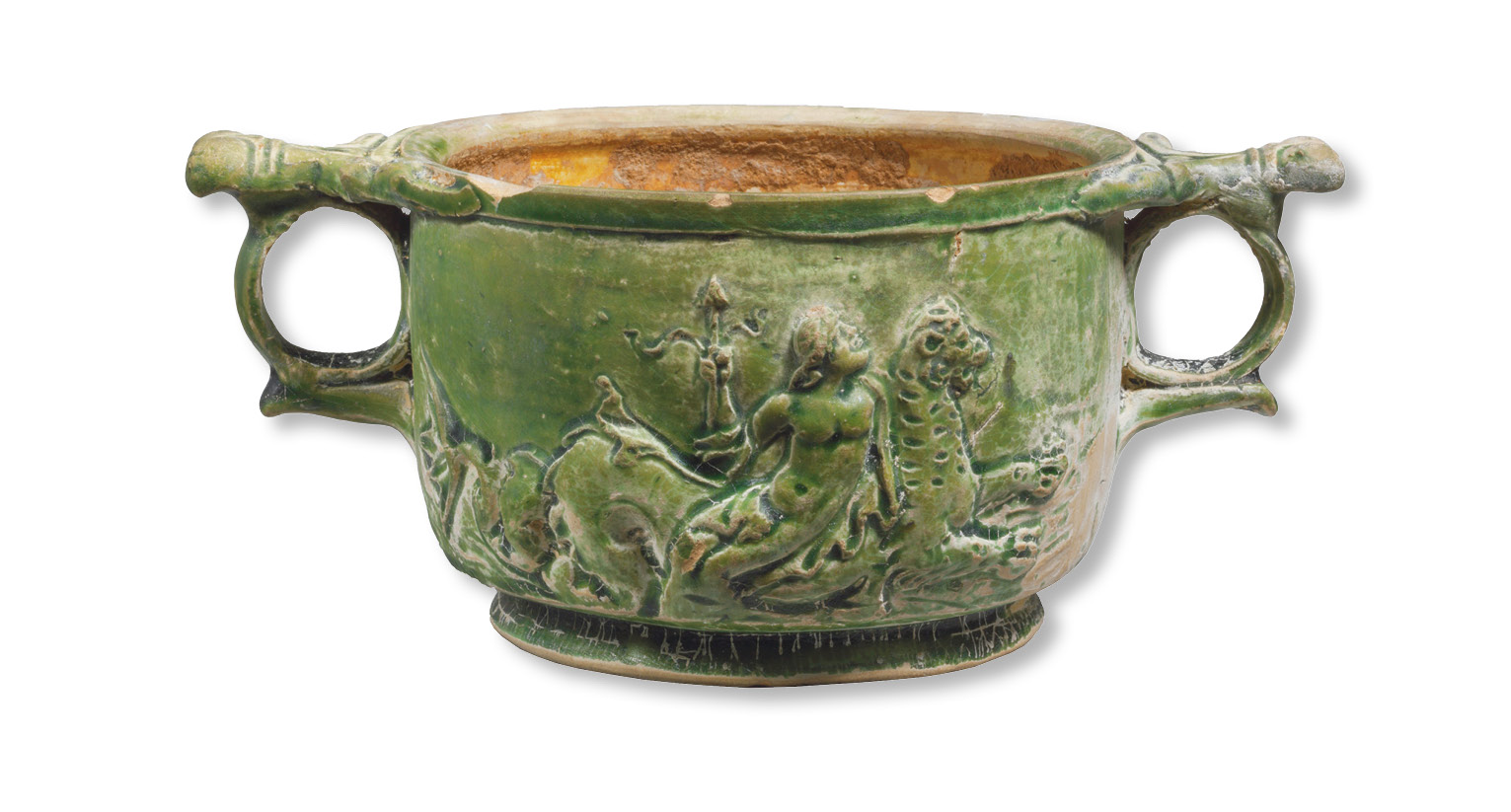
The Hoby cups themselves can be classified as two-handled cups, a type known to scholars of Greek and Roman material culture as a skyphos (plural: skyphoi). Originating in the Greek world, two-handled cups were commonly used for drinking wine, particularly in symposia – social drinking events central to Greek, elite, male culture. The shape of the skyphoi, characterised by a wide mouth, deep bowl, and small symmetrical handles, made them practical for communal wine consumption and easy handling. Over time, skyphoi became emblematic of Greek drinking practices, and their use spread across the eastern Mediterranean following the campaigns of Alexander the Great and the creation of his successors’ kingdoms.

As Rome expanded, Greek customs, including drinking habits, were adopted by the Roman elite. Skyphoi were used in drinking parties, and in the Roman period they appeared in domestic, ritual, and funerary contexts. Alongside ceramic and metal skyphoi, craftsmen in the Roman Empire produced versions in glass and even stone, highlighting their adaptability to various materials and settings. They were widely distributed from the western Mediterranean to the Near East. They were also often depicted in frescoes, sculpture, and mosaics, such as those found in Pompeii, Palmyra, and Antioch. Luxurious examples, like the Hoby cups, were discovered in assemblages such as the Boscoreale Treasure from near Pompeii (1st century AD) and the Berthouville Treasure in northern France (2nd-3rd century AD), showing their association with the elites.
In this way, the story of the Hoby cups extends beyond their immediate context, illuminating broader themes of archaeology in northern Europe. They exemplify the ways in which material culture could serve as a bridge between worlds, facilitating cultural exchange and mutual influence, acting as keys to understanding a complex and fascinating period in European history.
Roman Archaeology Beyond the Fringes of the Empire
The next RAC/TRAC conference is set for May 2026 at Aarhus University, Denmark. This feature is one of several that will investigate aspects of Rome’s rich legacy in the region.
The Roman Archaeology Conference (RAC) is the leading global forum for Roman archaeology, organised biennially by the Roman Society. Since its first meeting in Reading in 1995, RAC has grown into a significant event, attracting a diverse, international audience. It provides a platform for presenting cutting-edge research and fostering interdisciplinary discussion. The Theoretical Roman Archaeology Conference (TRAC) takes place annually and typically partners with RAC for a joint event every two years.
RAC/TRAC 2026 is organised by Aarhus University, in collaboration with UrbNet (Centre for Urban Network Evolutions) and the Museum of Ancient Art. The conference is set to showcase and develop innovative archaeological research, featuring keynote lectures and thematic sessions tackling contemporary debates and challenges in Roman archaeology. Key themes will include the latest approaches to urbanism, the role of networks in cultural and economic exchange, archive archaeology, and theoretical frameworks aimed at decolonising the discipline. The programme will also include two engaging excursions.
For more information, visit http://www.romansocietyrac.ac.uk/ractrac-2026 and https://urbnet.au.dk/news.
FURTHER READING:
• B Emme (2023) ‘Die Silberbecher von Hoby: narrative Strategie und diskursive Kontexte’, Jahrbuch des Deutschen Archäologischen Instituts 137: 141-176.
• T Grane (2013) ‘Roman imports in Scandinavia: their purpose and meaning’, in P Wells (ed.), Rome Beyond its Frontiers: imports, attitudes and practices, JRA Supplement 94 (Portsmouth: Journal of Roman Archaeology), pp. 29-44.
• K Lapatin (ed.) (2014) The Berthouville Silver Treasure and Roman Luxury (Los Angeles: J Paul Getty Museum).
• National Museum of Denmark, ‘The chieftain’s grave from Hoby’, https://en.natmus.dk/historical-knowledge/denmark/prehistoric-period-until-1050-ad/the-early-iron-age/the-chieftains-grave-from-hoby.