Subscribe now for full access and no adverts
The semi-precious stone, lapis lazuli, has been prized for its bright blue colour from at least as early as the 5th millennium BC, and is still valued today. However, apart from its colour and its long popularity, what is of particular importance about this stone is that it is only found in a few places in the world, including Badakhshan in north-east Afghanistan and Chile in South America. Today, lapis lazuli is best known for its use as a pigment in Renaissance Italy, where it was ground up and purified to form deep, true-blue ultramarine, one of the costliest and most precious of painting materials. Even so, lapis lazuli was valued for its colour and its perceived ability to protect its owner from evil through the millennia. Such desirable qualities made the stone an important raw material for artefacts manufactured by numerous ancient cultures. Tracing that lapis lazuli to its true source(s) promised important insights into ancient exchange networks, but achieving this goal has proven to be fraught with difficulties.

Provenance investigation
It has long been assumed that the lapis lazuli extensively used in ancient Mesopotamia and Egypt came from the Afghan source at Badakhshan, where the finest quality lapis lazuli is found, despite its remoteness. However, while this was the most probable source, for a long time it has proved impossible to demonstrate this scientifically by means of non-invasive techniques. This is in large part due to the complex composition of the stone. While the blue colour is created by lazurite, the lapis lazuli itself is an aggregate of different minerals, whose presence and abundances can vary considerably; this quality is reflected in its wide range of colours. Due to the heterogeneity of lapis lazuli, it is very difficult to identify provenance markers by analysing the whole stone. Moreover, large sets of reference rocks with a reliable source attribution are difficult to find due to the general inaccessibility of the mines and the lack of accurate geographical information on specimens stored in museums and private collections.
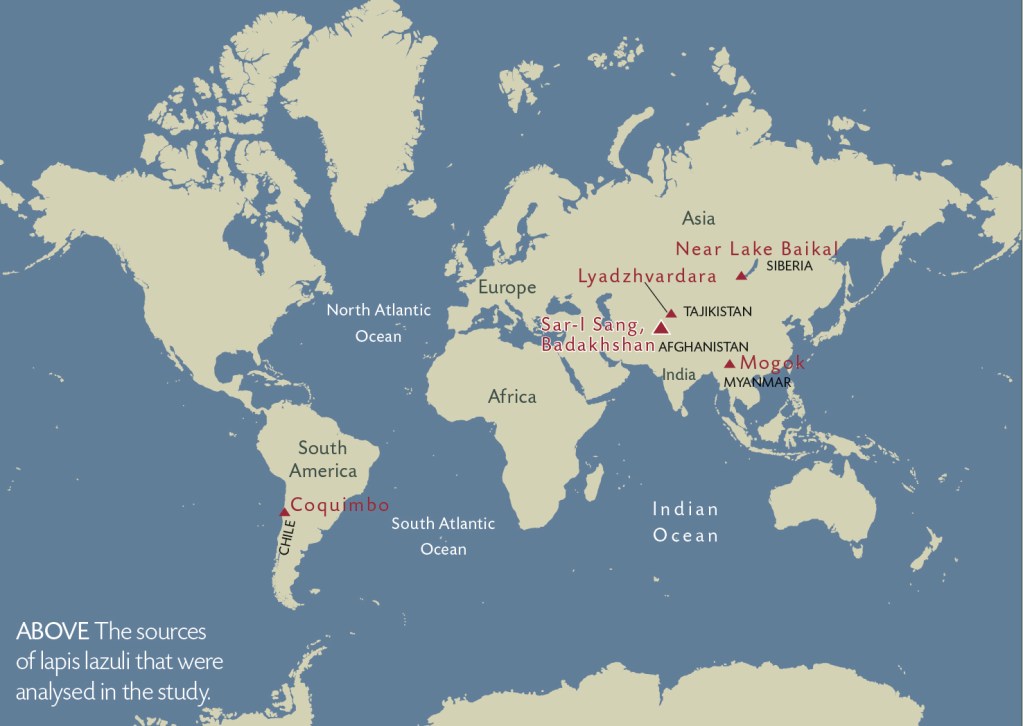
Now, though, a team of scientists from the University of Turin and the INFN Turin Division (Italy) has finally achieved this goal by developing a new methodology based on non-invasive advanced scientific techniques, called ion beam analyses. Using small proton accelerators available in different European laboratories, it is possible to analyse the properties of the lapis lazuli material down to the micrometric scale. This allowed the team to identify chemical and physical features within the single crystals of individual mineral phases (a few hundred microns in size), which can be used as a provenance fingerprint. In fact, lapis lazuli from different parts of the world has peculiar chemical properties due to some differences in the mechanism of mineral formation. In the last 15 years, the Turin team has analysed a large number of reference rocks (almost 70 to date) from five different source areas: Chile (Coquimbo region), Afghanistan (Badakhshan region), Tajikistan (Lyadzhvardara, Pamir Mountains), Siberia (Lake Baikal area), and Myanmar (Mogok region). Several characteristic trace elements or luminescence properties have been identified to distinguish between these lapis lazuli sources. These same markers can be searched in lapis lazuli artefacts and compared with the reference dataset to infer the provenance of the raw material used to create the analysed object.

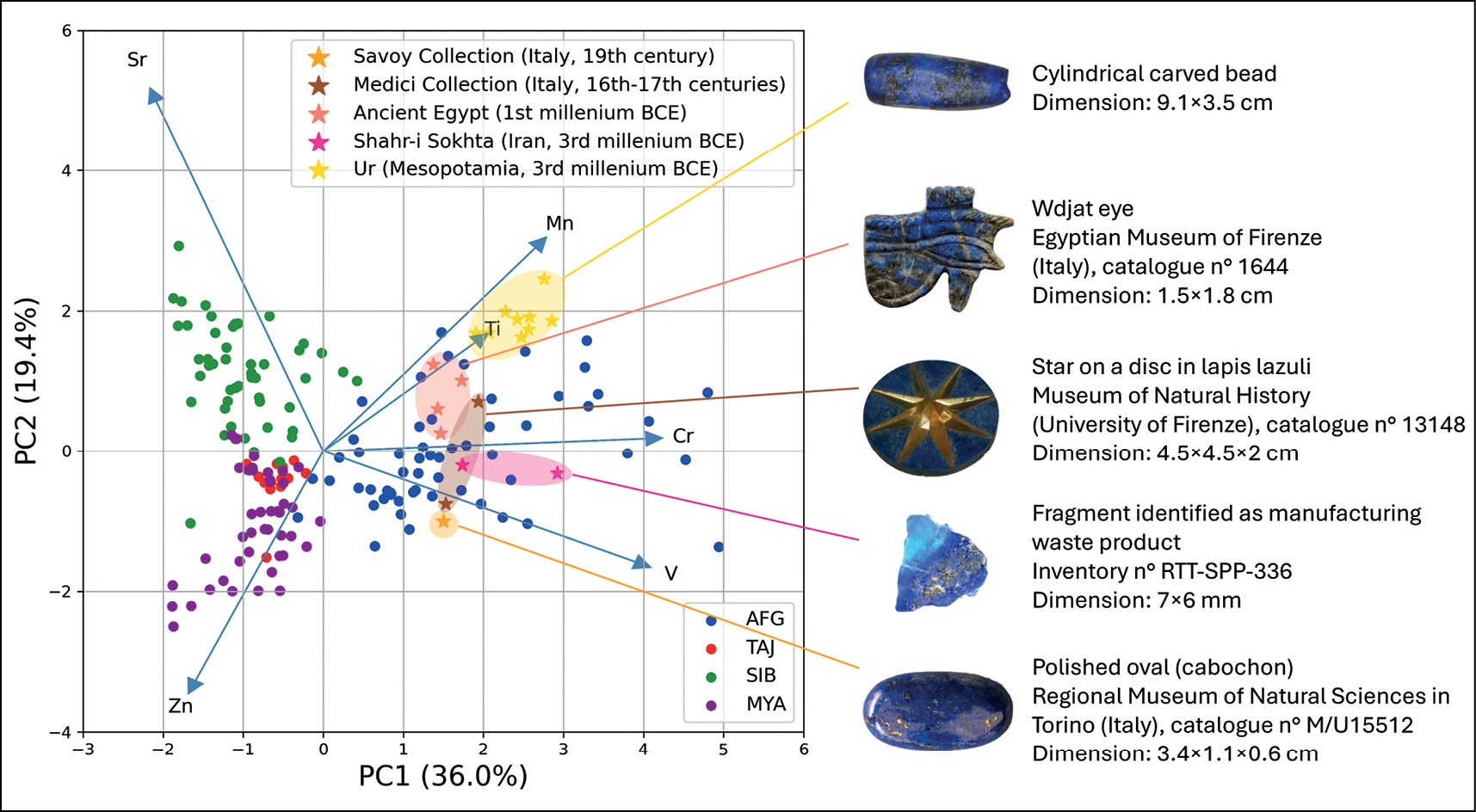
This approach allowed the team to prove, for example, that some 3rd millennium BC beads from the famous Royal Tombs found at Ur of the Chaldees in southern Iraq definitely came from the Afghan source. This result is of considerable significance on its own, but of equal importance is the fact that this method is non-invasive. The provenance of precious or rare objects, such as carved amulets, statuettes, or jewels, can now be proven, allowing us to trace the fluctuations in lapis lazuli long-distance trade over the millennia. Several archaeological and historical finds from different periods and cultural contexts have been analysed by the group using this methodology. These include working waste fragments retrieved at Shahr-i Sokhta (Iran, 3rd millennium BC), an important hub for the lapis lazuli trade to other cities on the Iranian plateau and towards western markets (such as Mesopotamia); amulets from ancient Egypt (mainly 1st millennium BC); carved objects from the ‘Collezione Medicea’ of the famous Medici family, which was assembled in the 16th and 17th centuries in Florence (Italy); and some pieces belonging to the 19th-century ‘Savoy Collection’ of the Regional Museum of Natural Sciences in Turin (Italy). In all these case studies, a unique compatibility with the Afghan source was found for the majority of the samples, scientifically proving the continuous use of this supply area over thousands of years.
To illustrate these findings, the results obtained from one sample for each of the cited case studies is shown on a chart. This reveals how they compare with reference rocks from the five source areas using a method called principal component analysis, which looks for natural patterns in a large dataset, reducing the number of features while keeping the most important information. This allowed the team to evaluate the correlations between several variables (in this case, the trace elements in diopside, a mineral phase often present inside lapis lazuli) and their role in the differentiation of groups of samples. Finally, then, the lapis lazuli used in so many important objects can be traced to a source with confidence. The crucial role that material from what is now Afghanistan played in supplying the ancient world inevitably invites questions about the nature of the mines in the region.
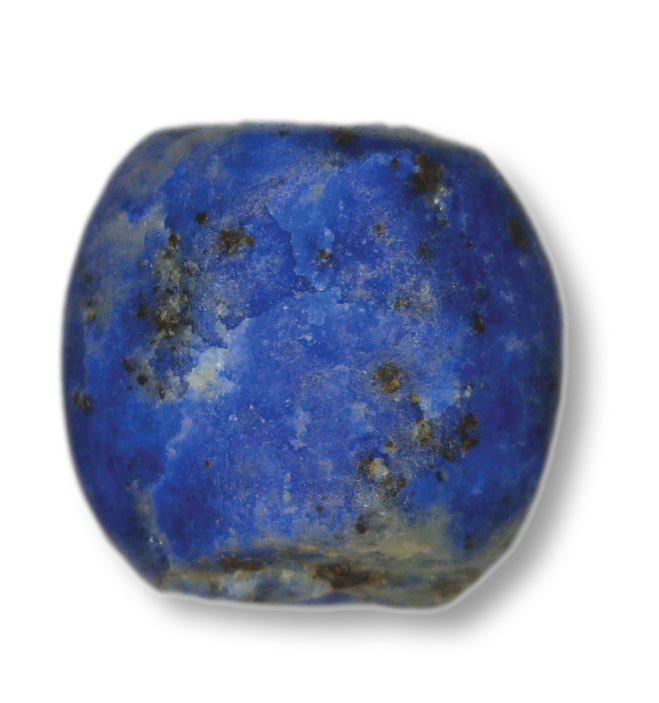

Top, above & below: A selection of lapis lazuli beads from the Royal Cemetery at Ur. These date to the 3rd millennium BC, and have now been linked to the Afghan source of the stone in Badakhshan. Images: courtesy of Alessandro Lo Giudice

The Afghan source
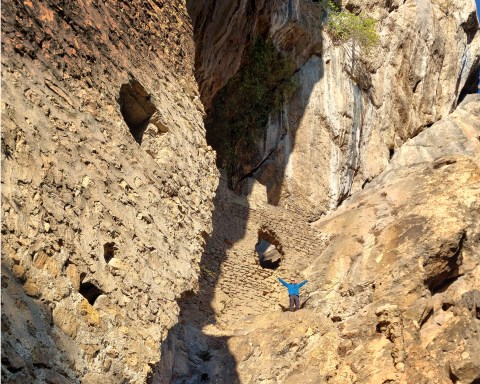
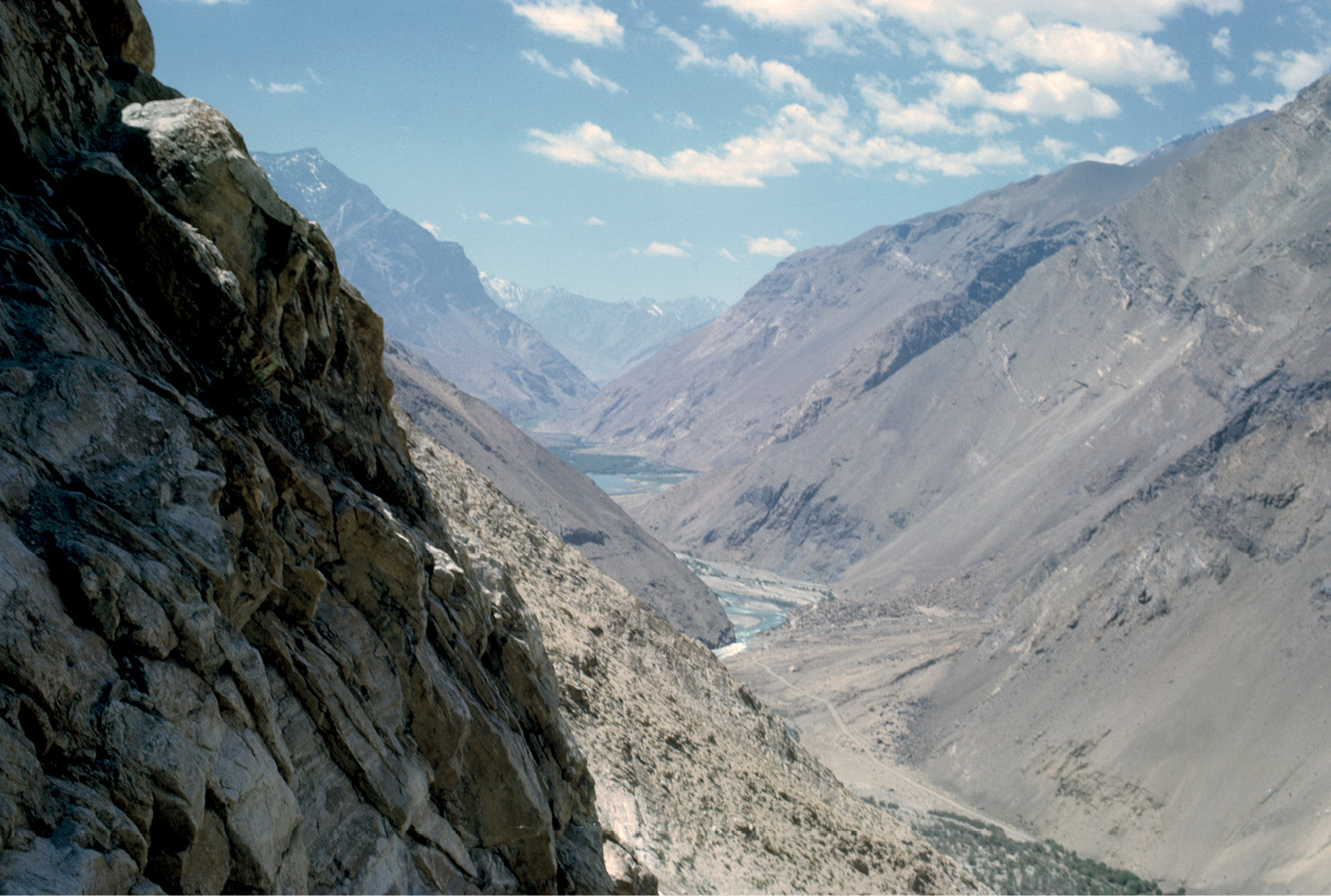
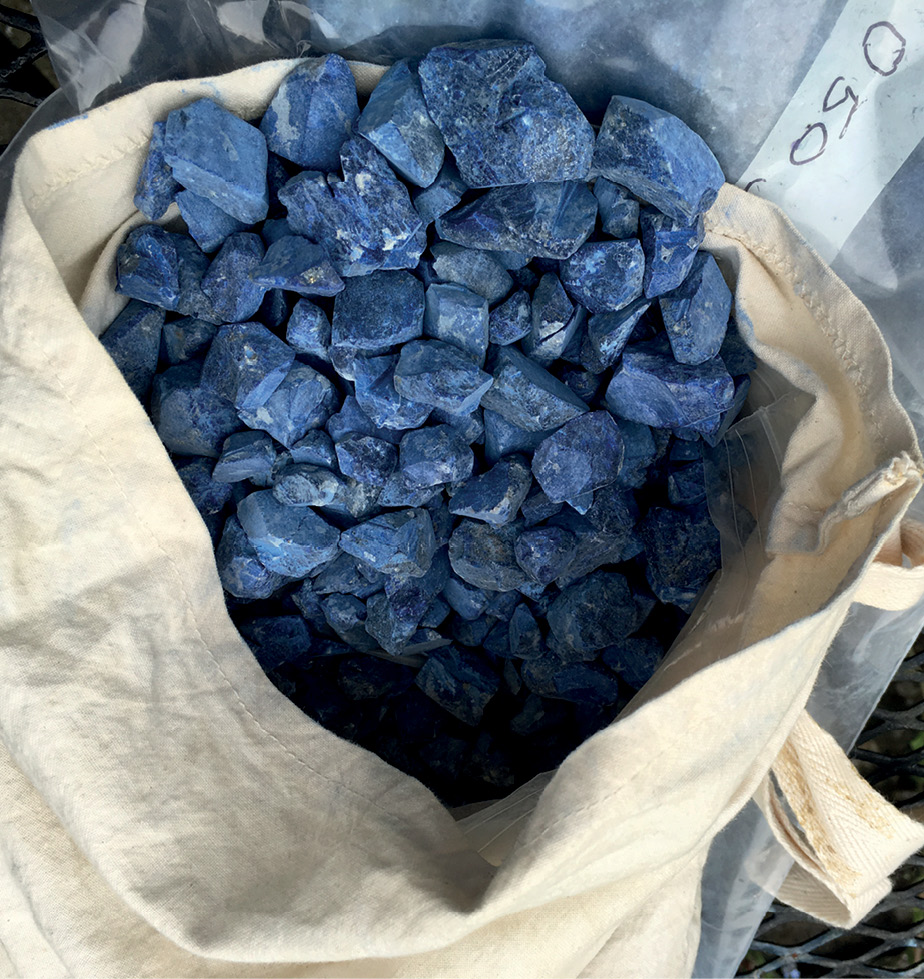
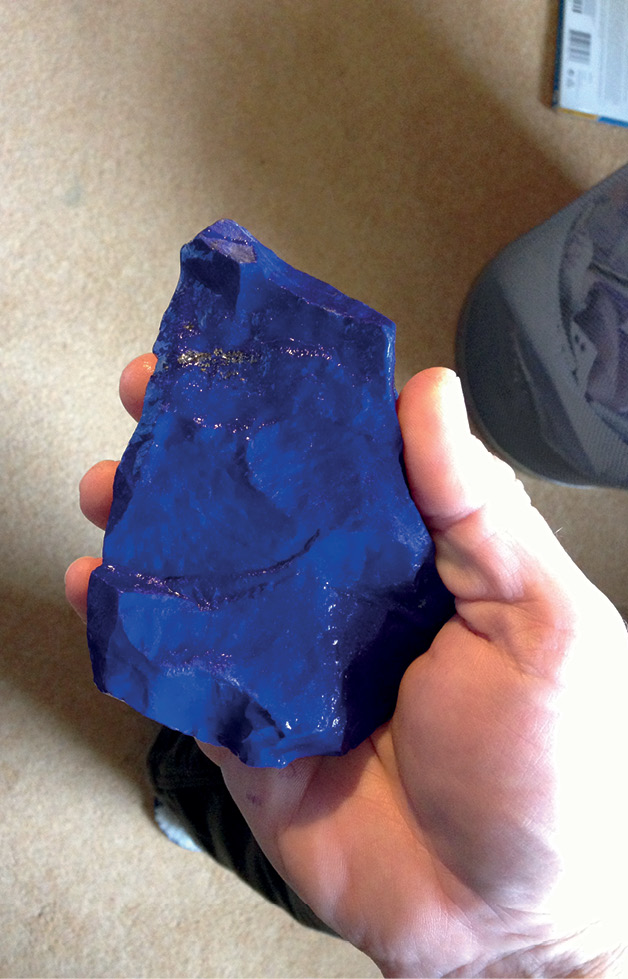
The Badakhshan mines are located in the Afghan province of Kerano-Munjan, an inhospitable area of bare mountains and deep ravines. Swift-flowing rivers have cut deep canyons and gorges through the mountain ranges and vegetation is confined to small, flat areas where sufficient soil remains. A few, widely separated settlements are linked by rocky trails open for less than half the year. The mining village Sar-I Sang (meaning ‘place of stones’) is a collection of mud- and stone-built hovels, located at the base of a steep mountain. Lapis lazuli occurs in a wide stratum of marbles that form the upper section of the mountain and which overlie earlier gneisses. This stratum occurs in a thick, rather ill-defined band, which varies considerably in the concentration of lazurite, and therefore colour. The specimens of lapis lazuli found at Sar-I Sang cover a wide range of hues from a deep, almost violet blue through royal blue of gem quality to light blue, a turquoise, and finally a few pieces of brilliant green. The finest quality should be a pure royal blue without blemish, although impurities are often present, including iron pyrites or ‘fool’s gold’, white crystals of diopside and calcite, and dark smudges.
The mines at Sar-I Sang are located over 330m up a steep mountainside, reached by a long zigzag path. In antiquity, there was only one mine, which consists of a series of lofty caverns, connected by narrow passages. The roofs and walls of these huge caverns, in places 45m high, were covered by a thick deposit of black soot, proof of the ancient method of extracting the stone: a technique described by Lieutenant Wood in 1838, while travelling to the source of the River Oxus (Amu Darya). Fuel and water were carried up the ascent to the old mine, and a fire lit near the rock surface that was to be worked. When the face was sufficiently heated, cold water was thrown on to it, splitting the rock and enabling further work to be done with the available tools – pick, hammer, and chisel – to extract the lapis lazuli from its marble matrix.
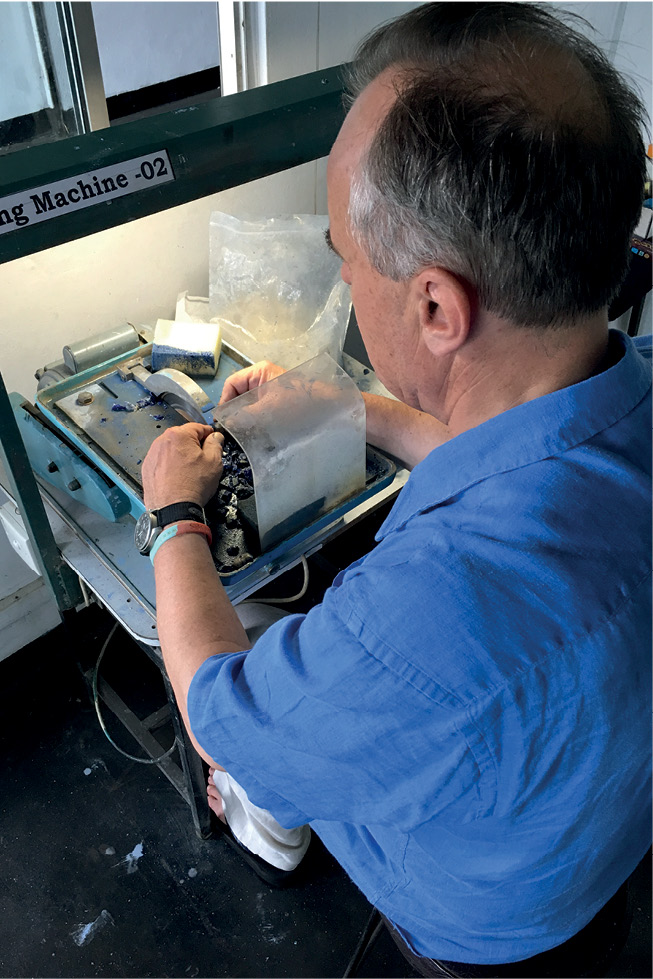
The old mine, Mardan-y Yak, has long been closed, for it is now known that the veins of lapis lazuli continue in bands along the top of the mountain, and a number of new mines have been opened to take advantage of this. The method of extracting the stone, apart from the addition of dynamite and drills, has not much changed through the millennia. In July 1994, the gemmologist Guy Clutterbuck walked across the mountains from Pakistan to Sar-I Sang. He describes here the real dangers of extracting this most beautiful of rocks.
‘At the entrance to the mine, which could best be described as a series of holes, a Badakhshani demanded a pass… We entered the mine, in this case Mine 4. The tunnel became increasingly narrow, so in certain places we had to drag ourselves on our stomachs with only a few inches to spare above us. Equipped with a handheld torch… the only view I had was of the soles of my guide’s boots as he unavoidably drew the thick clogging dust behind him. The distant clanking noise up ahead became clearer and more resonant as we neared the working area. The tunnel began to widen and barely discernible hands emerged from the dust and darkness to grab and prod. They turned out to belong to local thieves, who helped themselves to a few pieces of lapis lazuli, as the mining trolley went past on its way out of the mine. In the blackness of the confined space, the shouts and jabbering heightened a feeling of claustrophobia that was difficult to ignore.’
‘Finally, after a distance of what must have been approximately 50m, we arrived in what appeared to be a sort of catacomb, with miners frantically working at the cavities that the explosive had blown out. With my torch I picked out a seam of blue overhead that snaked through the parent rock: a dull grey/white diopside or calcite. The iron pyrites caused the rock to sparkle with golden flecks. Where the men had clearly identified a pocket of fine lapis lazuli, known as the eye (or the best), they worked it away from the roof or sides of the hollow. The shouting intensified as the miners scrambled to gather blocks and shards of lapis lazuli that they knocked out from the cracked rock with the help of a sizeable metal bar and a sledgehammer. Working in this environment is a serious business, fraught with hazards: a Western health and safety inspector would find it hard to conceive the lack of precautions. Most of those are left to the “will of Allah”. There is not a hard hat or a pair of goggles in sight, and their idea of a miner’s lamp is a paltry torch.’
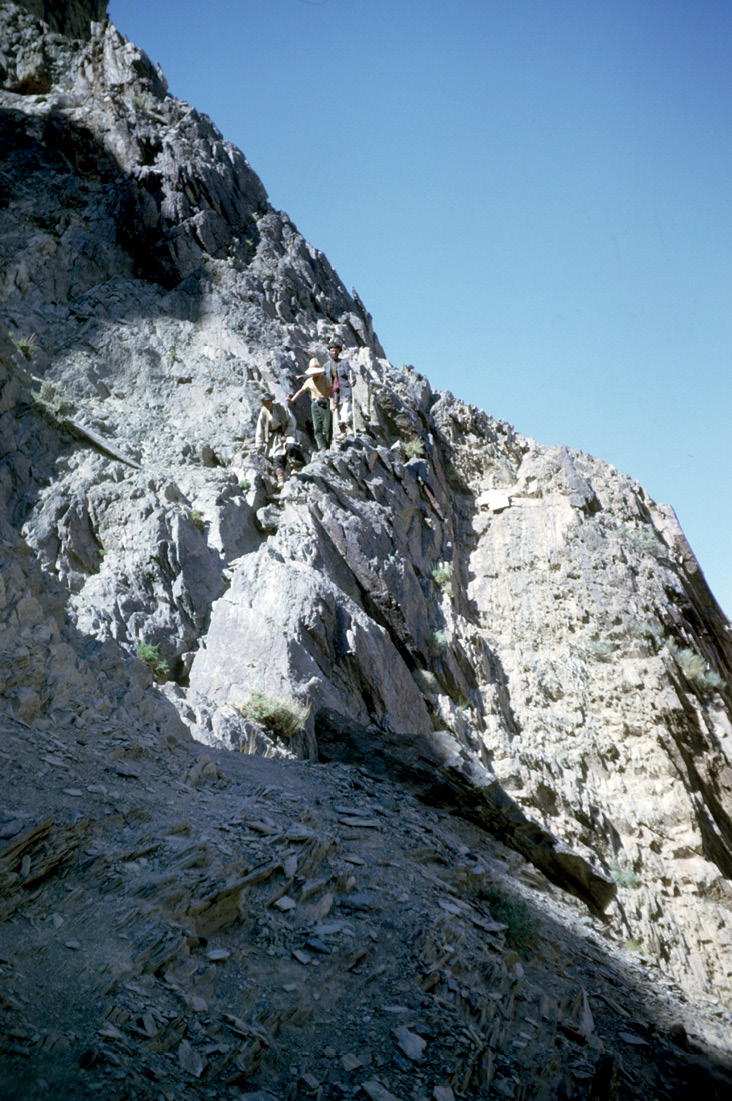
The Sar-I Sang mines in Badakhshan lie high above the village and are reached via a steep path. Image: Georgina Herrmann

‘When they start using explosives, any observer in his right mind should clear the area immediately. They drill a series of holes in order to house the sticks of explosive. Normally four or five sticks are required to bring the roof down. They handle these explosives with astonishing casualness. Having carefully positioned myself at what I judged a safe distance, I waited for the explosion and the smoke and dust that followed to clear. Returning to the face area can be lethal after the dynamiting has taken place, because in the excitement of the moment the miners have been known to be neglectful in checking if all the explosives have been detonated.’
‘After some time, we continued our struggle through the maze of tunnels until we reached a couple of wiry, elderly miners who alone were working an unpromising seam, armed only with an antiquated Chinese drill. Since there was no ventilation or extractor fans, the build-up of carbon monoxide was overpowering…100m at a spluttering crawl finally brought us out at the main entrance to the mine… Looking from the level surface that formed the entrance, we could see down a virtual precipice to the valley below. The vaulting heights of the snow-covered mountains contrasted with an impossibly blue sky, and, at that altitude, it wasn’t easy to draw breath.’
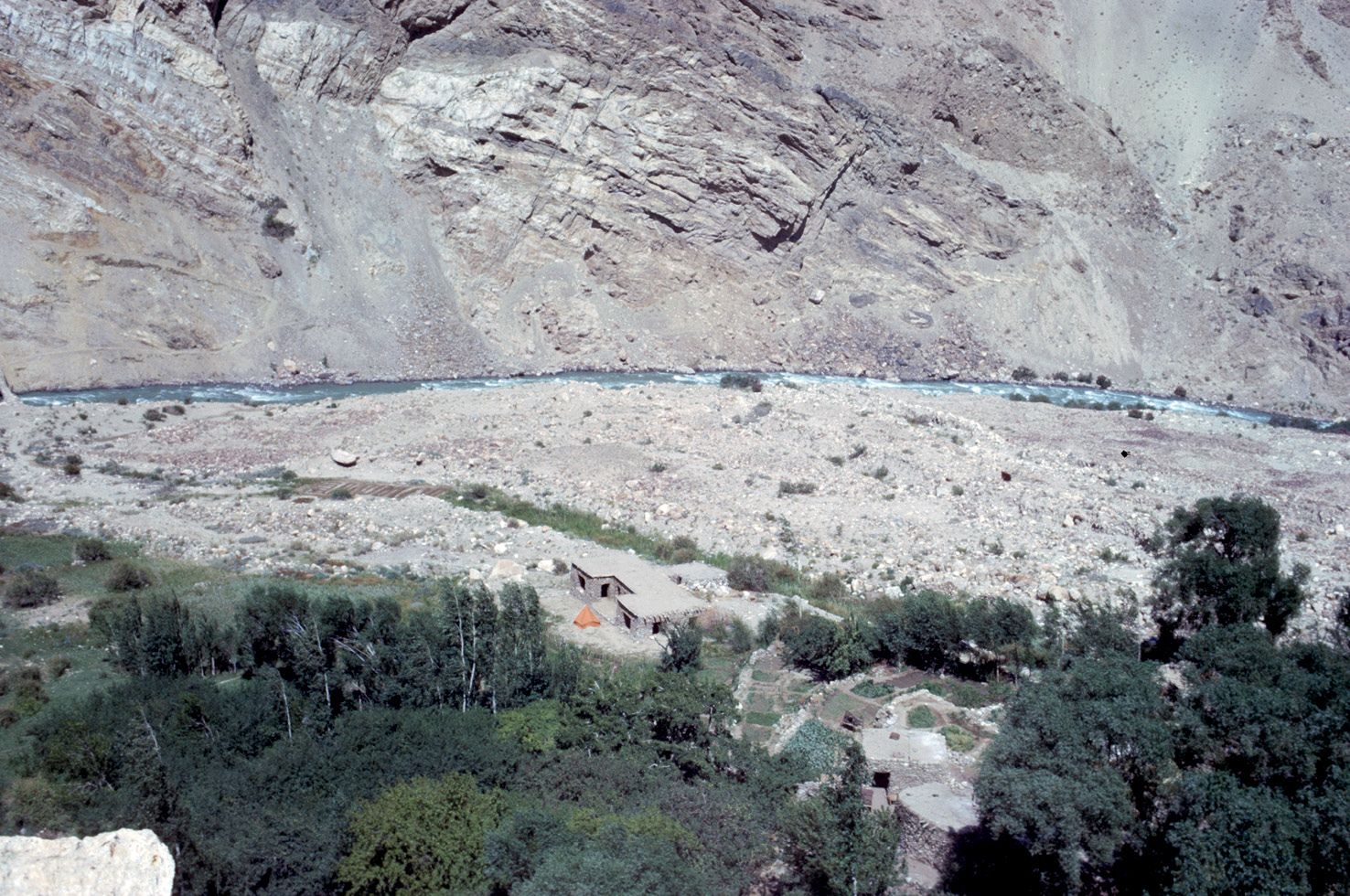
‘The miners work on average 12 hours a day. There are no holidays, unless they are too exhausted to keep dragging themselves up the mountain. Some of them remain in the village for the entire winter, since the mountain passes are closed by snowfall. Their huts are without any furnishing, save for the inevitable steel trunk and rugs covering the mud floor. The miners are paid on a commission basis by the mine leaseholder, an individual or syndicate, who in July 1994 paid £10,000 a month. In terms of the potential yield during that period it is a negligible sum for leasing the mine. The miners’ wages are an additional expense… The miners finish their working day by descending from the mines carrying anything up to 60kg of lapis lazuli on their backs. The sight of the night shift returning to the village far below as the dawn breaks over the mountains and filters through the dust that has risen behind them is a sight not easily forgotten.’
Discovery, use, and trade
It is not possible to know just how early the stone was discovered at Badakhshan. Presumably pieces fell down the mountain into the valley below and were washed into the river. So brilliant is the blue of the stone that it is easy to find on the surface. But it is a long way from a few fragments on a path in this remote and inaccessible region to late-5th-millennium Tepe Gawra in northern Iraq, some 30km to the north and east of Nineveh. At Level XIII in Gawra, a climax was reached in architecture, pottery, and carved gems, and there is evidence for the importation of a variety of semi-precious stones, including lapis lazuli, as well as close links with sites in northern Iran.
The bulk exploitation and transportation of the stone that was eventually achieved is best illustrated in the remarkable discoveries made in the 1920s by the famous British archaeologist Leonard Woolley of the tombs and graves of the Royal Cemetery at Ur. This is dated to the mid-3rd millennium BC and lies in southern Iraq. Vast quantities of beautiful jewellery made of a colourful combination of lapis lazuli, carnelian, and a red, copper gold were found, as well as amulets and cylinder seals. Lapis lazuli was used as an inlay on the famous Royal Standard and on the boxes of harps, and also for larger pieces, such as vessels and dagger handles. It was transported to Egypt, too. By this time, it seems probable that control of the lapis lazuli trade had shifted from northern to southern Iraq with its brilliant civilisation.
In the mid- and late 2nd millennium BC, during the reigns of the Kassite kings in Babylonia, there was a vigorous trade in lapis lazuli, and kilos of the unworked stone have been found in the 2nd-millennium site of Ebla in Syria. In the 1st millennium, an Iranian people, the Medes, controlled the trade, supplying the Assyrian empire with lapis lazuli. With the creation of the first world empire, that of the Achaemenian Persians, the whole length of the ‘blue road’ fell under their control.

The trade in lapis lazuli has continued through the millennia, fluctuating according to political and economic conditions. Venetian traders brought the stone to Renaissance Italy, and altars in Italian churches are richly embellished with lapis lazuli. Today, thanks to the uncontrolled exploitation of the mines, the stone is widely and cheaply available. Indeed, members of the Navajo (Diné) people now employ lapis lazuli instead of their traditional turquoise to decorate their jewellery. The ‘blue road’, then, continues to be well trodden.
FURTHER READING:
• L Guidorzi et al. (2022) ‘A provenance study on the lapis lazuli collection from the Regional Museum of Natural Sciences in Turin’, Journal of Physics: Conference Series 2204 012092.
• G Herrmann (1968) ‘Lapis lazuli: the early phases of its trade’, Iraq 30: 21-57.
• A Lo Giudice et al. (2017) ‘Protocol for lapis lazuli provenance determination: evidence for an Afghan origin of the stones used for ancient carved artefacts kept at the Egyptian Museum of Florence (Italy)’, Archaeological and Anthropological Sciences 9 (4): 637-651.
• M Magalini et al. (2025) ‘Micro-computed tomography and micro-laser ablation on altered pyrite in lapis lazuli to enhance provenance investigation: a new methodology and its application to archaeological cases’, The European Physical Journal Plus 140: 59.
• A Re et al. (2015) ‘Ion beam analysis for the provenance attribution of lapis lazuli used in glyptic art: the case of the Collezione Medicea’, Nucl Instrum Meth B 348: 278-284.