
Subscribe now for full access and no adverts
What is it about battles that so many of us find fascinating? Partly, it’s the sheer drama they contain. Battles compress history into moments of extraordinary tension, where decisions made in minutes can shape nations for centuries. But they also offer something deeper. Walking the ground, reading eye-witness testimony, and studying archival records, I have become convinced that warfare possesses rhythms and recurring patterns that transcend time. Weapons change. Technology transforms. Empires rise and fall. But the essential dilemmas remain remarkably familiar.
Over the past three decades I have spent my professional life immersed in history. As a non-fiction publisher, I have had the privilege of working with some of the world’s finest historians and biographers, including Simon Schama, Michael Wood, Walter Isaacson, and Alex von Tunzelmann. As a writer, I have explored subjects ranging from Stalingrad, Berlin, and Hiroshima to the lives of ordinary men and women caught up in extraordinary events. Yet despite all those years spent reading manuscripts, editing books, and researching my own, it is the subject of battle itself that continually draws me back.
For me, what emerges is a series of enduring dilemmas faced by commanders and soldiers in every age: how to inspire confidence, how to lead under pressure, how to exploit new ideas, how to deceive an opponent, and how to judge the crucial relationship between time and force. For this article, I have chosen five battles, spread across more than 2,000 years, that illustrate some of those recurring challenges, and show why the study of battle remains one of the most revealing ways to understand both history and human nature.
At first glance, the subjects I have chosen may appear wildly different. A Greek hoplite standing on a dusty plain outside Athens seems to have little in common with a Soviet infantryman fighting his way towards Berlin, or a pilot searching for enemy carriers over the Pacific. Yet the more time I have spent studying warfare across 3,000 years, the more I am struck by its recurring patterns.
Repeatedly, commanders and ordinary soldiers face the same questions. How do you persuade frightened people to move towards danger? How do you inspire confidence when events appear to be collapsing? When should you trust innovation? How do you trick an opponent? And how do timing and numbers combine to determine victory or defeat? The details change, but the underlying human problems endure.
1. Morale
Marathon, 490 BC
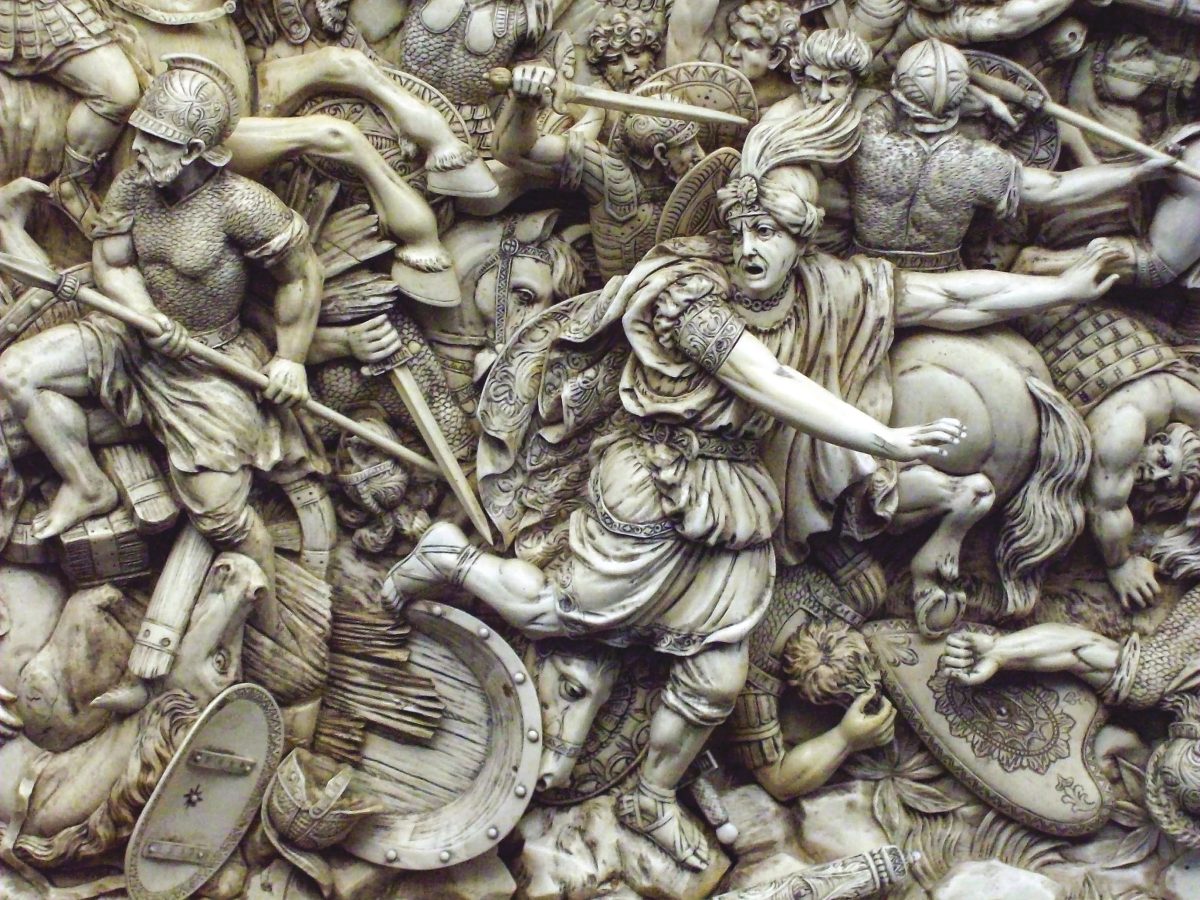
To understand the importance of morale, it is perhaps necessary first to travel back in time over two and a half millennia, to the Battle of Marathon in 490 BC. When the Persian Empire landed its forces outside Athens, it represented the greatest military power of its age. The Athenians who marched out to meet it on the plain of Marathon were not professional soldiers in the modern sense. They were citizens, farmers, craftsmen, and merchants, who had taken up arms to defend their city. Yet they confronted an enemy many regarded as unstoppable. As I discovered while walking the battlefield, the terrain itself reinforces the sense of peril they must have felt. The mountains hem you in. The sea lies open behind the Persian position. It is easy to imagine how intimidating the sight of the invading force must have appeared. And yet the Athenians won.
Part of the explanation lies in tactics and equipment. The Greek hoplite phalanx proved devastating in close combat. But the deeper lesson concerns belief. The men in the Greek line trusted the citizens standing beside them. They trusted their commanders. Most importantly, they believed their cause was worth fighting for. The battle demonstrated what military historians have repeatedly observed ever since: morale is not simply courage. It is collective confidence. That confidence transformed the odds. The Athenians discovered that the Persian Empire was not invincible, after all. The victory altered how they saw themselves and their future. As I argue in my new book Battle, Marathon showed that ‘courage and unity could overcome even a vast empire’, and that morale itself could become a decisive force in history.
The same pattern appears repeatedly in later centuries. Caesar’s legions at Alesia; Nelson’s sailors at Trafalgar; and the Soviet defenders at Stalingrad – all reveal the same truth. Armies rarely fight effectively because they are fearless. They fight effectively because they believe. Once belief fractures, strength and numbers suddenly matter much less.
War may be shaped by weapons and technology, but it is still ultimately conducted by human beings. Marathon reminds us that morale is among the most powerful forces on any battlefield. It cannot be weighed, counted or measured. Yet its presence can make ordinary people achieve extraordinary things, and its absence can make even the strongest army collapse. It remains as decisive today as it was on a Greek plain two and a half thousand years ago.
2. Leadership
Gaugamela, 331 BC
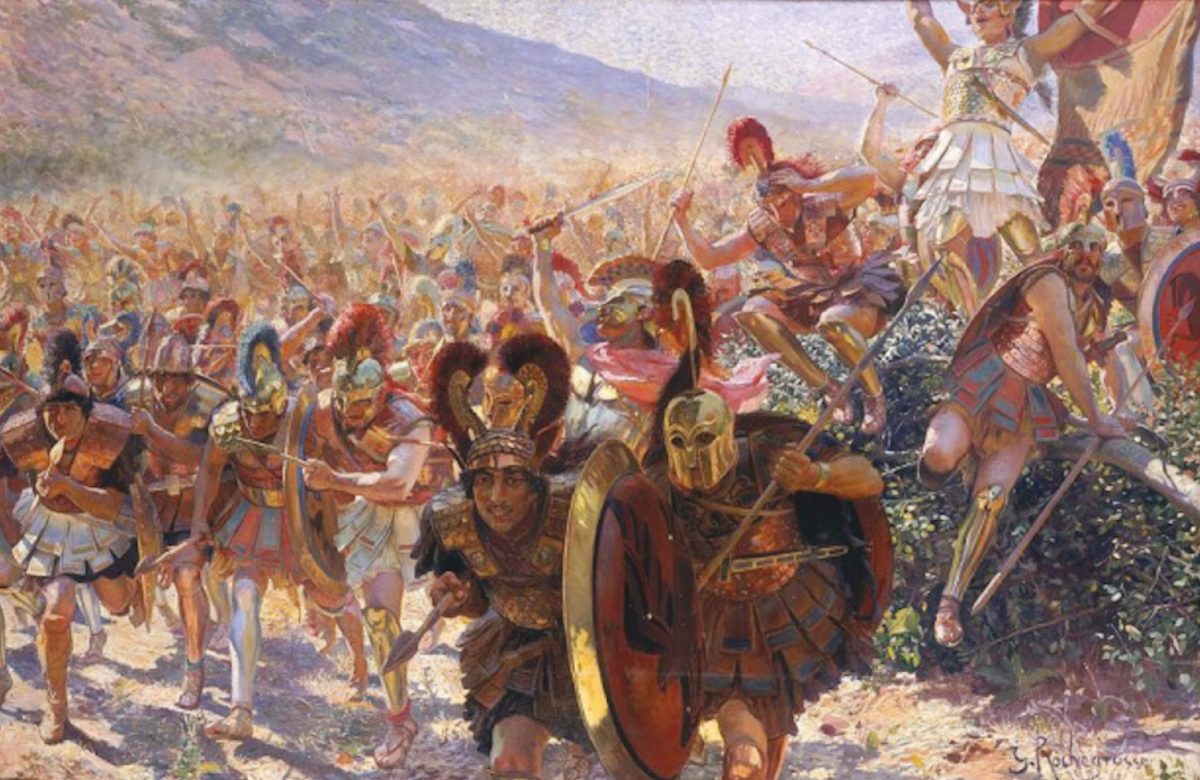
If morale explains why men continue fighting when fear tells them to run, leadership explains how armies make decisions amid uncertainty. Every commander, whether armed with bronze spear, musket or drone, confronts the same fundamental challenge: how to impose order on confusion. Battlefields are places of incomplete information, collapsing plans, and fleeting opportunities. The best leaders recognise these moments and act decisively; the worst become prisoners of events. No battle illustrates this truth more vividly than Gaugamela in 331 BC – perhaps Alexander the Great’s finest moment.
Today, standing on the plains near Mosul, modern Iraq’s second city, it is easy to understand why the Persian king Darius III chose to fight there. The terrain is broad, open, and flat, seemingly ideal for a larger army. According to ancient sources, Alexander’s army faced a force many times larger than his own, supported by cavalry, scythed chariots, and the immense resources of the Persian Empire. On paper, the result should have been obvious. Yet military history repeatedly demonstrates that battles are fought by people, not mathematics.
The Macedonian king’s genius lay not simply in tactical brilliance but in leadership under pressure. Unlike many rulers of the ancient world, he was never content to command from a distant vantage point. He shared the dangers faced by his men, and expected them to see him doing so. This visibility mattered. Leadership is partly practical, but it is also psychological. Soldiers draw confidence from commanders who appear calm when circumstances suggest panic. The ancient historian Arrian emphasised Alexander’s composure throughout the battle, even when the outcome remained uncertain, and it was this confidence that helped sustain the cohesion of his army.
What fascinates me about Gaugamela is that Alexander succeeded by understanding both landscape and human behaviour. Rather than attack directly, he manipulated Darius into extending his lines. He drew Persian cavalry away from the centre, probing for weakness while maintaining discipline among his own troops. Then, at precisely the right moment, he launched his elite Companion Cavalry through a gap that had opened in the Persian formation. It was an audacious manoeuvre, but audacity alone is never enough. The critical element was judgment: recognising the instant when risk became opportunity.
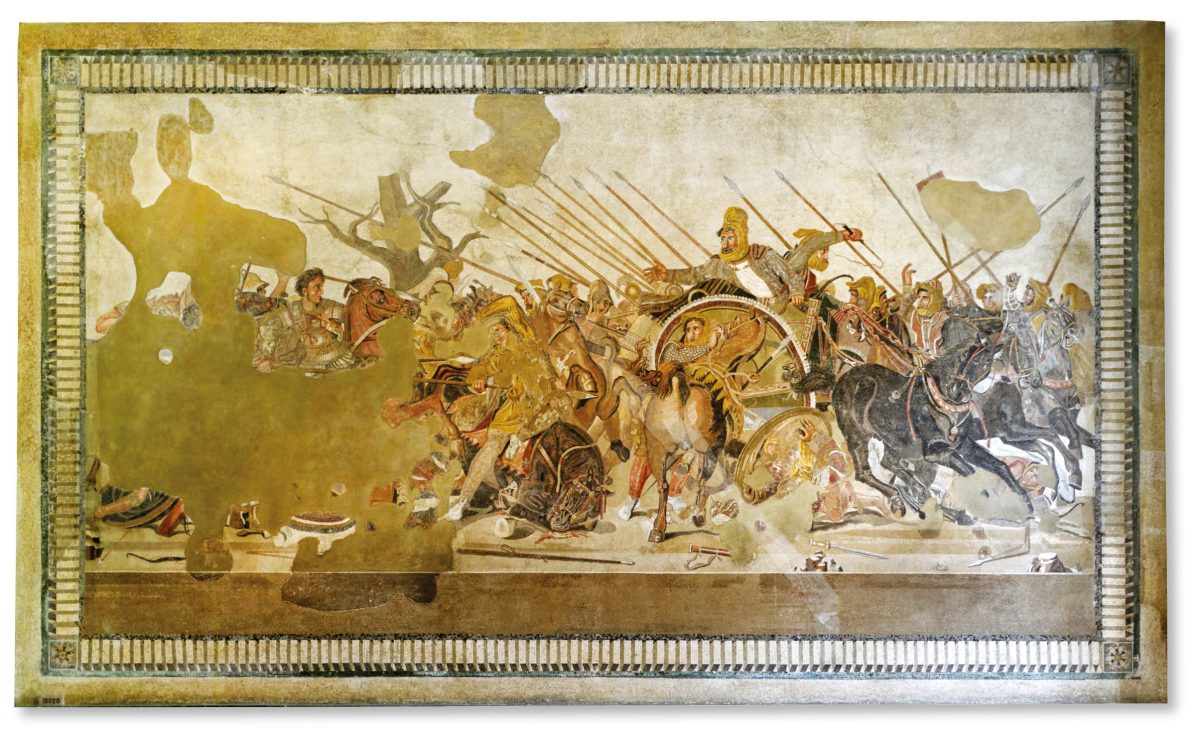

One can argue that Darius presents to the historian the other side of the leadership equation. He was neither foolish nor incompetent. Indeed, he had prepared the battlefield meticulously, clearing ground for his chariots and assembling overwhelming strength. Yet when Alexander’s attack developed, Darius became reactive. As confusion spread and the Macedonians pressed forward, he lost control of events. His eventual flight from the battlefield shattered Persian morale and accelerated the collapse of an empire that had dominated the Near East for two centuries.
That contrast explains why Gaugamela remains relevant. Leadership is rarely about possessing perfect information. More often, it is about making decisions despite uncertainty. Nelson at Trafalgar, Eisenhower before D-Day, and countless modern commanders have faced the same dilemma. Delay can be fatal. Impulsive action can be equally disastrous. The art lies in recognising which risks are worth taking. Alexander’s achievement at Gaugamela was not merely that he defeated a larger army. It was that he imposed his will on an unfolding chaos and persuaded thousands of men to trust him while doing so. Across more than 2,000 years of warfare, that remains one of leadership’s defining tests.
3. Innovation
Lepanto, 1571
One of the great misconceptions about military history is that innovation arrives with a bang: a new weapon appears, everything changes, and the old world is swept away. The reality is usually messier. Most breakthroughs are not inventions at all, but new ways of combining existing technologies, tactics, and ideas. They often look uncertain, even reckless, before they become accepted wisdom. Studying battlefields across the centuries has repeatedly persuaded me that innovation is less about technology than adaptation.
The Battle of Lepanto in 1571 offers a perfect example. For much of the 16th century, the Ottoman Empire appeared unstoppable. Its armies had pushed deep into Europe, and its fleet dominated large areas of the Mediterranean. When the Christian alliance of the Holy League assembled a coalition fleet to confront the Ottomans in the Gulf of Patras, the outcome was far from certain. Yet Lepanto became one of those moments when military thinking shifted decisively, revealing how a new approach could suddenly make an old system vulnerable.
Standing on the shores of western Greece today, it is difficult not to think about the scale of the clash. Hundreds of galleys converged across the water. Tens of thousands of men packed the decks. The smoke, noise, and confusion would have been overwhelming. But beneath the apparent chaos lay an important transformation in naval warfare. For centuries, Mediterranean fleets had relied heavily on boarding actions. Naval battles often resembled infantry engagements fought on floating platforms. The objective was frequently to grapple with the enemy and overwhelm him in close combat. At Lepanto, however, firepower increasingly dictated events. What mattered was not merely courage at close quarters but the ability to deliver accurate, sustained artillery fire before the enemy could close.
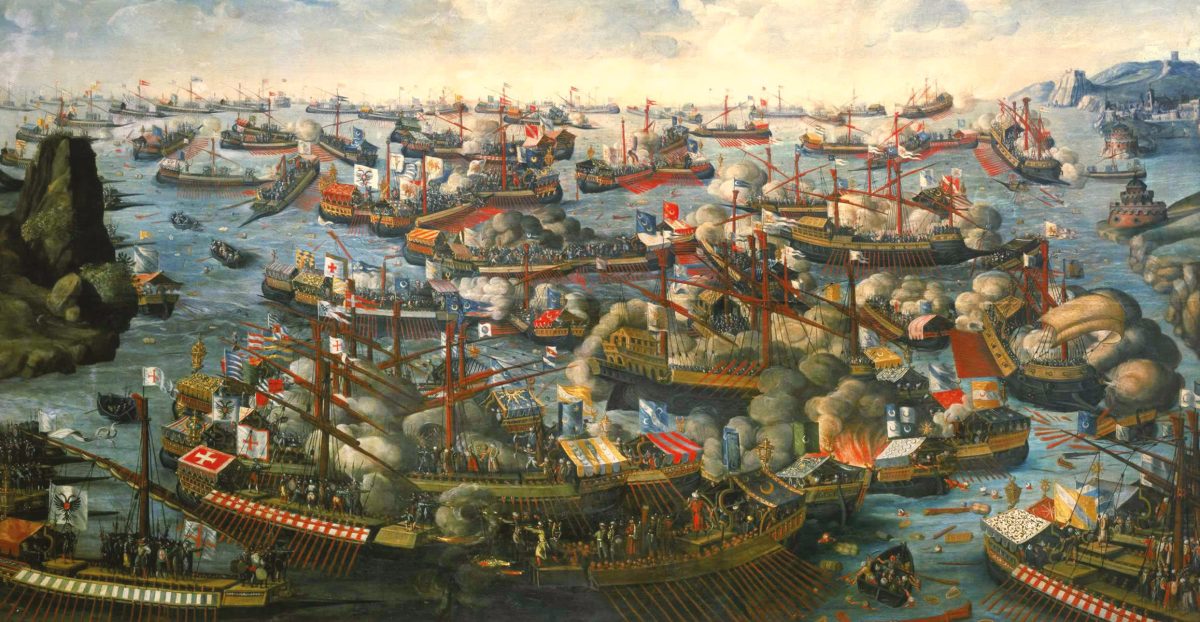
Lepanto demonstrated how long-range gunnery and improved fire control could tear the heart out of even the strongest fleet. The individual weapons were not entirely new. Cannon had existed for generations. What changed was the way they were integrated into operational thinking. Innovation was found in the application rather than the invention itself. This pattern recurs constantly throughout military history. The English and Welsh longbow did not emerge from nowhere. The German Blitzkrieg combined tanks, aircraft, and artillery into a coordinated system rather than relying on any single revolutionary weapon. In each case, the decisive factor was recognising possibilities that others had overlooked. As I conclude in Battle, innovation is often ‘a new use of existing tools, or a recombination of old methods in novel ways’.
Lepanto particularly fascinates me because contemporary observers could not yet see the future that was emerging before them. They were fighting with familiar ships, familiar weapons, and familiar fears. Yet beneath the surface, warfare was evolving. Naval commanders increasingly had to think not simply about bravery and seamanship but about firepower, coordination, and the management of complex systems. That is the enduring lesson. Innovation rarely announces itself as a revolution. More often it appears as a subtle adjustment that only later reveals its significance. The commanders at Lepanto did not know they were participating in a turning point. They were simply trying to solve the immediate problems before them. But that is precisely how military change usually occurs.
4. Subterfuge
Yorktown, 1781
If morale concerns belief, leadership concerns decision-making, and innovation concerns adaptation, then subterfuge is about perception. Throughout history, successful commanders have understood a simple truth: it is often easier to defeat an enemy’s understanding than his army. The ideal victory is not one won through attrition but through deception, by persuading an opponent to prepare for the wrong threat in the wrong place at the wrong time.
The means vary enormously. Hannibal Barca concealed his Carthaginian troops in the hills above Lake Trasimene to annihilate his pursuing Roman enemy. Allied planners created phantom armies before D-Day. Modern militaries use electronic warfare, cyber operations, and disinformation campaigns. But the underlying principle remains the same. Victory often belongs to the side that controls what the enemy believes. The American victory at Yorktown in 1781 provides one of history’s most elegant examples.
A few years ago, I walked the quiet earthworks overlooking the York River. It was difficult to imagine that this relatively small patch of Virginia would determine the outcome of an empire-spanning conflict. Yet Yorktown was not won primarily through battlefield brilliance. It was won because George Washington and his French allies manipulated British expectations with extraordinary skill. Throughout much of the American War of Independence, the British assumed that New York would remain the principal objective of any major rebel operation. It was a logical conclusion. Washington had repeatedly threatened the city, and British commanders expected any decisive confrontation to occur there. Rather than challenge this assumption, Washington encouraged it.
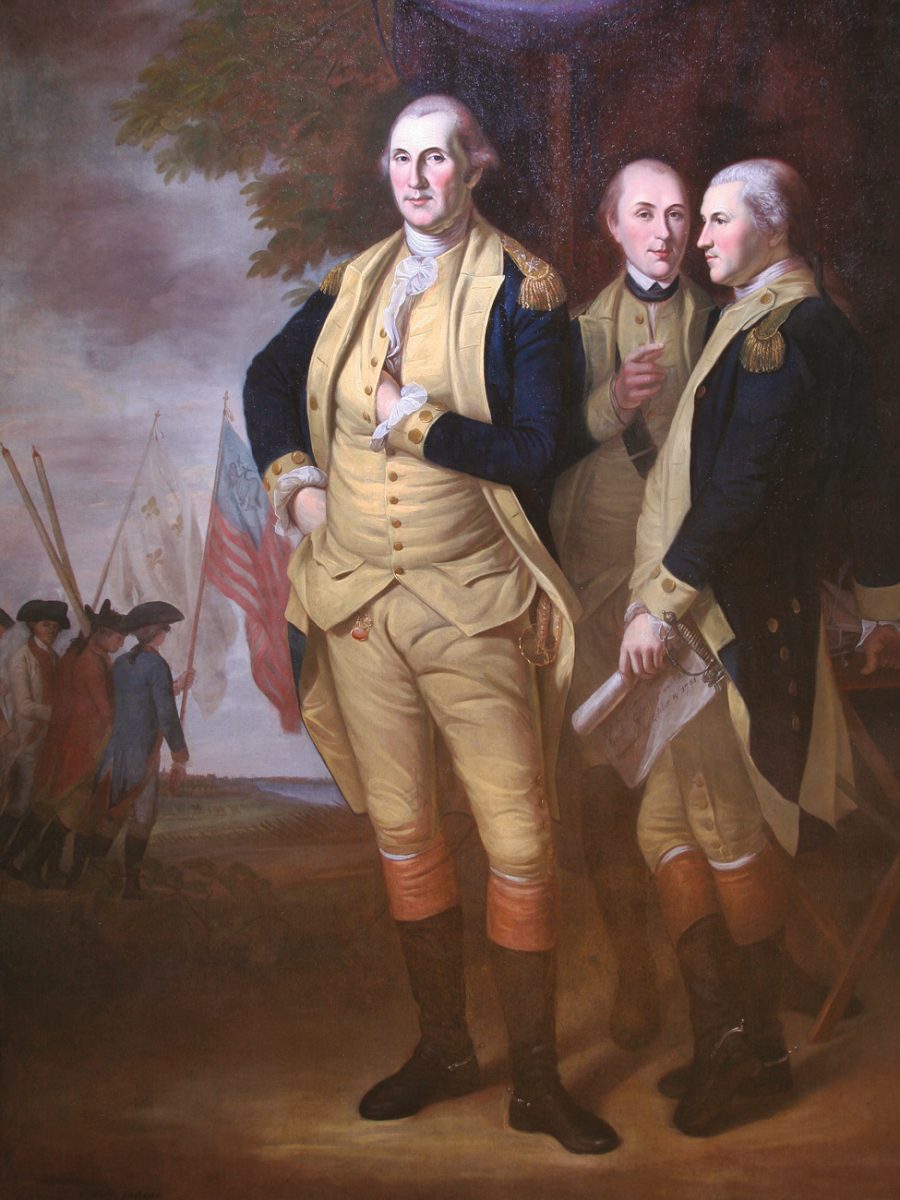
Washington, in command of the Continental Army, and his French allies, led by the Comte de Rochambeau, marched and counter-marched their forces in ways that reinforced British expectations until, almost at the last moment, the true objective became clear. By then it was too late. British forces under Lord Cornwallis had become isolated at Yorktown, on the Virginia Peninsula, while a French fleet under Admiral de Grasse sealed off the approaches to Chesapeake Bay. The trap snapped shut with remarkable speed.
What strikes me most about Yorktown is how ordinary much of the deception appeared. There were no dramatic disguises or outlandish ruses. Instead, success emerged from disciplined planning, careful control of information, and an understanding of how opponents interpreted events. This reflects a broader pattern visible across military history. Deception is often less theatrical than popular memory suggests. The most effective subterfuge usually resembles efficient staff work. The British were not defeated because they lacked courage: Cornwallis’s soldiers fought stubbornly throughout the campaign. Nor were they dramatically outnumbered. Rather, they were defeated because they spent crucial weeks operating according to a false picture of reality. By the time accurate information arrived, their strategic position had already become untenable.
This is a lesson that appears repeatedly in my book. Hannibal allowed Roman commanders to see exactly what they expected to see before springing his ambush at Lake Trasimene. Soviet maskirovka (literally ‘masking’ or ‘disguise’) operations during the summer of 1944 concealed what would be the juggernaut of Operation Bagration. The Allied deception effort before D-Day persuaded German commanders that the main invasion would land at the Pas-de-Calais, even after troops had already come ashore to the west in Normandy. As I state, the cleanest victories are often won when ‘the enemy realises the truth only as it breaks over him’. Yorktown demonstrates that subterfuge is not a secondary aspect of warfare but one of its defining characteristics. Commanders must constantly decide not simply what information to gather but what information to reveal. Every movement, every signal, and every public action communicates something to an opponent.

5. Timing and numbers
Midway, 1942
Of all the recurring patterns in warfare, timing and numbers are perhaps the least glamorous and the most decisive. They lack the drama of leadership and the intrigue of deception. Yet they often determine victory long before soldiers or sailors realise it. Every commander must confront the same hard reality: there is never enough time, enough manpower, or enough resources. The challenge is to make those finite quantities matter more than the enemy’s.
Again, military history is filled with examples. Napoleon’s triumph at Austerlitz in 1805 depended on drawing his opponents into the wrong position at exactly the right moment. Julius Caesar’s victory over the Gaulish tribes at Alesia relied on concentrating force at a decisive point despite numerical inferiority. More recently, as I argue in my new book, the defence of Ukraine’s capital Kyiv in 2022 demonstrated that time itself can defeat mass when a defender successfully delays and disrupts a larger enemy. Yet perhaps no battle better illustrates the relationship between timing and numbers than Midway in June 1942.
Six months after their stunning air attack on the United States Pacific Fleet at Pearl Harbor, Japan appeared ascendant across the Pacific. Its imperial forces had inflicted a string of humiliating defeats on the United States, Britain, France, and the Netherlands, and had seized vast territories at astonishing speed. The balance of forces seemed heavily weighted in Japan’s favour. Admiral Isoroku Yamamoto, the architect of the Pearl Harbor attack, hoped now to lure the remaining American aircraft carriers into a decisive battle near Midway Atoll, and to destroy them. If he had been successful, the Pacific War might have taken a very different course.
On paper, Japanese strength looked impressive. They possessed more ships, more aircraft, and more experienced carrier crews. Yet the battle reminds us that numbers alone never tell the whole story. Quantity only matters when it can be brought to bear at the right moment. Researching in the museums and archives associated with the Pacific War, I have often been struck by how narrow the margin between success and disaster really was. Midway was decided not over days, but over minutes. Throughout the morning of 4 June, a series of chance events, intelligence successes, reconnaissance failures, and command decisions combined to create a fleeting window of opportunity.
As I describe in Battle, American dive-bombers arrived over the Japanese fleet ‘at the one minute when decks were cluttered with refuelling aircraft and open torpedo warmers’. The Japanese carriers were caught in the most vulnerable state imaginable. Aircraft were being rearmed. Fuel lines were exposed. Munitions were stacked across crowded hangar decks. A fleet that had dominated the Pacific suddenly found itself balanced on a knife edge. Within a matter of minutes, three Japanese aircraft carriers were ablaze. Soon afterwards, a fourth followed. The destruction was catastrophic. What makes Midway so fascinating is that the disparity between victory and defeat was microscopic. Had the American aircraft arrived earlier, Japanese fighters might have intercepted them. Had they arrived later, the carriers might have launched their own strike first. Timing transformed possibility into reality.

Numbers, of course, still mattered. The United States could absorb losses more readily than Japan, and would eventually mobilise industrial resources on a scale no opponent could match. But Midway demonstrates that numerical strength is only meaningful when combined with opportunity. The Japanese fleet possessed immense power, yet at the critical moment that power became unusable.
The lesson extends far beyond naval warfare. Every battlefield presents to a commander fleeting opportunities, moments when time and force intersect. Sometimes a delay of an hour changes everything; occasionally a delay of a minute. The challenge lies in recognising those moments before they pass. Across 3,000 years of conflict, soldiers have fought with spears, muskets, horses, tanks, and drones, but timing remains stubbornly constant. As I conclude in Battle, the smallest slices of time can shape entire wars. Midway is perhaps the clearest demonstration of that truth. The battle was not won simply because the Americans were stronger, braver or more innovative. It was won because, at one extraordinary moment, preparation met opportunity. History, as it so often does, turned on that moment.
The longer I spend studying warfare, the less convinced I become that battles are really about weapons. Weapons matter, of course. So do tactics, technology, and terrain. Yet when I walk these places, from ancient plains to modern killing grounds, what lingers is not the machinery of war but the persistence of human nature. Every battlefield is a moment of decision. An individual chooses whether to advance or retreat. A commander decides whether to risk everything on a single strike, hold steady under pressure, or alter a plan years in the making. Entire societies discover what they are prepared to sacrifice, endure or defend. The circumstances differ, but the dilemmas remain surprisingly familiar.
That continuity is what makes military history more than a catalogue of victories and defeats. Battles are snapshots of humanity under extreme stress. They reveal character stripped bare. They show ingenuity and courage, but also fear, miscalculation, and hubris. The study of battle therefore offers something larger than an understanding of war. It provides a way of understanding ourselves. Perhaps that is why these stories continue to resonate centuries later. The armour, uniforms, and flags belong to the past, but the people do not feel distant. Their choices still feel recognisable. Across three millennia of conflict, the setting changes. But the human drama does not.
Iain MacGregor has been a publisher of non-fiction history for three decades, and is also an author. His books include Checkpoint Charlie: a history of Berlin in the Cold War; The Lighthouse of Stalingrad, which was MHM’s Book of the Year in 2023; and The Hiroshima Men, about the atomic bombing of Japan in August 1945. A fellow of the Royal Historical Society, he is a regular contributor to literary festivals, history podcasts, and TV documentaries. His new book, Battle: the moments that transformed warfare from ancient Greece to Ukraine (Bloomsbury UK, £25), is published on 8 October.
All images: Wikimedia Commons