

Subscribe now for full access and no adverts
Judging by the undergrowth spilling over the path, Ferozpur military cemetery sees few visitors these days. But it is here, amid the brambles and rock pythons, in the sun-scorched heart of the Punjab, that the trail leads for anyone seeking the final resting places of those who died in the early battles of the First Anglo-Sikh War (1845-1846).
‘There they are, look,’ said Amar Singh, my Sikh guide, as he pulled at some weeds and brushed away goat poo to reveal the headstones of just two of the British officers who fell to Sikh blades and bullets at Ferozashah, one of the earliest battles of the conflict, on 21-22 December 1845. ‘There’s Lieutenant Colonel Louis Bruce, 54th Bengal, and Major George Broadfoot’ – or the ‘Foremost Man in India and an Honour to Scotland’, as the inscription on the gravestone of the latter had it. Amar was dead right, but it was a smaller stone, right next to the others, that rocked me backwards – for here, at last, was the legendary ‘Fighting Bob’.
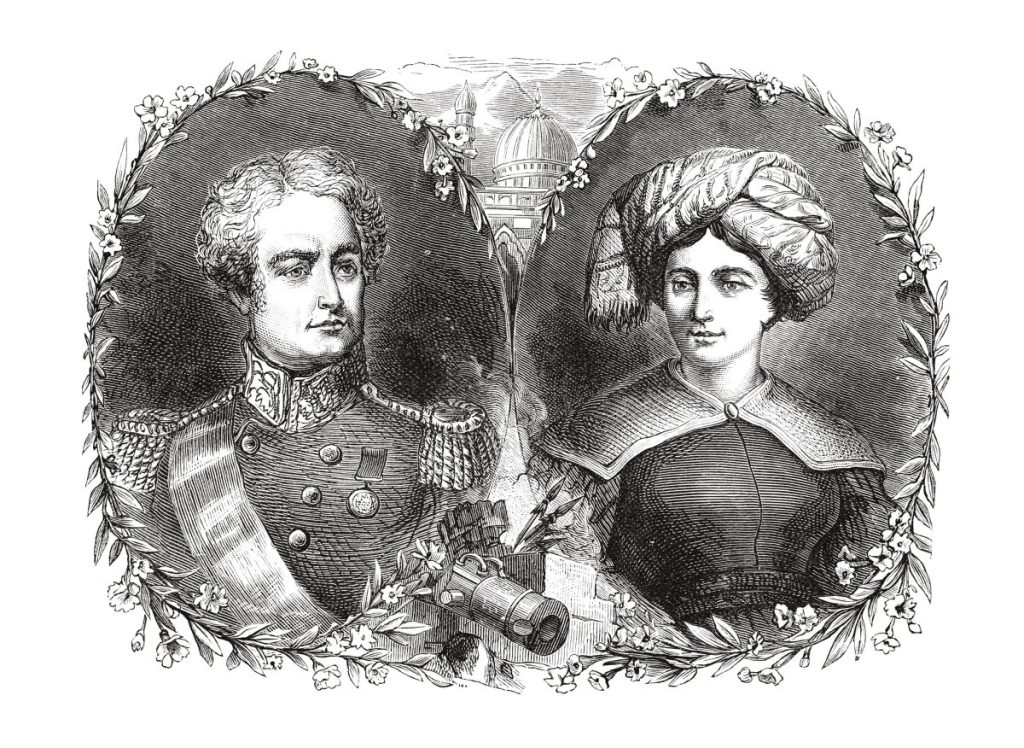
To his admirers, Major-General Sir Robert Henry Sale GCB (1782-1845) was what a British officer should be – a positive ‘Bayard’ (to use a traditional term for one who encapsulates the chivalric virtues of bravery and honour). Many with an interest in military history have studied his swordplay in steamy Burma (during the First Anglo-Burmese War, 1824-1826) and his brass-lunged leadership in the snows of Afghanistan (during the First Anglo-Afghan War, 1838-1842), and it was not only he, but also his flint-sharp wife, Florentia – the almost-equally-renowned ‘Grenadier in Petticoats’ – who had made such a deep impression.
I’ll be honest. Like many others, I had studied Sale’s remarkable career right up until the end of that First Afghan War – but, after that, things got a bit hazy. Well, now I knew: the old brave had made it to 63, before dying a soldier’s death at the hands of one of the toughest enemies the British have ever fought.

‘Fighting Bob’ Sale won a reputation for great courage and commitment, but if he were to be eclipsed by anyone, it would be by his wife Florentia. Image: Alamy.
A bloody era
Unusually for this bloody time, the entirety of the general’s active service was spent in what was then called ‘The East’, and at first glance it might be thought that he was a ‘John Company’ officer (as those employed in the armies of Honourable East India Company, or HEIC, were known). But while his father had indeed been a colonel in the HEIC’s service, when the precocious young Robert was just 12, enough money was scraped together to buy him a commission as a King’s officer. First, in 1795, he became an ensign in the 36th (Herefordshire) Regiment, before transferring to the 12th (East Suffolk) Regiment two years later and sailing for India.
While still in his teens, Sale fought alongside Wellington (then Arthur Wellesley) against Tipoo Sultan, the leader of the Kingdom of Mysore, at the Siege of Seringapatam (1799), and afterwards took part in a host of little-known but grindingly hard colonial operations. It was during this period that he steadily gained a reputation not only for great bravery, but also for stubbornness and rigid discipline.
He found time to fall in love, too. Sale met Florentia Wynch, the daughter of a HEIC civil servant in Madras, and the couple were married in 1809. If Fighting Bob’s name was to be eclipsed by anyone, it would be by his new wife, whose toughness and sheer single-mindedness on campaign would make her the toast of early Victorian Britain, earning her that famous soubriquet of the ‘Grenadier in Petticoats’. As we will see, Florentia’s reputation was cemented in Afghanistan in the 1840s. But, before that, Robert’s own renown grew as a result of a litany of adventures of which any soldier might feel proud.
First came the somewhat strange tale of Sale’s handling of a ‘near-mutinous’ regiment, of which he’d taken command in 1821. Ever the martinet, he had received several anonymous letters promising to kill him. His response was extraordinary. After each threat, he would parade his troops, ordering them to load their weapons with blank cartridges, and to fire at him as he stalked up and down in front of them. Amid the smoke and noise, there would have been plenty of opportunity to ram a musket ball down the barrel, yet no one did. Apparently their colonel would roar with laughter and shout, ‘Ah, it’s not my fault if you don’t shoot me!’
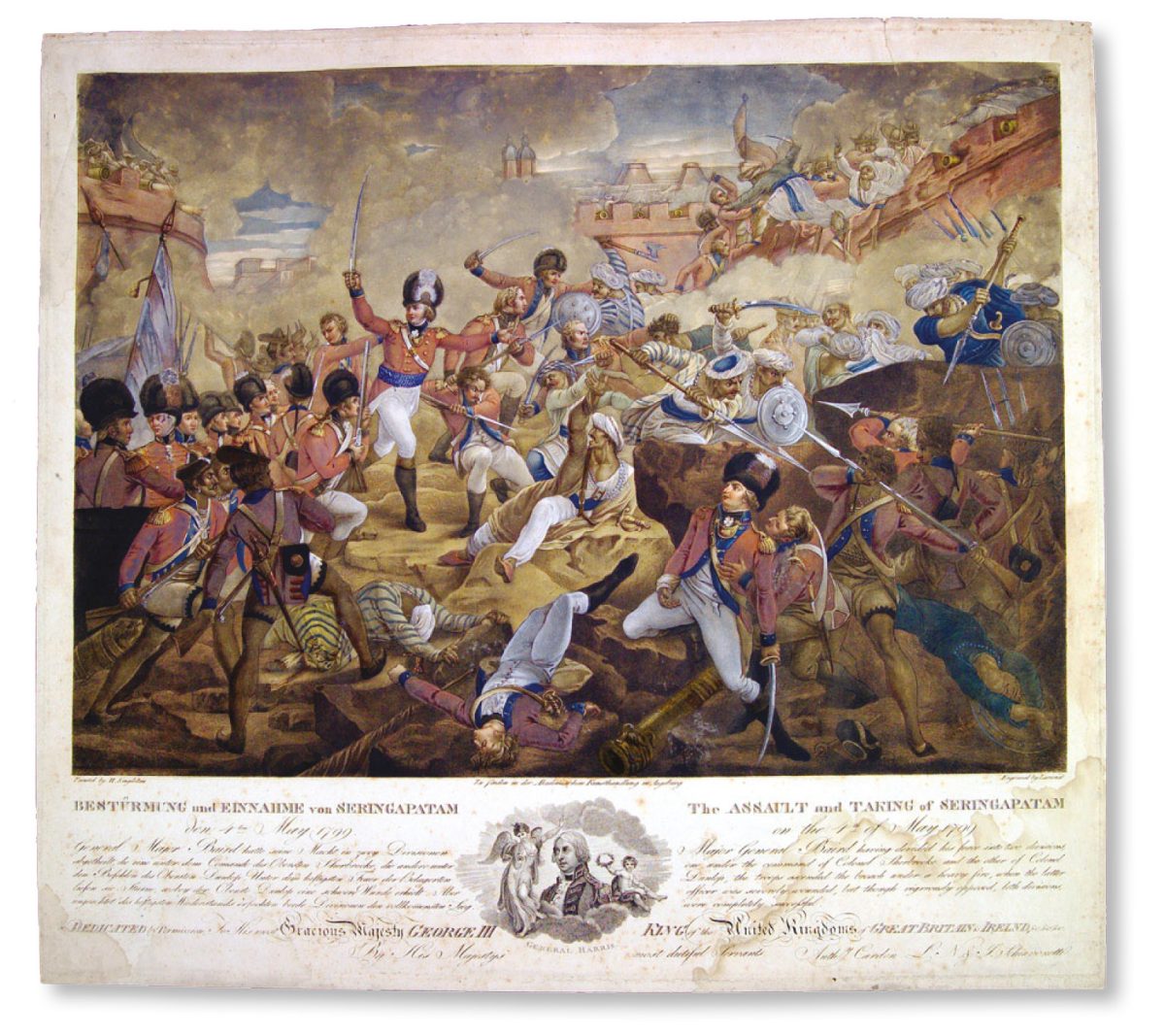
While he was still in his teens, Sale fought alongside Wellington (then Arthur Wellesley) at the Siege of Seringapatam, from 5 April to 4 May 1799. Image: National Army Museum
Seeing a vacancy for promotion, Sale next transferred to the 13th (1st Somersetshire) Regiment (Light Infantry), which he commanded during the aforementioned First Burmese War. It was there, at the Battle of Kumaroot on 8 July 1824, that his legend was properly established.
Henry Havelock (then a subaltern in the 13th, but later a general known for his part in the Indian Mutiny) described this incident: ‘A singular combat took place. A Burman chief singled out a soldier of the 13th. He aimed a blow at his head. Major Sale, who was near, interposing his own sabre, parried the cut. He, in his turn, made a cut at the Chief. The blow caused the Burman to stagger, but the major’s sabre shivered [shattered] like glass to the very hilt. Instantly closing with his enemy, he wrested from him his broad gilded weapon and striking the Barbarian with his full force below the ribs, nearly severed his body into two portions.’
Sale would shout, ‘Ah, it’s not my fault if you don’t shoot me!’
Six months later, during the storming of an entrenchment at Kokien (Rangoon), he was severely wounded in the skull, but fought on at the head of his command. As a result of his conduct during the Burmese War, Sale was created a Companion of the Bath and promoted to lieutenant colonel, but he and his wife had many more adventures and trials ahead of them.
Retreat from Kabul
In December 1838, it was decided to instal a British puppet, the Mughal prince Shah Shuja, on the throne of Afghanistan, thereby deposing the rightful king, Dost Mohammed Khan. With Fighting Bob as a column commander, a force first took the city of Kandahar, and then the fortress of Ghazni – for which Sale was knighted and made an acting major general – before entering the capital of Kabul, and crowning Shah Shuja.
Most of the troops now left, but Sale remained as second-in-command of the garrison, and sent for Florentia, along with one of their daughters and her soldier husband. An uneasy calm followed, enough for a cantonment (barracks, offices, and quarters) to be established outside the walls of the city. Colonial life began to blossom alongside the garden that Lady Sale assiduously cultivated.
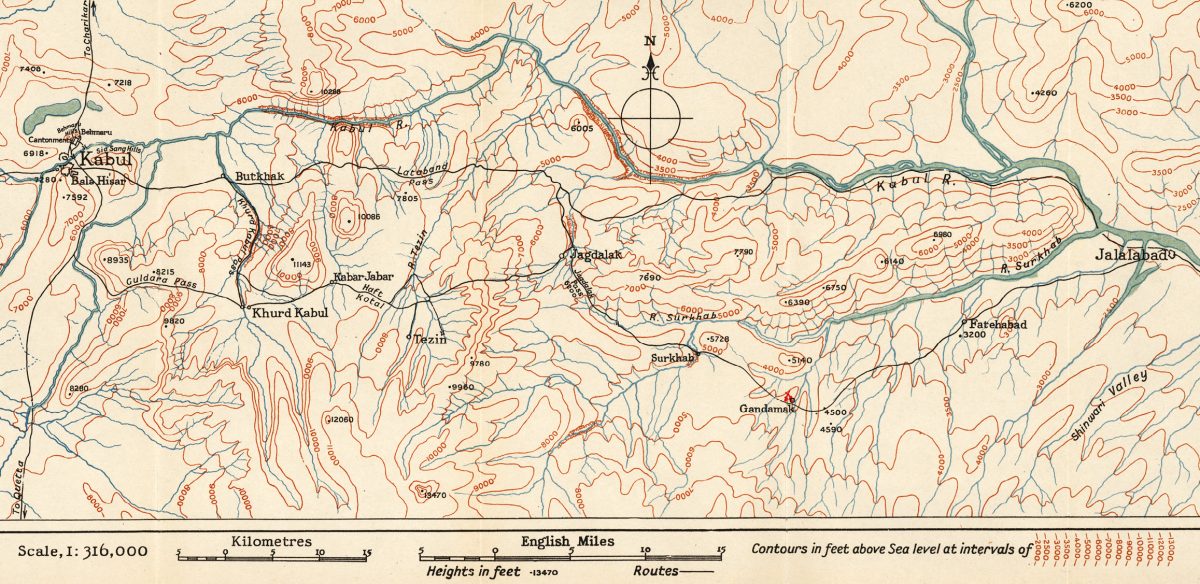
By the autumn of 1841, it was decided to reduce Kabul’s garrison, and in October Sale and the bulk of the force marched towards Peshawar. Their route took them over the Khoord–Kabul Pass, a narrow defile some five miles in length, hemmed in by cliffs that rose 500-600ft above the trail. Here, they were attacked by Ghilzai tribesmen, who were angry that subsidies previously paid to them by the British government for keeping the peace had been slashed. Such was the opposition that the column had to hole-up at Jalalabad fort on 12 November.
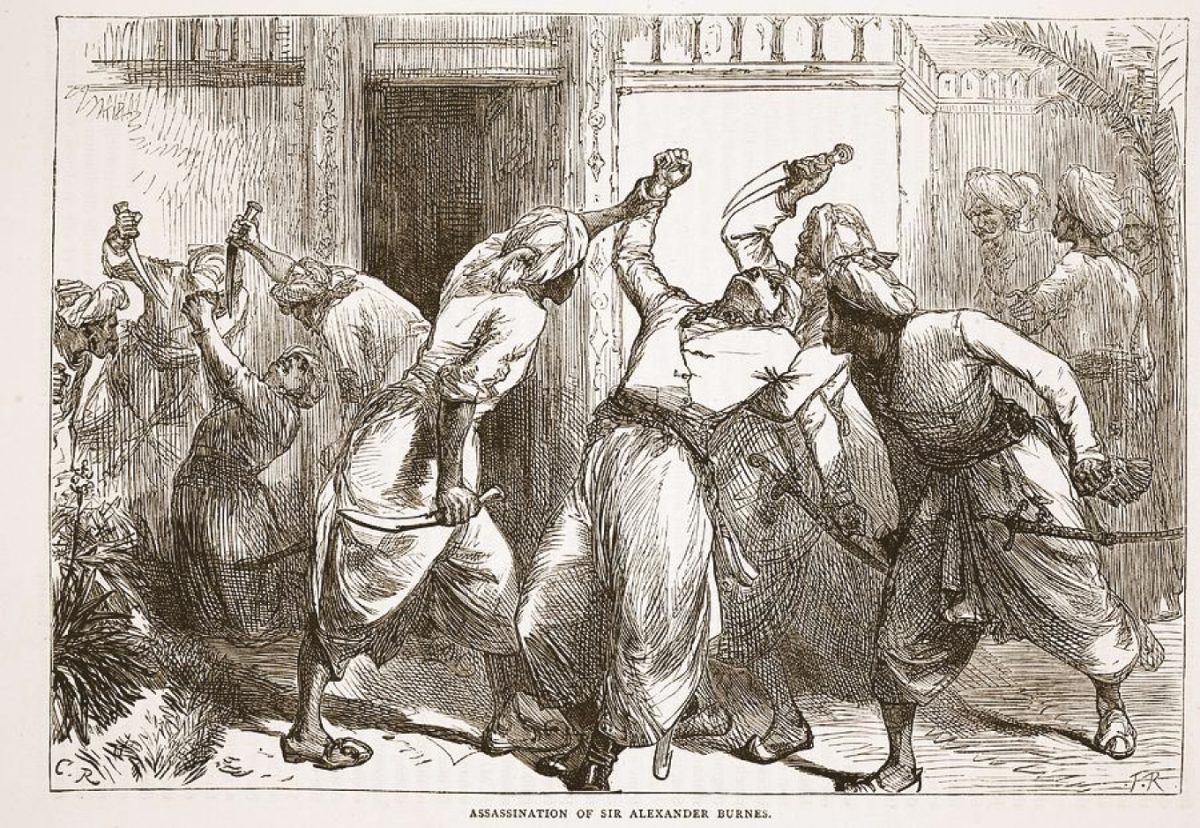
The curious decision had earlier been taken to leave the baggage, the wives and families, and most camp followers in Kabul with instructions to follow Sale’s brigade once the passes were clear. It was an uncomfortable, nervous time, as Lady Sale recorded in her diary entry for 4 January 1842: ‘The Afghans still tell us we are doomed; and warn us to be particularly cautious of our safety in going out of the cantonments. Taj Mohammed [a retainer] says that Mrs Sturt [Lady Sale’s daughter] and I must wear neemchees [sheepskin overcoats] over our riding habits – common leather ones – and turbans, and ride mixed in with the suwars [Indian cavalrymen]; not to go in palkees [palanquins, or human-powered sedan chairs] or keep near the other ladies, as they are likely to be attacked.’
Lady Sale’s fears were soon realised. The departure of most of the British bayonets was the one signal for which Dost Mohammed’s son, Sirdar Akbar Khan, had been waiting. He seized power, murdered British officials, and surrounded the small force and the civilians who remained in Kabul.

Now, there are several, vivid tales of Victorian couples sharing the horrors of a siege together (think of Major-General Sir Hugh and Lady Frances Wheeler, hungry and shot at in Cawnpore in 1857) – but for a husband and wife to be under different, yet simultaneous, blockades is highly unusual. Ever daring, Lady Sale retrieved round shot from her garden, and from the roof of her quarters spotted for the few guns that the Kabul party had in action. Dodging musket-fire by using chimney stacks for cover, she put herself in constant danger.
At the same time, her husband was encircled at Jalalabad, where he was in his element. From November 1841 until April 1842, Fighting Bob incessantly planned raids and sorties, constantly exposing himself to peril. Then, on 7 April, he led a highly successful attack, which, along with the approach of Major General George Pollock’s so-called ‘Army of Retribution’, caused the siege to be raised.
Back in Kabul, the remaining, embattled stragglers – 690 British troops, 3,000 sepoys (Indian soldiers), and a gaggle of 12,000 servants and camp followers under the command of Sir William Elphinstone (described by Major-General William Nott as ‘the most incompetent soldier that was to be found amongst all the officers of requisite rank’) – accepted Akbar Khan’s assurance of safe conduct. On 6 January 1842, this patchwork column set off towards Sale’s force, 90 miles away in Jalalabad, and, ultimately, India. Florentia Sale tells us: ‘We commenced our march at about mid-day… the troops were in the greatest state of disorganisation: the bodyguards mixed in with the advanced guard; and the camp followers all pushed ahead in their precipitate flight towards Hindostan…’.
Much has been made of General Sale’s steadfast refusal to dash to his wife’s rescue, but in purely military terms it was a good decision: he and his brigade would have been too late to be effective. As it was, the fugitive column soon met hazards, as Lady Sale relates: ‘The ladies, collectively speaking, were placed with the advance, under the charge of the escort; but Mrs Sturt and I rode up to Capt. Hay, and mixed ourselves with his troops… For myself, whilst I sat for hours on my horse in the cold, I felt very grateful for a tumbler of sherry, which at any other time would have made me [seem] very unlady-like, but now merely warmed me…’.
At first, things were simply uncomfortable. Rapidly, though, those around Elphinstone realised that Akbar Khan’s assurance was worthless. Sniping, skirmishing, and casual butchery soon broke out, with largely defenceless sutlers (merchant camp followers) falling victim to the predatory Afghans. Lady Sale had already used up several of her nine lives; now the retreat consumed more: ‘We had not proceeded half a mile when we were heavily fired upon… I had fortunately only one ball in my arm; three others passed through my poshteen [sheepskin jacket] near the shoulder without doing me any injury… The main attack of the enemy was on the column, baggage, and rear guard; and fortunate it was for Mrs Sturt and myself that we kept with the chiefs.’
The General’s Wife
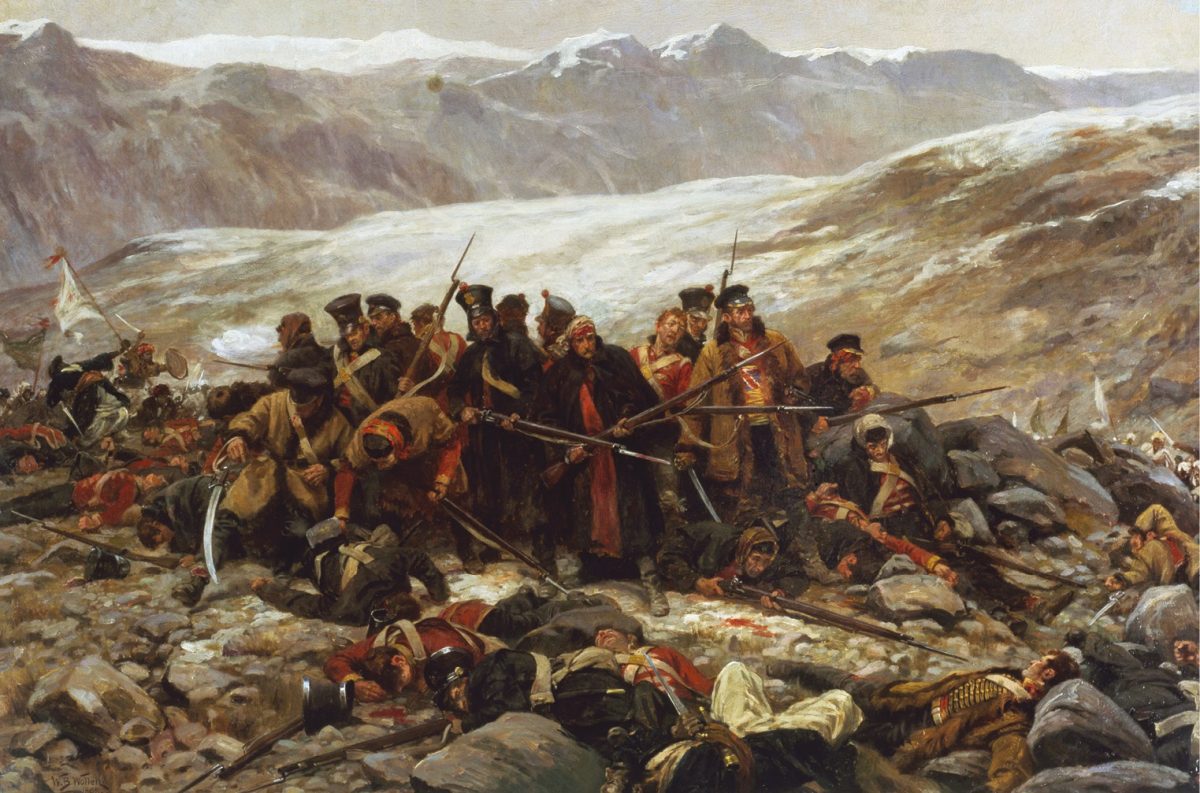
A week later, the situation had become even more grim. On 13 January, a stand was made on a snowy hillock called Gandamak by a group of officers and a few dozen men of the gallant 44th (East Essex) Regiment. It became an epic, immortalised in William Wollen’s grand 1898 canvas The Last Stand of the 44th Regiment at Gundamuck (now in the Museum of Chelmsford, Essex), which shows the regiment’s last moments, as knife-wielding Ghazi tribesmen closed in. In the middle of this bloody scrimmage, Captain Thomas Souter saved the Regimental Colour by wrapping it around his body: to this day, the bones of his men can be found on that awful hillside.
In the face of such horrors, Florentia Sale allowed herself to believe the word of her Afghan ‘escorts’ that she and her party would be safer if they were away from the others. Along with a clutch of wounded or sick officers, her bedraggled gang plodded through the snow from one ‘safe’ strongpoint to another, only to be moved on shortly afterwards. A number of times they crossed the path that the main body had taken. Strewn about were the bodies of the dead and the dying: bloody and frozen, all had been abandoned among the rocks and icy puddles. Florentia recognised many – her diaries talk of having last seen them at dinners, or cricket matches, in Madras or Kabul – but everything now was desolate.
Finally, her depleted party ended up in a fort facing Kafiristan (now Nuristan) – but any talk of being escorted on to India had evaporated: they were prisoners. Here, another test started. Lady Sale recorded that the skin of her wind-burnt face ‘came off in strips’ when she tried to wash, yet this did not stop her from insisting to her less-resilient companions one morning that they had a ‘grand breakfast of radishes’.
The Afghans still tell us we are doomed,’ wrote Lady Sale.
Not for one moment did she cease to be the General’s Wife, however, and it seems probable it was her leathery tenacity that buoyed the others through. Florentia delivered a soldier’s wife’s baby; and she guessed at which days were Sundays, holding divine service using a Bible taken from a corpse. She also kept standards high by insisting that everyone ‘chatted’ regularly – scraping ‘chats’, or fleas (from chatt, the Hindi word for ‘parasite’), from the seams of their clothes.
The denouement of Lady Sale’s imprisonment seems like a perfect Victorian romantic drama. When it was realised by her captors that vengeful – and this time properly organised – British troops were approaching fast, the prisoners were marched back towards Kabul, collecting other survivors on the way, most of them half-starved and wounded.
The route was still dangerous, though. It is often said that as the procession shambled onwards, an Afghan escort suggested that the ‘sahibs’ should be given muskets to protect themselves. Whether this was some form of appeasement, or simple pragmatism, is not clear, but none of the dispirited little gang stepped forward. Until, that is – perhaps predictably – Florentia Sale snorted, ‘Give me a musket… I’ll lead the party.’
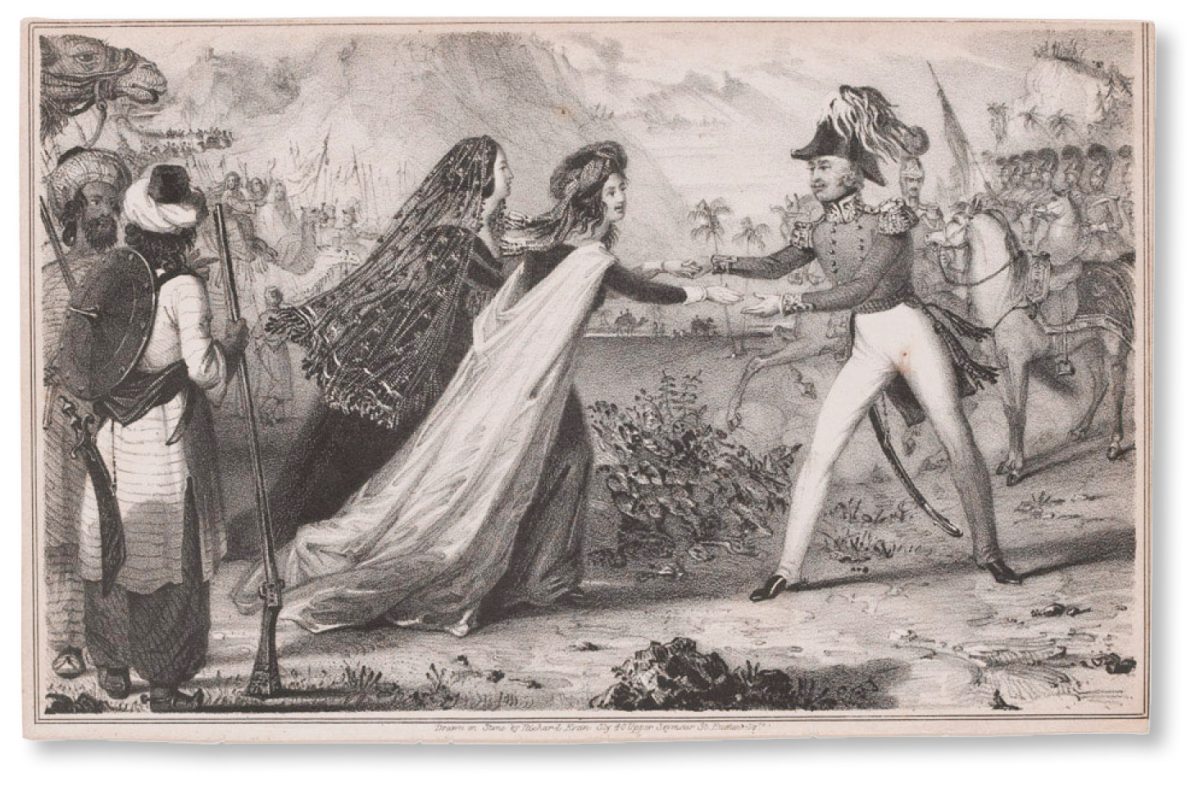
Finally, romance was able to blossom once more. On 19 September, Fighting Bob, now in command of one of the relief columns, heard rumours that his wife was somewhere nearby. Sure enough, near the Kalu Pass, west of Kabul, the lovers were at last reunited. By almost theatrical coincidence, it was the general’s 60th birthday, and the impossible happened: Lady Sale wept.
The final chapter
This is a tale that should conclude with a happy ending. And, in a way, it did, with both Sales becoming bywords for gritty colonial glamour, and the general being promoted and further honoured – a rare bright spot among the horrors of this debacle of an operation. And there was more joy to come. In 1843, Lady Sale published her Journal of the Disasters in Affghanistan, which flew off the shelves in no fewer than seven editions.
The couple should have lived happily ever after, enjoying the company of the ten children they had somehow also found time to sire – but fate intervened. Florentia prospered as a result of her diaries, with a grace-and-favour quarter at Hampton Court Palace, and a £500-a-year pension granted to her in recognition of the couple’s valour and service. In 1853, however, she died in Cape Town, where she had misguidedly gone for the good of her health. Today, she still lies there, below a memorial which reads: ‘Underneath this stone reposes all that could die of Lady Sale.’
Perhaps inevitably, for a man with the nickname Fighting Bob, her husband’s end was more violent. On 18 December 1845 – not with his sabre in hand any more, but as a Quarter-Master General to Sir Hugh Gough – the now-sixtysomething Sale’s leg was shattered by Sikh gunfire at the Battle of Mudki, and he died shortly afterwards.
Sir Robert was honoured with a Knight Grand Cross of the Order of the Bath, and two magnificent portraits. But I would put money on which tribute he would have valued the most. I suspect it would have been that modest little stone plaque in a Punjabi graveyard with which this article began, and which Amar Singh and I uncovered. Nothing showy, nothing grand, just some bald words close to where Fighting Bob fell with his face to his foes.
Patrick Mercer is a former soldier, journalist, and MP. He is interested in any action of the British Army or Royal Navy, but has made a special study of the Italian campaign in WWII.