
Subscribe now for full access and no adverts
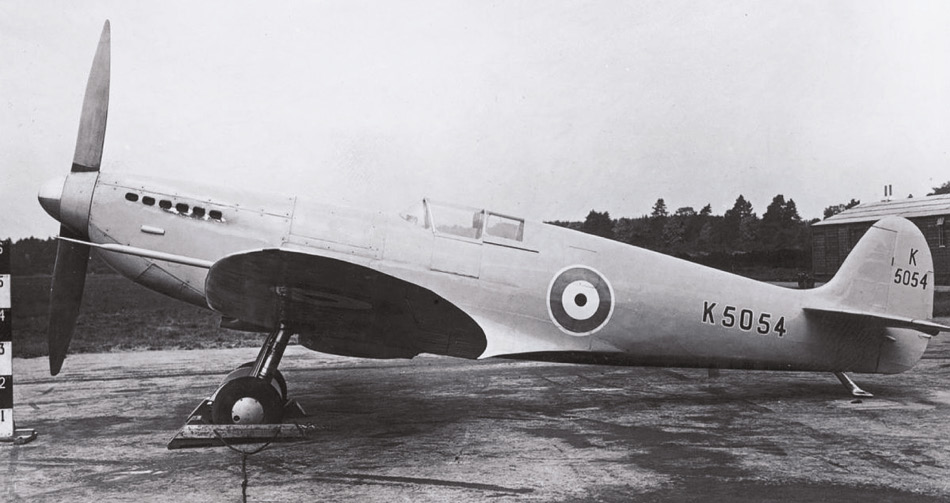
It was airborne for just eight minutes – but those eight minutes changed the course of World War II. With the chief test pilot of the Vickers aviation company, Captain Joseph ‘Mutt’ Summers, at the controls, the Supermarine Spitfire prototype K5054 – fitted with a fine-pitch propeller for additional take-off power – soared into the skies over Southampton’s Eastleigh Aerodrome for its maiden test flight. The aircraft’s baptism came just four months after the equivalent flight of the Hawker Hurricane. Together, the two single-seat fighters would play a decisive role in the Battle of Britain, and ensure Winston Churchill’s boast that the UK would ‘never surrender’ had bite as well as bombast.
The Spitfire’s maiden flight took place on 5 March 1936 – 90 years ago this spring – with production beginning two years later. Famously, the man responsible was the aircraft designer Reginald Joseph (R J) Mitchell (see box below), a trained engineer who had joined Supermarine in 1916. As the aviation company’s chief designer, he churned out seaplanes for the international Schneider Trophy races, which took place annually, and in the 1930s conceived his masterpiece, the iconic Spitfire, whose ultimate triumph he sadly would not live to see.
R J MITCHELL (1895-1937)
Remembered as the father of the Spitfire, Reginald Joseph (R J) Mitchell was also the creator of more than 20 other aircraft – many of them seaplanes and flying boats designed to link together Britain’s far-flung empire. After a middle-class childhood in Stoke, he joined the Supermarine works at Southampton, where he was appointed chief designer at a time of rapid change in the aircraft world.

Mitchell’s stroke of genius was to replace the wood, wire, and fabric of the conventional biplane with a stretched lightweight aluminium covering over a metal frame, while an elliptical wing shape tapering to a point at the end helped provide extra manoeuvrability. When this futuristic-looking airframe was combined with the new Rolls-Royce PV-12 engine, later known as the Merlin, Mitchell and his team were to earn their place in history – even if the designer believed the decision to call their creation ‘Spitfire’ meant it had a ‘bloody silly name’.
The prototype, known only as K5054, first flew on 5 March 1936, and three months later the Air Ministry ordered 300 Spitfires. By then, however, Mitchell was seriously ill with cancer, and his deputy Joe Smith supervised most of the final tests and redesigns. Mitchell died a year later, on 11 June 1937, at the age of just 42.
Preparing for combat
By the late 1930s, all the basic types of aircraft with which Britain entered WWII were either in development or full production. These included the Spitfire, the Hurricane, and the Boulton Paul Defiant for day fighting, and the Bristol Blenheim for day and night scrapping plus bombing; the Bristol Beaufighter and Westland Whirlwind fighters came further down the line, and there were also bombers of course. It was the Hurricane and Spitfire that would go down in history, however, as arguably the two most important aircraft prototypes ever built in Britain: without them, the Battle of Britain could not have been won, leaving these islands open to invasion.
Of the two eight-gun fighters, it was the Hurricane that first became airborne – on 6 November 1935, at Martlesham Heath in Suffolk, where it attained a speed of 315mph during trials. This prompted an official order for 600 in June 1936, by which time Hawker had already instigated production planning and tooling for 1,000 fighters. With war in Europe becoming ever more likely, it was important to be ahead of the game, and by Christmas 1937, 111 Squadron, based at Northolt, in west London, had a flight of serviceable Hurricanes. By the summer of 1940, 31 of Fighter Command’s 61 squadrons were flying Hurricanes.
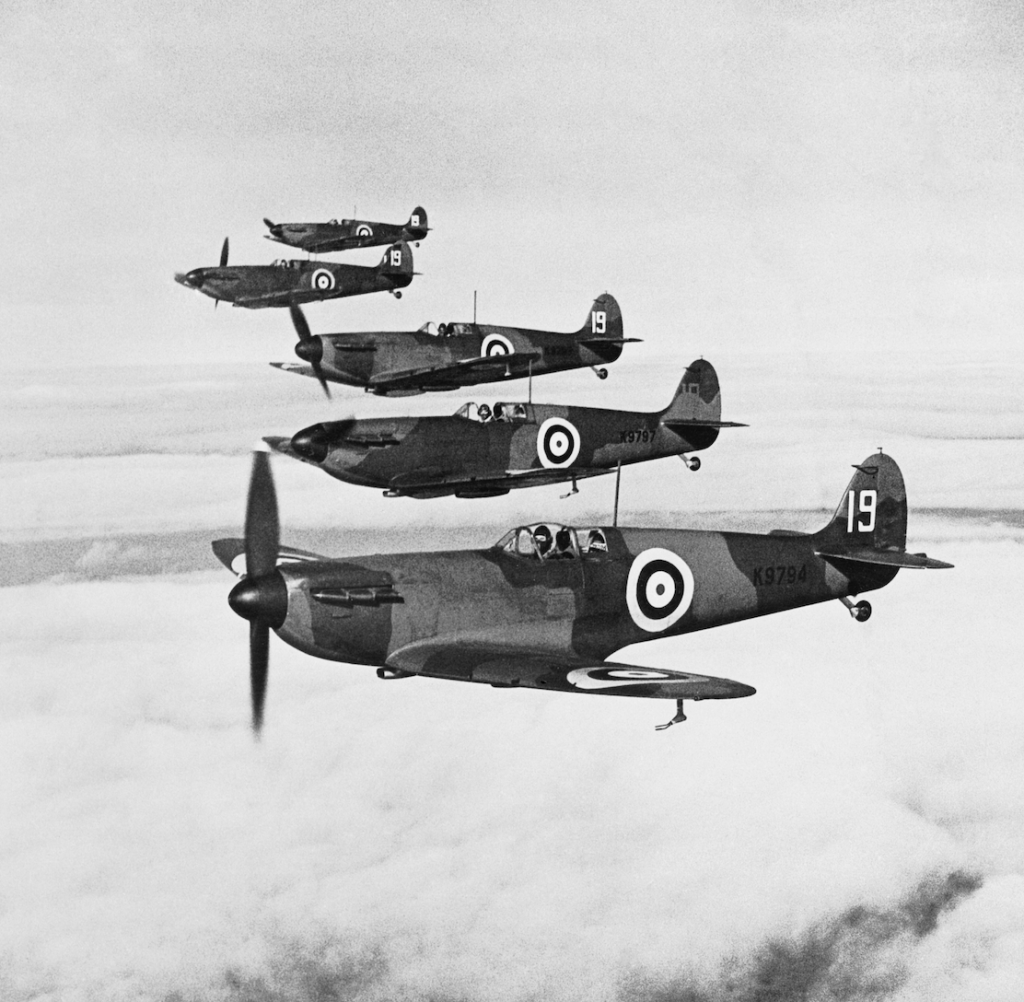
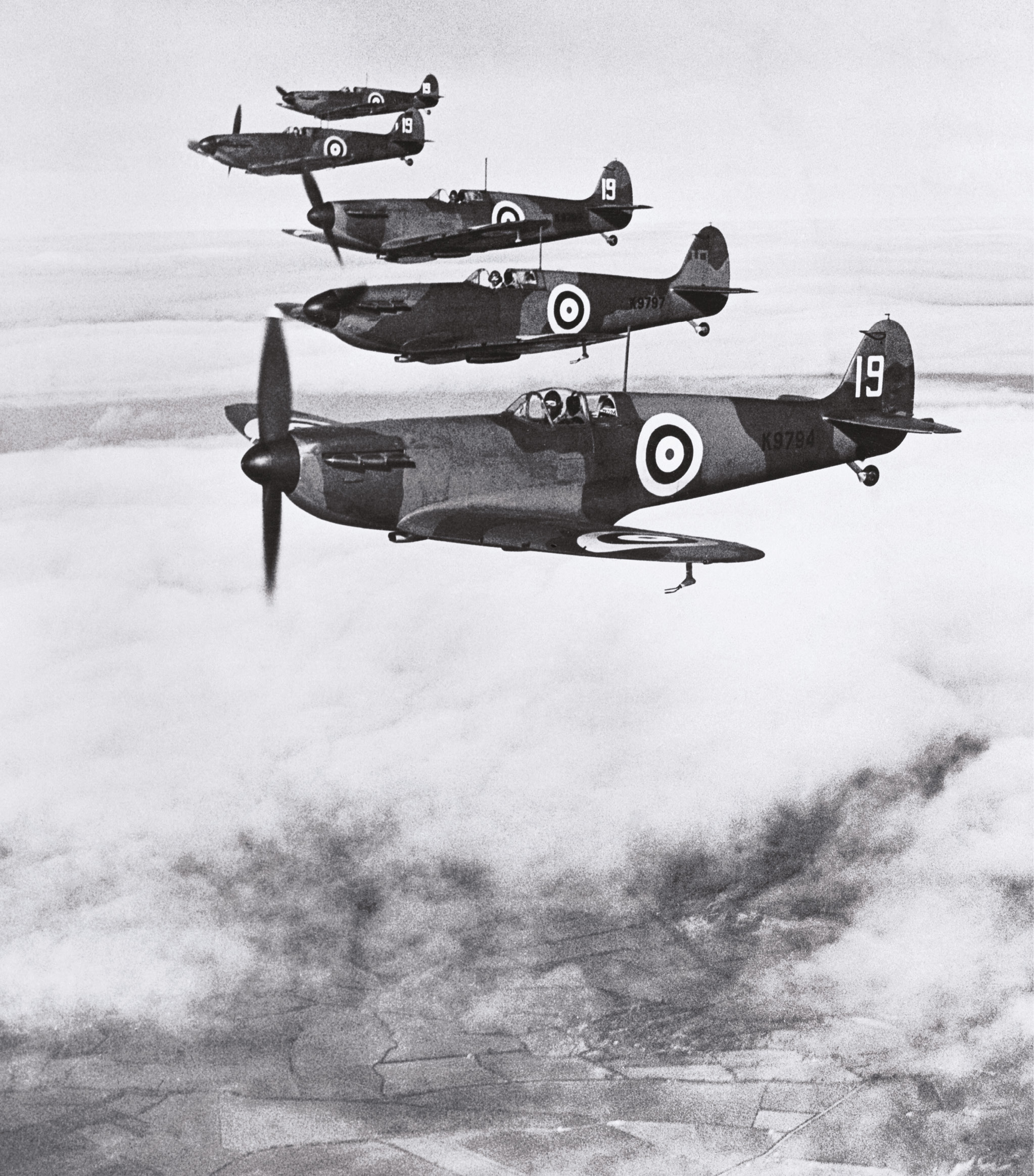
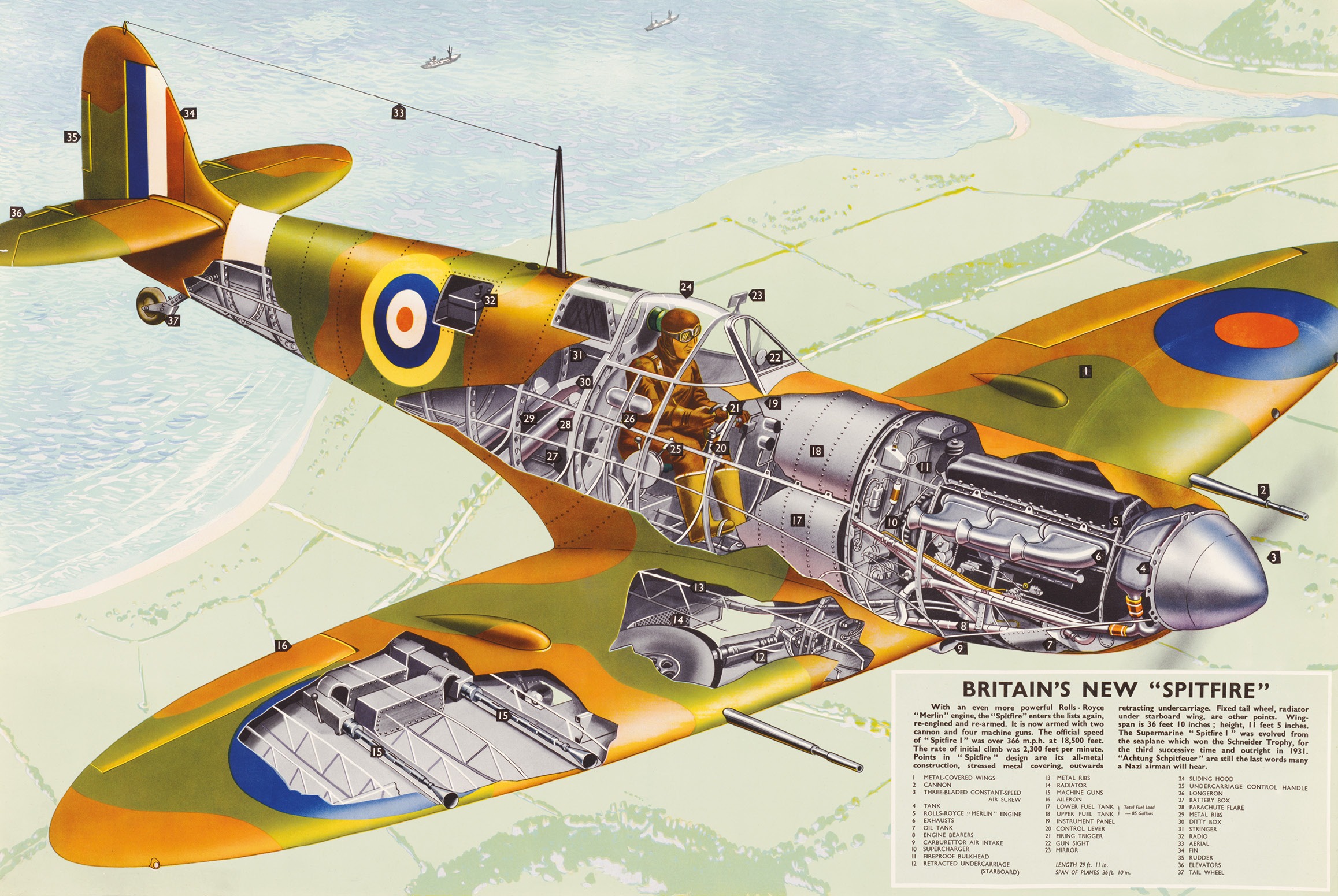
The Spitfire’s first flight in March 1936 was the harbinger of its own quite exceptional performance, showing it to be another fighter capable of 300mph, a remarkable speed for the time. Based at RAF Duxford, in Cambridgeshire, 19 Squadron was the first to operate the aircraft, receiving it in 1938. By the time of the Battle of Britain, which lasted from 10 July to 31 October 1940, there would be 19 Spitfire squadrons, their planes equipped either with two 20mm (0.78 inch) cannon and four Browning .303 machine-guns, or alternatively with eight Brownings.
The Spitfire made its combat debut during the Battle of France in May-June 1940, when Fighter Command defended Dunkirk from the Luftwaffe while the BEF escaped. The aircraft inflicted heavy casualties on the enemy but also suffered significant setbacks, with some 100 planes and 80 pilots lost in what, of course, was a losing battle. Such losses reduced Fighter Command to its lowest strength at any point during 1940 – so that by 5 June, Air Chief Marshal Hugh ‘Stuffy’ Dowding had just 331 Spitfires and Hurricanes available for what was coming, with only 36 more in reserve.
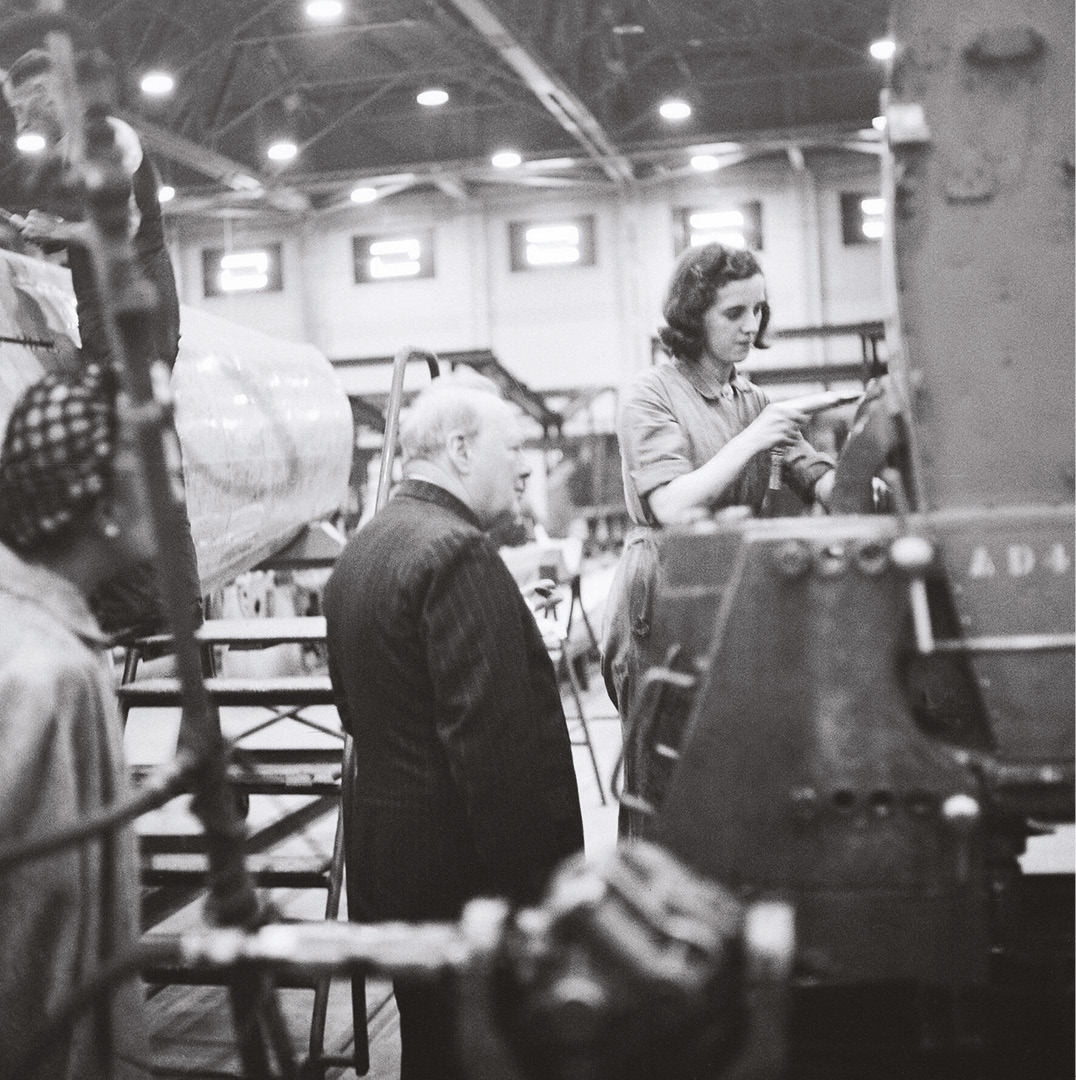
As a result, aircraft production, which had stalled during the Phoney War, was stepped up, with nearly 600 Hurricanes and 275 Spitfires turned out in June and July 1940 – an achievement that came despite the Luftwaffe’s best efforts to impede production. (On 26 September 1940, these included one of the most serious factory raids, when the Vickers-Supermarine Woolston Works in Southampton, the main centre for Spitfire production, was targeted by 60 Heinkel He 111s. The factory was wrecked and more than 30 people killed. The previous month, 149 Spitfires had come off the line at Woolston; somehow, another 139 were built in October, with work dispersed around the city.) The production of aircraft power plants – the Spitfire’s Rolls-Royce Merlin included – was similarly prioritised. Most Merlins were manufactured at the Rolls-Royce Nightingale Road factory in Derby, with production peaking at 100 engines per week. Rolls’s total Merlin output rose from 389 in April 1940 to 839 in June – a prodigious increase, with workers toiling day and night – while the Civilian Repair Organisation (CRO), ably assisted by No.50 RAF Maintenance Unit, responded with a similar upsurge in repaired Merlins.
The Spitfire primarily relied on the Merlin 12-cylinder V-type liquid-cooled engine with supercharger, putting it at the leading edge of tech for the time. During the Battle of Britain, the Germans arguably had nothing matching it: the nimble, short-range Messerschmitt Bf 109, with its exceptional armament, was certainly superior to the Hurricane and a match for the Spitfire at altitudes of c.6,000 metres and above, but the British fighters could execute tighter turns (especially the Spitfire) and were also (according to the renowned Luftwaffe aviator Oberleutnant Gerhard Schöpfel) able to absorb as much punishment as the Bf 109. While the Spitfire would certainly prove a worthy adversary for its German foe, its smaller numbers compared to the older Hurricane meant the latter was the battle’s workhorse. Playing to the planes’ relative strengths, Spitfires were tasked with engaging German fighters, while the Hurricanes generally attacked slower bomber formations.
Battle for Britain
The ‘official’ first day of the Battle of Britain, or Operation Adlerangriff as it was known in Germany, came on 10 July 1940. The opening phase was dubbed Kanalkampf, or the Channel Battle, by the Germans, who had gathered more than 750 fighters to safeguard more than 1,600 bombers, including Heinkel He 111s, Dornier Do 17s and Junkers Ju 87s (dive bombers popularly known as ‘Stukas’). Arrayed against them on the other side of the Channel were around 700 frontline Spitfires and Hurricanes mustered by the RAF.
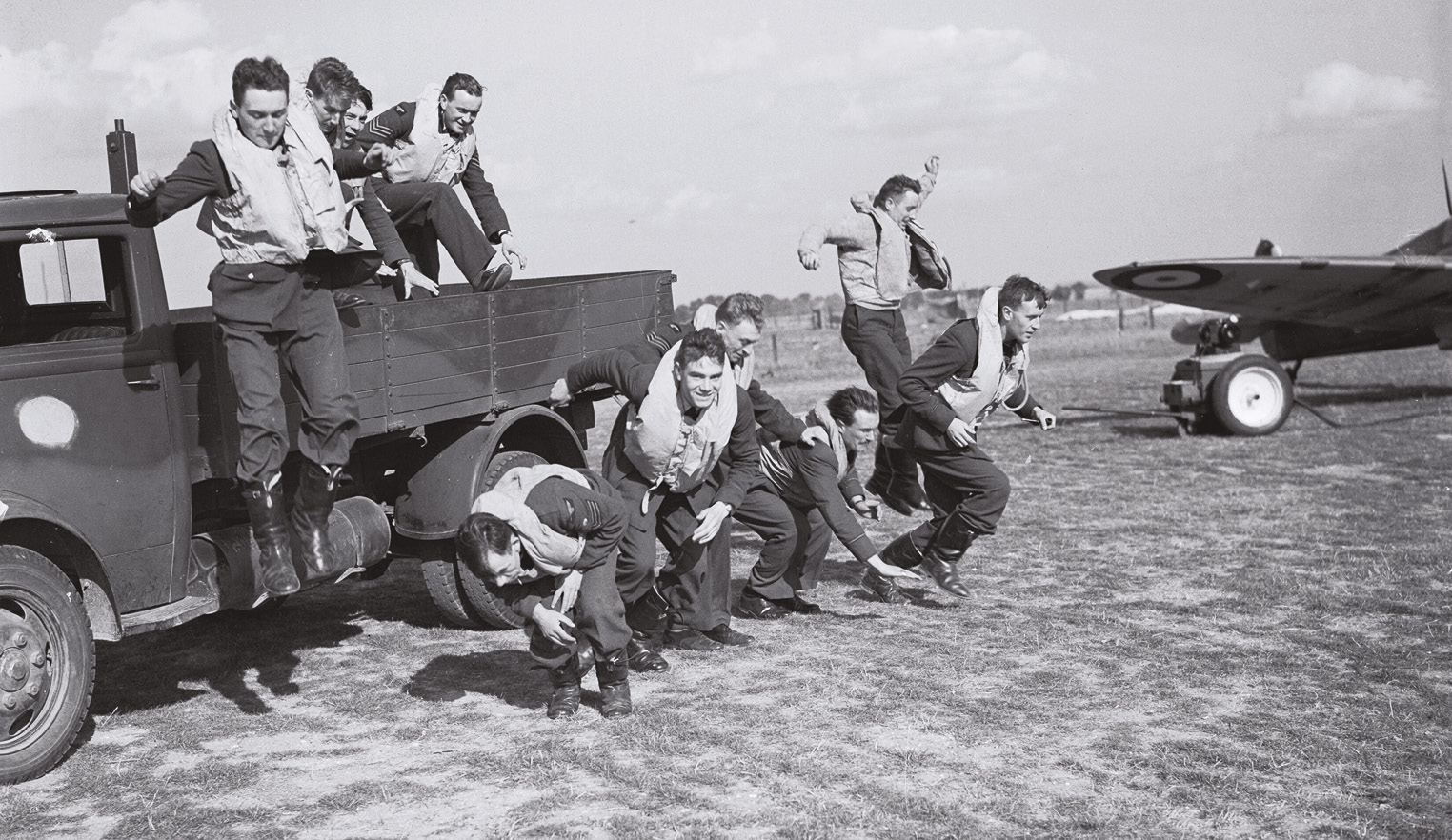
The fighting began in the morning when a Dornier Do 17P reconnaissance plane with strong escort picked up a large British shipping convoy off the north Kent coast. The German force was engaged by Spitfires, resulting in a damaged Dornier crashing in France. At lunchtime, the same convoy was attacked off Dover by Do 17s, Bf 109s and 110s, which were repulsed by portions of three Hurricane and two Spitfire squadrons. Three Do 17s, two Bf 109s and a single 110 were destroyed, while the RAF lost one Hurricane.
That Spitfires were engaged in a life-or-death struggle was soon clear: on 17 July, German Army High Command allocated 13 selected divisions to the Channel coast, the first wave of an impending invasion force. Leaflets dropped on England urging capitulation ‘in the name of reason’ were harvested by citizens and auctioned off on behalf of the homegrown ‘Spitfire fund’ movement – with funds organised nationwide to raise money to buy one of these iconic planes, priced notionally at £5,000 each. It was quickly evident, too, that the Spitfire and Hurricane were the mainstays of Britain’s air defence. The Boulton Paul Defiant had the same Merlin power plant as the Spitfire – but carrying the extra weight of a four-gun dorsal turret and additional crew member, it proved vulnerable to fast, well-armed single-seaters like 109s. Just two Defiant squadrons were operational during the Battle of Britain (141 and 264), with both ultimately proving more successful in night ops.
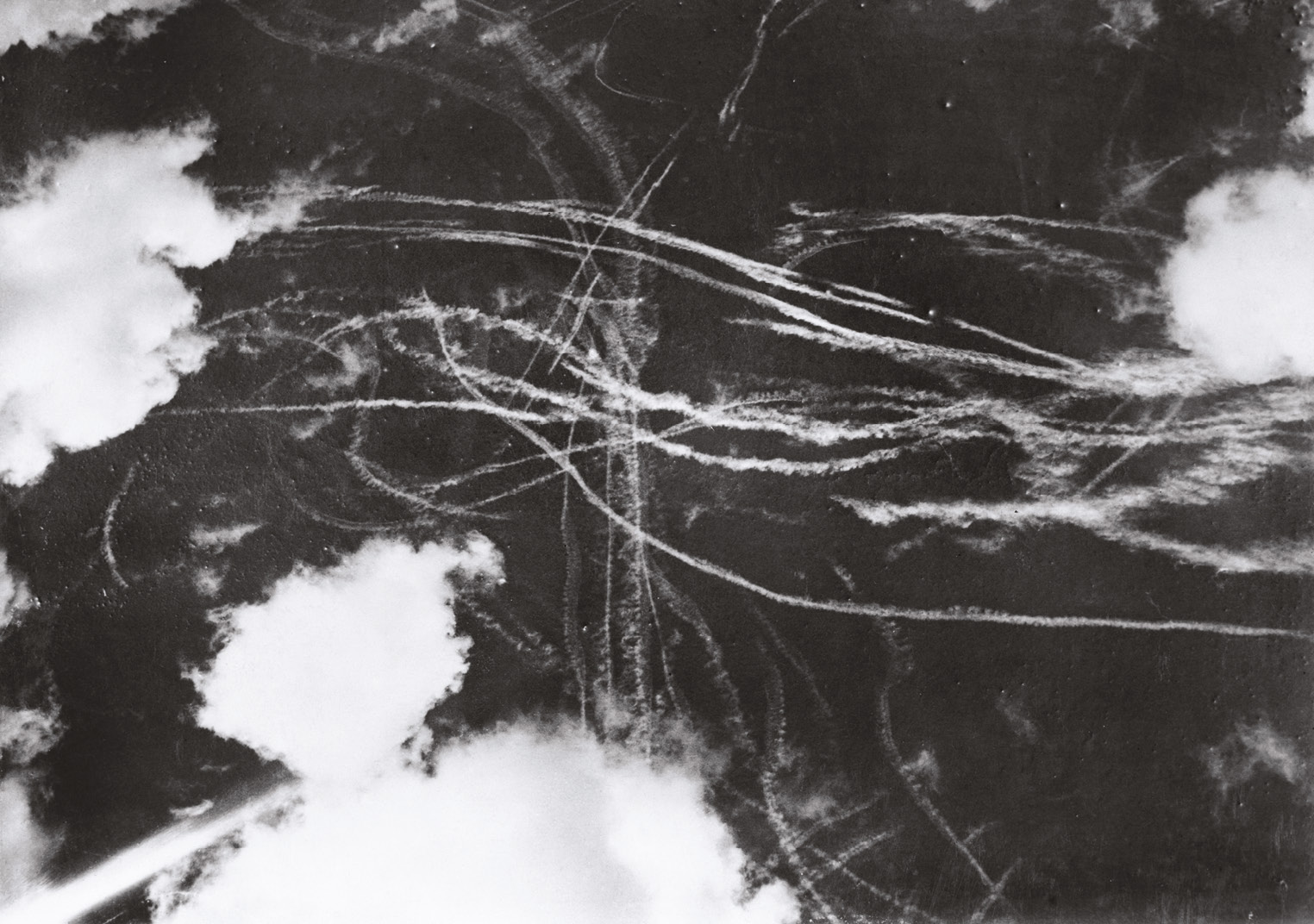
The port of Dover became a hotspot – the ‘Hellfire Corner’ of assault and defence. A typical raid took place on 29 July, when 48 Ju 87s, accompanied by around 80 109s, attacked in force. The welcoming committee comprised 41 Squadron Spitfires (from RAF Manston) and 501 Squadron Hurricanes (from RAF Hawkinge). Four 87s were shot down, while the RAF lost a Spitfire and Hurricane. That the Spitfire was the plane most feared by the Germans was exemplified by the rueful comments of Oberleutnant Julius Neumann, who observed that his fellow Luftwaffe pilots suffered from Kanalkrankheit, or ‘Channel sickness’: ‘Either the water or the Spitfires, one was enough… but both together was a bit too much.’ Two weeks later, 13 August was designated Adlertag, or ‘Eagle Day’, the date when Britain’s air defences should have been brought to their knees – but after a day on which the Germans lost 46 planes against 13, the RAF had shown it was still very much a fighting force.
A major improvement was made in 1940, when de Havilland CS (constant speed) propellers were fitted to most Spitfires and indeed Hurricanes. Based on American Hamilton Standard patents, these brought a significant performance boost: the de Havilland company produced a private conversion kit, re-equipping Fighter Command, with more than 1,050 aircraft upgraded by 15 August 1940. Rotol Airscrews, formed in 1937 by Rolls-Royce and Bristol Engines to take over propeller development, also manufactured CS props considered leading edge, and its models were fitted to Spitfires and Hurricanes. The timing couldn’t have been better, as the main assault on the RAF and the most concentrated attempt to destroy it in southern England is held to have taken place between 13 August and 6 September, with the bombing campaign of the Blitz commencing from 7 September.
THE BEST OF THE REST? FIVE OTHER FIGHTERS THAT MADE HISTORY…
Vickers F.B.5 (UK)
Known as the ‘Gunbus’, the Vickers F.B.5, or Fighting Biplane 5 (below), entered service in early 1915, becoming in the process the first production aircraft designed from the beginning with air-to-air armament – so it was with this fighter’s introduction that the ‘dogfight’ was truly envisaged. The world’s first operational fighter aircraft, it was a two-seat ‘pusher’ biplane (‘pusher’ denoting a propeller to the rear of the engine), which was armed with a single .303 (7.7mm) Lewis gun. This was operated by the observer seated in the front of the nacelle (cockpit). Just over 200 F.B.5s were built.

Hawker Hurricane (UK)
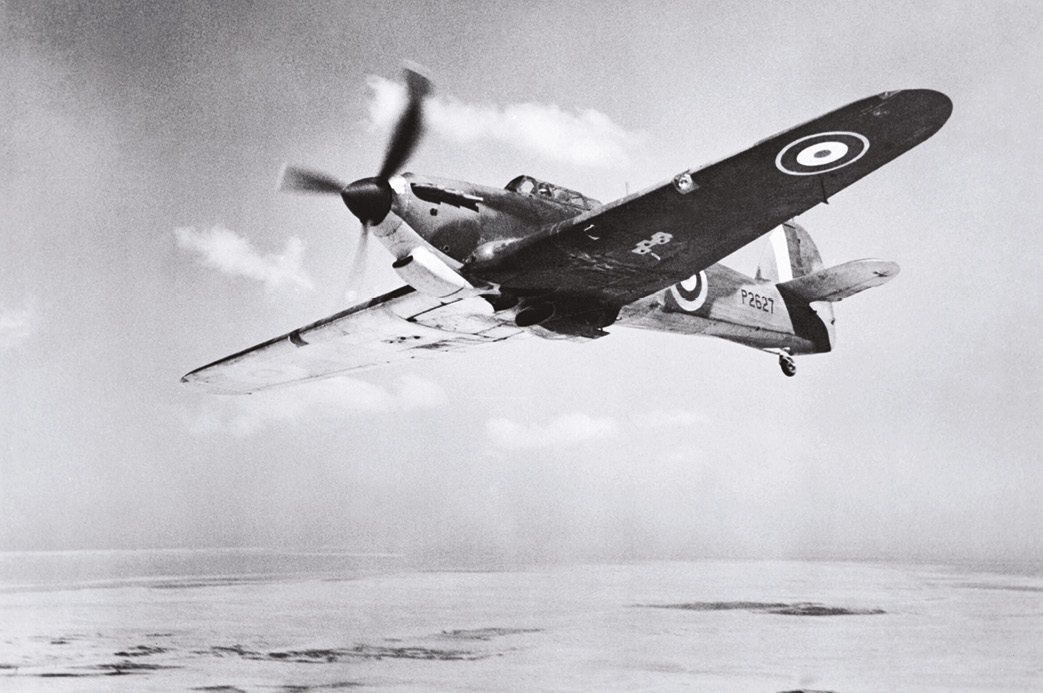
It would be remiss to omit the Hurricane (above) from any list of history making fighters, especially one in an article majoring on its Battle of Britain comrade. Built by Hawker Aircraft Ltd, it was and still is overshadowed by the more glamorous Spitfire, yet it was the Hurricane that accounted for 60 per cent of Luftwaffe losses during the Battle of Britain. Active in all major theatres of WWII, there were approaching 15,000 manufactured between 1937 and 1944, its maiden flight having taken place on 6 November 1935. The plane was rapidly produced in the lead-up to war, such that there were 18 Hurricane squadrons operational by September 1939.
Messerschmitt Bf 109 (Germany)
With approaching 35,000 built, the Bf 109 (top right) was the most heavily produced fighter in history. First flown on 29 May 1935, it was introduced in February 1937, and first saw combat during the Spanish Civil War. Allied with the Focke-Wulf Fw 190, the Bf 109 provided the backbone of the Luftwaffe’s fighter strength during WWII. Under constant development, it remained a competitive fighter through to the war’s end, and even beyond (it was still in operational use by the Spanish Air Force up to 1965). One of the most advanced fighters on inception, it was powered by a liquid-cooled, inverted V12 aero engine.

Messerschmitt Me 262 (Germany)
First flown with a piston engine on 18 April 1941, then with jet engines on 18 July 1942, the Me 262 (below) became the world’s first operational jet fighter in mid-1944, and one of only two seeing air-to-air combat during WWII (alongside the Heinkel He 162). Known as the Schwalbe (‘Swallow’), more than 1,400 were built, serving with the Luftwaffe and Czechoslovak Air Force (the latter continuing to operate them until 1951). Although conceived as an interceptor, there would also be a fighter-bomber version (Sturmvogel or ‘Storm Bird’). Although superior to Allied fighters, it had little impact on the war due to its late arrival and the small numbers built.

Mikoyan-Gurevich MiG-21 (Soviet Union)
The MiG-21 (not pictured), a supersonic jet fighter and interceptor, made its maiden flight on 16 June 1955, and around 11,500 were built between 1959 and 1986. Although more than 60 countries have utilised the MiG-21, its principal users have been the Soviet Air Forces and the Indian Air Force. Seventy years after its first flight, it is still in use with some nations, thereby proving its longevity. Another record breaker, it has been the most produced supersonic jet aircraft ever, the most manufactured combat aircraft since the Korean War, and at one time it had the longest production run of any combat aircraft.
Tipping the scales
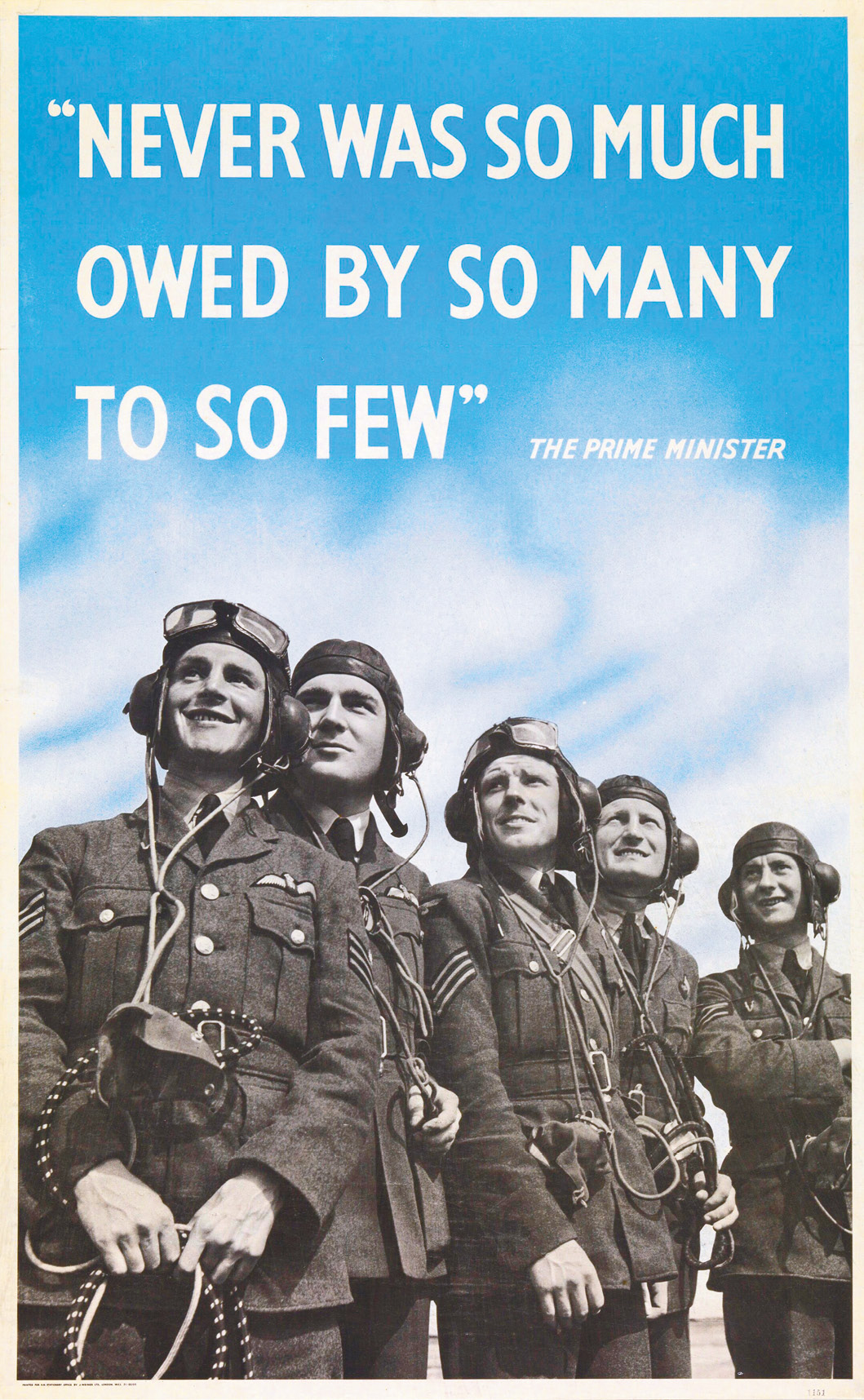
Technology didn’t always assist ‘The Few’. A combat report (Form ‘F’) completed on 19 August from Duxford detailed an engagement involving 19 Squadron and its Spitfires fitted with 20mm cannon. The intercept of Raid X.48 exposed the difficulty 19 Squadron was having with these cannon, which suffered continuous stoppages. To down an enemy aircraft with machine-gun fire required some 16 strikes of .303 ammo per square foot of plane (a.k.a. ‘lethal density’), which was not easily achievable. The 20mm Hispano cannon, built in Britain, might have been the answer, had it been reliable, but it was anything but. Eight of 19 Squadron’s Spitfires had one 20mm cannon fitted in each wing. After a visit by Dowding, these aircraft reverted to machine-guns. Meanwhile, the Luftwaffe’s focus began to shift: the first bombs fell on London on the night of 24 August, then on 7 September, Hitler authorised a changed approach, systematically attempting to bomb the UK capital into submission. A week later, Operation Sea Lion, the planned invasion of Britain, was postponed indefinitely, with the Führer acknowledging by the autumn of 1940 that the Battle of Britain couldn’t be won.
Dover was a hotspot – the ‘Hellfire Corner’ of assault and defence.
The Battle of Britain’s end date is commonly regarded as 31 October 1940 – but it had arguably been won earlier, with Churchill (in his multi-volume history The Second World War) plumping for 15 September as ‘the culminating date’. It was a day featuring a heavy afternoon attack. Churchill, ensconced in the operations room, queried the fighter reserves available. Air Commodore Keith Park, commander of 11 Group, responded with stark and pithy honesty: ‘There are none.’ Ten minutes later, the action ended, and this marked the turning of the tide. Churchill didn’t attribute the RAF’s success entirely to planes and pilots: ‘All the ascendancy of the Hurricanes and Spitfires would have been fruitless but for the system of underground control centres and telephone cables which had been devised and built before the war by the Air Ministry under Dowding’s advice and impulse.’
That Fighter Command was on the brink is not disputed, and Churchill felt the battle might yet have been lost had the Luftwaffe not switched its focus to London but continued targeting the airfields (some of which, like Biggin Hill and Manston, were being severely knocked about, with runways ruined by craters). In his opinion, the period between 24 August and 6 September was crucial, the scales tipping against Fighter Command as it saw its strength drained: 466 Spitfires and Hurricanes were lost over this period, and 103 precious pilots killed with a further 128 seriously wounded. Then, on 7 September, Luftwaffe chief Hermann Göring’s attention turned almost inexplicably to London, much to the relief of Fighter Command.
Epilogue
The story of the Spitfire continued beyond WWII. The final version, known as the Mk 24, first flew in April 1946, just over six months after war’s end. In February 1948, the last Spitfire left the production line, almost a dozen years after the prototype’s first flight. The Mk 24s were only used by one RAF squadron, No.80, from 1947. The final operational sortie by a Spitfire came in April 1954, a PR Mk 19 of 81 Squadron flying from Singapore over Malaysia, where it scoured for Communist guerillas during the ‘Emergency’ (1948-1960). The last non-operational flight of an RAF Spitfire followed in June 1957. Today, some 240 Spitfires have been preserved, with around 60 still airworthy – out of more than 20,000 manufactured between 1938 and 1948.
Stephen Roberts is a historian who has written several times for MHM, including cover stories on Edward III, the Siege of Leningrad, and the Battle of Aboukir Bay.
Further reading:
• A Price and P Blackah, Supermarine Spitfire: Haynes Icons Manuals (J H Haynes & Co, 2018).
• P R March, The Spitfire Story (The History Press, 2006).
All images: Wikimedia Commons