Subscribe now for full access and no adverts
In ancient Greek mythology, the Titan Prometheus transformed the fortunes of humanity when he stole fire from the gods, literally sparking civilisation. While this story is the stuff of legend, though, it is true that fire has fuelled major advances throughout history, from the development of metalworking to the Industrial Revolution.
When did early humans first learn to harness flames to their own advantage? Archaeological evidence from open-air sites in Kenya and cave deposits in South Africa speak of fire-use dating back as far as 1.6 million to 1.4 million years ago. These traces, however, are thought to represent people making the most of naturally occurring blazes, gathering embers in the aftermath of a lightning strike or a wildfire, and carrying them home so that they could be carefully rekindled. Keeping this fire going would have been a time-consuming and resource-intensive task – one that would have needed the dedicated attention of at least one member of the group, who would then not be available for essential everyday tasks like hunting or gathering food and other resources. Moreover, however well-tended a fire was, a sudden downpour could quickly extinguish these efforts, leaving the group waiting and hoping for another unpredictable opportunity to start the whole process again.
Developing the ability to make fire whenever it was needed was a step-change in human evolution. Offering a reliable source of warmth and light, it helped Palaeolithic populations to adapt to a much wider range of environments, particularly as early humans established themselves in colder climates like northern Europe and Britain (places where handy lightning strikes are also typically accompanied by heavy rain). Until recently, the earliest-known certain evidence for fire-making, rather than simply fire-use, was relatively late, dating back just 50,000 years. A number of late Neanderthal sites in France have produced hand-axes preserving evidence of use-wear which (experimental archaeology using replica artefacts suggests) indicate that they had been struck with pyrite. When struck against flint, this mineral produces showers of sparks that can be used to ignite tinder, making it a very efficient fire-lighter. Now, however, a team of researchers led by the British Museum have unearthed much earlier evidence of this activity at Barnham in Suffolk. Their findings, recently published in Nature (see ‘Further reading’ below), have pushed back the story of human fire-making by 350,000 years.
Location, location
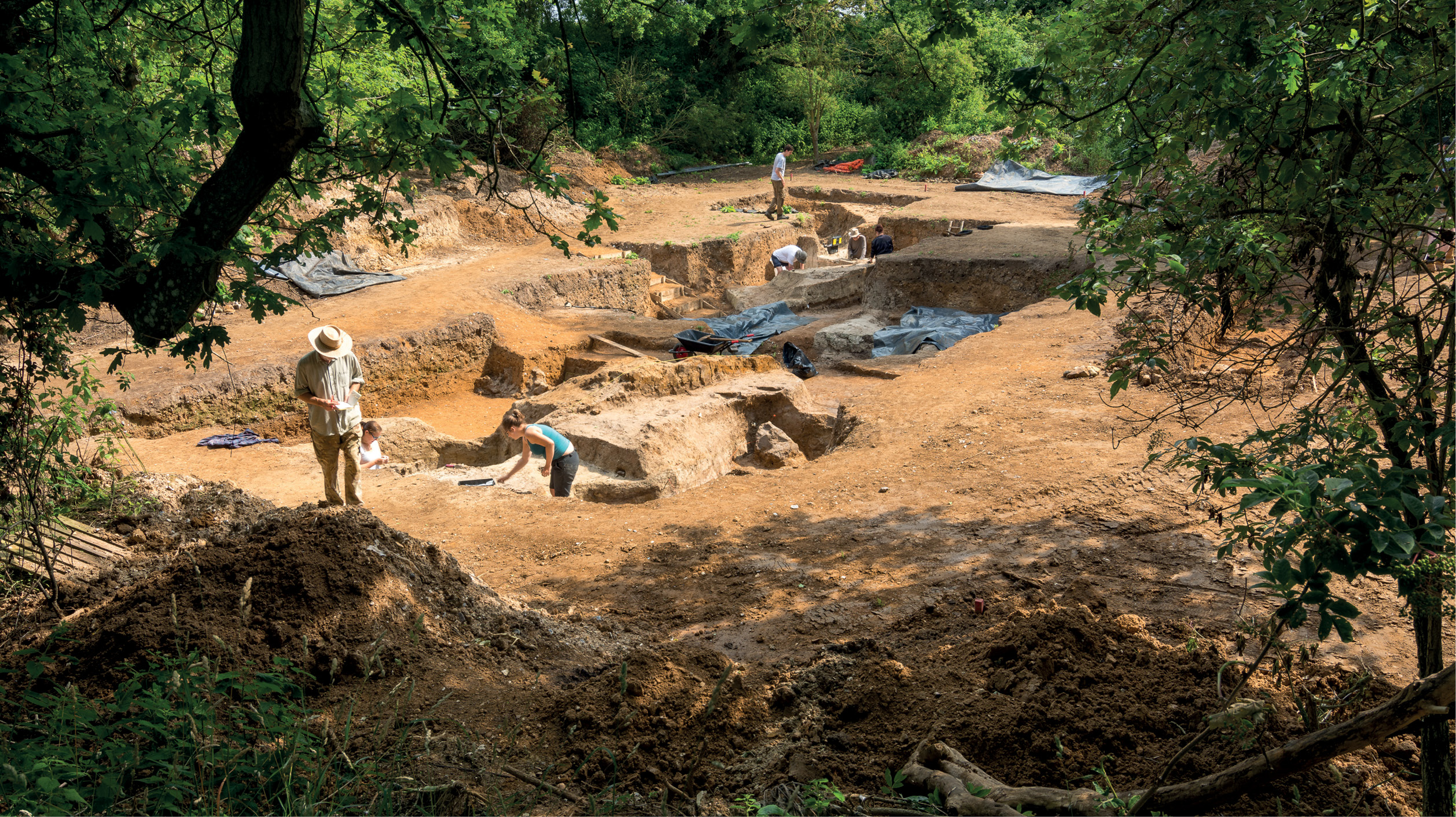
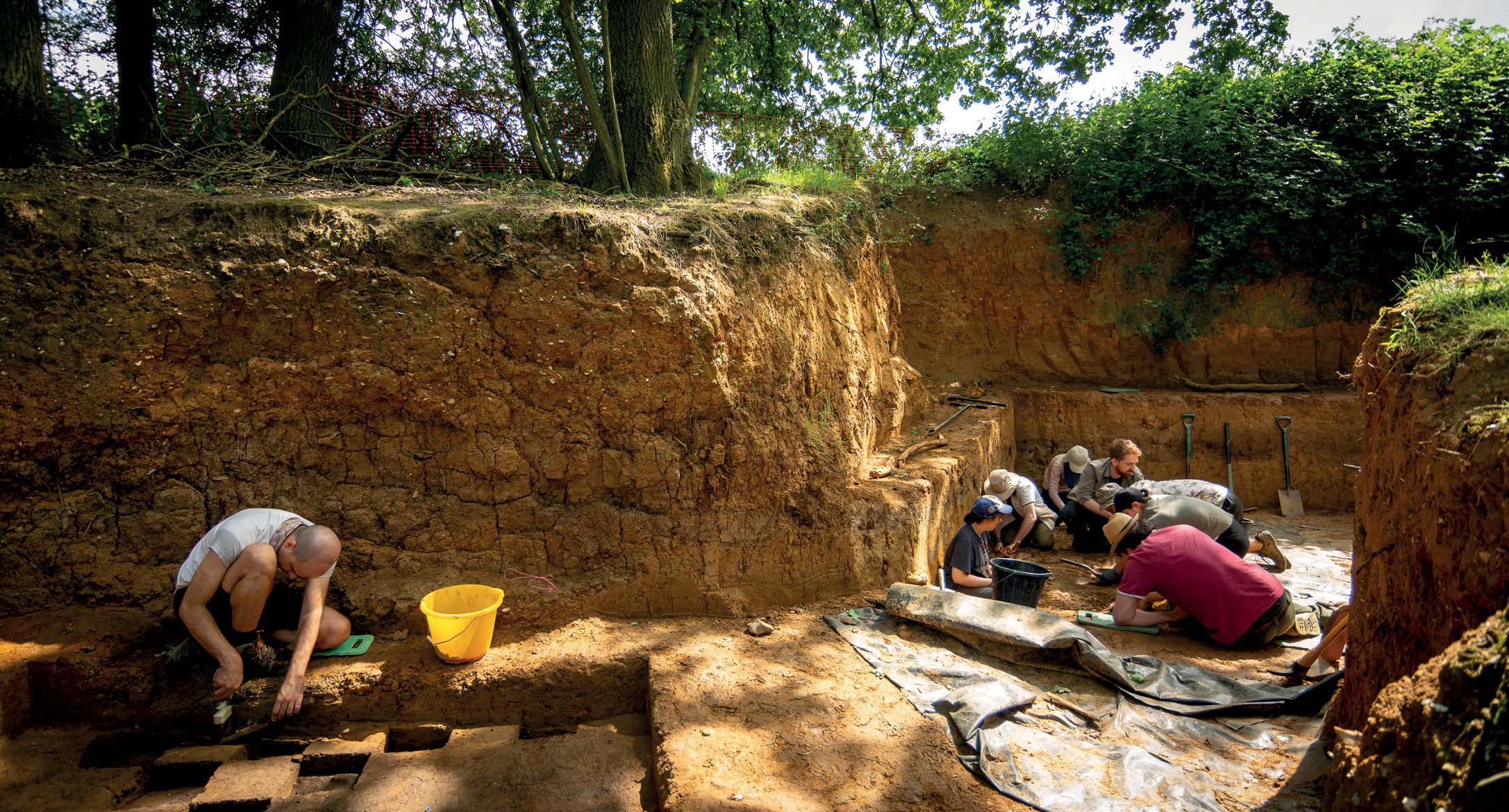
East Farm, Barnham, lies about 2 miles (3km) south of Thetford. In the late 19th century, the site was home to a clay pit that served the local brick-making industry until it was abandoned in the early 20th century, but these works are also known to have uncovered the remains of prehistoric animals, as well as flint tools pointing to human presence. More recently, East Farm witnessed a rather different form of digging, with British Museum excavations unearthing further clues between 1989 and 1994, and since 2013 the site has hosted a student field school, run under the auspices of the Pathways to Ancient Britain (PAB) project. A successor to the Ancient Human Occupation of Britain project (see CA 190 and 288), this is a collaboration between the British Museum, the Natural History Museum, Queen Mary University of London, UCL, the University of Liverpool, and Leiden University, funded by the Calleva Foundation. It aims to shed light on three periods of early human presence in Britain, from the first occupation of these shores through to the extinction of Neanderthals and the emergence of modern humans.

Over the last decade, PAB’s investigations at Barnham have uncovered environmental evidence and animal remains that paint a vivid picture of a stream-fed pond surrounded by grassland and deciduous trees. This landscape was inhabited by large animals, including elephants and bison, as well as early humans. Excavation of the long-dried-up pond’s sediments has recovered flint tools speaking of two phases of human activity: the first, represented by cores, waste flakes, and simple flaked tools, is thought to reflect intrepid groups venturing back into Britain as the ice sheets retreated c.420,000 years ago. Then, some years later but during the same warm interglacial period, another group visited the site, leaving behind rather more complex flint hand-axes. It is this second, more recent, phase that has produced the all-important evidence of fire-making.
Spark to a flame
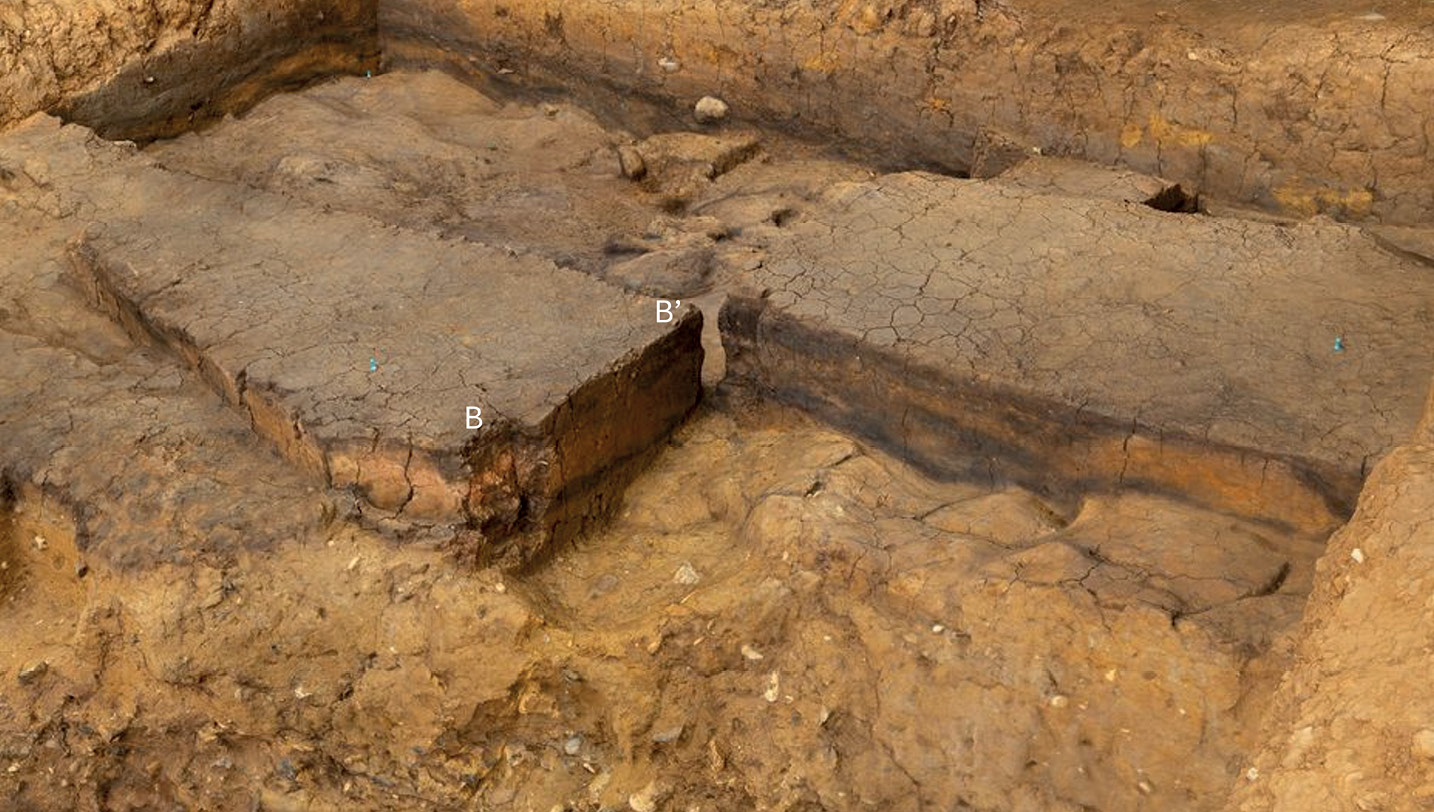
The first significant clues emerged early in PAB’s excavations, when a scatter of heat-shattered flints were uncovered in 2014. They had clearly been exposed to high temperatures, but were these the result of a wildfire or something more intentional? The answer came in 2021, when the team discovered an area of reddened clay whose colour indicated that it had also been subjected to intense heat. Crucially, this surface was associated with four of the hand- axes mentioned above, all of them heat-shattered, placing humans firmly in the picture.
Had the tool-makers created the fire themselves, though, or had their presence coincided with a natural blaze? Over the last four years, a diverse range of geochemical analyses aimed to find out – and this research was able to establish that the reddened clay was still in its original location, and that it had undergone multiple burnings featuring very high temperatures, some exceeding 750°C. In other words, the reddening was not the result of a single wildfire passing through, but instead represents the remains of a hearth or campfire that had been lit many times. As mentioned at the start of this article, campfires can of course be kindled using naturally created embers – but, as well as flint tools, excavation of the area around the ‘hearth’ produced two tiny pieces of pyrite.
This mineral mainly forms in the Lower Chalk, and the Breckland area in which Barnham is located overlies Chalk bedrock, but the Lower Chalk runs so deeply as to be inaccessible to early humans. Indeed, over the course of more than 35 years of fieldwork exploring 26 Breckland sites, PAB project members Professor Simon Lewis (Queen Mary University of London) and Professor Nick Ashton (British Museum) have not found any evidence of pyrite. The nearest reported source lies at Stowlangtoft, about 7.5 miles (12km) south-east of Barnham. This local scarcity suggests that the properties of pyrite were well understood by the area’s early human population, and that it had been deliberately sourced and brought to the site with the intention of making a fire.
Who had been responsible for this unprecedentedly early activity? It was not Homo sapiens, who were evolving in Africa at this time and are not thought to have arrived in Britain until around 40,000 years ago (CA 262). The hand-axes, however, are similar to examples excavated at Swanscombe in Kent – a site that also produced early Neanderthal skull fragments (CA 190, 196, 288, and 372). Our prehistoric cousins are often unfairly stereotyped as being less capable, but Neanderthals formed complex societies, innovated new tool types, and created cave art in France and Gibraltar. It now appears that they also knew how to make fire at a very early date.
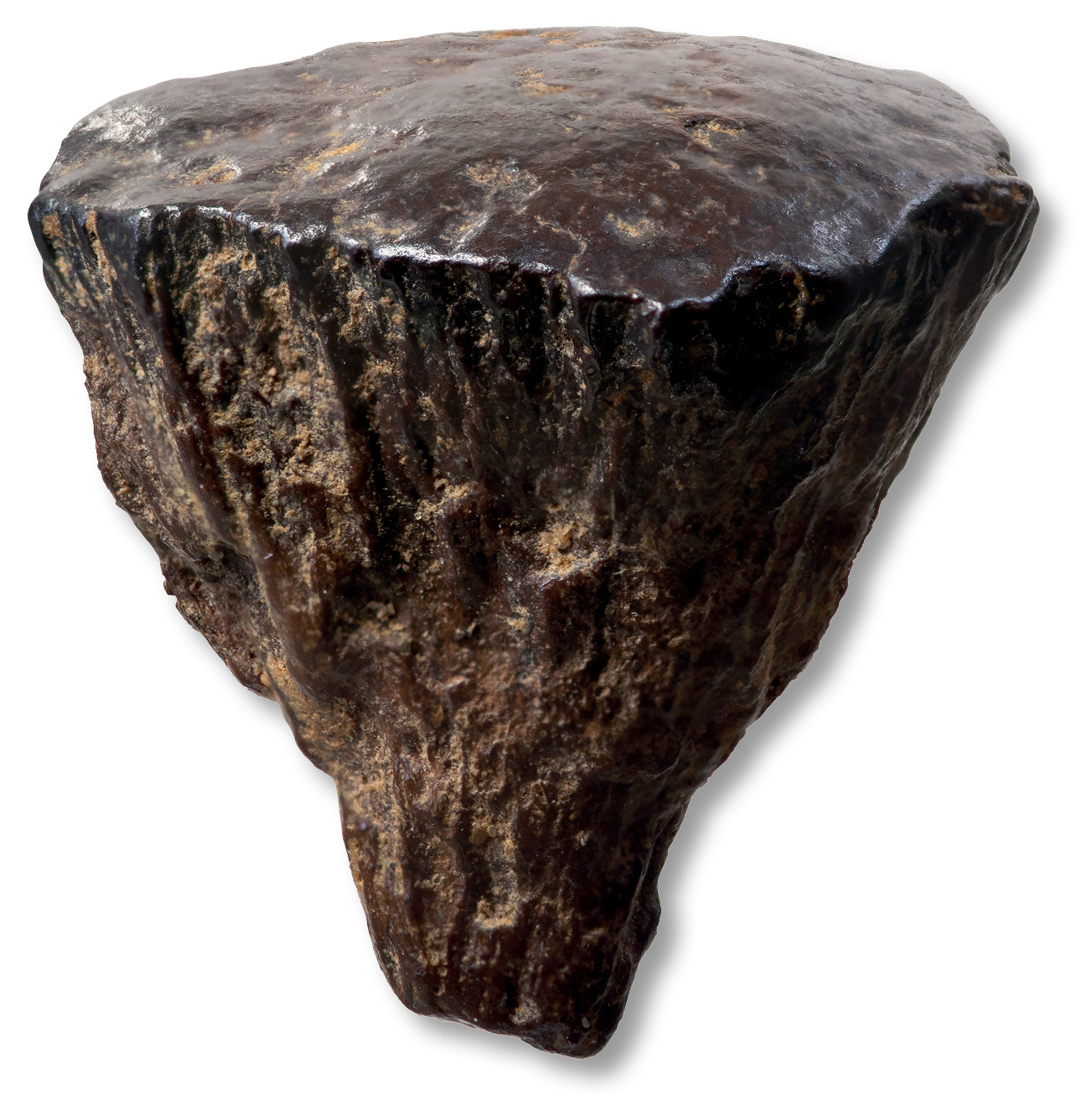
Above and below: Two tiny pieces of pyrite were found beside the campfire remains. This material is locally so rare that it was probably deliberately sourced and brought to the site with the intention of making a fire. Images: © The Trustees of the British Museum

Firing human society
Why was the ability to harness fire so significant? As mentioned above, the dependable warmth of a campfire enabled humans to live and thrive in much colder environments than before, and its heat facilitated the development of new technologies, too, like making glue for hafting tools and weapons. Meanwhile, its light offered protection from predators, and allowed humans to take advantage of safe and sheltered but very dark spaces like caves.
Another invaluable innovation linked to fire-making is cooking. This greatly widened the range of food sources available to early hunter-gatherers, as cooking helps to remove toxins from roots and tubers, and makes meat safer to consume and more easily digestible. This last aspect would have freed up energy that could instead help with brain development, the PAB team suggest, noting that the evidence from Barnham is contemporary with a period of steady increase in the size of early humans’ brains, which were approaching modern dimensions at this time.

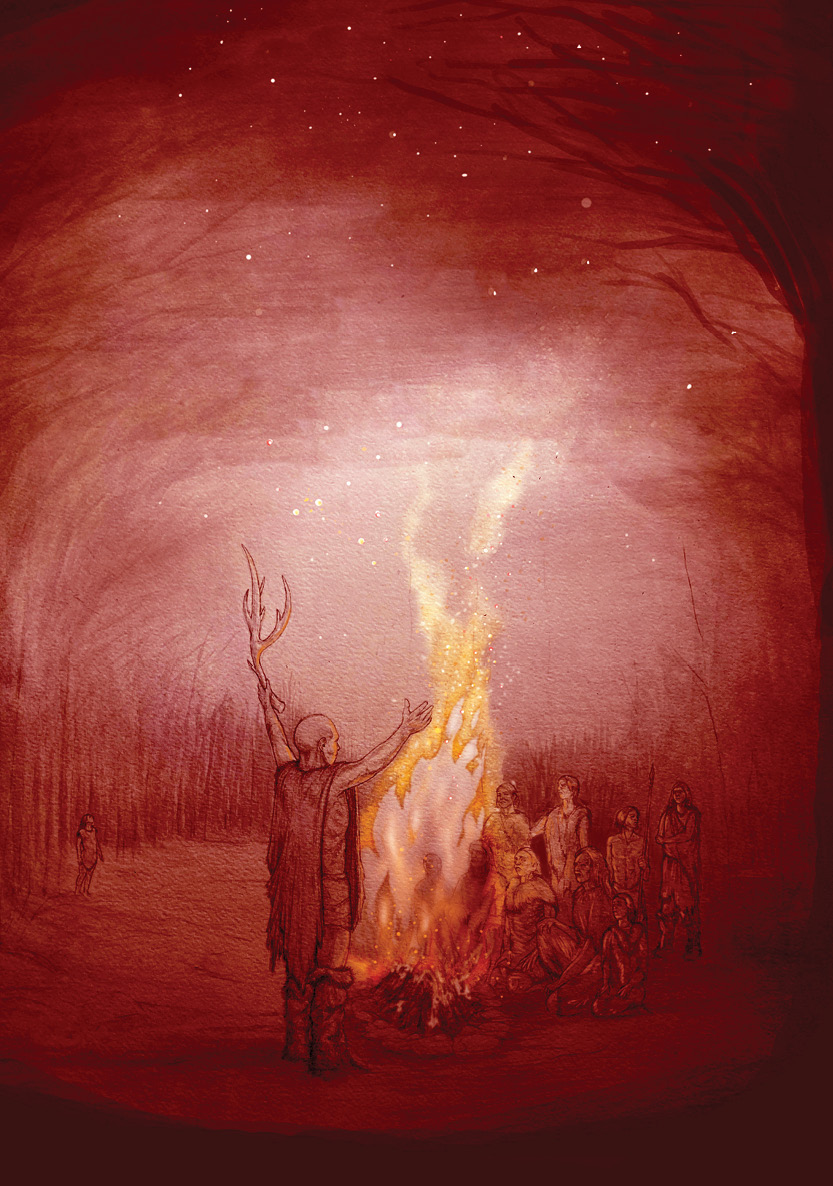
The development of fire-making did not only have biological consequences, however: it could have also played an important role in our social evolution. Campfires, and the culinary advantages that they brought, would have allowed larger groups to thrive within the same area, while rising columns of smoke could have helped widely scattered communities to locate their neighbours. Firelight would have extended the waking and working day by several hours, too, meaning that more of the daylight period could be devoted to hunting and gathering resources. After dark, communities could gather around the fire to make tools, teach skills, and simply spend time together, reinforcing the bonds that are vital to the emergence of more complex societies. Perhaps these periods of intense interaction laid foundations for the development of language and even storytelling and early myths.
We do not know if early Homo sapiens in Africa, or Denisovans in eastern Eurasia – another large-brained species who often inhabited very cold climates – also had access to fire-making at this time. However, the PAB team do not suggest that the Suffolk site is where this technology was first invented. Rather, they believe that fire-making knowledge travelled to Britain across the land-bridge that once linked us to continental Europe, carried by migrating groups of early humans who moved into Britain as its once-inhospitably frozen landscape warmed.

What makes Barnham special is what it adds to our understanding of the wider picture of human behaviour at this time. Thanks to its exceptional geological preservation and deep interglacial sediment record, the site offers us intriguing insights into a phenomenon that must have been replicated elsewhere, but for which we currently lack conclusive evidence. Physical traces of fire-use, particularly before the creation of hearths, is notoriously ephemeral: ash and charcoal can blow or wash away, heat-baked sediments can erode, and it is often difficult to establish whether fire-cracked artefacts are the product of naturally or deliberately created flames.
Surviving evidence suggests that fire-use increased in importance, both in Britain and on the Continent, around 500,000-400,000 years ago. This can be seen at sites in the area immediately around Barnham – among them Beeches Pit and Devereux’s Pit, about 6.2 miles (10km) from the site – and on the European mainland (such as Menez-Dregan and Terra Amata in France, and Gruta da Aroeira in Portugal), speaking of a widespread phenomenon. What was less clear, however, was how or why these fires had been created. With Barnham now demonstrating that early humans were capable of harnessing fire long before it was previously thought possible, we have an answer.
Further information:
• R Davis, M Hatch, S Hoare et al. (2025) ‘Earliest evidence of making fire’, Nature, https://doi.org/10.1038/s41586-025-09855-6.
• For more information about the Pathways to Ancient Britain project, see http://www.pabproject.org.
Source:
This report is based on the paper cited above, and on information from the following members of the research team, provided at a British Museum press briefing in December:
• Professor Nick Ashton, Curator of Palaeolithic Collections at the British Museum
• Dr Robert Davis, Project Curator of Pathways to Ancient Britain at the British Museum and lead author of the Nature paper
• Professor Chris Stringer, Natural History Museum
• Dr Sally Hoare, University of Liverpool
• Professor Simon Lewis, Queen Mary University, London
All images: courtesy of the Pathways to Ancient Britain project and by Jordan Mansfield, unless otherwise stated