
Subscribe now for full access and no adverts
Operation Downfall was the overall code-name assigned to the two planned invasions of the Japanese home islands: Operation Olympic, the invasion of Kyushu, scheduled for 1 November 1945 (X-Day); and Operation Coronet, the subsequent landings in Tokyo Bay, in the spring of 1946.
Earlier in the war, preliminary British studies had suggested that any such invasion would be impractical until 1947-1948 – but at the First Quebec Conference, on 17-24 August 1943, Allied leaders agreed that it should be scheduled for 1945-1946. The US Navy (USN) maintained, however, that there was no need for an invasion, which would risk heavy Allied casualties, and that Japan could be defeated instead by a naval blockade, supported by strategic bombing. The US Army strongly opposed this proposal, arguing that it could well increase Allied losses by prolonging the war indefinitely. Although the USN finally lost that argument, it still fought hard to dominate the operations’ command structure, claiming that there was no alternative to Admiral Chester W Nimitz, the commander of the US Pacific Fleet, as overall C-in-C, while the Army insisted on the post going to General Douglas MacArthur. Eventually, the USN reluctantly conceded MacArthur would take command.
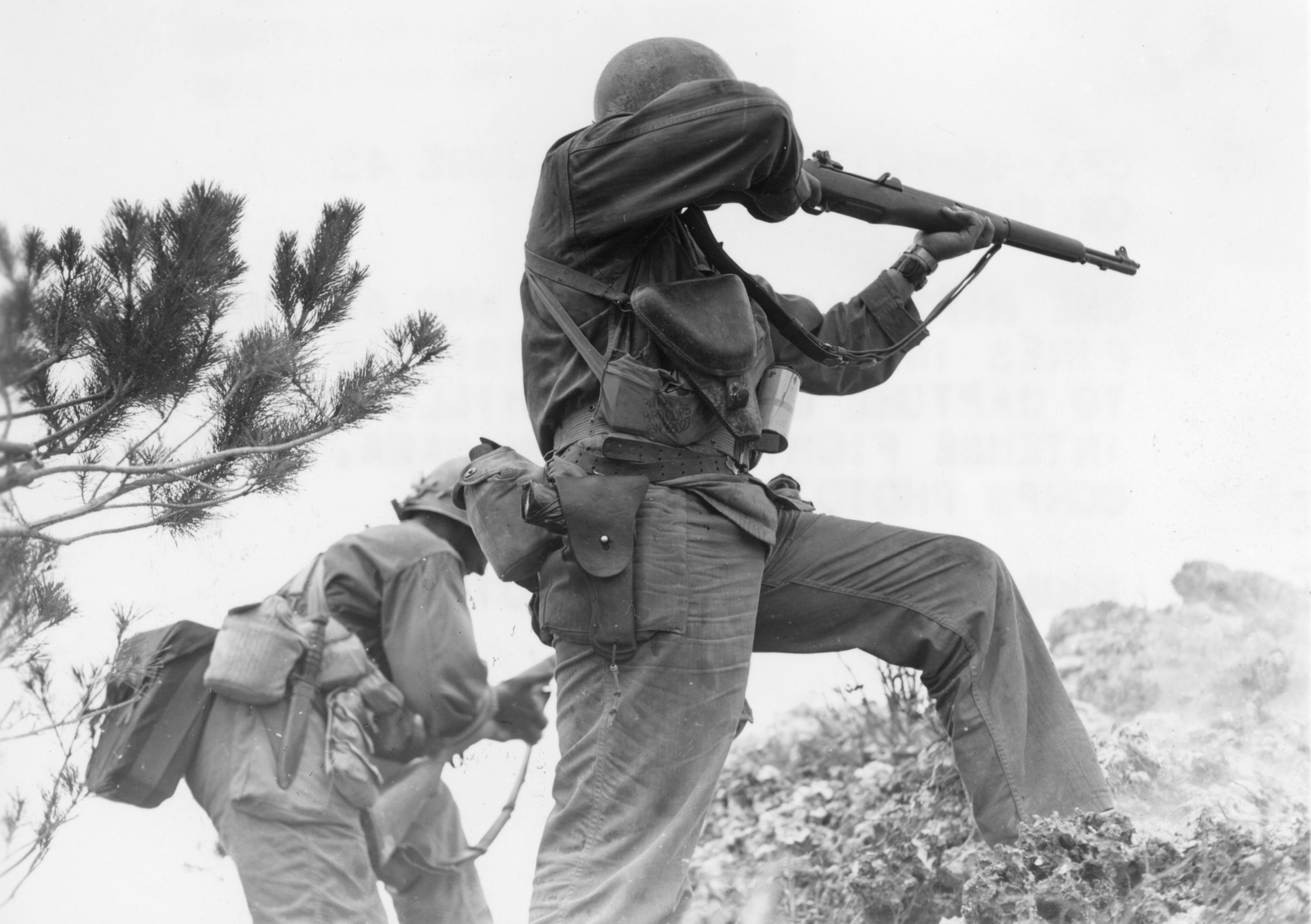
The invasions were to be US-dominated from the beginning, with only limited Allied forces being involved. Primarily, these included: Admiral Sir Bruce Fraser’s British Pacific fleet, with six fleet carriers; the RAF’s Tiger Force, with more than 400 Lancaster heavy bombers (to be replaced with the new Avro Lincoln as it entered service); the Australian 1st Tactical Air Force, with 20 fighter and ground-attack squadrons; and the Commonwealth Corps (British 3rd, Canadian 6th, and Australian 10th Divisions), which was assigned to Operation Coronet.
By early 1945, Allied planning was based on a number of ‘assumptions’, including:
• That operations in this area will be opposed not only by the available organised military forces of the Empire, but also by a fanatically hostile population.
• That approximately three hostile divisions will be disposed in southern Kyushu and an additional three in northern Kyushu at initiation of Operation Olympic.
• That total hostile forces committed against Kyushu operations will not exceed eight to ten divisions and that this level will be speedily attained.
• That approximately 21 hostile divisions, including depot divisions, will be on Honshu (the largest of Japan’s four main islands) at the initiation of Coronet, and that 14 of these divisions may be employed in the Kanto Plain area, centred on Tokyo Bay.
• That the enemy may withdraw his land-based air forces to the Asiatic mainland for protection from our neutralising attacks. That under such circumstances he can possibly amass 2,000 to 2,500 planes, and that this force can operate against Kyushu landings by staging through homeland airfields.
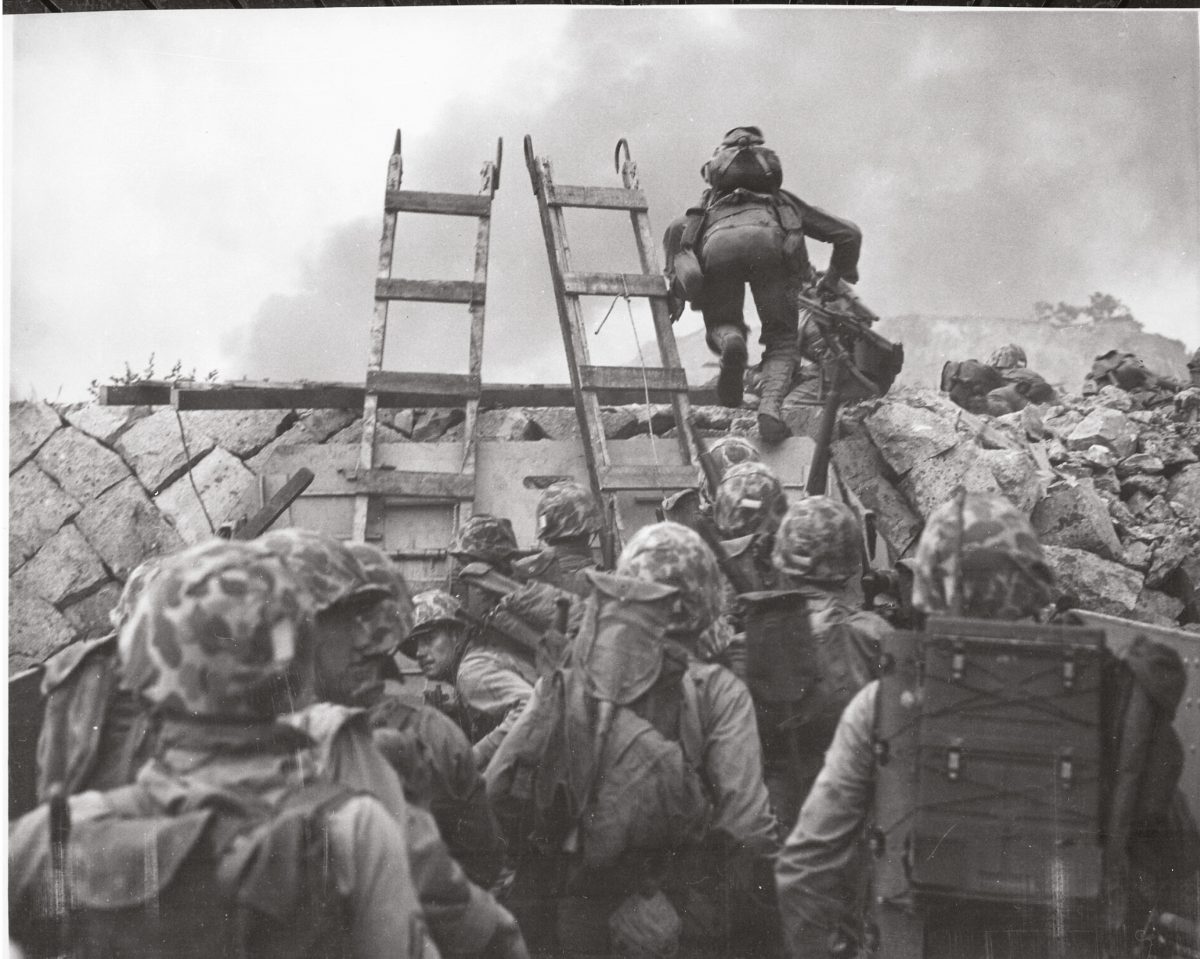
The main landings were to be preceded by the seizure of the Osumi and Koshikishima islands off the southern coast of Kyushu to provide secure anchorages for the massive invasion fleet, which included 42 aircraft carriers, 24 battleships, and 400 destroyers/destroyer escorts. The Allied navies would have provided unprecedented levels of naval gunfire support, with the battleships capable of engaging targets up to 18 miles (29km) inland. Air support was on an equally lavish scale, including almost 1,000 B-29 heavy bombers and more than 1,300 US and British carrier-based aircraft to guarantee local air superiority. The assault forces totalled 15 divisions, with more than 190,000 men, who would land on 35 beaches around Miyazaki, Ariake, and Kushikino in southern Kyushu. The island’s poor roads and difficult terrain, along with the anticipated fanatical Japanese resistance, led Allied objectives to be limited to occupying the southern third of the island.
It was estimated the operation would leave up to 800,000 Americans dead.
As soon as southern Kyushu was secured, bases would be established to support Operation Coronet, which was scheduled for 1 March 1946. This would have been the largest amphibious assault of all time, with an Allied force of 25 divisions earmarked for the opening stages of the operation. The initial objective was to swiftly surround Tokyo, driving inland to take the vast network of heavily fortified tunnels and caves forming the Imperial GHQ bunker complex at Matsushiro, near the central city of Nagano, which incorporated a bunker complex for the Emperor and his immediate family. A ground assault on these fortifications was certain to incur heavy casualties, and the complex was a priority target for 9 and 617 Squadrons of the RAF Tiger Force using 5- and 10-ton Tallboy and Grand Slam ‘earthquake bombs’.
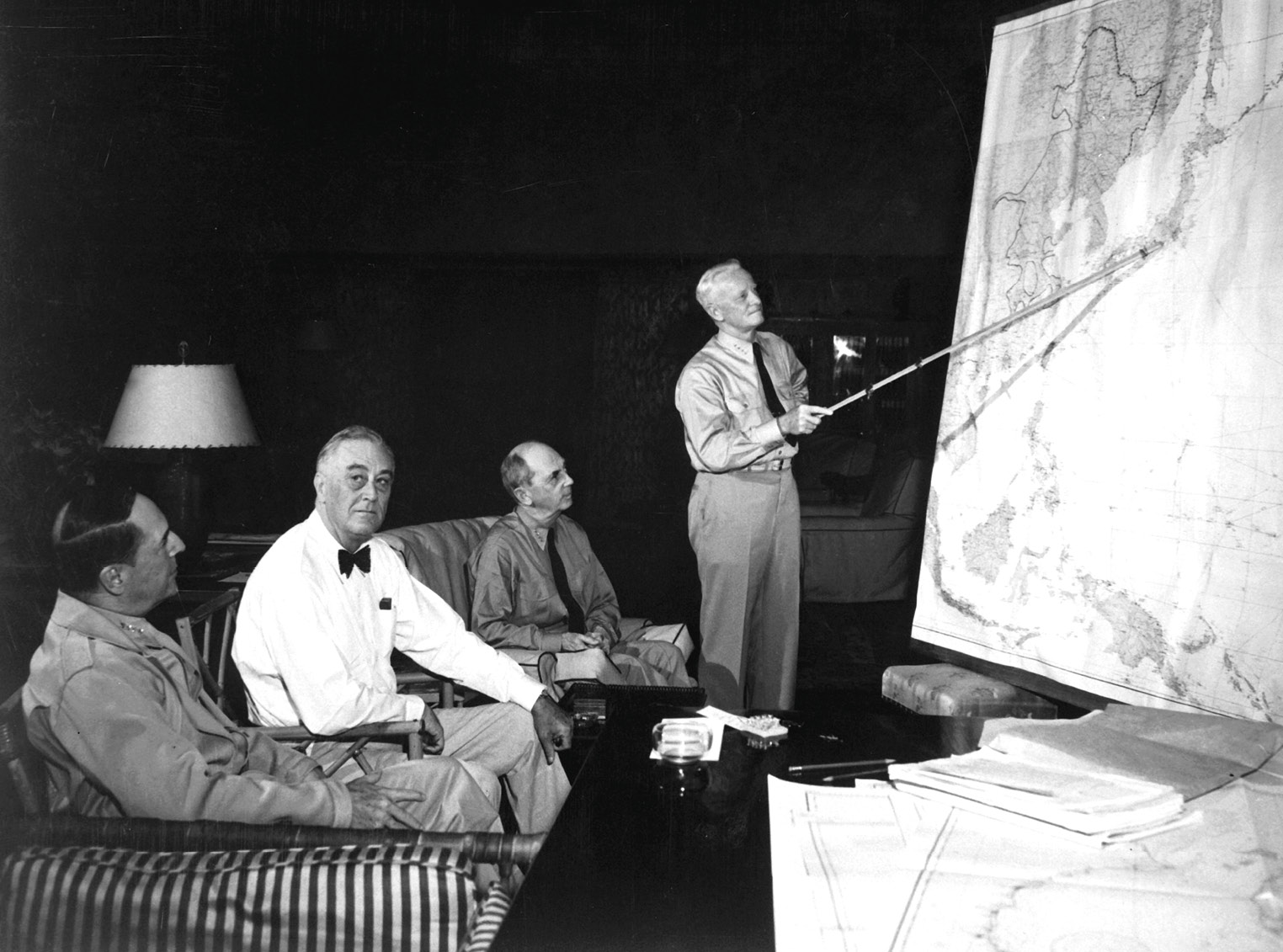
Defending Japan
In mid-1945, the Japanese were concentrating the bulk of their remaining military resources for the protection of the home islands – with the plan finally adopted, code-named Operation Ketsugo (‘Decisive’), giving priority to the defence of Kyushu. It was believed that fanatical resistance would help offset the overwhelming Allied technical superiority. This fanaticism was exemplified by the deployment of 6,000-plus ‘kamikaze’ aircraft (see also MHM 145, April/May 2025) escorted by 2,000 fighters to oppose the invasion of Kyushu: the kamikazes included purpose-built machines such as the Ohka piloted bomb, plus converted bombers, fighters, and trainers.
During the battle for Okinawa, beginning on 1 April 1945, roughly 2,000 kamikazes had been deployed, with one in nine hitting their targets, sinking 20 USN vessels and damaging a further 217. Japanese planners anticipated that conditions off Kyushu would be more favourable, as attackers could approach at low level, using the terrain to shield them from ships’ radars. The larger numbers of aircraft available would allow mass attacks with the potential of swamping Allied defences, increasing the kamikazes’ effectiveness so that one in six could be expected to hit. Their pilots were retrained to target transports and landing ships rather than warships – to inflict the maximum number of casualties with the aim of destroying 30-50 per cent of the invasion force at sea. Bomb supplies for kamikaze units were given high priority – with the result that, by the end of July, 3,000 100kg bombs had been delivered, along with 7,000 250kg bombs, 3,000 500kg bombs, and 300 800kg bombs.

By August 1945, most conventional vessels of the Imperial Japanese Navy (IJN) had been sunk or immobilised by lack of fuel, leaving an operational force of perhaps 20 destroyers and 40 submarines. The Allied blockade had dramatically cut oil imports and fuel reserves were so low that even these ships could only be kept at sea for a matter of days.
The IJN’s main strength now lay in its own kamikaze units – roughly 100 Koryu midget submarines, 200 smaller Kairyu midget submarines and 1,000 Kaiten manned torpedoes, plus at least 800 Shinyo high-speed suicide boats. These small craft had the advantage of needing far less fuel for their short-range one-way missions than conventional warships. A final naval line of defence would have been provided by up to 4,000 Fukuryu suicide frogmen operating just off-shore. They were armed with a naval version of the anti-tank ‘lunge mine’ – a 10kg (22lb) hollow-charge weapon on a long pole that was intended to be rammed against the hulls of Allied landing craft. Virtually all air and naval kamikaze forces would be committed to the battle for Kyushu, with minimal reserves retained for the defence of Honshu.
The ground defence of Kyushu was the responsibility of the 16th Area Army, comprising three armies with a total of 15 divisions, seven independent mixed brigades and independent tank brigades, and two coastal defence divisions. Although many of these troops were poorly trained and equipped, this force eventually reached a strength of more than 900,000 men, significantly outnumbering the 766,000 US troops committed to the invasion. The defenders had a total of almost 3,000 Armoured Fighting Vehicles scattered throughout the home islands, though the vast majority were obsolete or obsolescent types that were horribly vulnerable to US tanks and anti-tank weapons. Their potential effectiveness was further reduced by the fuel shortage, which would have forced many to be dug in as static strongpoints.

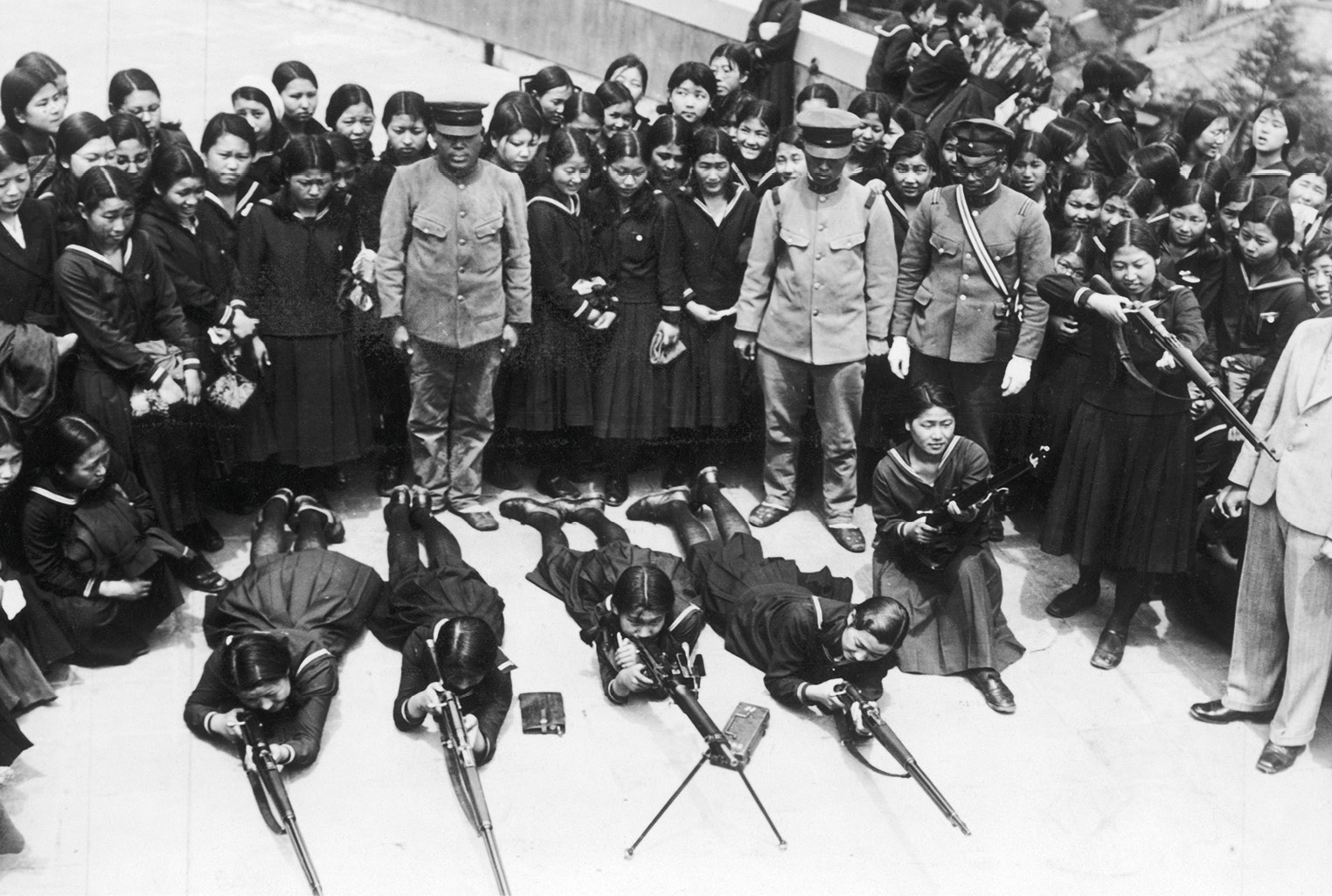
The lack of fuel was due to the Allied blockade and strategic bombing campaign, which had cut off the bulk of Japan’s imports of oil and raw materials, and severely damaged its war industries. This meant that, although the Japanese were able to increase the home islands’ garrison to the equivalent to 65 divisions by August 1945, there was only enough equipment for 40 divisions, and no more than 30 could be issued with ammunition. Shortages of weapons and equipment were even worse in the Volunteer Fighting Corps, a 28,000,000-strong militia that included all men aged between 15 and 60 and women from 17 to 40. Armouries were scoured for obsolete rifles and enough were scraped together to issue one for every ten men. Empty bottles were collected to make Molotov cocktails and poison grenades filled with hydrocyanic acid. Small workshops produced crude demolition charges, lunge mines, and even smooth-bore muskets, supplemented by longbows, swords, knives, and bamboo spears.

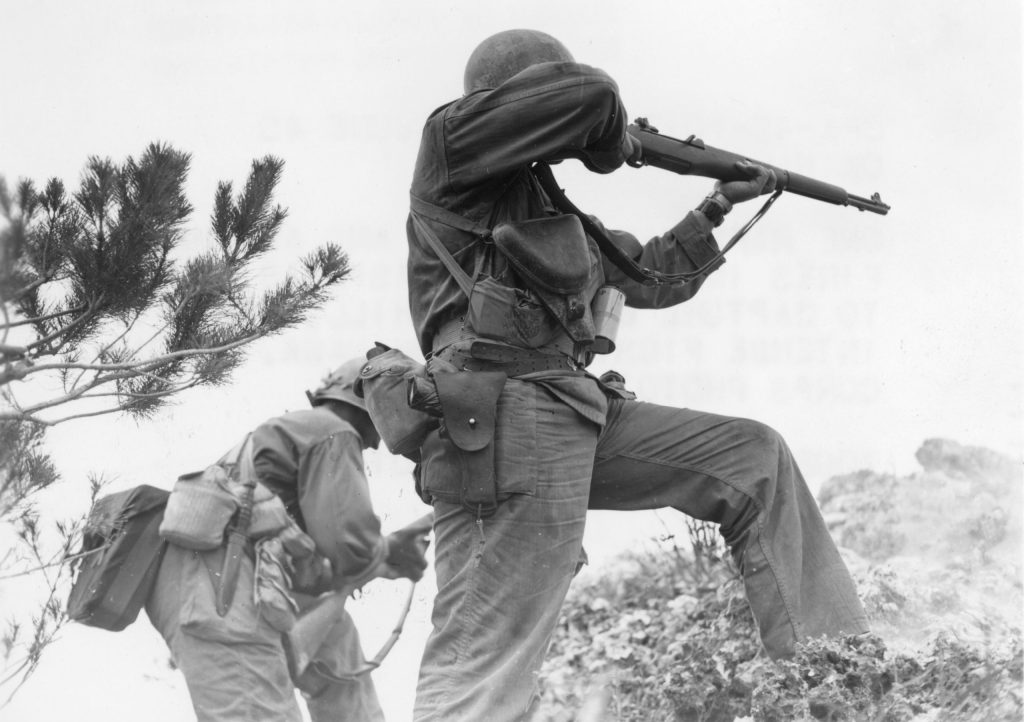
The limited training programme for the newly raised militia concentrated on guerilla warfare and night infiltration tactics, but all military personnel and able-bodied civilians were expected to fight to the death. The slogan ‘One hundred million will die for Emperor and Nation’ was far more than mere propaganda. The first indication of this came during the battle for the island of Saipan (15 June-9 July 1944), in which the American forces lost 3,100 dead and 13,000 wounded, while more than 29,000 of the 30,000-strong Japanese garrison were killed in action and an estimated 1,000 Japanese civilians committed suicide. The situation was even more horrific on the small island of Ie Shima during the Okinawa campaign. Between 16 and 24 April 1945, the US 77th Infantry Division incurred 1,120 casualties – but while the 3,500 Japanese troops were supported by at least 1,500 civilians, there were fewer than 300 survivors. The defence of the island was at least as fanatical as that of Saipan: one counter-attack was led by troops festooned with demolition charges to act as ‘human bombs’ and included women (some with babies strapped to their backs) armed with bamboo spears.
As a senior Japanese staff officer explained to US interrogators after the war:
We did not believe the entire people would be completely annihilated through fighting to the finish. Even if a crucial battle were fought in the homeland and the Imperial Forces were confined to the mountainous regions, the number of Japanese killed by enemy forces would be small… [But] even if the whole [Japanese] race were all but wiped out, its determination to preserve the national polity would be forever recorded in the annals of history.
Experience of Allied firepower had convinced the Japanese of the value of fortifications of all types, and they intended to combine beach defences with multiple belts of field defences further inland. Basic field defences on the beach had been shown to be horribly vulnerable to naval gunfire, but more elaborate and well-camouflaged beach defences were immune to anything other than a direct hit by a large-calibre shell. (The Japanese had even sent a military mission to Germany in late 1944 to learn from the German experience of the Normandy campaign.) Behind the beaches was the ‘foreground zone’, much like the defences constructed on Iwo Jima and Okinawa, with camouflaged mortar and artillery positions on the reverse slopes of ridges, close enough to engage the beachhead before Allied troops could dig in. Further inland was the ‘main zone of resistance’, beyond the range of naval gunfire, comprising mutually supporting positions sited for all-round defence, with a network of caves and tunnel systems to allow easy infiltration behind Allied lines.
In June 1945, Imperial GHQ established a Tokyo Defence Army, including three Guards brigades to protect the city and especially the Imperial Palace. This formation was supported by the powerful 36th Army, with six infantry and two tank divisions concentrated north-east of Tokyo, where it was well placed to reinforce the city itself, or the 52nd Army, covering Kujuˉkuri-hama on the Boˉsoˉ Peninsula (at the eastern end of Tokyo Bay), where the initial Operation Coronet landings were scheduled to take place.
The likely human cost
By mid-1945, Allied intelligence reports on the strengthening of the Kyushu garrison (including the redeployment of elite formations drawn from the Kwantung Army in Manchukuo, Japan’s puppet state in north-east China) began to cause serious concern in both the Pacific and Washington. On 29 July, MacArthur’s intelligence chief, Major General Charles Willoughby, noted first that the April estimate allowed for the Japanese capability to deploy six divisions on Kyushu, with the potential to deploy ten, then added: ‘These [six] divisions have since made their appearance, as predicted, and the end is not in sight.’ If not checked, this threatened ‘to grow to [the] point where we attack on a ratio of 1:1 which is not the recipe for victory’.
Japanese troops and many civilians were expected to fight to the death.
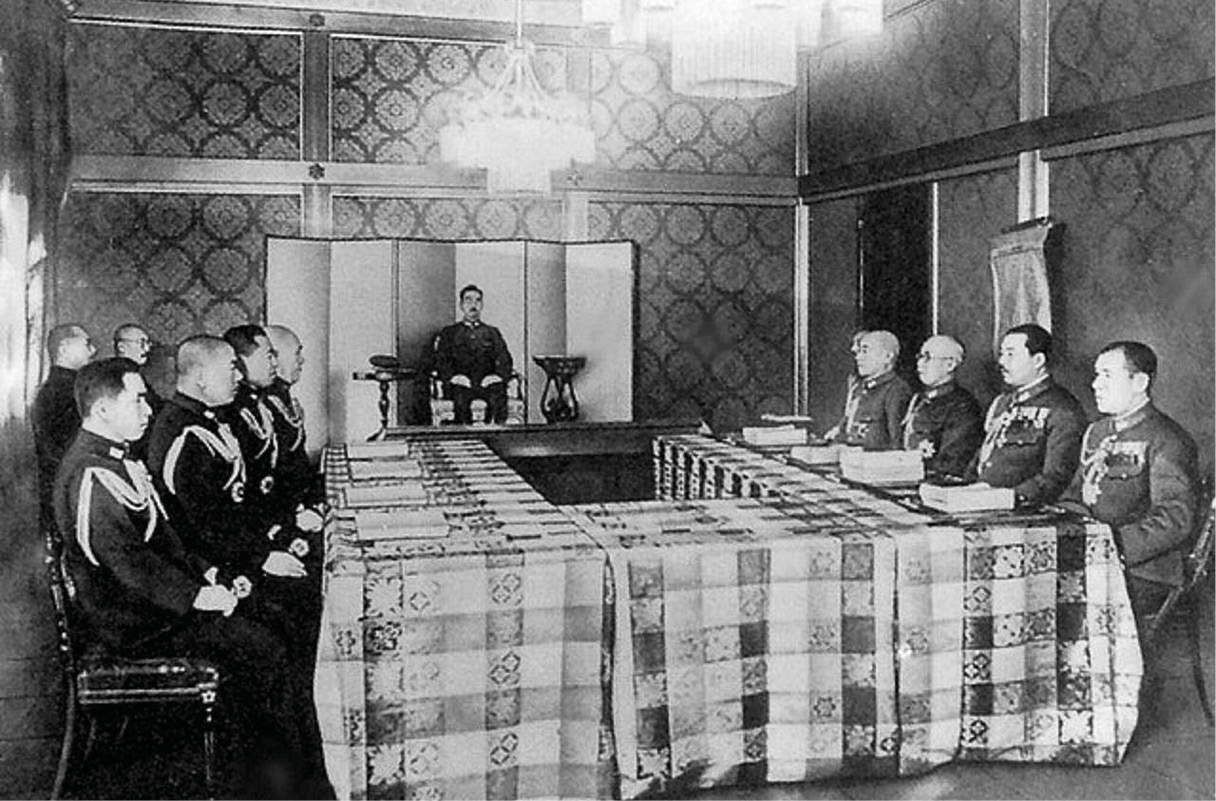
This situation led Allied planners, notably the US Army Chief of Staff, General George C Marshall, to consider drastic changes to Olympic, or its replacement by an entirely different plan. The use of gas was seriously considered, as highly predictable wind patterns made Japan particularly vulnerable to gas attack. Although chemical warfare had been outlawed since 1928 under the Geneva Protocol, neither the US nor Japan was a signatory. While the US had declared its intention never to initiate gas warfare, Japan had used gas against the Chinese in the 1930s, giving the Allies any excuse they might need.

The tactical use of atomic weapons in Operation Downfall was also seriously considered if Japan fought on after the attacks on Hiroshima and Nagasaki. It was calculated that at least seven bombs would be available by X-Day, but the lack of appreciation of the risks of fallout and residual radiation made their use in this role highly risky to Allied troops. (The only safety advice given was not to enter the target areas for at least 48 hours after the attacks.)
Estimates of likely Allied casualties rose steadily – in April 1945, it was suggested that the proposed Olympic and Coronet campaigns would incur a total of 1,200,000 casualties, including 267,000 dead. However, this was based on intelligence reports which grossly underestimated the strengths of the garrisons of Kyushu and Honshu. A later study estimated that the conquest of Japan would result in between 1,700,000 and 4,000,000 US casualties, including 400,000 to 800,000 fatalities, and between 5,000,000 and 10,000,000 Japanese dead. The massive Japanese death toll was based on the anticipated large-scale involvement of militia and civilians in the defence of Japan.

A final factor in the equation was the weather – had Operation Olympic gone ahead as planned, it would have been severely affected by a typhoon. The Pacific typhoon season in 1945 was very active, with 26 major storms between April and November. On 9 October, Typhoon Louise hit Okinawa, catching hundreds of US vessels in Buckner Bay before they could put to sea. Twelve ships sank, 222 were driven ashore, and a further 32 damaged beyond repair. Casualties included 36 killed, 47 missing, and more than 100 with serious injuries. An estimated 80 per cent of the island’s buildings were damaged, as were all the 60 aircraft based there. Had preparations for Operation Olympic still been under way, Okinawa would have been packed with far more troops, and casualties would almost certainly have been much higher. The worst effect would have been the estimated 45-day delay imposed on the landings, which would have given the Japanese time to improve their defences. This delay would also have brought the assaults perilously close to the beginning of the winter storm season, which posed such a risk that 1 December had been assessed as the last feasible date for the operation.
The massive casualty estimates for Operation Downfall put the appalling death toll of up to 246,000 from the atomic bomb attacks on Hiroshima and Nagasaki into perspective. In forcing the Japanese surrender, the atomic bombs in all probability saved millions of dead on both sides.
David Porter worked at the Ministry of Defence for many years, and is the author of 11 books on the Second World War. He is a regular MHM contributor.
All images: Wikimedia Commons, unless otherwise stated