
Subscribe now for full access and no adverts
When Colonel P G T Beauregard ordered the first shots of the American Civil War to be fired – on Fort Sumter, off the coast of South Carolina, on 12 April 1861 (see MHM 144, February/March 2025) – he could have had no idea of the cataclysm about to be enacted as the Southern states attempted to withdraw from the union with their Northern countrymen.
Humans have been waging war on their fellow beings for millennia, frequently with disastrous consequences for the soldiers involved and, all too often, for the civil populations caught in the struggle. Warfare, by its very nature, has frequently served as a spur to technological developments. From the stirrup to the crossbow, and from the catapult to gunpowder, technology has always emerged from (or been developed specifically to augment) man’s inhumanity to man.
But perhaps one of the saddest, most disturbing aspects of the American Civil War is the convergence and application of a devastating new array of emerging technologies on the battlefield – providing the first large-scale demonstration of the impact these developments would have on the future of warfare.
At the same time, military education and techniques still depended largely on lessons applicable to the Napoleonic Wars – as espoused by theorists such as Antoine- Henri Jomini and Carl von Clausewitz, and passed on to the officer class at US institutions such as West Point and the Virginia Military Institute. The results of this approach would also contribute immeasurably to the American Civil War’s ferocity and carnage.

Small arms
Since the early 16th century, infantrymen had used firearms called ‘flintlocks’, in which a piece of flint clamped in the jaws of a hammer produced sparks when striking a piece of metal called a ‘frizzen’. These sparks were thrown down into a ‘pan’ holding gunpowder, which flared up and passed through a ‘touch-hole’ to ignite the gunpowder in the weapon’s barrel, forcing a lead ball out of the weapon at the enemy. The projectile was fairly large, as with the standard weapon of British infantry called the ‘Brown Bess’, which fired a .75- calibre ball with an effective range of between 50 and 150 yards. Horribly inaccurate, slow to load, and subject to the vagaries of weather conditions, these weapons were typically used by mass formations and depended more on the volume of fire and its psychological impact on the opposing force.
This system began to change in the early 19th century with the introduction of the percussion cap – a small bit of copper filled with fulminate of mercury, which superseded the flintlock as a way to ignite the gunpowder. Thus, by the time of the outbreak of the Civil War, most infantrymen were armed with the Springfield rifled musket, firing a .58-calibre ball. With the addition of a rifled barrel, this weapon had an average range of between 200 and 400 yards – but, in the hands of a marksman, it was possible to hit a man at 500 yards.
With the percussion cap, the ignition system was also less susceptible to the vicissitudes of the weather. Furthermore, the new weapon used a new type of projectile, the Minié ball, a conical lead bullet featuring a hollow base. When it was fired, explosive gases expanded the base to grip the rifling, giving the projectile greater muzzle velocity and range. The projectile itself was remarkably destructive to human tissue, passing easily through flesh and smashing through bone. Soldiers not killed outright could easily lose an arm or leg to horrendous wounds inflicted. The most common rifles employed were the Springfield Model 1861 and the British Enfield Pattern 1853 – both of which were muzzle-loaders, requiring the user to load from a standing position.
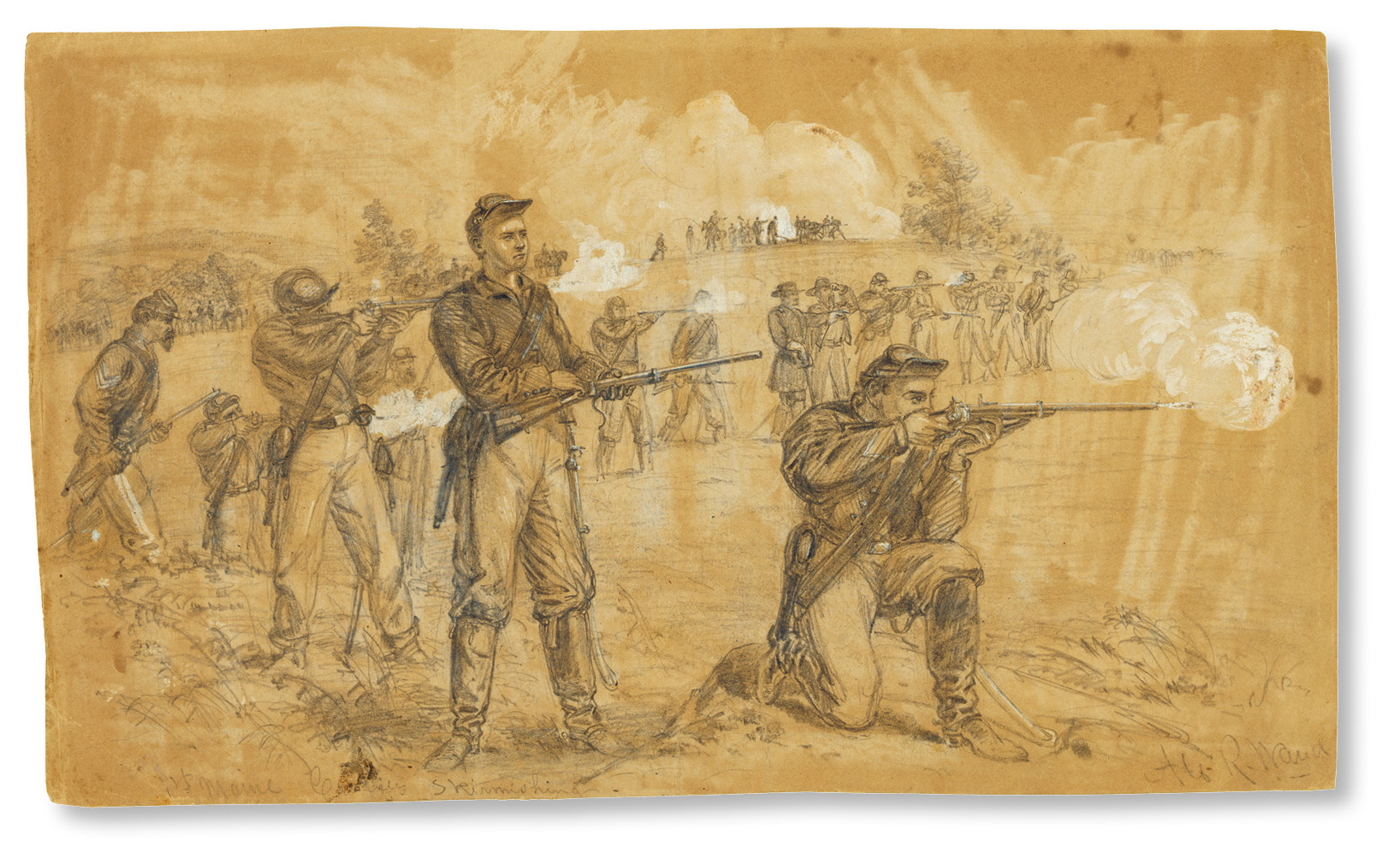
Besides the Springfield Model 1861, a number of other long arms were used, with carbines including the Sharps and the Burnside being highly prized among the cavalry. But most favoured was the breech-loading Spencer carbine. Designed by Christopher Spencer in 1860, it was a shorter weapon of lighter weight, and was the first repeating rifle in history. With a calibre of .52, it featured a lever-action falling breech block, and was fed from a cylindrical tube magazine holding seven rounds of copper or brass rim-fire cartridges, which was loaded through the buttstock. While lacking the range of the Springfield or Enfield, it had the distinct advantage of being able to provide a faster rate of fire of approximately 20 rounds per minute, and was easily handled on horseback.
The War Department resisted its adoption, fearing that soldiers would tend to waste ammunition and thus complicate resupply. However, Spencer himself managed to secure an audience with President Lincoln in the summer of 1863, and his live-fire demonstration in the grounds of the White House convinced the President to authorise wide production and distribution of the weapon. General James Ripley, the US Army’s Chief of Ordnance, ignored Lincoln’s orders but was quickly relieved of duty, thus encouraging production and distribution.
The Federal cavalry units were delighted with the weapon and its performance, having used it with great success at engagements such as Hoover’s Gap and Hanover (both in June 1863). General George Armstrong Custer was a great supporter of the Spencer. Southern soldiers also appreciated the utility of what they referred as the ‘Sunday Gun’ – famously saying that you could ‘load it on Sunday and fire all week’ – but, lacking the industrial capacity, the South could manufacture neither the weapon nor the cased ammunition needed to fire it. The war saw the introduction of the .44-calibre Henry repeating rifle, too, a lever-action weapon holding 16 rim-fire rounds in a tubular magazine. Although more limited in availability than the Spencer, it would play a significantly larger role in the American West following the war.
Also coming into their own on numerous battlefields were revolving pistols, normally loaded with six rounds, from manufacturers such as Colt and Remington in .36 and .44 calibre. Both the former’s Navy .36 and the latter’s New Model Army .44 were exceptionally popular, especially among cavalry units and mounted guerillas, who often wore special multi-pocketed ‘guerrilla shirts’ in which to carry additional pre-loaded revolver cylinders, thereby facilitating rapid reloading in action.
Artillery
Few developments were made in the artillery used on the battlefields of the Civil War, with the most common piece being the 12-pounder bronze Napoleon muzzle-loading field gun, with a range of between 1,300 and 1,700 yards. Ammunition ranged from solid shot to shrapnel and canister – the latter two being especially lethal to infantry. While not nearly as numerous as the Napoleon, there were also muzzle-loading Parrott and breech-loading Whitworth pieces, both with rifled barrels. While the Whitworth had a range of 4,000 yards, the Parrott had a range of up to 8,000 yards. There was marked improvement, too, in the Coehorn mortar, with Federal forces mounting a huge 13-inch mortar called ‘The Dictator’ on a railroad flatcar. This odd weapon was employed during the siege of Petersburg (June 1864-March 1865) and was able to throw a projectile 3,600 yards. The recoil was such that the flatcar on which it was mounted would move back up to 12 feet.
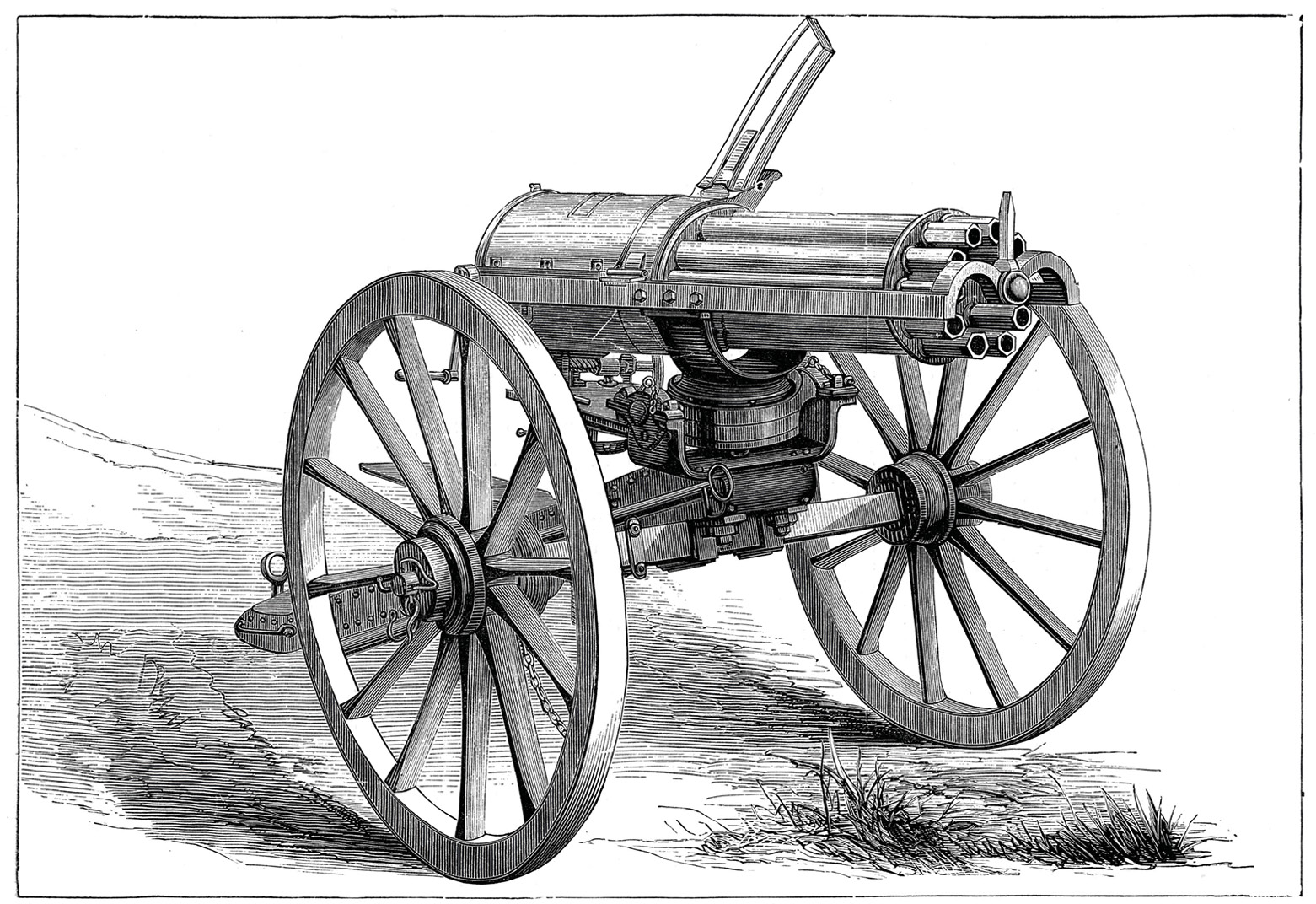
One odd development that presaged modern warfare was the development and fielding of the Gatling gun. This was a multi-barrelled (usually six or nine barrels), rapid-firing early machine-gun, mounted on a two-wheeled gun carriage, utilising brass- or copper-cased cartridges, which were gravity-fed through a loading chute and fired by operating a hand crank that rotated and aligned the barrels. The weapon had the capacity to fire as many as 200 rounds per minute. While not used extensively, it did appear at several battles, and the idea was soon appropriated by numerous foreign armies.
Naval developments
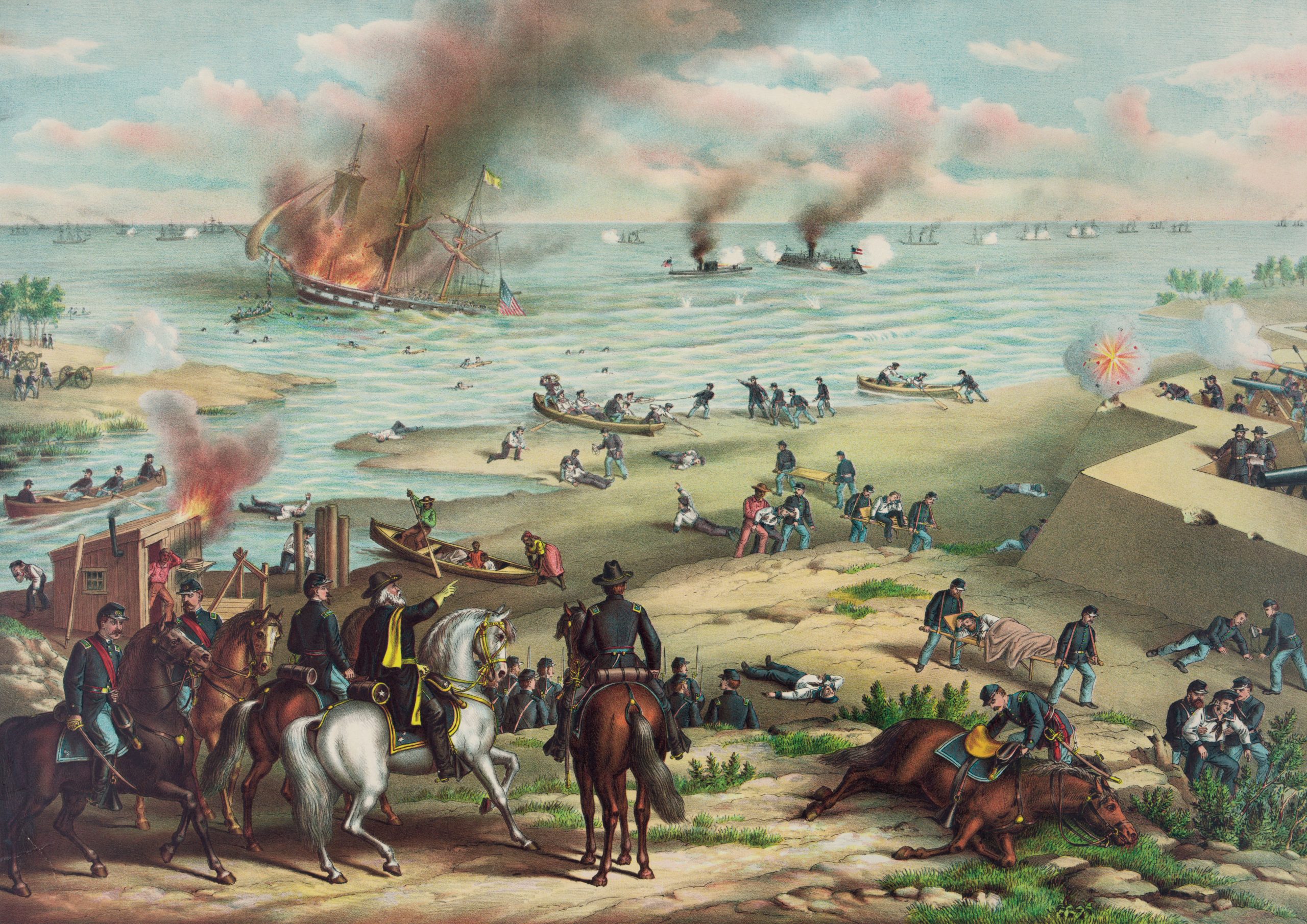
The Civil War saw great innovation in naval technology as well. While both navies were made up largely of wooden-hulled sailing vessels, many now had supplementary steam power, enabling greater flexibility in naval actions. New types of naval craft began to appear, starting with the Confederacy’s construction of an iron-clad warship based on the wooden hull of the partially destroyed, steam-powered frigate USS Merrimack. This new vessel, called the CSS Virginia, boasted sloping sides of 4-inch-thick iron plates, which were riveted together and pierced by 14 gunports.
This new approach to warships made its debut on 8 March 1862 at the Battle of Hampton Roads, fought near Norfolk, Virginia, where the Virginia assaulted Federal naval vessels, sinking the USS Cumberland and then destroying by the USS Congress, which had grounded itself attempting to flee the strange vessel. The following day, the Federal side debuted its own new ironclad warship, the USS Monitor. Often referred to as ‘a cheesebox on a raft’, it was mostly flat with a large, cylindrical rotating turret mounted amidships which contained two 380mm muzzle-loading Dahlgren guns. The two ships faced off and exchanged fire for several hours, with both vessels receiving minor damage. This was the first naval engagement of armoured vessels in history. While the result of the entire confrontation was a draw, the damage inflicted on the US Navy’s ships and crews on the first day resulted in 261 deaths – a number that would not be exceeded for a single naval engagement until 7 December 1941.
A minor development that would take on later significance was the Confederacy’s construction of the CSS Hunley, a primitive submarine. Propelled by a hand-cranked system operated by seven volunteers as an officer piloted the craft, it was a 49-foot-long cigar-shaped vessel equipped with an explosive charge affixed to a spar that protruded from the bow for 22 feet. On the evening of 17 February 1864, the Hunley attacked the steam-powered sloop USS Housatonic five miles off the shore of Charleston, South Carolina, where it was performing blockade duties. The Hunley successfully targeted the Housatonic, sending it to the bottom in three minutes. It was, however, a costly exercise, for the Hunley was also sunk (along with its entire crew) by the same explosion.
Aerial observation
Another aspect of the American Civil War was the adaptation by Federal forces of hot-air balloons for observation and direction of artillery fire. The largest of these balloons, the Union and the Intrepid, were inflated with hydrogen gas, provided by specially designed inflation wagons that could provide up to 32,000 cubic feet of gas. These monstrous craft could carry as many as five people in a suspended basket and communicate with ground forces via telegraph wires attached to the guy ropes. Used primarily in the Eastern Theatre of the war, and despite the real-time intelligence it had provided (notably at the Siege of Yorktown in April-May 1862), the Balloon Corps was officially disbanded in 1863.
A live-fire demonstration at the White House convinced Lincoln to back the Spencer carbine.

Telegraphy
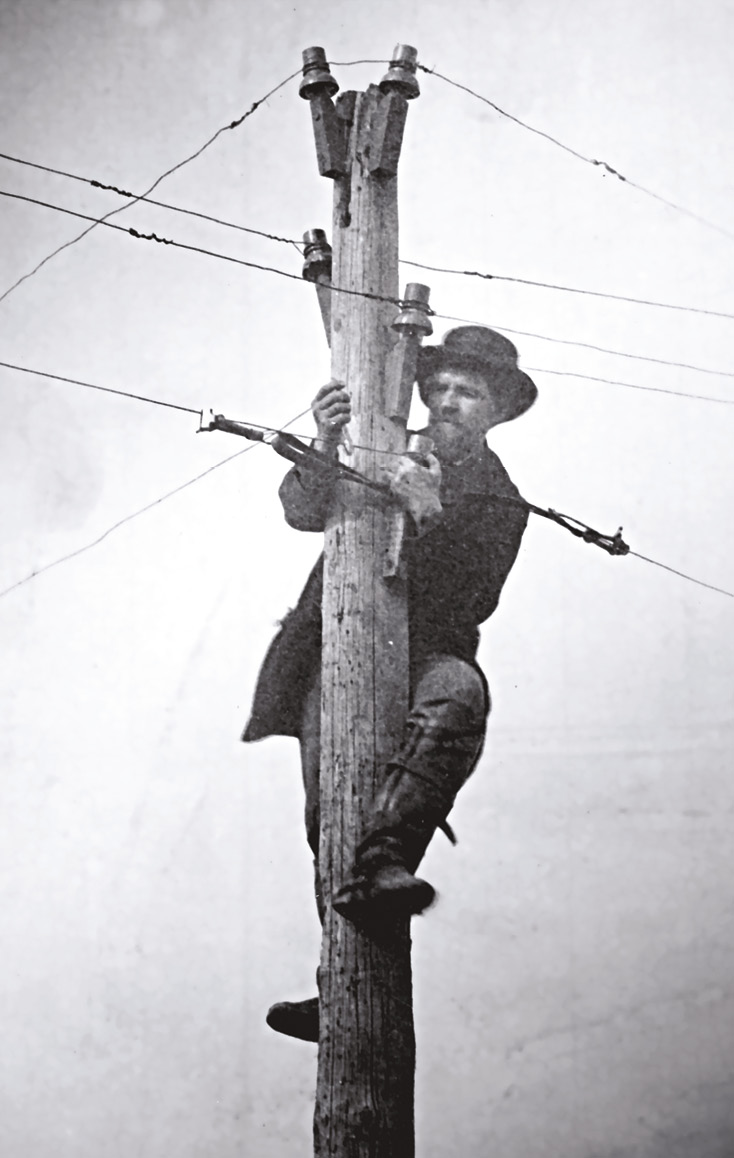
Introduced to the United States by Samuel B Morse in 1848, the telegraph became a vital link during the Civil War, with Federal troops installing more than 15,000 miles of telegraph cable, enabling commanders to send more than 6.5 million messages. Anson Stager, chief of the US Military Telegraph Corps, developed a coding system allowing Federal forces to exchange classified messages without fear of interception by the Confederacy. Thus, Federal commanders were able to communicate quickly, and to do so without compromising tactical or operational security. While the Confederacy also used the telegraph, their system was much less developed and, as the Union blockade took effect, it had less access to the materials needed to build and maintain telegraph lines and equipment. Abraham Lincoln was especially appreciative of the telegraph, spending many hours in an office outside the White House communicating with his commanders in the field.
Railroads
The American Civil War was the first conflict to make extensive use of railroads. At the onset of hostilities, there were around 30,000 miles of railroad track in the United States – with the bulk of that, some 21,000 miles, in the North. The industrialised North also held more than four-fifths of the engines, and two-thirds of the freight cars, and accounted for nearly 90% of locomotive production.
The South certainly made use of the railroads available to it, using trains to rush Longstreet’s corps 950 miles via ten different rail lines to assist Bragg’s victory at Chickamauga in September 1863. By the same token, however, the Union commander Ulysses S Grant would two months later rush two corps of the Army of the Potomac (under the command of Joe Hooker) 1,200 miles to decisively defeat Bragg at the Battle of Lookout Mountain, near Chattanooga.
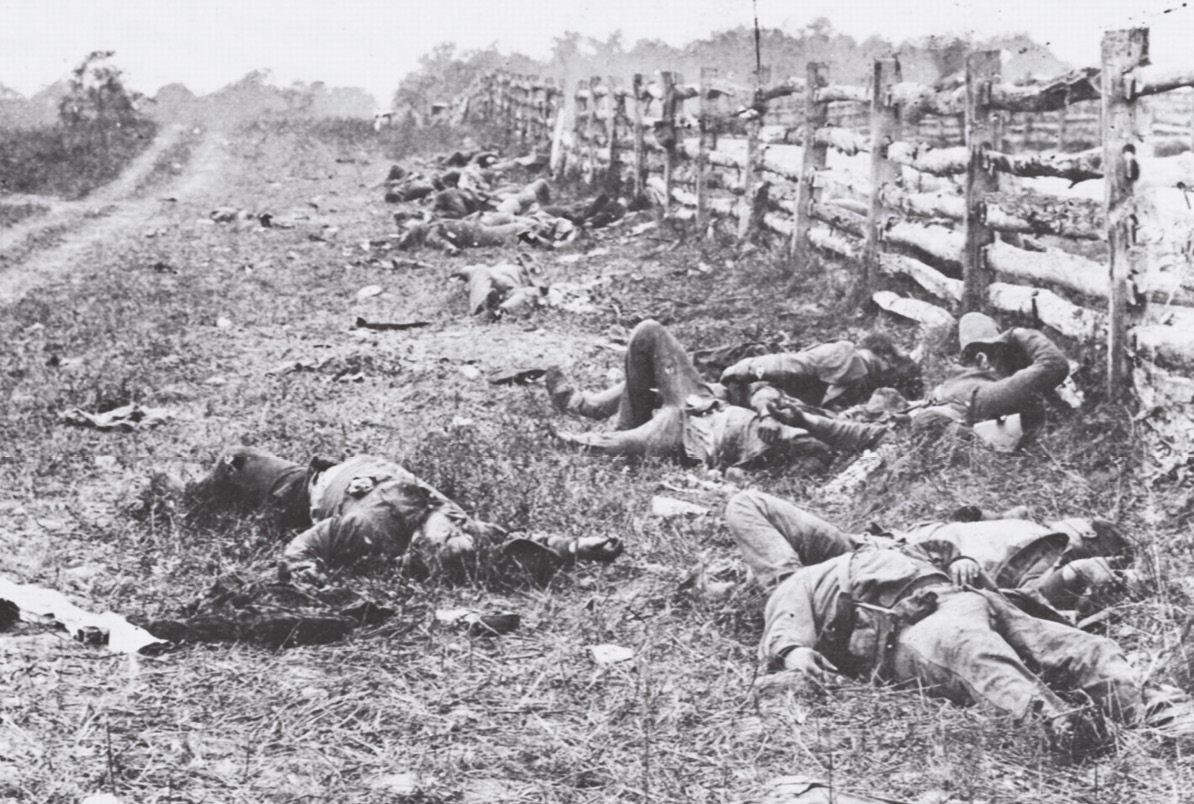
For the first time, photographs showed the results of combat.
In the final analysis, the Federals’ possession and careful management of superior locomotives, rolling stock, and rail facilities contributed significantly to their ultimate triumph. The Union Army was able to make full use of trains, moving troops, rations, ammunition, and livestock to critical areas, and fitting some out especially as hospital trains to treat and move wounded soldiers.
Photography
While not specifically a ‘weapon’, the camera came to play a significant role in warfare as a result of its exposures of the conflict between North and South. Though the technology was still in its infancy, a few photographic images had already been taken of soldiers, first in the Mexican-American War (1846-1848), and then during the Crimean War (1853-1856) by the British pioneer Roger Fenton. These photos were largely of individuals or small groups, either in formation or at informal gatherings, or in formal portraits. There were naturally great limitations on the process due to the delicate and time-consuming nature of developing and printing the results.
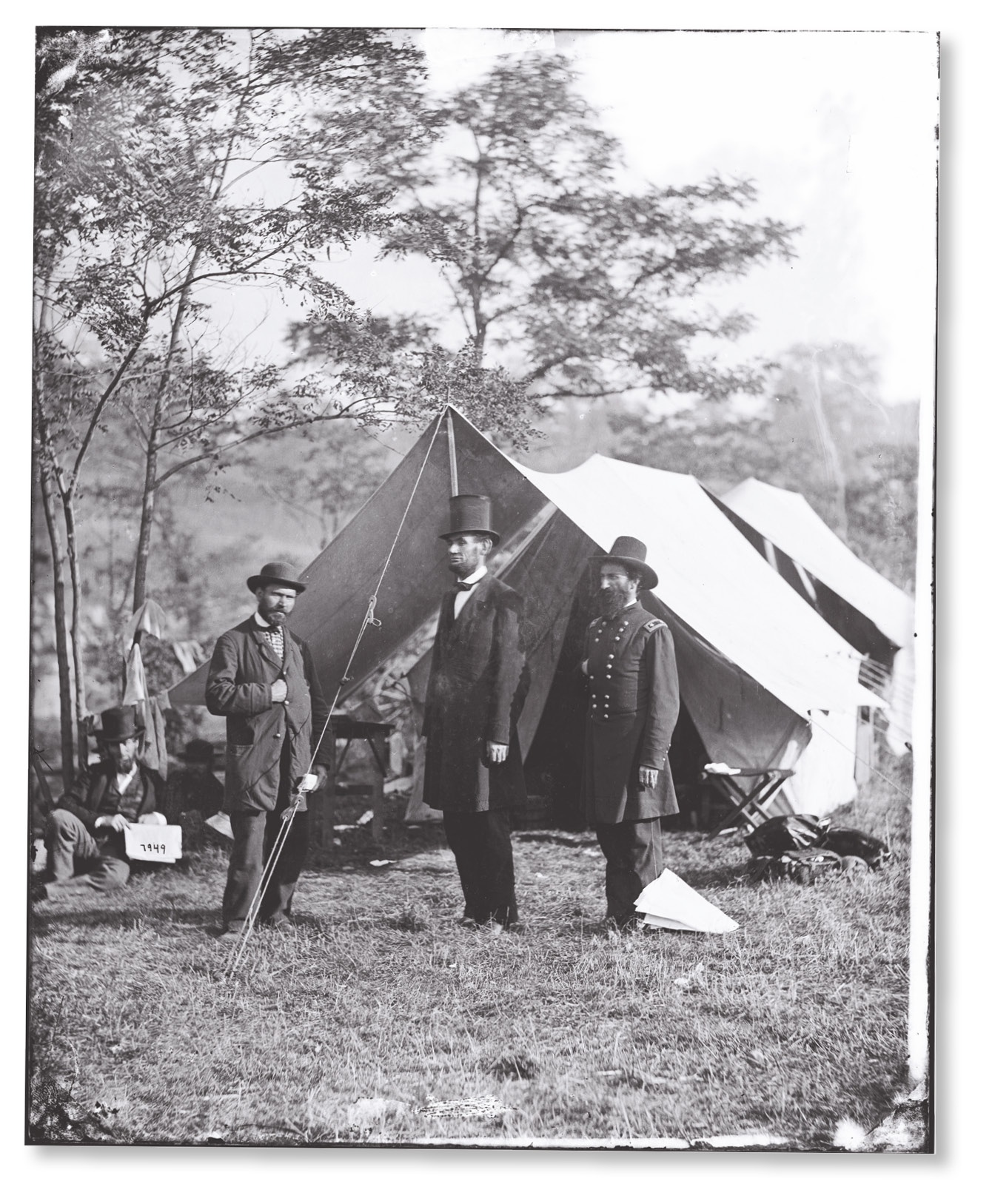
From the outset of the American Civil War, however, several intrepid practitioners – including Mathew Brady, Timothy O’Sullivan, and Alexander Gardner – took their art deeper into the field. Millions of images were taken of individual soldiers for what were called ‘cartes de visite’ (literally ‘visiting cards’, typically sent to family and friends), along with some 10,000 documentary images.
Of most significance were images of the immediate aftermath of battle. For the first time, photographers were able to make exposures of the results of combat – including, of course, depictions of rows of mangled corpses and wrecked equipment. Some of the more dreadful images appeared at the New York gallery of Mathew Brady in an exhibition entitled The Dead of Antietam. It was a stunning development for the public. A reporter for The New York Times wrote: ‘Mr Brady has done something to bring to us the terrible reality and earnestness of the war. If he has not brought bodies and laid them in our door-yards and along streets, he has done something very like it.’
As we have seen in the past three issues of MHM, the American Civil War was a horrendous effusion of blood and capital. For four years, the conflict tore the nation apart – but its physical and psychological effects would linger for decades afterwards. The world would quickly take notice of the technological developments that featured on American battlefields, and many of these would appear in yet more lethal form on the battlefields of Europe less than 50 years later.
Fred Chiaventone is a military historian, retired cavalry officer, and Professor Emeritus for International Security Affairs at the US Army’s Command and General Staff College.