
Subscribe now for full access and no adverts
Recent studies in Egyptology have focused on ethnicity as a primary identity category, especially in examining cultural contacts, migration, and mobility. These lines of research have been built primarily on our perspective as modern Western scholars, to whom ‘ethnicity’ often appears as an obvious – and thus valid – identity framework for investigating ancient realities. However, ethnographers have long known that ethnicity is a cultural construct, and its relevance varies significantly across different societies, and even within the same society over time (and, in some, lacks any relevance whatsoever).
Modern collective identities
Even in our modern Western societies, ethnicity is not always a primary identity frame. My country of origin, Switzerland, illustrates this very well. There is no doubt that Switzerland has a strong, well-defined Swiss collective identity. Yet such Swiss identity is not an ethnic one: rather, it is a collective identity based on shared history, social experiences, ways of behaving and interacting, shared laws and values, and plenty of other, often very immaterial, dimensions. There is a ‘Swiss nation’ but no ‘Swiss ethnicity’, in whatever way we want to define it. At the same time, people from an Italian-speaking region of Switzerland (such as me) share the same language and several traits of our material culture with the neighbouring regions of Italy. Yet we do not perceive ourselves as ‘ethnically Italian’, nor as part of an ‘Italian nation’ (whatever that would be). So one can wonder: if we knew nothing about the history of Switzerland, and we had only archaeology to inform us about it, would we be able to recognise any of these identity realities? Probably not, and it would be very difficult and speculative to try to do so.
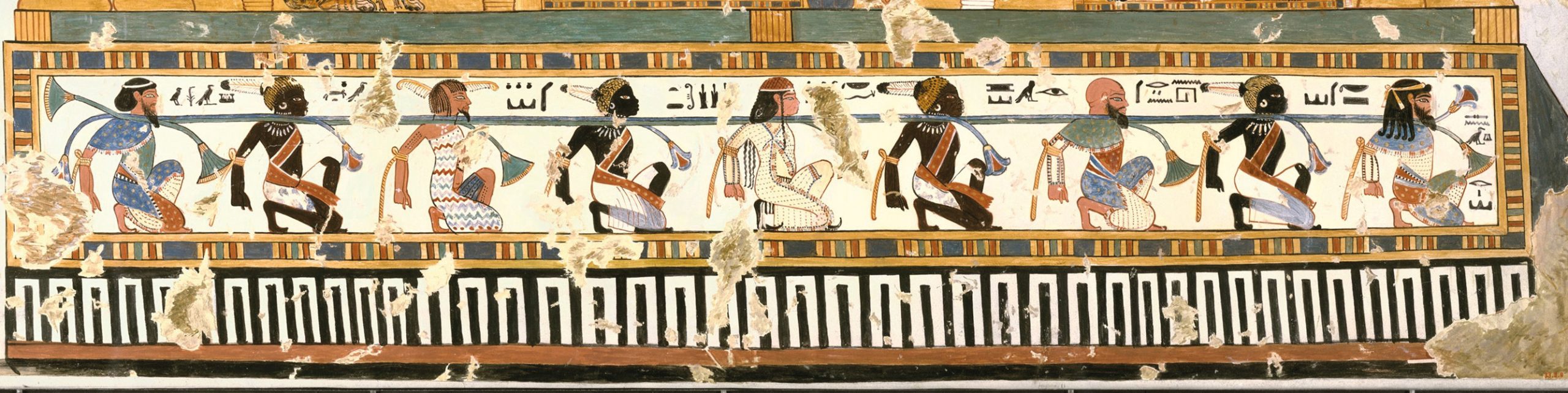
Ancient ethnicity
But if ethnicity is a construct – and one that, even today, is not central to all societies – why do we assume it must be relevant for understanding ancient societies, and ancient Egypt in particular? And, usually, without first asking another obvious question: did they have the concept of ethnicity to begin with?
These questions led me to my current research, which focuses on Near Eastern peoples living in Egypt. I discovered that ethnicity was definitely not the primary Egyptian framework for portraying Levantine sociocultural realities in official Egyptian sources from the New Kingdom. Instead, what emerged is a system in which the populations of the Levant are classified according to their relation with specific geographical, political, or geopolitical entities (for example, as inhabitants of specific cities, or as subjects of a specific ruler), rather than along ethnicity-based lines and groups.
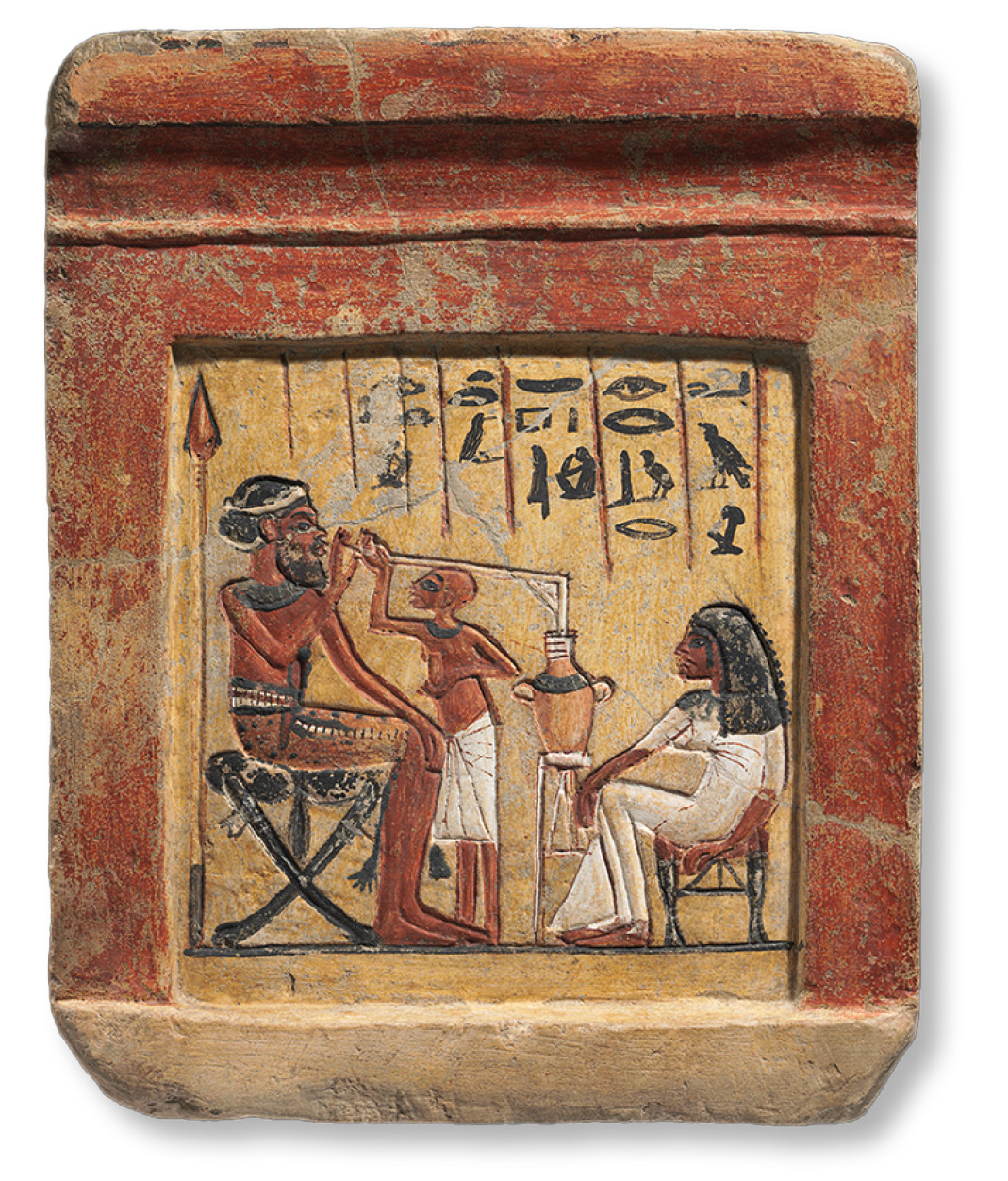
For instance, Egyptians understood ‘Hatti’ as a geopolitical entity, a state with a territory and cities, and with a king ruling over the ‘people of the land of Hatti’ – that is, the ‘Hittites’. There is no mention at all of any ‘Hittite ethnicity’, or of any ethnic distinctions among the subjects of the Hittite empire: rather, for the Egyptians, whoever was a subject of the Hittite king was a man of Hatti, a Hittite (as a demonym, not as an ethnonym), regardless of how ethnoculturally diverse and distinct they may have been. Interestingly, similar frameworks are seen in other ancient Eastern Mediterranean traditions. In a similar way, Ugaritic and Amarna documents define people by professions, social classes, or geopolitical affiliations rather than by ethnicity.

‘Others’
Non-geopolitical identities did exist in New Kingdom sources, but they were secondary, and most belonged to two categories.
The first includes traditional terms used in religious or poetic contexts, remnants of an earlier, more group-oriented identity framework. The ‘Nine Bows’ are a perfect example. This, of course, raises interesting questions about how concepts of collective identities changed over time within Egypt itself.
The second category includes terms for people living outside the recognised geopolitical frame, such as nomads, or outlaws, or migrating populations. However, even these terms cannot be taken as reflecting true ethnic groups. Rather, they reflect primarily Egyptian classifications of the ‘others’, rather than accurate descriptions of how the ‘others’ perceived themselves. Sometimes these groupings might have been informed by truly existing collective identities: for instance, one can assume that at least some of the ‘Sea People’ names might reflect genuine Sea People identities. In many other cases, however, they were purely Egyptian projections largely indifferent to local identities. This is the case, for example, for the Shasu people, whose name clearly derives from the Egyptian verb ‘to wander/to travel’, and which is therefore better understood as an occupational/lifestyle label than as an ethnonym.
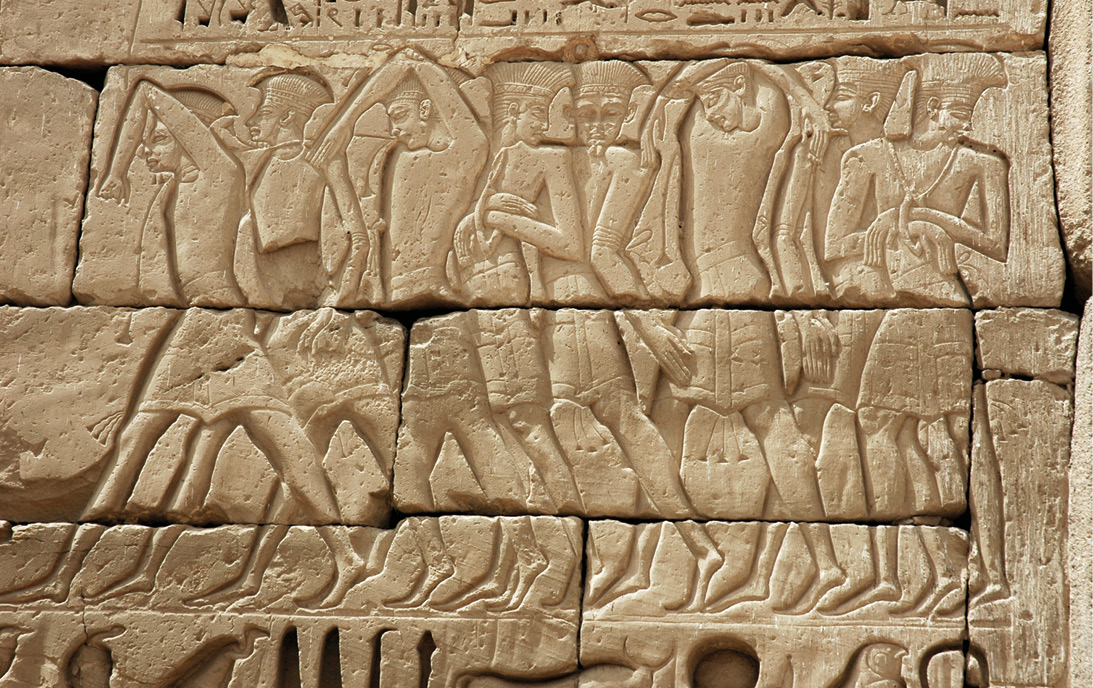
A shift in perspective
In conclusion, I believe that questioning the centrality of ethnicity is crucial, both in our personal experiences and, by extension, in our research approaches. In particular, recognising that ethnicity is not a universal concept enables us to consider other forms of social organisation, and this shift in perspective is indispensable to reach a more nuanced and accurate picture of ancient societies that, I hope, will better reflect their own concepts and experiences.
Marwan Kilani is a researcher for the Swiss National Science Foundation at the University of Basel. He was gained his PhD from Oxford University in 2017, and his current research focuses on dialects in Late Egyptian and linguistic interactions between Egypt and the Levant during the New Kingdom.
CRE 2024: CRE 2024 Current Research in Egyptology (CRE) is an annual postgraduate conference set up to facilitate research and promote bonds between British and international universities conducting research in Egyptology. Ahead of this year’s conference at the University of Liverpool (2-6 September), AE presents two more research papers (see also AE 143) by postgraduates attending the conference.