
Subscribe now for full access and no adverts

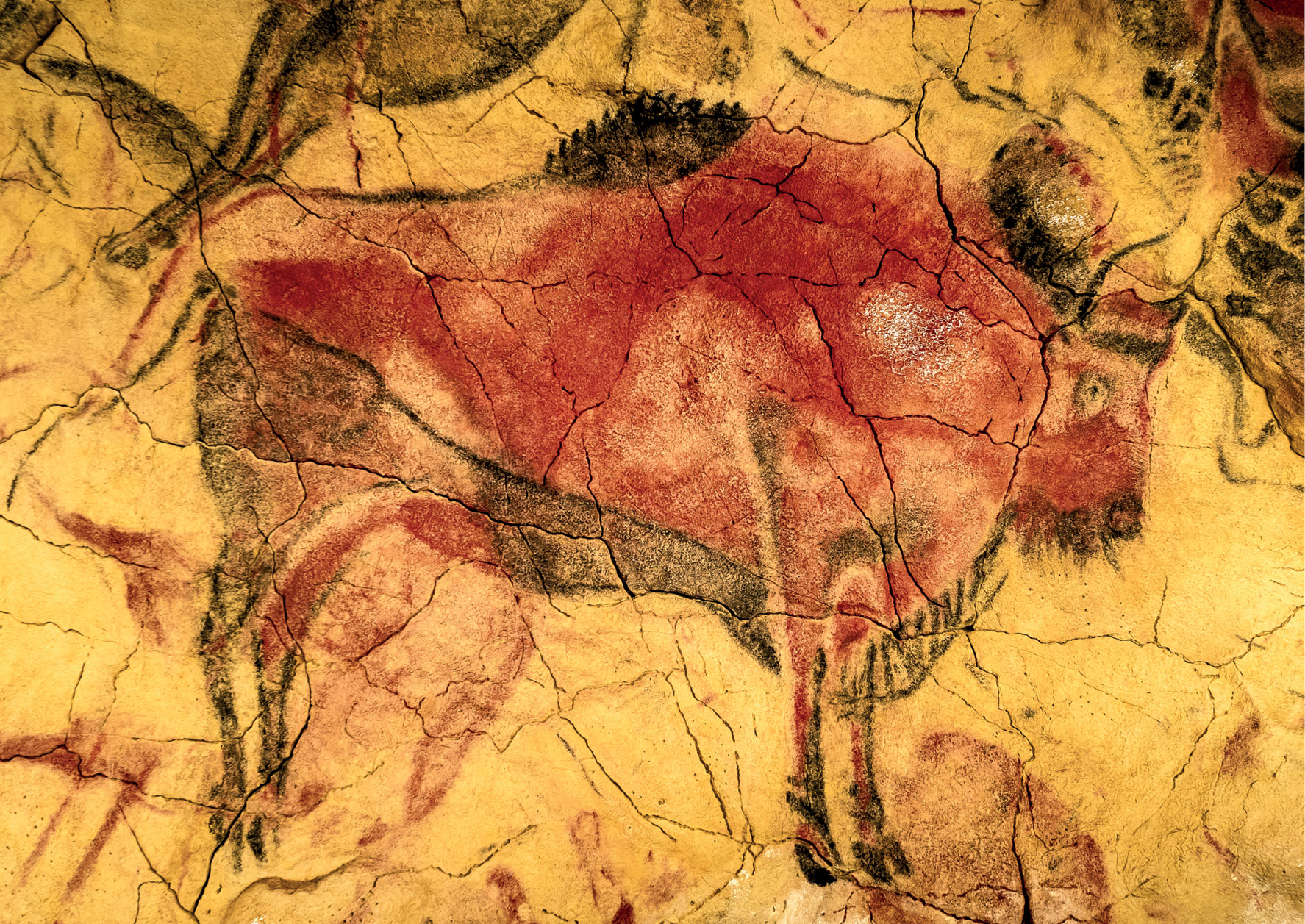
The east coast of Spain is not an obvious place to go hunting for Ice Age cave art. While the country is renowned for the striking visions of animals and shapes gracing sites such as Altamira and El Castillo, these repositories of ancient artistry are not evenly distributed. Instead, more than 70% of the Ice Age cave-art sites known in the world are concentrated in a relatively modest band of northern Spain and southern France. It is a very different story along Spain’s Mediterranean face. There, the star of the show is the cave of Parpalló, but it is a curiosity in many ways. Rather than serving as a canvas for the great tableaux of wild animals dominating popular perceptions of Ice Age imagery, the cave was home to an extraordinary collection of portable art. This included more than 5,000 individual limestone plaques adorned with red and yellow pigments that sketched out animals or abstract designs. When it comes to paintings or engravings on cave walls, the pickings are rather slimmer. Only nine certain sites have been detected along Spain’s east coast, and just three of these boast actual paintings, with the rest containing engravings. Given that such a seemingly barren area would appear a poor bet for a systematic survey project, it is little wonder that the recent discovery of a major cave-art site at Cova Dones, near Valencia, came from no more than a fortuitous trip to an intriguing local landmark.

Underground art scene
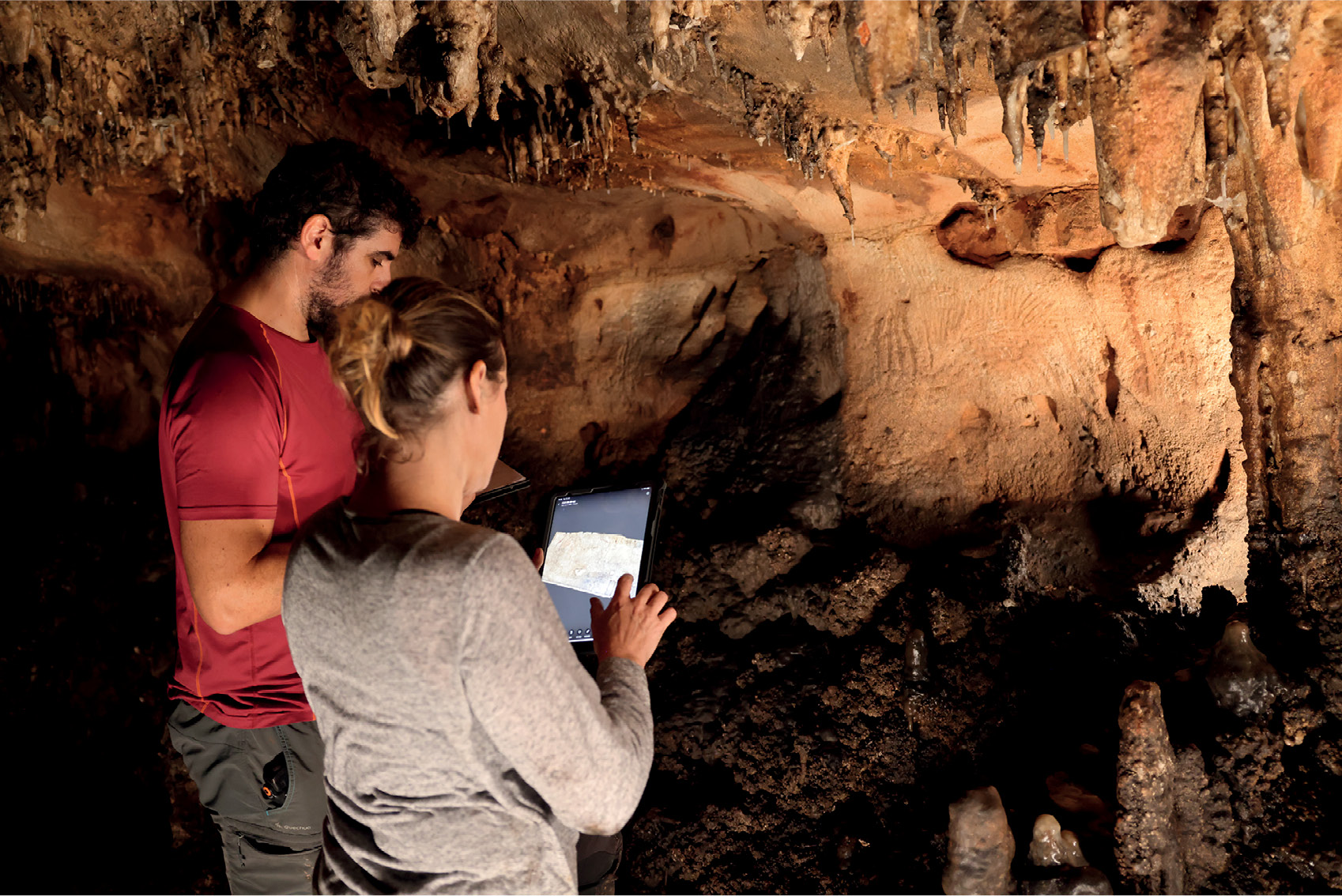
‘In 2021, I was working with some mobiliary Palaeolithic art material in a nearby museum,’ remembers Aitor Ruiz-Redondo, a senior lecturer at the University of Zaragoza. ‘One day, I went on a field trip with my colleagues Virginia Barciela – who is a lecturer at the University of Alicante, so she had all of the local knowledge – and Ximo Martorell. We visited some sites, including the cave at Cova Dones, and Virginia told me “I first came here 20 years ago and it seemed promising, because it is a rare deep cave in the area. I was just starting out back then and didn’t really have any time, so why don’t we go back and check it out now?” It proved to be a great choice on her part, because sure enough there was something in there. The art was not easy to recognise, but I saw there were some red lines, and then Ximo found an aurochs painting. It wasn’t on the scale of the ones that you see at Lascaux or somewhere like that. Instead, it was just five red lines sketching out the shape of the animal. In 2023, we returned to Cova Dones to resume work. At first, it looked like there were only two or three paintings, so we thought that we could record everything in a few days. It didn’t work out that way, though. When we realised the full magnitude of what we had found, those few days turned into six weeks of fieldwork – and we’re still not finished. I think it will take another three or four years to do it all.’

Cova Dones was not an archaeological blank slate when Aitor and Virginia visited. Back in the 1960s, Iron Age pottery had been found there, and the site was interpreted as an example of a phenomenon known as ‘Iberian cave sanctuaries’. As the name suggests, these are believed to be a product of some sort of ritual activity, resulting in finds being deposited at subterranean sites that are associated with water. While the precise nature of these prehistoric pursuits remains unclear, the presence of pottery well inside the cave certainly hints at something a little more unusual than standard occupation. After all, humans tend not to live deep underground, where it is dark and often damp. Instead, when a cave is selected as a home, it is usually the portion around the entrance that becomes the focus for day-to-day domestic doings. From there, humans generally only venture further into the Stygian depths when they have some sort of special purpose in mind.
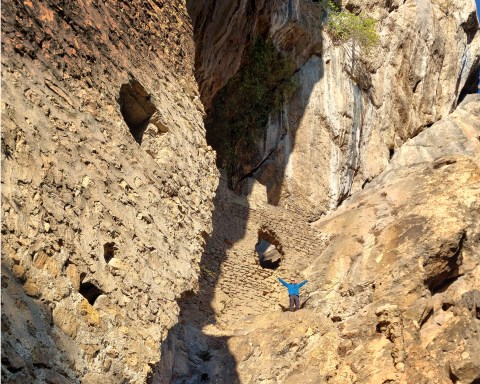
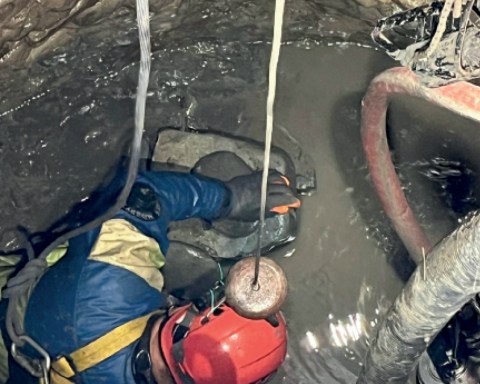
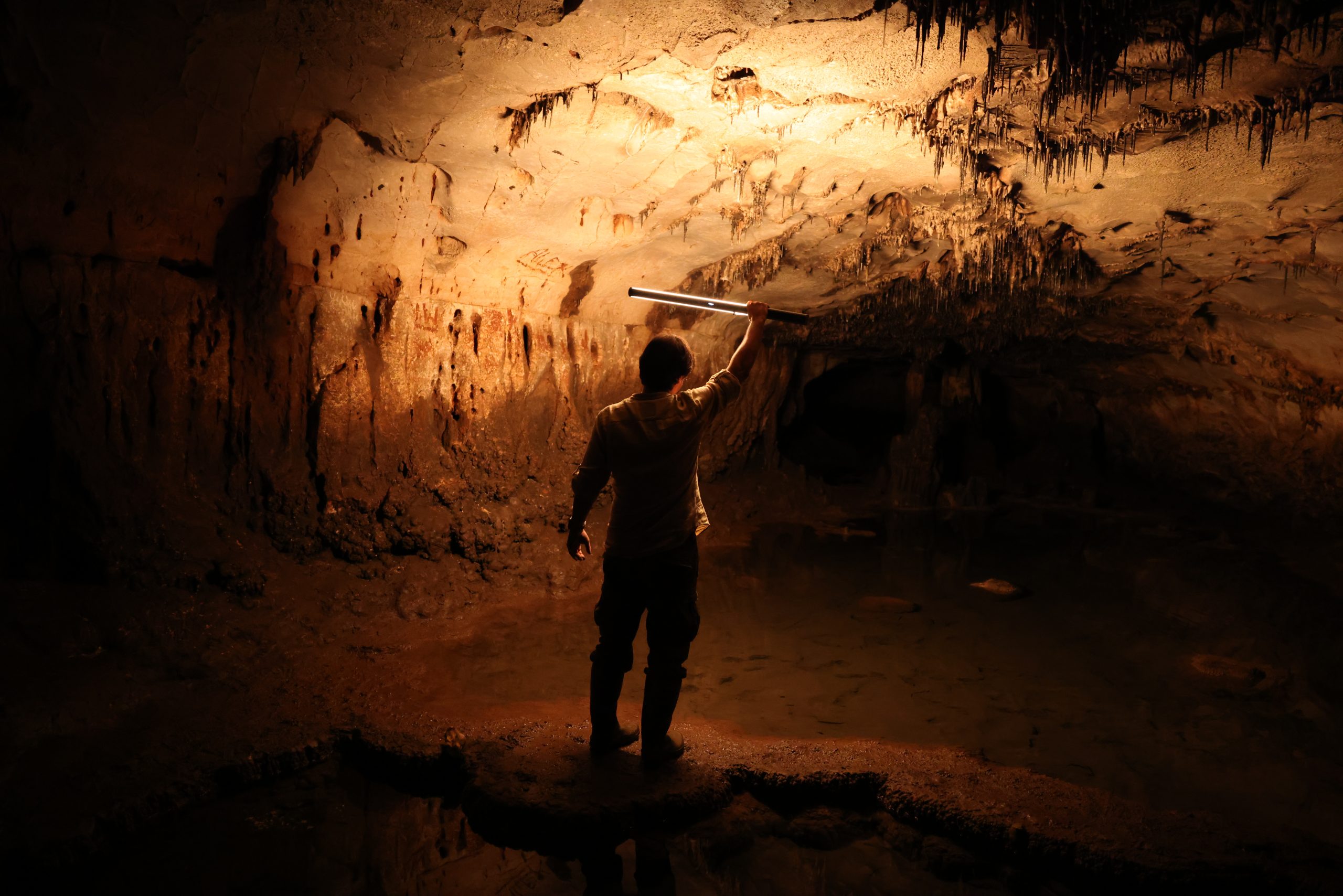
As far as Iron Age sanctuary caves are concerned, Cova Dones certainly fits the bill when it comes to a watery dimension. Although the cave does not lie far from the sea, the surrounding landscape is a rugged world of canyons and mountains. The region is also exceedingly dry. Cova Dones is eye-catching amid this arid expanse for holding water all year round. Indeed, one of the chambers within the cave is flooded, creating a subterranean lake about 1m deep. Accessing it is relatively straightforward, as the cave extends roughly 500m underground as a single and near-straight gallery with a high ceiling. So long as you have a good light, Cova Dones can be easily explored without any need for specialist crawling or climbing skills. The appeal of this combination of qualities is perhaps best illustrated by a tradition among local villages that newly weds would spend their first night of marital bliss together in the cave. Although this practice came to a close about a decade ago, when access to Cova Dones started to be controlled in order to preserve it, such relatively recent visitors had left plenty of traces of their presence.

Graffiti or art?
‘Unfortunately, the two chambers that contain 95% of the cave art are full – they are, you might say, littered – with modern graffiti,’ says Aitor, ‘that has destroyed much of the ancient art. The modern graffiti is made with a brown clay that was taken from the cave floor, and a lot of it says things like people’s names. So there is no question that it is modern. At first, we tried to ignore these clay markings, because we were looking for engravings and real paintings that are coloured black or red. We’d been working like that for two days, when I remember saying to one of my colleagues at about 5pm, “We should stop for the day, because I’m so tired right now that those clay markings behind you are starting to look like a horse!” Of course, she looked too and then replied “Huh! I must be tired too, because they do look like a horse.” So, we paused to take a closer look at the clay markings. When we did that, we saw that not all of them were modern graffiti at all. Some were covered by a thick calcite crust that had formed on the cave walls. That takes a while – there was no way the markings under them could be from the 20th century. So it was a case of “Oooh, really? I guess we’re not that tired after all!” We had powerful lights with us, and with them we suddenly saw that alongside the modern graffiti, the cave was full of clay markings that matched ancient styles.’
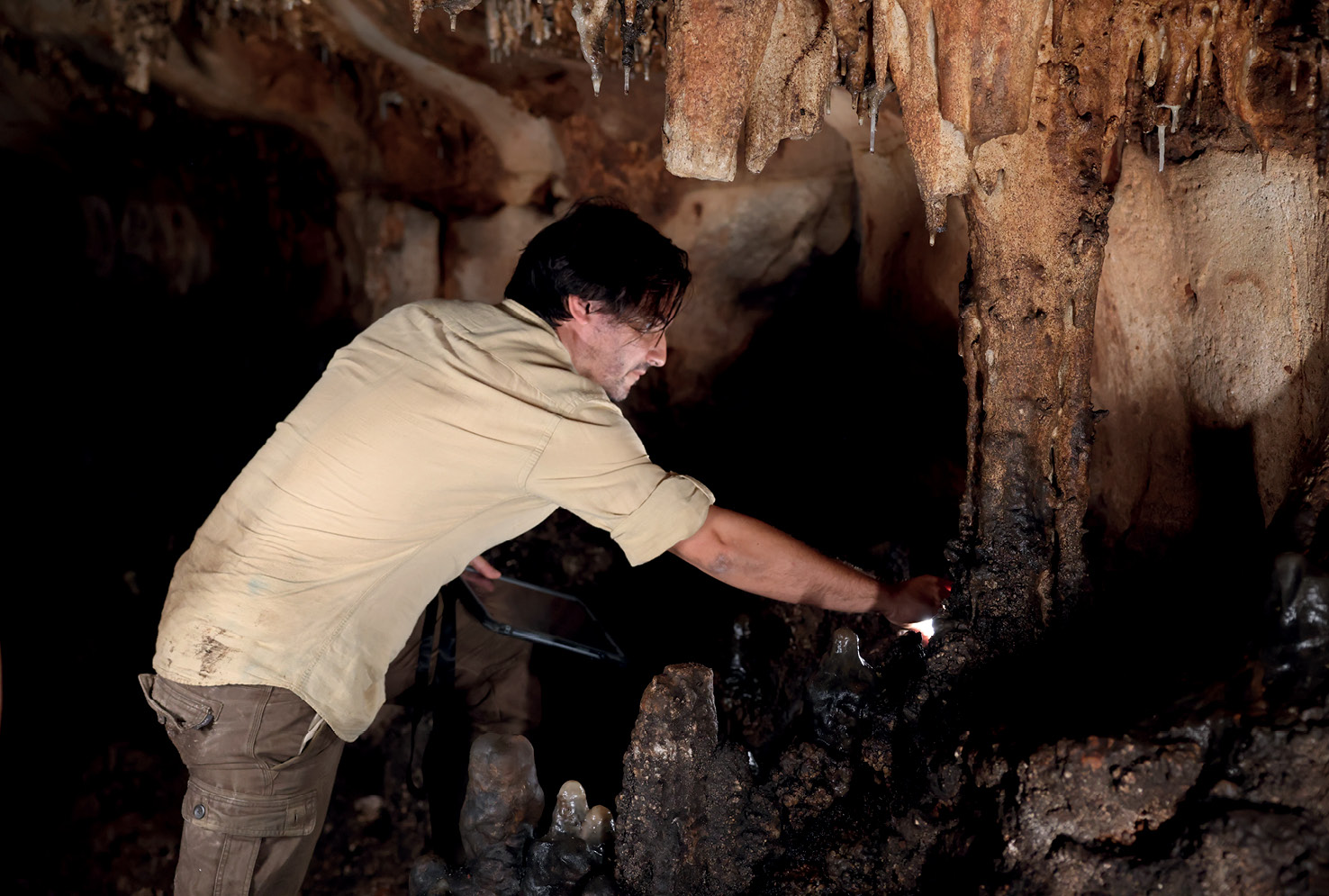
‘My first thought was “OK, let’s restart the survey of the walls tomorrow, because we need to start documenting this older clay, versus the modern graffiti.” It wasn’t easy at first, even for trained archaeologists, and even for a specialist in palaeolithic art. Virginia Barciela and Ximo Martorell, my two colleagues, have studied over 800 sites between them in their careers, and I have personally visited more than half of the sites with Palaeolithic art in the world. So we know our stuff. But this clay art just wasn’t obvious at first. Once we did know what we were looking for, though, we couldn’t stop seeing it. We still haven’t read all of the panels in the cave, but we do know which ones preserve art. Some of them are a palimpsest of many different lines and motifs, and for now we are counting them as a minimum unit of one, even though we know perfectly well that, when we have the time to scan them and check for differences in colour and so on, it will not be one – it will be more like ten. Even using that approach, the minimum number of examples defined in our preliminary study increased from the two or three paintings we originally thought were present to 110 motifs. It will certainly end up being a higher figure than that, and probably a lot higher.’
‘Eastern Spain is really not the area for cave art on this scale. What we have found at Cova Dones is certainly exceptional for the region. On top of that, when you consider the number of motifs created using clay, Cova Dones is exceptional for the world. The technique has been seen in a few other places in the Mediterranean region, but it has always been rare. When it comes to overall numbers of motifs, Cova Dones can’t compete with some of the sites in the classic region of northern Spain and southern France. For example, there are about 3,200 motifs at El Castillo, and more than 1,000 at Altamira. At the same time, there are fewer than 50 sites that we know of in the whole world with over 100 motifs. If we think of it in football terms, we can say that Cova Dones is playing in the Champion’s League, but it is not Manchester City yet!’
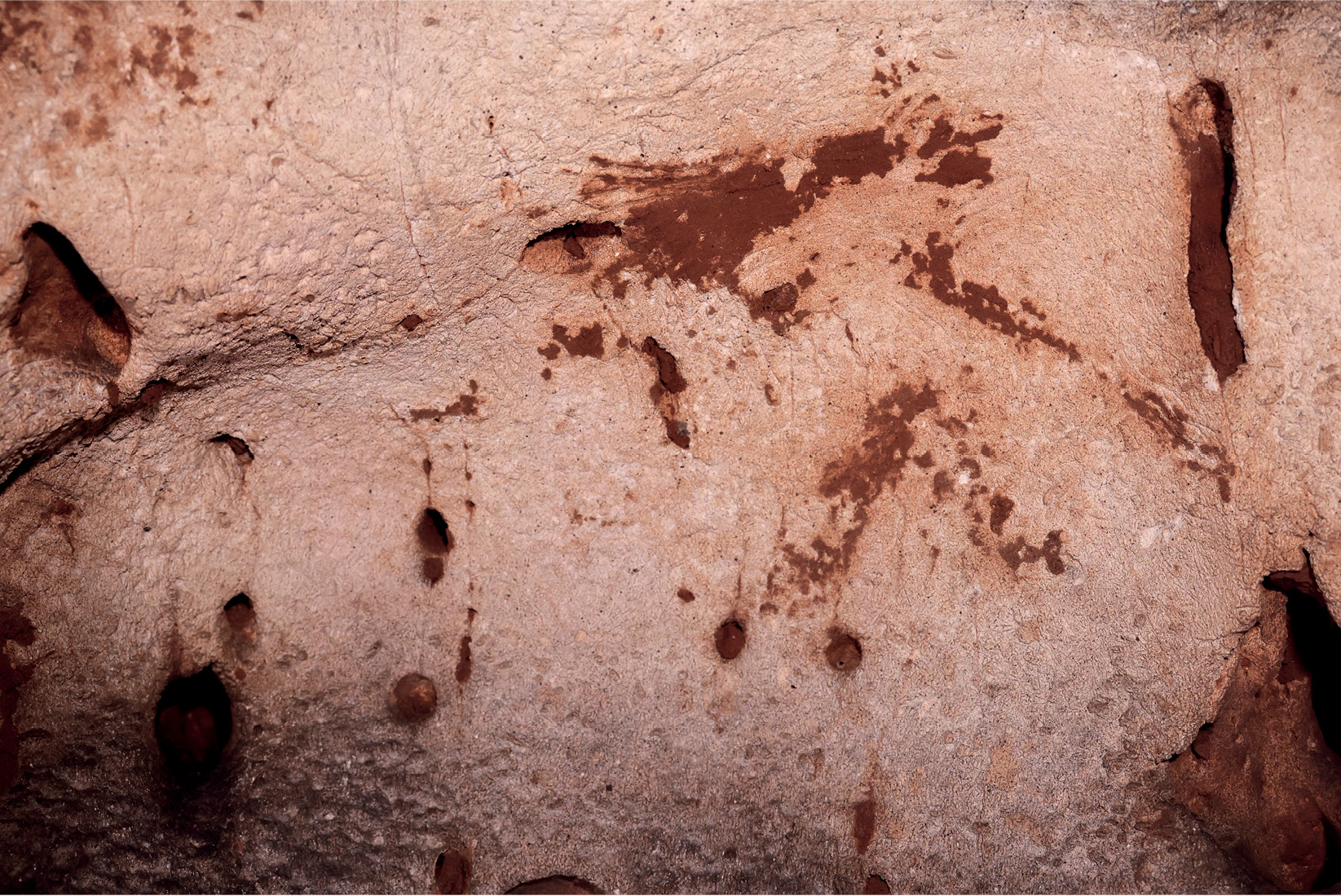
Given that a substantial proportion of the ancient art was created using clay, it raises questions about why a technique that is otherwise extremely unusual should be embraced so enthusiastically at Cova Dones. ‘At the moment it sounds exciting to say that it’s very rare,’ says Aitor, ‘but I am starting to wonder if the only reason we think it’s unusual is because it’s hard to identify. We are very lucky in this case to have the calcite layers covering some of the clay, but unless you have that, or motifs in the shape of Palaeolithic animals, how would you guess it’s old? Once you think about it, clay is really the simplest way to make paintings. After all, it is all around you in the cave, so the artist just needed to scoop it up. Maybe the real problem is that we haven’t been looking for it. Instead, we’ve focused on canonical paintings and engravings. I can tell you that this summer I went to two very famous caves in Spain, and in both of them I found clay paintings that have never been published. One of the caves has three or four clay motifs showing big animals, and they are right next to the painted animals. There are other cases where clay paintings have been recorded, but no one wanted to describe them as “clay”, so instead they say that they were made using “brown pigment”. It’s quite common in archaeology for things not to be collected until someone points out that they are important, so perhaps this is one of those cases.’
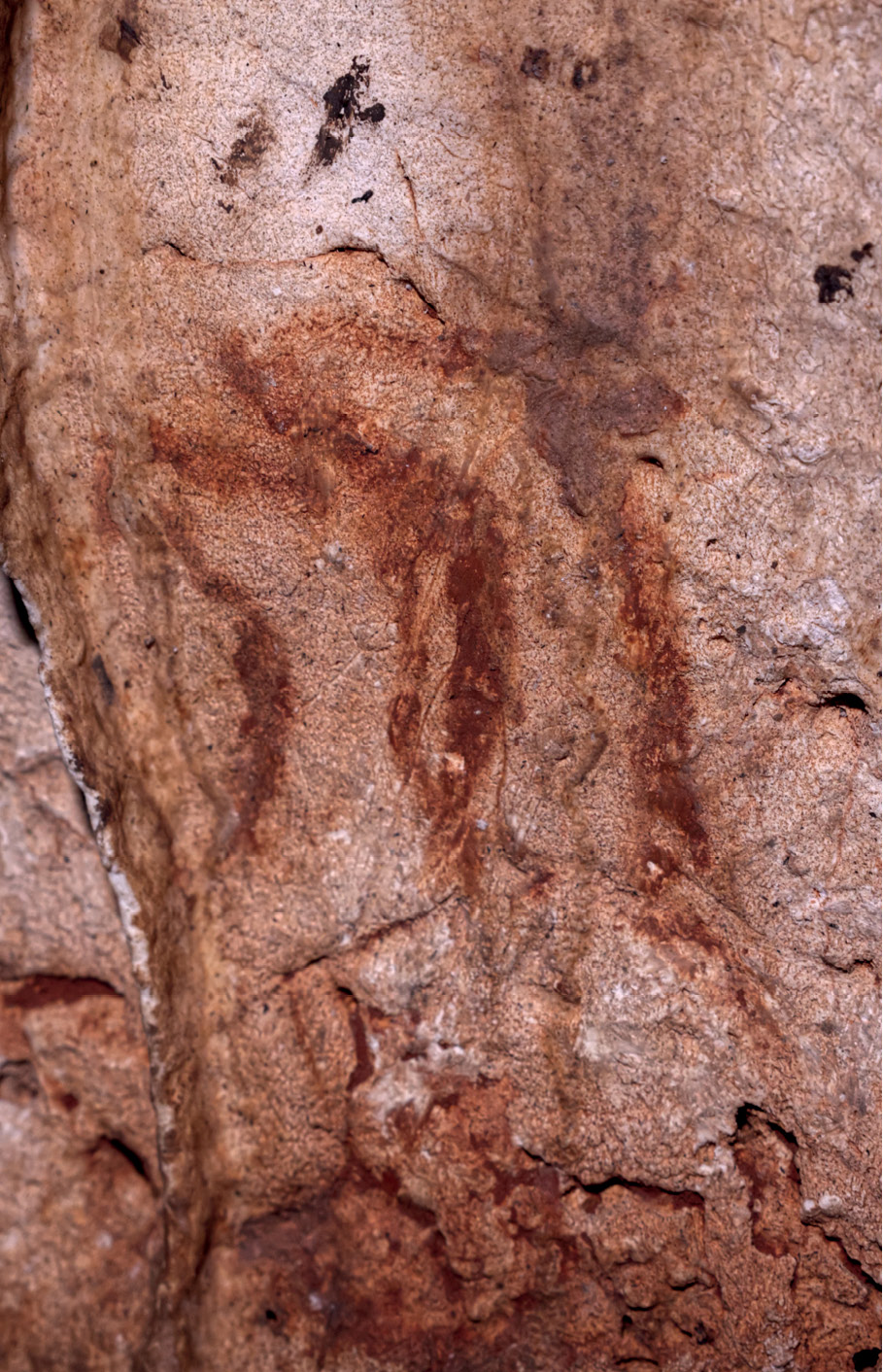
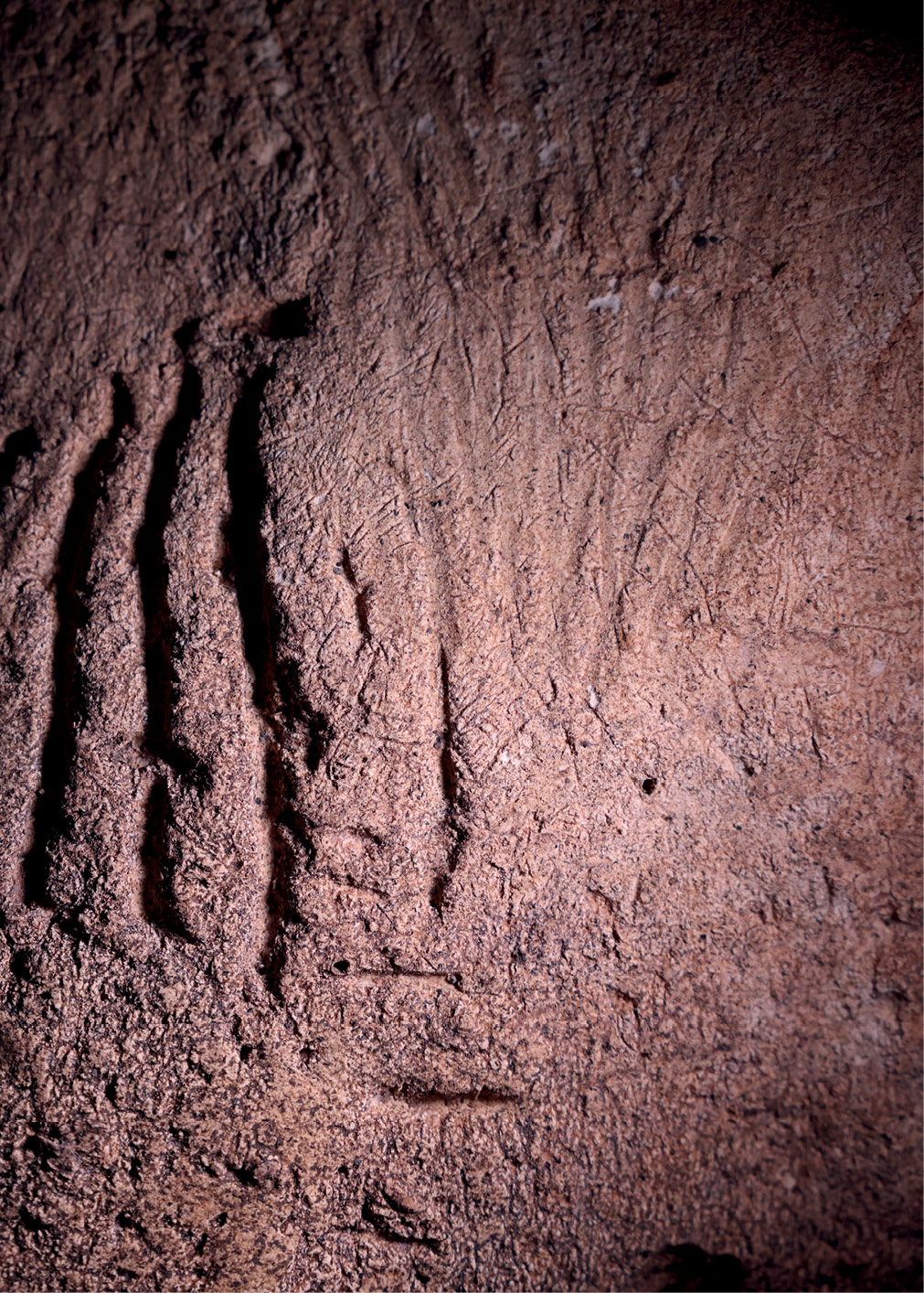
Whether the quantity of clay motifs in Cova Dones is truly exceptional, rather than a previously under-remarked staple of the genre is, then, yet to be seen. Another technique found at Cova Dones does, though, seem to be a genuine rarity, and also a first for the east coast of Spain. It is an artistic style created by engraving the outline of an animal, in this case two horses and an aurochs, and then using parts of the cave that have a natural mondmilch surface to add a shading effect. This mondmilch is a powdery form of limestone, so scraping it with a flint or similar tool brings a subtle texture to the art. A much more common style, both in Cova Dones and more generally, is the fluting created by pressing fingers or tools into soft surfaces to create lines sometimes referred to as ‘macaroni’. Several panels of this are present, and while such a simple technique is once again difficult to assign to the Palaeolithic period with certainty, a dramatic clue that narrows the dating options for one panel was encountered at Cova Dones.

‘We have found several cave bear claw-marks in the cave,’ says Aitor. ‘We can tell from the size of the claw that it has to be a cave bear – the only other thing big enough to make such marks is a brown bear, but scratching the walls of deep caves is not part of their behaviour. These scratches cut through an earlier painting and also a panel of flutings. So far as we can tell, the last surviving cave bears lived in the Alps, and they went extinct about 24,000 years ago. This can be thought of as a minimum age for the art, because we don’t know when cave bears died out in the Mediterranean area – in fact, it’s a relatively recent discovery that the species existed here at all. But it doesn’t seem likely that they survived here longer than they did in the Alps. We’re planning a scientific dating programme for later in the year – with uranium series dating for the calcite, and also radiocarbon dating if we manage to excavate any organic remains on the floor – so that will give us more accuracy.’
Burning questions
Finding such a remarkable body of art inevitably raises questions about the meaning of such imagery. For Aitor, though, the most important question is what the evidence from the cave-art sites can tell us about how the art was made and witnessed, rather than musing about the slippery question of why. ‘At the end of the day, the paintings are like lithics or pottery or any other archaeological remains we study to understand the people who made them,’ Aitor points out. ‘We can look at the exchange of different styles and think about what that tells us about long-distance contacts. By checking the provenance of the raw materials for the painting, we can understand where they found these substances and learn more about patterns of movement. For the last 15-20 years, I think about 90% of Palaeolithic art specialists have been focused on looking at the art this way, and we are reaching very positive conclusions.’
‘One example is that I have been involved in projects studying what kinds of fires were made to create the light necessary to see the art. This allows us to look at what types of trees were used for fuel, when the wood was collected, and whether the range of species was carefully selected. We can see if these people were making static fires and contemplating the paintings from far away, or if they used torches. These are all things we can know from the archaeological remains. And, from that, we can make simulations showing what it would have looked like, and start to answer questions about how many people could see the art at the same time: was it made for private viewing, or a few individuals, or a large crowd? Piecing the evidence together is hard work, but these are things that we can understand. The results probably aren’t as satisfying as being able to give a “yes” or “no” answer about what paintings of bison or horses really mean. But the sad truth is that we will probably never know for sure. Even if we could go back and ask someone, that would be one person, from one place, giving his or her opinion. But Palaeolithic art was being created for 30,000 years around large parts of the world. Why should it only have one meaning?’
FURTHER READING:
The initial season of work at Cova Dones has been published: A Ruiz-Redondo, V Barciela, and X Martorell (2023) ‘Cova Dones: a major Palaeolithic cave-art site in eastern Iberia’, Antiquity, https://doi.org/10.15184/aqy.2023.133.
All images: © A. Ruiz-Redondo, V. Barciela & X. Martorell unless otherwise stated.