

Subscribe now for full access and no adverts
On 12 March 1938, units from the Wehrmacht’s 8th Army crossed the border into Austria. Their move into a neighbouring sovereign country was unopposed. Austrian Chancellor Kurt Schuschnigg had been totally outmanoeuvred by Hitler’s bullying tactics over previous weeks and realised that neither Britain nor France would do anything to stop the takeover of his country. Schuschnigg consequently declared that no blood should be shed to oppose the union of Austria with Germany.
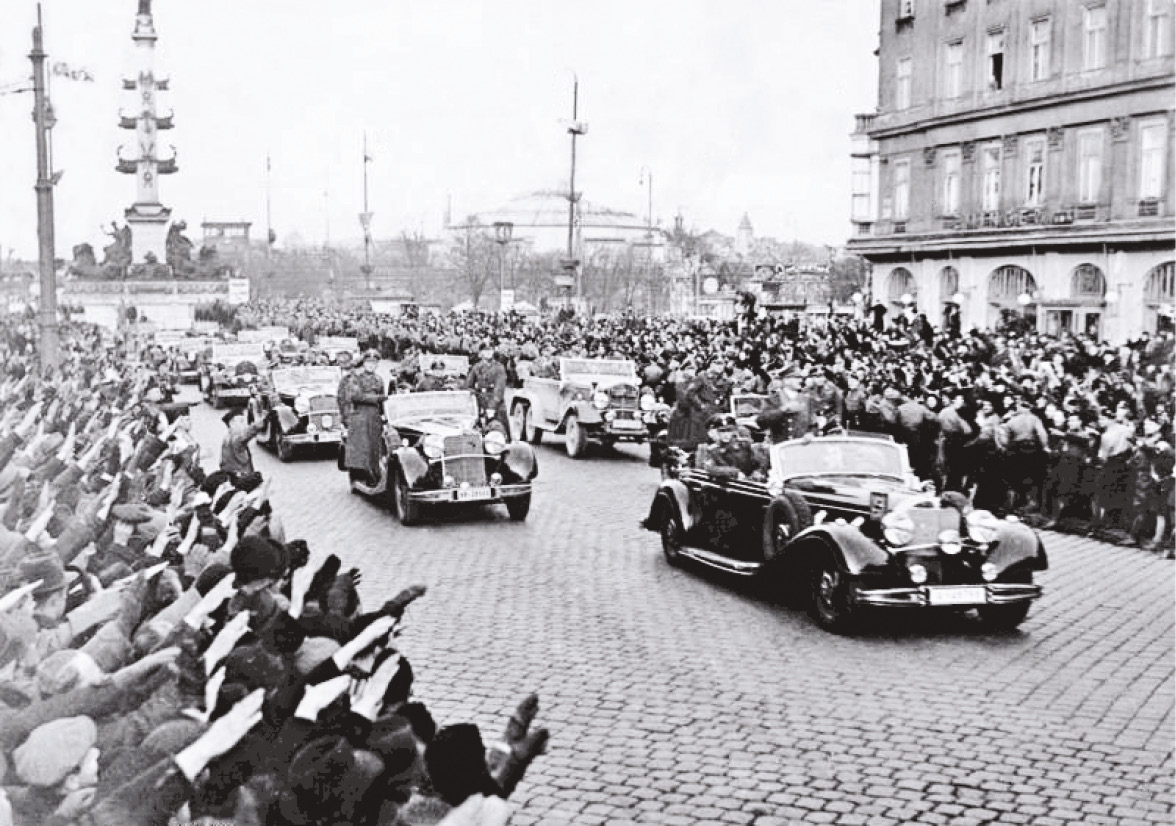
The German troops advancing into Austria were met by cheering crowds waving Nazi flags. That afternoon, Hitler himself crossed the border and drove to a rally in Linz attended by a quarter of a million jubilant Austrians. A few days later, even bigger crowds cheered his arrival in Vienna. On a balcony overlooking the Heldenplatz (Heroes’ Square), Hitler proudly welcomed his homeland of Austria into the Greater German Reich. Nazi propaganda showed newsreel film and photos of crowds waving enthusiastically at the arrival of the Germans in what was named the Anschluss (or ‘joining’) of two German-speaking nations which had traditionally been closely linked.
Despite the prohibition of the union of Germany and Austria in the 1919 Treaty of Versailles, most observers in Britain and France were not alarmed. The Times in London compared it to the union of Scotland and England 250 years before. Only Winston Churchill spoke out against the Anschluss in the House of Commons, saying that appeasing the German Führer would only encourage him to go further, and that Nazi aggression posed a threat to the whole of Europe. He was, of course, right. Later that year, Hitler seized part of Czechoslovakia, and 18 months later had invaded Poland.
At the end of the long war that followed, the victorious Allied powers had to take a view on Austria and its people. Were they to be regarded as partners to the Germans in their blame for the war? Or was the Allied advance into Austria in April-May 1945 to be seen as the liberation of a people who had been conquered by Nazi Germany?

The fall of Vienna
In the Moscow Conference of October-November 1943, the Foreign Ministers of the United States, Britain, and the Soviet Union took the view that Austria should be regarded as the first victim of Nazi aggression. Although Austrians who had committed war crimes as part of the Nazi regime would still be prosecuted, it was agreed that Austria as a whole should be treated as a liberated and independent country after the war. Like Germany, however, it would still be subject to military occupation, by Britain, France, the United States, and the USSR.
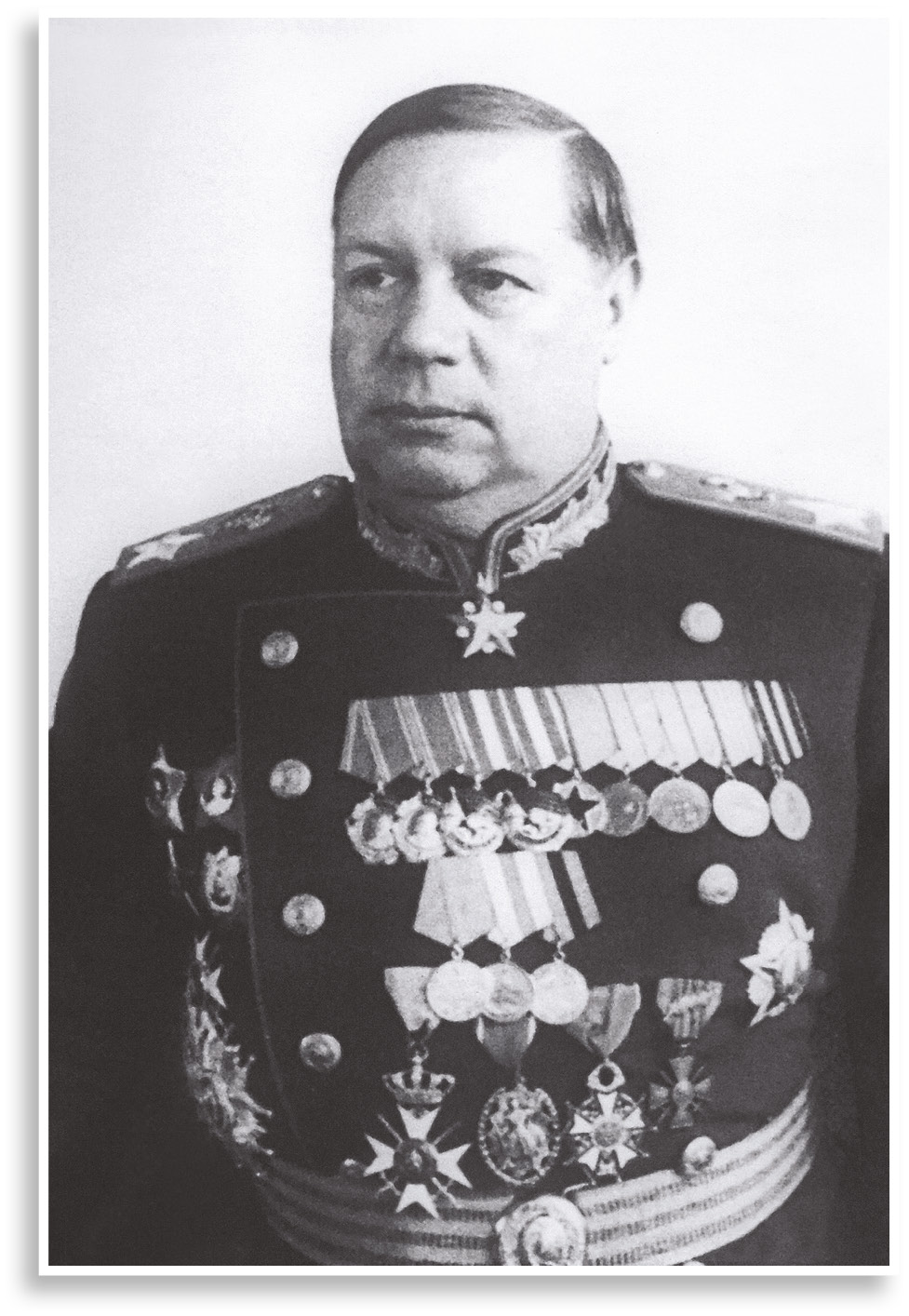
Soviet troops under Marshal Fyodor Tolbukhin crossed into eastern Austria on 29 March 1945 after defeating Hitler’s final strategic offensive, Operation Spring Awakening (Unternehmen Frühlingserwachen), in Hungary. Tolbukhin’s forces of the 3rd Ukrainian Front advanced towards Vienna and effectively put the city under siege. The only significant German force left to defend it was the remnants of the II SS Panzer Corps, along with various garrison and anti-aircraft troops. These motley forces were under the command of General Rudolf von Bünau, with the Panzer forces led by SS General Wilhelm Bittrich. Certain areas of the city were fiercely defended and the destruction here was severe. Other parts of the city were hardly defended at all, and the Soviet advance encountered little opposition.
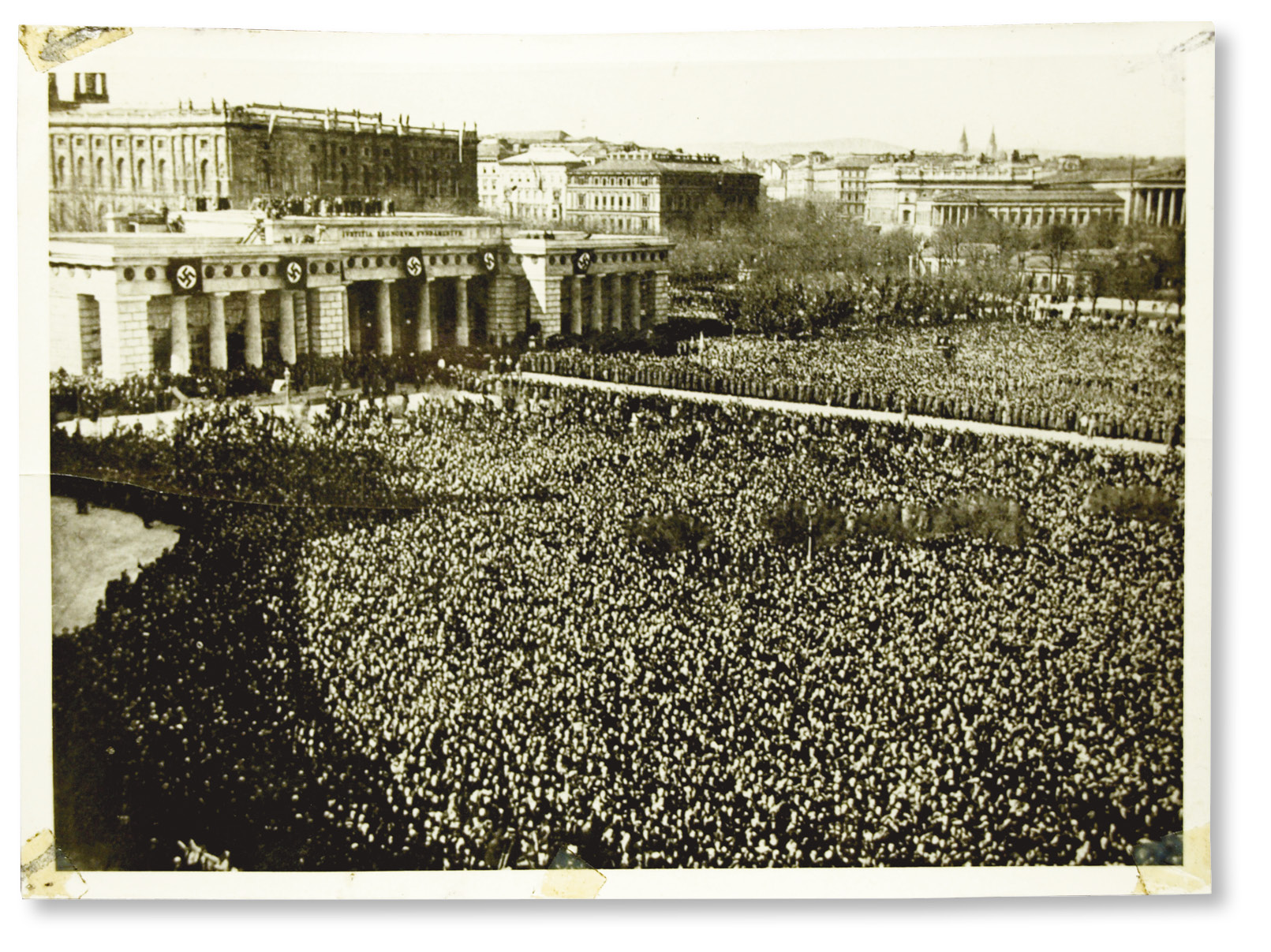
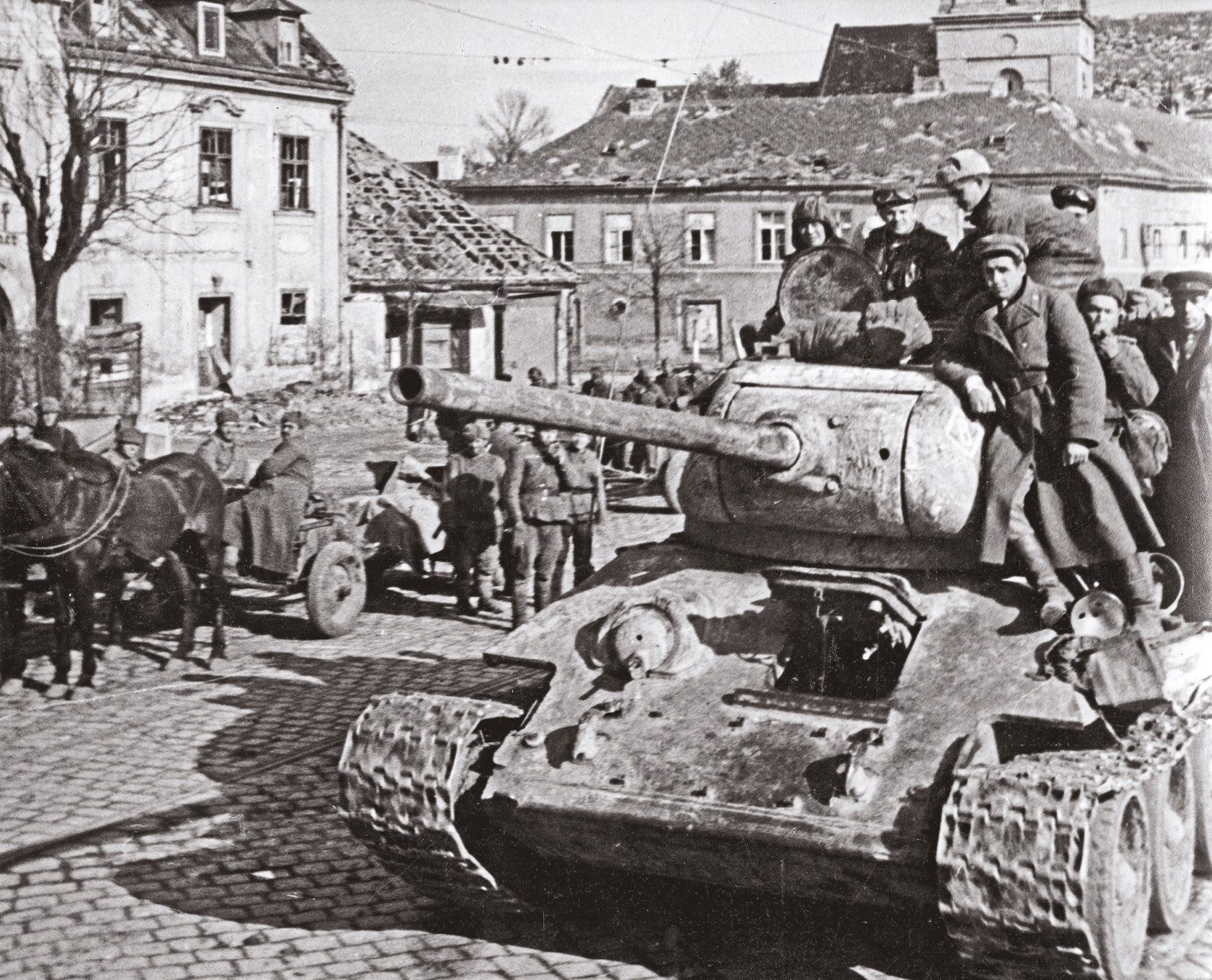
The Soviet 4th and 9th Guards Armies advanced into the eastern and southern suburbs of the city. On 8 April, the Soviets seized control of the west, which contained the strategically important central railway station. The Soviet 46th Army moved into the north on the same day, and the historic centre of Vienna was surrounded. Troops of the Danube Flotilla seized the Reichsbrücke (Imperial Bridge), and the German II Panzer Corps withdrew westwards to avoid being encircled. The 2nd SS Panzer Division, the once mighty Das Reich Division, was part of this withdrawal to the west. After several days of street fighting, the centre of Vienna was finally captured by the Red Army on 13 April. The Battle for Vienna had cost the Soviets the lives of 17,000 men. By this point, advancing Red Army troops had already moved on beyond the capital and were pursuing German forces towards Graz. It was an ignominious end for the second capital of the Greater Reich.
The Third Man
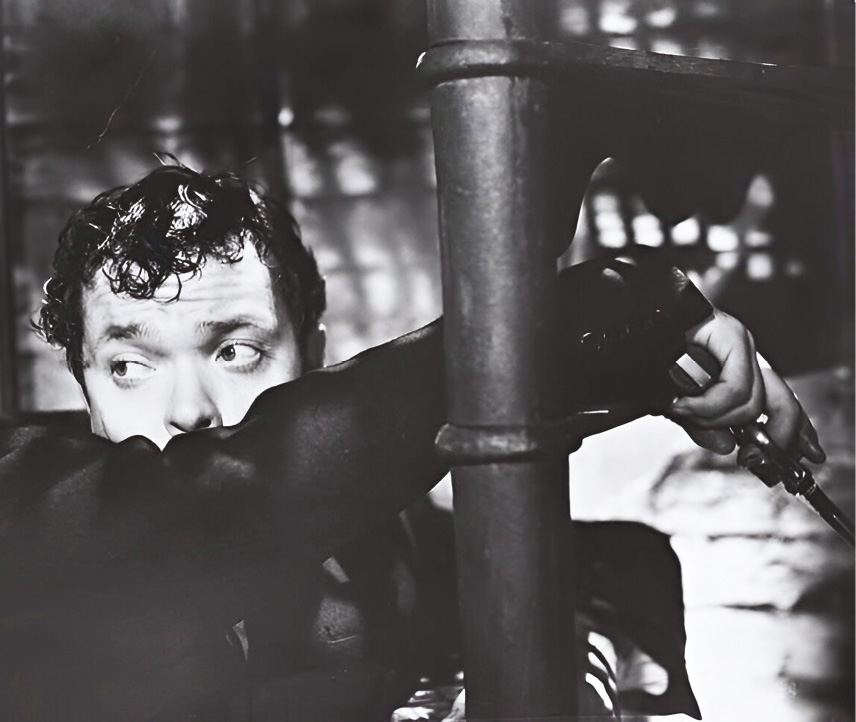
The Third Man is often described as one of the finest British films ever made. Carol Reed turned a screenplay by Graham Greene into a masterpiece of cinema, released in 1949. Set and filmed mostly in post-war Vienna, it perfectly exposes the rundown, shabby exterior of a once-great imperial city.
An American writer by the name of Holly Martins (Joseph Cotten) comes to Vienna to meet his old friend Harry Lime (Orson Welles), only to be told that the latter has died in a car accident. As Martins explores further he encounters a British officer from the occupation force, Major Calloway (Trevor Howard), and becomes infatuated with Lime’s old girlfriend, Anna Schmidt (Alida Valli). They travel into the shadowy underground world of the occupied city to find that Lime was stealing drugs from a British military hospital to water down and sell on the black market. His death was faked in order to aid his escape into the Soviet sector of the city.
The film is remembered for its superbly mysterious performance by Welles (who does not appear for more than an hour), for its stunning black-and white photography of the city by Robert Krasker, and for the memorable score played mostly on the zither by Anton Karas. The film’s denouement, a chase shot in the sewers of Vienna (which was, unlike the rest of the film, shot at Shepperton Studios outside London), is a classic piece of cinema noir.
In 1999, the British Film Institute voted The Third Man the greatest British movie of all time. Certainly, it is one of the few films to capture the weary spirit of post-war occupied Vienna, in which buildings are in ruins, rubble is piled high, and everything is available at a price on the black market – a city both physically and morally devastated by war.
A city divided
Without consulting his Western Allies, Stalin attempted to set up a pro-Communist provisional government. Churchill was outraged and protested loudly – both to Stalin, who ignored him, and to the new American president, Harry Truman, who sided with the prime minister. Neither London nor Washington recognised this new Austrian government.
US troops from the 11th Armoured Division crossed into western Austria on 29 April. British troops followed a week later. When the fighting stopped, Austria was left divided, a microcosm of the rest of Europe. However, the earlier agreements held. On 9 July, the Allies agreed on the borders of their occupied zones. The Soviets occupied the eastern half of the country and the area to the north of the Danube. The French were allocated the Tyrol in the west. British units of the 8th Army that had fought their way up through Italy, occupied the south of Austria. American units who had got as far as Linz before the German surrender occupied Salzburg and the north-west of Austria. Following the model of Berlin, Vienna was itself divided into four zones of occupation, although the historic city centre was administered by an Allied Control Council, and the four armies jointly patrolled and occupied this area.
By 1945, the city of Mozart, Strauss, Klimt, and Freud lay in ruins.
American and British troops arrived in Vienna in July 1945 and their zones of occupation were allocated without dispute. By the end of the year, 55,000 British troops were serving in Austria. The 8th Army was disbanded and reformed as British Troops Austria, which retained the gold crusader-cross insignia of the former unit. At the same time, there were 40,000 American, 15,000 French, and about 150,000 Soviet troops in the country. As in Germany, Soviet troops had been pillaging property and carrying out the mass rape of women since arriving in Austria, even though they had been officially told to regard the local people as victims of Nazism not as perpetrators of the regime. According to Austrian police records, 90% of reported crimes in Austria in 1946 were committed by men dressed in Soviet army uniforms, often while drunk.
Vienna had suffered from bombing during the war and about 20% of the housing stock had been damaged or destroyed. Additionally, some parts of the city had been badly damaged in the battle for the capital in April. There was a severe housing shortage, which meant many families had to share overcrowded mansion blocks. The unhealthy conditions made for the spread of diseases including typhus and tuberculosis. According to American reports, most Austrians survived from 1945 to 1946 on only a near-starvation diet, while shortages of food and of almost all other resources meant that the black market flourished in the shadows of the ruined city.
With its grand Habsburg palaces, Vienna had been a great European cultural and intellectual centre in the first half of the 20th century, and a mecca for classical music and art. It had been the city of Mozart, Strauss, Klimt, and Freud. But by 1945 it was a city in ruins with an impoverished and starving population trying to eke out a living in any way they could. It would take many years for some of the city’s great buildings to be restored and for the economy to improve living conditions for the majority of the city’s population.

After the four occupation armies had taken up their positions in their respective zones, the first meeting of the Allied Council for Austria, consisting of the military commanders of the four armies, took place on 12 September 1945. The original government set up by Stalin was rejected and new elections took place in November. The Communists won only 5% of the votes cast, showing that the elections had been held freely in marked contrast to the rigged elections held in many of the other satellite states occupied by Soviet troops. A coalition of Christian and Social Democrats slowly took power under the eventual leadership of Leopold Figl. This government provided the stable leadership Austria needed and, over the years, slowly guided the country back to prosperity and eventually to independence.
Meanwhile, the Soviets, as in East Germany, took the opportunity in their zone of seizing what were called ‘German external assets’ as reparations for war damage. Industrial plant and machinery worth approximately $500m was confiscated and taken to the East.
UNRRA: Bringing relief
The United Nations Relief and Rehabilitation Administration (UNRRA) had been set up by the US, the UK, China, and the USSR towards the end of World War II to bring relief to victims of the conflict in all areas of the world. It was charged with providing food, fuel, clothing, shelter, and basic medical supplies to those who had been made homeless or lived in areas devastated by years of war. Its headquarters were in Washington, DC, and it distributed $4bn of aid in the three years of its existence. UNRRA teams were active across central Europe and Asia. They also helped many Displaced Persons to return home in the chaos of the post-war era, including 11 million non-Germans who had been taken to Germany as slave workers.
Forty-four nations contributed to the funding of UNRRA, although the lion’s share of its funding (about 70%) came from the United States. UNRRA activities were featured in Fred Zinnemann’s 1948 film The Search, starring Montgomery Clift, Ivan Jandl, and Aline MacMahon. The film tells the story of a young Auschwitz survivor and his mother, who search for each other across post-war Europe. With the help of UNRRA, they are finally reunited.
UNRRA was dissolved in September 1948 and its functions were transferred to several other UN agencies, including the International Refugee Organisation and the World Health Organisation. Its heir in the Middle East was UNRWA, established in 1949 to provide relief for Palestinian refugees who had fled the establishment of the state of Israel. It is still in existence today, and its legitimacy is much contested in the present conflict in Gaza.
Struggle for survival
The first years of post-war military occupation were a terrible time for the Austrian people. From early 1946, UNRRA (the United Nations Relief and Rehabilitation Administration) began to provide food supplies across the country. The bitterly cold winter of 1946/1947 was followed by a disastrous harvest. Food riots shook Vienna in May 1947 and spread across much of Austria over the following months.
The winding up of UNRRA aid in 1948 also marked the beginning of economic support from the Marshall Plan. This operation, named after US Secretary of State George Marshall, was formally known as the European Recovery Program. It was intended by the US to shore up Europe and prevent the most devastated regions from turning to Communism. In Austria, it played a key role in preventing the country from falling entirely under Soviet influence. Initially, Marshall Aid to Austria focused on rebuilding heavy industries in the US and British sectors, and in providing food relief. In all, Austria received about $1bn in Marshall Aid, one of the highest sums per person in the whole of Europe.

The situation remained tense in Vienna and across the whole of Austria. Fearing a blockade of the capital like that of Berlin in 1948-1949 – when the Soviet Union blocked railway, road, and canal access to the sectors of the city under Western control – supply dumps were built up in Salzburg. Preparations were made to fly in relief if needed. The British and the US troops began to train an Austrian Gendarmerie as a military force capable of defending the western half of the country. The US believed that the withdrawal of their forces would lead to a Soviet takeover on the Czechoslovak model and so insisted on maintaining troops in the country.
The death of Stalin in 1953 led to a relaxation in the tensions between East and West. Two years later, Austrian Chancellor Julius Raab agreed terms with Soviet foreign minister Vyacheslav Molotov. Austria would be given its independence as long as it agreed to certain conditions: that it would remain neutral; that there would be no Western military bases in the country; and that it guaranteed there would be no further Anschluss with the revived Germany. The Western Allies were happy to go along with this. A new Austrian State Treaty was signed in Vienna in May 1955. By this point, the Allied military garrisons had dwindled in size. The last of the occupying troops left Vienna and the whole of Austria in October 1955. More than ten years after the end of the Second World War, Austria at last could stand on its own feet economically and politically, and begin a new chapter of its history as a free and independent nation. To this day, Austria is not a member of NATO and houses no foreign troops as a consequence of the 1955 Treaty.
Taylor Downing’s latest book The Army that Never Was: D-Day and the Great Deception is out now in paperback (Icon Books, £10.99).
In the next issue of MHM: How the Soviets consolidated military and political control in countries they occupied.
All images: Wikimedia Commons, unless otherwise stated